

Heuristic Intrusion Detection Based on Traffic Flow Statistical Analysis
Open accessThe DOI matches its Crossref record; 35 of the 35 references it cites were found in a registry or an index.
Abstract
As telecommunications are becoming increasingly important for modern systems, ensuring secure data transmission is getting more and more critical. Specialised numerous devices that form smart grids are a potential attack vector and therefore is a challenge for cybersecurity. It requires the continuous development of methods to counteract this risk. This paper presents a heuristic approach to detecting threats in network traffic using statistical analysis of packet flows. The important advantage of this method is ability of intrusion detection also in encrypted transmissions. Flow information is processing by neural networks to detect malicious traffic. The architectures of subsequent versions of the artificial neural networks were generated based on the results obtained by previous iterations by searching the hyperparameter space, resulting in more refined models. Finally, the networks prepared in this way exhibited high performance while maintaining a small size—thereby making them an effective method of attacks detection in network environment to protect smart grids.
Overview
The claims and statistics of this paper haven’t been checked yet.
Free: it reads the open-access text and checks the first 5 claims that cite a source we can check. Create a free account to check every claim.
Integrity signals
Registry
Cites
Statistics
Figures
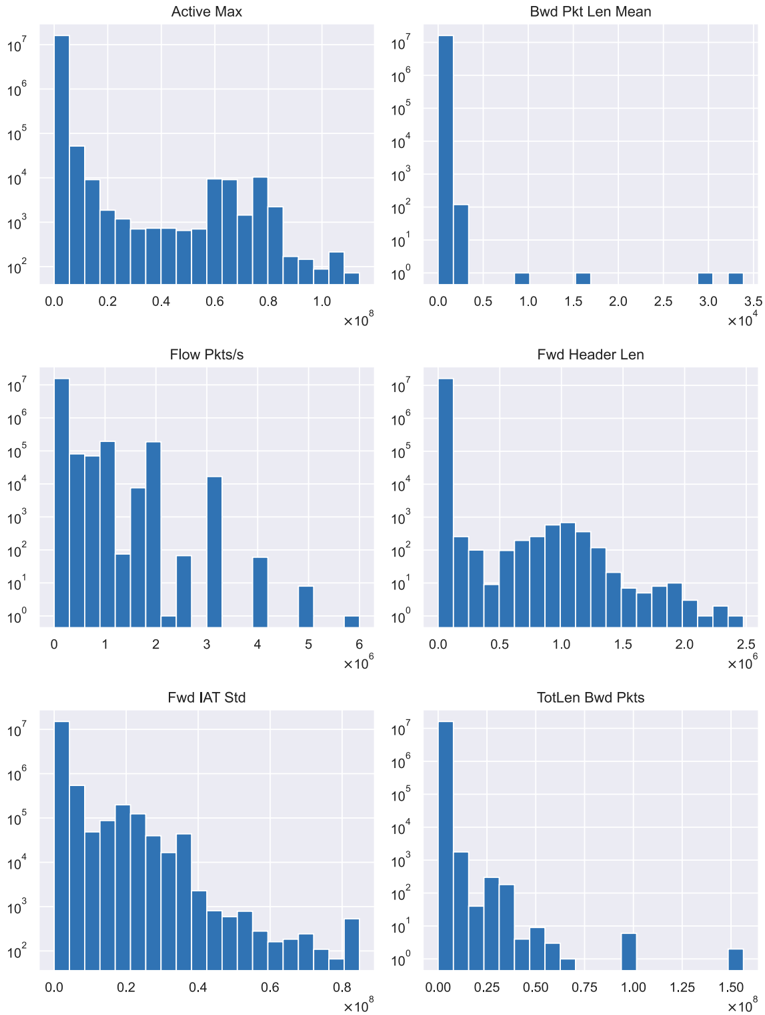
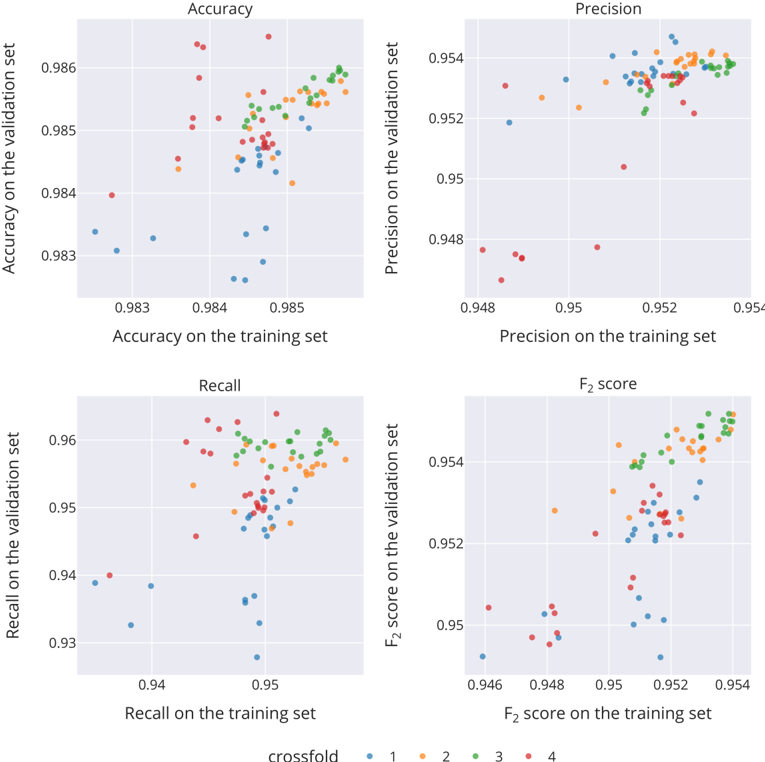

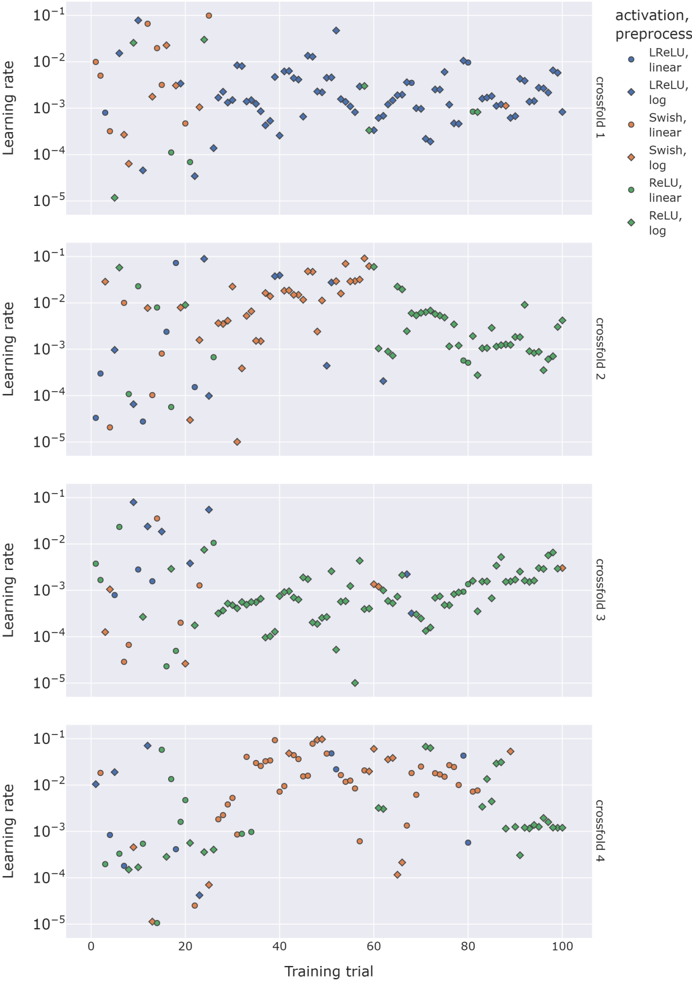
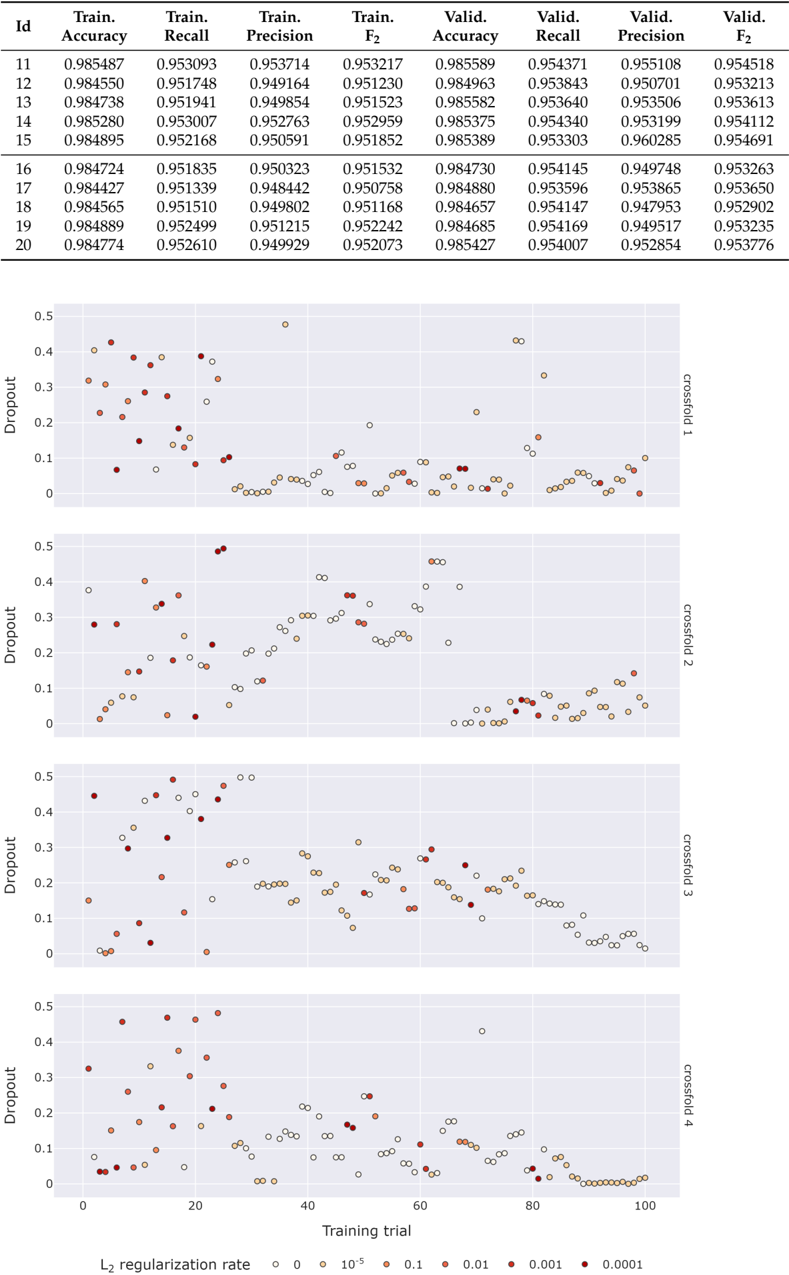
Verification
Claims the paper makes
The claims and statistics of this paper haven’t been checked yet.
Free: it reads the open-access text and checks the first 5 claims that cite a source we can check. Create a free account to check every claim.
Claims other papers make about this one
Each is checked against this paper’s own text: does it say what the citing paper says it does?
The source backs part of the claim, not all of it — or backs it for a different population, condition or comparison.
In the citing paper
“Heuristic-based insider threat detection approaches in [82], [83] present proactive ways to identifying potential malicious activities by establishing a set of rules, guidelines, or heuristics that define normal behavior within an organization's network or information systems.”
From A Review of Recent Advances, Challenges, and Opportunities in Malicious Insider Threat Detection Using Machine Learning Methods (2024) · cites this paper as [83]
Experimental — accuracy not yet measured
Self-check
Percentages, sums and reported differences re-computed from the paper’s own numbers.
The self-check needs the paper’s full text.
Citations
Cites
Adam: A Method for Stochastic Optimization
Kingma, D. P., & Ba, J. (2014) · arXiv · doi:10.48550/arxiv.1412.6980 · Cited by 98,946
(2010) · Cited by 14,134
Larian Studios Dev Team (2024) · doi:10.1145/3292500.3330701 · Cited by 8,618
(2010) · Cited by 8,261
Improving neural networks by preventing co-adaptation of feature detectors
Hinton, G. E., Srivastava, N., Krizhevsky, A., Sutskever, I., & Salakhutdinov, R. R. (2012) · arXiv · doi:10.48550/arxiv.1207.0580 · Cited by 6,382
Toward Generating a New Intrusion Detection Dataset and Intrusion Traffic Characterization
Sharafaldin, I., Habibi Lashkari, A., & Ghorbani, A. A. (2018) · Proceedings of the 4th International Conference on Information Systems Security and Privacy · doi:10.5220/0006639801080116 · Cited by 5,318
(2011) · Cited by 3,939
Searching for activation functions
Ramachandran, P., Zoph, B., & Le, Q. V. (2017) · arXiv · doi:10.48550/arxiv.1710.05941 · Cited by 2,335
A Review of False Data Injection Attacks Against Modern Power Systems
Liang, G., Zhao, J., Luo, F., Weller, S. R., & Dong, Z. Y. (2017) · IEEE Transactions on Smart Grid · doi:10.1109/tsg.2015.2495133 · Cited by 1,028
He, Y., Mendis, G. J., & Wei, J. (2017) · IEEE Transactions on Smart Grid · doi:10.1109/tsg.2017.2703842 · Cited by 834
Research works printed but not linked: 3
- Goodfellow, I., Bengio, Y., and Courville, A. (2016). Deep Learning, MIT Press.
- Tieleman, 2012, Lecture 6.5-rmsprop: Divide the gradient by a running average of its recent magnitude, Neural Netw. Mach. Learn., 4, 26
- Cortes, C., Mohri, M., and Rostamizadeh, A. (2009, January 18–21). L2 Regularization for Learning Kernels. Proceedings of the Twenty-Fifth Conference on Uncertainty in Artificial Intelligence, Montreal, QC, Canada.
Cited by
Alzaabi, F. R., & Mehmood, A. (2024) · IEEE Access · doi:10.1109/access.2024.3369906 · Cited by 204
Enhancing DoS Detection in WSNs Using Enhanced Ant Colony Optimization Algorithm
Alrawashdeh, R., Aljughaiman, A., Albuali, A., Alsenani, Y. S., & Al-Naeem, M. (2024) · IEEE Access · doi:10.1109/access.2024.3462636 · Cited by 19
Machine Learning-Based Load Forecasting for Nanogrid Peak Load Cost Reduction
Kumar, A., Yan, B., & Bilton, A. (2022) · Energies · doi:10.3390/en15186721 · Cited by 15
Suresh, A., Dwarakanath, B., Nanda, A. K., Kumar, P. S., Sankar, S., & Cheerla, S. (2024) · Wireless Personal Communications · doi:10.1007/s11277-023-10852-z · Cited by 11
Vladov, S., Vysotska, V., Vashchenko, S., Bolvinov, S., Glubochenko, S., Repchonok, A. Y., Korniienko, M., Nazarkevych, M., & Herasymchuk, R. V. (2025) · Big Data and Cognitive Computing · doi:10.3390/bdcc9110267 · Cited by 8
Metadata
- Authors
- Szczepanik, W., & Niemiec, M.
- Affiliations
- AGH University of Krakow (PL)
- Corresponding author
- Szczepanik, Wojciech
- Venue
- Energies
- Publisher
- MDPI AG
- Published
- 2022-05-27
- Volume
- 15
- Issue
- 11
- Pages
- 3951
- ISSN
- 1996-1073 (ISSN-L)
- OpenAlex
- W4281729307
- Cited by
- 9
- References
- 30
- Citations by year
- 2025: 3 · 2024: 3 · 2023: 2 · 2022: 1
- FWCI
- 1.00
- Type
- journal article
- Language
- en
- Open access
- gold
- doi.org
- Licence
- Locations
- Energies (publishedVersion, cc-by)
- RePEc: Research Papers in Economics (submittedVersion)
- DOAJ (DOAJ: Directory of Open Access Journals) (submittedVersion, cc-by-sa)
- Funders
- European Union’s Horizon 2020 Research and Innovation Programme (830943)
- Topics
- Physical Sciences › Computer Science › Computer Networks and Communications › Network Security and Intrusion Detection
- Physical Sciences › Computer Science › Artificial Intelligence › Internet Traffic Analysis and Secure E-voting
- Physical Sciences › Computer Science › Hardware and Architecture › Network Packet Processing and Optimization
- Keywords
- intrusion detection, network traffic analysis, smart grid cybersecurity, encrypted traffic, malicious traffic detection, neural network architecture, hyperparameter optimization, heuristic detection
About these checks
Registry, retraction, Cites and statistics results are computed, not judged, with one exception: a printed reference that no index lists is read once by a model before it counts as a citation error. Claims are extracted by a model and kept only when their quote appears verbatim in the text; each cited source is then checked, with a model’s help, for whether it says what the claim relies on. Those verdicts can be wrong — read the claim’s quote and the cited source before relying on one.
Statistics and arithmetic are recomputed, not judged.
Confidence bands are shown only for fields calibrated on our annotated test set. None is calibrated yet, so no band is shown.
What counts as a claim ›How we measure confidence ›How we check this ›
Are you an author, or do you see a problem with this page? Request a review
How to cite
Cite CoChat for the checks on this page, and the paper for its own findings.
- This page
- CoChat. (2026). Citation check: Heuristic Intrusion Detection Based on Traffic Flow Statistical Analysis. https://app.cochat.ai/papers/10.3390/en15113951
- The paper
- Szczepanik, W., & Niemiec, M. (2022). Heuristic Intrusion Detection Based on Traffic Flow Statistical Analysis. Energies. https://doi.org/10.3390/en15113951
Data sources
Bibliographic data: Semantic Scholar, OpenAlex, Crossref.
Contains information from the Semantic Scholar Academic Graph Datasets, made available under the ODC Attribution License (ODC-BY 1.0).
Semantic Scholar’s data is described in: Kinney, R., et al. (2023). The Semantic Scholar Open Data Platform. arXiv:2301.10140.
