

Prospects and Challenges of the Machine Learning and Data-Driven Methods for the Predictive Analysis of Power Systems: A Review
Open accessThe DOI matches its Crossref record; 222 of the 224 references it cites were found in a registry or an index.
Abstract
The use of machine learning and data-driven methods for predictive analysis of power systems offers the potential to accurately predict and manage the behavior of these systems by utilizing large volumes of data generated from various sources. These methods have gained significant attention in recent years due to their ability to handle large amounts of data and to make accurate predictions. The importance of these methods gained particular momentum with the recent transformation that the traditional power system underwent as they are morphing into the smart power grids of the future. The transition towards the smart grids that embed the high-renewables electricity systems is challenging, as the generation of electricity from renewable sources is intermittent and fluctuates with weather conditions. This transition is facilitated by the Internet of Energy (IoE) that refers to the integration of advanced digital technologies such as the Internet of Things (IoT), blockchain, and artificial intelligence (AI) into the electricity systems. It has been further enhanced by the digitalization caused by the COVID-19 pandemic that also affected the energy and power sector. Our review paper explores the prospects and challenges of using machine learning and data-driven methods in power systems and provides an overview of the ways in which the predictive analysis for constructing these systems can be applied in order to make them more efficient. The paper begins with the description of the power system and the role of the predictive analysis in power system operations. Next, the paper discusses the use of machine learning and data-driven methods for predictive analysis in power systems, including their benefits and limitations. In addition, the paper reviews the existing literature on this topic and highlights the various methods that have been used for predictive analysis of power systems. Furthermore, it identifies the challenges and opportunities associated with using these methods in power systems. The challenges of using these methods, such as data quality and availability, are also discussed. Finally, the review concludes with a discussion of recommendations for further research on the application of machine learning and data-driven methods for the predictive analysis in the future smart grid-driven power systems powered by the IoE.
Overview
The claims and statistics of this paper haven’t been checked yet.
Free: it reads the open-access text and checks the first 5 claims that cite a source we can check. Create a free account to check every claim.
Integrity signals
Registry
Cites
Statistics
Figures
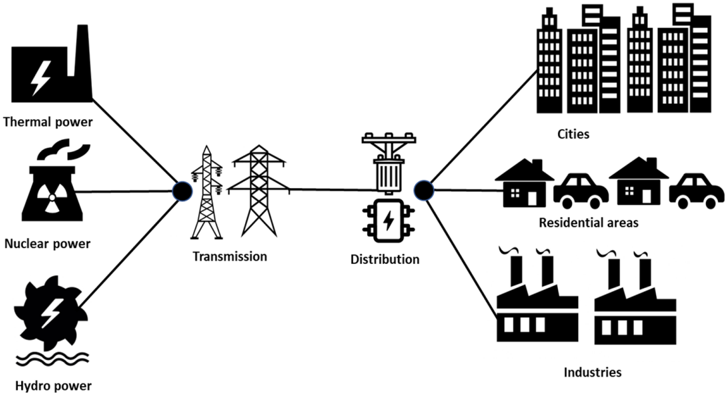
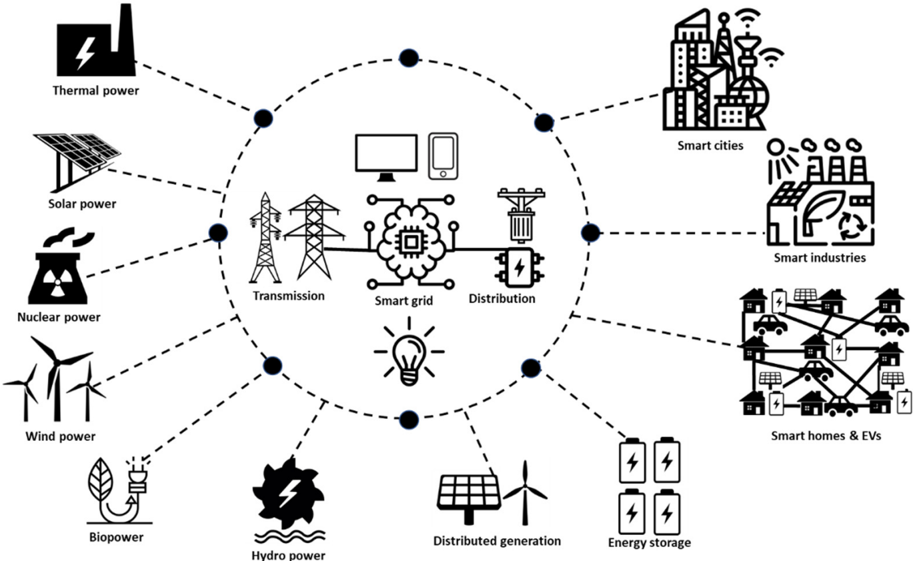
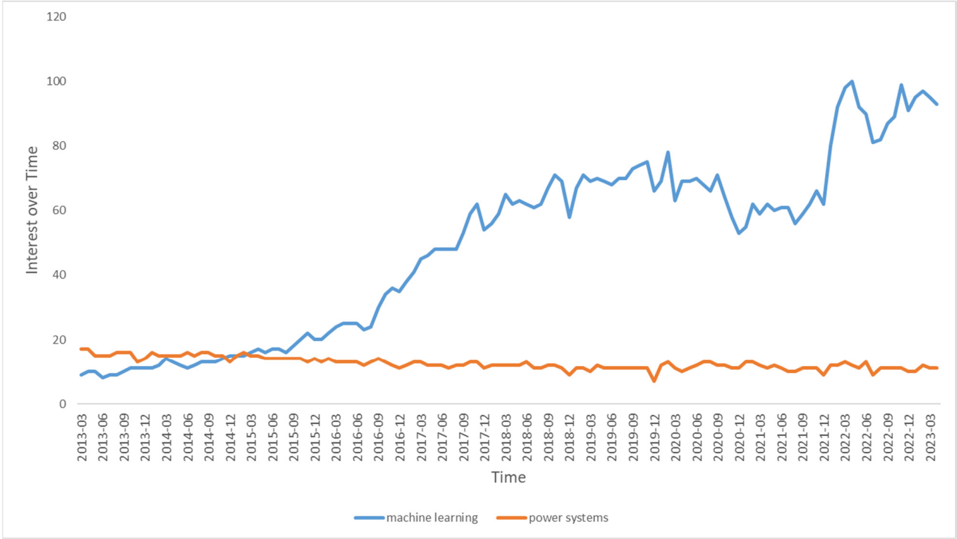
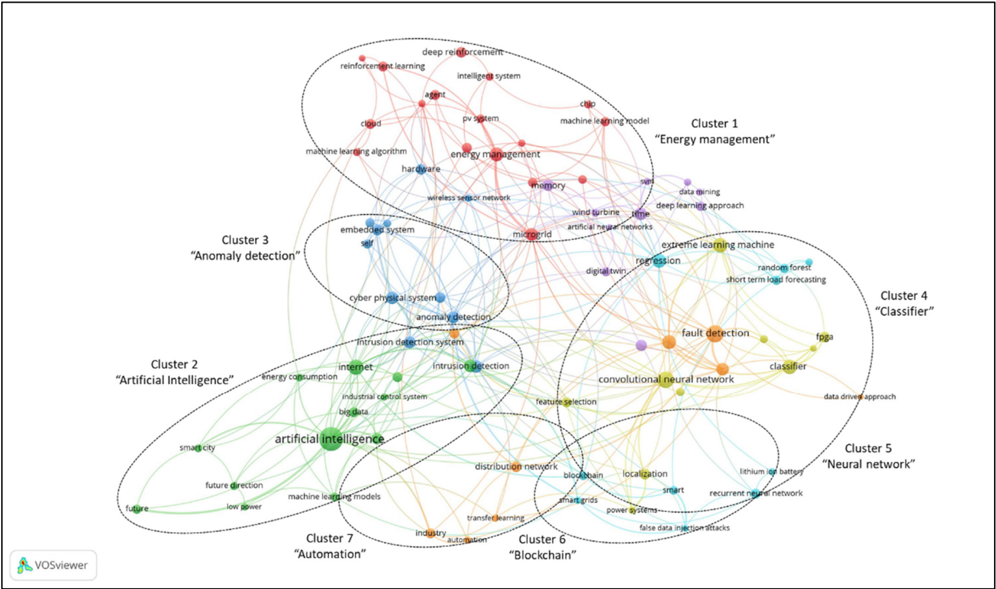
Verification
Claims the paper makes
The claims and statistics of this paper haven’t been checked yet.
Free: it reads the open-access text and checks the first 5 claims that cite a source we can check. Create a free account to check every claim.
Claims other papers make about this one
Each is checked against this paper’s own text: does it say what the citing paper says it does?
The source backs part of the claim, not all of it — or backs it for a different population, condition or comparison.
In the citing paper
“risks from integrating AI with legacy OT systems and IoT devices (Section 3.3.1;[40])”
From Addressing Challenges for the Effective Adoption of Artificial Intelligence in the Energy Sector (2025) · cites this paper as [40]
Experimental — accuracy not yet measuredThe source backs part of the claim, not all of it — or backs it for a different population, condition or comparison.
In the citing paper
“Data latency and connectivity issues can nullify AI benefits [22,40]”
From Addressing Challenges for the Effective Adoption of Artificial Intelligence in the Energy Sector (2025) · cites this paper as [40]
Experimental — accuracy not yet measuredThe check wasn’t confident either way, so it gives no verdict — never disputed.
In the citing paper
“can introduce latency in mission-critical systems [40]”
From Addressing Challenges for the Effective Adoption of Artificial Intelligence in the Energy Sector (2025) · cites this paper as [40]
Experimental — accuracy not yet measured
Self-check
Percentages, sums and reported differences re-computed from the paper’s own numbers.
The self-check needs the paper’s full text.
Citations
Cites
1 retracted
Das, A., Peu, S. D., Akanda, M. A. M., & Islam, A. R. M. T. (2023) · Energies · doi:10.3390/en16052198 · Cited by 41
RetractedMachine learning: Algorithms, real-world applications and research directions
Sarker, I. H. (2021) · SN Computer Science · doi:10.1007/s42979-021-00592-x · Cited by 5,583
Wamba-Taguimdje, S.-L., Fosso Wamba, S., Kala Kamdjoug, J. R., & Tchatchouang Wanko, C. E. (2020) · Business Process Management Journal · doi:10.1108/bpmj-10-2019-0411 · Cited by 1,280
Artificial intelligence in sustainable energy industry: Status Quo, challenges and opportunities
Ahmad, T., Zhang, D., Huang, C., Zhang, H., Dai, N., Song, Y., & Chen, H. (2021) · Journal of Cleaner Production · doi:10.1016/j.jclepro.2021.125834 · Cited by 1,258
Rahman, A., Farrok, O., & Haque, M. M. (2022) · Renewable and Sustainable Energy Reviews · doi:10.1016/j.rser.2022.112279 · Cited by 1,105
A survey on smart grid technologies and applications
Dileep, G. (2020) · Renewable Energy · doi:10.1016/j.renene.2019.08.092 · Cited by 1,020
Machine Learning: New Ideas and Tools in Environmental Science and Engineering
Zhong, S., Zhang, K., Bagheri, M., Burken, J. G., Gu, A., Li, B., Ma, X., Marrone, B. L., Ren, Z. J., Schrier, J., et al. (2021) · Environmental Science & Technology · doi:10.1021/acs.est.1c01339 · Cited by 945
Blockchain for the future of sustainable supply chain management in Industry 4.0
Esmaeilian, B., Sarkis, J., Lewis, K., & Behdad, S. (2020) · Resources, Conservation and Recycling · doi:10.1016/j.resconrec.2020.105064 · Cited by 855
Big data driven smart energy management: from big data to big insights
Zhou, K., Fu, C., & Yang, S. (2016) · Renewable and Sustainable Energy Reviews · doi:10.1016/j.rser.2015.11.050 · Cited by 841
Tan, K. M., Babu, T. S., Ramachandaramurthy, V. K., Kasinathan, P., Solanki, S. G., & Raveendran, S. K. (2021) · Journal of Energy Storage · doi:10.1016/j.est.2021.102591 · Cited by 776
Research works printed but not linked: 3
- Strielkowski, W. Social Impacts of Smart Grids: The Future of Smart Grids and Energy Market Design; Elsevier: London, UK, 2019.
- Ewani, J.; Bitala, W.; Lotisa, V.; Browndi, I. Smart City and Future of Urban Planning based on Predictive Analysis by Adoption of Information Technology. J. Basis Appl. Sci. Manag. Syst. 2022, 4, 425-431.
- Zhou, 2019, Digital twin framework and its application to power grid online analysis, CSEE J. Power Energy Syst., 5, 391
Cited by
Items 201–283 of 283
Gawas, M., & Gawas, M. (2026) · Lecture notes in networks and systems · doi:10.1007/978-3-032-11509-6_14
Zhang, B., Xu, Y., Congrui, S., & Hu, Z. (2025) · Informatica · doi:10.31449/inf.v49i36.10475
“The IoTG public key is used for signature verification, and the IoTG device number and root hash value are obtained through formula (8) [22].”
Zaid, M. M. A., & Mohammed, A. A. (2026) · Journal of Kufa for Mathematics and Computer · doi:10.31642/jokmc/2018/120204
El-Bakkouri, Y., Aitouhanni, I., Derici, S., & Azegagh, J. (2026) · IGI Global eBooks · doi:10.4018/979-8-3373-6746-0.ch006
Zhang, O., Zhou, X., Yu, X., Wu, X., & Jiang, X. (2025) · International Conference on Electrical Engineering and Control Science (IC2ECS) · doi:10.1109/ic2ecs68700.2025.11361639
“Data-driven methods, represented by deep learning, can extract potential patterns from historical data, but their 'black-box' nature results in weak physical interpretability, and their generalization ability is at risk under new operating conditions not covered in the training data [6].”
Artificial Intelligence and Machine Learning Role in Enhancing Wireless Network Security
Qadir, M. T., Maghdid, H. S., Salh, C. H., & Othman, N. F. (2026) · Qalaai Zanist Scientific Journal · doi:10.25212/lfu.qzj.11.1.24
Machine learning-driven Security Frameworks for IoT in Next-Generation Wireless Networks
Othman, N. F., Askar, S. K., Salh, C. H., & Qadir, M. T. (2026) · Qalaai Zanist Scientific Journal · doi:10.25212/lfu.qzj.11.1.32
Semantic-Syntactic Feature Fusion via Mixture of Experts for Code Smell Detection
Wang, Y., Ye, C., & Sui, Y. (2025) · International Symposium on Computer Engineering and Intelligent Communications (ISCEIC) · doi:10.1109/isceic67854.2025.11405731
“Machine learning (ML) and deep learning (DL) approaches address some of these limitations by learning data-driven 2025 6th International Symposium on Computer Engineering and Intelligent Communications (ISCEIC) representations [8].”
Lebelo, M., Moeti, M. N., & Langa, M. R. (2025) · International Multidisciplinary Information Technology and Engineering Conference (IMITEC) · doi:10.1109/imitec67386.2025.11410463
Liu, B., Wu, X., Cao, L., & Duan, Y. (2026) · Energy Sources Part A Recovery Utilization and Environmental Effects · doi:10.1080/15567036.2026.2634847
Operationalizing Data and AI Capabilities in Modern Software Engineering Systems
Phan, A., Kalipattapu, S. N., & Bhanot, N. (2025) · International Journal of Computational and Experimental Science and Engineering · doi:10.22399/ijcesen.4958
“In contrast, contemporary systems increasingly embed data-driven and learning-based components that adapt, predict, and optimize behavior over time (Strielkowski et al., 2023).”
Intelligent Analysis and Prediction of Building Energy Consumption in Cloud Computing
Huang, L., Zhu, X., & Ren, X. (2026) · IEEE International Conference on Computation, Big-Data and Engineering (ICCBE) · doi:10.3390/engproc2026128008
Zhang, Y., Sadiq, M., Fraz, M. M., aldhahri, E. A., Almazroi, A. A., Iqbal, M., Hayat, A., Geng, Y., Algamdi, A. S. R., Noreen, A., et al. (2026) · Sustainable materials and technologies · doi:10.1016/j.susmat.2026.e01949 · Cited by 2
Innovative Machine Learning Applications for green Finance
Sangotra, D. I., Parmar, D. V., Trivedi, N. B., Priya, P. V., Pravin, T., & Praveenkumar, K. (2026) · Advances in computational intelligence and robotics book series · doi:10.4018/979-8-3373-1494-5.ch014
Madzhumayev, M. M., & Kuznetsova, O. A. (2025) · Вестник Российского университета дружбы народов. Серия: Юридические науки · doi:10.22363/2313-2337-2026-30-1-70-89
Mathematical and Statistical Model of Load Recognition in Microgrids
Naqvi, N., Raees, F., & Zaidi, A. A. (2026) · International Journal of Trends and Innovations in Business & Social Sciences · doi:10.48112/tibss.v4i1.1225
Weather-based power outage prediction in New York City: An ensemble machine learning approach
Mohan, A., & Mohanasundaram, M. (2026) · Journal of Emerging Investigators · doi:10.59720/25-197
Arslanel, E., & Yetişken, Y. (2026) · Pamukkale University Journal of Engineering Sciences · doi:10.65206/pajes.1860192
Kong, S., & Zhou, P. (2026) · ICST Transactions on Scalable Information Systems · doi:10.4108/eetsis.11781
“The said difficulties have led to the introduction of data-driven methods which can learn from operational data, merge information from different sensors, and change their behavior dynamically in response to environmental changes—all these without needing specific system models [10].”
Izaki, A. T., & Santana, J. J. D. A. (2026) · Revista Interface Tecnológica · doi:10.31510/infa.v22i2.2300
Pradeep, N., Girish, S. K., Sheshadri, G. S., & Manjunatha, H. M. (2026) · Lecture notes in electrical engineering · doi:10.1007/978-981-95-0788-7_9
Digital twin-based energy-efficient framework for smart grid management using RF algorithm
Chen, J., Liang, Y., Lu, K., Wan, Z., & Wang, X. (2026) · Sustainable Computing Informatics and Systems · doi:10.1016/j.suscom.2026.101387
Modeling air humidity using an artificial neural network based on temperature and rainfall
Atmanto, D., Purwanto, A., Marini, A., Marfu, A., Amiruddin, S., & Kahpi, H. S. (2026) · Discover Applied Sciences · doi:10.1007/s42452-026-08801-z
“Artificial Neural Networks (ANN), as part of machine learning techniques, offer a data-driven solution to model complex and nonlinear relationships [5, 24, 37].”
Mumtaz, U., Anand Bharathi, S., Vinoth Kumar, S., Shukla, A., Bharath Raj, N., Malik, A., Jenefer, J., & Nilavarasan, S. (2026) · Advances in computational intelligence and robotics book series · doi:10.4018/979-8-2600-1840-8.ch011
Adewole, D. B. (2026) · Cognizance Journal of Multidisciplinary Studies · doi:10.47760/cognizance.2026.v06i05.008
Padmavathy, G., Alex, S., Thangarajan, R., Shankar, N., Ganesan, A., & Arunfred, N. (2026) · Indian Journal of Information Sources and Services · doi:10.51983/ijiss-2026.16.2.32
“Together with predictive analytics, machine learning algorithms, and statistical models, organizations will be able to better predict the future demand and understand the inventory status, customer behavior, and organizational bottlenecks (Strielkowski et al., 2023; Oyewole et al., 2024).”
Savadkoohian, M., & Javadian, N. (2025) · International Conference on Signal Processing and Intelligent Systems (ICSPIS) · doi:10.1109/icspis68676.2025.11551656
Machine Learning Applications in Asthma and COPD Management: Prediction, Monitoring, and Outcomes
Khan, N., Fatima, H., Rafique, I., Amir, I., Nousheen, S., Abid, Z., & Afzal, A. (2026) · Advances in computational intelligence and robotics book series · doi:10.4018/979-8-3373-7759-9.ch010
Петров, И. А., & Krŭsteva, A. (2026) · International Conference on Information Technologies in Engineering Education (Inforino) · doi:10.1109/inforino68543.2026.11556549
“Russia: Several Russian univercities enhance international collabations and emphasize on modeling hybrid microgrids [28-29].”
Gunawan, M. A., Setiawan, A., Suiraoka, I. P., Ghani, H. H. A., Fitri, A., & Azizah, D. (2026) · Research Square · doi:10.21203/rs.3.rs-10045621/v1
Comparative evaluation of multiple machine learning models for power system fault diagnosis
Liu, H., He, P., Lu, Z., Li, J., Lu, Z., & 贾金川 (2026) · Frontiers in Energy Research · doi:10.3389/fenrg.2026.1669209
A Multi-Level Hybrid EKF–Machine Learning Soft Sensor for Robust Bioprocess Monitoring
Boskabadi, M. R., Kailasanathan, R., Ricardez‐Sandoval, L., & Mansouri, S. S. (2026) · Systems and Control Transactions · doi:10.69997/sct.109478
Forecasting the technological level of industrial production based on machine learning
Efimovna, B. A., & Alexandrovna, P. D. (2026) · International Conference on Integrated Intelligence and Cognitive Engineering (ICIICE) · doi:10.1109/iciice69672.2026.11565113
Coupling of input and output signals of electrical equipment using an LLM agent
Ilyinov, L., Gorkunov, N. M., Gromozdov, D. R., Sargsian, O., Karpasov, I., & Gapanyuk, Y. (2026) · International Conference on Integrated Intelligence and Cognitive Engineering (ICIICE) · doi:10.1109/iciice69672.2026.11565467
“In safety-critical domains such as power systems and industrial control, fully autonomous decision-making is neither feasible nor desirable given current technological capabilities and regulatory requirements [7].”
Wu, K. (2026) · SSRN Electronic Journal · doi:10.2139/ssrn.6986837
A hierarchical graph attention method for building load data imputation
Chen, J., Wang, W., Xiao, B., & Li, T. (2026) · Electric Power Systems Research · doi:10.1016/j.epsr.2026.113479
Dharmadhikar, A., & Linus, R. M. (2026) · ShodhKosh Journal of Visual and Performing Arts · doi:10.29121/shodhkosh.v7.i1.2026.8830
Shunmugesh, K., Kurian, S., Megha, K. J., Sunny, A., Hiremath, S., & Vishwanatha, H. M. (2026) · Materials Today Communications · doi:10.1016/j.mtcomm.2026.115678
Ezzat, A., Abdel-Khalik, A. S., Hamdy, R. A., & Hamad, M. S. (2026) · Scientific Reports · doi:10.1038/s41598-026-60510-0
“The development of an intelligent, data-driven framework is therefore necessary to balance battery longevity, energy efficiency, and renewable energy integration 9 .”
A Supervised Learning Approach to Outage Prediction Using Large Outage Management System Data
Shees, A., Amaan, A., Mohammed, J., & Sarwat, A. I. (2026) · Procedia Computer Science · doi:10.1016/j.procs.2026.06.229
Recent advancements in quantum machine learning applications: A review from smart grid viewpoint
Shaabani, M. H., Miri, S. P., Moghadasi, S. R., Arani, Z. D., Roknabadi, M. H. A., & Gharehpetian, G. B. (2026) · Applied Soft Computing · doi:10.1016/j.asoc.2026.115956 · Cited by 1
Li, T., Wang, Q., Yang, G., Huang, Q., Ren, Q., & Yang, H. (2026) · International Transactions on Electrical Energy Systems · doi:10.1155/etep/5528391
(2026) · ICST Transactions on Scalable Information Systems · doi:10.4108/eetsis.14017
Fast and robust probabilistic AC power flow via a hybrid MLP/Newton-Raphson framework
Wavi, S. A. E., Maraoui, S., & Bouzrara, K. (2026) · Electric Power Systems Research · doi:10.1016/j.epsr.2026.113766
Forecasting Regional Power Demand in India Using Seasonal ARIMA and Enhanced LSTM Architectures
Tripathi, A., & Shukla, M. (2025) · IEEE International Conference on Innovate for Humanitarian: Tech Solutions for Global Challenge (ICIH) · doi:10.1109/icih67754.2025.11609028
“Machine learned based Predictive Analytics can therefore provide real time decision making on a pattern recognition basis to improve forecast accuracy against the largest scale sensory data of today's smart grid [5].”
A.Anthoniammal, Prasad, A., Bhuvaneswari, G., Rajakumar, P. T. V., Vinothkumar, S., & Sudha, S. (2026) · International Academic Journal of Innovative Research · doi:10.71086/iajir/v13i2/iajir1329
Data Driven Approaches for Industrial Systems Optimization and Process Efficiency Improvement
Goswami, A., & Kadao, A. K. (2026) · International Academic Journal of Innovative Research · doi:10.71086/iajir/v13i2/iajir1327 · Cited by 4
Kumar, S., & Kumar, P. (2026) · IGI Global eBooks · doi:10.4018/979-8-3373-8372-9.ch002
Han, Z., Jiang, R., Zhang, B., Liu, S. X., & Dong, H. (2026) · Energies · doi:10.3390/en19153517
State of Metrological Support for Control of Optical Materials Parameters in the Russian Federation
Vorobyev, D. D., & Komshin, A. S. (2026) · Springer proceedings in physics · doi:10.1007/978-3-032-30639-5_49
Data Quality Cross-Domain Collaboration and Governance Framework for the Power Sectore
Wan, Z., Yang, J., Xiu, J., Ma, Q., Geng, X., Zang, X., & Yang, Q. (2026) · Lecture notes in electrical engineering · doi:10.1007/978-981-92-0232-4_33
Integration of digital twin technologies in smart grid substations
Lin, J., Wu, W., Hu, B., Qin, Q., & Huang, H. (2026) · Peer-to-Peer Networking and Applications · doi:10.1007/s12083-026-02275-x
Stephen, S. S., Hadi, A., Akinradewo, O. I., & Aigbavboa, C. O. (2026) · Asian Journal of Civil Engineering · doi:10.1007/s42107-026-01762-z
“…model-free adaptive control paradigm capable of operating under non-linear dynamics and uncertainty by learning control policies directly through interaction with the environment rather than relying on predefined update laws (Strielkowski et al., 2023; Perumal et al., 2024; Luo et al., 2025).”
Liang, T., Wang, J., & Wang, L. (2026) · International Conference on Intelligent Engineering and Next-Gen Healthcare Systems (IEHNS) · doi:10.1109/iehns68708.2026.11607212
“From a practical point of view, in the process of serving major projects in the free trade port, power grid companies generally face problems such as diverse types of guarantee objects, significant differences in guarantee needs and complex allocation of guarantee resources [3-5].”
Rai, A., Sharma, U. K., & Ball, R. J. (2026) · Journal of Materials in Civil Engineering · doi:10.1061/jmcee7.mteng-23555 · Cited by 1
Machine learning–based predictive control for energy-efficient manufacturing systems
Kapula, P. R. (2026) · Materials research proceedings · doi:10.21741/97816449042312-22
Reinforcement learning-based decision making for sustainable manufacturing operations
Amit Kumar, J. A. I. N. (2026) · Materials research proceedings · doi:10.21741/97816449042312-11
Cyber-physical manufacturing systems enabled by IoT and machine intelligence
Mudholkar, P. (2026) · Materials research proceedings · doi:10.21741/97816449042312-16
Gaikwad, A. S. (2026) · Current Pharmaceutical Analysis · doi:10.1016/j.cpan.2026.08.004
Model Prediksi Keberhasilan Penuntutan Perkara Korupsi Menggunakan Explainable Machine learning
Pratiwi, B., Wicaksono, Y. A., & Achaqie, H. N. R. (2026) · Perkara. · doi:10.51903/5jrjhq72
Technological Pathways to Reverse Supply Chain Resilience in PV Waste: A Fuzzy DEMATEL Approach
Yadav, D., Kumar, S., & Ram, N. (2026) · Process Integration and Optimization for Sustainability · doi:10.1007/s41660-026-00841-7
Sarıışık, G. (2026) · International Journal of Energy Research · doi:10.1155/er/1483915
Yang, Y., Chen, X., Li, Y., Sun, H., Zhang, L., Zhong, J., Zhang, K., & Yao, J. P. (2026) · Computers & Geosciences · doi:10.1016/j.cageo.2026.106261
Zhang, Z., Xu, X., Liu, W., Wang, J., Lv, P., & Koh, C. T. (2026) · International Journal of Information Technologies and Systems Approach · doi:10.4018/ijitsa.420812
Akinyele, D., Olabode, O., Alamu, O., & Opeyemi, D. A. (2026) · Next research. · doi:10.1016/j.nexres.2026.102417
Scalable AutoML Frameworks for End-to-End Optimization of Data Science Workflows
Udariansyah, D., Alshar’e, M., Yadav, P. K., & Tomar, A. (2026) · Journal of Data Sciences · doi:10.61453/jods.v20260208
Sasipriya, G., Senthilkumar, G., Agarkar, A. A., Vanguri, G. L. N., & Kumar, K. K. (2026) · Journal of Thermal Analysis and Calorimetry · doi:10.1007/s10973-026-16141-8
Nireekshana, N. (2026) · Journal of Electrical Systems and Information Technology · doi:10.1186/s43067-026-00389-z
Robust Evaluation Metrics for Assessing Machine Learning Performance Beyond Accuracy
Putra, A., Noche, E. B., & Gabhane, D. (2026) · Journal of Data Sciences · doi:10.61453/jods.v20260216
Brain‐Inspired Memory Network Empowering Intelligent Power System Inspection
Tian, Y., Zhou, P., Li, Z., Jia, X., & Chen, C. (2026) · Journal of Electrical and Computer Engineering · doi:10.1155/jece/5574368
Tang, Y. (2026) · SSRN Electronic Journal · doi:10.2139/ssrn.7472487
AI-driven energy transition of modern power grids: a controlled dispatch analysisPreprint
Striełkowski, W., Wang, D., & Gryshova, I. (2026) · SSRN Electronic Journal · doi:10.2139/ssrn.7488647
Artificial Intelligence in Drug Manufacturing, Quality Control, and Post-Market Surveillance
Ali, K. A., Choudhuri, S., Kuila, S., Paul, P., Das, R., & Roy, S. K. (2026) · IGI Global eBooks · doi:10.4018/979-8-3373-9715-3.ch013
Sulaima, M. F., Arora, S., Krejcar, O., Herout, L., & Namazi, H. (2026) · Energy Nexus · doi:10.1016/j.nexus.2026.100869
AI-driven energy transition of modern power grids: a controlled dispatch analysisPreprint
Striełkowski, W., Wang, D., & Gryshova, I. (2026) · SSRN Electronic Journal · doi:10.2139/ssrn.7602608
Static and Dynamic Data-Driven Modeling of Colombian Average Redispatch Marginal Cost
Ramírez-Murillo, H., Tellez‐Castro, D., & Torres-Pinzón, C. A. (2026) · Communications in computer and information science · doi:10.1007/978-3-032-41324-6_28
Al-Abboodi, K., Khosravi, A., & Ahmadian, N. (2026) · e-Prime – Nexus of Electrical Electronic and Intelligent Engineering · doi:10.1016/j.eprime.2026.201251
Mahdiraji, E. A., Azari, M. N., Abdullah, M., & Qutlimurotov, A. (2026) · IET Renewable Power Generation · doi:10.1049/rpg2.70398
Disrupting Commercial Real Estate Management and Financing with AI-supported Digital Twins Modeling
Goldmann¹, N., & Stewart², J. M. (2026) · Journal of Financial and Economic Dynamics (JFED) · doi:10.66361/jfed.128
Kodonas, A., Kalogiannidis, S., Papadopoulou, C.-I., Konteos, G., & Papaevangelou, O. (2026) · WSEAS TRANSACTIONS ON ENVIRONMENT AND DEVELOPMENT · doi:10.37394/232015.2026.22.100
Khosravi, N., Çelık, D., Sepehrzad, R., Abdolmohammadi, H. R., Farsani, E. A., & Bevrani, H. (2026) · Applied Energy · doi:10.1016/j.apenergy.2026.129098
Predictive Analytics in Economics: Data-Driven Approaches for Market Forecasting and Policy Planning
Ganesan, D. A. (2026) · International Academic Journal of Economics · doi:10.71086/iajh/v13i3/iajh1316
Metadata
- Authors
- Strielkowski, W., Vlasov, A., Selivanov, K., Muraviev, K., & Shakhnov, V.
- Affiliations
- Department of Trade and Finance, Faculty of Economics and Management, Czech University of Life Sciences Prague, Kamýcká 129, Prague 6, 165 00 Prague, Czech Republic
- Bauman Moscow State Technical University (RU)
- Venue
- Energies
- Publisher
- MDPI AG
- Published
- 2023-05-11
- Volume
- 16
- Issue
- 10
- Pages
- 4025
- ISSN
- 1996-1073 (ISSN-L)
- OpenAlex
- W4381425968
- Cited by
- 237
- References
- 224
- Citations by year
- 2026: 83 · 2025: 101 · 2024: 44 · 2023: 7
- FWCI
- 17.43
- Type
- journal article
- Language
- en
- Open access
- gold
- doi.org
- Licence
- Locations
- Energies (publishedVersion, cc-by)
- RePEc: Research Papers in Economics (submittedVersion)
- DOAJ (DOAJ: Directory of Open Access Journals) (submittedVersion, cc-by-sa)
- Funders
- Bauman Moscow State Technical University (PRIOR/SN/NU/22/SP2/5)
- Topics
- Physical Sciences › Engineering › Electrical and Electronic Engineering › Smart Grid and Power Systems
- Physical Sciences › Engineering › Electrical and Electronic Engineering › Energy Load and Power Forecasting
- Physical Sciences › Engineering › Electrical and Electronic Engineering › Power System Optimization and Stability
- Keywords
- machine learning, data-driven methods, predictive analytics, power systems, smart grid, energy internet, Internet of Things, blockchain, renewable energy integration, power system operation, data quality
About these checks
Registry, retraction, Cites and statistics results are computed, not judged, with one exception: a printed reference that no index lists is read once by a model before it counts as a citation error. Claims are extracted by a model and kept only when their quote appears verbatim in the text; each cited source is then checked, with a model’s help, for whether it says what the claim relies on. Those verdicts can be wrong — read the claim’s quote and the cited source before relying on one.
Statistics and arithmetic are recomputed, not judged.
Confidence bands are shown only for fields calibrated on our annotated test set. None is calibrated yet, so no band is shown.
What counts as a claim ›How we measure confidence ›How we check this ›
Are you an author, or do you see a problem with this page? Request a review
Data sources
Bibliographic data: Semantic Scholar, OpenAlex, Crossref.
Contains information from the Semantic Scholar Academic Graph Datasets, made available under the ODC Attribution License (ODC-BY 1.0).
Semantic Scholar’s data is described in: Kinney, R., et al. (2023). The Semantic Scholar Open Data Platform. arXiv:2301.10140.
