

Working Capital
Open accessThe DOI matches its Crossref record; 28 of the 30 references it cites were found in a registry or an index.
Abstract
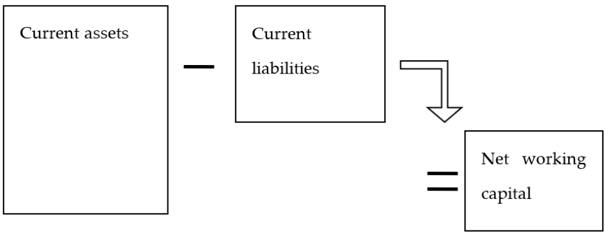
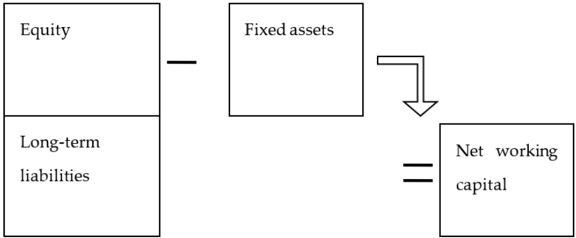
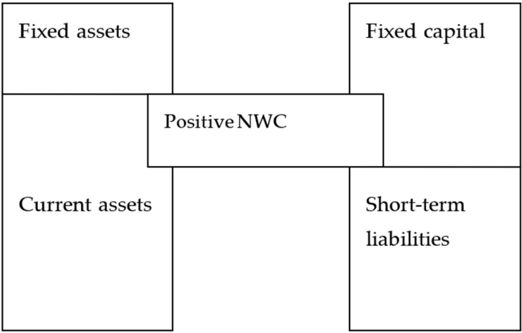
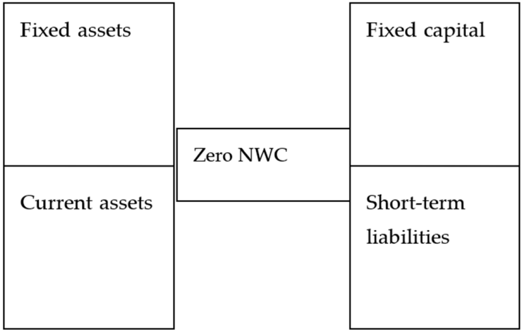
The simplest net working capital can be defined as the difference between the value of current assets and short-term liabilities together with other short-term accruals. It is equivalent to the part of the current assets financed with equity, provisions for liabilities, long-term liabilities, and the remaining part of accruals. Therefore, it is the capital that finances only that part of the current assets that are not financed with short-term liabilities. This amount is financed with fixed capital. Summing up, net working capital is the fixed capital that finances the company’s current assets.
Overview
The claims and statistics of this paper haven’t been checked yet.
Free: it reads the open-access text and checks the first 5 claims that cite a source we can check. Create a free account to check every claim.
Integrity signals
Registry
Cites
Statistics
Figures


Verification
Claims the paper makes
The claims and statistics of this paper haven’t been checked yet.
Free: it reads the open-access text and checks the first 5 claims that cite a source we can check. Create a free account to check every claim.
Self-check
Percentages, sums and reported differences re-computed from the paper’s own numbers.
The self-check needs the paper’s full text.
Citations
Cites
The determinants and implications of corporate cash holdings
Opler, T. (1999) · Journal of Financial Economics · doi:10.1016/s0304-405x(99)00003-3 · Cited by 3,914
Does Working Capital Management Affect Profitability of Belgian Firms?
Deloof, M. (2003) · Journal of Business Finance & Accounting · doi:10.1111/1468-5957.00008 · Cited by 1,849
The Determinants of Corporate Liquidity: Theory and Evidence
Kim, C.-S., Mauer, D. C., & Sherman, A. E. (1998) · The Journal of Financial and Quantitative Analysis · doi:10.2307/2331099 · Cited by 1,244
Working Capital and Fixed Investment: New Evidence on Financing Constraints
Fazzari, S. M., & Petersen, B. C. (1993) · The RAND Journal of Economics · doi:10.2307/2555961 · Cited by 907
Liquidity-profitability tradeoff: An empirical investigation in an emerging market
Eljelly, A. M. A. (2004) · International Journal of Commerce and Management · doi:10.1108/10569210480000179 · Cited by 906
(2010) · Cited by 611
Working capital management, corporate performance, and financial constraints
Baños-Caballero, S., García-Teruel, P. J., & Martínez-Solano, P. (2014) · Journal of Business Research · doi:10.1016/j.jbusres.2013.01.016 · Cited by 608
Is working capital management value-enhancing? Evidence from firm performance and investments
Aktas, N., Croci, E., & Petmezas, D. (2015) · Journal of Corporate Finance · doi:10.1016/j.jcorpfin.2014.12.008 · Cited by 534
(2006) · SSRN Electronic Journal · Cited by 506
Enqvist, J., Graham, M., & Nikkinen, J. (2014) · Research in International Business and Finance · doi:10.1016/j.ribaf.2014.03.005 · Cited by 483
Corporate returns and cash conversion cycles
Jose, M. L., Lancaster, C., & Stevens, J. L. (1996) · Journal of Economics and Finance · doi:10.1007/bf02920497 · Cited by 427
Investment and financing constraints in China: Does working capital management make a difference?
Ding, S., Guariglia, A., & Knight, J. (2013) · Journal of Banking & Finance · doi:10.1016/j.jbankfin.2012.03.025 · Cited by 377
Working Capital Management and Shareholders’ Wealth
Kieschnick, R., Laplante, M., & Moussawi, R. (2013) · Review of Finance · doi:10.1093/rof/rfs043 · Cited by 330
THE RESURGENCE OF INVENTORY RESEARCH: WHAT HAVE WE LEARNED?
Blinder, A. S., & Maccini, L. J. (1991) · Journal of Economic Surveys · doi:10.1111/j.1467-6419.1991.tb00138.x · Cited by 260
Working capital, cash holding, and profitability of restaurant firms
Mun, S. G., & Jang, S. (. (2015) · International Journal of Hospitality Management · doi:10.1016/j.ijhm.2015.04.003 · Cited by 182
de Almeida, J. R., & Eid, W. (2013) · Journal of Business Research · doi:10.1016/j.jbusres.2013.07.012 · Cited by 178
Effects of the COVID-19 Global Crisis on the Working Capital Management Policy: Evidence from Poland
Zimon, G., & Tarighi, H. (2021) · Journal of Risk and Financial Management · doi:10.3390/jrfm14040169 · Cited by 127
Self-citationWorking capital management in the automotive industry: Financial value chain analysis
Lind, L., Pirttilä, M., Viskari, S., Schupp, F., & Kärri, T. (2012) · Journal of Purchasing and Supply Management · doi:10.1016/j.pursup.2012.04.003 · Cited by 97
Efficient working capital management, financial constraints and firm value: A text-based analysis
Dhole, S., Mishra, S., & Pal, A. M. (2019) · Pacific-Basin Finance Journal · doi:10.1016/j.pacfin.2019.101212 · Cited by 92
Working capital management policy in health care: The effect of leverage
Dalcı, İ., & Özyapıcı, H. (2018) · Health Policy · doi:10.1016/j.healthpol.2018.09.012 · Cited by 67
Salehi, M., Mahdavi, N., Dari, S. Z. A., & Tarighi, H. (2018) · International Journal of Emerging Markets · doi:10.1108/ijoem-11-2017-0439 · Cited by 63
Working capital policy practice: Evidence from Sri Lankan companies
Zhao, B., & Wijewardana, W. P. (2012) · Procedia - Social and Behavioral Sciences · doi:10.1016/j.sbspro.2012.03.251 · Cited by 56
Are working capital decisions truly short-term in nature?
Chauhan, G. S. (2019) · Journal of Business Research · doi:10.1016/j.jbusres.2019.02.032 · Cited by 48
THE STRATEGIC DETERMINANTS OF WORKING CAPITAL: A PRODUCT‐LINE PERSPECTIVE
Nunn, K. P. (1981) · The Journal of Financial Research · doi:10.1111/j.1475-6803.1981.tb00604.x · Cited by 42
Bian, Y., Lemoine, D., Yeung, T. G., Bostel, N., Hovelaque, V., Viviani, J., & Gayraud, F. (2017) · International Journal of Production Economics · doi:10.1016/j.ijpe.2017.12.002 · Cited by 38
Zimon, G., Babenko, V., Sadowska, B., Chudy–Laskowska, K., & Gosik, B. (2021) · Risks · doi:10.3390/risks9040063 · Cited by 36
Self-citationThe effect of the split share structure reform on working capital management of Chinese companies
He, W., Mukherjee, T. K., & Baker, H. K. (2017) · Global Finance Journal · doi:10.1016/j.gfj.2017.02.003 · Cited by 25
Zimon, G. (2020) · Eurasian studies in business and economics · doi:10.1007/978-3-030-48531-3_7 · Cited by 7
Self-citation
Research works printed but not linked: 8
- 5. Andrew, J.; Gallagher, T. Financial Management: Principles and Practice ; Freeload Press: Madison, WI, USA, 2007.
- 7. Brealey, R.A.; Myers, S.C.; Marcus, A.J. Fundamentals of Corporate Finance , 7th ed.; McGraw Hill: New York, NY, USA, 2012.
- 9. Kim, Y.; Srinivasan, V. Advances in Working Capital Management ; JAI Press: Greenwich, CT, USA, 1988.
- 16. Neale, B.; Pike, R. Corporate Finance and Investment: Decisions & Strategies ; FT Prentice Hall: Hoboken, NJ, USA, 2006; p. 375.
- 17. Boer, G. Managing the cash gap. J. Account. 1999 , 1 , 111-119.
- 27. Shin, H.H.; Soenen, L. Efficiency of working capital management and corporate profitability. Financ. Pract. Educ. 1998 , 8 , 39-45.
- 30. Ek, R.; Guerin, S. Is there a right level of working capital? J. Corp. Treas. Manag. 2011 , 4 , 137-149.
- 39. Smith, K. Profitability versus liquidity tradeoffs in working capital management. In Readings on the Management of Working Capital ; Smith, K.V., Ed.; West Publishing Company: Eagan, MN, USA, 1980; pp. 549-562.
Cited by
Habib, A. M. (2022) · Financial Markets Institutions and Risks · doi:10.21272/fmir.6(3).18-25.2022 · Cited by 118
Habib, A. M., & Mourad, N. (2022) · Operations Research Forum · doi:10.1007/s43069-022-00155-7 · Cited by 49
Demiraj, R., Dsouza, S., & Abiad, M. (2022) · Risks · doi:10.3390/risks10120236 · Cited by 44
Zimon, G., Tarighi, H., Salehi, M., & Sadowski, A. (2022) · Energies · doi:10.3390/en15249627 · Cited by 52
Self-citationHabib, A. M., & Kayani, U. N. (2023) · Operations Research Forum · doi:10.1007/s43069-023-00217-4 · Cited by 41
Metadata
- Authors
- Zimon, G.
- Affiliations
- Rzeszów University of Technology (PL)
- Corresponding author
- Zimon, Grzegorz
- ORCID
- Zimon, Grzegorz
- Venue
- Encyclopedia
- Publisher
- MDPI AG
- Published
- 2021-08-06
- Volume
- 1
- Issue
- 3
- Pages
- 764-772
- ISSN
- 2673-8392 (ISSN-L)
- OpenAlex
- W4205972248
- Cited by
- 22
- References
- 30
- Citations by year
- 2026: 2 · 2025: 2 · 2024: 3 · 2023: 8 · 2022: 6 · 2021: 1
- Type
- reference entry
- Language
- en
- Open access
- gold
- doi.org
- Licence
- Locations
- Encyclopedia (publishedVersion, cc-by)
- DOAJ (DOAJ: Directory of Open Access Journals) (submittedVersion, cc-by-sa)
- Topics
- Social Sciences › Business, Management and Accounting › Accounting › Working Capital and Financial Performance
- Social Sciences › Business, Management and Accounting › Accounting › Financial Analysis and Corporate Governance
- Social Sciences › Decision Sciences › Management Science and Operations Research › Supply Chain and Inventory Management
- Keywords
- net working capital, current assets, current liabilities, fixed capital, capital structure, working capital financing
About these checks
Registry, retraction, Cites and statistics results are computed, not judged, with one exception: a printed reference that no index lists is read once by a model before it counts as a citation error. Claims are extracted by a model and kept only when their quote appears verbatim in the text; each cited source is then checked, with a model’s help, for whether it says what the claim relies on. Those verdicts can be wrong — read the claim’s quote and the cited source before relying on one.
Statistics and arithmetic are recomputed, not judged.
Confidence bands are shown only for fields calibrated on our annotated test set. None is calibrated yet, so no band is shown.
What counts as a claim ›How we measure confidence ›How we check this ›
Are you an author, or do you see a problem with this page? Request a review
Data sources
Bibliographic data: Semantic Scholar, OpenAlex, Crossref.
Contains information from the Semantic Scholar Academic Graph Datasets, made available under the ODC Attribution License (ODC-BY 1.0).
Semantic Scholar’s data is described in: Kinney, R., et al. (2023). The Semantic Scholar Open Data Platform. arXiv:2301.10140.
