

The Role of Ovotransferrin in Egg-White Antimicrobial Activity: A Review
Open accessThe DOI matches its Crossref record; 142 of the 143 references it cites were found in a registry or an index.
Abstract
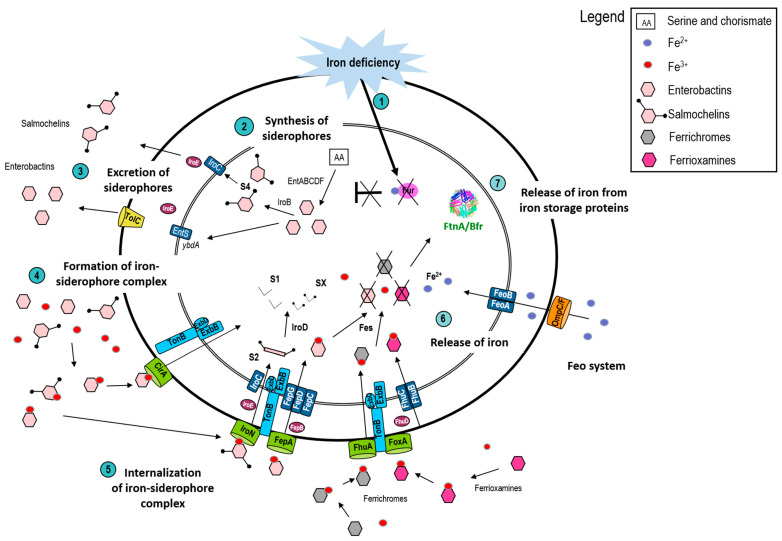
Eggs are a whole food which affordably support human nutritional requirements worldwide. Eggs strongly resist bacterial infection due to an arsenal of defensive systems, many of which reside in the egg white. However, despite improved control of egg production and distribution, eggs remain a vehicle for foodborne transmission of Salmonella enterica serovar Enteritidis, which continues to represent a major public health challenge. It is generally accepted that iron deficiency, mediated by the iron-chelating properties of the egg-white protein ovotransferrin, has a key role in inhibiting infection of eggs by Salmonella. Ovotransferrin has an additional antibacterial activity beyond iron-chelation, which appears to depend on direct interaction with the bacterial cell surface, resulting in membrane perturbation. Current understanding of the antibacterial role of ovotransferrin is limited by a failure to fully consider its activity within the natural context of the egg white, where a series relevant environmental factors (such as alkalinity, high viscosity, ionic composition, and egg white protein interactions) may exert significant influence on ovotransferrin activity. This review provides an overview of what is known and what remains to be determined regarding the antimicrobial activity of ovotransferrin in egg white, and thus enhances understanding of egg safety through improved insight of this key antimicrobial component of eggs.
Overview
The claims and statistics of this paper haven’t been checked yet.
Free: it reads the open-access text and checks the first 5 claims that cite a source we can check. Create a free account to check every claim.
Integrity signals
Registry
Cites
Statistics
Figures
Verification
Claims the paper makes
The claims and statistics of this paper haven’t been checked yet.
Free: it reads the open-access text and checks the first 5 claims that cite a source we can check. Create a free account to check every claim.
Self-check
Percentages, sums and reported differences re-computed from the paper’s own numbers.
The self-check needs the paper’s full text.
Citations
Cites
UCSF Chimera—A visualization system for exploratory research and analysis
Pettersen, E. F., Goddard, T. D., Huang, C. C., Couch, G. S., Greenblatt, D. M., Meng, E. C., & Ferrin, T. E. (2004) · Journal of Computational Chemistry · doi:10.1002/jcc.20084 · Cited by 45,828
CHEMIOSMOTIC COUPLING IN OXIDATIVE AND PHOTOSYNTHETIC PHOSPHORYLATION
MITCHELL, P. (1966) · Biological Reviews · doi:10.1111/j.1469-185x.1966.tb01501.x · Cited by 3,663
PDB2PQR: an automated pipeline for the setup of Poisson-Boltzmann electrostatics calculations
Dolinsky, T. J., Nielsen, J. E., McCammon, J. A., & Baker, N. A. (2004) · Nucleic Acids Research · doi:10.1093/nar/gkh381 · Cited by 3,472
Andrews, S. C., Robinson, A. K., & Rodríguez-Quiñones, F. (2003) · FEMS Microbiology Reviews · doi:10.1016/s0168-6445(03)00055-x · Cited by 2,702 · cited 5×
“1 to 10 μM are typically needed for optimal bacterial growth [53].”
BackgroundInfluentialSelf-citationMolecular basis of bacterial outer membrane permeability
Nikaido, H., & Vaara, M. (1985) · Microbiological Reviews · doi:10.1128/mmbr.49.1.1-32.1985 · Cited by 2,447
Goetz, D. H., Holmes, M. A., Borregaard, N., Bluhm, M. E., Raymond, K. N., & Strong, R. K. (2002) · Molecular Cell · doi:10.1016/s1097-2765(02)00708-6 · Cited by 1,355 · cited 1×
“Siderocalin inhibits enterobactin-mediated bacterial growth during infection through its ferri-enterobactin sequestration activity [65].”
BackgroundRegulation of cytoplasmic pH in bacteria
Booth, I. R. (1985) · Microbiological Reviews · doi:10.1128/mmbr.49.4.359-378.1985 · Cited by 1,200
A small RNA regulates the expression of genes involved in iron metabolism in Escherichia coli
Massé, E., & Gottesman, S. (2002) · Proceedings of the National Academy of Sciences · doi:10.1073/pnas.032066599 · Cited by 1,154
Iron and metal regulation in bacteria
Hantke, K. (2001) · Current Opinion in Microbiology · doi:10.1016/s1369-5274(00)00184-3 · Cited by 755 · cited 3×
“Enteritidis primarily uses the FeoABC system [71,77], which allows”
BackgroundMethodKilling of gram-negative bacteria by lactoferrin and lysozyme.
Ellison, R. T., & Giehl, T. J. (1991) · Journal of Clinical Investigation · doi:10.1172/jci115407 · Cited by 746
A Cell-Surface Receptor for Lipocalin 24p3 Selectively Mediates Apoptosis and Iron Uptake
Devireddy, L. R., Gazin, C., Zhu, X., & Green, M. R. (2005) · Cell · doi:10.1016/j.cell.2005.10.027 · Cited by 672 · cited 1×
“It is important to emphasise that the glucosylation of enterobactin is a virulence strategy since it allows circumvention of the capture of enterobactin by siderocalin (also named lipocalin 2), a host innate immunity protein in human serum [64].”
BackgroundMechanisms of egg contamination by Salmonella Enteritidis
Gantois, I., Ducatelle, R., Pasmans, F., Haesebrouck, F., Gast, R., Humphrey, T. J., & Van Immerseel, F. (2009) · FEMS Microbiology Reviews · doi:10.1111/j.1574-6976.2008.00161.x · Cited by 661
The Golden Egg: Nutritional Value, Bioactivities, and Emerging Benefits for Human Health
Réhault-Godbert, S., Guyot, N., & Nys, Y. (2019) · Nutrients · doi:10.3390/nu11030684 · Cited by 637
Chemiosmotic coupling in oxidative and photosynthetic phosphorylation
Mitchell, P. (2011) · Biochimica et Biophysica Acta (BBA) - Bioenergetics · doi:10.1016/j.bbabio.2011.09.018 · Cited by 573
Damage of the outer membrane of enteric gram-negative bacteria by lactoferrin and transferrin
Ellison, R. T., Giehl, T. J., & LaForce, F. M. (1988) · Infection and Immunity · doi:10.1128/iai.56.11.2774-2781.1988 · Cited by 538
THE BARRIER FUNCTION OF THE GRAM‐NEGATIVE ENVELOPE
Leive, L. (1974) · Annals of the New York Academy of Sciences · doi:10.1111/j.1749-6632.1974.tb43261.x · Cited by 510
Transcriptional regulation by Ferric Uptake Regulator (Fur) in pathogenic bacteria
Troxell, B., & Hassan, H. M. (2013) · Frontiers in Cellular and Infection Microbiology · doi:10.3389/fcimb.2013.00059 · Cited by 500 · cited 2×
“Iron uptake by Enterobacteriaceae is finely controlled by the ferric uptake regulator (Fur) protein, which acts as the global regulator of iron homeostasis according to cellular iron availability ([70] for a review).”
BackgroundPadan, E., Zilberstein, D., & Schuldiner, S. (1981) · Biochimica et Biophysica Acta (BBA) - Reviews on Biomembranes · doi:10.1016/0304-4157(81)90004-6 · Cited by 434
The Proton Electrochemical Gradient in Escherichia coli Cells
PADAN, E., ZILBERSTEIN, D., & ROTTENBERG, H. (1976) · European Journal of Biochemistry · doi:10.1111/j.1432-1033.1976.tb10257.x · Cited by 392
The specific binding of iron(III) and copper(II) to transferrin and conalbumin
Aasa, R., Malmström, B. G., Saltman, P., & Vänngård, T. (1963) · Biochimica et Biophysica Acta · doi:10.1016/0006-3002(63)90599-7 · Cited by 366
Apolactoferrin structure demonstrates ligand-induced conformational change in transferrins
Andersen, B. F., Baker, H. M., Morris, G. E., Rumball, S. V., & Baker, E. N. (1990) · Nature · doi:10.1038/344784a0 · Cited by 363
Hantke, K., Nicholson, G., Rabsch, W., & Winkelmann, G. (2003) · Proceedings of the National Academy of Sciences · doi:10.1073/pnas.0737682100 · Cited by 359
Branen, J. K., & Davidson, P. M. (2004) · International Journal of Food Microbiology · doi:10.1016/s0168-1605(03)00172-7 · Cited by 357
Andrews, S. C. (1998) · Advances in Microbial Physiology · doi:10.1016/s0065-2911(08)60134-4 · Cited by 353
Self-citationpH as a Primary Control in Environmental Microbiology: 1. Thermodynamic Perspective
Jin, Q., & Kirk, M. F. (2018) · Frontiers in Environmental Science · doi:10.3389/fenvs.2018.00021 · Cited by 341
Ovotransferrin antimicrobial peptide (OTAP-92) kills bacteria through a membrane damage mechanism
Ibrahim, H. R., Sugimoto, Y., & Aoki, T. (2000) · Biochimica et Biophysica Acta (BBA) - General Subjects · doi:10.1016/s0304-4165(00)00122-7 · Cited by 319
The phage‐shock‐protein response
Darwin, A. J. (2005) · Molecular Microbiology · doi:10.1111/j.1365-2958.2005.04694.x · Cited by 296
Identification and localization of lysozyme as a component of eggshell membranes and eggshell matrix
Hincke, M. T., Gautron, J., Panheleux, M., Garcia-Ruiz, J., McKee, M. D., & Nys, Y. (2000) · Matrix Biology · doi:10.1016/s0945-053x(00)00095-0 · Cited by 253
The chicken egg white proteome
Mann, K. (2007) · PROTEOMICS · doi:10.1002/pmic.200700397 · Cited by 246
Schade, A. L., & Caroline, L. (1944) · Science · doi:10.1126/science.100.2584.14 · Cited by 240
Gehring, A. M., Mori, I., & Walsh, C. T. (1998) · Biochemistry · doi:10.1021/bi9726584 · Cited by 235
Skare, J. T., Ahmer, B. M., Seachord, C. L., Darveau, R. P., & Postle, K. (1993) · Journal of Biological Chemistry · doi:10.1016/s0021-9258(19)85421-2 · Cited by 224
The Metal Combining Properties of Conalbumin1
Warner, R. C., & Weber, I. (1953) · Journal of the American Chemical Society · doi:10.1021/ja01116a056 · Cited by 217
Crystal Structure of Diferric Hen Ovotransferrin at 2.4 Å Resolution
Kurokawa, H., Mikami, B., & Hirose, M. (1995) · Journal of Molecular Biology · doi:10.1006/jmbi.1995.0611 · Cited by 209
Kleerebezem, M., Crielaard, W., & Tommassen, J. (1996) · The EMBO Journal · doi:10.1002/j.1460-2075.1996.tb00344.x · Cited by 200
Proteomic Analysis of Hen Egg White
Guérin-Dubiard, C., Pasco, M., Mollé, D., Désert, C., Croguennec, T., & Nau, F. (2006) · Journal of Agricultural and Food Chemistry · doi:10.1021/jf0529969 · Cited by 198
Self-citationDepolarization, Bacterial Membrane Composition, and the Antimicrobial Action of Ceragenins
Epand, R. F., Pollard, J. E., Wright, J. O., Savage, P. B., & Epand, R. M. (2010) · Antimicrobial Agents and Chemotherapy · doi:10.1128/aac.00380-10 · Cited by 198
Zaheer, K. (2015) · Food and Nutrition Sciences · doi:10.4236/fns.2015.613127 · Cited by 195
In Vitro Characterization of Salmochelin and Enterobactin Trilactone Hydrolases IroD, IroE, and Fes
Lin, H., Fischbach, M. A., Liu, D. R., & Walsh, C. T. (2005) · Journal of the American Chemical Society · doi:10.1021/ja0522027 · Cited by 195
Raivio, T. L., Leblanc, S. K. D., & Price, N. L. (2013) · Journal of Bacteriology · doi:10.1128/jb.00105-13 · Cited by 192
The structure of salmochelins: C-glucosylated enterobactins of Salmonella enterica §
Bister, B., Bischoff, D., Nicholson, G. J., Valdebenito, M., Schneider, K., Winkelmann, G., Hantke, K., & Süssmuth, R. D. (2004) · Biometals · doi:10.1023/b:biom.0000029432.69418.6a · Cited by 187
Iron Uptake in Salmonella typhimurium : Utilization of Exogenous Siderochromes as Iron Carriers
Luckey, M., Pollack, J. R., Wayne, R., Ames, B. N., & Neilands, J. B. (1972) · Journal of Bacteriology · doi:10.1128/jb.111.3.731-738.1972 · Cited by 184
Biochemical basis for the properties of egg white
Li‐Chan, E. C. Y., & Nakai, S. (1989) · Cited by 183
The Complete Nucleotide Sequence of the Chicken Ovotransferrin mRNA
JELTSCH, J., & CHAMBON, P. (1982) · European Journal of Biochemistry · doi:10.1111/j.1432-1033.1982.tb05879.x · Cited by 183
Reproduction des volailles et production d'oeufs
Sauveur, B. (1988) · HAL · Cited by 179
Exploring the Chicken Egg White Proteome with Combinatorial Peptide Ligand Libraries
D’Ambrosio, C., Arena, S., Scaloni, A., Guerrier, L., Boschetti, E., Mendieta, M. E., Citterio, A., & Righetti, P. G. (2008) · Journal of Proteome Research · doi:10.1021/pr800193y · Cited by 174
Langman, L., Young, I. G., Frost, G. E., Rosenberg, H., & Gibson, F. (1972) · Journal of Bacteriology · doi:10.1128/jb.112.3.1142-1149.1972 · Cited by 173
Proteins of Iron Storage and Transport
Crichton, R. R. (1990) · Advances in protein chemistry · doi:10.1016/s0065-3233(08)60288-0 · Cited by 171
In-depth analysis of the chicken egg white proteome using an LTQ Orbitrap Velos
Mann, K., & Mann, M. (2011) · Proteome Science · doi:10.1186/1477-5956-9-7 · Cited by 168
Clavijo, R. I., Loui, C., Andersen, G. L., Riley, L. W., & Lu, S. (2006) · Applied and Environmental Microbiology · doi:10.1128/aem.72.2.1055-1064.2006 · Cited by 163
Ultraviolet difference spectral studies of conalbumin complexes with transition metal ions
Tan, A. T., & Woodworth, R. C. (1969) · Biochemistry · doi:10.1021/bi00837a033 · Cited by 155
Azari, P. R., & Feeney, R. E. (1958) · Journal of Biological Chemistry · doi:10.1016/s0021-9258(18)70395-5 · Cited by 148
IroN, a Novel Outer Membrane Siderophore Receptor Characteristic of Salmonella enterica
Bäumler, A. J., Norris, T. L., Lasco, T., Voigt, W., Reissbrodt, R., Rabsch, W., & Heffron, F. (1998) · Journal of Bacteriology · doi:10.1128/jb.180.6.1446-1453.1998 · Cited by 147 · cited 1×
“The glucosylation of enterobactin, to form salmochelin, requires the product of the iroB gene [63].”
BackgroundPhysiological roles of ovotransferrin
Giansanti, F., Leboffe, L., Pitari, G., Ippoliti, R., & Antonini, G. (2012) · Biochimica et Biophysica Acta (BBA) - General Subjects · doi:10.1016/j.bbagen.2011.08.004 · Cited by 145 · cited 2×
“This is why ovotransferrin and peptides resulting from its hydrolysis have been extensively reviewed and studied, in particularly to consider pharmaceutical or functional/nutraceutical food applications ([37] for review).”
BackgroundA cluster of five genes specifying the aerobactin iron uptake system of plasmid ColV-K30
Carbonetti, N. H., & Williams, P. H. (1984) · Infection and Immunity · doi:10.1128/iai.46.1.7-12.1984 · Cited by 144
Gast, R. K., & Holt, P. S. (2000) · Poultry Science · doi:10.1093/ps/79.4.559 · Cited by 142
Grossmann, J. G., Neu, M., Pantos, E., Schwab, F. J., Evans, R. W., Townes-Andrews, E., Lindley, P. F., Appel, H., Thies, W.-G., & Hasnain, S. S. (1992) · Journal of Molecular Biology · doi:10.1016/0022-2836(92)90402-6 · Cited by 139
Regulation of Gene Expression in the Chick Oviduct by Steroid Hormones
Palmiter, R. D., Mulvihill, E. R., McKnight, G. S., & Senear, A. W. (1978) · Cold Spring Harbor Symposia on Quantitative Biology · doi:10.1101/sqb.1978.042.01.066 · Cited by 133
Natural antimicrobial systems and their potential in food preservation of the future.
Banks, J., R G Board, & Sparks, N. H. C. (1986) · PubMed · Cited by 132
Factors Involved in the Inhibition of Growth of Salmonella enteritidis in Liquid Egg White
Baron, F., Gautier, M., & Brulé, G. (1997) · Journal of Food Protection · doi:10.4315/0362-028x-60.11.1318 · Cited by 124
Self-citationComparison of different electrophoretic separations of hen egg white proteins
Desert, C., Guérin-Dubiard, C., Nau, F., Jan, G., Val, F., & Mallard, J. (2001) · Journal of Agricultural and Food Chemistry · doi:10.1021/jf001423n · Cited by 123
Self-citationGong, D., Wilson, P. W., Bain, M., McDade, K., Kalina, J., Hervé‐Grépinet, V., Nys, Y. Y., & Dunn, I. (2010) · BMC Immunology · doi:10.1186/1471-2172-11-12 · Cited by 123
A comparison of glycopeptides from the ovotransferrin and serum transferrin of the hen
Williams, J. (1968) · Biochemical Journal · doi:10.1042/bj1080057 · Cited by 123
Antibacterial activity of hen egg white lysozyme against Listeria monocytogenes Scott A in foods
Hughey, V. L., Wilger, P. A., & Johnson, E. A. (1989) · Applied and Environmental Microbiology · doi:10.1128/aem.55.3.631-638.1989 · Cited by 116
Egg white versus Salmonella Enteritidis! A harsh medium meets a resilient pathogen
Baron, F., Nau, F., Guérin‐Dubiard, C., Bonnassié, S., Gautier, M., Andrews, S. C., & Jan, S. (2015) · Food Microbiology · doi:10.1016/j.fm.2015.09.009 · Cited by 110
Self-citationValeur nutritionnelle des oeufs
Nys, Y. Y., & Sauveur, B. (2004) · INRAE Productions Animales · doi:10.20870/productions-animales.2004.17.5.3611 · Cited by 106
Purification and Characterization of Avian β-Defensin 11, an Antimicrobial Peptide of the Hen Egg
Hervé‐Grépinet, V., Réhault‐Godbert, S., Labas, V., Magallon, T., Derache, C., Lavergne, M., Gautron, J., Lalmanach, A.-C., & Nys, Y. Y. (2010) · Antimicrobial Agents and Chemotherapy · doi:10.1128/aac.00204-10 · Cited by 105
Rohrbach, M. R., Braun, V, & Köster, W. (1995) · Journal of Bacteriology · doi:10.1128/jb.177.24.7186-7193.1995 · Cited by 102
Nagase, H., Harris, E. D., Woessner, J. F., & Brew, K. (1983) · Journal of Biological Chemistry · doi:10.1016/s0021-9258(18)32203-8 · Cited by 100
Ovalbumin-related Protein X Is a Heparin-binding Ov-Serpin Exhibiting Antimicrobial Activities
Réhault‐Godbert, S., Labas, V., Helloin, E., Hervé‐Grépinet, V., Slugocki, C., Berges, M., Bourin, M. C., Brionne, A., Poirier, J.-C., Gautron, J., et al. (2013) · Journal of Biological Chemistry · doi:10.1074/jbc.m113.469759 · Cited by 99
Lin, L. N., Mason, A. B., Woodworth, R. C., & Brandts, J. F. (1994) · Biochemistry · doi:10.1021/bi00173a035 · Cited by 96
Transferrins selectively cause ion efflux through bacterial and artificial membranes
Aguilera, O., Quiros, L. M., & Fierro, J. F. (2003) · FEBS Letters · doi:10.1016/s0014-5793(03)00719-1 · Cited by 93
Cotterill, O. J., & Winter, A. R. (1955) · Poultry Science · doi:10.3382/ps.0340679 · Cited by 90
Survival characteristics of Salmonella enterica serovar Enteritidis in chicken egg albumen
Kang, H.-W., Loui, C., Clavijo, R. I., Riley, L. W., & Lu, S. (2006) · Epidemiology and Infection · doi:10.1017/s0950268806006054 · Cited by 88
Antifungal activity of ovotransferrin towards genus Candida
Valenti, P., Visca, P., Antonini, G., & Orsi, N. (1985) · Mycopathologia · doi:10.1007/bf00447027 · Cited by 87 · cited 2×
“Valenti et al. (1985) showed that iron saturation of ovotransferrin had no impact on its antimicrobial activity against Candida albicans and suggested a complex mechanism involving a direct interaction between ovotransferrin and Candida cells.”
BackgroundResultCrystal Structure of Hen Apo-ovotransferrin
Kurokawa, H., Dewan, J. C., Mikami, B., Sacchettini, J. C., & Hirose, M. (1999) · Journal of Biological Chemistry · doi:10.1074/jbc.274.40.28445 · Cited by 86
The mechanical properties of the thick white of the hen's egg
Brooks, J., & Hale, H. P. (1959) · Biochimica et Biophysica Acta · doi:10.1016/0006-3002(59)90574-8 · Cited by 86
FACTORS IN EGG WHITE WHICH CONTROL GROWTH OF BACTERIA
Garibaldi, J. A. (1960) · Journal of Food Science · doi:10.1111/j.1365-2621.1960.tb00339.x · Cited by 86
Gantois, I., Ducatelle, R., Pasmans, F., Haesebrouck, F., & Van Immerseel, F. (2008) · Applied and Environmental Microbiology · doi:10.1128/aem.01087-08 · Cited by 83
Ma, B., Guo, Y., Fu, X., & Jin, Y. (2020) · LWT · doi:10.1016/j.lwt.2020.109720 · Cited by 83
Roles of the EnvZ/OmpR Two-Component System and Porins in Iron Acquisition in Escherichia coli
Gerken, H. G., Vuong, P., Soparkar, K., & Misra, R. (2020) · mBio · doi:10.1128/mbio.01192-20 · Cited by 83
(BIOHAZ), E. P. O. B. H. (2014) · EFSA Journal · doi:10.2903/j.efsa.2014.3782 · Cited by 80
Hen Egg White Lysozyme Permeabilizes Escherichia coli Outer and Inner Membranes
Derde, M., Lechevalier, V., Guérin-Dubiard, C., Cochet, M.-F., Jan, S., Baron, F., Gautier, M., Vié, V., & Nau, F. (2013) · Journal of Agricultural and Food Chemistry · doi:10.1021/jf4029199 · Cited by 76
Self-citationAntimicrobial activity of chicken egg white cystatin
Węsierska, E., Saleh, Y., Trziszka, T., Kopeć, W., Siewiński, M., & Korzekwa, K. (2005) · World Journal of Microbiology and Biotechnology · doi:10.1007/s11274-004-1932-y · Cited by 75
The influence of incubation temperature and pH on the antimicrobial properties of hen egg albumen
Tranter, H. S., & R.G. Board (1984) · Journal of Applied Bacteriology · doi:10.1111/j.1365-2672.1984.tb04696.x · Cited by 74
Interaction between lactoferrin and ovotransferrin and Candida cells
Valenti, P., Visca, P., Antonini, G., & Orsi, N. (1986) · FEMS Microbiology Letters · doi:10.1111/j.1574-6968.1986.tb01285.x · Cited by 73
Increase in the pH of the White and Yolk of Hens' Eggs
Sharp, P. F., & Powell, C. K. (1931) · Industrial & Engineering Chemistry · doi:10.1021/ie50254a024 · Cited by 70
Alternative Structural State of Transferrin
Mizutani, K., Yamashita, H., Kurokawa, H., Mikami, B., & Hirose, M. (1999) · Journal of Biological Chemistry · doi:10.1074/jbc.274.15.10190 · Cited by 67
Interaction of Lactoferrin and Transferrins with the Outer Membrane of Bordetella Pertussis
Redhead, K., Hill, T., & Chart, H. (1987) · Microbiology · doi:10.1099/00221287-133-4-891 · Cited by 66
Persistence of contamination of hens' egg albumen in vitro with Salmonella serotypes
Lock, J. L., & Board, R. G. (1992) · Epidemiology and Infection · doi:10.1017/s095026880004989x · Cited by 65
Chen, J., Thesmar, H. S., & KERR, W. L. (2005) · Journal of Food Protection · doi:10.4315/0362-028x-68.12.2553 · Cited by 64
Changes in the composition of ovomucin during liquefaction of thick egg white
Robinson, D. S., & Monsey, J. B. (1972) · Journal of the Science of Food and Agriculture · doi:10.1002/jsfa.2740230105 · Cited by 62
Growth of Salmonella serovars in hens’ egg albumen as affected by storage prior to inoculation
Messens, W., Duboccage, L., Grijspeerdt, K., Heyndrickx, M., & Herman, L. (2003) · Food Microbiology · doi:10.1016/s0740-0020(03)00045-5 · Cited by 59
Identification of the bacteria-inhibiting iron-binding protein of egg white as conalbumin.
Alderton, G., Ward, W. H., & FEVOLD, H. L. (1946) · PubMed · Cited by 55
Baron, F., Nau, F., Guérin‐Dubiard, C., Gonnet, F., Dubois, J.-J., & Gautier, M. (2003) · Journal of Food Protection · doi:10.4315/0362-028x-66.5.825 · Cited by 54
Self-citationRole of Microbial Iron Transport Compounds in the Bacterial Spoilage of Eggs
Garibaldi, J. A. (1970) · Applied Microbiology · doi:10.1128/aem.20.4.558-560.1970 · Cited by 51
Ko, K. Y., & Ahn, D. U. (2008) · Poultry Science · doi:10.3382/ps.2007-00434 · Cited by 51 · cited 1×
“Ko and Ahn (2008) studied the effect of addition of iron (25–300% saturation) to ovotransferrin and found that 200% saturation prevented the denaturation of ovotransferrin with ethanol [51].”
BackgroundBaron, F., Bonnassié, S., Alabdeh, M., Cochet, M., Nau, F., Guérin‐Dubiard, C., Gautier, M., Andrews, S. C., & Jan, S. (2017) · Frontiers in Microbiology · doi:10.3389/fmicb.2017.00829 · Cited by 50
Self-citationCHART, H., Buck, M., STEVENSON, P., & Griffiths, E. (1986) · Microbiology · doi:10.1099/00221287-132-5-1373 · Cited by 47
Raspoet, R., Appia‐Ayme, C., Shearer, N., Martel, A., Pasmans, F., Haesebrouck, F., Ducatelle, R., Thompson, A., & Immerseel, F. V. (2014) · Applied and Environmental Microbiology · doi:10.1128/aem.02867-14 · Cited by 45
Baron, F., Jan, S., Gonnet, F., Pasco, M., Jardin, J., Giudici, B., Gautier, M., Guérin‐Dubiard, C., & Nau, F. (2014) · Journal of Food Protection · doi:10.4315/0362-028x.jfp-13-473 · Cited by 45
Self-citationRapid Growth of Salmonella Enteritidis in Egg White Reconstituted from Industrial Egg White Powder
Baron, F., Gautier, M., & Brulé, G. (1999) · Journal of Food Protection · doi:10.4315/0362-028x-62.6.585 · Cited by 44
Self-citationRéhault‐Godbert, S., Baron, F., Mignon-Grasteau, S., Labas, V., Gautier, M., Hincke, M. T., & Nys, Y. Y. (2010) · Journal of Food Protection · doi:10.4315/0362-028x-73.9.1604 · Cited by 44
Self-citationCaza, M., Garénaux, A., Lepine, F. L., & Dozois, C. M. (2015) · Molecular Microbiology · doi:10.1111/mmi.13059 · Cited by 43
Gantois, I., Ducatelle, R., Pasmans, F., Haesebrouck, F., & Immerseel, F. V. (2008) · Zoonoses and Public Health · doi:10.1111/j.1863-2378.2008.01195.x · Cited by 43
Valenti, P., Visca, P., Antonini, G., Orsi, N., & Antonini, E. (1987) · Medical Microbiology and Immunology · doi:10.1007/bf00193893 · Cited by 42
Técher, C., Baron, F., Delbrassinne, L., Belaïd, R., Brunet, N., Gillard, A., Gonnet, F., Cochet, M., Grosset, N., Gautier, M., et al. (2014) · Journal of Applied Microbiology · doi:10.1111/jam.12462 · Cited by 42
Self-citationAlabdeh, M., Lechevalier-Datin, V., Nau, F., Gautier, M., Cochet, M., Gonnet, F., Jan, S., & Baron, F. (2011) · Journal of Food Protection · doi:10.4315/0362-028x.jfp-10-157 · Cited by 41
Self-citationComparative study of aggregated and disaggregated ovomucin during egg white thinning
Kato, A., Ogato, S., Matsudomi, N., & Kobayashi, K. (1981) · Journal of Agricultural and Food Chemistry · doi:10.1021/jf00106a035 · Cited by 40
Antibacterial activity of lactoferricin, lysozyme and EDTA against Salmonella enteritidis
Facon, M., & Skura, B. J. (1996) · International Dairy Journal · doi:10.1016/0958-6946(95)00004-6 · Cited by 40
Copper binding selectivity of N- and C-sites in serum (human)- and ovo-transferrin
Hirose, J., Fujiwara, H., Magarifuchi, T., Iguti, Y., Iwamoto, H., Kominami, S., & Hiromi, K. (1996) · Biochimica et Biophysica Acta (BBA) - Protein Structure and Molecular Enzymology · doi:10.1016/0167-4838(96)00058-1 · Cited by 40
Suzuki, T., Yamauchi, K., KAWASE, K., TOMITA, M., KIYOSAWA, I., & OKONOGI, S. (1989) · Agricultural and Biological Chemistry · doi:10.1271/bbb1961.53.1705 · Cited by 39
CHROMATOGRAPHY AND ELECTROPHORESIS OF NATIVE AND SPRAY‐DRIED EGG WHITE
GALYEAN, R. D., & Cotterill, O. J. (1979) · Journal of Food Science · doi:10.1111/j.1365-2621.1979.tb06435.x · Cited by 38
Ko, K. Y., Mendonca, A. F., & Ahn, D. U. (2008) · Poultry Science · doi:10.3382/ps.2007-00521 · Cited by 38
Egg and egg product microbiology
Baron, F., & Jan, S. (2011) · Elsevier eBooks · doi:10.1533/9780857093912.3.330 · Cited by 36
Self-citationIron restriction and the growth ofSalmonella enteritidis
Chart, H., & Rowe, B. (1993) · Epidemiology and Infection · doi:10.1017/s0950268800050664 · Cited by 36
Correnti, C., Clifton, M. C., Abergel, R. J., Allred, B., Hoette, T. M., Ruiz, M., Cancedda, R., Raymond, K. N., Descalzi, F., & Strong, R. K. (2011) · Structure · doi:10.1016/j.str.2011.09.019 · Cited by 36
The Effect of Lysozyme and Ethylenediaminetetraacetic Acid on Salmonella on Broiler Parts
SAMUELSON, K. J., RUPNOW, J. H., & FRONING, G. W. (1985) · Poultry Science · doi:10.3382/ps.0641488 · Cited by 35
Ko, K., Mendonca, A. F., & Ahn, D. U. (2008) · Poultry Science · doi:10.3382/ps.2007-00503 · Cited by 35
Formation and characterization of peptides in egg white during storage at ambient temperature
Liu, M., Yu, W., Ren, F., & Wu, J. (2018) · Food Chemistry · doi:10.1016/j.foodchem.2018.04.042 · Cited by 34
Qin, X., He, S., Zhou, X., Cheng, X., Huang, X., Wang, Y., Wang, S., Cui, Y., Shi, C., & Shi, X. (2018) · International Journal of Food Microbiology · doi:10.1016/j.ijfoodmicro.2018.08.010 · Cited by 34
The distribution of carbon dioxide in the hen’s egg
Brooks, J. M., & Pace, J. (1938) · Proceedings of the Royal Society B Biological Sciences · doi:10.1098/rspb.1938.0051 · Cited by 33
Huang, X., Zhou, X., Jia, B., Li, N., Jia, J., He, M., He, Y., Qin, X., Cui, Y., Shi, C., et al. (2019) · mSphere · doi:10.1128/msphere.00700-18 · Cited by 33
Robinson, D. S., & Monsey, J. B. (1972) · Journal of the Science of Food and Agriculture · doi:10.1002/jsfa.2740230710 · Cited by 30
DEGRADATION OF THE O‐GLYCOSIDICALLY LINKED CARBOHYDRATE UNITS OF OVOMUCIN DURING EGG WHITE THINNING
Kato, A., Ogino, K., KURAMOTO, Y., & Kobayashi, K. (1979) · Journal of Food Science · doi:10.1111/j.1365-2621.1979.tb06434.x · Cited by 30
Structure of diferric hen serum transferrin at 2.8 Å resolution
Thakurta, P. G., Choudhury, D., Dasgupta, R., & Dattagupta, J. Κ. (2003) · Acta Crystallographica Section D Biological Crystallography · doi:10.1107/s0907444903016652 · Cited by 29
A study of the kinetics of iron and copper binding to hen ovotransferrin
Phelps, C. F., & Antonini, E. (1975) · Biochemical Journal · doi:10.1042/bj1470385a · Cited by 29
Chenault, S. S., & Earhart, C. F. (1992) · Journal of General Microbiology · doi:10.1099/00221287-138-10-2167 · Cited by 28
The specific biological characteristics of spoilage microorganisms in eggs
Liu, W., Zhang, J., Guo, A., Chen, Q., Gu, L., Ruan, Y., & Zhang, X. (2020) · LWT · doi:10.1016/j.lwt.2020.110069 · Cited by 28
ÉQUILIBRE ACIDO-BASIQUE DU SANG ET FORMATION DE LA COQUILLE DE L'ŒUF
Mongin, P., & LACASSAGNE, L. (1966) · annales de biologie animale biochimie biophysique · doi:10.1051/rnd:19660107 · Cited by 27
Robinson, D. S., & Monsey, J. B. (1975) · Biochemical Journal · doi:10.1042/bj1470055 · Cited by 27
Valenti, P. (1981) · FEMS Microbiology Letters · doi:10.1016/0378-1097(81)90203-2 · Cited by 26
Proteomic analysis of fertilized egg white during early incubation
Wang, J., & Wu, J. (2013) · EuPA Open Proteomics · doi:10.1016/j.euprot.2013.11.001 · Cited by 24
Studies on factors of solubilization of insoluble ovomucin during thick white thinning
Sato, Y., Hayakawa, S., & Nakamura, R. (1976) · Journal of Agricultural and Food Chemistry · doi:10.1021/jf60206a033 · Cited by 22
Apparent shear viscosity of native egg white
LANG, E. R., & Rha, C. (1982) · International Journal of Food Science & Technology · doi:10.1111/j.1365-2621.1982.tb00219.x · Cited by 22
Baron, F., Cochet, M., Alabdeh, M., Guérin‐Dubiard, C., Gautier, M., Nau, F., Andrews, S. C., Bonnassié, S., & Jan, S. (2020) · Frontiers in Microbiology · doi:10.3389/fmicb.2020.584986 · Cited by 22
Self-citationOkamoto, I., Mizutani, K., & Hirose, M. (2004) · Biochemistry · doi:10.1021/bi049147j · Cited by 20
Huang, X., Hu, M., Zhou, X., Liu, Y., Shi, C., & Shi, X. (2020) · mSphere · doi:10.1128/msphere.00638-19 · Cited by 18
Jan, S., Baron, F., Alabdeh, M., Chaari, W., Grosset, N., Cochet, M., Gautier, M., Vié, V., & Nau, F. (2013) · Journal of Food Protection · doi:10.4315/0362-028x.jfp-12-418 · Cited by 17
Self-citationDifferences in absorption and emission properties of conalbumin and metal‐saturated conalbumin
Tan, A., & Woodworth, R. C. (1970) · Journal of Polymer Science Part C Polymer Symposia · doi:10.1002/polc.5070300162 · Cited by 14
Evans, R. W., Donovan, J. W., & Williams, J. S. (1977) · FEBS Letters · doi:10.1016/0014-5793(77)80632-7 · Cited by 14
Julien, L. A., Fau, C., Baron, F., Bonnassié, S., Guérin‐Dubiard, C., Nau, F., Gautier, M., Karatzas, K. A. G., Jan, S., & Andrews, S. C. (2020) · Frontiers in Microbiology · doi:10.3389/fmicb.2020.00913 · Cited by 14
Self-citation
Research works printed but not linked: 3
- Stadelman W.J. Cotterill O.J. Egg Science and Technology 4th ed. CRC Press Boca Raton, FL, USA 2017
- Griffiths E.L.W.Y.N. Availability of Iron and Survival of Bacteria in Infection Med. Microbiol. 1983 3 153 177
- Grittins J.E. Overfield N.D. The Nutrient Content of Eggs in Great Britain Proceedings of the 4th European Symposium on the Quality of Eggs and Eggs Products Oosterwod A. de Vries A.W. Springer Beekbergen, The Netherland 1991 113 116
Cited by
Potentials of Natural Preservatives to Enhance Food Safety and Shelf Life: A Review
Teshome, E., Forsido, S. F., Rupasinghe, H. P. V., & Olika Keyata, E. (2022) · The Scientific World Journal · doi:10.1155/2022/9901018 · Cited by 248
“Inhibits bacterial growth due to iron deprivation [46]”
BackgroundMafe, A. N., Edo, G. I., Makia, R. S., Joshua, O. A., Akpoghelie, P. O., Gaaz, T. S., Jikah, A. N., Yousif, E., Isoje, E. F., Igbuku, U. A., et al. (2024) · Food Chemistry Advances · doi:10.1016/j.focha.2024.100852 · Cited by 235
Precision Fermentation as an Alternative to Animal Protein, a Review
Knychala, M. M., Boing, L. A., Ienczak, J. L., Trichez, D., & Stambuk, B. U. (2024) · Fermentation · doi:10.3390/fermentation10060315 · Cited by 164
Functional Properties and Extraction Techniques of Chicken Egg White Proteins
Li, Z., Huang, X., Tang, Q., Ma, M., Jin, Y., & Sheng, L. (2022) · Foods · doi:10.3390/foods11162434 · Cited by 110
The vertical transmission of Salmonella Enteritidis in a One-Health context
Liu, B., Zhang, X., Ding, X., Bin, P., & Zhu, G. (2022) · One Health · doi:10.1016/j.onehlt.2022.100469 · Cited by 94
Metadata
- Authors
- Legros, J., Jan, S., Bonnassie, S., Gautier, M., Croguennec, T., Pezennec, S., Cochet, M.-F., Nau, F., Andrews, S. C., & Baron, F.
- Affiliations
- Institut Agro Rennes-Angers (FR)
- UFR Sciences de la vie et de L’environnement, Université de Rennes 1, 35000 Rennes, France
- Institut National de Recherche pour l'Agriculture, l'Alimentation et l'Environnement (FR)
- University of Reading (GB)
- Corresponding author
- Baron, Florence
- ORCID
- Venue
- Foods
- Publisher
- MDPI AG
- Published
- 2021-04-10
- Volume
- 10
- Issue
- 4
- Pages
- 823
- ISSN
- 2304-8158 (ISSN-L)
- PMC
- PMC8070150
- OpenAlex
- W3154321443
- Semantic Scholar
- 6b8105b163660afebb9e5b082d25eaa1bfe0e96f
- Cited by
- 102
- References
- 143
- Citations by year
- 2026: 20 · 2025: 22 · 2024: 24 · 2023: 16 · 2022: 17 · 2021: 3
- FWCI
- 1.86
- Type
- journal article
- Language
- en
- Open access
- gold
- doi.org
- Licence
- Locations
- Foods (publishedVersion, cc-by)
- PubMed Central (publishedVersion, cc-by)
- PubMed (publishedVersion)
- CentAUR (University of Reading) (submittedVersion)
- HAL (submittedVersion, cc-by)
- DOAJ (DOAJ: Directory of Open Access Journals) (submittedVersion, cc-by-sa)
- Funders
- University of Reading
- Conseil Régional de Bretagne
- Biotechnology and Biological Sciences Research Council (BB/N021800/1)
- Topics
- Life Sciences › Immunology and Microbiology › Microbiology › Antimicrobial Peptides and Activities
- Life Sciences › Agricultural and Biological Sciences › Food Science › Salmonella and Campylobacter epidemiology
- Life Sciences › Agricultural and Biological Sciences › Food Science › Proteins in Food Systems
- Keywords
- ovotransferrin, egg white, antimicrobial activity, iron chelation, Salmonella Enteritidis, egg safety, egg white proteins, membrane perturbation, foodborne transmission
About these checks
Registry, retraction, Cites and statistics results are computed, not judged, with one exception: a printed reference that no index lists is read once by a model before it counts as a citation error. Claims are extracted by a model and kept only when their quote appears verbatim in the text; each cited source is then checked, with a model’s help, for whether it says what the claim relies on. Those verdicts can be wrong — read the claim’s quote and the cited source before relying on one.
Statistics and arithmetic are recomputed, not judged.
Confidence bands are shown only for fields calibrated on our annotated test set. None is calibrated yet, so no band is shown.
What counts as a claim ›How we measure confidence ›How we check this ›
Are you an author, or do you see a problem with this page? Request a review
Data sources
Bibliographic data: Semantic Scholar, OpenAlex, Crossref.
Contains information from the Semantic Scholar Academic Graph Datasets, made available under the ODC Attribution License (ODC-BY 1.0).
Semantic Scholar’s data is described in: Kinney, R., et al. (2023). The Semantic Scholar Open Data Platform. arXiv:2301.10140.
