

The DOI matches its Crossref record; 103 of the 103 references it cites were found in a registry or an index.
Prevalence of Pathogens in Poultry Meat: A Meta-Analysis of European Published Surveys
Open accessAbstract
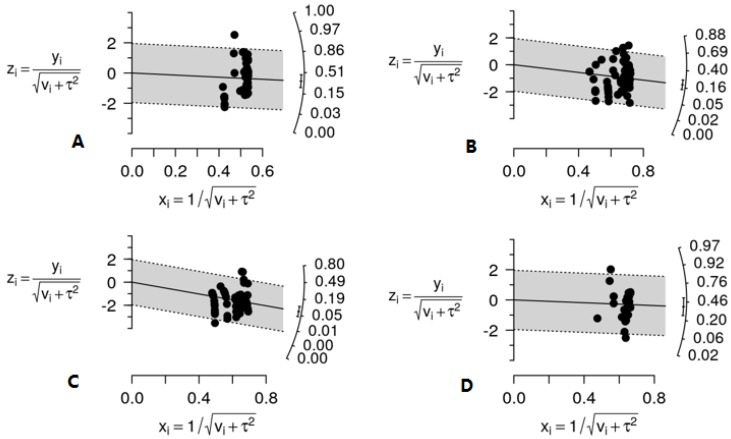
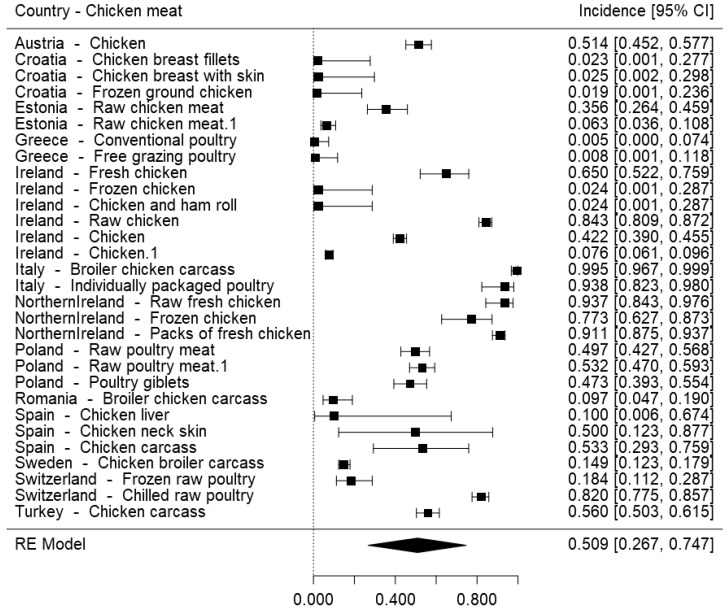
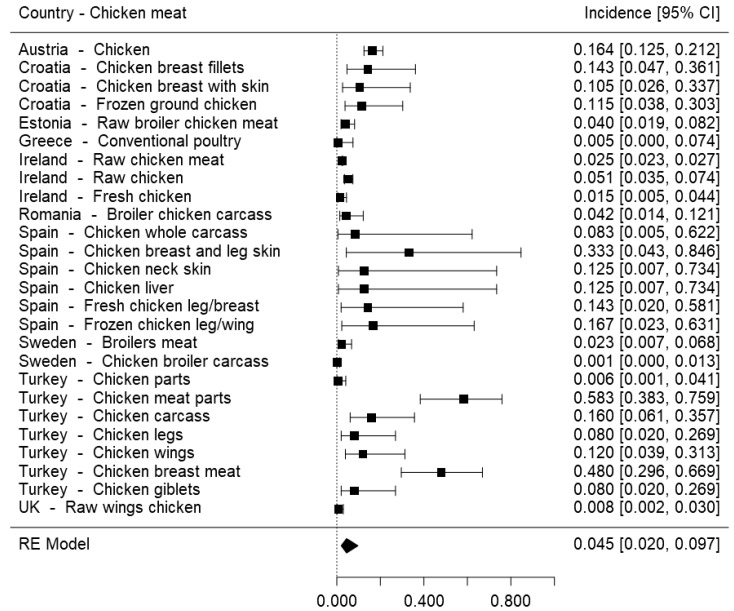
The objective of this study was to investigate and summarize the levels of incidence of Salmonella spp., Listeria monocytogenes, Staphylococcus aureus and Campylobacter spp. in poultry meat commercialized in Europe. After systematic review, incidence data and study characteristics were extracted from 78 studies conducted in 21 European countries. Pooled prevalence values from 203 extracted observations were estimated from random-effects meta-analysis models adjusted by pathogen, poultry type, sampling stage, cold preservation type, meat cutting type and packaging status. The results suggest that S. aureus is the main pathogen detected in poultry meat (38.5%; 95% CI: 25.4–53.4), followed by Campylobacter spp. (33.3%; 95% CI: 22.3–46.4%), while L. monocytogenes and Salmonella spp. present lower prevalence (19.3%; 95% CI: 14.4–25.3% and 7.10%; 95% CI: 4.60–10.8%, respectively). Despite the differences in prevalence, all pathogens were found in chicken and other poultry meats, at both end-processing step and retail level, in packed and unpacked products and in several meat cutting types. Prevalence data on cold preservation products also revealed that chilling and freezing can reduce the proliferation of pathogens but might not be able to inactivate them. The results of this meta-analysis highlight that further risk management strategies are needed to reduce pathogen incidence in poultry meat throughout the entire food chain across Europe, in particular for S. aureus and Campylobacter spp.
Overview
The claims and statistics of this paper haven’t been checked yet.
Run the check — free, no account needed. It reads the open-access text and checks the sources it cites.
Integrity signals
Registry
Cites
Statistics
Figures
Verification
Claims the paper makes
The claims and statistics of this paper haven’t been checked yet.
Run the check — free, no account needed. It reads the open-access text and checks the sources it cites.
Claims other papers make about this one
Each is checked against this paper’s own text: does it say what the citing paper says it does?
The cited source says what the claim attributes to it.
In the citing paper
“Chicken ingredients might be considered likely sources of Campylobacter given the well‐documented high prevalence of carcass contamination (Suzuki & Yamamoto 2009, Gonçalves‐Tenório et al. 2018)”
From Raw diets for dogs and cats: a review, with particular reference to microbiological hazards. (2019) · cites this paper as Gonçalves‐Tenório et al. 2018
Self-check
Percentages, sums and reported differences re-computed from the paper’s own numbers.
The self-check needs the paper’s full text.
Citations
Cites
Conducting Meta-Analyses in R with the metafor Package
Viechtbauer, W. (2010) · Journal of Statistical Software · doi:10.18637/jss.v036.i03 · Cited by 20,464
Staphylococcus aureus and its food poisoning toxins: characterization and outbreak investigation
Hennekinne, J., Buyser, M. D., & Dragacci, S. (2011) · FEMS Microbiology Reviews · doi:10.1111/j.1574-6976.2011.00311.x · Cited by 1,010
(EFSA), E. F. S. A. (2017) · EFSA Journal · doi:10.2903/j.efsa.2017.5077 · Cited by 889
Balaban, N., & Rasooly, A. (2000) · International Journal of Food Microbiology · doi:10.1016/s0168-1605(00)00377-9 · Cited by 838
Campylobacters as zoonotic pathogens: A food production perspective
Humphrey, T., O’Brien, S. J., & Madsen, M. (2007) · International Journal of Food Microbiology · doi:10.1016/j.ijfoodmicro.2007.01.006 · Cited by 769
Campylobacteriosis: the role of poultry meat
Skarp, C. P. A., Hänninen, M., & Rautelin, H. (2015) · Clinical Microbiology and Infection · doi:10.1016/j.cmi.2015.11.019 · Cited by 464
Bacterial Contaminants of Poultry Meat: Sources, Species, and Dynamics
Rouger, A., Tresse, O., & Zagorec, M. (2017) · Microorganisms · doi:10.3390/microorganisms5030050 · Cited by 430
Prevalence of methicillin-resistant Staphylococcus aureus in meat
Boer, E. D., Zwartkruis-Nahuis, J. T. M., Wit, B., Huijsdens, X. W., de Neeling, A. J., Bosch, T., van Oosterom, R. A. A., Vila, A., & Heuvelink, A. (2008) · International Journal of Food Microbiology · doi:10.1016/j.ijfoodmicro.2008.12.007 · Cited by 407
Jorgensen, F., Bailey, R. A., Williams, S., Henderson, P., Wareing, D. R. A., Bolton, F. J., Frost, J. A., Lr, W., & Humphrey, T. J. (2002) · International Journal of Food Microbiology · doi:10.1016/s0168-1605(02)00027-2 · Cited by 323
Occurrence of Listeria monocytogenes in fresh and processed foods in Navarra (Spain)
Vitas, A. I., & Aguado, V. (2003) · International Journal of Food Microbiology · doi:10.1016/s0168-1605(03)00314-3 · Cited by 261
Research works printed but not linked: 2
- Hocking, A.D. (2003). Chapter 12: Staphylococcus aureus and staphylococcal enterotoxins. Foodborne Microorganisms of Public Health Significance, Australian Institute of Food Science and Technology (NSW Branch). [6th ed.].
- Mbata, 2017, Poultry meat pathogens and its Control, Int. J. Food Saf., 7, 20
Cited by
Sorted by citations
Raw diets for dogs and cats: a review, with particular reference to microbiological hazards.
Davies, R. H., Lawes, J. R., & Wales, A. D. (2019) · Journal of Small Animal Practice · doi:10.1111/jsap.13000 · Cited by 195
İnci̇li̇, G. K., Karatepe, P., Akgöl, M., Güngören, A., Koluman, A., Ilhak, O. İ., Kanmaz, H., Kaya, B., & Hayaloğlu, A. A. (2022) · Food Microbiology · doi:10.1016/j.fm.2022.104001 · Cited by 131
The changing microbiome of poultry meat; from farm to fridge
Marmion, M., Ferone, M., Whyte, P., & Scannell, A. G. M. (2021) · Food Microbiology · doi:10.1016/j.fm.2021.103823 · Cited by 136
Gilbert, W., Thomas, L. F., Coyne, L., & Rushton, J. (2020) · animal · doi:10.1016/j.animal.2020.100123 · Cited by 115
Yang, X., Huang, J., Zhang, Y., Liu, S., Chen, L., Xiao, C., Zeng, H., Wei, X., Gu, Q., Li, Y., et al. (2020) · The Science of The Total Environment · doi:10.1016/j.scitotenv.2019.136385 · Cited by 117
İnci̇li̇, G. K., Karatepe, P., Akgöl, M., Kaya, B., Kanmaz, H., & Hayaloğlu, A. A. (2021) · International Journal of Biological Macromolecules · doi:10.1016/j.ijbiomac.2021.06.106 · Cited by 102
Liu, Y., Sun, W., Sun, T., Gorris, L. G. M., Wang, X., Liu, B., & Dong, Q. (2019) · International Journal of Food Microbiology · doi:10.1016/j.ijfoodmicro.2019.108358 · Cited by 94
Billah, M. M., & Rahman, M. S. (2024) · Journal of Hazardous Materials Advances · doi:10.1016/j.hazadv.2024.100407 · Cited by 114
Chowdhury, M. A. H., Ashrafudoulla, M., Mevo, S. I. U., Mizan, M. F. R., Park, S. H., & Ha, S. (2023) · Comprehensive Reviews in Food Science and Food Safety · doi:10.1111/1541-4337.13121 · Cited by 92
Sun, T., Liu, Y., Qin, X., Aspridou, Z., Zheng, J., Wang, X., Li, Z., & Dong, Q. (2021) · Foods · doi:10.3390/foods10112757 · Cited by 90
Shen, W., Chen, H., Geng, J., Wu, R. A., Wang, X., & Ding, T. (2021) · International Journal of Food Microbiology · doi:10.1016/j.ijfoodmicro.2021.109473 · Cited by 74
Golden, C. E., & Mishra, A. (2020) · Journal of Food Protection · doi:10.4315/jfp-19-538 · Cited by 70
Public health aspects of Vibrio spp. related to the consumption of seafood in the EU
(BIOHAZ), E. P. O. B. H., Koutsoumanis, K. P., Allende, A., Álvarez‐Ordóñez, A., Bolton, D., Bover‐Cid, S., Chemaly, M., Cesare, A. D., Herman, L., Hilbert, F., et al. (2024) · EFSA Journal · doi:10.2903/j.efsa.2024.8896 · Cited by 80
Kalia, V. C., Shim, W. Y., Patel, S. K. S., Gong, C., & Lee, J.-K. (2022) · The Science of The Total Environment · doi:10.1016/j.scitotenv.2022.155300 · Cited by 66
Zhao, X., Hu, M., Zhang, Q., Zhao, C., Zhang, Y., Li, L., Qi, J., Luo, Y., Zhou, D., & Liu, Y. (2020) · Poultry Science · doi:10.1016/j.psj.2020.09.071 · Cited by 57
“It has been widely reported that most of human salmonellosis is caused by infection derived from contaminated eggs, poultry meat, and meat products (Omwandho and Kubota, 2010; Kirk et al., 2015; Gonçalves-Ten orio et al., 2018).”
BackgroundZakrzewski, A., Gajewska, J., Chajęcka‐Wierzchowska, W., Załuski, D., & Zadernowska, A. (2023) · The Science of The Total Environment · doi:10.1016/j.scitotenv.2023.167912 · Cited by 54
Ibrahim, S., Hoong, L. W., Siong, Y. L., Mustapha, Z., Zalati, C. W. S. C. W., Aklilu, E., Mohamad, M., & Kamaruzzaman, N. F. (2021) · Antibiotics · doi:10.3390/antibiotics10050579 · Cited by 52
“Interestingly, the same trend does not appear to be so in Bangladesh, as a study showed a high prevalence (48%) of Salmonella isolated from poultry [24].”
BackgroundResultHessel, C. T., Elias, S. D. O., Pessoa, J. P., Zanin, L. M., Stedefeldt, E., & Tondo, E. C. (2019) · Food Research International · doi:10.1016/j.foodres.2019.108631 · Cited by 52
Perin, A. P., Martins, B. T. F., Barreiros, M. A. B., Yamatogi, R. S., Nero, L. A., & Bersot, L. D. S. (2019) · Brazilian Journal of Microbiology · doi:10.1007/s42770-019-00188-x · Cited by 52
Belina, D., Hailu, Y., Gobena, T., Hald, T., & Njage, P. M. K. (2021) · One Health Outlook · doi:10.1186/s42522-021-00048-5 · Cited by 58
Klaharn, K., Pichpol, D., Meeyam, T., Harintharanon, T., Lohaanukul, P., & Punyapornwithaya, V. (2022) · PLoS ONE · doi:10.1371/journal.pone.0269416 · Cited by 48
“5% in European countries and South Korea, respectively [6,14].”
BackgroundResultZelalem, A., Sisay, M., Vipham, J., Abegaz, K., Kebede, A., & Terefe, Y. (2019) · International Journal of Food Contamination · doi:10.1186/s40550-019-0071-z · Cited by 47
Jaber, H., Oubihi, A., Ouryemchi, I., Boulamtat, R., Oubayoucef, A., Bourkhiss, B., & Ouhssine, M. (2021) · Biochemistry Research International · doi:10.1155/2021/6685800 · Cited by 43
Sood, U., Gupta, V., Kumar, R., Lal, S., Fawcett, D., Rattan, S., Poinern, G. E. J., & Lal, R. (2019) · Indian Journal of Microbiology · doi:10.1007/s12088-019-00785-2 · Cited by 48
Amoako, D. G., Somboro, A. M., Abia, A. L. K., Molechan, C., Perrett, K., Bester, L. A., & Essack, S. Y. (2019) · Microbial Drug Resistance · doi:10.1089/mdr.2019.0201 · Cited by 40
“15 However, unlike other continents, the prevalence and antibiotic resistance of S. aureus infections in poultry in Africa are not monitored, 36 hence the difficulty in correlating our results with studies in South Africa and the African continent.”
Díaz, D., Hernández‐Carreño, P. E., Velazquez, D. Z., Chaidez‐Ibarra, M. A., Pardo, A. M., Martínez‐Villa, F. A., Canizalez‐Román, A., Ortiz-Navarrete, V. F., Rosiles, R., Camacho, S. M. G., et al. (2021) · Transboundary and Emerging Diseases · doi:10.1111/tbed.14362 · Cited by 39
The Influence of Selected Food Safety Practices of Consumers on Food Waste Due to Its Spoilage
Tomaszewska, M., Bilska, B., & Kołożyn‐Krajewska, D. (2022) · International Journal of Environmental Research and Public Health · doi:10.3390/ijerph19138144 · Cited by 45
“Even though, Polish consumers are generally aware of the fact that providing cooling temperatures during different processes, for example the storage of perishable food, slows down the growth and development of microbes [49].”
BackgroundZhang, H., Pan, S., Zhang, K., Michiels, J., Zeng, Q., Ding, X., Wang, J., Peng, H., Bai, J., Xuan, Y., et al. (2020) · Microorganisms · doi:10.3390/microorganisms8050757 · Cited by 35
“studies from various countries have indicated that food products of poultry origin are among the most common vehicles for transmission of Salmonella [1,2].”
BackgroundPanera-Martínez, S., Melcón, C. R., Serrano-Galán, V., Alonso‐Calleja, C., & Capita, R. (2021) · Food Control · doi:10.1016/j.foodcont.2021.108608 · Cited by 35
Quality and Safety of Meat Products
Panea, B., & Ripoll, G. (2020) · Foods · doi:10.3390/foods9060803 · Cited by 32
Peng, J., Xiao, R., Wu, C., Zheng, Z., Deng, Y., Chen, K., Xiang, Y., Xu, C., Zou, L., Liao, M., et al. (2024) · Food Research International · doi:10.1016/j.foodres.2024.114654 · Cited by 32
Kunadu, A. P., Otwey, R. Y., & Mosi, L. (2020) · Food Control · doi:10.1016/j.foodcont.2020.107440 · Cited by 31
Processing and retail strategies to minimizeCampylobactercontamination in retail chicken
Lu, T., Marmion, M., Ferone, M., Wall, P. G., & Scannell, A. G. M. (2019) · Journal of Food Processing and Preservation · doi:10.1111/jfpp.14251 · Cited by 30
Awad, A., Gwida, M., Khalifa, E., & Sadat, A. (2020) · Veterinary World · doi:10.14202/vetworld.2020.440-445 · Cited by 29
Iannetti, L., Schirone, M., Neri, D., Visciano, P., Acciari, V. A., Centorotola, G., Mangieri, M. S., Torresi, M., Santarelli, G. A., Marzio, V. D., et al. (2020) · Food Microbiology · doi:10.1016/j.fm.2020.103533 · Cited by 29
Quantitative microbiological slaughter process analysis in a large-scale Swiss poultry abattoir
Buess, S., Zurfluh, K., Stephan, R., & Guldimann, C. (2019) · Food Control · doi:10.1016/j.foodcont.2019.05.012 · Cited by 28
Deblais, L., Kathayat, D., Helmy, Y. A., Closs, G., & Rajashekara, G. (2020) · Animal Health Research Reviews · doi:10.1017/s1466252319000124 · Cited by 30
“, Staphylococcus aureus, Escherichia coli, and Clostridium perfringens have also been associated with foodborne illnesses related to poultry; however, the occurrence of these pathogens remain isolated and sporadic in poultry compared with Salmonella and Campylobacter and/or are caused by post-harvest cross contaminati…”
BackgroundHe, R., Zhong, Q., Chen, W., Zhang, M., Pei, J., Chen, H., & Chen, W. (2023) · LWT · doi:10.1016/j.lwt.2023.114492 · Cited by 28
Yadav, B., & Roopesh, M. S. (2021) · Food Microbiology · doi:10.1016/j.fm.2021.103976 · Cited by 26
de Lima, A. S., Maia, D. S. V., Haubert, L., Oliveira, T. L., Fiorentini, Â. M., Rombaldi, C. V., & da Silva, W. P. (2019) · LWT · doi:10.1016/j.lwt.2019.108884 · Cited by 25
Çufaoğlu, G., AMBARCIOĞLU, P., & Ayaz, N. D. (2021) · LWT · doi:10.1016/j.lwt.2021.111210 · Cited by 24
Xiao, X., Wang, W., Zhang, J., Liao, M., Rainwater, C. E., Yang, H., & Li, Y. (2020) · Food Control · doi:10.1016/j.foodcont.2020.107612 · Cited by 23
Walker, N., Li, S., Strauss, H., & Pokharel, S. (2021) · Food Microbiology · doi:10.1016/j.fm.2021.103862 · Cited by 23
Ansarifar, E., Riahi, S. M., Tasara, T., Sadighara, P., & Zeinali, T. (2023) · BMC Microbiology · doi:10.1186/s12866-023-02879-w · Cited by 23
“3%) represented the second most prevalent bacterial contamination of poultry meat based on a systematic review of European surveys [123].”
BackgroundResultInfluentialAyoub, H., Kumar, M. S., Dubal, Z. B., Bhilegaonkar, K. N., Nguyen‐Viet, H., Grace, D., Thapliyal, S., Sanjumon, E. S., Sneha, E. N. P., Premkumar, D., et al. (2025) · Foods · doi:10.3390/foods14040555 · Cited by 26
“[13].”
Shanmugasundaram, R., Acevedo-Villanueva, K. Y., Mortada, M., Akerele, G. O., Applegate, T. J., Kogut, M. H., & Selvaraj, R. K. (2021) · PLoS ONE · doi:10.1371/journal.pone.0260280 · Cited by 22
“Introduction Among the foodborne pathogens of poultry, Salmonella is the most important foodborne pathogen of concern to the poultry industry [1].”
BackgroundSoubeiga, A. P., Kpoda, D. S., Compaoré, M. K. A., Somda, A. B., Kaseko, N., Rouamba, S. S., Ouedraogo, S., Traoré, R., Karfo, P., NEZIEN, D., et al. (2022) · International Journal of Microbiology · doi:10.1155/2022/9640828 · Cited by 22
“Salmonellosis occurs after the consumption of food or water that has been contaminated by Salmonella [5].”
BackgroundSpada, E., Cianni, R. D., Vita, G. A. D., & Mancuso, T. (2024) · Foods · doi:10.3390/foods13071092 · Cited by 22
Skowron, K., Wałecka-Zacharska, E., Wiktorczyk-Kapischke, N., Skowron, K. J., Grudlewska‐Buda, K., Bauza-Kaszewska, J., Bernaciak, Z., Borkowski, M., & Gospodarek-Komkowska, E. (2020) · Foods · doi:10.3390/foods9091293 · Cited by 22
“monocytogenes was found to be the third most incident pathogen in overall poultry meats [28].”
BackgroundDetection of hepatitis E virus (rabbit genotype) in farmed rabbits entering the food chain
Bigoraj, E., Kozyra, I., Kwit, E., & Rzeżutka, A. (2020) · International Journal of Food Microbiology · doi:10.1016/j.ijfoodmicro.2020.108507 · Cited by 21
Alves, Â., Santos-Ferreira, N., Magalhães, R. M., Ferreira, V. B., & Teixeira, P. C. M. (2022) · Food Control · doi:10.1016/j.foodcont.2022.108959 · Cited by 21
Argyri, A. A., Papadopoulou, O. S., Sourri, P., Chorianopoulos, N., & Tassou, C. C. (2019) · Microorganisms · doi:10.3390/microorganisms7110520 · Cited by 20
“monocytogenes in chicken meat is not required to be reported to EFSA, little information is available about the prevalence in chicken meat [11].”
BackgroundNdraha, N., Lin, H., Tsai, S.-K., Hsiao, H., & Lin, H. ‐. (2023) · Foods · doi:10.3390/foods12213895 · Cited by 19
“In a recent study, Gonçalves-Ten ó rio et al. [5] focused on analyzing the prevalence of pathogens in poultry meat across European countries using a meta-analysis approach.”
BackgroundMethodInfluentialKelbert, L., Barmettler, K., Horlbog, J. A., Stevens, M. J. A., Cernela, N., Nüesch‐Inderbinen, M., & Stephan, R. (2025) · Journal of Food Protection · doi:10.1016/j.jfp.2025.100540 · Cited by 18
Mohammadi-Aragh, M. K., Linhoss, J. E., & Evans, J. D. (2022) · The Journal of Applied Poultry Research · doi:10.1016/j.japr.2022.100278 · Cited by 18
López-Alonso, V., Ortiz, S., Corujo, A., & Martı́nez-Suárez, J. V. (2020) · Journal of Food Protection · doi:10.4315/0362-028x.jfp-19-289 · Cited by 17
Mahmoud, U. T., Darwish, M., Ali, F. A. Z., Amen, O. A., Mahmoud, M. A. M., Ahmed, O. B., El-Reda, G. A., Osman, M. A., Othman, A. A., Abushahba, M. F. N., et al. (2021) · Avian Pathology · doi:10.1080/03079457.2021.1875123 · Cited by 17
“As such, MRSA is not only considered a hospital-acquired pathogen but also a veterinary and zoonotic pathogen of concern (Chon et al., 2017; Gonçalves-Tenório et al., 2018).”
BackgroundTayeb, B. A., Mohamed-Sharif, Y. H., Choli, F. R., Haji, S. S., Ibrahim, M. M., Haji, S. K., Rasheed, M. J., & Mustafa, N. A. (2023) · Foodborne Pathogens and Disease · doi:10.1089/fpd.2023.0004 · Cited by 16
“…of food research, this type of analysis may serve various purposes, including addressing research questions related to disease prevalence, incidence rate, microbial loads in foodstuffs, pre-/post-harvest treatment efficacy, risk assessment, and consumer habits (Gonc¸alves-Teno´rio et al., 2018).”
Prevalence and serotype of poultry salmonellosis in Africa: a systematic review and meta-analysis
Kabeta, T., Tolosa, T., Duchateau, L., Immerseel, F. V., & Antonissen, G. (2024) · Avian Pathology · doi:10.1080/03079457.2024.2344549 · Cited by 18
“In contrast, a lower PPE of 7.0% was reported from Europe by Gonçalves-Tenório et al. (2018) who found the pathogens in chicken and other poultry meats, at both end-processing step and retail levels, in packed and unpacked products.”
InfluentialLytou, A. E., Renieri, C. T., Doulgeraki, A. I., Nychas, G. E., & Panagou, E. Ζ. (2020) · International Journal of Food Microbiology · doi:10.1016/j.ijfoodmicro.2019.108506 · Cited by 16
Ahmed, M. J., Hossain, M. I., Bhuiyan, M. I. H., Rahman, M. A., Kaderi, I. J., Nirob, A. I., Rahi, M. A. I., Mamun, M., Alam, K. E., Chowdhury, M. J., et al. (2025) · Poultry Science · doi:10.1016/j.psj.2025.105811 · Cited by 17
“(Xavier et al., 2014; Gonçalves-Ten ´ orio et al., 2018; Yang et al., 2019; Zelalem et al., 2019), and a higher rate was detected in Pakistan at 51.4 % (Fatima et al., 2023).”
InfluentialQueenan, K., Cuevas, S., Mabhaudhi, T., Chimonyo, M., Slotow, R., & Häsler, B. (2021) · Frontiers in Sustainable Food Systems · doi:10.3389/fsufs.2021.650469 · Cited by 17
Wang, W., Cui, J. H., Liu, F., Hu, Y., Li, F., Zhou, Z., Deng, X., Dong, Y., Li, S., & Xiao, J. (2023) · Frontiers in Microbiology · doi:10.3389/fmicb.2023.1295769 · Cited by 14
Microbial and Sensory Quality Changes in Broiler Chicken Breast Meat During Refrigerated Storage
Augustyńska-Prejsnar, A., Kačániová, M., Hanus, P., Sokołowicz, Z., & Słowiński, M. (2024) · Foods · doi:10.3390/foods13244063 · Cited by 14
“While chill line controls used during butchering increase microbiota selection pressure, chilling remains one of the best ways to reduce microbial contamination of chicken carcasses during processing [4,5,35].”
Ogu, G. I., & Akinnibosun, F. I. (2019) · Notulae Scientia Biologicae · doi:10.15835/nsb11210469 · Cited by 13
“Though they serve as important food nutrient for humans, studies have shown that consumption of poorly processed chicken meat and products could serve as a veritable route for most human food-borne illnesses (Stoica et al., 2015; USDA, 2015; Nidaullah et al., 2017; Gonçalves-Tenório et al., 2018).”
BackgroundShi, S., Zhou, D., Xu, Y., Dong, J., Han, Y., He, G., Li, W., Hu, J., Liu, Y., & Zhao, K. (2022) · Animals · doi:10.3390/ani12192528 · Cited by 13
“Epidemiological studies in various countries have shown that poultry-derived food is one of the commonest vectors of Salmonella [2].”
BackgroundChuang, S., Sheen, S., Sommers, C. H., & Sheen, L. (2020) · LWT · doi:10.1016/j.lwt.2020.110601 · Cited by 13
Botta, C., Buzzanca, D., Chiarini, E., Chiesa, F., Rubiola, S., Ferrocino, I., Fontanella, E., Rantsiou, K., Houf, K., & Alessandria, V. (2024) · Applied and Environmental Microbiology · doi:10.1128/aem.00296-24 · Cited by 12
“In poultry slaughterhouses, pathogens such as Campylobacter , Salmonella , and Listeria monocytogenes have been reported as commonly present (15, 16).”
BackgroundReiche, T., Hageskal, G., Mareș, M., Hoel, S., Tøndervik, A., Heggeset, T. M. B., Haugen, T., Sperstad, S. B., Trøen, H. H., Bjørkøy, S., et al. (2025) · Applied and Environmental Microbiology · doi:10.1128/aem.02401-24 · Cited by 12
“Other pathogens that may be of risk for consumers include Escherichia coli , Salmonella enterica , Staphylococcus aureus, and Enterococcus faecalis (4–6).”
AL-Hijazeen, M. A., Mendonça, A. F., Lee, E. J., Ahn, D. U., & White, S. (2022) · Food Control · doi:10.1016/j.foodcont.2022.109059 · Cited by 12
Martínez‐Laorden, A., Arraiz‐Fernandez, C., Cantalejo, M. J., & González‐Fandos, E. (2024) · International Journal of Food Science & Technology · doi:10.1111/ijfs.17013 · Cited by 11
Poultry as A Source and Reservoir for Campylobacteriosis
Amjad, M., & Zia, U.-U.-R. (2023) · European Journal of Veterinary Medicine · doi:10.24018/ejvetmed.2023.3.1.87 · Cited by 11
Tsafrakidou, P., Sameli, N., Kakouri, A., Bosnea, L. A., & Samelis, J. (2023) · Applied Microbiology · doi:10.3390/applmicrobiol3040088 · Cited by 10
“…cooking and thus the incidence of L. monocytogenes in chicken meat is not required to be reported to the European Food Safety Authority (EFSA) [52,80], further systematic surveillance and challenge data on the prevalence and control of this stress-resistant pathogen [30] in alternative poultry…”
BackgroundViability and Virulence of Listeria monocytogenes in Poultry
Panera-Martínez, S., Capita, R., García-Fernández, C., & Alonso‐Calleja, C. (2023) · Microorganisms · doi:10.3390/microorganisms11092232 · Cited by 12
“This widespread presence may be related to the ubiquity of these bacteria and to fecal contamination during evisceration, since birds can be carriers of this microorganism [37,38].”
Decontamination of egg‐associated pathogens by plasma‐activated water and hydrogen peroxide
Nasiru, M. M., Boateng, E. F., Umair, M., Alnadari, F., Bassey, A. P., Qian, J., Yan, W., Li, C., & Zhang, J. (2024) · Journal of Food Safety · doi:10.1111/jfs.13136 · Cited by 9
Melcón, C. R., Esteves, A., Panera-Martínez, S., Capita, R., & Alonso‐Calleja, C. (2022) · Antibiotics · doi:10.3390/antibiotics11121828 · Cited by 9
Subramaniam, R., Jambari, N. N., Hao, K. C., Abidin, U. F. U. Z., & Nor‐Khaizura, M. A. R. (2023) · Food Control · doi:10.1016/j.foodcont.2023.109647 · Cited by 9
Bradford, L. M., Yao, L., Anastasiadis, C., Cooper, A. L., Blais, B. W., Deckert, A., Reid‐Smith, R. J., Lau, C., Diarra, M. S., Carrillo, C. D., et al. (2024) · Microbiology Spectrum · doi:10.1128/spectrum.01027-24 · Cited by 8
“Poultry products are also commonly contaminated with Staphylococcus aureus, Listeria monocytogenes, Clostridium perfringens, and pathogenic Escherichia coli (18).”
Soares, V. M., Padilha, M. B., Guerra, M. E. D. M., Schneider, F. A., Gasparetto, R., dos Santos, E. A. R., Tadielo, L. E., Brum, M. C. S., Traesel, C. K., & Pereira, J. G. (2021) · Ciência Rural · doi:10.1590/0103-8478cr20200569 · Cited by 8
Chiok, K. L., & Shah, D. H. (2019) · Poultry Science · doi:10.3382/ps/pez119 · Cited by 8
“Enteritidis infection in chickens is relevant for public health because human infections are associated with consumption of contaminated eggs and meat [(Shah et al., 2017b; Goncalves-Tenorio et al., 2018) and reviewed in Chousalkar et al.”
BackgroundAkhlaghi, H., Javan, A. J., & Chashmi, S. H. E. (2024) · International Journal of Food Microbiology · doi:10.1016/j.ijfoodmicro.2024.110573 · Cited by 8
Quality and Safety of Meat Products
Panea, B., & Ripoll, G. (2018) · Foods · doi:10.3390/foods7080118 · Cited by 8
“Other important pathogens in meat and meat products, such as Salmonella spp., Listeria monocytogenes, Staphylococcus aureus and Campylobacter spp. are considered in the review entitled Prevalence of Pathogens in Poultry Meat: A Meta-Analysis of European Published Surveys [3].”
BackgroundChea, B., Kong, S., Thim, S., Ban, N., Chrun, R., Venn, V., Fernandez-Colorado, C. P., & Kang, K. (2025) · Veterinary World · doi:10.14202/vetworld.2025.918-926 · Cited by 7
Li, S., Konoval, H. M., Marecek, S., Lathrop, A., & Pokharel, S. (2022) · Foods · doi:10.3390/foods11060879 · Cited by 7
Çufaoğlu, G., AMBARCIOĞLU, P., DERİNÖZ, A. N., & Ayaz, N. D. (2022) · Tarım Bilimleri Dergisi · doi:10.15832/ankutbd.1108594 · Cited by 7
Pigłowski, M., Nogales, A., & Śmiechowska, M. (2025) · Sustainability · doi:10.3390/su17030889 · Cited by 8
The Role of Farm Environment and Management in Shaping the Gut Microbiota of Poultry
Carrasco, J. M. D., Redondo, L. M., Casanova, N. A., & Fernández-Miyakawa, M. E. (2022) · The microbiomes of humans, animals, plants, and the environment · doi:10.1007/978-3-030-90303-9_10 · Cited by 8
Agyemang, K., Donkor, P. O., Ayim, I., Adzitey, F., Lin, L., & Cui, H. (2020) · Journal of Food Processing and Preservation · doi:10.1111/jfpp.14489 · Cited by 7
RetractedKiskinis, K., Mantzios, T., Economou, V., Petridou, E., Tsitsos, A., Patsias, A., Αποστόλου, Ι., Papadopoulos, G. Α., Giannenas, Ι., Fortomaris, P. D., et al. (2024) · Animals · doi:10.3390/ani14111611 · Cited by 6
“Currently, the most prevalent and noteworthy foodborne zoonotic poultry pathogens are Campylobacter spp., Salmonella spp., E. coli , Staphylococcus spp., and Listeria spp. [3,4].”
BackgroundLayer segmented filamentous bacteria colonize and impact gut health of broiler chickens
Jochum, J., Skow, C., & Mellata, M. (2024) · mSphere · doi:10.1128/msphere.00492-24 · Cited by 7
“The ability of the D-SFB treatment to increase host resistance to bacterial pathogens relevant to poultry (24) was tested in vitro using blood serum against avian pathogenic Escherichia coli (APEC) that cause extraintestinal infections and colibacillosis in chickens (25) and ileal mucosal scrapings…”
Phage Biotechnology to Mitigate Antimicrobial Resistance in Agriculture
Premaratne, A., Zhang, H., Wang, R., Chinivasagam, H. N., & Billington, C. (2021) · Sustainable agriculture reviews · doi:10.1007/978-3-030-58259-3_9 · Cited by 7
A systematic review and Bayesian meta-analysis about Salmonella spp. prevalence on raw chicken meat
Hessel, C. T., Costa, E. D. F., Boff, R., Pessoa, J. P., & Tondo, E. C. (2022) · Microbial Risk Analysis · doi:10.1016/j.mran.2022.100205 · Cited by 6
A meta-analysis of the effect of gamma irradiation on chicken meat quality: Microbiology and colour
Dimov, K. G., & Popova, T. L. (2022) · Food Science and Applied Biotechnology · doi:10.30721/fsab2022.v5.i2.185 · Cited by 6
Food Safety Awareness, Food Policies, and Gender: A Review and an Empirical Examination from Nepal
Khanal, A. R., Gurung, R. K., Timilsina, R. H., & Poudel, S. R. (2023) · Nepal Public Policy Review · doi:10.59552/nppr.v3i1.62 · Cited by 6
Chiarini, E., Buzzanca, D., Chiesa, F., Botta, C., Rantsiou, K., Houf, K., & Alessandria, V. (2024) · Food Control · doi:10.1016/j.foodcont.2024.110500 · Cited by 6
The occurrence of some foodborne pathogens recovered from poultry meat in Shahrekord, Iran
Nourbakhsh, S. A., & Rahimi, E. (2023) · Journal of Advanced Veterinary and Animal Research · doi:10.5455/javar.2023.j670 · Cited by 5
Zhan, Z., He, S., Hu, M. S., Cui, Y., Tai, C., & Shi, X. (2025) · Journal of Future Foods · doi:10.1016/j.jfutfo.2025.07.009 · Cited by 6
López-Alonso, V., Ortiz, S., & Martı́nez-Suárez, J. V. (2019) · Microbiology Resource Announcements · doi:10.1128/mra.00088-19 · Cited by 5
“monocytogenes is also frequently found in raw chicken and other poultry meat in retail stores (3).”
BackgroundMwangi, A. W., Kunyanga, C. N., Sogin, J. H., Ngala, S., Aliwa, B. O., Onsaŕe, R., & Ndiritu, A. K. (2025) · Critical Reviews in Food Science and Nutrition · doi:10.1080/10408398.2025.2539402 · Cited by 4
“These findings differ slightly from a meta-analysis conducted by Gonçalves-Tenório et al. (2018) in high income countries, which reported a pooled prevalence of 48.6% Campylobacter contamination of chicken meat.”
InfluentialBuzzanca, D., Chiarini, E., Mania, I., Chiesa, F., & Alessandria, V. (2023) · Microbiology Research · doi:10.3390/microbiolres14030089 · Cited by 4
“Among animal products, poultry meat is considered a vector of human bacterial pathogens [9].”
Metadata
- Authors
- Gonçalves-Tenório, A., Silva, B., Rodrigues, V., Cadavez, V., & Gonzales-Barron, U.
- Affiliations
- Universidade Politécnica de Bragança (PT)
- CIMO Mountain Research Centre, School of Agriculture, Polytechnic Institute of Bragança, Campus de Santa Apolónia, 5301-855 Bragança, Portugal
- Venue
- Foods
- Publisher
- MDPI AG
- Published
- 2018-05-03
- Volume
- 7
- Issue
- 5
- Pages
- 69
- ISSN
- 2304-8158 (ISSN-L)
- PMC
- PMC5977089
- OpenAlex
- W2800674284
- Cited by
- 154
- References
- 103
- Citations by year
- 2026: 12 · 2025: 25 · 2024: 22 · 2023: 22 · 2022: 19 · 2021: 18 · 2020: 18 · 2019: 15 · 2018: 3
- FWCI
- 1.37
- Type
- journal article
- Language
- en
- Open access
- gold
- doi.org
- Licence
- Locations
- Foods (publishedVersion, cc-by)
- PubMed Central (publishedVersion, cc-by)
- PubMed (publishedVersion)
- DOAJ (DOAJ: Directory of Open Access Journals) (submittedVersion)
- Funders
- Fundação para a Ciência e a Tecnologia (IF/00570)
- Topics
- Life Sciences › Agricultural and Biological Sciences › Food Science › Salmonella and Campylobacter epidemiology
- Life Sciences › Agricultural and Biological Sciences › Food Science › Listeria monocytogenes in Food Safety
- Life Sciences › Agricultural and Biological Sciences › Food Science › Food Safety and Hygiene
- Keywords
- poultry meat, foodborne pathogens, prevalence, Salmonella, Listeria monocytogenes, Staphylococcus aureus, Campylobacter, retail meat, cold preservation, chilling, freezing, meat packaging, food safety risk management, Europe
About these checks
Registry, retraction, Cites and statistics results are computed, not judged, with one exception: a printed reference that no index lists is read once by a model before it counts as a citation error. Claims are extracted by a model and kept only when their quote appears verbatim in the text; each cited source is then checked, with a model’s help, for whether it says what the claim relies on. Those verdicts can be wrong — read the claim’s quote and the cited source before relying on one.
Statistics and arithmetic are recomputed, not judged.
Confidence bands are shown only for fields calibrated on our annotated test set. None is calibrated yet, so no band is shown.
What counts as a claim ›How we measure confidence ›How we check this ›
Are you an author, or do you see a problem with this page? Request a review
