

Microbial Community Analysis of Sauerkraut Fermentation Reveals a Stable and Rapidly Established Community
Open accessThe DOI matches its Crossref record; 24 of the 25 references it cites were found in a registry or an index.
Abstract
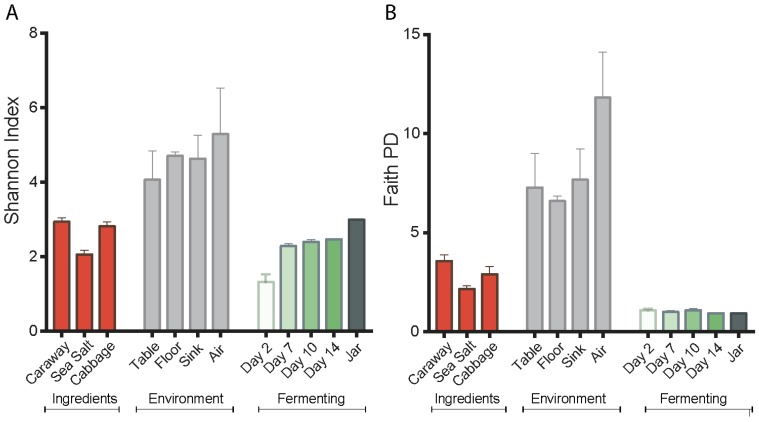
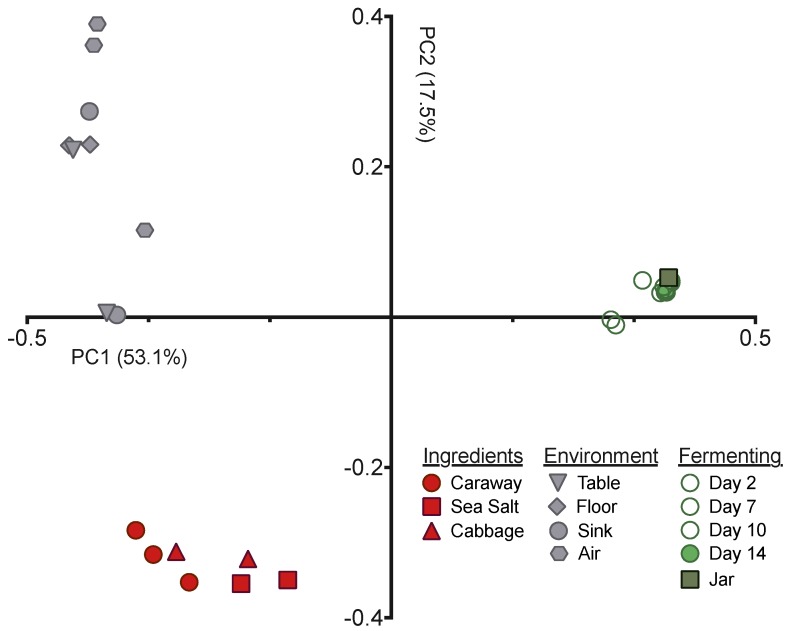
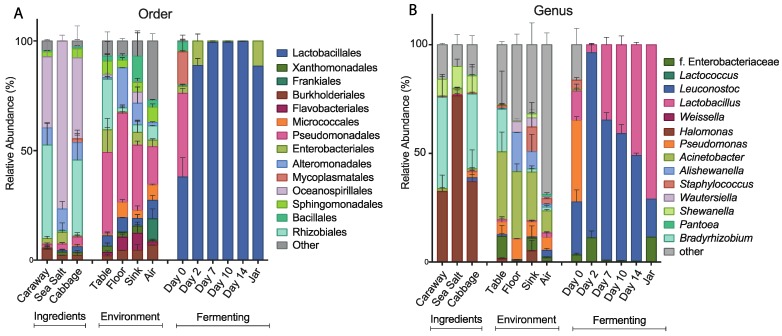
Despite recent interest in microbial communities of fermented foods, there has been little inquiry into the bacterial community dynamics of sauerkraut, one of the world’s oldest and most prevalent fermented foods. In this study, we utilize 16S rRNA amplicon sequencing to profile the microbial community of naturally fermented sauerkraut throughout the fermentation process while also analyzing the bacterial communities of the starting ingredients and the production environment. Our results indicate that the sauerkraut microbiome is rapidly established after fermentation begins and that the community is stable through fermentation and packaging for commercial sale. Our high-throughput analysis is in agreement with previous studies that utilized traditional microbiological assessments but expands the identified taxonomy. Additionally, we find that the microbial communities of the starting ingredients and the production facility environment exhibit low relative abundance of the lactic acid bacteria that dominate fermented sauerkraut.
Overview
The claims and statistics of this paper haven’t been checked yet.
Free: it reads the open-access text and checks the first 5 claims that cite a source we can check. Create a free account to check every claim.
Integrity signals
Registry
Cites
Statistics
Figures
Verification
Claims the paper makes
The claims and statistics of this paper haven’t been checked yet.
Free: it reads the open-access text and checks the first 5 claims that cite a source we can check. Create a free account to check every claim.
Claims other papers make about this one
Each is checked against this paper’s own text: does it say what the citing paper says it does?
The cited source says what the claim attributes to it.
In the citing paper
“Sauerkraut has also been shown to predominantly contain Leuconostoc and Lactobacillus spp. [18,19,90,91].”
From Fermented foods: definitions and characteristics, impact on the gut microbiota and effects on gastrointestinal health and disease (2019) · cites this paper as [90]
Self-check
Percentages, sums and reported differences re-computed from the paper’s own numbers.
The self-check needs the paper’s full text.
Citations
Cites
QIIME allows analysis of high-throughput community sequencing data
Caporaso, J. G., Kuczynski, J., Stombaugh, J., Bittinger, K., Bushman, F. D., Costello, E. K., Fierer, N., Peña, A. G., Goodrich, J. K., Gordon, J. I., et al. (2010) · Nature Methods · doi:10.1038/nmeth.f.303 · Cited by 34,887
Ultra-high-throughput microbial community analysis on the Illumina HiSeq and MiSeq platforms
Caporaso, J. G., Lauber, C. L., Walters, W. A., Berg-Lyons, D., Huntley, J., Fierer, N., Owens, S. M., Betley, J., Fraser, L., Bauer, M., et al. (2012) · The ISME Journal · doi:10.1038/ismej.2012.8 · Cited by 8,839
A communal catalogue reveals Earth's multiscale microbial diversity
Thompson, L. R., Sanders, J. G., McDonald, D., Amir, A., Ladau, J., Locey, K. J., Prill, R. J., Tripathi, A., Gibbons, S. M., Ackermann, G., et al. (2017) · Nature · doi:10.1038/nature24621 · Cited by 2,684
Walters, W., Hyde, E. R., Berg-Lyons, D., Ackermann, G., Humphrey, G., Parada, A., Gilbert, J. A., Jansson, J. K., Caporaso, J. G., Fuhrman, J. A., et al. (2016) · mSystems · doi:10.1128/msystems.00009-15 · Cited by 2,191
Trends in the Use of Complementary Health Approaches Among Adults in the United States: New Data
Jackson, C. (2015) · Holistic Nursing Practice · doi:10.1097/hnp.0000000000000088 · Cited by 1,166
(2015) · PubMed · Cited by 926
Lactic acid bacteria as probiotics.
Ljungh, Å., & Wadström, T. (2006) · PubMed · Cited by 551
Application of bacteriocins in vegetable food biopreservation
Settanni, L., & Corsetti, A. (2008) · International Journal of Food Microbiology · doi:10.1016/j.ijfoodmicro.2007.09.001 · Cited by 441
Cheigh, H., Park, K., & Lee, C. Y. (1994) · Critical Reviews in Food Science and Nutrition · doi:10.1080/10408399409527656 · Cited by 413
Kim, M., & Chun, J. (2005) · International Journal of Food Microbiology · doi:10.1016/j.ijfoodmicro.2004.11.030 · Cited by 251
Research works printed but not linked: 1
- Pederson C.S. Albury M.N. Bulletin: Number 824: The Sauerkraut Fermentation Agricultural Experiment Station New York, NY, USA 1969
Cited by
Marco, M. L., Sanders, M. E., Gänzle, M., Arrieta, M. C., Cotter, P. D., De Vuyst, L., Hill, C., Holzapfel, W., Lebeer, S., Merenstein, D., et al. (2021) · Nature Reviews Gastroenterology & Hepatology · doi:10.1038/s41575-020-00390-5 · Cited by 937
Dimidi, E., Cox, S., Rossi, M., & Whelan, K. (2019) · Nutrients · doi:10.3390/nu11081806 · Cited by 801
“Sauerkraut has also been shown to predominantly contain Leuconostoc and Lactobacillus spp. [18,19,90,91].”
BackgroundVoidarou, C., Antoniadou, Μ., Rozos, G., Tzora, A., Skoufos, I., Varzakas, T., Lagiou, A., & Bezirtzoglou, E. (2020) · Foods · doi:10.3390/foods10010069 · Cited by 281
“[193] utilized 16S rRNA amplicon sequencing to profile the microbial community of naturally fermented sauerkraut throughout the fermentation process and analysed the bacterial communities of the starting ingredients and the production environment.”
MethodShah, A. B., Baiseitova, A., Zahoor, M., Ahmad, I., Ikram, M., Bakhsh, A., Shah, M. A., Ali, I., Idress, M., Ullah, R., et al. (2024) · Gut Microbes · doi:10.1080/19490976.2024.2431643 · Cited by 185
Fermented foods: An update on evidence-based health benefits and future perspectives
Diez-Ozaeta, I., & Astiazaran, O. J. (2022) · Food Research International · doi:10.1016/j.foodres.2022.111133 · Cited by 162
Peters, A., Krumbholz, P., Jäger, E., Heintz-Buschart, A., Çakir, M. V., Rothemund, S., Gaudl, A., Ceglarek, U., Schöneberg, T., & Stäubert, C. (2019) · PLOS Genetics · doi:10.1371/journal.pgen.1008145 · Cited by 168
A Holistic Review on Euro-Asian Lactic Acid Bacteria Fermented Cereals and Vegetables
Ashaolu, T., & Reale, A. (2020) · Microorganisms · doi:10.3390/microorganisms8081176 · Cited by 155
“[67] highlighted that although LAB exhibit low relative abundance in the starting ingredients, and in the production facility environment, they are able to dominate the fermented sauerkraut, confirming the high capability of LAB to cope with the strong selective pressures of high salinity and acidity during fermentati…”
BackgroundMicrobiome Assembly in Fermented Foods
Louw, N. L., Lele, K., Ye, R., Edwards, C. B., & Wolfe, B. E. (2023) · Annual Review of Microbiology · doi:10.1146/annurev-micro-032521-041956 · Cited by 151
Liu, S., Hu, J., Zhong, Y., Hu, X., Yin, J., Xiong, T., Nie, S., & Xie, M. (2023) · Food Chemistry · doi:10.1016/j.foodchem.2023.137453 · Cited by 120
Putative probiotic lactic acid bacteria isolated from sauerkraut fermentations
Touret, T., Oliveira, M., & Semedo-Lemsaddek, T. (2018) · PLOS ONE · doi:10.1371/journal.pone.0203501 · Cited by 108
Park, I., & Mannaa, M. (2025) · Foods · doi:10.3390/foods14132292 · Cited by 114
“Traditional fermented vegetables, such as Korean kimchi and European sauerkraut, are primarily dominated by LAB, including species within the genera Lactobacillus , Leu-conostoc , Weissella , and Pediococcus [14,47].”
Mi, T., Wang, D., Yao, S., Yang, H., Che, Y., & Wu, C. (2022) · Food Research International · doi:10.1016/j.foodres.2022.111622 · Cited by 93
Mohammadkhah, A. I., Simpson, E. B., Patterson, S. G., & Ferguson, J. F. (2018) · Children · doi:10.3390/children5120160 · Cited by 95
“Fermented foods act as a natural source of probiotics, with fermented dairy products [100,101] and vegetables [102,103] contributing bacteria to the diet, although the extent to which these bacteria survive and colonize the gut in individuals with established microbiomes is unclear [104].”
BackgroundXu, J., Peng, S., Xiong, Y., Zheng, Z., Liu, M., Xu, J., Chen, W., Liu, M., Kong, J., Wang, C., et al. (2024) · Comprehensive Reviews in Food Science and Food Safety · doi:10.1111/1541-4337.13362 · Cited by 100
Opportunities and Challenges of Understanding Community Assembly in Spontaneous Food Fermentation
Sooresh, M. M., Willing, B. P., & Bourrie, B. C. T. (2023) · Foods · doi:10.3390/foods12030673 · Cited by 102
“Enterobacteria are commonly detected in the initial phases of several spontaneous fermentations including beer [18], mahewu [30], sauerkraut [35], cocoa bean [36], carrot juice [37] and kimchi [38] due to their association with the raw materials [5].”
BackgroundChemical composition and sensory quality of sauerkraut produced from different cabbage varieties
Satora, P., Skotniczny, M., Strnad, S., & Piechowicz, W. (2020) · LWT · doi:10.1016/j.lwt.2020.110325 · Cited by 84
Tang, Y., Chen, G., Wang, D., Hu, R., Li, H., Liu, S., Zhang, Q., Ming, J., & Chi, Y. (2022) · LWT · doi:10.1016/j.lwt.2022.113084 · Cited by 80
Xu, X., Peng, Q., Zhang, Y., Tian, D., Zhang, P., Huang, Y., Ma, L., Dia, V. P., Qiao, Y., & Shi, B. (2020) · Food & Function · doi:10.1039/d0fo00905a · Cited by 70
Metabolic Conversions by Lactic Acid Bacteria during Plant Protein Fermentations
Engels, W., Siu, J., van Schalkwijk, S., Wesselink, W., Jacobs, S., & Bachmann, H. (2022) · Foods · doi:10.3390/foods11071005 · Cited by 81
“For example, species of the genera Leuconostoc, Weissella, and Lactobacillus have been reported to play a crucial role in the production of vegetable-based products, namely kimchi and sauerkraut [7,8].”
BackgroundLactofermentation of vegetables: An ancient method of preservation matching new trends
Thierry, A., Baty, C., Marché, L., Chuat, V., Picard, O., Lortal, S., & Valence, F. (2023) · Trends in Food Science & Technology · doi:10.1016/j.tifs.2023.07.009 · Cited by 64
Ezekiel, C. N., Ayeni, K. I., Ezeokoli, O. T., Sulyok, M., van Wyk, D. A. B., Oyedele, O. A., Akinyemi, M. O., Chibuzor‐Onyema, I. E., Adeleke, R. A., Nwangburuka, C. C., et al. (2019) · Frontiers in Microbiology · doi:10.3389/fmicb.2018.03282 · Cited by 63
Rodzi, N. A. R. M., & Lee, L. K. (2021) · Food Research International · doi:10.1016/j.foodres.2021.110814 · Cited by 68
Chen, J. M., Al, K. F., Craven, L. J., Seney, S. L., Coons, M., McCormick, H., Reid, G., O’Connor, C. P., & Burton, J. P. (2020) · Nutrients · doi:10.3390/nu12030648 · Cited by 62
“The lactic acid preservative effects lower the pH levels past the point of optimal growth for other microorganisms [33].”
BackgroundTlais, A. Z. A., Lemos, W. J. F., Filannino, P., Campanaro, S., Gobbetti, M., & Cagno, R. D. (2022) · Microbiology Spectrum · doi:10.1128/spectrum.00168-22 · Cited by 67
“and lactobacilli as the dominant microorganisms in the early and middle/late stages of sauerkraut fermentation, respectively (7, 8).”
BackgroundGaudioso, G., Weil, T., Marzorati, G., Solovyev, P. A., Bontempo, L., Franciosi, E., Bertoldi, L., Pedrolli, C., Tuohy, K. M., & Fava, F. (2022) · Frontiers in Microbiology · doi:10.3389/fmicb.2022.929738 · Cited by 60
“(SK1) or day 14 (SK2) until day 35, thus reflecting increased evenness amongst the LAB actively involved in the fermentation (Zabat et al., 2018).”
BackgroundResultEco-Evolutionary Dynamics in Microbial Communities from Spontaneous Fermented Foods
Alekseeva, A. Y., Groenenboom, A. E., Smid, E. J., & Schoustra, S. E. (2021) · International Journal of Environmental Research and Public Health · doi:10.3390/ijerph181910093 · Cited by 59
Miller, E. R., Kearns, P. J., Niccum, B. A., O’Mara Schwartz, J., Ornstein, A., & Wolfe, B. E. (2019) · Applied and Environmental Microbiology · doi:10.1128/aem.00269-19 · Cited by 49
“These genera contain species that are important for vegetable fermentation, including Leuconostoc mesenteroides, a common heterofermentative LAB detected in the early stages of many fermented vegetables (48), and Lactobacillus plantarum, a homofermentative LAB that is typically found in the later stages of fermentatio…”
BackgroundMicrobial communities of a variety of 75 homemade fermented vegetables
Thierry, A., Madec, M., Chuat, V., Bage, A.-S., Picard, O., Grondin, C., Rué, O., Mariadassou, M., Marché, L., & Valence, F. (2023) · Frontiers in Microbiology · doi:10.3389/fmicb.2023.1323424 · Cited by 52
Gut Microbiota and Microbial Metabolism in Early Risk of Cardiometabolic Disease
Gabriel, C. L., & Ferguson, J. F. (2023) · Circulation Research · doi:10.1161/circresaha.123.322055 · Cited by 55
Rojas, A. A. R., Swidah, R., & Schindler, D. (2022) · Frontiers in Bioengineering and Biotechnology · doi:10.3389/fbioe.2022.982975 · Cited by 50
Astudillo-Melgar, F., Ochoa‐Leyva, A., Utrilla, J., & Huerta‐Beristain, G. (2019) · Frontiers in Microbiology · doi:10.3389/fmicb.2019.00531 · Cited by 52
Are Fermented Foods Effective against Inflammatory Diseases?
Paul, A. K., Lim, C. L., Apu, M. A. I., Dolma, K. G., Gupta, M., Pereira, M. D. L., Wilairatana, P., Rahmatullah, M., Wiart, C., & Nissapatorn, V. (2023) · International Journal of Environmental Research and Public Health · doi:10.3390/ijerph20032481 · Cited by 75
“Lactobacillus, Pediococcus, Bifidobacterium, Lactococcus, Streptococcus, and Leuconostoc are the probiotic bacteria most often isolated from fermented foods and animal/human digestive systems [70,71].”
BackgroundMichels, K. B., Willett, W. C., Vaidya, R. L., Zhang, X., & Giovannucci, E. L. (2020) · American Journal of Clinical Nutrition · doi:10.1093/ajcn/nqaa244 · Cited by 47
Peng, S., Xu, J., Xu, J., Wang, J., Zhang, Y., Liao, X., & Zhao, L. (2023) · LWT · doi:10.1016/j.lwt.2023.114752 · Cited by 46
Long-term population dynamics of viable microbes in a closed ecosystem of fermented vegetables
Kim, J. Y., Park, S.-E., Kim, E.-J., Seo, S.-H., Whon, T. W., Cho, K., Kwon, S. J., Roh, S. W., & Son, H.-S. (2022) · Food Research International · doi:10.1016/j.foodres.2022.111044 · Cited by 43
Health Benefits of Kimchi, Sauerkraut, and Other Fermented Foods of the Genus Brassica
Fijan, S., Fijan, P., Wei, L., & Marco, M. L. (2024) · Applied Microbiology · doi:10.3390/applmicrobiol4030079 · Cited by 43
Microbial Transformations of Organically Fermented Foods
Raghuvanshi, R., Grayson, A. G., Schena, I., Amanze, O., Suwintono, K., & Quinn, R. A. (2019) · Metabolites · doi:10.3390/metabo9080165 · Cited by 38
“is not uncommon in fermented food microbiome profiles, for example, the early days of carrot and cabbage (sauerkraut) fermentation had an abundance of these organisms whereas lactic acid bacteria came to dominate at later stages of the fermentation [25,26].”
BackgroundPhage community involvement in fermented beverages: an open door to technological advances?
Ledormand, P., Desmasures, N., & Dalmasso, M. (2020) · Critical Reviews in Food Science and Nutrition · doi:10.1080/10408398.2020.1790497 · Cited by 36
“Some examples of fermented products microbiota are given for each group: sauerkraut (Zabat et al. 2018), kimchi (Jung et al.”
BackgroundMartirosyan, D. M., & Leem, C. (2019) · Bioactive Compounds in Health and Disease · doi:10.31989/bchd.v2i10.431 · Cited by 35
“Other studies found that despite low initial relative abundance, sauerkraut fermentation resulted in a stable and rapidly established community of lactic acid bacteria that certainly met the recommended CFU range for probiotics [19, 20].”
ResultAlemán, R., Fernández, I. M., Marcía-Fuentes, J. A., Maldonado, S. A. S., & Martín‐Vertedor, D. (2024) · Fermentation · doi:10.3390/fermentation10030124 · Cited by 31
Ndukwe, J. K., Aduba, C. C., Ughamba, K. T., Chukwu, K. O., Eze, C. N., Nwaiwu, O., & Onyeaka, H. N. (2023) · Beverages · doi:10.3390/beverages9010014 · Cited by 30
Schropp, N., Bauer, A., Stanislas, V., Huang, K. D., Lesker, T.-R., Bielecka, A. A., Strowig, T., & Michels, K. B. (2025) · Microbiome · doi:10.1186/s40168-024-02016-3 · Cited by 27
Virome studies of food production systems: time for ‘farm to fork’ analyses
Mahony, J., & van Sinderen, D. (2021) · Current Opinion in Biotechnology · doi:10.1016/j.copbio.2021.06.014 · Cited by 26
Ecological factors that drive microbial communities in culturally diverse fermented foods
Gautam, A., Poopalarajah, R., Ahmad, A. R., Rana, B., Denekew, T. W., Anh, N., Utenova, L., Kunwor, Y. S., Bhandari, N. N., & Jha, A. R. (2025) · BMC Microbiology · doi:10.1186/s12866-025-04413-6 · Cited by 27
“While microbial ecosystems of European foods have been extensively characterized using high-416 throughput genomics [44-48, 81], comprehensive In this study, we sought to elucidate the ecological factors governing the microbial communities in traditional fermented foods commonly consumed in Asia…”
Characterization of the Bacterial Composition of 47 Fermented Foods in Sweden
Palmnäs, M. S. A., Izabel, A. D. S., Dicksved, J., & Landberg, R. (2023) · Foods · doi:10.3390/foods12203827 · Cited by 24
Baer, M., Höppe, L., Seel, W., & Lipski, A. (2024) · BMC Microbiology · doi:10.1186/s12866-024-03677-8 · Cited by 22
“Amplicon sequencing is a method frequently applied in food microbiology to characterize microbial communities of various foodstuff ranging from dairy products and surfaces [8, 9] to meat [2, 10], vegetables [11, 12], and fermented foods and beverages [13, 14].”
Wei, L., & Marco, M. L. (2025) · Applied and Environmental Microbiology · doi:10.1128/aem.02234-24 · Cited by 27
Effects of Fermented Vegetable Consumption on Human Gut Microbiome Diversity—A Pilot Study
Thriene, K., Hansen, S. S., Binder, N., & Michels, K. B. (2022) · Fermentation · doi:10.3390/fermentation8030118 · Cited by 23
“While the bacterial community present in sauerkraut has been reported to establish itself within approximately four weeks of incubation and to remain stable during the fermentation process [6], long-term survival of microbes is not guaranteed during shelf-life.”
BackgroundD’Amore, T., Zolfanelli, C., Lauciello, V., Ciancia, A. D., Vagliasindi, A., Smaoui, S., & Varzakas, T. H. (2025) · Microorganisms · doi:10.3390/microorganisms13061335 · Cited by 25
“This ongoing acidification enhances the stability and preservation of sauerkraut [66,67].”
Analysis of Cultivable Microbial Community during Kimchi Fermentation Using MALDI-TOF MS
Kim, E., Yang, S.-M., & Kim, H. (2021) · Foods · doi:10.3390/foods10051068 · Cited by 22
“The composition of these microorganisms was similar to sauerkraut, a fermented cabbage food, but it was different from other fermented soybean foods, such as gochujang [15,35].”
BackgroundGe, L., Huang, Y., Li, X., Wang, N., Liu, J., Liu, M., Mei, Y., Yang, M., Zhao, J., & Zhao, N. (2024) · Food Chemistry · doi:10.1016/j.foodchem.2024.140171 · Cited by 21
Mayta-Apaza, A. C., García‐Cano, I., Dabrowski, K. R., & Jiménez‐Flores, R. (2021) · Microorganisms · doi:10.3390/microorganisms9010100 · Cited by 23
“Similar microbial shifts have been observed in fermented foods, such as sauerkraut, fish sauce, unpasteurized dairy products, and meats [16,35,38,51,58,60].”
BackgroundLanza, B., Zago, M., Di Marco, S., Di Loreto, G., Cellini, M., Tidona, F., Bonvini, B., Bacceli, M., & Simone, N. (2020) · Fermentation · doi:10.3390/fermentation6040126 · Cited by 20
“cabbage [39], or ‘boza’, a low-alcohol cereal-fermented beverage produced in the Balkan peninsula, which are very rich in probiotic LAB [40].”
BackgroundLavelle, K., Mahony, J., & van Sinderen, D. (2025) · International Journal of Food Microbiology · doi:10.1016/j.ijfoodmicro.2025.111304 · Cited by 22
Chan, M., Liu, D., Wu, Y., Yang, F., & Howell, K. S. (2021) · Frontiers in Microbiology · doi:10.3389/fmicb.2021.759708 · Cited by 23
Plant compounds for the potential reduction of food waste – a focus on antimicrobial peptides
Shwaiki, L. N., Arendt, E. K., & Lynch, K. M. (2021) · Critical Reviews in Food Science and Nutrition · doi:10.1080/10408398.2021.1873733 · Cited by 22
The effects of vegetable pickling conditions on the dynamics of microbiota and metabolites
Sawada, K., Koyano, H., Yamamoto, N., & Yamada, T. (2021) · PeerJ · doi:10.7717/peerj.11123 · Cited by 21
Kim, E., Won, J.-E., Yang, S.-M., Kim, H.-J., & Kim, H. (2022) · Foods · doi:10.3390/foods11070909 · Cited by 22
“The quality of fermented foods correlates to the various microorganisms that occur naturally during the fermentation process; they produce bacteriocins, organic acids, and flavor compounds responsible for the flavor formation of fermented foods [8].”
BackgroundSawada, K., Koyano, H., Yamamoto, N., & Yamada, T. (2021) · Scientific Reports · doi:10.1038/s41598-021-81105-x · Cited by 17
López, J. R., Burgos, M. J. G., Pulido, R. P., Gálvez, A., & López, R. L. (2020) · Microorganisms · doi:10.3390/microorganisms8060909 · Cited by 15
“This succession is typical of some vegetable fermentations such as sauerkraut fermentation [36].”
BackgroundLactic acid fermentation of fruit and vegetable juices and smoothies: Innovation and health aspects
Garcia, C., & Remize, F. (2022) · Elsevier eBooks · doi:10.1016/b978-0-323-89875-1.00008-0 · Cited by 19
Linking the edible plant microbiome and human gut microbiome
Berg, G., Toledo, G. V., Schierstaedt, J., Hyöty, H., & Wicaksono, W. A. (2025) · Gut Microbes · doi:10.1080/19490976.2025.2551113 · Cited by 14
Wang, X., Wang, X., Lou, H., Li, Y., Khashaba, R. A., & Zhao, R. (2024) · Food Bioscience · doi:10.1016/j.fbio.2024.104374 · Cited by 16
Patel, P. G., Patel, A. C., Chakraborty, P., & Gosai, H. B. (2023) · Springer eBooks · doi:10.1007/978-981-99-1463-0_1 · Cited by 16
Microbiology of Fermented Foods and Beverages
Varzakas, T. H. (2020) · Foods · doi:10.3390/foods9111660 · Cited by 14
“[3] utilized 16S rRNA amplicon sequencing to profile the microbial community of naturally fermented sauerkraut throughout the fermentation process and analyzed the bacterial communities of the starting ingredients and the production environment.”
MethodMayta-Apaza, A. C., Rocha-Mendoza, D., García‐Cano, I., & Jiménez‐Flores, R. (2022) · ACS Food Science & Technology · doi:10.1021/acsfoodscitech.2c00157 · Cited by 14
Molina, G. E. S., Ras, G., Barone, G., Fernández-Varela, R., da Silva, D. F., Jacobsen, C., Duedahl‐Olesen, L., Hansen, E. B., & Bang‐Berthelsen, C. H. (2024) · Food Research International · doi:10.1016/j.foodres.2024.115200 · Cited by 16
Exploring viral diversity in fermented vegetables through viral metagenomics
Gendre, J. C., Marrec, C. L., Chaillou, S., Omhover-Fougy, L., Landaud, S., & Dugat‐Bony, É. (2025) · Food Microbiology · doi:10.1016/j.fm.2025.104733 · Cited by 15
Yang, H., Yao, S., Hao, L., Jin, Y., Huang, J., Zhou, R., & Wu, C. (2025) · Food Bioscience · doi:10.1016/j.fbio.2025.106511 · Cited by 13
Tomita, S., Watanabe, J., Nakamura, T., Endo, A., & Okada, S. (2019) · Journal of Bioscience and Bioengineering · doi:10.1016/j.jbiosc.2019.11.010 · Cited by 16
Advancing Fermented Food Products: Exploring Bioprocess Technologies and Overcoming Challenges
Sudarsini, B., Venkateswarulu, T. C., Krupanidhi, S., Sumalatha, B., & Indira, M. (2023) · Food and Bioprocess Technology · doi:10.1007/s11947-023-03287-8 · Cited by 14
“The fermentation process is initiated by Leuconostoc mesenteroides which creates an environment favorable for the growth of Lactobacillus plantarum , Lactococcus lactis , and Lactobacillus brevis (Zabat et al., 2018).”
Ohwofasa, A., Dhami, M. K., Tian, B., Winefield, C. S., & On, S. L. W. (2023) · Heliyon · doi:10.1016/j.heliyon.2023.e15658 · Cited by 12
Wang, J., Xin, L., Li, X.-A., Kong, B., Qin, L., & Chen, Q. (2024) · Food Microbiology · doi:10.1016/j.fm.2024.104534 · Cited by 12
Maini, Z. A. N., & Lopez, C. M. (2022) · Heliyon · doi:10.1016/j.heliyon.2022.e10154 · Cited by 15
“Changes in pH have been shown to be significant in the decline of Leuconostoc relative abundance in studies on other fermented vegetables (Zabat et al., 2018; Lee et al., 2017; Swain et al., 2014).”
BackgroundFood for the mind: The journey of probiotics from foods to anti-Alzheimer’s disease therapeutics
Anand, A., Khurana, N., Kumar, R., & Sharma, N. (2022) · Food Bioscience · doi:10.1016/j.fbio.2022.102323 · Cited by 13
Fadare, O. S., Anyadike, C. H., Momoh, A. O., & Bello, T. K. (2023) · African Journal of Clinical and Experimental Microbiology · doi:10.4314/ajcem.v24i1.8 · Cited by 15
“Sauerkraut, which is a fermented cabbage food with origin in Central Europe, has traditionally been seen as an under-utilized natural source of probiotic bacteria that might be used as a starting culture in other fermentation procedures (3).”
Jansone, L., Krūma, Z., & Straumīte, E. (2022) · Foods · doi:10.3390/foods12010019 · Cited by 10
“By the end of fermentation, vast changes occur as the cabbage becomes sauerkraut, creating unique textures and flavours, improved nutritional value with organic acids that exhibit antioxidant activity [1,4,7], increased digestibility with lactic acid bacteria as a probiotic, stabilized microflora [8,9], as well as red…”
BackgroundStévant, P., Zioga, E., Sørensen, J. S., Bang‐Berthelsen, C. H., Dahl, T. H., Barnung, T. N., Kleppe, M., & Løvdal, T. (2025) · Frontiers in Food Science and Technology · doi:10.3389/frfst.2024.1490547 · Cited by 10
Rachmawati, E., Suharti, S., Sargowo, D., Kinasih, L. S., Oktaviano, Y. H., Mutiah, R., Ismail, M., & Nasih, A. M. (2023) · Saudi Pharmaceutical Journal · doi:10.1016/j.jsps.2023.03.004 · Cited by 9
“C (Zabat et al., 2018).”
Vasudha, M., & Devaraja, G. (2023) · Journal of Microbiology Biotechnology and Food Sciences · doi:10.55251/jmbfs.9654 · Cited by 11
Pino‐García, R. D., Porrelli, A., Rus‐Fernández, P., Segura‐Carretero, A., & Curiel, J. A. (2019) · LWT · doi:10.1016/j.lwt.2019.108829 · Cited by 9
Eltayeb, M. M., Eltigani, S. A., & Taniguchi, T. (2020) · Annals of Microbiology · doi:10.1186/s13213-020-01595-4 · Cited by 9
Jasiak, K., & Amund, D. (2021) · Food Frontiers · doi:10.1002/fft2.123 · Cited by 9
Microbial Diversity and Changes in Flavor Compounds During the Fermentation of Vegetables: A Review
Wang, X., Zhang, Y., Tian, J., Zhu, S., Zhu, Y. G., Zheng, J., & Chen, X. (2025) · Journal of Food Science · doi:10.1111/1750-3841.70738 · Cited by 7
Min, K. H., Yin, F. H., Amin, Z., Mansa, R. F., & Wong, C. (2023) · Borneo International Journal of Biotechnology (BIJB) · doi:10.51200/bijb.v2i.4186 · Cited by 14
“…, which is followed by the growth of other LAB primarily Lactobacillus brevis , Pediococcus pentosaceus , and Lactobacillus plantarum , of which Lactobacillus plantarum is responsible for the subsequent phase of fermentation and the high acidity of the resulting sauerkraut (Zabat et al., 2018).”
BackgroundPihelgas, S., Ehala-Aleksejev, K., Kutti, M.-L., Kuldjärv, R., & Kazantseva, J. (2025) · Frontiers in Nutrition · doi:10.3389/fnut.2025.1623710 · Cited by 8
Zonjić, J., Karačić, A., Brodić, I., Starčević, A., Renko, I., Krznarić, Ž., Ivančić, M., Pršo, A.-M. L., & Šatalić, Z. (2025) · Nutrients · doi:10.3390/nu17050929 · Cited by 6
“It is essential to see which athletes’ gut microbiota respond or do not respond to sauerkraut supplementation in both the short and long term and whether the same effects could be obtained with only sauerkraut brine as the liquid component.”
Ecological presence and functional role of bacteriophages in fermented vegetables
Lin, X., Deng, C., Shu, Y., Li, S., Song, Y., Kong, H., Liang, Z., Liu, L., & Rao, Y. (2025) · Food Microbiology · doi:10.1016/j.fm.2025.104884 · Cited by 7
Cao, M., Hao, H., Duan, S., Meng, Z., Li, R., Jin, J., Luo, Y., Ren, X., Sun, B., Song, Y., et al. (2026) · Frontiers in Microbiology · doi:10.3389/fmicb.2026.1784956 · Cited by 8
Borthakur, D. N., Sharma, B. K., & Duncan, T. (2026) · Frontiers in Industrial Microbiology · doi:10.3389/finmi.2026.1834783 · Cited by 6
The cutting type of vegetables influences the spontaneous fermentation rate
Valence, F., Junker, R., Baty-Julien, C., Rué, O., Mariadassou, M., Madec, M. N., Maillard, M.-B., Bage, A.-S., Chuat, V., Marché, L., et al. (2025) · Peer Community Journal · doi:10.24072/pcjournal.553 · Cited by 8
Zhang, Y., Yan, H., Xu, X., Xiao, X., Yuan, Y., Guo, N., Zhang, T., Li, M., Zhu, L., Zhao, C., et al. (2024) · Fermentation · doi:10.3390/fermentation10040185 · Cited by 8
Rothwell, M. A. R., Zhai, Y., Pagán‐Medina, C. G., & Pérez‐Díaz, I. M. (2022) · Microbiology Spectrum · doi:10.1128/spectrum.01031-21 · Cited by 6
Watch out for the Saurkraut: Weissella confusa endocarditis in a liver transplant candidate
Wijarnpreecha, K., & Fontana, R. J. (2022) · Clinical Liver Disease · doi:10.1002/cld.1256 · Cited by 6
Microbial ecology of Australian commercial rice koji and soybean miso
Allwood, J. G., Wakeling, L., & Bean, D. C. (2023) · JSFA reports · doi:10.1002/jsf2.112 · Cited by 8
Hu, Y., Lo, I., Hsiao, J., & Sheu, F. (2024) · Journal of the Science of Food and Agriculture · doi:10.1002/jsfa.13688 · Cited by 5
Influence of the initial microbiota on eggplant shibazuke pickle and eggplant juice fermentation
Sawada, K., & Yamada, T. (2024) · Microbiology Spectrum · doi:10.1128/spectrum.00464-24 · Cited by 6
“Studies of the well-known fermented pickles sauerkraut and kimchi have revealed the succession of the dominant LAB from Leuconostoc to the genus formerly annotated as Lactobacillus during the fermentation process (6, 7).”
BackgroundQiao, N., & Gänzle, M. G. (2025) · International Journal of Food Microbiology · doi:10.1016/j.ijfoodmicro.2025.111571 · Cited by 4
The effects of fermented vegetables on the gut microbiota for prevention of cardiovascular disease
Baron, M., Zuo, B., Chai, J., Zhao, J., Jahan-Mihan, A., Ochrietor, J., & Arikawa, A. Y. (2024) · Gut Microbiome · doi:10.1017/gmb.2024.4 · Cited by 5
“It is well established that once the pH of fermented cabbage reaches 3.5, the presence of bacteria is restricted to the genera mentioned above (Zabat et al., 2018).”
BackgroundResultInfluentialComparison of enrichment methods for isolating Enterohemorrhagic Escherichia coli in kimchi
Jeong, M.-K., Nam, G. W., Heo, E. J., Kim, M.-G., Kwak, H., Kim, S. H., & Suh, S. H. (2022) · Journal of Microbiological Methods · doi:10.1016/j.mimet.2022.106543 · Cited by 4
Metadata
- Authors
- Zabat, M. A., Sano, W. H., Wurster, J. I., Cabral, D. J., & Belenky, P.
- Affiliations
- Brown University (US)
- Corresponding author
- Belenky, Peter
- Venue
- Foods
- Publisher
- MDPI AG
- Published
- 2018-05-12
- Volume
- 7
- Issue
- 5
- Pages
- 77
- ISSN
- 2304-8158 (ISSN-L)
- PMC
- PMC5977097
- OpenAlex
- W2799331051
- Semantic Scholar
- 68c6ce50e18e51839ba090b0cac7eb1bccc00424
- Cited by
- 160
- References
- 25
- Citations by year
- 2026: 21 · 2025: 30 · 2024: 21 · 2023: 20 · 2022: 21 · 2021: 15 · 2020: 19 · 2019: 11 · 2018: 2
- FWCI
- 11.02
- Type
- journal article
- Language
- en
- Open access
- gold
- doi.org
- Licence
- Locations
- Foods (publishedVersion, cc-by)
- PubMed Central (publishedVersion, cc-by)
- PubMed (publishedVersion)
- Funders
- National Science Foundation (1644760)
- National Institutes of Health (NIH P20 GM109035)
- Topics
- Life Sciences › Agricultural and Biological Sciences › Food Science › Probiotics and Fermented Foods
- Life Sciences › Agricultural and Biological Sciences › Food Science › Fermentation and Sensory Analysis
- Life Sciences › Biochemistry, Genetics and Molecular Biology › Molecular Biology › Gut microbiota and health
- Keywords
- sauerkraut, fermented foods, microbial community dynamics, lactic acid bacteria, bacterial community stability, 16S rRNA amplicon sequencing, spontaneous fermentation
About these checks
Registry, retraction, Cites and statistics results are computed, not judged, with one exception: a printed reference that no index lists is read once by a model before it counts as a citation error. Claims are extracted by a model and kept only when their quote appears verbatim in the text; each cited source is then checked, with a model’s help, for whether it says what the claim relies on. Those verdicts can be wrong — read the claim’s quote and the cited source before relying on one.
Statistics and arithmetic are recomputed, not judged.
Confidence bands are shown only for fields calibrated on our annotated test set. None is calibrated yet, so no band is shown.
What counts as a claim ›How we measure confidence ›How we check this ›
Are you an author, or do you see a problem with this page? Request a review
Data sources
Bibliographic data: Semantic Scholar, OpenAlex, Crossref.
Contains information from the Semantic Scholar Academic Graph Datasets, made available under the ODC Attribution License (ODC-BY 1.0).
Semantic Scholar’s data is described in: Kinney, R., et al. (2023). The Semantic Scholar Open Data Platform. arXiv:2301.10140.
