

Analysis of Mobile App-Based Mental Health Solutions for College Students: A Rapid Review
Open accessThe DOI matches its Crossref record; 31 of the 32 references it cites were found in a registry or an index; 44 of the 79 sources its claims cite were checked for support.
Abstract
Background: College students are one of the most susceptible age groups to mental health problems. With the growing popularity of mobile health (mHealth), there is an increasing need to investigate its implications for mental health solutions. This review evaluates mHealth interventions for addressing mental health problems among college students. Methods: An online database search was conducted. Articles were required to focus on the impact of mHealth intervention on student mental health. Fifteen of the 487 articles, initially pulled from the search query, were included in the review. Results: The review identified three primary aspects of mental health: depression, anxiety, and stress. Research that found statistically significant improvements following mHealth intervention involved study durations between four and eight weeks, daily app use, guided lessons using cognitive behavioral therapy, acceptance and commitment therapy, and meditation. The review’s findings show that future work must address the concern of digital divide, gender and sex differences, and have larger sample sizes. Conclusions: There is potential to improve depressive symptoms and other similar mental health problems among college students via mobile app interventions. However, actions must be taken to improve barriers to communication and better reach the younger generations. © 2023 by the authors.
Overview
CoChat Summary
TL;DR
This rapid review found that 15 of 487 screened papers on mobile app-based mental health interventions for college students met inclusion criteria, and the studies most often reported improvements in depression, anxiety, and stress. The paper concludes that mHealth apps show potential, but effectiveness depends on design and access issues such as digital divide, gender imbalance, and small samples.
Key findings
- The search yielded 487 articles; 15 were included in the review, with 13 different apps represented across those studies.
- The main mental health outcomes assessed were depression, anxiety, and stress; the review also noted secondary outcomes including sleep quality, self-image, burnout, perception of quality of life, and general health.
- Among the included studies, 12 tested depression and 6 found significant improvements; 10 tested anxiety and 7 found significant improvements; 7 tested stress and 6 found significant improvements.
- The review reports that statistically significant improvements were associated with 4–8 week interventions, daily app use, and interventions using cognitive behavioral therapy, acceptance and commitment therapy, and meditation; it also states that all five studies assessing general health found significant improvements.
Methods
- Rapid review using articles retrieved from PubMed and IEEE Xplore; search terms included students, mental health, and mobile/app.
- Included studies had to focus on the impact of mHealth interventions on student mental health; articles older than five years were excluded, and only English-language articles were kept.
- Two graduate students independently reviewed and coded papers, with conflicts resolved by a third senior researcher; the paper extracted study details such as app type, intervention duration, frequency of use, participant counts, dropout, and outcomes.
Limitations
- The paper states the review is limited to relevant studies published in English between January 2017 and September 2022.
- The text indicates the evidence base was small and geographically narrow: only 15 studies were included, and all fifteen were conducted in high-income or developed nations.
- The paper also notes evidence limitations evident in the included studies: skewed sex/gender representation (on average 72% female) and dropout rates up to 50%, which the authors say can reduce generalizability and validity.
Model-written summary. Check it against the paper before relying on it.
Integrity signals
Registry
Cites
Statistics
Figures
Verification
Claims the paper makes
23 Valid · 8 Not valid · 5 Not checked · 32 Own results and interpretations
The cited sources support only part of this claim — read each source’s verdict below.
In the paper
“Most of the apps evaluated were available for public use before the study.”
§ Analysis of Mobile App-Based Mental Health Solutions for College Students: A Rapid Review > 3. Results > 3.1. Mobile App for Mental Health As shown in Table 2, thirteen different apps were used across the fifteen studies. Most of the apps evaluated were available for public use before the study. [13,14,15,17,18,19,21,23] The other apps were created for their respective studies and await validation before seeking more widespread audiences [11,12,16,20,22,24,25]. The Calm app [15,23] and the StudiCare Stress app [11,20] were used by two studies, respectively. Other apps used by different studies included the ACT Daily app, [14] Balloon app, [19] DeStressify app [21], IntelliCare for College Students app [16], K-CESD-R Mobile App app [24], MCT & More app [18], Mental app [22], Metric Wire app [12], mHealth Positive Psychology Multicomponent Program app [25], Nod app [13], and Stop, Breathe and Think app [17]. Most apps leveraged a combination of methodologies to deliver diagnosis and treatment. The most common strategies were meditation and mindfulness [12,13,15,17,18,19,20,21,23] (n = 8), cognitive behavioral therapy [12,13,15,18,20,23] (n = 5), acceptance and commitment therapy [14,18,20] (n = 3), metacognitive training [18,19] (n = 2), and positive psychology [13,25] (n = 2). Other strategies enacted included varying kinds of surveys and emotion regulation strategies. The apps delivered these strategies via different means of presentations. Most apps (n = 9) used traditional guided exercises and lessons to impart their knowledge to users [11,14,15,16,17,18,19,20,21,23,25]. Other apps used combinations of virtual workshops, reflections, and self-monitoring [12,13,22,24]. The StudiCare Stress app and ACT Daily app used chatbots to interact with users and guide them through lessons. All apps used questionnaires and surveys to gauge user feelings. Participants of the different studies were asked to use their respective apps for varying degrees of time. The most common assignment revolved around using the app once daily. This could be one prompt, one session, or one exercise daily, usually taking about ten minutes to complete [15,16,17,19,23,24,25]. Few studies required the participants to use the app once or twice every week [11,20]. Other studies required participants to use the app multiple times a day [12,14]; Some studies also left the frequency of interaction entirely up to users [13,22]. The most common intervention length was four weeks [13,17,18,21] and eight weeks [12,15,16,19]. The most extended intervention lasted ten weeks, [25] while the shortest lasted one week [23]. Post-evaluation follow-ups were noted in eight studies [11,13,14,15,20,21,23,25].
What the sources say
- Not checked — no full text of the sourcecites [13] Bruehlman-Senecal E. Hook C.J. Pfeifer J.H. FitzGerald C. Davis B. Delucchi K.L. Haritatos J. Ramo D.E. Smartphone App to Address Loneliness Among College Students: Pilot Randomized Controlled Trial JMIR Ment. Health 2020 7 e21496 10.2196/21496 33079071 PMC7609198 source
- Not checked — no full text of the sourcecites [14] Haeger J.A. Davis C.H. Levin M.E. Utilizing ACT daily as a self-guided app for clients waiting for services at a college counseling center: A pilot study J. Am. Coll. Health 2022 70 742 749 10.1080/07448481.2020.1763366 32529933 source
- Partly supportedcites [15] Huberty J. Green J. Glissmann C. Larkey L. Puzia M. Lee C. Efficacy of the Mindfulness Meditation Mobile App “Calm” to Reduce Stress Among College Students: Randomized Controlled Trial JMIR Mhealth Uhealth 2019 7 e14273 10.2196/14273 31237569 PMC6614998 sourceExperimental — accuracy not yet measured
The Introduction describes Calm as a consumer app, and Methods > Recruitment and Selection excludes students already using it, supporting that Calm was available before the trial. But the Introduction says this study tested Calm against a wait-list control; it did not evaluate multiple apps or establish that most evaluated apps were publicly available. (LLM, conf=0.84)
plainn = 8- Asserted: passes — The authors put it forward as true.
- Checkable: passes — It can be checked against evidence.
- Load-bearing: unclear — It is unclear whether the paper’s conclusions depend on it.
- Based: passes — The paper gives a reason why it holds.
The cited sources that could be checked couldn’t confirm or dispute this claim.
In the paper
“This approach is best suited for capturing timely information about fast-growing topics [8].”
§ Analysis of Mobile App-Based Mental Health Solutions for College Students: A Rapid Review > 2. Materials and Methods
What the sources say
- Could not verifycites [8] Ebert D.D. Mortier P. Kaehlke F. Bruffaerts R. Baumeister H. Auerbach R.P. Alonso J. Vilagut G. Martínez K.I. Lochner C. Barriers of mental health treatment utilization among first-year college students: First cross-national results from the WHO World Mental Health International College Student Initiative Int. J. Methods Psychiatr. Res. 2019 28 e1782 10.1002/mpr.1782 31069905 PMC6522323 sourceExperimental — accuracy not yet measured
The Methods describe a cross-national student survey, and the Discussion addresses limitations of its findings; neither evaluates rapid reviews. Searches for “rapid review,” “timely,” and “fast-growing topics” found no passage supporting the claimed suitability of that approach. (LLM, conf=0.77)
plain- Asserted: passes — The authors put it forward as true.
- Checkable: passes — It can be checked against evidence.
- Load-bearing: passes — The paper’s conclusions depend on it.
- Based: passes — The paper gives a reason why it holds.
- Could not verify
The sources with a verdict support this claim; the rest weren’t checked yet, have no full text we could read, or their verdicts aren’t rated yet.
In the paper
“College students are one of the most susceptible age groups to mental health problems.”
§ Analysis of Mobile App-Based Mental Health Solutions for College Students: A Rapid Review > Abstract
What the sources say
- Not matchedcites [2] WHO World Mental Health Report: Transforming Mental Health for All WHO Geneva, Switzerland 2022 296
We searched by its title and found no matching paper.
- Not checked — no full text of the sourcecites [3] Villarroel M.A. Terlizzi E.P. Symptoms of Depression among Adults: United States, 2019 NCHS Data Brief 2020 1 8 33054920
- Supportedcites [4] Pedrelli P. Nyer M. Yeung A. Zulauf C. Wilens T. College Students: Mental Health Problems and Treatment Considerations Acad. Psychiatry 2015 39 503 511 10.1007/s40596-014-0205-9 25142250 PMC4527955 source
The Abstract says mental health problems are very common among college students. The Prevalence of Mental Health Disorders section says most disorders have their peak onset during young adulthood and describes how attending college can exacerbate or trigger symptoms, supporting the claim as a broad paraphrase. (LLM, conf=0.87)
plain- Asserted: passes — The authors put it forward as true.
- Checkable: passes — It can be checked against evidence.
- Load-bearing: unclear — It is unclear whether the paper’s conclusions depend on it.
- Based: passes — The paper gives a reason why it holds.
- Not matched
The cited sources support only part of this claim — read each source’s verdict below.
In the paper
“Most apps (n = 9) used traditional guided exercises and lessons to impart their knowledge to users”
§ Analysis of Mobile App-Based Mental Health Solutions for College Students: A Rapid Review > 3. Results > 3.1. Mobile App for Mental Health As shown in Table 2, thirteen different apps were used across the fifteen studies. Most of the apps evaluated were available for public use before the study. [13,14,15,17,18,19,21,23] The other apps were created for their respective studies and await validation before seeking more widespread audiences [11,12,16,20,22,24,25]. The Calm app [15,23] and the StudiCare Stress app [11,20] were used by two studies, respectively. Other apps used by different studies included the ACT Daily app, [14] Balloon app, [19] DeStressify app [21], IntelliCare for College Students app [16], K-CESD-R Mobile App app [24], MCT & More app [18], Mental app [22], Metric Wire app [12], mHealth Positive Psychology Multicomponent Program app [25], Nod app [13], and Stop, Breathe and Think app [17]. Most apps leveraged a combination of methodologies to deliver diagnosis and treatment. The most common strategies were meditation and mindfulness [12,13,15,17,18,19,20,21,23] (n = 8), cognitive behavioral therapy [12,13,15,18,20,23] (n = 5), acceptance and commitment therapy [14,18,20] (n = 3), metacognitive training [18,19] (n = 2), and positive psychology [13,25] (n = 2). Other strategies enacted included varying kinds of surveys and emotion regulation strategies. The apps delivered these strategies via different means of presentations. Most apps (n = 9) used traditional guided exercises and lessons to impart their knowledge to users [11,14,15,16,17,18,19,20,21,23,25]. Other apps used combinations of virtual workshops, reflections, and self-monitoring [12,13,22,24]. The StudiCare Stress app and ACT Daily app used chatbots to interact with users and guide them through lessons. All apps used questionnaires and surveys to gauge user feelings. Participants of the different studies were asked to use their respective apps for varying degrees of time. The most common assignment revolved around using the app once daily. This could be one prompt, one session, or one exercise daily, usually taking about ten minutes to complete [15,16,17,19,23,24,25]. Few studies required the participants to use the app once or twice every week [11,20]. Other studies required participants to use the app multiple times a day [12,14]; Some studies also left the frequency of interaction entirely up to users [13,22]. The most common intervention length was four weeks [13,17,18,21] and eight weeks [12,15,16,19]. The most extended intervention lasted ten weeks, [25] while the shortest lasted one week [23]. Post-evaluation follow-ups were noted in eight studies [11,13,14,15,20,21,23,25].
What the sources say
- Could not verifycites [11] Harrer M. Apolinário-Hagen J. Fritsche L. Salewski C. Zarski A.-C. Lehr D. Baumeister H. Cuijpers P. Ebert D.D. Effect of an internet- and app-based stress intervention compared to online psychoeducation in university students with depressive symptoms: Results of a randomized controlled trial Internet Interv. 2021 24 100374 10.1016/j.invent.2021.100374 33718001 PMC7932886 sourceExperimental — accuracy not yet measured
Sections 2.5.1 and 2.5.2 describe modules, exercises, and psychoeducation in the interventions studied, but not a set of apps. Searches for the quoted wording and for nine apps using guided exercises and lessons found no passage reporting that count or comparison. (LLM, conf=0.76)
- Not checked — no full text of the sourcecites [14] Haeger J.A. Davis C.H. Levin M.E. Utilizing ACT daily as a self-guided app for clients waiting for services at a college counseling center: A pilot study J. Am. Coll. Health 2022 70 742 749 10.1080/07448481.2020.1763366 32529933 source
- Partly supportedcites [15] Huberty J. Green J. Glissmann C. Larkey L. Puzia M. Lee C. Efficacy of the Mindfulness Meditation Mobile App “Calm” to Reduce Stress Among College Students: Randomized Controlled Trial JMIR Mhealth Uhealth 2019 7 e14273 10.2196/14273 31237569 PMC6614998 sourceExperimental — accuracy not yet measured
The Methods (Intervention Group; page unavailable) describe Calm using guided meditation exercises and an educational component. The paper studies one app, however, and does not report that most apps—or nine apps—used this approach. (LLM, conf=0.85)
plainn = 9- Asserted: passes — The authors put it forward as true.
- Checkable: passes — It can be checked against evidence.
- Load-bearing: unclear — It is unclear whether the paper’s conclusions depend on it.
- Based: passes — The paper gives a reason why it holds.
- Could not verify
The sources with a verdict support this claim; the rest weren’t checked yet, have no full text we could read, or their verdicts aren’t rated yet.
In the paper
“Five studies tested the effectiveness of their app on general health and found significant improvements in their participants’ symptoms from before to after intervention [17,20,22,23,25].”
§ Analysis of Mobile App-Based Mental Health Solutions for College Students: A Rapid Review > 3. Results > 3.2. Mental Health Attributes and Assessment
What the sources say
- Not checked — no full text of the sourcecites [17] Levin M.E. Hicks E.T. Krafft J. Pilot evaluation of the stop, breathe & think mindfulness app for student clients on a college counseling center waitlist J. Am. Coll. Health 2022 70 165 173 10.1080/07448481.2020.1728281 32150519 source
- Supportedcites [20] Harrer M. Adam S.H. Fleischmann R.J. Baumeister H. Auerbach R. Bruffaerts R. Cuijpers P. Kessler R.C. Berking M. Lehr D. Effectiveness of an Internet- and App-Based Intervention for College Students with Elevated Stress: Randomized Controlled Trial J. Med. Internet Res. 2018 20 e136 10.2196/jmir.9293 29685870 PMC5938594 source
This paper is one of the five studies cited, so it need not establish the count of five on its own. In Results > Main Effectiveness Analysis (page unavailable), it reports significantly lower perceived stress at posttest in the intervention group relative to the waitlist control; Results > Secondary Outcome Analysis also reports significant effects for most health-related outcomes. Table 2 shows symptom scores falling from baseline to posttest, although the reported significance tests compare study arms rather than testing within-group change. (LLM, conf=0.88)
- Supportedcites [22] Kajitani K. Higashijima I. Kaneko K. Matsushita T. Fukumori H. Kim D. Short-term effect of a smartphone application on the mental health of university students: A pilot study using a user-centered design self-monitoring application for mental health PLoS ONE 2020 15 e0239592 10.1371/journal.pone.0239592 32976515 PMC7518576 source
The Results report that app users’ GHQ-12 (General Health Questionnaire) scores improved significantly from before to after the intervention (4.86 to 2.64, p < .001). This paper supports the claim for the study it represents among the five cited; it does not need to establish the findings of the other four studies. (LLM, conf=0.92)
plainstates a cause- Asserted: passes — The authors put it forward as true.
- Checkable: passes — It can be checked against evidence.
- Load-bearing: unclear — It is unclear whether the paper’s conclusions depend on it.
- Based: passes — The paper gives a reason why it holds.
29 more claims · 6 with their cited sources checked
Create a free account to see all 68 claims and to verify the 2 references still open.
- It may state two separate claims as one. 21
- Probably not a substantial claim. 19
Self-check
Percentages, sums and reported differences re-computed from the paper’s own numbers.
Rated major: it would touch a result — a value a result rests on, reported and recomputed p-values on opposite sides of the significance level, two passages that conflict with no sign which is right, or a cited work retracted before this paper was published.
In the paper
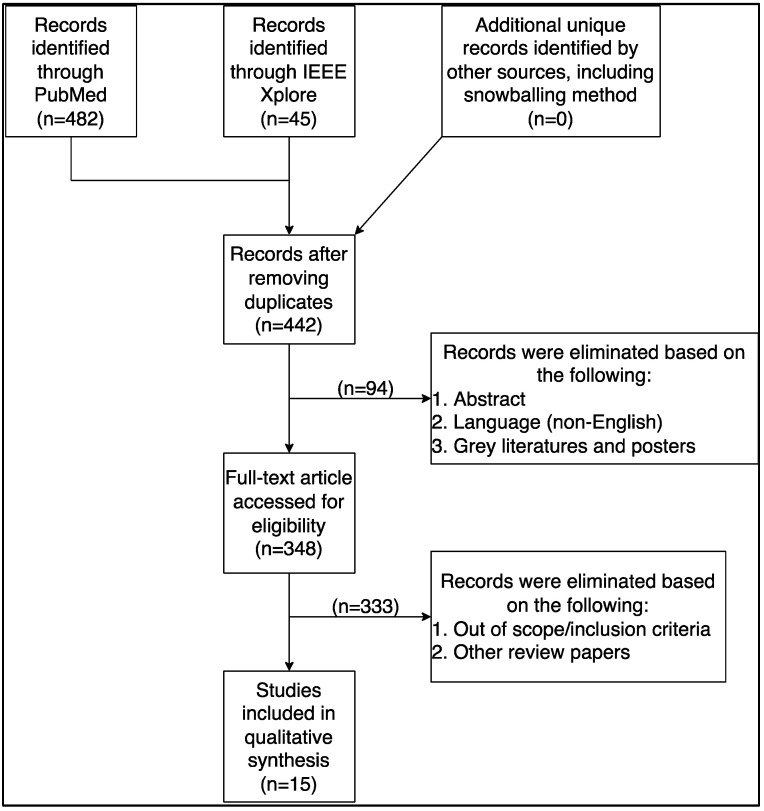
“Older articles or articles published in foreign languages were also excluded (n = 94). Review articles, conference abstracts, posters, opinion papers, letters to editors, editorials, book chapters, and other grey literature were excluded (n = 27). Others (n = 368) did not match our inclusion criteria and were excluded. Fifteen articles matched the inclusion criteria and were analyzed in this study.”
§ Analysis of Mobile App-Based Mental Health Solutions for College Students: A Rapid Review > 3. Results
Reported 487 · recomputed 504
Rated major: it would touch a result — a value a result rests on, reported and recomputed p-values on opposite sides of the significance level, two passages that conflict with no sign which is right, or a cited work retracted before this paper was published.
In the paper
“The search query yielded 487 (PubMed = 442, IEEE Xplore = 54) articles”
§ Analysis of Mobile App-Based Mental Health Solutions for College Students: A Rapid Review > 3. Results
Reported 487 · recomputed 496
Citations
Cites
College Students: Mental Health Problems and Treatment Considerations
Pedrelli, P., Nyer, M., Yeung, A., Zulauf, C., & Wilens, T. (2015) · Academic Psychiatry · doi:10.1007/s40596-014-0205-9 · Cited by 1,325 · cited 1×
“It is estimated that one in every three college freshmen has mental health issues [4], and an estimated 9% of all students have depressive symptoms [5].”
BackgroundMental health problems in college freshmen: Prevalence and academic functioning
Bruffaerts, R., Mortier, P., Kiekens, G., Auerbach, R. P., Cuijpers, P., Demyttenaere, K., Green, J. G., Nock, M. K., & Kessler, R. C. (2018) · Journal of Affective Disorders · doi:10.1016/j.jad.2017.07.044 · Cited by 1,047 · cited 1×
“It is estimated that one in every three college freshmen has mental health issues [4], and an estimated 9% of all students have depressive symptoms [5].”
BackgroundToward a new definition of mental health
Galderisi, S., Heinz, A., Kastrup, M., Beezhold, J., & Sartorius, N. (2015) · World Psychiatry · doi:10.1002/wps.20231 · Cited by 938 · cited 1×
“Instability of the mind can impact one’s thoughts, feelings, and actions [1]; thus, resulting challenges are expected.”
BackgroundEisenberg, D., Hunt, J., & Speer, N. (2013) · Journal of Nervous & Mental Disease · doi:10.1097/nmd.0b013e31827ab077 · Cited by 728 · cited 1×
“adults reported a barrier to mental healthcare access (the most critical link being affordability) [6].”
BackgroundKällander, K., Tibenderana, J. K., Akpogheneta, O. J., Strachan, D. L., Hill, Z., ten Asbroek, A. H. A., Conteh, L., Kirkwood, B. R., & Meek, S. R. (2013) · Journal of Medical Internet Research · doi:10.2196/jmir.2130 · Cited by 653 · cited 1×
“Unlike most other studies where female underrepresentation has been an issue [29], our review identified the underrepresentation of males.”
ResultHuberty, J., Green, J., Glissmann, C., Larkey, L., Puzia, M., & Lee, C. (2019) · JMIR mHealth and uHealth · doi:10.2196/14273 · Cited by 488 · cited 9×
“The most common strategies were meditation and mindfulness [12,13,15,17–21,23] (n = 8), cognitive behavioral therapy [12,13,15,18,20,23] (n = 5), acceptance and commitment therapy [14,18,20] (n = 3), metacognitive training [18,19] (n = 2), and positive psychology [13,25] (n = 2).”
BackgroundMethodInfluentialDifferential dropout and bias in randomised controlled trials: when it matters and when it may not
Bell, M. L., Kenward, M. G., Fairclough, D. L., & Horton, N. J. (2013) · BMJ · doi:10.1136/bmj.e8668 · Cited by 460 · cited 1×
“Dropout in research typically diminishes the validity of results, as completers may differ from people who drop out [30].”
BackgroundEbert, D. D., Mortier, P., Kaehlke, F., Bruffaerts, R., Baumeister, H., Auerbach, R. P., Alonso, J., Vilagut, G., Martínez, K. U., Lochner, C., et al. (2019) · International Journal of Methods in Psychiatric Research · doi:10.1002/mpr.1782 · Cited by 407 · cited 3×
“This approach is best suited for capturing timely information about fast-growing topics [8].”
BackgroundChandrashekar, P. (2018) · mHealth · doi:10.21037/mhealth.2018.03.02 · Cited by 359
Coombs, N. C., Meriwether, W. E., Caringi, J., & Newcomer, S. R. (2021) · SSM - Population Health · doi:10.1016/j.ssmph.2021.100847 · Cited by 333 · cited 1×
“treatment or wanting to work through their issues [7].”
Background
Cited by
Pritam, N., Gill, K. S., Kumar, M., Rawat, R., & Banerjee, D. (2024) · International Conference for Innovation in Technology (INOCON) · doi:10.1109/inocon60754.2024.10512216 · Cited by 13
“Choudhury et al. [11-12] evaluate the efficacy of mobile health (mHealth) interventions in addressing mental health concerns among college students.”
BackgroundLiu, X., Guo, Y.-X., Zhang, X., Zhang, L.-X., & Zhang, Y. (2023) · World Journal of Psychiatry · doi:10.5498/wjp.v13.i6.397 · Cited by 9
Qin, Z., Ng, S., Wu, W., & Zhang, S. (2024) · Healthcare · doi:10.3390/healthcare12131297 · Cited by 15
“Gender‑tailored design features lack detailed elaborations in research related to men‑ tal health applications (apps), which offer a range of tools and functionalities to address various psychological disorders [1,2].”
BackgroundBorjalilu, S. (2023) · International Journal of Islamic Educational Psychology · doi:10.18196/ijiep.v4i1.16513 · Cited by 11
Malik, I., & Mushquash, A. R. (2025) · Frontiers in Digital Health · doi:10.3389/fdgth.2025.1503428 · Cited by 8
“Among postsecondary students, research shows that MH apps are effective in improving outcomes, such as depression, anxiety, stress, well-being, and academic performance (23, 24).”
Associations between smartphone use and mental disorders in college students: a systematic review
Santos, R. M. S., de Oliveira, G. B., Fernandes, F. M., Ventura, S. D. A., Romano‐Silva, M. A., & de Miranda, D. M. (2024) · International Journal of Research in Medical Sciences · doi:10.18203/2320-6012.ijrms20244130 · Cited by 6
MENTAL HEALTH SUPPORT NEEDS OF STUDENTS DURING THE WARTIME
Polyvіanaia, M., Степанова, Н. Р., Yachnik, Y., Myshakivska, O., Fegert, J. M., Sitarski, E., & Пінчук, І. (2024) · Proceedings of the Shevchenko Scientific Society Medical Sciences · doi:10.25040/ntsh2024.02.21 · Cited by 10
Could the use of web-based applications assist in neuropsychiatric treatment? An umbrella review
Pelucio, L., Quagliato, L. A., Cardoso, A., Horato, N., & Nardi, A. E. (2025) · BMC Psychology · doi:10.1186/s40359-024-02263-x · Cited by 3
“…patients who can access applications that remind them of when to take medication or provide a psychological technique for relaxation, meditation, or many clinical examples that support treatment, to which the patient can gain access through a smartphone at any time of day in any location [19–32].”
Mental Health Mobile Applications Used During the COVID -19 Pandemic: A systematic review
Javanmard, Z., Ameri, F., Golmakani, S., Heidari, M., Nasrolahi, N., & Rajabi, E. (2023) · Journal of Health and Biomedical Informatics · doi:10.34172/jhbmi.2023.17 · Cited by 2
Indigenous healing practices in Bangladesh: does science think parallel to these or not?
Yesmin, S., & Akhter, A. (2024) · Global Knowledge, Memory and Communication · doi:10.1108/gkmc-05-2023-0161 · Cited by 3
Ta, A., Salgin, N., Armstrong, C., Reindel, K. M. P., Mehta, R. K., McDonald, A., McCord, C., & Sasangohar, F. (2026) · IISE Transactions on Healthcare Systems Engineering · doi:10.1080/24725579.2026.2685699 · Cited by 18
Fatores predisponentes para sintomas de ansiedade, depressão e insônia em estudantes universitários
de Oliveira, J. C., Neves, V. R., Céspedes, J. G., et al. (2024) · Revista Brasileira de Enfermagem · doi:10.1590/0034-7167-2023-0387pt · Cited by 1
Predisposing factors for symptoms of anxiety, depression, and insomnia in university students
de Oliveira, J. C., Neves, V. R., Céspedes, J. G., et al. (2024) · Revista Brasileira de Enfermagem · doi:10.1590/0034-7167-2023-0387 · Cited by 1
Simbula, S., & Herold, M. (2025) · Journal of Technology in Behavioral Science · doi:10.1007/s41347-025-00583-2 · Cited by 2
Huang, S., Fu, J., Liang, Z., Chen, W., Yu, L., Qiu, P., Zhang, Y., & Chen, B. (2025) · BMC Public Health · doi:10.1186/s12889-025-24410-8 · Cited by 1
“This may reflect a generational difference in accessing and valuing postoperative information, as suggested by previous studies, which reported that younger patients often feel more empowered to engage in self-care due to higher health literacy [27, 28].”
El-Gayar, O., Al-Ramahi, M. A., Wahbeh, A., Elnoshokaty, A., & Nasralah, T. (2025) · Telemedicine Journal and e-Health · doi:10.1089/tmj.2024.0053 · Cited by 2
“13,14 Furthermore, they provide the necessary self-management and behavior change for patients with mental health issues, 7,15 – 17 smoking cessation, 5 insomnia, 13,18 and diabetes.”
Tren Penelitian Kesehatan Mental Mahasiswa: Analisis Bibliometrik
Hertinjung, W. S., Taufik, T., Purwandari, E., et al. (2024) · Psikobuletin Buletin Ilmiah Psikologi · doi:10.24014/pib.v5i2.26732
“Sebagaimana telah diuraikan di awal pembahasan bahwa layanan kesehatan mental berbasis digital (Dallinger et al., 2022; Choudhury et al., 2023; Legros & Boyraz, 2023; Balhara et al., 2023), konseling dan psikoterapi online (Zeren et al., 2020; Westerhof et al., 2019) dapat menjadi alternatif solusi…”
BackgroundAn Early Warning Study of College Students’ Mental Health Risk Based on Dual-Factor Modeling
Guo, J., & Wang, F. (2024) · Advances in Social Science, Education and Humanities Research/Advances in social science, education and humanities research · doi:10.2991/978-2-38476-271-2_9
Zamanpour, Z., & Zardkhaneh, S. A. (2025) · مجله علمی دانشگاه علوم پزشکی رفسنجان · doi:10.61186/jrums.24.2.196
Socias-Soler, J., Francisco, C., Martínez‐García, L., Péris-Baquero, Ó., & Osma, J. (2025) · International Journal of Methods in Psychiatric Research · doi:10.1002/mpr.70025
“Finally, the use of technology, especially through a mobile app, allows therapeutic skills and techniques to be always available for use, at any time, which facilitates their use with greater intensity and frequency (Choudhury et al. 2023; Lin and Lou 2023), even after treatment is over.”
Usability and Quality of the JoyPop App: Prospective Evaluation Study
Malik, I., Neufeld, T., & Mushquash, A. R. (2025) · JMIR Human Factors · doi:10.2196/65472 · Cited by 1
“Research examining the effectiveness and efficacy of mental health apps among students shows that apps can improve well-being and reduce stress, depression, and anxiety [17,18].”
Design and Implementation of Mobile Application in College Students' Daily Mental Health Education
Wang, R. (2025) · International Journal of e-Collaboration · doi:10.4018/ijec.393203
Mahmudah, N., & Satriyandari, Y. (2025) · BIO Web of Conferences · doi:10.1051/bioconf/202520303018
Saithong, P., & Yoddee, J. (2026) · Multidisciplinary Science Journal · doi:10.31893/multiscience.2026553
“These apps have been particularly effective in expanding access among young people and university students by overcoming traditional care barriers and enhancing engagement (Choudhury et al., 2023; Ding, 2025; Salamanca-Sanabria et al., 2023; Larsen et al., 2016).”
Blended mobile health and wellness coaching enhances student engagement in mental health care
Reifman, M., Cao, X., Rozwadowski, M., Kim, J., Kluge, M., Subrayan, U. L., Benz, M., Reis, A., Moore, J., Shedden, K., et al. (2026) · Academia Mental Health and Well-Being · doi:10.20935/mhealthwellb8298
“Several studies have examined the effect of digital interventions and wellness coaching on this college population, but these interventions have only ever been deployed separately from one another [9,14-16].”
Silva, M. B., de Figueiredo, A. L. D., Melo, P. V. P. B., da Silva, M. D., Magalhães, A. H., & Aita, K. M. D. S. U. (2026) · doi:10.5753/sbcas_estendido.2026.25282
“Nesse panorama, intervenções de mHealth (saúde móvel) surgem como alter-nativas para democratizar o suporte e reduzir obstáculos logísticos [Lattie and et al. 2019, Choudhury and et al. 2023].”
Vellem, B., & Mangi, N. G. (2026) · Health SA Gesondheid · doi:10.4102/hsag.v31i0.3301
“…and mobile health (mHealth) interventions have demonstrated significant potential as scalable and accessible solutions to address the complex mental health needs of students in resource-constrained settings (Choudhury et al. 2023; Bidargaddi et al. 2020; Hunt et al. 2023; Oliveira et al. 2021).”
Metadata
- Authors
- Choudhury, A., Kuehn, A., Shamszare, H., & Shahsavar, Y.
- Affiliations
- West Virginia University (US)
- Corresponding author
- Choudhury, Avishek
- Venue
- Healthcare
- Publisher
- MDPI AG
- Published
- 2023-01-16
- Volume
- 11
- Issue
- 2
- Pages
- 272
- ISSN
- 2227-9032 (ISSN-L)
- PMC
- PMC9859497
- OpenAlex
- W4316467490
- Semantic Scholar
- 5cfd0b95563085aaf5a37d30aae3f83f4f8d5e55
- Cited by
- 27
- References
- 32
- Citations by year
- 2026: 5 · 2025: 9 · 2024: 10 · 2023: 3
- FWCI
- 0.91
- Type
- journal article
- Language
- en
- Open access
- gold
- doi.org
- Licence
- Locations
- Healthcare (publishedVersion, cc-by)
- PubMed Central (publishedVersion, cc-by)
- PubMed (publishedVersion)
- Topics
- Social Sciences › Psychology › Applied Psychology › Digital Mental Health Interventions
- Health Sciences › Health Professions › General Health Professions › Mobile Health and mHealth Applications
- Social Sciences › Psychology › Clinical Psychology › Mindfulness and Compassion Interventions
- Keywords
- mobile health, mobile application, college student mental health, depression, anxiety, stress, cognitive behavioral therapy, acceptance and commitment therapy, meditation, digital divide, gender differences
About these checks
Registry, retraction, Cites and statistics results are computed, not judged, with one exception: a printed reference that no index lists is read once by a model before it counts as a citation error. Claims are extracted by a model and kept only when their quote appears verbatim in the text; each cited source is then checked, with a model’s help, for whether it says what the claim relies on. Those verdicts can be wrong — read the claim’s quote and the cited source before relying on one.
The claim verdicts this report counts are experimental: their accuracy is not yet measured.
A language model drew the claims from the paper on 2026-10-11, under version 3 of the claim definition (model deepseek-v4.1-flash, prompt extract-v3).
A second model labelled each claim on 2026-10-11 (model jev-1.13-20260917, definition revision gold-guideline-v0.2).
Cited sources are checked with a language model’s help (gpt-6-sol).
Statistics and arithmetic are recomputed, not judged.
Confidence bands are shown only for fields calibrated on our annotated test set. None is calibrated yet, so no band is shown.
What counts as a claim ›How we measure confidence ›How we check this ›
Are you an author, or do you see a problem with this page? Request a review
Data sources
Bibliographic data: Semantic Scholar, OpenAlex, Crossref.
Contains information from the Semantic Scholar Academic Graph Datasets, made available under the ODC Attribution License (ODC-BY 1.0).
Semantic Scholar’s data is described in: Kinney, R., et al. (2023). The Semantic Scholar Open Data Platform. arXiv:2301.10140.
