

The Effect of Prior Mental Health on Persistent Physical Symptoms after Exposure to a Chemical Disaster
Open accessThe DOI matches its Crossref record; 36 of the 36 references it cites were found in a registry or an index.
Abstract
A styrene monomer (SM) oil vapor leak occurred at a chemical plant in Seosan, South Korea on 17 May 2019. A bad odor developed, and many residents complained of various symptoms and visited nearby medical institutions. We analyzed the demographic and clinical characteristics of patients treated at local hospitals and clinics for symptoms related to SM exposure, and identified factors affecting symptom persistence in any organ. Data were collected by the main Seosan office, and 1201 (33.0%) subjects agreed to participate in this study. We used the Assessment of Chemical Exposure toolkit of the Agency for Toxic Substances and Disease Registry. Logistic regression was performed to determine whether mental health symptoms prior to the accident were risk factors for symptom persistence. The strongest risk factor for persistence of at least one symptom in any organ was a preexisting mental health symptom (odds ratio [OR] = 5.47, 95% confidence interval [CI]: 2.57–11.65). Persistent symptoms of the nervous (OR = 1.54), musculoskeletal (OR = 1.92), and gastrointestinal (OR = 1.45) systems were observed. Prior mental health symptoms are risk factors for persistent physical symptoms after a chemical disaster. After a disaster, management of individuals with preaccident mental symptoms or disease is needed.
Overview
The claims and statistics of this paper haven’t been checked yet.
Free: it reads the open-access text and checks the first 5 claims that cite a source we can check. Create a free account to check every claim.
Integrity signals
Registry
Cites
Statistics
Figures
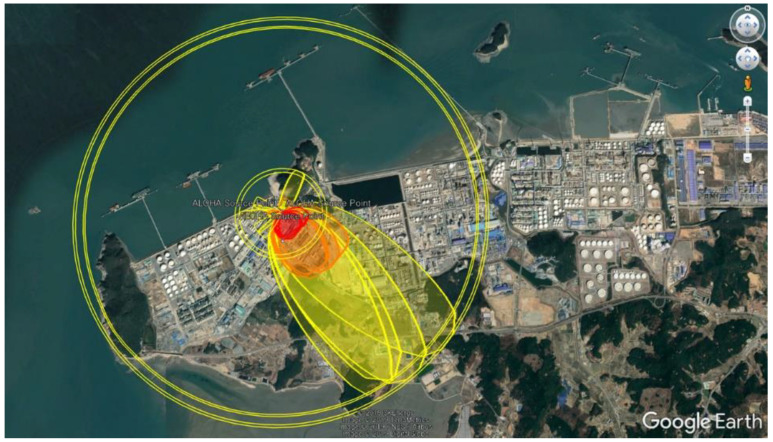
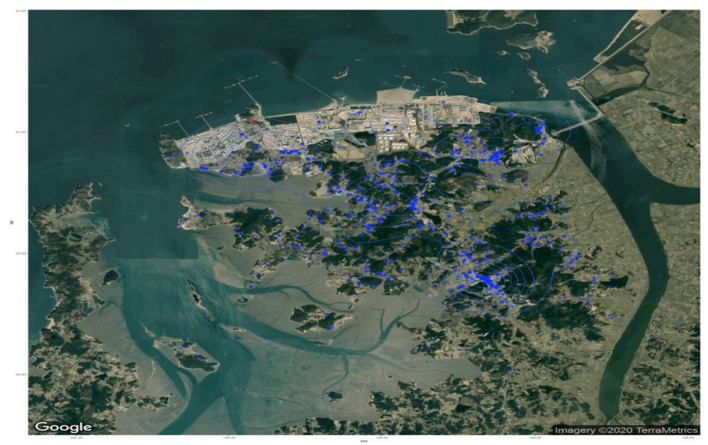
Verification
Claims the paper makes
The claims and statistics of this paper haven’t been checked yet.
Free: it reads the open-access text and checks the first 5 claims that cite a source we can check. Create a free account to check every claim.
Claims other papers make about this one
Each is checked against this paper’s own text: does it say what the citing paper says it does?
The source backs part of the claim, not all of it — or backs it for a different population, condition or comparison.
In the citing paper
“Early adverse life experiences, negative affectivity, neuroticism, depression, and anxiety have been identified as psycho logical predisposing conditions for persistent physical symptoms”
From Persistent physical symptoms: definition, genesis, and management (2024) · cites this paper as [66]
Experimental — accuracy not yet measured
Self-check
Percentages, sums and reported differences re-computed from the paper’s own numbers.
The self-check needs the paper’s full text.
Citations
Cites
Sackett, D. L. (1979) · Journal of Chronic Diseases · doi:10.1016/0021-9681(79)90012-2 · Cited by 2,075 · cited 1×
“Some questions may be structured to cause respondents to select incorrect answers [40].”
BackgroundA catalog of biases in questionnaires.
Choi, B. C. K., & Pak, A. W. P. (2005) · Preventing Chronic Disease · Cited by 1,098
Predictors of persistent pain after total knee arthroplasty: a systematic review and meta-analysis
Lewis, G. N., Rice, D. A., McNair, P. J., & Kluger, M. (2015) · British Journal of Anaesthesia · doi:10.1093/bja/aeu441 · Cited by 587
Health problems of victims before and after disaster: a longitudinal study in general practice
Yzermans, C. J., Donker, G. A., Kerssens, J. J., Dirkzwager, A. J., Soeteman, R. J., & ten Veen, P. M. (2005) · International Journal of Epidemiology · doi:10.1093/ije/dyi096 · Cited by 130 · cited 1×
“As media attention increased, so too did medically unexplained somatic symptoms [37].”
BackgroundSampling and design challenges in studying the mental health consequences of disasters
Galea, S., Maxwell, A. R., & Norris, F. (2008) · International Journal of Methods in Psychiatric Research · doi:10.1002/mpr.267 · Cited by 119 · cited 1×
“It is difficult to determine whether leaks cause the mental health problems or exacerbate poor existing mental health [27].”
BackgroundCurrent understanding of the neurobiology of major depressive disorder.
Chiriţă, A. L., Gheorman, V., Bondari, D., & Rogoveanu, I. (2015) · PubMed · Cited by 104
Bowler, R. M., Mergler, D., Huel, G., & Cone, J. E. (1994) · Journal of Traumatic Stress · doi:10.1002/jts.2490070408 · Cited by 102 · cited 1×
“The chemical disaster at the Cantara Loop of the Sacramento River triggered severe psychological, psychosocial, psychophysiological, and physical reactions in exposed compared to unexposed residents [36].”
BackgroundLinden, M., Baumann, K., Rotter, M., & Schippan, B. (2008) · International Journal of Psychiatry in Clinical Practice · doi:10.1080/13651500701580478 · Cited by 71 · cited 1×
“PTED is a reactive disorder induced by negative life events, and associated mental health problems may be highly persistent [33].”
BackgroundInanloo, B., & Tansel, B. (2015) · Journal of Environmental Management · doi:10.1016/j.jenvman.2015.02.044 · Cited by 70
Biases in Perception and Reporting following a Perceived Toxic Exposure
Lees-Haley, P. R., & Brown, R. S. (1992) · Perceptual and Motor Skills · doi:10.2466/pms.1992.75.2.531 · Cited by 63
Norris, F. H. (2002) · Journal of Heredity · doi:10.1093/jurban/79.3.308 · Cited by 54 · cited 1×
“Prior psychological problems are strong predictors of additional difficulties after a disaster [28].”
BackgroundBrown, M. R. G., Pazderka, H., Agyapong, V. I. O., Greenshaw, A. J., Cribben, I., Brett-MacLean, P., Drolet, J., McDonald-Harker, C. B., Omeje, J., Lee, B. A., et al. (2021) · Frontiers in Psychiatry · doi:10.3389/fpsyt.2021.676256 · Cited by 47
Increase in neuropsychiatric symptoms after occupational exposure to low levels of styrene.
Edling, C., Anundi, H., Johanson, G., & Nilsson, K. (1993) · Occupational and Environmental Medicine · doi:10.1136/oem.50.9.843 · Cited by 45
Clinical and neurobehavioural study of the acute and chronic neurotoxicity of styrene.
Triebig, G., Lehrl, S., Weltle, D., Schaller, K. H., & Valentin, H. (1989) · Occupational and Environmental Medicine · doi:10.1136/oem.46.11.799 · Cited by 41
Depression and anxiety in a manganese-exposed community
Racette, B. A., Nelson, G., Dlamini, W. W., Hershey, T. G., Prathibha, P., Turner, J. R., Checkoway, H., Sheppard, L. A., & Nielsen, S. S. (2021) · NeuroToxicology · doi:10.1016/j.neuro.2021.05.017 · Cited by 40 · cited 1×
“We suggest that living in such an area is associated with perceived risks to health and safety, which may cause anxiety, insomnia, and depression [34,35].”
BackgroundGriffiths, S., Entwistle, J., Kelly, F. J., & Deary, M. E. (2022) · Environment International · doi:10.1016/j.envint.2022.107152 · Cited by 39
Pazderka, H., Brown, M., Agyapong, V. I. O., Greenshaw, A. J., McDonald-Harker, C. B., Noble, S., Mankowski, M., Lee, B. A., Drolet, J., Omeje, J., et al. (2021) · Frontiers in Psychiatry · doi:10.3389/fpsyt.2021.682041 · Cited by 35
Acute Symptoms after a Community Hydrogen Fluoride Spill
Na, J.-Y., Woo, K.-H., Yoon, S.-Y., Cho, S.-Y., Song, I.-U., Kim, J.-A., & Kim, J.-S. (2013) · Annals of Occupational and Environmental Medicine · doi:10.1186/2052-4374-25-17 · Cited by 33
Evaluation of Long-Term Occupational Exposure to Styrene Vapor on Olfactory Function
Dalton, P., Lees, P. S. J., Gould, M., Dilks, D. D., Stefaniak, A. B., Bader, M., Ihrig, A., & Triebig, G. (2007) · Chemical Senses · doi:10.1093/chemse/bjm041 · Cited by 29 · cited 1×
“Acute inhalation of >50 ppm of styrene (AEGL-2) may irritate the nasal mucosa and eyes; a level > 100 ppm may cause skin irritation and central nervous system symptoms [11].”
BackgroundExperiences of dyadic sport friendships as a function of self and partner attachment characteristics
Carr, S., & Fitzpatrick, N. (2011) · Psychology of sport and exercise · doi:10.1016/j.psychsport.2011.03.003 · Cited by 28
Fennema, J. S. A., van Ameijden, E. J. C., Coutinho, R. A., & Hoek, J. A. (1995) · International Journal of Epidemiology · doi:10.1093/ije/24.5.1034 · Cited by 28
Determination of Acute Exposure Guideline Levels in a Dispersion Model
Stage, S. A. (2004) · Journal of the Air & Waste Management Association · doi:10.1080/10473289.2004.10470885 · Cited by 22
Lung disease associated with occupational styrene exposure
Meyer, K. C., Sharma, B., KAUFMANN, B. R., Kupper, A., & Hodgson, M. J. (2018) · American Journal of Industrial Medicine · doi:10.1002/ajim.22867 · Cited by 20
Querulant delusion and post-traumatic embitterment disorder
Linden, M. (2020) · International Review of Psychiatry · doi:10.1080/09540261.2020.1747410 · Cited by 20 · cited 1×
“Individuals affected by leakages may seek compensation for mental and physical harm, and systemic symptoms are more frequent in those seeking compensation [31,32].”
BackgroundBarjoee, S. S., Dashtian, A. H., Keykhosravi, S. S., Saryazdi, M. J. A., & Afrough, M. J. (2021) · Environmental Monitoring and Assessment · doi:10.1007/s10661-021-09569-y · Cited by 19
Fitzpatrick, K., Wild, T. C., Pritchard, C., Azimi, T., McGee, T. K., Sperber, J., Albert, L., & Montesanti, S. R. (2021) · Frontiers in Public Health · doi:10.3389/fpubh.2021.723613 · Cited by 19
Acute health effects after accidental exposure to styrene from drinking water in Spain
Arnedo-Pena, A., Bellido-Blasco, J. B., Villamarín-Vázquez, J. L., Aranda-Mares, J. L., Font, N., Gobba, F., & Kogevinas, M. (2003) · Environmental Health · doi:10.1186/1476-069x-2-6 · Cited by 18
Psychological Evaluation of the Emotional Effects of a Community Toxic Exposure
Greve, K. W., Bianchini, K. J., Doane, B. M., Love, J. M., & Stickle, T. R. (2005) · Journal of Occupational and Environmental Medicine · doi:10.1097/01.jom.0000150386.33867.f9 · Cited by 17 · cited 2×
“Acute chemical exposures (such as spills) commonly induce irritation, long-term chronic disease, anxiety, depression, and somatization [26].”
BackgroundMielke, H., Gundert, A., Abraham, K., & Gundert‐Remy, U. (2005) · Toxicology · doi:10.1016/j.tox.2005.06.018 · Cited by 17
Rivière, S., Albessard, A., Gardette, V., Lapierre-Duval, K., bel, V. S., & Lang, T. (2010) · European Journal of Public Health · doi:10.1093/eurpub/ckq081 · Cited by 14
Lees, P. S. J., Stefaniak, A. B., Emmett, E. A., & Dalton, P. (2003) · American Journal of Industrial Medicine · doi:10.1002/ajim.10236 · Cited by 13 · cited 1×
“Individuals affected by leakages may seek compensation for mental and physical harm, and systemic symptoms are more frequent in those seeking compensation [31,32].”
BackgroundMeier, D. C., Benkstein, K. D., Hurst, W. S., & Chu, P. M. (2016) · Journal of Testing and Evaluation · doi:10.1520/jte20150382 · Cited by 10
Hyde, A. M., Verstraeten, B. S. E., Olson, J., King, S., Brémault‐Phillips, S., & Olson, D. M. (2021) · Frontiers in Public Health · doi:10.3389/fpubh.2021.601375 · Cited by 10
Fatemi, F., Ardalan, A., Aguirre, B. E., Mansouri, N., & Mohammadfam, I. (2017) · Electronic physician · doi:10.19082/5638 · Cited by 9
Toolkit for Epidemiologic Response to an Acute Chemical Release
Duncan, M. A., & Orr, M. F. (2016) · Disaster Medicine and Public Health Preparedness · doi:10.1017/dmp.2015.187 · Cited by 6 · cited 1×
“The Assessment of Chemical Exposure (ACE) toolkit of the Agency for Toxic Substances and Disease Registry (ATSDR) was used in this study [16].”
Method(2011) · PubMed · Cited by 1
Research works printed but not linked: 1
- Committee on Acute Exposure Guideline Levels Committee on Toxicology Board on Environmental Studies and Toxicology Division on Earth and Life Studies National Academies of Sciences Acute Exposure Guideline Levels for Selected Airborne Chemicals National Academies Press Washington, DC, USA 2016 6 9 27831678
Cited by
Persistent physical symptoms: definition, genesis, and management
Löwe, B., Toussaint, A., Rosmalen, J. G. M., Huang, W.-L., Burton, C., Weigel, A., Levenson, J. L., & Henningsen, P. (2024) · The Lancet · doi:10.1016/s0140-6736(24)00623-8 · Cited by 280
Ghaffari, F., Pishgooie, S. A. H., Zareiyan, A., Sharififar, S., & Azarmi, S. (2025) · مجله طب جانباز · doi:10.58209/ijwph.17.1.63 · Cited by 2
Park, S., Kim, J., Park, S., Moon, J. S., Hu, Q., Yu, J., Yoon, S., Kim, J., & Kim, H. (2026) · Environment International · doi:10.1016/j.envint.2026.110360 · Cited by 1
Metadata
- Authors
- Min, Y.-S., Kim, S.-Y., Choi, S.-K., & Ahn, Y.-S.
- Affiliations
- Soonchunhyang University (KR)
- Affiliated Clinic, LG Energy Solution, Cheongju 28122, Republic of Korea
- Yonsei University (KR)
- Corresponding author
- Ahn, Yeon-Soon
- Venue
- Healthcare
- Publisher
- MDPI AG
- Published
- 2023-03-31
- Volume
- 11
- Issue
- 7
- Pages
- 1004
- ISSN
- 2227-9032 (ISSN-L)
- PMC
- PMC10094456
- OpenAlex
- W4362467982
- Semantic Scholar
- ee25a872d2f639b3ea67d16618d0c790fb0aac37
- Cited by
- 3
- References
- 36
- Citations by year
- 2026: 1 · 2025: 1 · 2024: 1
- FWCI
- 1.01
- Type
- journal article
- Language
- en
- Open access
- gold
- doi.org
- Licence
- Locations
- Healthcare (publishedVersion, cc-by)
- PubMed Central (publishedVersion, cc-by)
- PubMed (publishedVersion)
- Funders
- Soonchunhyang University Research Fund
- Topics
- Health Sciences › Health Professions › Emergency Medical Services › Disaster Response and Management
- Social Sciences › Psychology › Clinical Psychology › Posttraumatic Stress Disorder Research
- Health Sciences › Medicine › Psychiatry and Mental health › Psychosomatic Disorders and Their Treatments
- Keywords
- styrene monomer, chemical disasters, persistent physical symptoms, disaster mental health, neurological symptoms, musculoskeletal symptoms, gastrointestinal symptoms
About these checks
Registry, retraction, Cites and statistics results are computed, not judged, with one exception: a printed reference that no index lists is read once by a model before it counts as a citation error. Claims are extracted by a model and kept only when their quote appears verbatim in the text; each cited source is then checked, with a model’s help, for whether it says what the claim relies on. Those verdicts can be wrong — read the claim’s quote and the cited source before relying on one.
Statistics and arithmetic are recomputed, not judged.
Confidence bands are shown only for fields calibrated on our annotated test set. None is calibrated yet, so no band is shown.
What counts as a claim ›How we measure confidence ›How we check this ›
Are you an author, or do you see a problem with this page? Request a review
Data sources
Bibliographic data: Semantic Scholar, OpenAlex, Crossref.
Contains information from the Semantic Scholar Academic Graph Datasets, made available under the ODC Attribution License (ODC-BY 1.0).
Semantic Scholar’s data is described in: Kinney, R., et al. (2023). The Semantic Scholar Open Data Platform. arXiv:2301.10140.
