

Understanding Psychosocial Barriers to Healthcare Technology Adoption: A Review of TAM Technology Acceptance Model and Unified Theory of Acceptance and Use of Technology and UTAUT Frameworks
Open accessPublished version of a preprint
The DOI matches its Crossref record; 42 of the 42 references it cites were found in a registry or an index.
Abstract
Background: Leveraging healthcare technology improves human development and well-being. However, adoption is frequently delayed by behavioural and psychological barriers, such as perceived usefulness, trust, and organisational readiness. This review examines the suitability of the Unified Theory of Acceptance and Use of Technology (UTAUT) and the Technology Acceptance Model (TAM) frameworks in healthcare settings, focusing on behavioural, educational, and psychological factors that influence technology adoption. Methods: A total of 20 peer-reviewed articles from 2019 to 2024 were examined. Results: The review identified significant organisational and psychological obstacles, including a lack of trust, inadequate training, and organisational support. While the UTAUT provided a more comprehensive viewpoint, it needed to be modified to include context-specific factors, including trust, facilitating circumstances, and educational interventions. Meanwhile, the TAM’s emphasis on perceived usefulness and ease of use was shown to be insufficient for dealing with complex healthcare situations. Conclusions: Interventions targeting stakeholders’ organisational and psychological preparation and educational strategies are essential to overcoming resistance and enhancing trust. Future research should look into integrative frameworks incorporating behavioural, psychological, and instructional tactics to improve the use of technology in healthcare.
Overview
The claims and statistics of this paper haven’t been checked yet.
Free: it reads the open-access text and checks the first 5 claims that cite a source we can check. Create a free account to check every claim.
Integrity signals
Registry
Cites
Statistics
Figures
Verification
Claims the paper makes
The claims and statistics of this paper haven’t been checked yet.
Free: it reads the open-access text and checks the first 5 claims that cite a source we can check. Create a free account to check every claim.
Self-check
Percentages, sums and reported differences re-computed from the paper’s own numbers.
The self-check needs the paper’s full text.
Citations
Cites
User Acceptance of Information Technology: Toward A Unified View1
Venkatesh, V., Morris, M. G., Davis, G. B., & Davis, F. D. (2003) · MIS Quarterly · doi:10.2307/30036540 · Cited by 45,035 · cited 4×
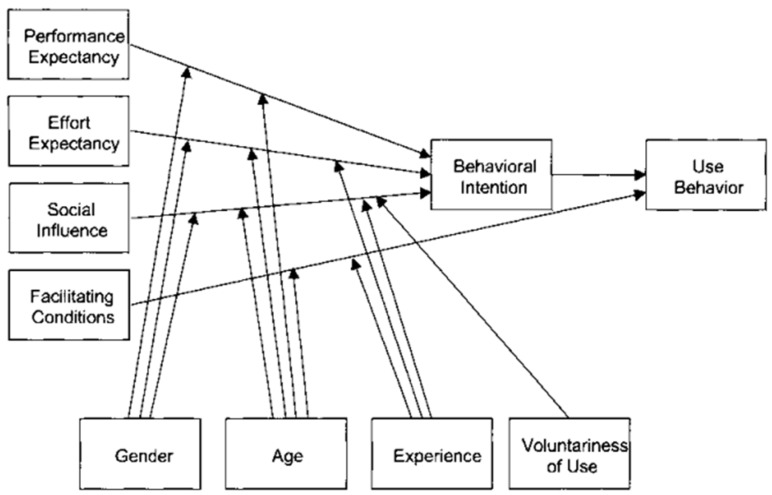
“According to Venkatesh et al. (2003) [21], the UTAUT may explain as much as 70% of the variation in intention.”
InfluentialUser Acceptance of Computer Technology: A Comparison of Two Theoretical Models
Davis, F. D., Bagozzi, R. P., & Warshaw, P. R. (1989) · Management Science · doi:10.1287/mnsc.35.8.982 · Cited by 25,709 · cited 2×
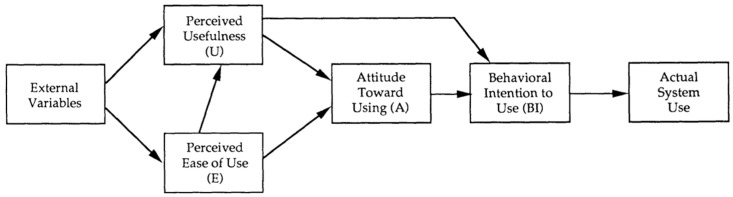
“The TAM was developed in 1989 by Fred Davis and adopted from the Theory of Reasoned Action (TRA) [18].”
Technology acceptance model: a literature review from 1986 to 2013
Marangunić, N., & Granić, A. (2015) · Universal Access in the Information Society · doi:10.1007/s10209-014-0348-1 · Cited by 2,458
Dwivedi, Y. K., Rana, N. P., Jeyaraj, A., Clement, M., & Williams, M. D. (2019) · Information Systems Frontiers · doi:10.1007/s10796-017-9774-y · Cited by 2,137 · cited 1×
“This consolidates the current theoretical viewpoints and enhances research on individual acceptance. made the UTAUT one of the most popular These improvements have made the UTAUT one of the most popular theoretical frameworks in IT/IS research [23]. theoretical frameworks in IT/IS research [23].”
The rise of artificial intelligence in healthcare applications
Bohr, A., & Memarzadeh, K. (2020) · Artificial Intelligence in Healthcare · doi:10.1016/b978-0-12-818438-7.00002-2 · Cited by 1,636 · cited 1×
“As is widely known, the healthcare industry has long struggled with a labour shortage [1,2].”
Kamal, S. A., Shafiq, M., & Kakria, P. (2020) · Technology in Society · doi:10.1016/j.techsoc.2019.101212 · Cited by 894 · cited 2×
“Furthermore, it is commonly used in studies investigating the interaction between technology and individual behaviours and intentions [19].”
Impact of Trust and Privacy Concerns on Technology Acceptance in Healthcare: An Indian Perspective
Dhagarra, D., Goswami, M., & Kumar, G. (2020) · International Journal of Medical Informatics · doi:10.1016/j.ijmedinf.2020.104164 · Cited by 436 · cited 4×
“Dhagarra et al. (2020) [13] investigated the effect of trust and privacy issues on the acceptance of technology in healthcare from an Indian viewpoint.”
InfluentialSchaper, L. K., & Pervan, G. P. (2007) · International Journal of Medical Informatics · doi:10.1016/j.ijmedinf.2006.05.028 · Cited by 371
Mackey, T. K., Kuo, T.-T., Gummadi, B., Clauson, K. A., Church, G., Grishin, D., Obbad, K., Barkovich, R., & Palombini, M. (2019) · BMC Medicine · doi:10.1186/s12916-019-1296-7 · Cited by 318 · cited 1×
“The healthcare industry faces one of the most serious problems in terms of technology adoption because people find it very difficult to adapt to new technologies despite the industry being the most important for people’s health [17].”
Technology Acceptance Models in Health Informatics: TAM and UTAUT
Elske, A. (2019) · Studies in Health Technology and Informatics · doi:10.3233/shti190111 · Cited by 296
Beyond TAM and UTAUT: Future directions for HIT implementation research
Shachak, A., Kuziemsky, C., & Petersen, C. (2019) · Journal of Biomedical Informatics · doi:10.1016/j.jbi.2019.103315 · Cited by 263 · cited 1×
“The TAM is a model that has been simplified and emphasises perceived usefulness and perceived ease of use, which has led to the model missing numerous complex variables that affect technology adoption in the healthcare industry [7].”
Malatji, W. R., Eck, R. V., & Zuva, T. (2020) · Advances in Science Technology and Engineering Systems Journal · doi:10.25046/aj050612 · Cited by 209 · cited 3×
“On the other hand, perceived usefulness (PU) examines the system’s convenience, which is how much users feel the system improves their job performance or effectiveness [12,20].”
Ali, S., Khalid, N., Javed, H. M. U., & Islam, D. M. Z. (2021) · Journal of Open Innovation: Technology, Market, and Complexity · doi:10.3390/joitmc7010010 · Cited by 202 · cited 1×
“For instance, it may efficiently lessen the operational challenges faced by healthcare professionals and facilitate their quicker adoption of new technologies by streamlining the technology’s operating interface and offering real-time technical assistance.”
Philippi, P., Baumeister, H., Apolinário-Hagen, J., Ebert, D. D., Hennemann, S., Kott, L., Lin, J., Messner, E.-M., & Terhorst, Y. (2021) · Internet Interventions · doi:10.1016/j.invent.2021.100459 · Cited by 200 · cited 1×
“Table 3 provides a more comprehensive overview of the advantages and limitations of the TAM and UTAUT theories.”
Learning management systems and technology acceptance models: A systematic review
Al-Nuaimi, M. N., & Al-Emran, M. (2021) · Education and Information Technologies · doi:10.1007/s10639-021-10513-3 · Cited by 167
Edo, O. C., Ang, D. S., Etu, E.-E., Tenebe, I. T., Edo, S., & Diekola, O. A. (2023) · International Journal of Information Management Data Insights · doi:10.1016/j.jjimei.2023.100186 · Cited by 151
Zhou, L., Owusu‐Marfo, J., Antwi, H. A., Antwi, M. O., Kachie, A. D. T., & Ampon-Wireko, S. (2019) · BMC Medical Informatics and Decision Making · doi:10.1186/s12911-019-0956-z · Cited by 136 · cited 6×
“However, as noted by Zhou et al. (2019) [30], the integrative architecture of the UTAUT may be too complicated and resource-intensive for real-world implementations despite its theoretical strength.”
InfluentialUse and the Users of a Patient Portal: Cross-Sectional Study
Hoogenbosch, B., Postma, J., Ginkel, J. M. D. M., Tiemessen, N. A., van Delden, J. J. M., & van Os‐Medendorp, H. (2018) · Journal of Medical Internet Research · doi:10.2196/jmir.9418 · Cited by 127
Modeling adoption of intelligent agents in medical imaging
Calisto, F. M., Nunes, N., & Nascimento, J. C. (2022) · International Journal of Human-Computer Studies · doi:10.1016/j.ijhcs.2022.102922 · Cited by 111
Zin, K. S. L. T., Kim, S., Kim, H.-S., & Feyissa, I. F. (2023) · Administrative Sciences · doi:10.3390/admsci13020042 · Cited by 103 · cited 5×
“For example, Zin et al. (2023) [24] emphasised the technological difficulties faced by the elderly when using digital health solutions, while Wang et al. (2023) [28] observed that the ease of use of virtual reality technology significantly influenced the adoption of this technology by paediatric…”
InfluentialHussain, Z. (2021) · Digital Applications in Archaeology and Cultural Heritage · doi:10.1016/j.daach.2021.e00182 · Cited by 99 · cited 1×
“One excellent example of how technology has affected lives is the existence of automobiles [16].”
Alhashmi, S. F. S., Salloum, S. A., & Mhamdi, C. (2019) · Cited by 96
Yang, Y., Zhang, J., Zang, G., & Pu, J. (2019) · PubMed · doi:10.11909/j.issn.1671-5411.2019.08.010 · Cited by 95 · cited 1×
“Although technology has become more and more commonplace in this age of technological innovation, practitioners in the healthcare sector, in particular, continue to lack faith in technological innovation and artificial intelligence (AI) [3].”
Zhu, Y., Zhao, Z., Guo, J., Wang, Y., Zhang, C., Zheng, J., Zou, Z., & Liu, W. (2023) · International Journal of Environmental Research and Public Health · doi:10.3390/ijerph20043139 · Cited by 93 · cited 7×
“However, its ability to demonstrate specific acceptance and usage decisions within an organisation may be limited [14].”
InfluentialStakeholder Perceptions of the Safety and Assurance of Artificial Intelligence in Healthcare
Sujan, M. A., White, S., Habli, I., & Reynolds, N. (2022) · Safety Science · doi:10.1016/j.ssci.2022.105870 · Cited by 79
Nazari-Shirkouhi, S., Badizadeh, A., Dashtpeyma, M., & Ghodsi, R. (2023) · Journal of Ambient Intelligence and Humanized Computing · doi:10.1007/s12652-023-04601-0 · Cited by 58
Tian, Y., & Wang, X. (2022) · Frontiers in Psychology · doi:10.3389/fpsyg.2022.986800 · Cited by 55
Wrzosek, N., Zimmermann, A. E., & Balwicki, Ł. (2020) · Healthcare · doi:10.3390/healthcare8040563 · Cited by 46 · cited 1×
“This finding also shows the positive attitudes among peers and healthcare professionals towards promoting the adoption of PHRs. Wrzosek et al. (2020) [38] conducted a study to explore doctors’ perceptions of e-prescribing following its mandatory adoption in Poland, utilising the UTAUT theory.”
Walle, A. D., Ferede, T. A., Baykemagn, N. D., Shimie, A. W., Kebede, S. D., Tegegne, M. D., Wubante, S. M., Yehula, C. M., Demsash, A. W., Melaku, M. S., et al. (2023) · BMJ Health & Care Informatics · doi:10.1136/bmjhci-2022-100707 · Cited by 46 · cited 3×
“Walle et al. (2023) [27] conducted a study that employed a revised Technology Acceptance Model to forecast how healthcare professionals in resource-constrained situations would adopt electronic personal health record systems.”
InfluentialYin, Z., Yan, J., Fang, S., Wang, D., & Han, D. (2022) · Annals of Translational Medicine · doi:10.21037/atm-21-5510 · Cited by 42
Nurhayati, S., Anandari, D., & Ekowati, W. (2019) · Jurnal Kesehatan Masyarakat · doi:10.15294/kemas.v15i1.12376 · Cited by 38 · cited 2×
“Nevertheless, two studies were carried out without modifications to the UTAUT theory, suggesting that the theory has a thorough framework that is applicable in healthcare settings even in the absence of changes.”
Owusu, P. R., Asiedu, E. P., Ji, J., & Sarpong, F. A. (2022) · Journal of Computer and Communications · doi:10.4236/jcc.2022.103007 · Cited by 31 · cited 1×
“The two most popular theories are the Technology Acceptance Model (TAM) and the Unified Theory of Acceptance and Use of Technology (UTAUT), which are the essential theoretical research models for assessing the level of technology adoption [4,5].”
Examining the Factors Influencing Teleconsultation Adoption During the Pandemic Using the TAM Model
f, F., f, F., f, F., f, F., & f, F. (2024) · GLOBAL BUSINESS & FINANCE REVIEW · doi:10.17549/gbfr.2024.29.3.149 · Cited by 31 · cited 8×
“For instance, including privacy and trust considerations has improved the TAM’s ability to anticipate the adoption of teleconsultations [5,12,13].”
InfluentialYousef, C. C., Salgado, T. M., Farooq, A., Burnett, K., McClelland, L. E., Thomas, A., Alenazi, A. O., Esba, L. C. A., AlAzmi, A., Alhameed, A. F., et al. (2021) · JMIR Medical Informatics · doi:10.2196/30214 · Cited by 30 · cited 1×
“Table 3 provides a more comprehensive overview of the advantages and limitations of the TAM and UTAUT theories.”
Predicting pediatric healthcare provider use of virtual reality using a technology acceptance model
Wang, E., Kennedy, K. M., Zhang, L., Qian, D., Forbes, T., Zuniga‐Hernandez, M., Li, B. S.-K., Domingue, B. W., & Caruso, T. J. (2023) · JAMIA Open · doi:10.1093/jamiaopen/ooad076 · Cited by 26 · cited 4×
“To achieve a more accurate conclusion, Wang et al. (2023) [28] modified the TAM theory to include numerous characteristics such as age, gender, race, clinical role, years of experience, past VR usage, perceived enjoyment, intention to use, want to purchase, and curiosity.”
InfluentialAl‐Emran, M., Al-Qaysi, N., Al-Sharafi, M. A., Alhadawi, H. S., Ansari, H., Arpacı, İ., & Ali, N. B. (2024) · International Journal of Human-Computer Interaction · doi:10.1080/10447318.2024.2410536 · Cited by 24 · cited 1×
“These have the potential to improve the quality and efficacy of medical treatment, encourage wider technology adoption, and increase public and healthcare professionals’ trust in developing technologies.”
Zin, R. M. (2024) · Journal of Electrical Systems · doi:10.52783/jes.2392 · Cited by 15
Zoccarato, F., Manzoni, M., Minotti, D., Lettieri, E., & Boaretto, A. (2024) · BMC Health Services Research · doi:10.1186/s12913-024-11195-6 · Cited by 15 · cited 6×
“For instance, including privacy and trust considerations has improved the TAM’s ability to anticipate the adoption of teleconsultations [5,12,13].”
InfluentialKarkonasasi, K., Cheah, Y., Vadiveloo, M., & Mousavi, S. A. (2023) · Vaccines · doi:10.3390/vaccines11081331 · Cited by 13 · cited 1×
“Karkonasasi et al. (2023) [29] applied the Extended TAM theory in order to investigate the acceptability of a text-messaging vaccine recall as well as a reminder system in the healthcare sector in Malaysia.”
Farhady, S., Sepehri, M. M., & Pourfathollah, A. A. (2020) · Medical Journal of the Islamic Republic of Iran · doi:10.47176/mjiri.34.83 · Cited by 11
effectiveness of simulation-based training in nursing education
Alshammari, Y. F. H., Alharbi, M. N., Alanazi, H. F., Aldhahawi, B. K., Alshammari, F. M., Alsuwaydaa, R. H., Alenezi, S. G., Alshammari, B. A., Alshammari, R. M., & Alshammari, B. M. (2021) · International Journal of Health Sciences · doi:10.53730/ijhs.v5ns1.14810 · Cited by 4 · cited 1×
“These have the potential to improve the quality and efficacy of medical treatment, encourage wider technology adoption, and increase public and healthcare professionals’ trust in developing technologies.”
Karkonasasi, K., Cheah, Y., Vadiveloo, M., et al. (2023) · Preprints.org · doi:10.20944/preprints202306.2058.v1 · Cited by 3
Research works printed but not linked: 1
- Christian M. Gularso K. Utomo P. Yulita H. Wibowo S. Sunarno S. Melati R. Generation YZ’s E-Healthcare Use Factors Distribution in COVID-19’s Third Year: A UTAUT Modeling J. Distrib. Sci. 2023 21 117 129 10.15722/jds.21.07.202307.117 · doi:10.15722/jds.21.07.202307.117
Cited by
Status and perceptions of ChatGPT utilization among medical students: a survey-based study
Hu, N., Jiang, X. L., Wang, Y. D., Kang, Y. M., Xia, Z., Chen, H. H., Duan, S. N., & Chen, D. (2025) · BMC Medical Education · doi:10.1186/s12909-025-07438-7 · Cited by 71
“However, the identified concerns about misinformation and plagiarism reflect TAM’s perceived risk component, potentially moderating adoption intentions [20].”
Fan, J., Zhang, L., Li, N., & Man, S. (2025) · BMC Nursing · doi:10.1186/s12912-025-03265-9 · Cited by 60
“UTAUT further emphasizes technological accessibility as determinant of adoption willingness [46, 47].”
Chen, Z., Wu, T., Wu, X., Wang, J., Ke, S., Li, H., & Lin, R. (2025) · BMC Nursing · doi:10.1186/s12912-025-03577-w · Cited by 44
“The unified theory of acceptance and use of technology (UTAUT) emphasizes the direct impact of four core dimensions, namely, performance expectations, effort expectations, social influence, and facilitating conditions, on technology adoption [17, 18].”
Hamdouni, A. (2025) · International Journal of Financial Studies · doi:10.3390/ijfs13040234 · Cited by 35
“Meanwhile, the Technology Acceptance Model (TAM) underscores the role of behavioral factors in technology adoption (Lee et al., 2025).”
Marinescu, Ș. A., Oncioiu, I., & Ghibanu, I. A. (2025) · Healthcare · doi:10.3390/healthcare13111222 · Cited by 30
“These conceptual frameworks enable one to see the factors influencing the attitudes and behaviors of healthcare professionals toward AI-CDSSs, supporting the creation of efficient plans for including these systems in clinical practice [49].”
Metadata
- Authors
- Lee, A. T., Ramasamy, R. K., & Subbarao, A.
- Affiliations
- Multimedia University (MY)
- Corresponding author
- Ramasamy, R Kanesaraj
- Venue
- Healthcare
- Publisher
- MDPI AG
- Published
- 2025-01-27
- Volume
- 13
- Issue
- 3
- Pages
- 250
- ISSN
- 2227-9032 (ISSN-L)
- PMC
- PMC11816427
- OpenAlex
- W4406873496
- Cited by
- 241
- References
- 40
- Citations by year
- 2026: 160 · 2025: 81
- FWCI
- 60.43
- Type
- journal article
- Language
- en
- Open access
- gold
- doi.org
- Licence
- Locations
- Healthcare (publishedVersion, cc-by)
- Preprints.org (acceptedVersion, cc-by)
- PubMed Central (publishedVersion, cc-by)
- PubMed (publishedVersion)
- Siti Hasmah Digital Library-MMU Institutiona Repository (Multimedia University) (acceptedVersion)
- Funders
- Telekom Research & Development Sdn Bhd (TM R&D) (RDTC/241124)
- Topics
- Social Sciences › Decision Sciences › Information Systems and Management › Technology Adoption and User Behaviour
- Health Sciences › Health Professions › Health Information Management › Electronic Health Records Systems
- Health Sciences › Health Professions › Health Information Management › Health, Technology, Consumer Behavior
- Keywords
- health technology adoption, technology acceptance model, UTAUT, Unified Theory of Acceptance and Use of Technology, psychosocial barriers, trust in technology, perceived usefulness, perceived ease of use, organizational readiness, employee training, organizational support, resistance to technology
About these checks
Registry, retraction, Cites and statistics results are computed, not judged, with one exception: a printed reference that no index lists is read once by a model before it counts as a citation error. Claims are extracted by a model and kept only when their quote appears verbatim in the text; each cited source is then checked, with a model’s help, for whether it says what the claim relies on. Those verdicts can be wrong — read the claim’s quote and the cited source before relying on one.
Statistics and arithmetic are recomputed, not judged.
Confidence bands are shown only for fields calibrated on our annotated test set. None is calibrated yet, so no band is shown.
What counts as a claim ›How we measure confidence ›How we check this ›
Are you an author, or do you see a problem with this page? Request a review
Data sources
Bibliographic data: Semantic Scholar, OpenAlex, Crossref.
Contains information from the Semantic Scholar Academic Graph Datasets, made available under the ODC Attribution License (ODC-BY 1.0).
Semantic Scholar’s data is described in: Kinney, R., et al. (2023). The Semantic Scholar Open Data Platform. arXiv:2301.10140.
