

Explainable AI in Clinical Decision Support Systems: A Meta-Analysis of Methods, Applications, and Usability Challenges
Open accessThe DOI matches its Crossref record; 124 of the 126 references it cites were found in a registry or an index; 11 of the 16 sources its claims cite were checked for support.
Abstract
This meta-analysis synthesizes 62 peer-reviewed studies on XAI in CDSSs and reports gaps in user-friendly evaluation, methodological transparency, and ethical issues, alongside limited study of explanation fidelity, clinician trust, and usability in real-world settings.
Overview
CoChat Summary
TL;DR
This systematic review/meta-analysis synthesizes 62 peer-reviewed studies (2018–2025) on explainable AI in clinical decision support systems, finding that SHAP, LIME, and Grad-CAM dominate while evaluation, usability, and ethical integration remain underdeveloped. It proposes a Task–Modality–Explanation Alignment (TMEA) framework and calls for standardized metrics, participatory design, and longitudinal clinical validation.
Key findings
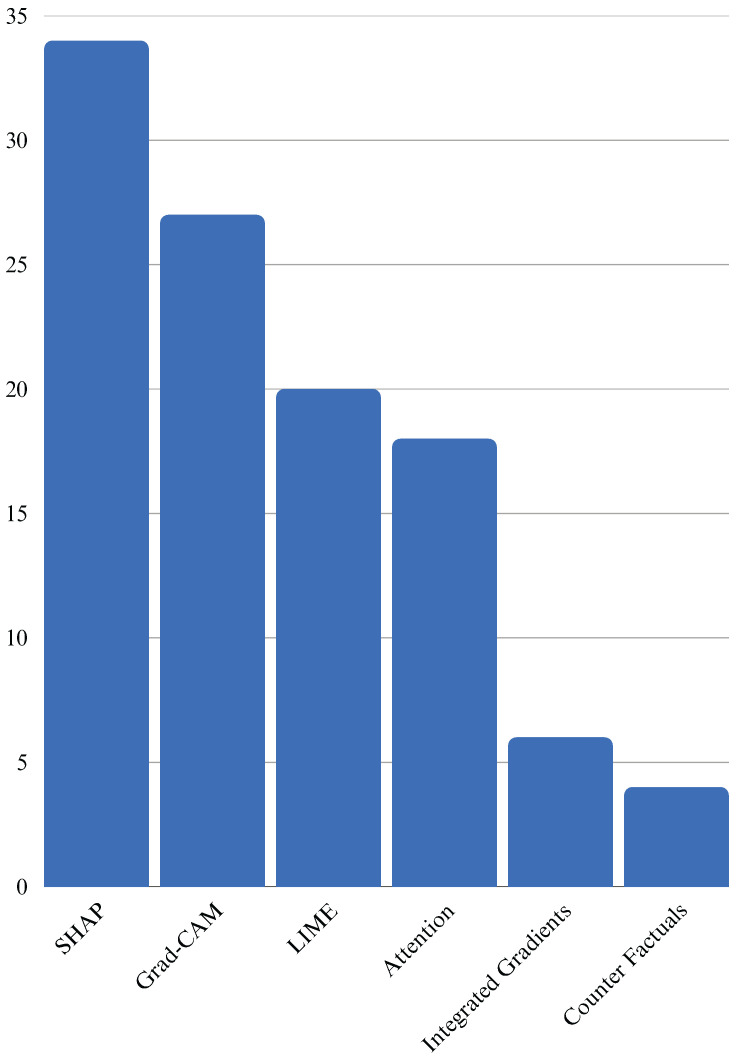
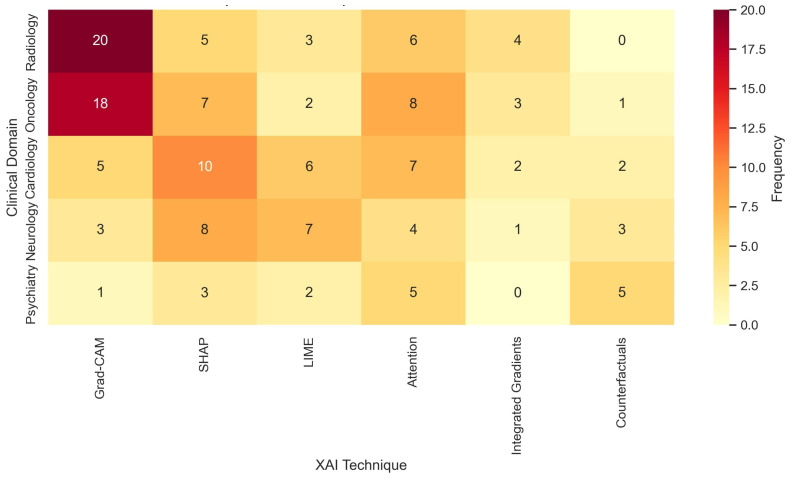
- Across 62 studies, SHAP was the most frequently used XAI method, followed by LIME and Grad-CAM; model-agnostic techniques dominated tabular/EHR tasks, while model-specific methods such as Grad-CAM and attention mechanisms prevailed in imaging and sequential data. Concept-based explanations appeared in 4 studies.
- Reported model performance had a median AUC of 0.87 (IQR 0.81–0.93), accuracy 86.4, sensitivity 84.1, and specificity 85.3. Studies combining high predictive performance with explanation fidelity ≥0.85 reported clinician trust scores 12–18 percentage points higher than those without quantitative explanation evaluation.
- Explanation evaluation was limited: fidelity n = 16, consistency n = 10, human trust/agreement n = 9, localization accuracy n = 6, and qualitative case studies n = 12. Only 18 of 62 studies reported clinical validation through physician feedback, usability testing, or pilot deployment.
- Methodological and ethical gaps were common: 87% of studies reported improved interpretability, but only 11 used robust statistical testing; 17.7% conducted formal significance tests; confidence intervals for interpretability metrics were reported in eight studies; 29% shared complete codebases; 18/62 (29%) reported clinician involvement; 22.5% conducted formal trust scoring; and 15% included fairness or bias mitigation strategies.
Methods
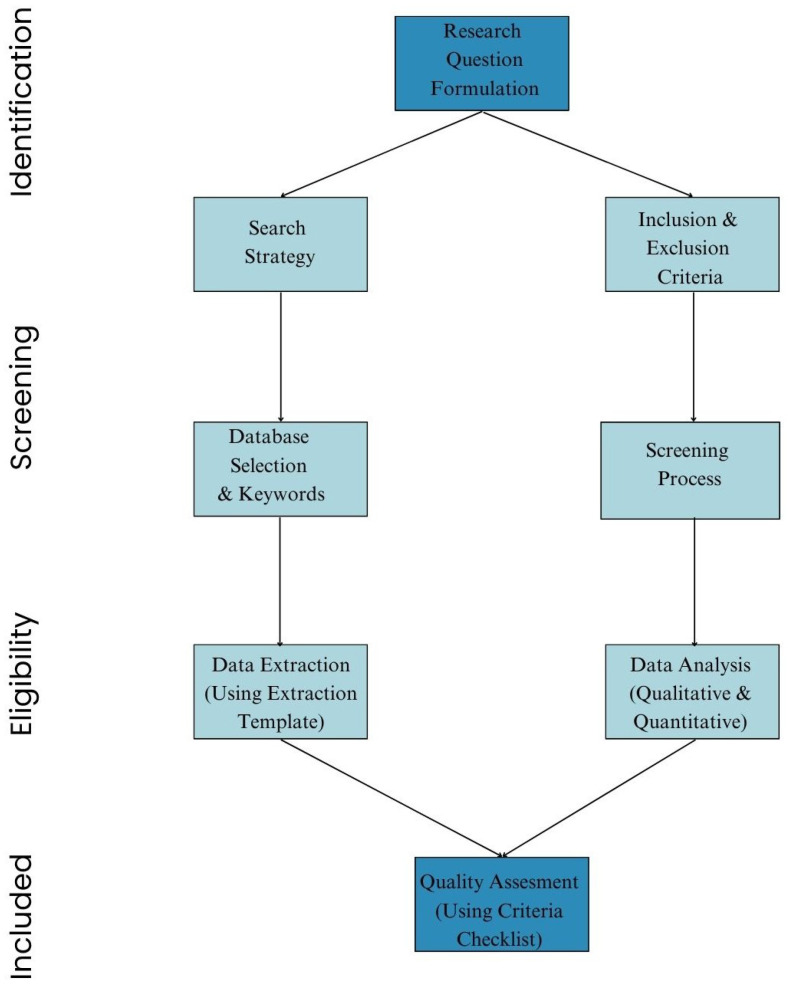
- PRISMA-guided systematic review searching PubMed, IEEE Xplore, Scopus, and Web of Science from January 2018 to May 2025 using Boolean keyword combinations. The initial search returned 1,824 records; after removing 312 duplicates, 1,512 records were screened, 182 full texts assessed, and 62 studies included.
- Inclusion criteria required peer-reviewed English primary studies applying XAI to real-world clinical data or simulations for CDSSs and evaluating interpretability, transparency, usability, or trust. Reviews, editorials, studies without XAI implementation/evaluation, non-healthcare domains, and non-peer-reviewed preprints were excluded. Quality was assessed with a 10-point checklist adapted from CONSORT-AI and STARD-AI; studies scoring below 5 were excluded.
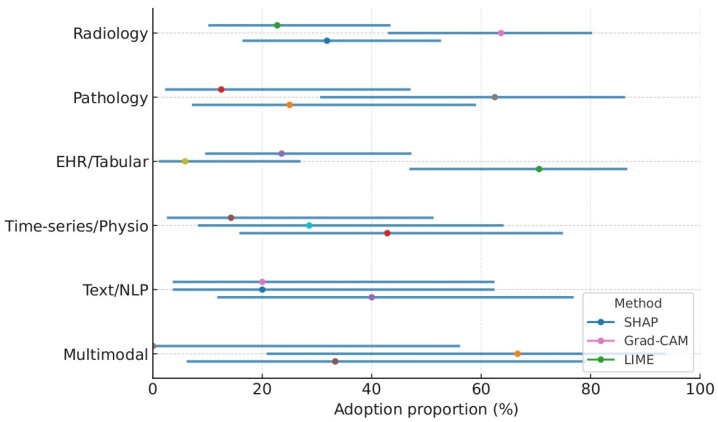
- Due to heterogeneity, no conventional effect-size meta-analysis was performed. The authors conducted a text-only quantitative synthesis of study-level proportions with 95% binomial confidence intervals (Wilson method) plus narrative synthesis grouped by XAI technique, clinical use case, and evaluation outcome. Software included Rayyan 1.6.1, Excel 2406, Python 3.11.5, and LaTeX 2024.
Limitations
- The paper states: restriction to English-language peer-reviewed articles may introduce language and publication bias; inconsistent reporting across studies limited replicability; qualitative synthesis involved subjectivity; the evolving XAI landscape means LLM/foundation-model explainability was minimally represented; no formal quantitative meta-analysis was possible due to heterogeneous metrics and poor statistical reporting; model and domain diversity was skewed toward imaging and structured EHR data; and most studies lacked patient, nurse, or administrator perspectives.
- Evident from the text: despite the title’s use of “Meta-Analysis,” the authors explicitly did not perform a conventional effect-size meta-analysis, relying instead on descriptive statistics and thematic synthesis. Several frequency results are reported narratively or vaguely (e.g., “many studies”) rather than with exact counts, and the review notes that explanation effectiveness, clinical impact, and usability interpretations remain inherently subjective.
Model-written summary. Check it against the paper before relying on it.
Integrity signals
Registry
Cites
Statistics
Figures
Verification
Claims the paper makes
3 Valid · 10 Not valid · 8 Not checked · 77 Own results and interpretations
The cited sources support only part of this claim — read each source’s verdict below.
In the paper
“Many AI models, especially deep neural networks, operate as “black boxes,” as they provide predictions or classifications without offering clear explanations for their outputs [9].”
§ Explainable AI in Clinical Decision Support Systems: A Meta-Analysis of Methods, Applications, and Usability Challenges > 1. Introduction
What the sources say
- Partly supportedcites [9] Ahmed M.I. Spooner B. Isherwood J. Lane M. Orrock E. Dennison A. A Systematic Review of the Barriers to the Implementation of Artificial Intelligence in Healthcare Cureus 2023 15 e46454 10.7759/cureus.46454 37927664 PMC10623210 sourceExperimental — accuracy not yet measured
The Review (page unavailable) defines the black-box phenomenon as an AI algorithm reaching a conclusion without users understanding its basis, and notes the lack of human-interpretable explanations for model predictions. It supports the general claim, but the passages do not specifically identify deep neural networks as especially prone to this problem. (LLM, conf=0.84)
plain- Asserted: passes — The authors put it forward as true.
- Checkable: passes — It can be checked against evidence.
- Load-bearing: passes — The paper’s conclusions depend on it.
- Based: passes — The paper gives a reason why it holds.
- Partly supported
The cited sources that could be checked couldn’t confirm or dispute this claim.
In the paper
“On the contrary, methods used to explain black-box models can introduce approximation errors or oversimplify prediction reasoning [28].”
§ Explainable AI in Clinical Decision Support Systems: A Meta-Analysis of Methods, Applications, and Usability Challenges > 1. Introduction
What the sources say
- Could not verifycites [28] Hu F. Yang H. Qiu L. Wang X. Ren Z. Wei S. Zhou H. Chen Y. Hu H. Innovation networks in the advanced medical equipment industry: Supporting regional digital health systems from a local–national perspective Front. Public Health 2025 13 1635475 10.3389/fpubh.2025.1635475 40823228 PMC12350417 sourceExperimental — accuracy not yet measured
The Research methods section describes social network analysis of patent collaborations, while the Limitations section discusses constraints of those data and the regional scope; neither addresses explanations of black-box predictions. Searches for approximation errors, oversimplified prediction reasoning, and explainable AI found no passage supporting the claim. The indexed passages provide no page numbers. (LLM, conf=0.77)
plainstates a cause- Asserted: passes — The authors put it forward as true.
- Checkable: passes — It can be checked against evidence.
- Load-bearing: passes — The paper’s conclusions depend on it.
- Based: passes — The paper gives a reason why it holds.
- Could not verify
The cited sources that could be checked couldn’t confirm or dispute this claim.
In the paper
“However, despite these advancements, a critical barrier to the widespread adoption of AI in healthcare is the lack of transparency and interpretability in model decision-making processes [7,8].”
§ Explainable AI in Clinical Decision Support Systems: A Meta-Analysis of Methods, Applications, and Usability Challenges > 1. Introduction
What the sources say
- Could not verifycites [7] Li C. Wang P. Wang C. Zhang L. Liu Z. Ye Q. Xu Y. Huang F. Zhang X. Yu P.S. Loki’s Dance of Illusions: A Comprehensive Survey of Hallucination in Large Language Models arXiv 2025 2507.02870 sourceExperimental — accuracy not yet measured
The Introduction (p. 1) discusses patient-safety risks from hallucinated diagnostic recommendations, not transparency or interpretability as a barrier to healthcare AI adoption. The Method Exploration section (p. 26) proposes more transparent expressions of model uncertainty, but does not connect them to healthcare adoption. Searches for healthcare adoption and model interpretability found no passage making the attributed point. (LLM, conf=0.75)
- Could not verifycites [8] Song J. Ma C. Ran M. AirGPT: Pioneering the convergence of conversational AI with atmospheric science npj Clim. Atmos. Sci. 2025 8 179 10.1038/s41612-025-01070-4 sourceExperimental — accuracy not yet measured
The Ethical considerations section discusses transparency about AirGPT’s limitations and capabilities in air-quality research, not the interpretability of AI decision-making in healthcare. Searches for healthcare adoption barriers and model interpretability found no passage in our copy addressing the claim; page numbers were unavailable. (LLM, conf=0.78)
plainstates a cause- Asserted: passes — The authors put it forward as true.
- Checkable: passes — It can be checked against evidence.
- Load-bearing: passes — The paper’s conclusions depend on it.
- Based: passes — The paper gives a reason why it holds.
- Could not verify
The cited sources that could be checked couldn’t confirm or dispute this claim.
In the paper
“Concept-based explanations (n = 4) attempted to align learned representations with human-recognizable clinical concepts (e.g., visual patterns or lab markers) [112].”
§ Explainable AI in Clinical Decision Support Systems: A Meta-Analysis of Methods, Applications, and Usability Challenges > 3. Results and Analysis > 3.1. Distribution by XAI Technique
What the sources say
- Could not verifycites [112] Wachter S. Mittelstadt B. Russell C. Counterfactual explanations without opening the black box: Automated decisions and the GDPR Harv. J. Law Technol. 2017 31 841 10.2139/ssrn.3063289 sourceExperimental — accuracy not yet measured
The discussion of explanations in AI and machine learning (pp. 11–12) describes human-understandable approximations of algorithms, not concept-based explanations that align learned representations with clinical concepts. Searches for clinical concepts, visual patterns, lab markers, and learned representations found no passage addressing that claim or the count of four. (LLM, conf=0.76)
plainn = 4- Asserted: passes — The authors put it forward as true.
- Checkable: passes — It can be checked against evidence.
- Load-bearing: unclear — It is unclear whether the paper’s conclusions depend on it.
- Based: passes — The paper gives a reason why it holds.
- Could not verify
The cited sources that could be checked couldn’t confirm or dispute this claim.
In the paper
“One major issue is the trade-off between model accuracy and interpretability. Simpler models such as logistic regression and decision trees are easier to explain but may lack the predictive power of complex neural networks [26,27].”
§ Explainable AI in Clinical Decision Support Systems: A Meta-Analysis of Methods, Applications, and Usability Challenges > 1. Introduction
What the sources say
- Could not verifycites [26] Ali S. Abuhmed T. El-Sappagh S. Muhammad K. Alonso-Moral J.M. Confalonieri R. Herrera F. Explainable Artificial Intelligence (XAI): What We Know and What Is Left to Attain Trustworthy Artificial Intelligence Inf. Fusion 2023 99 101805 10.1016/j.inffus.2023.101805 sourceExperimental — accuracy not yet measured
Section 1.1 discusses interpretable-by-design methods and accuracy as an evaluation measure, but does not describe an accuracy–interpretability trade-off. Searches for that trade-off, logistic regression and decision trees, and comparisons with neural networks found no passage supporting the claim in our copy. (LLM, conf=0.74)
- Not checked — no full text of the sourcecites [27] Liu Z. Si L. Shi S. Li J. Zhu J. Lee W.H. Lo S.L. Yan X. Chen B. Fu F. Classification of three anesthesia stages based on near-infrared spectroscopy signals IEEE J. Biomed. Health Inform. 2024 28 5270 5279 10.1109/JBHI.2024.3409163 38833406 source
hedgedstates a possible cause- Asserted: passes — The authors put it forward as true.
- Checkable: passes — It can be checked against evidence.
- Load-bearing: passes — The paper’s conclusions depend on it.
- Based: passes — The paper gives a reason why it holds.
- Could not verify
59 more claims
Create a free account to see all 98 claims and every source verdict.
- It may state two separate claims as one. 22
- Probably not a substantial claim. 19
- The quote only partly states this claim. 1
Claims other papers make about this one
Each is checked against this paper’s own text: does it say what the citing paper says it does?
The cited source doesn’t support the claim as written.
In the citing paper
“found no research that evaluated explanation fidelity, clinician trust, or usability in real-world settings”
From A generative AI multi-agent framework with integrated XAI governance for cancer diagnostics: from multi-omics interpretation to lifestyle risk stratification (2026) · cites this paper as Abbas et al., 2025
Checked by a reasoning model — may be wrong.
Experimental — accuracy not yet measuredThe cited source doesn’t support the claim as written.
In the citing paper
“model-agnostic post hoc techniques now constitute the majority of XAI tools deployed in oncology”
From A generative AI multi-agent framework with integrated XAI governance for cancer diagnostics: from multi-omics interpretation to lifestyle risk stratification (2026) · cites this paper as Abbas et al., 2025
Checked by a reasoning model — may be wrong.
Experimental — accuracy not yet measuredThe source backs part of the claim, not all of it — or backs it for a different population, condition or comparison.
In the citing paper
“for instance, early adopters may be susceptible to automation bias, leading to over-reliance on AI recommendations [82], while more skeptical users might exhibit confirmation bias, ignoring AI outputs that contradict their pre-existing beliefs [84].”
From Explainable AI for Clinical Decision Support Systems: Literature Review, Key Gaps, and Research Synthesis (2025) · cites this paper as [82]
Experimental — accuracy not yet measuredThe source backs part of the claim, not all of it — or backs it for a different population, condition or comparison.
In the citing paper
“For image-based XAI, the key challenges include managing visual confirmation bias, interpreting spatial ambiguity (as a heatmap shows *where* but not necessarily *why*), and ensuring the visual explanation is a faithful representation of the model's logic [82].”
From Explainable AI for Clinical Decision Support Systems: Literature Review, Key Gaps, and Research Synthesis (2025) · cites this paper as [82]
Experimental — accuracy not yet measuredThe cited source says what the claim attributes to it.
In the citing paper
“XAI for medical imaging primarily focuses on spatial attribution, using techniques like saliency maps (e.g., Grad-CAM) to answer the clinician's question, 'Where is the model looking?' [82].”
From Explainable AI for Clinical Decision Support Systems: Literature Review, Key Gaps, and Research Synthesis (2025) · cites this paper as [82]
2 more claims about this paper
Create a free account to see every claim other papers make about this one.
Self-check
Percentages, sums and reported differences re-computed from the paper’s own numbers.
Each contradiction between two passages listed here was confirmed by an independent check.
Rated major: it would touch a result — a value a result rests on, reported and recomputed p-values on opposite sides of the significance level, two passages that conflict with no sign which is right, or a cited work retracted before this paper was published.
In the paper
§ Explainable AI in Clinical Decision Support Systems: A Meta-Analysis of Methods, Applications, and Usability Challenges > Abstract
“there are still gaps in user-friendly evaluation, methodological transparency, and ethical issues, as seen by the absence of research that evaluated explanation fidelity, clinician trust, or usability in real-world settings.”
§ Explainable AI in Clinical Decision Support Systems: A Meta-Analysis of Methods, Applications, and Usability Challenges > 3. Results and Analysis > 3.4. Clinical Usability and Integration
“Of the 62 reviewed studies, only 18 explicitly reported clinical validation through physician feedback, usability testing, or pilot deployment.”
Rated minor: it would not touch a result — a value no result rests on, a p-value that stays on the same side of the significance level, or a conflict that is clerical, resolved elsewhere in the paper, or outside its own findings.
In the paper
§ Explainable AI in Clinical Decision Support Systems: A Meta-Analysis of Methods, Applications, and Usability Challenges > Abstract
“Model-agnostic techniques such as visualization models like Gradient-weighted Class Activation Mapping (Grad-CAM) and attention mechanisms dominated in imaging and sequential data tasks.”
§ Explainable AI in Clinical Decision Support Systems: A Meta-Analysis of Methods, Applications, and Usability Challenges > 3. Results and Analysis > 3.1. Distribution by XAI Technique
“In contrast, model-specific approaches such as Grad-CAM, attention mechanisms, and Integrated Gradients are tailored to deep neural network architectures and require access to gradients or attention weights [106].”
Citations
Cites
"Why Should I Trust You?": Explaining the Predictions of Any Classifier
Ribeiro, M. T., Singh, S., & Guestrin, C. (2016) · Proceedings of the 22nd ACM SIGKDD International Conference on Knowledge Discovery and Data Mining · doi:10.1145/2939672.2939778 · Cited by 17,555
Learning Deep Features for Discriminative Localization
Zhou, B., Khosla, A., Lapedriza, A., Oliva, A., & Torralba, A. (2016) · 2016 IEEE Conference on Computer Vision and Pattern Recognition (CVPR) · doi:10.1109/cvpr.2016.319 · Cited by 11,428 · cited 1×
“This visual modality is particularly helpful for explaining CNN decisions to medical professionals [47,108,109].”
From local explanations to global understanding with explainable AI for trees
Lundberg, S. M., Erion, G., Chen, H., DeGrave, A., Prutkin, J. M., Nair, B., Katz, R., Himmelfarb, J., Bansal, N., & Lee, S.-I. (2020) · Nature Machine Intelligence · doi:10.1038/s42256-019-0138-9 · Cited by 10,551 · cited 4×
“In contrast, model-specific approaches such as Grad-CAM, attention mechanisms, and Integrated Gradients are tailored to deep neural network architectures and require access to gradients or attention weights [106].”
InfluentialSelf-citationRajkomar, A., Dean, J., & Kohane, I. (2019) · New England Journal of Medicine · doi:10.1056/nejmra1814259 · Cited by 4,579 · cited 1×
“Its simplicity and ability to visualize feature importance for binary classifiers make it suitable for tabular EHR data [50,55].”
Axiomatic attribution for deep networks
Sundararajan, M., Taly, A., & Yan, Q. (2017) · arXiv · doi:10.48550/arxiv.1703.01365 · Cited by 4,087
Grad-CAM++: Generalized Gradient-Based Visual Explanations for Deep Convolutional Networks
Chattopadhay, A., Sarkar, A., Howlader, P., & Balasubramanian, V. N. (2018) · 2018 IEEE Winter Conference on Applications of Computer Vision (WACV) · doi:10.1109/wacv.2018.00097 · Cited by 3,639 · cited 1×
“This visual modality is particularly helpful for explaining CNN decisions to medical professionals [47,108,109].”
Rajpurkar, P., Chen, E., Banerjee, O., & Topol, E. J. (2022) · Nature Medicine · doi:10.1038/s41591-021-01614-0 · Cited by 3,212 · cited 1×
“Endocrinology, dermatology, psychiatry, and pathology each had a modest presence, often using hybrid or ensemble XAI pipelines [48,120,121].”
Explainable AI: a review of machine learning interpretability methods
Linardatos, P., Papastefanopoulos, V., & Kotsiantis, S. (2020) · Entropy · doi:10.3390/e23010018 · Cited by 2,922 · cited 1×
“These methods are designed to provide insights into which features influence a model’s decision, how sensitive the model is to input variations, and how the trustworthiness of its predictions varies across contexts [14].”
A Survey on Explainable Artificial Intelligence (XAI): Toward Medical XAI
Tjoa, E., & Guan, C. (2021) · IEEE Transactions on Neural Networks and Learning Systems · doi:10.1109/tnnls.2020.3027314 · Cited by 2,524 · cited 4×
“This trend reflects an increasing awareness that no single explanation technique is universally sufficient, and ensemble interpretability can enhance clinical confidence [47,106,115].”
InfluentialExplainability for artificial intelligence in healthcare: a multidisciplinary perspective
the Precise4Q consortium, Amann, J., Blasimme, A., Vayena, E., Frey, D., & Madai, V. I. (2020) · BMC Medical Informatics and Decision Making · doi:10.1186/s12911-020-01332-6 · Cited by 2,203
Research works printed but not linked: 3
- Koh P.W. Nguyen T. Tang Y.S. Mussmann S. Pierson E. Kim B. Liang P. Concept Bottleneck Models Proceedings of the International Conference on Machine Learning (ICML), PMLR Virtual 13–18 July 2020 5338 5348
- Kim B. Wattenberg M. Gilmer J. Cai C. Wexler J. Viegas F. Interpretability beyond feature attribution: Quantitative testing with concept activation vectors (TCAV) Proceedings of the International Conference on Machine Learning Stockholm, Sweden 10–15 July 2018 PMLR 2668 2677
- Chen C.K. Li O. Tao D. Barnett J. Rudin C. Su J. This looks like that: Deep learning for interpretable image recognition Proceedings of the Advances in Neural Information Processing Systems Vancouver, BC, Canada 8–14 December 2019 Volume 32
Cited by
Items 101–200 of 221
Othman, M. A. (2026) · Digital Health · doi:10.1177/20552076261428362
Alsaad, N., Peralta, R. R., Mokdad, Z. A., Msheik, A., Khan, M. M., Illeyan, A., Shah, N., Hussein, M., Al-Shurbaji, F., & Iqbal, J. (2026) · IntechOpen eBooks · doi:10.5772/intechopen.1014950
Njei, B. M., & Kanmounye, U. S. (2026) · JMIR Research Protocols · doi:10.2196/90456 · Cited by 1
“Recent studies in liver disease and other clinical prediction settings have increasingly used explainable machine learning approaches to move beyond black-box risk estimates and provide patient-level feature attribution that may support clinician interpretation and adoption [20-22].”
Amadó, C., Martín, A., Miró, J., Torres, F. J. R., Ruiz, A., Haji, A. E., Clavé, P., & Ortega, O. (2026) · JMIR AI · doi:10.2196/81028
“In this context, AI-based screening approaches may offer complementary value by enabling systematic and scalable identification of patients at risk in scenarios where conventional clinical assessment is limited or not routinely feasible [23,24].”
Kokoszka, M., Chodór, M., Kuczkowska, J. M., Bordakiewicz, J., Michalska, Z., Pokorska, D., Świechowska, J., Zarzycka, Z., Samberger, I., & Wiciak, M. (2026) · International Journal of Innovative Technologies in Social Science · doi:10.31435/ijitss.1(49).2026.4963 · Cited by 1
“CDSS applications in oncology and cardiology have already begun utilizing XAI to interpret malignancy and arrhythmia[18].”
InfluentialSarcoidosis and Obstructive Sleep Apnoea: An Intriguing Relationship
Ciccarelli, U., Ghelardini, P., Pisciella, M. C., Zezza, G., Nervoso, A., Giordani, F., Mari, P., Martone, F. M., & Siciliano, M. (2026) · The Open Respiratory Medicine Journal · doi:10.2174/0118743064450100260420103730
Muthukrishnan, P. J., & Packialatha, A. (2026) · IEEE International Conference on Communication Systems and Network Technologies (CSNT) · doi:10.1109/csnt69054.2026.11502331
“In their recent meta-analysis, Abbas et al. [7] demonstrate how SHAP and LIME improve feature-level knowledge in CDSS. Visual approaches such as saliency maps and Grad-CAM highlight the application of XAI in medical imaging, as shown by Hettikankanamage et al. [8].”
Tasci, G., Kaya, Ş., Taşçı, İ., Bayğın, M., Yıldırım, K., Taşçı, B., Doğan, Ş., & Tuncer, T. (2026) · Psychiatry Research · doi:10.1016/j.psychres.2026.117227 · Cited by 2
Muthunambu, N. K., Sowmiya, K., B, M. L., Karthic, E., & Nithish, S. (2026) · International Conference on Smart Electronic Devices and Intelligent Systems (ICSEDIS) · doi:10.1109/icsedis68157.2026.11518078
“Fuse modality representations using weighted summation 5.”
Ravindhran, B., Hatfield-Chetter, G., Morris-Jarvis, J. A., Stedman, N., Carradice, D., Smith, G., Thakker, D., Bicknell, C. D., Chetter, I. C., & Pymer, S. (2026) · Annals of Vascular Surgery · doi:10.1016/j.avsg.2026.05.071 · Cited by 1
Łuniewska, M., Noja, G.-G., Țăran, A.-M., Niemcewicz, P., & Stankevičienė, J. (2026) · Technological Forecasting and Social Change · doi:10.1016/j.techfore.2026.124704 · Cited by 2
Faheem, S., Bahri, R., Bansal, H., & Santoshi, S. (2026) · International Conference on Computing for Sustainable Global Development · doi:10.23919/indiacom70271.2026.11525837
“It adjusts the calculation by giving more importance to classes with more samples; this ensures that the final score is a reflection of the performance across all classes even when the dataset is imbalanced [25].”
Mogavero, M. P., Bruni, O., Lanza, G., Faraguna, U., Silvani, A., & Ferri, R. (2026) · SLEEP · doi:10.1093/sleep/zsag149
Singh, V., Jhamb, A., Sil, S., Kumar, S., Agrawal, C., Pareek, A., Gautam, A., Parale, G. P., Singh, S., & Padmanabhan, D. (2026) · International Journal of Research in Medical Sciences · doi:10.18203/2320-6012.ijrms20261686
Han, X., Wang, F., & Wang, G. (2026) · Frontiers in Cardiovascular Medicine · doi:10.3389/fcvm.2026.1780649
“In pediatric cardiomyopathy (71).”
Explainable Deep Neural Networks for Heart Disease Prediction in Clinical Decision Support
Ishaya, C., Yıldırım, P., & Gambo, Y. (2026) · International Congress on Human-Computer Interaction, Optimization and Robotic Applications (ICHORA) · doi:10.1109/ichora69329.2026.11536986
A Comparative Analysis of e-Sanjeevani and an AI-Driven Telemedicine Chatbot Framework
Rajendran, S., & Shastry, C. (2026) · International Journal of Emerging Research in Science Engineering and Management · doi:10.66710/ijersem.v2i5.1
Savvopoulos, S., Παπαδοπούλου, Α., Karavalakis, G., Sakellari, I., Georgolopoulos, G., Argyropoulos, C., Yannaki, E., & Hatzikirou, H. (2026) · JMIR Medical Informatics · doi:10.2196/78471 · Cited by 1
“A broad synthesis across clinical domains shows model-agnostic explanation tools are common while gaps remain in explanation fidelity, clinician trust, and usability [21].”
Li, Y., Deng, H., & Gu, Y. (2026) · Bioengineering · doi:10.3390/bioengineering13060665
Zhu, A., Wei, S., Wang, H., Liu, S., Li, Y., Pan, X., Gao, X., & Lin, X. (2026) · Digital Health · doi:10.1177/20552076261458962 · Cited by 1
Reducing Bias in Skin Image Analysis for Pre-Diabetes Prediction Using Multimodal Transformers
Kaur, R., & Kukreja, S. (2026) · International Conference Big Data and Machine Learning · doi:10.1109/icbdml68582.2026.11544663
“A meta-analysis conducted by Abbas et al. (2025) identified [15] Grad-CAM and SHAP as prevalent and reliable methodologies in clinical decision-support systems, attributed to their transparency and user-friendliness.”
Iglesias, V. S., Modi, N. J., Purackal, R. S., Shoukat, K., Koyun, A., Nangolo, M. N., & Park, K. (2026) · Westcliff International Journal of Applied Research · doi:10.47670/wuwijar20262vnrkamk
Gogoi, P., & Valan, J. A. (2026) · Computer Methods in Biomechanics & Biomedical Engineering · doi:10.1080/10255842.2026.2682548
Mitra, N., & Dey, A. (2026) · doi:10.1109/qpain69676.2026.11546038
“Artificial intelligence is increasingly integrated into health-care systems, demonstrating significant potential in clinical decision support and predictive modeling [9], [10].”
S, S. D., & Jamuna, R. (2026) · International Conference on Intelligent Communication Technologies and Virtual Mobile Networks (ICICV) · doi:10.1109/icicv68925.2026.11554621
“The transparency has become an issue that has questioned the issue of trust, accountability and ethical compliance in automated decision systems [3].”
Eskandar, K. (2026) · World Journal of Nephrology · doi:10.5527/wjn.v15.i2.117719 · Cited by 1
Xing, H., Rehman, A., Hussain, M., Mastoi, M. S., Gulzar, N., & Khan, M. A. (2026) · Archives of Computational Methods in Engineering · doi:10.1007/s11831-026-10699-0 · Cited by 2
Cusácovich, I., Martin, M. P., & Castro, R. G. (2026) · JMIR Formative Research · doi:10.2196/104579
“Interface design is therefore central: Explanations, confidence cues, and recommendation framing may influence trust, but explainability alone does not reliably prevent overreliance [18-20].”
A capability centric framework for delivering human centred AI services in healthcare
Atariani, M. (2026) · Discover Artificial Intelligence · doi:10.1007/s44163-026-01572-x
“For imaging tri-age, this includes tracking model performance across anatomical regions and patient subgroups, override rates (for example, radiologists downgrading or upgrading flags), and clinical outcomes such as time-to-report for critical findings [19, 20, 38].”
PhysioRAG: A RAG-Based System for Evidence-Based Physiotherapy Guidance
Hamza, M., Bordia, N., M., P. V., & C., M. H. (2026) · International Multi-Conference on Systems, Signals & Devices (SSD) · doi:10.1109/ssd69655.2026.11559043
“A primary hurdle to clinical adoption remains the “black box” issue [9], [10] and the risk of “hal-lucination” [11]–[13].”
Brown, A. E., Marostica, C. W., Hodgson, N. R., & Martini, W. A. (2026) · Cureus · doi:10.7759/cureus.111163 · Cited by 1
“There also currently exists limited research that combines rigorous model evaluation with eXplainable Artificial Intelligence (XAI) techniques applied at both the population and individual prediction levels [24-26].”
Liu, T., Wang, H., Liu, J.-L., Zhao, X., Xia, Y., Wang, X., Kang, Y., Liu, C., Gao, X., Jiang, X., et al. (2026) · npj Digital Medicine · doi:10.1038/s41746-026-02901-1 · Cited by 2
“Furthermore, interpretability and transparency of POCC are essential for gaining clinicians ’ trust 31 .”
Artificial Intelligence for Weight Management in Children: A Narrative Review
Calcaterra, V., Marin, L., Cena, H., Vandoni, M., Conti, M. V., Guardamagna, L., Patanè, P., Rossi, V., Pellino, V. C., Silvestri, D., et al. (2026) · Healthcare · doi:10.3390/healthcare14131821 · Cited by 1
“Beyond ethical considerations, practical issues related to acceptability and usability play a crucial role in determining the real-world effectiveness of AI-based interventions [112].”
Phiphatkhunarnon, P., Kitro, A., Suksatit, B., Neo, B. L., Do, T., & Tepsan, W. (2026) · Informatics · doi:10.3390/informatics13070103
Haas, S., Högemann, M., & Thomas, O. (2026) · Frontiers in Artificial Intelligence · doi:10.3389/frai.2026.1830201 · Cited by 1
Wang, H., Zhao, B., Jiao, Y., Liang, C., & Zheng, G. (2026) · Technological Forecasting and Social Change · doi:10.1016/j.techfore.2026.124803 · Cited by 3
Transforming Diagnostics Through Generative Models
ElSayary, A. (2026) · Advances in computational intelligence and robotics book series · doi:10.4018/979-8-3373-7082-8.ch004
Tettey, J., Abdulazeez, H. A., Yusuff, T. A., Olabanji, O., & Akor, J. T. (2026) · International Journal of Evidence-Based Medicine · doi:10.63946/jebm/18769
“Existing telemedicine models remain insufficiently equipped to address how AI integration may alter perceptions of accountability, human oversight, and therapeutic JEBM: https://www.jebm.org/ authenticity within digitally mediated healthcare environments [31].”
Hou, S. H. S., Jiang, J., Li, X., Yang, M., Chen, Q., Ma, X., & Gu, X. (2026) · Journal of Medical Internet Research · doi:10.2196/94775
“Compared with similar studies, the explainability methods used in this research are relatively limited [34,35].”
Bridging AI and Clinical Reasoning: Abductive Explanations for Alignment on Critical Symptoms
Sonna, B., & Grastien, A. (2026) · Australasian Computer Science Week Multiconference (ACSW) · doi:10.1145/3793811.3793822
Sukthong, N. (2026) · Asia Pacific Information Technology Conference (APIT) · doi:10.1145/3796130.3796135
“Explainable Artificial Intelligence (XAI) has therefore become an essential research direction aimed at improving the transparency, interpretability, and accountability of ML systems in healthcare [10].”
InfluentialAliyev, V., Cebeci, S., Birsin, Z., et al. (2026) · Clinical & Translational Oncology · doi:10.1007/s12094-026-04484-5
Rule Extraction Methods Based on Triadic Fuzzy Linguistic Formal Context
Shao, M., Zhao, H., Liu, Y., et al. (2026) · Lecture notes in computer science · doi:10.1007/978-981-92-2369-5_31
Smart Medical Assistance System Using AI
Singh, P. K., Anand, R., & Tripathi, A. M. (2026) · IEEE International Conference on Computing, Power and Communication Technologies (IC2PCT) · doi:10.1109/ic2pct68894.2026.11584397
“However, usability testing is limited, there are no Standardized Interpretability Metrics, and the Trust of Clinicians is low [18].”
Wang, Y., Yao, J., Tian, J., Wang, Y., & Yang, Y. (2026) · JMIR Research Protocols · doi:10.2196/88163
“Critically, recent meta-analytic work on explainable AI in clinical decision support emphasizes that robust evaluation must extend beyond technical metrics to encompass interpretability, usability, and user trust —dimensions increasingly recognized as essential for safe clinical integration [16].”
Sona, R., Sanjith, S. R., Iswarya, M., & Bhuvaneswari, M. (2026) · Frontiers in Public Health · doi:10.3389/fpubh.2026.1901894
Bhuvaneswari, V., Navithyan, P., Akhter, M. A., et al. (2026) · International Conference on Next Generation Electronics (NELEX) · doi:10.1109/nelex69209.2026.11590610
“Abbas et al. [5] identified the explainable AI problem is aimed at assisting the physicians with decision-making and the issue of AI transparency.”
Artificial Intelligence and Healthcare Policy: A Bibliometric Analysis of Global Research Trends
Rashidian, P., Heidarzad-Pahlaviani, F., Moghimnejadhosseini, S., Chellapuram, N., Somu, K. P., Jala, S. R. A., Jeanty, H., Sahu, S., Mahapatro, A., Talebzadeh, M., et al. (2026) · Healthcare · doi:10.3390/healthcare14142103 · Cited by 1
“Explainability, transparency, and interpretability are increasingly viewed as essential to clinician trust, human oversight, and responsible decision-making in high-stakes health environments [54,55].”
Segarra, C. O. V., & García, J. D. M. (2026) · ASCE MAGAZINE · doi:10.70577/asce.v5i3.999
Panner, E., Scheffer, S., & Matyas, K. (2026) · IEEE International Conference on Human-Machine Systems (ICHMS) · doi:10.1109/ichms69701.2026.11602295 · Cited by 2
“As noted in literature, “Especially in safety-critical domains such as healthcare, it is perceived that explainable AI (XAI) can engender trust, help monitor bias, and facilitate AI development” [17].”
InfluentialNeto, R. O. C., Bergamo, F. M. D. A., Ribeiro, L. D., Mundim, A. P. M., Betanzoz, A. C. M., Anunciação, E. J. S. D., Cunha, C. F. D. S. B., Cales, M. D. S., Marceliano‐Alves, M. F. V., & Maslinkiewicz, A. (2026) · RECIMA21 - Revista Científica Multidisciplinar · doi:10.47820/recima21.v7i7.8570
Vorwerk, J., Leypoldt, L. B., Schwandt, J., Kohler, J., Nimmagadda, S. C., Ahmed, H., Patnana, P. K., Hönemann, H., Helbing, T., Feierabend, S., et al. (2026) · Oncology Research and Treatment · doi:10.1159/000553462
Keldal, G., ÇELİK, M., İni̇k, Ö., et al. (2026) · International Journal of Clinical Practice · doi:10.1155/ijcp/5543116
A Novel Probabilistic- Based Data Enrichment Approach for imbalanced Medical Dataset Classification
Nezzar, N. E. H., Dendani, N., & Azizi, N. (2026) · International Conference on Pattern Analysis and Intelligent Systems (PAIS) · doi:10.1109/pais69842.2026.11605287
“…or augmented data are incorporated [36] Explainable Artificial Intelligence (XAI) methods address these challenges by providing post-hoc explanations that quantify the contribution of each input feature to the model predictions, both at the population level and for individual instances [37].”
Emerging Biomarkers and Artificial Intelligence: Transforming Clinical Biochemistry Diagnostics
Bhore, M., Kaple, M., Vagga, A. A., et al. (2026) · IEEE International Conference on Intelligent Technologies for a Sustainable and Inclusive Future (ICITSIF) · doi:10.1109/icitsif69060.2026.11609149
“Moreover, incorporating new biomarkers into current models of artificial intelligence might not have sufficient validation or commonly accepted reference ranges [19].”
An XAI Framework for Heart Disease Oriented Healthcare Decision Support Systems
Kamdi, N. G., Dagadkar, S. N., Puri, C., Bansod, S., Kamdi, P., & Pimpalkar, A. K. (2026) · IEEE International Conference on Intelligent Technologies for a Sustainable and Inclusive Future (ICITSIF) · doi:10.1109/icitsif69060.2026.11608423
“Explainable Artificial Intelligence (XAI) techniques have therefore become more widely used in clinical decision support systems due to the need for transparent, reliable, and human-centered AI systems [2], [18].”
Yeni, D. K., Güven, D., BÜYÜK, F., & Gökmen, M. C. (2026) · Journal of Microbiological Methods · doi:10.1016/j.mimet.2026.107638
Billa, M., Thomas, M., & J, V. M. (2026) · Research Square · doi:10.21203/rs.3.rs-10465954/v1
Agrawal, H., & Gupta, N. (2026) · International Surgery Journal · doi:10.18203/2349-2902.isj20262497
“34 Although this conceptual workflow remains largely theoretical for jejunal diverticulosis at present, similar AI-assisted pipelines have already been successfully implemented in other areas of gastrointestinal imaging and acute abdominal pathology.”
Yang, Q., Li, S., Wang, K., Chang, X., Cao, S., & Zhang, G. (2026) · Frontiers in Psychology · doi:10.3389/fpsyg.2026.1886547 · Cited by 1
Frimu-Pascu, D.-D., Dobre, C., & Olteanu, M. (2026) · Sensors · doi:10.3390/s26154817
“…require contextual interpretation with treatment phase and comorbidities [22–27]; and clinical multimodal AI requires explain-ability, auditability, privacy safeguards, and human oversight [28–30,32 These gaps motivate a design principle: each agent addresses a specific sensing-system requirement.”
Soegiarto, G., Sutanto, H., Elisa, E., Baskoro, A., Fetarayani, D., Endaryanto, A., Pawarti, D. R., Umborowati, M. A., Rahmawati, L. D., Nurani, W. K., et al. (2026) · Allergy medicine. · doi:10.1016/j.allmed.2026.100125 · Cited by 2
Sayeed, S., & Liang, G. (2026) · International Conference on Federated Learning and Intelligent Computing Systems (FLICS) · doi:10.1109/flics70075.2026.11621939
“Abbas et al. [3] conducted a meta-analysis synthesising 62 studies on explainable AI in clinical decision support, finding that SHAP [22], Local Interpretable Model-agnostic Explanations (LIME), and Gradient-weighted Class Activation Mapping (Grad-CAM) were the most frequently applied techniques.”
Aladhadh, S. (2026) · Life · doi:10.3390/life16081259
“Furthermore, research in this domain is greatly constrained by limited access to large, well-annotated ECG datasets due to privacy and regulatory restrictions that hinder reproducibility and comparative evaluation [8,9].”
Chitca, D.-D., Botezatu, C., Pancă, C. C., Mastalier, B. S. M., & BUJDEI-TEBEICA, V. (2026) · Proceedings of the ... International Conference on Business Excellence · doi:10.2478/picbe-2026-0382
“(Abbas et al., 2025; Rajkomar et al., 2019) In practice, many contemporary architectures are hybrid, combining explicit clinical rules (for safety constraints and guideline adherence) with ML components (for risk prediction and prioritization).”
Evaluation a Decision Support System Based-Machine Learning for Medical Issues
Ahmed, A. S., Layeb, S. B., & Salah, H. A. (2026) · Lecture notes in networks and systems · doi:10.1007/978-3-032-32023-0_3
An Explainable Graph Neural Network Framework for Anemia Classification on Imbalanced Tabular Data
Ramdani, M., Rahmawati, A., & Nurjakiah, M. R. (2026) · Journal of Intelligent Systems Technology and Informatics · doi:10.64878/jistics.v2i2.266
Explainable and Trustworthy AI Models for Precision Medicine and Clinical Decision Support Systems
Kunduru, P. R. (2026) · Lecture notes in networks and systems · doi:10.1007/978-3-032-25631-7_31
Pavan, K., Asahara, S., Ganapathy, N., et al. (2026) · Applied Sciences · doi:10.3390/app16157630
Liang, Y., Li, Z., & Ge, J. (2026) · Vessel Plus · doi:10.20517/2574-1209.2026.40
Sydorchuk, L., Соколенко, М. О., Sydorchuk, R. I., Соколенко, А., Kamyshna, I. I., Sokolenko, L., Moroz, P. V., Sydorchuk, A., Sokolenko, O., Halabitska, I., et al. (2026) · Frontiers in Cellular and Infection Microbiology · doi:10.3389/fcimb.2026.1874596
Human-Centered AI for Precision Healthcare
Pamungkas, V. A., Malau, D. A., Pertiwi, I. M., Laksana, R. P., & Budiarsa, R. (2026) · Advances in computational intelligence and robotics book series · doi:10.4018/979-8-3373-8904-2.ch002
Chen, Z., Zhang, D., Yu, D., Gong, Y., & Qin, P. (2026) · International Conference on Artificial Intelligence and Computing (AIC) · doi:10.1109/aic65131.2026.11633849
“Topological analysis—specifically degree distributions— transforms KGs into interpretable systems by revealing the semantic organization of knowledge [16], [37], [38].”
Saberi, K., Abbood, R. S., Al-Taie, S. F., Smerat, A., Abdullayev, M. M., Maksudova, M. K., Hedayatinia, M., Zarei, A., Nourizadeh, M., Ghahari, A., et al. (2026) · Veterinary Medicine and Science · doi:10.1002/vms3.71152
“…on models developed from biased, incomplete or poorly validated datasets may compromise patient care, particularly when outputs influence high-stakes decisions such as surgery, long-term treatment planning or euthanasia (Giordano et al. 2021 ; Xiao et al. 2025 ; Abbas et al. 2025 ; Bellamy 2023 ).”
Fine-Grained Geriatric Emotion Recognition Using Multi-Region Attention Network (MRAN)
Sari, W. P., Prasetya, N. W., Harianto, R. W., Sari, N. M. A. W., & Manaf, H. (2026) · International Conference on Applying New Technology in Green Buildings (ATiGB) · doi:10.1109/atigb70203.2026.11628341
“Because of this, holistic models have high false-positive rates for negative emotions, which makes them unreliable for clinical screening where high precision is critical [7].”
HEAL-HCV: A Hybrid Explainable AI Learning Framework for Hepatitis C Screening
Majumdar, A., Begum, R., Mondal, S., Das, B., & Khatua, D. (2026) · Internet of things · doi:10.1007/978-3-032-27248-5_2
EMHRI-XAI Framework for Diabetic Complication Prediction and Risk Monitoring in Women
U, R. M. V., Pushpalatha, M. P., & Patel, M. V. (2026) · doi:10.1109/icseti67678.2026.11636674
“SHAP plots like waterfall plots resulted in more comprehensive case-level interpretation of contributors to risk [20], [21].”
Explainable Discomfort Detection: A Privacy-Aware Framework for Patient-Centered AI
Liu, S., & Liu, J. (2026) · International Conference on Electrical, Computer and Energy Technologies (ICECET) · doi:10.1109/icecet65726.2026.11633260
“Traditional Explainable AI (XAI) techniques like saliency maps (e.g., Grad-CAM) can show where a model is looking but fail to communicate why in a way that is clinically meaningful [17].”
Chen, K., & Wen, L. (2026) · International Conference on Artificial Intelligence and Big Data (ICAIBD) · doi:10.1109/icaibd69640.2026.11637354
“Explainable AI is crucial for enhancing clinical decision transparency and user trust [9], while mitigation mechanisms based on big data and explainable systems have been proposed for cognitive biases in executive decision-making [10].”
Saranya, N., Kalidas, P., Dharanya, G., Sujithra, L. R., Abinaya, B., & Shermy, R. P. (2026) · International Conference on Intelligent and Sustainable AI Systems (ICOSAAS) · doi:10.1109/icosaas68663.2026.11649190
Explainable AI in Personalized Medicine: Bridging Patient Data and Clinical Decisions
Shrivastava, A., Gupta, N., Madhavi, A., Donthamsetty, S., Mahajan, S., & Sharma, S. (2026) · International Conference on Emerging Trends in Information, Communication & Systems (ICETICS) · doi:10.1109/icetics69505.2026.11651309
“Research in [12] highlighted the importance of structured data management and institutional databases, which form the backbone for reliable explanation generation.”
From Algorithm to Augmentation: Redefining Human–AI Dynamics in Modern Healthcare
Gresbek, M., & Schirmer, H. (2026) · IntechOpen eBooks · doi:10.5772/intechopen.1017039
Wang, Z., Yang, K., Wang, L., Zhao, H., Lv, P., Cai, C., Sun, W., & Wang, B. (2026) · Frontiers in Pharmacology · doi:10.3389/fphar.2026.1861637
Reséndez, V., Kazokas, M., Dumlu, S. N., Borsci, S., & Yildirim, F. (2026) · Human Factors in Healthcare · doi:10.1016/j.hfh.2026.100158
Delgado, C. N. P., Torres-García, C., Álvarez-Ruiz, M., Golchin, M. D., Serrada-Tejeda, S., Máximo-Bocanegra, N., & Pérez‐de‐Heredia‐Torres, M. (2026) · Applied Sciences · doi:10.3390/app16178374
Diamantidis, D. E., Tsakaldimis, G., Smyrlis, N. V., Chousein, C., Kafalis, C., Foutzitzi, K., Deligeorgiou, E., Panagiotopoulos, N., Lailisidis, S., Georgellis, C., et al. (2026) · Current Urology · doi:10.1097/cu9.0000000000000367
Xu, T., Yin, Y., Zhang, X., Wei, W., Yuan, J., Wang, H., Ding, G., Xue, W., Chen, Z., Xie, S., et al. (2026) · Journal of Medical Internet Research · doi:10.2196/98118
“Work on transparency and explainability similarly distinguishes subjective trust from appropriately calibrated reliance on an AI system [45].”
Obeagu, E. I. (2026) · Frontiers in Oncology · doi:10.3389/fonc.2026.1910821
“AI-enabled D-dimeromics has the potential to complement existing prognostic models by integrating longitudinal D-dimer trajectories with radiomic, pathomic, genomic, liquid biopsy, and clinical data to generate continuously updated individualized risk pro fi les (40).”
Structural requirements for intelligent clinical digital twins in feedback-driven care
Wang, Y., Smith, G. E., Lipori, G. P., Sun, R. C., Shenkman, E. A., Liu, M., Wu, Y., & Guo, Y. (2026) · npj Health Systems · doi:10.1038/s44401-026-00143-7
“Generative AI may support components such as organizing and summarizing multi-source clinical information, preserving clinically meaningful temporality in internal representations, and improving communication of outputs and uncertainty through decision interfaces 54,55 .”
Biddeci, G., Spinelli, G., Colomba, P., et al. (2026) · Cells · doi:10.3390/cells15171614
Arends, G. R., van Kooij, Y. E., Rutten, J. J. S., Bolt, I. L. L. E., Loos, N. L., & Wouters, R. M. (2026) · Archives of Physical Medicine and Rehabilitation · doi:10.1016/j.apmr.2026.08.019
Dynamic alignment of large language models for evidence-grounded heart failure decision support
Liu, L., Dong, C., Ba, Y., Yan, H., Tang, X., Sun, Y., Chen, H., Shi, B., Yu, Q., & Zhang, S. (2026) · Digital Health · doi:10.1177/20552076261487568 · Cited by 3
Cozmescu, A. F., Cernega, A., Didilescu, A. C., Imre, M. M., Funieru, C., & Pițuru, S.-M. (2026) · Dentistry Journal · doi:10.3390/dj14090572 · Cited by 1
“…seen precisely among educated, digitally engaged patients may therefore be interpreted not as technophobia but as a calibrated response to recognized ambiguity, consistent with calls for comprehensive regulatory frameworks that clarify accountability, transparency, and patient protection [61–63].”
Ma, M.-L., Cao, J., & Yang, J. (2026) · Frontiers in Psychology · doi:10.3389/fpsyg.2026.1934277
Molla, A. S., Chowdhury, A., Shuvo, S. S. A., et al. (2026) · IoT · doi:10.3390/iot7030073
Martínez, O. F. A., & Lin, S. (2026) · Journal of Pediatric Nursing · doi:10.1016/j.pedn.2026.09.010
Innocent, D. C., Innocent, R. C., & Innocent, I. P. (2026) · Frontiers in Tropical Diseases · doi:10.3389/fitd.2026.1894145
Alwakid, G. N., Tariq, N., Humayun, M., Mujtaba, H., & Rubab, K. (2026) · Journal of Disability Research · doi:10.57197/jdr-2025-0834
Elhanashi, A., & Saponara, S. (2026) · Bioengineering · doi:10.3390/bioengineering13091065
“…that let institutions train shared models without pooling sensitive records in one place [14–18]; 5G/6G-class connectivity handles low-latency transmission and localisation [19,20]; and explainable AI (XAI) methods try to make what the model outputs legible to the clinician reading it [21,22].”
InfluentialÖztuna, Ş., Koçak, M. B., & Işık, C. (2026) · Healthcare · doi:10.3390/healthcare14183027
Metadata
- Authors
- Abbas, Q., Jeong, W., & Lee, S. W.
- Affiliations
- Institute of Space Technology (PK)
- Department of Metabiohealth, Institute for Cross-Disciplinary Studies, Sungkyunkwan University, Suwon 16419, Republic of Korea
- Kangbuk Samsung Hospital (KR)
- Corresponding author
- Lee, Seung Won
- Venue
- Healthcare
- Publisher
- MDPI AG
- Published
- 2025-08-29
- Volume
- 13
- Issue
- 17
- Pages
- 2154
- ISSN
- 2227-9032 (ISSN-L)
- PMC
- PMC12427955
- OpenAlex
- W4413811448
- Cited by
- 236
- References
- 119
- Citations by year
- 2026: 211 · 2025: 25
- FWCI
- 22.53
- Type
- journal article
- Language
- en
- Open access
- gold
- doi.org
- Licence
- Locations
- Healthcare (publishedVersion, cc-by)
- PubMed (publishedVersion)
- PubMed Central (publishedVersion, cc-by)
- Funders
- Ministry of Education and Ministry of Science & ICT, Republic of Korea (NRF [2021-R1-I1A2 (059735)], RS [2024-0040 (5650)], RS [2024-0044 (0881)], RS [2019-II19 (0421)], RS [2025-2544 (3209)])
- Topics
- Physical Sciences › Computer Science › Artificial Intelligence › Explainable Artificial Intelligence (XAI)
- Health Sciences › Medicine › Health Informatics › Artificial Intelligence in Healthcare and Education
- Physical Sciences › Computer Science › Artificial Intelligence › Machine Learning in Healthcare
- Keywords
- explainable AI, clinical decision support systems, Grad-CAM, attention mechanism, model-agnostic explanation, explanation fidelity, clinician trust, usability, interpretability evaluation, radiology, neurology, intensive care
About these checks
Registry, retraction, Cites and statistics results are computed, not judged, with one exception: a printed reference that no index lists is read once by a model before it counts as a citation error. Claims are extracted by a model and kept only when their quote appears verbatim in the text; each cited source is then checked, with a model’s help, for whether it says what the claim relies on. Those verdicts can be wrong — read the claim’s quote and the cited source before relying on one.
The claim verdicts this report counts are experimental: their accuracy is not yet measured.
A language model drew the claims from the paper on 2026-10-10, under version 3 of the claim definition (model deepseek-v4.1-flash, prompt extract-v3).
A second model labelled each claim on 2026-10-10 (model jev-1.13-20260917, definition revision gold-guideline-v0.2).
Cited sources are checked with a language model’s help (gpt-6-sol).
Statistics and arithmetic are recomputed, not judged.
Confidence bands are shown only for fields calibrated on our annotated test set. None is calibrated yet, so no band is shown.
What counts as a claim ›How we measure confidence ›How we check this ›
Are you an author, or do you see a problem with this page? Request a review
Data sources
Bibliographic data: Semantic Scholar, OpenAlex, Crossref.
Contains information from the Semantic Scholar Academic Graph Datasets, made available under the ODC Attribution License (ODC-BY 1.0).
Semantic Scholar’s data is described in: Kinney, R., et al. (2023). The Semantic Scholar Open Data Platform. arXiv:2301.10140.
