

Explainable AI in Clinical Decision Support Systems: A Meta-Analysis of Methods, Applications, and Usability Challenges
Open accessThe DOI matches its Crossref record; 124 of the 126 references it cites were found in a registry or an index; 11 of the 16 sources its claims cite were checked for support.
Abstract
This meta-analysis synthesizes 62 peer-reviewed studies on XAI in CDSSs and reports gaps in user-friendly evaluation, methodological transparency, and ethical issues, alongside limited study of explanation fidelity, clinician trust, and usability in real-world settings.
Overview
CoChat Summary
TL;DR
This systematic review/meta-analysis synthesizes 62 peer-reviewed studies (2018–2025) on explainable AI in clinical decision support systems, finding that SHAP, LIME, and Grad-CAM dominate while evaluation, usability, and ethical integration remain underdeveloped. It proposes a Task–Modality–Explanation Alignment (TMEA) framework and calls for standardized metrics, participatory design, and longitudinal clinical validation.
Key findings
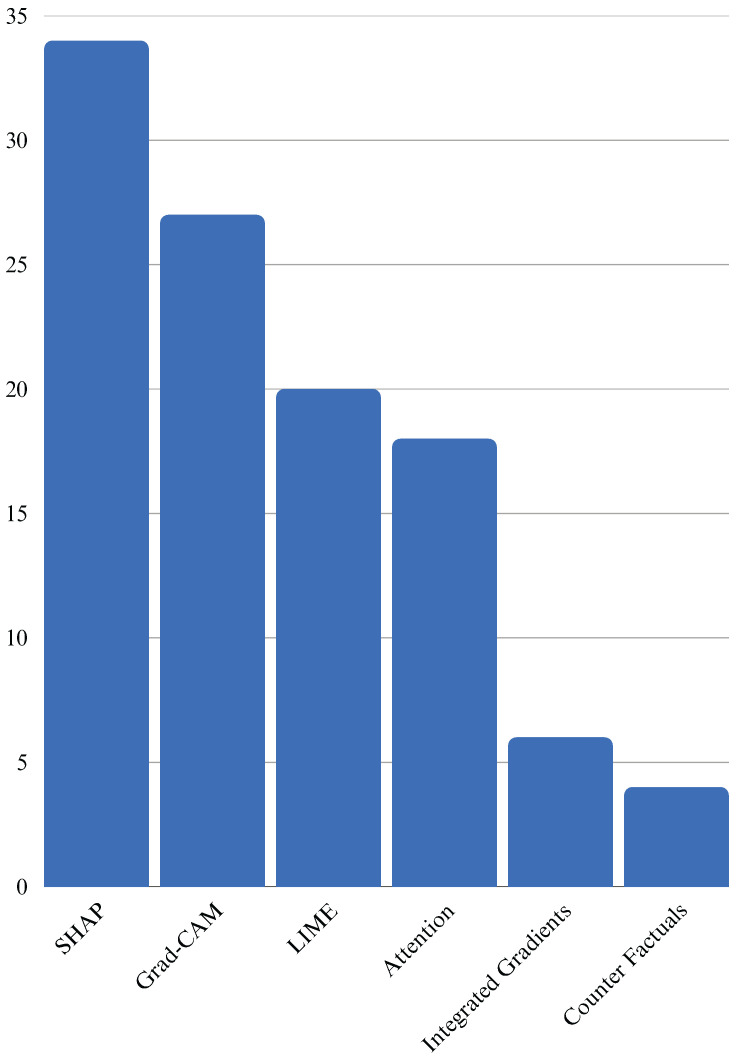
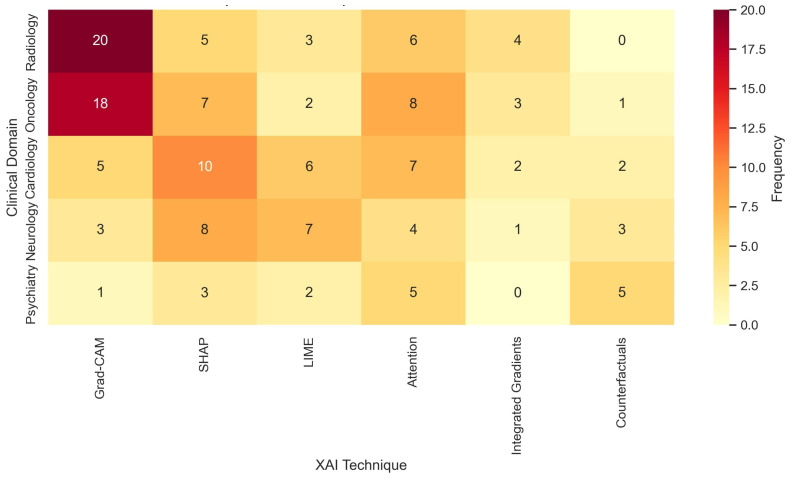
- Across 62 studies, SHAP was the most frequently used XAI method, followed by LIME and Grad-CAM; model-agnostic techniques dominated tabular/EHR tasks, while model-specific methods such as Grad-CAM and attention mechanisms prevailed in imaging and sequential data. Concept-based explanations appeared in 4 studies.
- Reported model performance had a median AUC of 0.87 (IQR 0.81–0.93), accuracy 86.4, sensitivity 84.1, and specificity 85.3. Studies combining high predictive performance with explanation fidelity ≥0.85 reported clinician trust scores 12–18 percentage points higher than those without quantitative explanation evaluation.
- Explanation evaluation was limited: fidelity n = 16, consistency n = 10, human trust/agreement n = 9, localization accuracy n = 6, and qualitative case studies n = 12. Only 18 of 62 studies reported clinical validation through physician feedback, usability testing, or pilot deployment.
- Methodological and ethical gaps were common: 87% of studies reported improved interpretability, but only 11 used robust statistical testing; 17.7% conducted formal significance tests; confidence intervals for interpretability metrics were reported in eight studies; 29% shared complete codebases; 18/62 (29%) reported clinician involvement; 22.5% conducted formal trust scoring; and 15% included fairness or bias mitigation strategies.
Methods
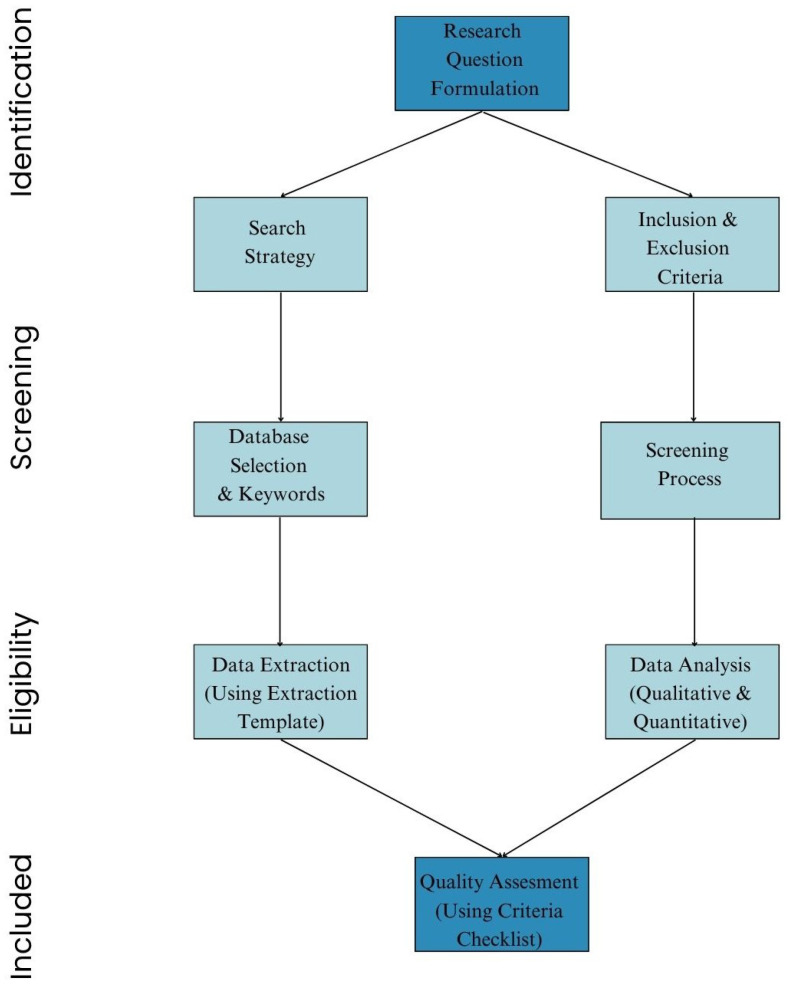
- PRISMA-guided systematic review searching PubMed, IEEE Xplore, Scopus, and Web of Science from January 2018 to May 2025 using Boolean keyword combinations. The initial search returned 1,824 records; after removing 312 duplicates, 1,512 records were screened, 182 full texts assessed, and 62 studies included.
- Inclusion criteria required peer-reviewed English primary studies applying XAI to real-world clinical data or simulations for CDSSs and evaluating interpretability, transparency, usability, or trust. Reviews, editorials, studies without XAI implementation/evaluation, non-healthcare domains, and non-peer-reviewed preprints were excluded. Quality was assessed with a 10-point checklist adapted from CONSORT-AI and STARD-AI; studies scoring below 5 were excluded.
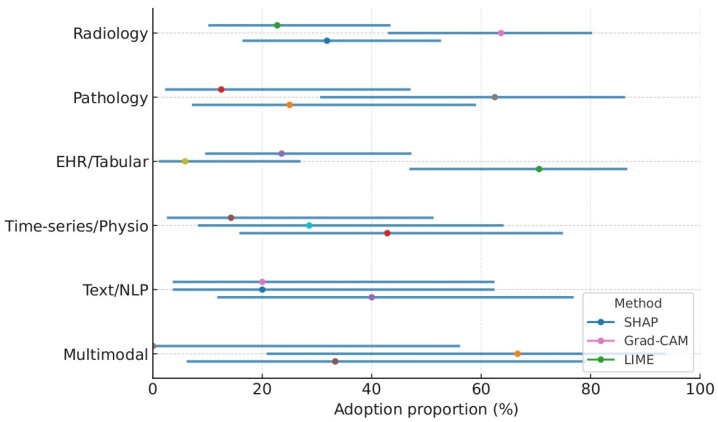
- Due to heterogeneity, no conventional effect-size meta-analysis was performed. The authors conducted a text-only quantitative synthesis of study-level proportions with 95% binomial confidence intervals (Wilson method) plus narrative synthesis grouped by XAI technique, clinical use case, and evaluation outcome. Software included Rayyan 1.6.1, Excel 2406, Python 3.11.5, and LaTeX 2024.
Limitations
- The paper states: restriction to English-language peer-reviewed articles may introduce language and publication bias; inconsistent reporting across studies limited replicability; qualitative synthesis involved subjectivity; the evolving XAI landscape means LLM/foundation-model explainability was minimally represented; no formal quantitative meta-analysis was possible due to heterogeneous metrics and poor statistical reporting; model and domain diversity was skewed toward imaging and structured EHR data; and most studies lacked patient, nurse, or administrator perspectives.
- Evident from the text: despite the title’s use of “Meta-Analysis,” the authors explicitly did not perform a conventional effect-size meta-analysis, relying instead on descriptive statistics and thematic synthesis. Several frequency results are reported narratively or vaguely (e.g., “many studies”) rather than with exact counts, and the review notes that explanation effectiveness, clinical impact, and usability interpretations remain inherently subjective.
Model-written summary. Check it against the paper before relying on it.
Integrity signals
Registry
Cites
Statistics
Figures
Verification
Claims the paper makes
3 Valid · 10 Not valid · 8 Not checked · 77 Own results and interpretations
The cited sources support only part of this claim — read each source’s verdict below.
In the paper
“Many AI models, especially deep neural networks, operate as “black boxes,” as they provide predictions or classifications without offering clear explanations for their outputs [9].”
§ Explainable AI in Clinical Decision Support Systems: A Meta-Analysis of Methods, Applications, and Usability Challenges > 1. Introduction
What the sources say
- Partly supportedcites [9] Ahmed M.I. Spooner B. Isherwood J. Lane M. Orrock E. Dennison A. A Systematic Review of the Barriers to the Implementation of Artificial Intelligence in Healthcare Cureus 2023 15 e46454 10.7759/cureus.46454 37927664 PMC10623210 sourceExperimental — accuracy not yet measured
The Review (page unavailable) defines the black-box phenomenon as an AI algorithm reaching a conclusion without users understanding its basis, and notes the lack of human-interpretable explanations for model predictions. It supports the general claim, but the passages do not specifically identify deep neural networks as especially prone to this problem. (LLM, conf=0.84)
plain- Asserted: passes — The authors put it forward as true.
- Checkable: passes — It can be checked against evidence.
- Load-bearing: passes — The paper’s conclusions depend on it.
- Based: passes — The paper gives a reason why it holds.
- Partly supported
The cited sources that could be checked couldn’t confirm or dispute this claim.
In the paper
“On the contrary, methods used to explain black-box models can introduce approximation errors or oversimplify prediction reasoning [28].”
§ Explainable AI in Clinical Decision Support Systems: A Meta-Analysis of Methods, Applications, and Usability Challenges > 1. Introduction
What the sources say
- Could not verifycites [28] Hu F. Yang H. Qiu L. Wang X. Ren Z. Wei S. Zhou H. Chen Y. Hu H. Innovation networks in the advanced medical equipment industry: Supporting regional digital health systems from a local–national perspective Front. Public Health 2025 13 1635475 10.3389/fpubh.2025.1635475 40823228 PMC12350417 sourceExperimental — accuracy not yet measured
The Research methods section describes social network analysis of patent collaborations, while the Limitations section discusses constraints of those data and the regional scope; neither addresses explanations of black-box predictions. Searches for approximation errors, oversimplified prediction reasoning, and explainable AI found no passage supporting the claim. The indexed passages provide no page numbers. (LLM, conf=0.77)
plainstates a cause- Asserted: passes — The authors put it forward as true.
- Checkable: passes — It can be checked against evidence.
- Load-bearing: passes — The paper’s conclusions depend on it.
- Based: passes — The paper gives a reason why it holds.
- Could not verify
The cited sources that could be checked couldn’t confirm or dispute this claim.
In the paper
“However, despite these advancements, a critical barrier to the widespread adoption of AI in healthcare is the lack of transparency and interpretability in model decision-making processes [7,8].”
§ Explainable AI in Clinical Decision Support Systems: A Meta-Analysis of Methods, Applications, and Usability Challenges > 1. Introduction
What the sources say
- Could not verifycites [7] Li C. Wang P. Wang C. Zhang L. Liu Z. Ye Q. Xu Y. Huang F. Zhang X. Yu P.S. Loki’s Dance of Illusions: A Comprehensive Survey of Hallucination in Large Language Models arXiv 2025 2507.02870 sourceExperimental — accuracy not yet measured
The Introduction (p. 1) discusses patient-safety risks from hallucinated diagnostic recommendations, not transparency or interpretability as a barrier to healthcare AI adoption. The Method Exploration section (p. 26) proposes more transparent expressions of model uncertainty, but does not connect them to healthcare adoption. Searches for healthcare adoption and model interpretability found no passage making the attributed point. (LLM, conf=0.75)
- Could not verifycites [8] Song J. Ma C. Ran M. AirGPT: Pioneering the convergence of conversational AI with atmospheric science npj Clim. Atmos. Sci. 2025 8 179 10.1038/s41612-025-01070-4 sourceExperimental — accuracy not yet measured
The Ethical considerations section discusses transparency about AirGPT’s limitations and capabilities in air-quality research, not the interpretability of AI decision-making in healthcare. Searches for healthcare adoption barriers and model interpretability found no passage in our copy addressing the claim; page numbers were unavailable. (LLM, conf=0.78)
plainstates a cause- Asserted: passes — The authors put it forward as true.
- Checkable: passes — It can be checked against evidence.
- Load-bearing: passes — The paper’s conclusions depend on it.
- Based: passes — The paper gives a reason why it holds.
- Could not verify
The cited sources that could be checked couldn’t confirm or dispute this claim.
In the paper
“Concept-based explanations (n = 4) attempted to align learned representations with human-recognizable clinical concepts (e.g., visual patterns or lab markers) [112].”
§ Explainable AI in Clinical Decision Support Systems: A Meta-Analysis of Methods, Applications, and Usability Challenges > 3. Results and Analysis > 3.1. Distribution by XAI Technique
What the sources say
- Could not verifycites [112] Wachter S. Mittelstadt B. Russell C. Counterfactual explanations without opening the black box: Automated decisions and the GDPR Harv. J. Law Technol. 2017 31 841 10.2139/ssrn.3063289 sourceExperimental — accuracy not yet measured
The discussion of explanations in AI and machine learning (pp. 11–12) describes human-understandable approximations of algorithms, not concept-based explanations that align learned representations with clinical concepts. Searches for clinical concepts, visual patterns, lab markers, and learned representations found no passage addressing that claim or the count of four. (LLM, conf=0.76)
plainn = 4- Asserted: passes — The authors put it forward as true.
- Checkable: passes — It can be checked against evidence.
- Load-bearing: unclear — It is unclear whether the paper’s conclusions depend on it.
- Based: passes — The paper gives a reason why it holds.
- Could not verify
The cited sources that could be checked couldn’t confirm or dispute this claim.
In the paper
“One major issue is the trade-off between model accuracy and interpretability. Simpler models such as logistic regression and decision trees are easier to explain but may lack the predictive power of complex neural networks [26,27].”
§ Explainable AI in Clinical Decision Support Systems: A Meta-Analysis of Methods, Applications, and Usability Challenges > 1. Introduction
What the sources say
- Could not verifycites [26] Ali S. Abuhmed T. El-Sappagh S. Muhammad K. Alonso-Moral J.M. Confalonieri R. Herrera F. Explainable Artificial Intelligence (XAI): What We Know and What Is Left to Attain Trustworthy Artificial Intelligence Inf. Fusion 2023 99 101805 10.1016/j.inffus.2023.101805 sourceExperimental — accuracy not yet measured
Section 1.1 discusses interpretable-by-design methods and accuracy as an evaluation measure, but does not describe an accuracy–interpretability trade-off. Searches for that trade-off, logistic regression and decision trees, and comparisons with neural networks found no passage supporting the claim in our copy. (LLM, conf=0.74)
- Not checked — no full text of the sourcecites [27] Liu Z. Si L. Shi S. Li J. Zhu J. Lee W.H. Lo S.L. Yan X. Chen B. Fu F. Classification of three anesthesia stages based on near-infrared spectroscopy signals IEEE J. Biomed. Health Inform. 2024 28 5270 5279 10.1109/JBHI.2024.3409163 38833406 source
hedgedstates a possible cause- Asserted: passes — The authors put it forward as true.
- Checkable: passes — It can be checked against evidence.
- Load-bearing: passes — The paper’s conclusions depend on it.
- Based: passes — The paper gives a reason why it holds.
- Could not verify
59 more claims
Create a free account to see all 98 claims and every source verdict.
- It may state two separate claims as one. 22
- Probably not a substantial claim. 19
- The quote only partly states this claim. 1
Claims other papers make about this one
Each is checked against this paper’s own text: does it say what the citing paper says it does?
The cited source doesn’t support the claim as written.
In the citing paper
“found no research that evaluated explanation fidelity, clinician trust, or usability in real-world settings”
From A generative AI multi-agent framework with integrated XAI governance for cancer diagnostics: from multi-omics interpretation to lifestyle risk stratification (2026) · cites this paper as Abbas et al., 2025
Checked by a reasoning model — may be wrong.
Experimental — accuracy not yet measuredThe cited source doesn’t support the claim as written.
In the citing paper
“model-agnostic post hoc techniques now constitute the majority of XAI tools deployed in oncology”
From A generative AI multi-agent framework with integrated XAI governance for cancer diagnostics: from multi-omics interpretation to lifestyle risk stratification (2026) · cites this paper as Abbas et al., 2025
Checked by a reasoning model — may be wrong.
Experimental — accuracy not yet measuredThe source backs part of the claim, not all of it — or backs it for a different population, condition or comparison.
In the citing paper
“for instance, early adopters may be susceptible to automation bias, leading to over-reliance on AI recommendations [82], while more skeptical users might exhibit confirmation bias, ignoring AI outputs that contradict their pre-existing beliefs [84].”
From Explainable AI for Clinical Decision Support Systems: Literature Review, Key Gaps, and Research Synthesis (2025) · cites this paper as [82]
Experimental — accuracy not yet measuredThe source backs part of the claim, not all of it — or backs it for a different population, condition or comparison.
In the citing paper
“For image-based XAI, the key challenges include managing visual confirmation bias, interpreting spatial ambiguity (as a heatmap shows *where* but not necessarily *why*), and ensuring the visual explanation is a faithful representation of the model's logic [82].”
From Explainable AI for Clinical Decision Support Systems: Literature Review, Key Gaps, and Research Synthesis (2025) · cites this paper as [82]
Experimental — accuracy not yet measuredThe cited source says what the claim attributes to it.
In the citing paper
“XAI for medical imaging primarily focuses on spatial attribution, using techniques like saliency maps (e.g., Grad-CAM) to answer the clinician's question, 'Where is the model looking?' [82].”
From Explainable AI for Clinical Decision Support Systems: Literature Review, Key Gaps, and Research Synthesis (2025) · cites this paper as [82]
2 more claims about this paper
Create a free account to see every claim other papers make about this one.
Self-check
Percentages, sums and reported differences re-computed from the paper’s own numbers.
Each contradiction between two passages listed here was confirmed by an independent check.
Rated major: it would touch a result — a value a result rests on, reported and recomputed p-values on opposite sides of the significance level, two passages that conflict with no sign which is right, or a cited work retracted before this paper was published.
In the paper
§ Explainable AI in Clinical Decision Support Systems: A Meta-Analysis of Methods, Applications, and Usability Challenges > Abstract
“there are still gaps in user-friendly evaluation, methodological transparency, and ethical issues, as seen by the absence of research that evaluated explanation fidelity, clinician trust, or usability in real-world settings.”
§ Explainable AI in Clinical Decision Support Systems: A Meta-Analysis of Methods, Applications, and Usability Challenges > 3. Results and Analysis > 3.4. Clinical Usability and Integration
“Of the 62 reviewed studies, only 18 explicitly reported clinical validation through physician feedback, usability testing, or pilot deployment.”
Rated minor: it would not touch a result — a value no result rests on, a p-value that stays on the same side of the significance level, or a conflict that is clerical, resolved elsewhere in the paper, or outside its own findings.
In the paper
§ Explainable AI in Clinical Decision Support Systems: A Meta-Analysis of Methods, Applications, and Usability Challenges > Abstract
“Model-agnostic techniques such as visualization models like Gradient-weighted Class Activation Mapping (Grad-CAM) and attention mechanisms dominated in imaging and sequential data tasks.”
§ Explainable AI in Clinical Decision Support Systems: A Meta-Analysis of Methods, Applications, and Usability Challenges > 3. Results and Analysis > 3.1. Distribution by XAI Technique
“In contrast, model-specific approaches such as Grad-CAM, attention mechanisms, and Integrated Gradients are tailored to deep neural network architectures and require access to gradients or attention weights [106].”
Citations
Cites
"Why Should I Trust You?": Explaining the Predictions of Any Classifier
Ribeiro, M. T., Singh, S., & Guestrin, C. (2016) · Proceedings of the 22nd ACM SIGKDD International Conference on Knowledge Discovery and Data Mining · doi:10.1145/2939672.2939778 · Cited by 17,555
Learning Deep Features for Discriminative Localization
Zhou, B., Khosla, A., Lapedriza, A., Oliva, A., & Torralba, A. (2016) · 2016 IEEE Conference on Computer Vision and Pattern Recognition (CVPR) · doi:10.1109/cvpr.2016.319 · Cited by 11,428 · cited 1×
“This visual modality is particularly helpful for explaining CNN decisions to medical professionals [47,108,109].”
From local explanations to global understanding with explainable AI for trees
Lundberg, S. M., Erion, G., Chen, H., DeGrave, A., Prutkin, J. M., Nair, B., Katz, R., Himmelfarb, J., Bansal, N., & Lee, S.-I. (2020) · Nature Machine Intelligence · doi:10.1038/s42256-019-0138-9 · Cited by 10,551 · cited 4×
“In contrast, model-specific approaches such as Grad-CAM, attention mechanisms, and Integrated Gradients are tailored to deep neural network architectures and require access to gradients or attention weights [106].”
InfluentialSelf-citationRajkomar, A., Dean, J., & Kohane, I. (2019) · New England Journal of Medicine · doi:10.1056/nejmra1814259 · Cited by 4,579 · cited 1×
“Its simplicity and ability to visualize feature importance for binary classifiers make it suitable for tabular EHR data [50,55].”
Axiomatic attribution for deep networks
Sundararajan, M., Taly, A., & Yan, Q. (2017) · arXiv · doi:10.48550/arxiv.1703.01365 · Cited by 4,087
Grad-CAM++: Generalized Gradient-Based Visual Explanations for Deep Convolutional Networks
Chattopadhay, A., Sarkar, A., Howlader, P., & Balasubramanian, V. N. (2018) · 2018 IEEE Winter Conference on Applications of Computer Vision (WACV) · doi:10.1109/wacv.2018.00097 · Cited by 3,639 · cited 1×
“This visual modality is particularly helpful for explaining CNN decisions to medical professionals [47,108,109].”
Rajpurkar, P., Chen, E., Banerjee, O., & Topol, E. J. (2022) · Nature Medicine · doi:10.1038/s41591-021-01614-0 · Cited by 3,212 · cited 1×
“Endocrinology, dermatology, psychiatry, and pathology each had a modest presence, often using hybrid or ensemble XAI pipelines [48,120,121].”
Explainable AI: a review of machine learning interpretability methods
Linardatos, P., Papastefanopoulos, V., & Kotsiantis, S. (2020) · Entropy · doi:10.3390/e23010018 · Cited by 2,922 · cited 1×
“These methods are designed to provide insights into which features influence a model’s decision, how sensitive the model is to input variations, and how the trustworthiness of its predictions varies across contexts [14].”
A Survey on Explainable Artificial Intelligence (XAI): Toward Medical XAI
Tjoa, E., & Guan, C. (2021) · IEEE Transactions on Neural Networks and Learning Systems · doi:10.1109/tnnls.2020.3027314 · Cited by 2,524 · cited 4×
“This trend reflects an increasing awareness that no single explanation technique is universally sufficient, and ensemble interpretability can enhance clinical confidence [47,106,115].”
InfluentialExplainability for artificial intelligence in healthcare: a multidisciplinary perspective
the Precise4Q consortium, Amann, J., Blasimme, A., Vayena, E., Frey, D., & Madai, V. I. (2020) · BMC Medical Informatics and Decision Making · doi:10.1186/s12911-020-01332-6 · Cited by 2,203
Explainable machine-learning predictions for the prevention of hypoxaemia during surgery
Lundberg, S. M., Nair, B., Vavilala, M. S., Horibe, M., Eisses, M. J., Adams, T., Liston, D. E., Low, D. K.-W., Newman, S.-F., Kim, J., et al. (2018) · Nature Biomedical Engineering · doi:10.1038/s41551-018-0304-0 · Cited by 1,967
Self-citationAli, S., Abuhmed, T., El-Sappagh, S., Muhammad, K., Alonso-Moral, J. M., Confalonieri, R., Guidotti, R., Del Ser, J., Díaz-Rodríguez, N., & Herrera, F. (2023) · Information Fusion · doi:10.1016/j.inffus.2023.101805 · Cited by 1,762 · cited 1×
“Simpler models such as logistic regression and decision trees are easier to explain but may lack the predictive power of complex neural networks [26,27].”
Intelligible Models for HealthCare: Predicting Pneumonia Risk and Hospital 30-day Readmission
Caruana, R., Lou, Y., Gehrke, J., Koch, P., Sturm, M., & Elhadad, N. (2015) · Proceedings of the 21th ACM SIGKDD International Conference on Knowledge Discovery and Data Mining · doi:10.1145/2783258.2788613 · Cited by 1,685
Counterfactual explanations without opening the black box: automated decisions and the GDPR
Wachter, S., Mittelstadt, B., & Russell, C. (2017) · SSRN Electronic Journal · doi:10.2139/ssrn.3063289 · Cited by 1,061
Clinical decision support in the era of artificial intelligence
Shortliffe, E. H., & Sepúlveda, M. J. (2018) · JAMA · doi:10.1001/jama.2018.17163 · Cited by 920 · cited 2×
“…measuring trust, interpretability, and ease of use Barriers to integration identified across the studies include lack of interoperability with existing EHR systems, lack of regulatory pathways for explainable models, limited clinician training in AI, and concerns over explanation reliability [122].”
Fooling LIME and SHAP: Adversarial Attacks on Post hoc Explanation Methods
Slack, D., Hilgard, S., Jia, E., Singh, S., & Lakkaraju, H. (2020) · Proceedings of the AAAI/ACM Conference on AI, Ethics, and Society · doi:10.1145/3375627.3375830 · Cited by 900
An interpretable machine learning model for accurate prediction of sepsis in the ICU
Nemati, S., Holder, A., Razmi, F., Stanley, M. D., Clifford, G. D., & Buchman, T. G. (2018) · Critical Care Medicine · doi:10.1097/ccm.0000000000002936 · Cited by 832 · cited 1×
“Endocrinology, dermatology, psychiatry, and pathology each had a modest presence, often using hybrid or ensemble XAI pipelines [48,120,121].”
Manipulating and Measuring Model Interpretability
Poursabzi-Sangdeh, F., Goldstein, D. G., Hofman, J. M., Wortman Vaughan, J. W., & Wallach, H. (2021) · Proceedings of the 2021 CHI Conference on Human Factors in Computing Systems · doi:10.1145/3411764.3445315 · Cited by 728 · cited 1×
“Others emphasized the need for adjustable granularity of explanations i.e., providing both overview and drill-down levels of insight [51,125,126].”
Explainable Deep Learning Models in Medical Image Analysis
Singh, A., Sengupta, S., & Lakshminarayanan, V. (2020) · Journal of Imaging · doi:10.3390/jimaging6060052 · Cited by 718 · cited 1×
“This was followed by oncology, where XAI techniques such as SHAP and concept bottlenecks supported cancer prognosis, recurrence prediction, and treatment planning [106,114,117].”
Manipulating and Measuring Model Interpretability
Poursabzi-Sangdeh, F., Goldstein, D. G., Hofman, J. M., Vaughan, J. W., & Wallach, H. (2018) · arXiv · doi:10.48550/arxiv.1802.07810 · Cited by 711
Ethical Machine Learning in Healthcare
Chen, I. Y., Pierson, E., Rose, S., Joshi, S., Ferryman, K., & Ghassemi, M. (2021) · Annual Review of Biomedical Data Science · doi:10.1146/annurev-biodatasci-092820-114757 · Cited by 645
Rahman, T., Chowdhury, M. E. H., Khandakar, A., Islam, K. R., Islam, K. F., Mahbub, Z. B., Kadir, M. A., & Kashem, S. (2020) · Applied Sciences · doi:10.3390/app10093233 · Cited by 638
A Survey Of Methods For Explaining Black Box Models
Guidotti, R., Monreale, A., Ruggieri, S., Turini, F., Pedreschi, D., & Giannotti, F. (2018) · arXiv · doi:10.48550/arxiv.1802.01933 · Cited by 630
A Survey of Methods for Explaining Black Box Models
Guidotti, R., Monreale, A., Ruggieri, S., Turini, F., Giannotti, F., & Pedreschi, D. (2019) · ACM Computing Surveys · doi:10.1145/3236009 · Cited by 629
A Multiscale Visualization of Attention in the Transformer Model
Vig, J. (2019) · Proceedings of the 57th Annual Meeting of the Association for Computational Linguistics: System Demonstrations · doi:10.18653/v1/p19-3007 · Cited by 600 · cited 1×
“These mechanisms inherently offer interpretability by design, although their outputs can sometimes be opaque without supplementary visualization [67,110,111].”
A Review of Explainable Artificial Intelligence in Healthcare
Sadeghi, Z., Alizadehsani, R., CIFCI, M. A., Kausar, S., Rehman, R., Mahanta, P., Bora, P. K., Almasri, A., Alkhawaldeh, R. S., Hussain, S., et al. (2024) · Computers and Electrical Engineering · doi:10.1016/j.compeleceng.2024.109370 · Cited by 598 · cited 2×
“Explainable AI offers a promising approach to translating complex computational decisions into human-understandable forms, ultimately enhancing both diagnostic confidence and patient safety [33,44].”
Aligning Cyber Space With Physical World: A Comprehensive Survey on Embodied AI
Liu, Y., Chen, W., Bai, Y., Liang, X., Li, G., Gao, W., & Lin, L. (2025) · IEEE/ASME Transactions on Mechatronics · doi:10.1109/tmech.2025.3574943 · Cited by 536 · cited 1×
“The goal is not only to satisfy regulatory and ethical requirements but also to foster human–AI collaboration by improving the understanding and confidence of clinicians in AI-driven tools [15,16].”
Lauritsen, S. M., Kristensen, M., Olsen, M. V., Larsen, M. S., Lauritsen, K. M., Jørgensen, M. J., Lange, J., & Thiesson, B. (2020) · Nature Communications · doi:10.1038/s41467-020-17431-x · Cited by 448
Vimbi, V., Shaffi, N., & Mahmud, M. (2024) · Brain Informatics · doi:10.1186/s40708-024-00222-1 · Cited by 433
A Systematic Review of the Barriers to the Implementation of Artificial Intelligence in Healthcare
Ahmed, M. I., Spooner, B., Isherwood, J., Lane, M., Orrock, E., & Dennison, A. (2023) · Cureus · doi:10.7759/cureus.46454 · Cited by 364
MDNet: A Semantically and Visually Interpretable Medical Image Diagnosis Network
Zhang, Z., Xie, Y., Xing, F., McGough, M., & Yang, L. (2017) · 2017 IEEE Conference on Computer Vision and Pattern Recognition (CVPR) · doi:10.1109/cvpr.2017.378 · Cited by 354
Rosenbacke, R., Melhus, Å., McKee, M., & Stuckler, D. (2024) · JMIR AI · doi:10.2196/53207 · Cited by 305 · cited 1×
“The goal is not only to satisfy regulatory and ethical requirements but also to foster human–AI collaboration by improving the understanding and confidence of clinicians in AI-driven tools [15,16].”
AI-Driven Clinical Decision Support Systems: An Ongoing Pursuit of Potential
Elhaddad, M., & Hamam, S. (2024) · Cureus · doi:10.7759/cureus.57728 · Cited by 301 · cited 1×
“AI has emerged as a transformative force in modern healthcare, particularly through its integration into clinical decision support systems (CDSSs) [1,2].”
Why model why? Assessing the strengths and limitations of LIMEPreprint
Dieber, J., & Kirrane, S. (2020) · arXiv (Cornell University) · doi:10.48550/arxiv.2012.00093 · Cited by 255
A Review of Challenges and Opportunities in Machine Learning for Health
Ghassemi, M., Naumann, T., Schulam, P., Beam, A. L., Chen, I. Y., & Ranganath, R. (2018) · PubMed · doi:10.48550/arxiv.1806.00388 · Cited by 248 · cited 1×
“Others emphasized the need for adjustable granularity of explanations i.e., providing both overview and drill-down levels of insight [51,125,126].”
Harnessing the Power of Clinical Decision Support Systems: Challenges and Opportunities
Chen, Z., Liang, N., Zhang, H., Li, H., Yang, Y., Zong, X., Chen, Y., Wang, Y., & Shi, N. (2023) · Open Heart · doi:10.1136/openhrt-2023-002432 · Cited by 244
Abbas, S. R., Abbas, Z., Zahir, A., & Lee, S. W. (2024) · Healthcare · doi:10.3390/healthcare12242587 · Cited by 228 · cited 1×
“Many studies on XAI in healthcare remain in the proof-of-concept stage or are only tested on retrospective datasets [34,35].”
Self-citationProblems with Shapley-value-based explanations as feature importance measures
Kumar, I. E., Venkatasubramanian, S., Scheidegger, C., & Friedler, S. (2020) · arXiv · doi:10.48550/arxiv.2002.11097 · Cited by 228 · cited 1×
“SHAP is valued for generating both local and global explanations and for its applicability to tree-based models such as XGBoost and random forests [106,107].”
Mienye, I. D., Obaido, G., Jere, N., Mienye, E., Aruleba, K., Emmanuel, I. D., & Ogbuokiri, B. (2024) · Informatics in Medicine Unlocked · doi:10.1016/j.imu.2024.101587 · Cited by 212 · cited 2×
“It addresses the fundamental need for transparency and interpretability in medical AI, fostering trust, accountability, and ethical integrity [10,41].”
Current AI technologies in cancer diagnostics and treatment
Tiwari, A., Mishra, S., & Kuo, T.-R. (2025) · Molecular Cancer · doi:10.1186/s12943-025-02369-9 · Cited by 207
A Scoping Review of Reporting Gaps in FDA-Approved AI Medical Devices
Muralidharan, V., Adewale, B. A., Huang, C. J., Nta, M. T., Ademiju, P. O., Pathmarajah, P., Hang, M. K., Adesanya, O., Abdullateef, R. O., Babatunde, A. O., et al. (2024) · npj Digital Medicine · doi:10.1038/s41746-024-01270-x · Cited by 201 · cited 1×
“Regulatory bodies such as the U.S. Food and Drug Administration (FDA) and the European Medicines Agency (EMA) are increasingly emphasizing the need for transparency and accountability in AI-based medical devices [17,18].”
Dermatologist-like explainable AI enhances trust and confidence in diagnosing melanoma
Chanda, T., Hauser, K., Hobelsberger, S., Bucher, T.-C., Garcia, C. N., Wies, C., Kittler, H., Tschandl, P., Navarrete-Dechent, C., Podlipnik, S., et al. (2024) · Nature Communications · doi:10.1038/s41467-023-43095-4 · Cited by 182
Should AI models be explainable to clinicians?
Abgrall, G., Holder, A. L., Chelly Dagdia, Z., Zeitouni, K., & Monnet, X. (2024) · Critical Care · doi:10.1186/s13054-024-05005-y · Cited by 175 · cited 1×
“As AI continues to evolve, the emphasis on explainability will be pivotal for its responsible and sustainable integration into routine clinical workflows [45,46].”
Singhal, A., Neveditsin, N., Tanveer, H., & Mago, V. (2024) · JMIR Medical Informatics · doi:10.2196/50048 · Cited by 172 · cited 1×
“Explainability is also central to the ethical principles of AI, including fairness, accountability, and transparency (FAT) [19,20].”
Argumentation and explainable artificial intelligence: a survey
Vassiliades, A., Bassiliades, N., & Patkos, T. (2021) · The Knowledge Engineering Review · doi:10.1017/s0269888921000011 · Cited by 160 · cited 1×
“Although many models demonstrate technical efficacy in controlled settings, practical adoption in clinical settings depends on how well they align with clinicians’ workflows, interpretive expectations, and decision-making processes [122–124].”
Solving the Explainable AI Conundrum by Bridging Clinicians’ Needs and Developers’ Goals
Bienefeld, N., Boss, J. M., Lüthy, R., Brodbeck, D., Azzati, J., Blaser, M., Willms, J., & Keller, E. (2023) · npj Digital Medicine · doi:10.1038/s41746-023-00837-4 · Cited by 159 · cited 1×
“Clinicians have different needs and cognitive styles, and not all explanations are equally meaningful or useful for every user [31,32].”
DeepCOVIDExplainer: Explainable COVID-19 Diagnosis from Chest X-ray Images
Karim, M. R., Dohmen, T., Cochez, M., Beyan, O., Rebholz-Schuhmann, D., & Decker, S. (2020) · 2020 IEEE International Conference on Bioinformatics and Biomedicine (BIBM) · doi:10.1109/bibm49941.2020.9313304 · Cited by 152
Prediction of sepsis mortality in ICU patients using machine learning methods
Gao, J., Lu, Y., Ashrafi, N., Domingo, I., Alaei, K., & Pishgar, M. (2024) · BMC Medical Informatics and Decision Making · doi:10.1186/s12911-024-02630-z · Cited by 146
Ennab, M., & Mcheick, H. (2025) · Machine Learning and Knowledge Extraction · doi:10.3390/make7010012 · Cited by 114 · cited 1×
“It encompasses a wide range of techniques, including model-agnostic methods like LIME (Local Interpret Model-agnostic Explanations) and SHAP (SHapley Additive exPla-nations), as well as model-specific approaches such as decision trees, attention mechanisms, and saliency maps like Grad-CAM [12,13].”
Hassan, S. U., Abdulkadir, S. J., Zahid, M. S. M., & Al-Selwi, S. M. (2025) · Computers in Biology and Medicine · doi:10.1016/j.compbiomed.2024.109569 · Cited by 108
Continuous Seizure Detection Based on Transformer and Long-Term iEEG
Sun, Y., Jin, W., Si, X., Zhang, X., Cao, J., Wang, L., Yin, S., & Ming, D. (2022) · IEEE Journal of Biomedical and Health Informatics · doi:10.1109/jbhi.2022.3199206 · Cited by 95
Metta, C., Beretta, A., Pellungrini, R., Rinzivillo, S., & Giannotti, F. (2024) · Bioengineering · doi:10.3390/bioengineering11040369 · Cited by 91 · cited 1×
“As healthcare continues to embrace data-driven decision making, the integration of XAI into CDSSs will be essential to achieve a responsible and effective adoption of AI [42].”
Casey, B. F. (2019) · btlj · doi:10.15779/z38m32n986 · Cited by 91 · cited 1×
“As AI continues to evolve, the emphasis on explainability will be pivotal for its responsible and sustainable integration into routine clinical workflows [45,46].”
Explainable AI and Multi-Modal Causability in Medicine
Holzinger, A. (2021) · i-com · doi:10.1515/icom-2020-0024 · Cited by 87 · cited 3×
“Our review found that XAI-enhanced models were distributed across a wide range of clinical areas, each with unique challenges and interpretability requirements [47,48].”
Wang, Q., Jiang, Q., Yang, Y., & Pan, J. (2022) · Journal of Transport & Health · doi:10.1016/j.jth.2022.101353 · Cited by 86 · cited 1×
“This not only aids in clinical interpretation but also aligns AI recommendations with clinical reasoning, thereby increasing user trust and adoption [24,25].”
Ladbury, C., Zarinshenas, R., Semwal, H., Tam, A., Vaidehi, N., Rodin, A. S., Liu, A., Glaser, S., Salgia, R., & Amini, A. (2022) · Translational Cancer Research · doi:10.21037/tcr-22-1626 · Cited by 86
Hasan, M. A., Haque, F. M., Sabuj, S. R., Sarker, H., Goni, M. O. F., Rahman, F. S., & Rashid, M. M. (2024) · Technologies · doi:10.3390/technologies12040056 · Cited by 84
Abbas, S. R., Seol, H., Abbas, Z., & Lee, S. W. (2025) · Healthcare · doi:10.3390/healthcare13141642 · Cited by 80 · cited 1×
“Understanding the clinical domains where XAI is being applied is crucial for evaluating its utility in healthcare specialties [116].”
Self-citationLin, X., Liang, C., Liu, J., Lyu, T., Ghumman, N., & Campbell, B. A. (2024) · Journal of Medical Internet Research · doi:10.2196/54737 · Cited by 78
Schindele, A., Krebold, A., Heiß, U., Nimptsch, K., Pfaehler, E. A. G., Berr, C., Bundschuh, R. A., Wendler, T., Kertels, O., Tran‐Gia, J., et al. (2025) · European Journal of Radiology · doi:10.1016/j.ejrad.2025.112049 · Cited by 76
Hu, F., Yang, H., Qiu, L., Wang, X., Ren, Z., Wei, S., Zhou, H., Chen, Y., & Hu, H. (2025) · Frontiers in Public Health · doi:10.3389/fpubh.2025.1635475 · Cited by 76 · cited 1×
“On the contrary, methods used to explain black-box models can introduce approximation errors or oversimplify prediction reasoning [28].”
Anonymity-enhanced Sequential Multi-signer Ring Signature for Secure Medical Data Sharing in IoMT
Xu, G., Fan, X., Xu, S., Cao, Y., Chen, X.-B., Shang, T., & Yu, S. (2025) · IEEE Transactions on Information Forensics and Security · doi:10.1109/tifs.2025.3574959 · Cited by 74 · cited 1×
“Clinicians have different needs and cognitive styles, and not all explanations are equally meaningful or useful for every user [31,32].”
Explainable artificial intelligence in emergency medicine: an overview
Okada, Y., Ning, Y., & Ong, M. E. H. (2023) · Clinical and Experimental Emergency Medicine · doi:10.15441/ceem.23.145 · Cited by 72 · cited 1×
“This has led to increasing demand for XAI, a subfield of AI that focuses on creating models with behavior and predictions that are understandable and trustworthy to human users [10,11].”
Classification of three anesthesia stages based on near-infrared spectroscopy signals
Liu, Z., Si, L., Shi, S., Li, J., Zhu, J., Lee, W. H., Lo, S.-L., Yan, X., Chen, B., Fu, F., et al. (2024) · IEEE Journal of Biomedical and Health Informatics · doi:10.1109/jbhi.2024.3409163 · Cited by 71 · cited 1×
“Simpler models such as logistic regression and decision trees are easier to explain but may lack the predictive power of complex neural networks [26,27].”
An explainable attention-based TCN heartbeats classification model for arrhythmia detection
Zhao, Y., Ren, J., Zhang, B., Wu, J., & Lyu, Y. (2022) · Biomedical Signal Processing and Control · doi:10.1016/j.bspc.2022.104337 · Cited by 70
Li, H., Wang, Z., Guan, Z., Miao, J., Li, W., Yu, P., & Molina-Jiménez, C. (2024) · Computer Methods and Programs in Biomedicine · doi:10.1016/j.cmpb.2024.108080 · Cited by 70
MRNDR: Multihead Attention-Based Recommendation Network for Drug Repurposing
Feng, X., Ma, Z., Yu, C., & Xin, R. (2024) · Journal of Chemical Information and Modeling · doi:10.1021/acs.jcim.3c01726 · Cited by 68
Transparency of artificial intelligence/machine learning-enabled medical devices
Shick, A. A., Webber, C. M., Kiarashi, N., Weinberg, J. P., Deoras, A., Petrick, N., Saha, A., & Diamond, M. C. (2024) · npj Digital Medicine · doi:10.1038/s41746-023-00992-8 · Cited by 67 · cited 1×
“Regulatory bodies such as the U.S. Food and Drug Administration (FDA) and the European Medicines Agency (EMA) are increasingly emphasizing the need for transparency and accountability in AI-based medical devices [17,18].”
The ethical requirement of explainability for AI-DSS in healthcare: a systematic review of reasons
Freyer, N., Groß, D., & Lipprandt, M. (2024) · BMC Medical Ethics · doi:10.1186/s12910-024-01103-2 · Cited by 67 · cited 1×
“Furthermore, explainability can improve model debugging and development, helping researchers and engineers identify biases, data quality issues, and unintended outcomes [21].”
Yagin, B., Yağın, F. H., Çolak, C., İnceoğlu, F., Kadry, S., & Kim, J. (2023) · Diagnostics · doi:10.3390/diagnostics13213314 · Cited by 66
Predictive Modeling of Hospital Readmission: Challenges and Solutions
Wang, S., & Zhu, X. (2021) · IEEE Transactions on Computational Biology and Bioinformatics · doi:10.1109/tcbb.2021.3089682 · Cited by 62
Song, D., Yao, J., Jiang, Y., Shi, S., Cui, C., Wang, L., Wang, L., Wu, H., Tian, H., Ye, X., et al. (2023) · Computer Methods and Programs in Biomedicine · doi:10.1016/j.cmpb.2023.107527 · Cited by 58
Explainable Artificial Intelligence in Radiological Cardiovascular Imaging—A Systematic Review
Haupt, M., Maurer, M. H., & Thomas, R. P. (2025) · Diagnostics · doi:10.3390/diagnostics15111399 · Cited by 58 · cited 1×
“For example, in diagnostic imaging, XAI can highlight specific regions of interest on radiographs or MRIs that contribute to a diagnosis, allowing radiologists to verify and validate the model’s conclusions [22,23].”
Abas Mohamed, Y., Ee Khoo, B., Shahrimie Mohd Asaari, M., Ezane Aziz, M., & Rahiman Ghazali, F. (2025) · International Journal of Medical Informatics · doi:10.1016/j.ijmedinf.2024.105689 · Cited by 57 · cited 1×
“What is considered a good explanation depends on the clinical context, the user’s expertise, and the decision at hand [29,30].”
Masud, G. H. A., Shanto, R. I., Sakin, I., & Kabir, M. R. (2025) · Array · doi:10.1016/j.array.2025.100375 · Cited by 57
Ai, Z., Huang, X., Feng, J., Wang, H., Tao, Y., Zeng, F., & Lu, Y. (2022) · Frontiers in Neuroinformatics · doi:10.3389/fninf.2022.876927 · Cited by 55
Sun, J. Y., Sun, C., Tang, Y.-X., Liu, T.-C., & Lu, C.-J. (2023) · Healthcare · doi:10.3390/healthcare11142000 · Cited by 55
Auzine, M. M., Khan, M. H.-M., Baichoo, S., Sahib, N. G., Bissoonauth-Daiboo, P., Gao, X. W., & Heetun, Z. (2024) · PLoS ONE · doi:10.1371/journal.pone.0305628 · Cited by 54
Human-machine plan conflict and conflict resolution in a visual search task
Pan, Y., & Xu, J. (2025) · International Journal of Human-Computer Studies · doi:10.1016/j.ijhcs.2024.103377 · Cited by 54 · cited 1×
“Explainability is also central to the ethical principles of AI, including fairness, accountability, and transparency (FAT) [19,20].”
Xue, Q., Xu, D. R., Cheng, T. C., Pan, J., & Yip, W. (2023) · Archives of Public Health · doi:10.1186/s13690-023-01029-y · Cited by 50 · cited 1×
“For example, in diagnostic imaging, XAI can highlight specific regions of interest on radiographs or MRIs that contribute to a diagnosis, allowing radiologists to verify and validate the model’s conclusions [22,23].”
Explaining Deep Learning for ECG Analysis: Building Blocks for Auditing and Knowledge Discovery
Wagner, P., Mehari, T., Haverkamp, W., & Strodthoff, N. (2024) · Computers in Biology and Medicine · doi:10.1016/j.compbiomed.2024.108525 · Cited by 48
AirGPT: Pioneering the convergence of conversational AI with atmospheric science
Song, J., Ma, C., & Ran, M. (2025) · npj Climate and Atmospheric Science · doi:10.1038/s41612-025-01070-4 · Cited by 48 · cited 1×
“However, despite these advancements, a critical barrier to the widespread adoption of AI in healthcare is the lack of transparency and interpretability in model decision-making processes [7,8].”
Rezk, N. G., AlShathri, S. I., Sayed, A., & Hemdan, E. E. (2025) · Bioengineering · doi:10.3390/bioengineering12040356 · Cited by 47 · cited 1×
“Each of these applications demonstrates the growing importance of XAI in ensuring that AI-driven insights are actionable, safe, and aligned with clinical values [40].”
Bayor, A. A., Li, J., Yang, I. A., & Varnfield, M. (2025) · Journal of Medical Internet Research · doi:10.2196/63733 · Cited by 46 · cited 1×
“Scalability, data interoperability, and usability are critical factors that determine whether these systems can transition from research prototypes to clinical tools [36,37].”
A comprehensive review of explainable AI for disease diagnosis
Biswas, A. A. (2024) · Array · doi:10.1016/j.array.2024.100345 · Cited by 45
Hu, F., Yang, H., Qiu, L., Wei, S., Hu, H., & Zhou, H. (2025) · Frontiers in Public Health · doi:10.3389/fpubh.2025.1518327 · Cited by 45 · cited 1×
“It addresses the fundamental need for transparency and interpretability in medical AI, fostering trust, accountability, and ethical integrity [10,41].”
Cost-Sensitive Neighborhood Granularity Selection for Hierarchical Classification
Li, S., Yang, J., Bao, H., Xia, D., Zhang, Q., & Wang, G. (2025) · IEEE Transactions on Knowledge and Data Engineering · doi:10.1109/tkde.2025.3566038 · Cited by 45 · cited 1×
“The growing complexity of modern healthcare data, from EHRs and wearable sensor outputs to medical imaging and genomics, demands advanced analytical tools [43].”
Deep learning-based multidimensional feature fusion for classification of ECG arrhythmia
Cui, J., Wang, L., He, X., De Albuquerque, V. H. C., AlQahtani, S. A., & Hassan, M. M. (2023) · Neural Computing and Applications · doi:10.1007/s00521-021-06487-5 · Cited by 43 · cited 1×
“Cardiology studies commonly utilized SHAP and Integrated Gradients to rank cardiovascular risk factors [118,119].”
Wu, X., Li, L., Tao, X., Yuan, J., & Xie, H. (2025) · IEEE Transactions on Emerging Topics in Computational Intelligence · doi:10.1109/tetci.2025.3537918 · Cited by 39 · cited 1×
“It encompasses a wide range of techniques, including model-agnostic methods like LIME (Local Interpret Model-agnostic Explanations) and SHAP (SHapley Additive exPla-nations), as well as model-specific approaches such as decision trees, attention mechanisms, and saliency maps like Grad-CAM [12,13].”
Ji, Z., Ge, Y., Chukwudi, C. C., Kaicheng, U., Zhang, S. M., Peng, Y., Zhu, J., Zaki, H. A., Zhang, X., Yang, S., et al. (2025) · IEEE Journal of Biomedical and Health Informatics · doi:10.1109/jbhi.2025.3548048 · Cited by 35
Dai, C., Fan, Y., Li, Y., Bao, X., Li, Y., Su, M., Yao, Y., Deng, K., Xing, B., Feng, F., et al. (2020) · Frontiers in Endocrinology · doi:10.3389/fendo.2020.00643 · Cited by 34
Hempel, P., Ribeiro, A. H., Vollmer, M., Bender, T., Dörr, M., Krefting, D., & Spicher, N. (2025) · npj Digital Medicine · doi:10.1038/s41746-024-01428-7 · Cited by 31 · cited 1×
“In neurology, explainable models are applied to detect and monitor neurodegenerative diseases using multimodal data [39].”
Abbas, S. R., Abbas, Z., Zahir, A., & Lee, S. W. (2025) · Briefings in Bioinformatics · doi:10.1093/bib/bbaf329 · Cited by 30 · cited 1×
“Explainable AI offers a promising approach to translating complex computational decisions into human-understandable forms, ultimately enhancing both diagnostic confidence and patient safety [33,44].”
Self-citationBozorgmehr, A., & Weltermann, B. (2023) · JMIR AI · doi:10.2196/41868 · Cited by 29
AI Advances in ICU with an Emphasis on Sepsis Prediction: An Overview
Stylianides, C., Nicolaou, A., Sulaiman, W. A., Alexandropoulou, C.-A., Panagiotopoulos, I., Karathanasopoulou, K., Dimitrakopoulos, G., Kleanthous, S., Politi, E., Ntalaperas, D., et al. (2025) · Machine Learning and Knowledge Extraction · doi:10.3390/make7010006 · Cited by 28 · cited 1×
“This not only aids in clinical interpretation but also aligns AI recommendations with clinical reasoning, thereby increasing user trust and adoption [24,25].”
Ma, Y., Zhang, D., Xu, J., Pang, H., Hu, M., Li, J., Zhou, S., Guo, L., & Fu, Y. (2023) · BMC Cardiovascular Disorders · doi:10.1186/s12872-023-03087-0 · Cited by 27
Exploring explainable AI features in the vocal biomarkers of lung disease
Chen, Z., Liang, N., Li, H., Zhang, H., Li, H., Yan, L., Hu, Z., Chen, Y., Zhang, Y., Wang, Y., et al. (2024) · Computers in Biology and Medicine · doi:10.1016/j.compbiomed.2024.108844 · Cited by 26 · cited 1×
“Other methods, such as Integrated Gradients, Layer-wise Relevance Propagation (LRP), and DeepLIFT, were less commonly used but provided robust explanation fidelity and saliency mapping for specific tasks [93,112–114].”
Düsing, C., Cimiano, P., Rehberg, S., Scherer, C., Kaup, O., Köster, C., Hellmich, S., Herrmann, D., Meier, K. L., Claßen, S., et al. (2024) · Artificial Intelligence in Medicine · doi:10.1016/j.artmed.2024.102982 · Cited by 26
AdaCBM: An Adaptive Concept Bottleneck Model for Explainable and Accurate Diagnosis
Chowdhury, T. F., Phan, V. M. H., Liao, K., To, M., Xie, Y., van den Hengel, A., Verjans, J. W. H., & Liao, Z. (2024) · Lecture notes in computer science · doi:10.1007/978-3-031-72117-5_4 · Cited by 26
Mirzaei, S., Mao, H., Al-Nima, R. R. O., & Woo, W. L. (2023) · Information · doi:10.3390/info15010004 · Cited by 25 · cited 1×
“What is considered a good explanation depends on the clinical context, the user’s expertise, and the decision at hand [29,30].”
Grad-CAM based Visualization for Interpretable Lung Cancer Categorization using Deep CNN Models
Mothkur, R., Soubhagyalakshmi, P., & Swetha, C. B. (2025) · Journal of Electronics Electromedical Engineering and Medical Informatics · doi:10.35882/jeeemi.v7i3.690 · Cited by 25
Style-transfer counterfactual explanations: An application to mortality prevention of ICU patients
Wang, Z., Samsten, I., Kougia, V., & Papapetrou, P. (2022) · Artificial Intelligence in Medicine · doi:10.1016/j.artmed.2022.102457 · Cited by 22
Beyond Known Reality: Exploiting Counterfactual Explanations for Medical ResearchPreprint
Tanyel, T., Ayvaz, S., & Keserci, B. (2023) · arXiv (Cornell University) · doi:10.48550/arxiv.2307.02131 · Cited by 21
Machine Learning Interpretability in Diabetes Risk Assessment: A SHAP Analysis
Kutlu, M., Donmez, T. B., & Freeman, C. T. (2024) · Computers and electronics in medicine. · doi:10.69882/adba.cem.2024075 · Cited by 20
Chen, S., Fan, J., Pishgar, E., Alaei, K., Placencia, G., & Pishgar, M. (2025) · medRxiv · doi:10.1101/2025.02.24.25322816 · Cited by 20
Concept Complement Bottleneck Model for Interpretable Medical Image DiagnosisPreprint
Wang, H., Hou, J., & Chen, H. (2024) · arXiv (Cornell University) · doi:10.48550/arxiv.2410.15446 · Cited by 20
VLFATRollout: Fully transformer-based classifier for retinal OCT volumes
Oghbaie, M., Araújo, T., Schmidt-Erfurth, U. M., & Bogunović, H. (2024) · Computerized Medical Imaging and Graphics · doi:10.1016/j.compmedimag.2024.102452 · Cited by 18
Explainable Deep Learning for Covid-19 Detection Using Chest X-ray and CT-Scan Images
Mahmoudi, S. A., Stassin, S., Daho, M. E. H., Lessage, X., & Mahmoudi, S. (2021) · EAI/Springer Innovations in Communication and Computing · doi:10.1007/978-3-030-72752-9_16 · Cited by 17
Abbas, Z., Rehman, M. U., Tayara, H., & Chong, K. T. (2023) · Bioinformatics · doi:10.1093/bioinformatics/btad664 · Cited by 17 · cited 1×
“Many studies on XAI in healthcare remain in the proof-of-concept stage or are only tested on retrospective datasets [34,35].”
Dubey, Y. K., Tarte, Y., Talatule, N., Damahe, K., Palsodkar, P., & Fulzele, P. R. (2024) · Diagnostics · doi:10.3390/diagnostics14222514 · Cited by 17
Diagnosis of Atrial Fibrillation Based on AI-Detected Anomalies of ECG Segments
Choi, S., Choi, K., Yun, H. K., Kim, S. H., Choi, H.-H., Park, Y.-S., & Joo, S. (2024) · Heliyon · doi:10.1016/j.heliyon.2023.e23597 · Cited by 15 · cited 1×
“These mechanisms inherently offer interpretability by design, although their outputs can sometimes be opaque without supplementary visualization [67,110,111].”
Liu, J., Wang, X., Ye, X., & Chen, D. (2025) · Frontiers in Nutrition · doi:10.3389/fnut.2024.1481073 · Cited by 15
Satelight: self-attention-based model for epileptic spike detection from multi-electrode EEG
Fukumori, K., Yoshida, N., Sugano, H., Nakajima, M., & Tanaka, T. (2022) · Journal of Neural Engineering · doi:10.1088/1741-2552/ac9050 · Cited by 12
Attention-Based Explainability Approaches in Healthcare Natural Language Processing
Amjad, H., Ashraf, M., Sherazi, S. H. A., et al. (2023) · International Joint Conference on Biomedical Engineering Systems and Technologies (BIOSTEC) · doi:10.5220/0011927300003414 · Cited by 11
Badhon, S. M. S. I., Khushbu, S. A., Saha, N. C., et al. (2024) · Preprints.org · doi:10.20944/preprints202407.2556.v1 · Cited by 9
Dermatological Diagnosis Explainability Benchmark for Convolutional Neural NetworksPreprint
Jalaboi, R., Winther, O., & Galimzianova, A. (2023) · arXiv (Cornell University) · doi:10.48550/arxiv.2302.12084 · Cited by 9
Patel, S., Lohakare, M., Prajapati, S., et al. (2021) · doi:10.1109/raai52226.2021.9507938 · Cited by 8
Explainable vs. Interpretable Artificial Intelligence Frameworks in Oncology
Bertsimas, D., & Margonis, G. A. (2023) · Translational Cancer Research · doi:10.21037/tcr-22-2427 · Cited by 8 · cited 2×
“With the advent of AI, particularly machine learning (ML) and deep learning (DL) techniques, CDSSs have become more powerful, capable of uncovering complex patterns in vast datasets and delivering predictive and prescriptive analytics with unprecedented speed and precision [5,6].”
Chen, P., Sun, J., Chu, Y., & Zhao, Y. (2024) · BMC Medical Informatics and Decision Making · doi:10.1186/s12911-024-02829-0 · Cited by 8
Nafea, M. S., & Ismail, Z. H. (2025) · AI · doi:10.3390/ai6060120 · Cited by 8
A new approach for arrhythmia classification
Karhk, B., & Özbay, Y. (2002) · Proceedings of the Annual International Conference of the IEEE Engineering in Medicine and Biology Society · doi:10.1109/iembs.1996.647593 · Cited by 7 · cited 1×
“These mechanisms inherently offer interpretability by design, although their outputs can sometimes be opaque without supplementary visualization [67,110,111].”
-, S. B. S., & Singh, A. (2024) · International Journal For Multidisciplinary Research · doi:10.36948/ijfmr.2024.v06i04.26096 · Cited by 5
A Survey on Human-Centered Evaluation of Explainable AI Methods in Clinical Decision Support Systems
Gambetti, A., Han, Q., Shen, H., & Soares, C. (2025) · arXiv · doi:10.48550/arxiv.2502.09849 · Cited by 4
Kambara, M. S., Chukka, O., Choi, K., Tsenum, J. L., Gupta, S., English, N. J., Jordan, I. K., & Mariño‐Ramírez, L. (2025) · bioRxiv (Cold Spring Harbor Laboratory) · doi:10.1101/2025.02.18.638789 · Cited by 3
A Multiscale Visualization of Attention in the Transformer Model
Vig, J. (2019) · arXiv · doi:10.48550/arxiv.1906.05714
Loki's Dance of Illusions: A Comprehensive Survey of Hallucination in Large Language Models
Li, C., Wang, P., Wang, C., Zhang, L., Liu, Z., Ye, Q., Xu, Y., Huang, F., Zhang, X., & Yu, P. S. (2025) · arXiv · doi:10.48550/arxiv.2507.02870
Research works printed but not linked: 3
- Koh P.W. Nguyen T. Tang Y.S. Mussmann S. Pierson E. Kim B. Liang P. Concept Bottleneck Models Proceedings of the International Conference on Machine Learning (ICML), PMLR Virtual 13–18 July 2020 5338 5348
- Kim B. Wattenberg M. Gilmer J. Cai C. Wexler J. Viegas F. Interpretability beyond feature attribution: Quantitative testing with concept activation vectors (TCAV) Proceedings of the International Conference on Machine Learning Stockholm, Sweden 10–15 July 2018 PMLR 2668 2677
- Chen C.K. Li O. Tao D. Barnett J. Rudin C. Su J. This looks like that: Deep learning for interpretable image recognition Proceedings of the Advances in Neural Information Processing Systems Vancouver, BC, Canada 8–14 December 2019 Volume 32
Cited by
Ahmed, F., Naz, N. S., Khan, S., Rehman, A. U., Ismael, W. M., & Khan, M. A. (2026) · BMC Medical Imaging · doi:10.1186/s12880-025-02118-w · Cited by 104
Salimparsa, M., Sedig, K., Lizotte, D. J., Abdullah, S. S., Chalabianloo, N., & Muanda, F. T. (2025) · Informatics · doi:10.3390/informatics12040119 · Cited by 39
“For image-based XAI, the key challenges include managing visual confirmation bias, interpreting spatial ambiguity (as a heatmap shows *where* but not necessarily *why*), and ensuring the visual explanation is a faithful representation of the model’s logic [82].”
InfluentialCherukuri, S. P., Kaur, A., Goyal, B., Kukunoor, H. R., Sahito, A. F., Sachdeva, P., Yerrapragada, G., Poonguzhali, E., Shariff, M. N., Natarajan, T., et al. (2025) · Cancers · doi:10.3390/cancers17193165 · Cited by 57
“A recent meta-analysis on explainable AI in clinical decision support further underscores this challenge, highlighting both the promise and the usability gaps of current XAI methods in healthcare and emphasizing that improved interpretability is essential for trustworthy clinical adoption [166].”
Marouf, A. A., Rokne, J. G., & Alhajj, R. (2025) · Cancers · doi:10.3390/cancers17223638 · Cited by 44
“Abbas et al. [61] in their meta-analysis review the current landscape of explainable artificial intelligence (XAI) within clinical decision support systems (CDSSs), synthesizing how different methods (e.g., SHAP [62], LIME, attention maps) are applied across healthcare domains.”
Zhang, K., Wang, D., Lin, F., Xie, J., & Zhou, W. (2026) · iScience · doi:10.1016/j.isci.2026.115026 · Cited by 50
“21,22 26 Despite this progress, a substantial gap persists: the limited and frequently unsuccessful integration of XAI into large-scale clinical practice.”
Metadata
- Authors
- Abbas, Q., Jeong, W., & Lee, S. W.
- Affiliations
- Institute of Space Technology (PK)
- Department of Metabiohealth, Institute for Cross-Disciplinary Studies, Sungkyunkwan University, Suwon 16419, Republic of Korea
- Kangbuk Samsung Hospital (KR)
- Corresponding author
- Lee, Seung Won
- Venue
- Healthcare
- Publisher
- MDPI AG
- Published
- 2025-08-29
- Volume
- 13
- Issue
- 17
- Pages
- 2154
- ISSN
- 2227-9032 (ISSN-L)
- PMC
- PMC12427955
- OpenAlex
- W4413811448
- Cited by
- 236
- References
- 119
- Citations by year
- 2026: 211 · 2025: 25
- FWCI
- 22.53
- Type
- journal article
- Language
- en
- Open access
- gold
- doi.org
- Licence
- Locations
- Healthcare (publishedVersion, cc-by)
- PubMed (publishedVersion)
- PubMed Central (publishedVersion, cc-by)
- Funders
- Ministry of Education and Ministry of Science & ICT, Republic of Korea (NRF [2021-R1-I1A2 (059735)], RS [2024-0040 (5650)], RS [2024-0044 (0881)], RS [2019-II19 (0421)], RS [2025-2544 (3209)])
- Topics
- Physical Sciences › Computer Science › Artificial Intelligence › Explainable Artificial Intelligence (XAI)
- Health Sciences › Medicine › Health Informatics › Artificial Intelligence in Healthcare and Education
- Physical Sciences › Computer Science › Artificial Intelligence › Machine Learning in Healthcare
- Keywords
- explainable AI, clinical decision support systems, Grad-CAM, attention mechanism, model-agnostic explanation, explanation fidelity, clinician trust, usability, interpretability evaluation, radiology, neurology, intensive care
About these checks
Registry, retraction, Cites and statistics results are computed, not judged, with one exception: a printed reference that no index lists is read once by a model before it counts as a citation error. Claims are extracted by a model and kept only when their quote appears verbatim in the text; each cited source is then checked, with a model’s help, for whether it says what the claim relies on. Those verdicts can be wrong — read the claim’s quote and the cited source before relying on one.
The claim verdicts this report counts are experimental: their accuracy is not yet measured.
A language model drew the claims from the paper on 2026-10-10, under version 3 of the claim definition (model deepseek-v4.1-flash, prompt extract-v3).
A second model labelled each claim on 2026-10-10 (model jev-1.13-20260917, definition revision gold-guideline-v0.2).
Cited sources are checked with a language model’s help (gpt-6-sol).
Statistics and arithmetic are recomputed, not judged.
Confidence bands are shown only for fields calibrated on our annotated test set. None is calibrated yet, so no band is shown.
What counts as a claim ›How we measure confidence ›How we check this ›
Are you an author, or do you see a problem with this page? Request a review
Data sources
Bibliographic data: Semantic Scholar, OpenAlex, Crossref.
Contains information from the Semantic Scholar Academic Graph Datasets, made available under the ODC Attribution License (ODC-BY 1.0).
Semantic Scholar’s data is described in: Kinney, R., et al. (2023). The Semantic Scholar Open Data Platform. arXiv:2301.10140.
