

Socioeconomic, Educational, Cultural, and Oral Health Practices Among Caregivers Declining Their Children's Participation in School-Based Oral Health Promotion Programs: A Cross-Sectional Study
Open accessThe DOI matches its Crossref record; 38 of the 38 references it cites were found in a registry or an index; 10 of the 12 sources its claims cite were checked for support.
Abstract
Background/Objectives: Oral health promotion in early childhood depends strongly on caregivers’ preventive care at home and educational centers. The aim of this study was to investigate socioeconomic, educational, cultural, and oral health factors associated with caregivers’ decisions to decline their children’s participation in school-based oral health promotion programs. Methods: Caregivers who did not authorize their children’s participation in the project were identified through school records and contacted using available information (name, telephone number, and email address). Participants were selected through simple random sampling. Results: Among the 58 caregivers included in the study, the main reasons reported were failure to return the consent form or missing the deadline (36.2%), considering the child too young (19.0%), already receiving private dental care (13.8%), not understanding the consent form (13.8%), not having received the document (10.3%), lack of trust in the professional (3.4%), and other reasons (3.4%). Higher income was significantly associated with higher educational level (p = 0.002), increased toothbrushing frequency (p = 0.007), shorter time since the last dental visit (p < 0.001), and lower levels of embarrassment related to oral health (p < 0.001). Additionally, lower-income caregivers were more likely to seek dental care only in the presence of problems (p = 0.046), while higher-income families were more likely to report private dental care as a reason for non-authorization (p < 0.001). Conclusions: These findings associate socioeconomic and educational inequalities with adverse effects on family oral health among parents, by reducing the frequency of preventive dental examinations and daily oral hygiene practices; and among children, by limiting authorization to participate in school-based oral health promotion programs. This evidence underscores that successful promotion of children’s oral health in educational settings requires addressing social disparities while strengthening caregivers’ knowledge and motivation to support participation.
Overview
CoChat Summary
TL;DR
This cross-sectional study examined caregivers in Araçatuba, Brazil, who declined their children’s participation in a school-based oral health promotion program (“Happy Smile”). It found that non-authorization was linked to socioeconomic and educational inequalities, with higher income associated with better oral health practices and lower-income caregivers more often reporting curative dental care use and embarrassment about oral health.
Key findings
- Among 58 caregivers, the main reasons for non-authorization were failure to return the consent form or missing the deadline (36.2%), considering the child too young (19.0%), already receiving private dental care (13.8%), not understanding the consent form (13.8%), not having received the document (10.3%), lack of trust in the professional (3.4%), and other reasons (3.4%).
- Higher income was significantly associated with higher educational level (p = 0.002), increased toothbrushing frequency (p = 0.007), shorter time since the last dental visit (p < 0.001), and lower embarrassment related to oral health (p < 0.001).
- Lower-income caregivers were more likely to seek dental care only in the presence of problems (p = 0.046), while higher-income families were more likely to report private dental care as a reason for non-authorization (p < 0.001).
- Oral hygiene was mostly limited to toothbrush and toothpaste (81.0%), with 19.0% also using dental floss; no significant association was found between income and oral hygiene tools used (p = 0.649).
Methods
- Cross-sectional study of parents/caregivers of children aged 0 to 5 years and 11 months enrolled in early childhood education centers participating in the “Happy Smile” project in Araçatuba, São Paulo, Brazil.
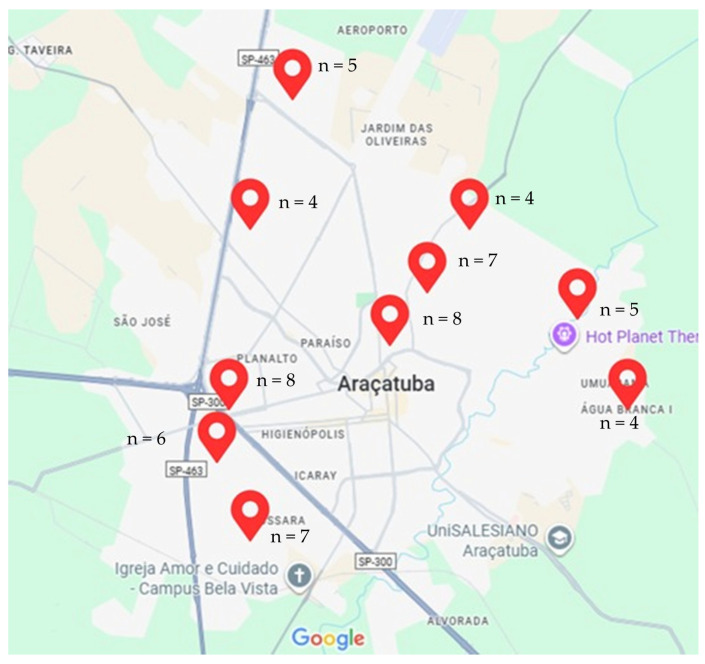
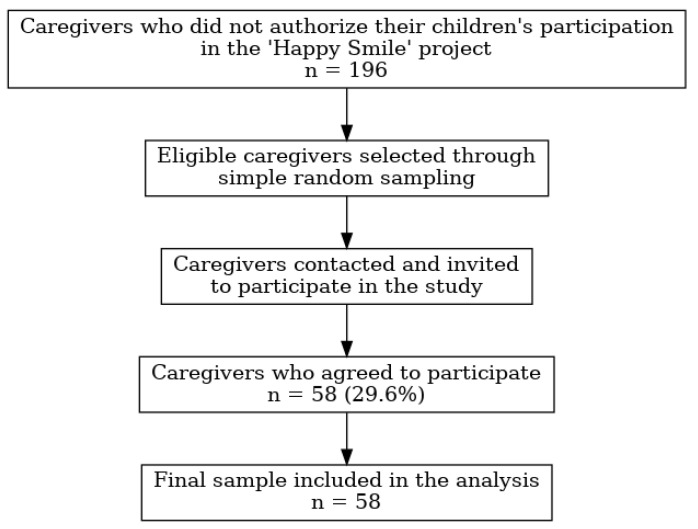
- From 19 invited center managers, 10 agreed; caregivers who did not authorize participation were identified through school records, selected by simple random sampling, and contacted. The finite population was 196 non-authorizing caregivers; minimum sample size was estimated at 36, and 58 caregivers were included.
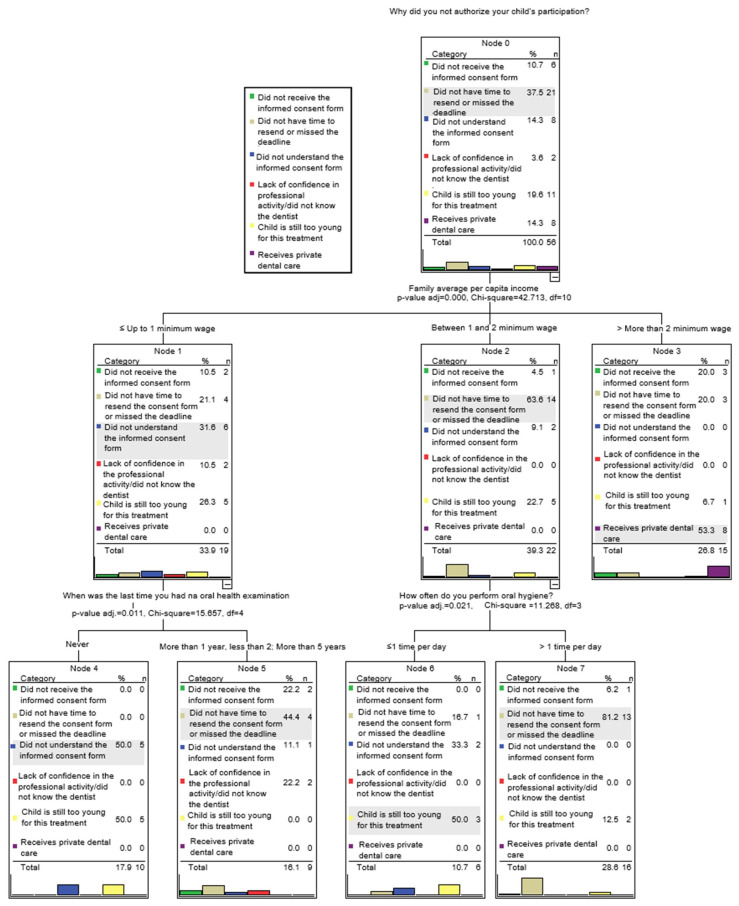
- Data were collected via a structured questionnaire administered in person or remotely (WhatsApp or Google Hangouts). Statistical analysis used SPSS version 21.0 with a 5% significance level, chi-square tests with Bonferroni post hoc adjustment, Spearman’s correlation, and Classification Tree multivariate analysis.
Limitations
- The paper states the sample was restricted to a single municipality, limiting generalizability to other socioeconomic, cultural, and educational contexts.
- Participation was voluntary, which may have introduced selection bias because caregivers who agreed may differ systematically from those who declined or were not reached.
- The paper states reliance on self-reported questionnaire data may have led to recall bias or social desirability bias; evident from the text, the sample size was also relatively small (58 caregivers), and the cross-sectional design cannot establish causality.
Model-written summary. Check it against the paper before relying on it.
Integrity signals
Registry
Cites
Statistics
Figures
Verification
Claims the paper makes
7 Valid · 1 Not valid · 1 Not checked · 45 Own results and interpretations
The cited sources support only part of this claim — read each source’s verdict below.
In the paper
“In this study, the predominance of curative demand among caregivers who do not regularly seek dental care and who have a limited perception of the importance of prevention is consistent with previous studies indicating that, despite improvements in access, preventive dentistry has not yet been fully incorporated into routine practice [22,23].”
§ Socioeconomic, Educational, Cultural, and Oral Health Practices Among Caregivers Declining Their Children’s Participation in School-Based Oral Health Promotion Programs: A Cross-Sectional Study > 4. Discussion
What the sources say
- Partly supportedcites [22] Colombo S. Gallus S. Beretta M. Lugo A. Scaglioni S. Colombo P. Paglia M. Gatto R. Marzo G. Caruso S. Prevalence and determinants of early childhood caries in Italy Eur. J. Paediatr. Dent. 2019 20 267 273 10.23804/ejpd.2019.20.04.02 31850767 doi:10.23804/ejpd.2019.20.04.02Experimental — accuracy not yet measured
Split into 2 atoms — 0 confirmed, 2 partially supported, 0 disputed, 0 misattributed, 0 unverifiable. Expand the claim to see per-atom verdicts.
- Partly supportedcites [23] Peres M.A. Macpherson L.M. Weyant R.J. Daly B. Venturelli R. Mathur M.R. Listl S. Celeste R.K. Guarnizo-Herreño C.C. Kearns C. Oral diseases: A global public health challenge Lancet 2019 394 249 260 10.1016/S0140-6736(19)31146-8 31327369 sourceExperimental — accuracy not yet measured
Split into 2 atoms — 0 confirmed, 2 partially supported, 0 disputed, 0 misattributed, 0 unverifiable. Expand the claim to see per-atom verdicts.
hedgedstates an association- Asserted: passes — The authors put it forward as true.
- Checkable: passes — It can be checked against evidence.
- Load-bearing: unclear — It is unclear whether the paper’s conclusions depend on it.
- Based: passes — The paper gives a reason why it holds.
- Partly supported
The cited sources support only part of this claim — read each source’s verdict below.
In the paper
“opting for private care [19]”
§ Socioeconomic, Educational, Cultural, and Oral Health Practices Among Caregivers Declining Their Children’s Participation in School-Based Oral Health Promotion Programs: A Cross-Sectional Study > 4. Discussion
What the sources say
- Partly supportedcites [19] Comassetto M.O. Baumgarten A. Kindlein K.A. Hilgert J.B. Figueiredo M.C. Faustino-Silva D.D. Access to oral health in early childhood in the city of Porto Alegre, Brazil Cienc. Saude Coletiva 2019 24 953 961 (In Portuguese with English Abstract) 10.1590/1413-81232018243.29082016 30892516 sourceExperimental — accuracy not yet measured
The Results (page not available in our copy) associate higher family income and parental education with children having a dental visit, and report that private offices were the most frequent consultation site (43.9%). They do not show that higher-income or more-educated families specifically chose private care rather than public care. (LLM, conf=0.84)
plainstates an association- Asserted: passes — The authors put it forward as true.
- Checkable: passes — It can be checked against evidence.
- Load-bearing: unclear — It is unclear whether the paper’s conclusions depend on it.
- Based: passes — The paper gives a reason why it holds.
- Partly supported
The cited sources support only part of this claim — read each source’s verdict below.
In the paper
“This resistance was more frequent among families with lower income and educational levels, highlighting informational and cultural barriers [26,27].”
§ Socioeconomic, Educational, Cultural, and Oral Health Practices Among Caregivers Declining Their Children’s Participation in School-Based Oral Health Promotion Programs: A Cross-Sectional Study > 4. Discussion
What the sources say
- Not checked — no full text of the sourcecites [26] Zhao Y. Surdu S. Langelier M. Parental perspectives on barriers to pediatric oral health care: Associations with children’s and families’ characteristics Pediatr. Dent. 2023 45 24 35 36879369
- Partly supportedcites [27] Doğan G.K. Polat Y. Özüdoğru S. Parental awareness and attitudes towards pediatric dentistry and children’s oral health BMC Oral Health 2025 25 672 10.1186/s12903-025-06037-8 40307748 PMC12044928 sourceExperimental — accuracy not yet measured
The Conclusion (page not provided) reports that parents with lower socioeconomic status were less likely to take their children to the dentist regularly and more likely to hold oral-health misconceptions. The Discussion (page not provided) links lower income and education to barriers to care, but it does not establish that resistance to treatment was more frequent in those families; it offers cultural differences only as a possible explanation for some attitudes. (LLM, conf=0.79)
plainstates an association- Asserted: passes — The authors put it forward as true.
- Checkable: passes — It can be checked against evidence.
- Load-bearing: passes — The paper’s conclusions depend on it.
- Based: passes — The paper gives a reason why it holds.
A result the paper reports from its own data — it cites no other source for it, so there is none to check. The quote shows it is in the paper.
In the paper
“Families earning three minimum wages or more were the only ones to report private dental care as the reason for non-authorization (p < 0.001) (Table 3).”
- Also stated in: § Abstract · hedged
“higher-income families were more likely to report private dental care as a reason for non-authorization (p < 0.001)”
§ Socioeconomic, Educational, Cultural, and Oral Health Practices Among Caregivers Declining Their Children’s Participation in School-Based Oral Health Promotion Programs: A Cross-Sectional Study > 3. Results
plainstates an association- Asserted: passes — The authors put it forward as true.
- Checkable: passes — It can be checked against evidence.
- Load-bearing: passes — The paper’s conclusions depend on it.
- Based: passes — The paper gives a reason why it holds.
- Also stated in: § Abstract · hedged
A result the paper reports from its own data — it cites no other source for it, so there is none to check. The quote shows it is in the paper.
In the paper
“Pearson’s correlation analysis demonstrated that higher income was associated with lower levels of embarrassment related to oral health status (p < 0.001).”
- Also stated in: § Abstract · plain
“lower levels of embarrassment related to oral health (p < 0.001)”
§ Socioeconomic, Educational, Cultural, and Oral Health Practices Among Caregivers Declining Their Children’s Participation in School-Based Oral Health Promotion Programs: A Cross-Sectional Study > 3. Results
boostedstates an association- Asserted: passes — The authors put it forward as true.
- Checkable: passes — It can be checked against evidence.
- Load-bearing: passes — The paper’s conclusions depend on it.
- Based: passes — The paper gives a reason why it holds.
- Also stated in: § Abstract · plain
30 more claims
Create a free account to see all 54 claims and every source verdict.
- Probably not a substantial claim. 12
- It may state two separate claims as one. 10
Self-check
Percentages, sums and reported differences re-computed from the paper’s own numbers.
Each contradiction between two passages listed here was confirmed by an independent check.
Rated minor: it would not touch a result — a value no result rests on, a p-value that stays on the same side of the significance level, or a conflict that is clerical, resolved elsewhere in the paper, or outside its own findings.
In the paper
§ Socioeconomic, Educational, Cultural, and Oral Health Practices Among Caregivers Declining Their Children’s Participation in School-Based Oral Health Promotion Programs: A Cross-Sectional Study > 2. Materials and Methods > 2.4. Statistical Analysis
“correlations between categorical variables were evaluated using Spearman’s correlation test.”
§ Socioeconomic, Educational, Cultural, and Oral Health Practices Among Caregivers Declining Their Children’s Participation in School-Based Oral Health Promotion Programs: A Cross-Sectional Study > 3. Results
“A significant Pearson correlation was observed between income and time since the last dental examination, indicating that higher-income caregivers were more likely to have had more recent dental visits (p < 0.001).”
Citations
Cites
Oral diseases: a global public health challenge
Peres, M. A., Macpherson, L. M. D., Weyant, R. J., Daly, B., Venturelli, R., Mathur, M. R., Listl, S., Celeste, R. K., Guarnizo-Herreño, C. C., Kearns, C., et al. (2019) · The Lancet · doi:10.1016/s0140-6736(19)31146-8 · Cited by 4,054 · cited 1×
“…seek dental care and who have a limited perception of the importance of prevention is con-https://doi.org/10.3390/healthcare14101347 sistent with previous studies indicating that, despite improvements in access, preventive dentistry has not yet been fully incorporated into routine practice [22,23].”
InfluentialJeong, J., Franchett, E. E., Ramos de Oliveira, C. V., Rehmani, K., & Yousafzai, A. K. (2021) · PLoS Medicine · doi:10.1371/journal.pmed.1003602 · Cited by 903 · cited 1×
“The knowledge, availability, beliefs, and resources of these individuals can significantly shape health outcomes, often determining whether preventive measures and medical guidance are effectively implemented, even when institutional support is available [1].”
Early Childhood Caries: Prevalence, Risk Factors, and Prevention
Anil, S., & Anand, P. S. (2017) · Frontiers in Pediatrics · doi:10.3389/fped.2017.00157 · Cited by 685 · cited 1×
“The presence of untreated dental caries is associated with negative impacts on specific daily activities, such as difficulty eating and sleeping, and may consequently affect psychological and physical development [10,11].”
Health-promoting schools: an opportunity for oral health promotion.
Kwan, S., Petersen, P. E., Pine, C. M., & Borutta, A. (2005) · Europe PMC (PubMed Central) · Cited by 665
Health-promoting schools: an opportunity for oral health promotion.
Kwan, S., Petersen, P., Pine, C., & Borutta, A. (2005) · Bulletin of the World Health Organization · doi:10.1590/s0042-96862005000900013 · Cited by 539
The sustainability of public health interventions in schools: a systematic review
Herlitz, L., MacIntyre, H., Osborn, T., & Bonell, C. (2020) · Implementation Science · doi:10.1186/s13012-019-0961-8 · Cited by 434
Deprivation and oral health: a review
Locker, D. (2000) · Community Dentistry and Oral Epidemiology · doi:10.1034/j.1600-0528.2000.280301.x · Cited by 411 · cited 1×
“During childhood, maintaining good oral health plays a fundamental role not only in children’s immediate quality of life but also in their well-being throughout adulthood [9].”
Relationship between oral health literacy and oral health status
Baskaradoss, J. K. (2018) · BMC Oral Health · doi:10.1186/s12903-018-0640-1 · Cited by 308 · cited 2×
“…to recognize and address this vulnerability by ensuring equitable access to oral health services, education, and support for parents, caregivers and educators, as well as by implementing public policies that promote an environment conducive to children’s oral health and healthy development [16].”
Integration of oral health into primary health care: A systematic review
Prasad, M., Manjunath, C., Murthy, A., Sampath, A., Jaiswal, S., & Mohapatra, A. (2019) · Journal of Family Medicine and Primary Care · doi:10.4103/jfmpc.jfmpc_286_19 · Cited by 170 · cited 1×
“Understanding the integration between oral health and primary healthcare is necessary to recognize the importance of oral health for overall health, with the aim of ensuring timely referral of children to dental care [33].”
Fraihat, N., Madae’en, S., Bencze, Z., Herczeg, A., & Varga, O. (2019) · International Journal of Environmental Research and Public Health · doi:10.3390/ijerph16152668 · Cited by 122 · cited 1×
“Evidence indicates positive outcomes associated with these programs, particularly in increasing knowledge and improving oral hygiene-related behaviors [7,8].”
Nicholson, E., McDonnell, T., De Brún, A., Barrett, M., Bury, G., Collins, C., Hensey, C., & McAuliffe, E. (2020) · BMC Health Services Research · doi:10.1186/s12913-020-05527-5 · Cited by 107 · cited 1×
“In these cases, the use of dental services is often driven by the perception that the child’s condition is urgent [36].”
Machry, R. V., Tuchtenhagen, S., Agostini, B. A., Teixeira, C. R. D. S., Piovesan, C., Mendes, F. M., & Ardenghi, T. M. (2013) · BMC Oral Health · doi:10.1186/1472-6831-13-60 · Cited by 103 · cited 1×
“The presence of statistically significant associations between income, educational level, time since the last dental visit, reason for the last visit [29,30], and embarrassment related to oral health reinforces the need for public policies specifically targeted at more vulnerable populations.”
Preditores da realização de consultas odontológicas de rotina e por problema em pré-escolares
Camargo, M. B. J., Barros, A. J. D., Frazão, P., Matijasevich, A., Santos, I. S., Peres, M. A., & Peres, K. G. (2012) · Revista de Saúde Pública · doi:10.1590/s0034-89102012005000004 · Cited by 84 · cited 1×
“Conversely, individuals with lower income reported less frequent or no dental visits [21].”
Utilization of dental services and associated factors among preschool children in China
Gao, X., Ding, M., Xu, M., Wu, H., Zhang, C., Wang, X., Feng, X., Tai, B., Hu, D., Lin, H., et al. (2020) · BMC Oral Health · doi:10.1186/s12903-019-0996-x · Cited by 79 · cited 1×
“The presence of statistically significant associations between income, educational level, time since the last dental visit, reason for the last visit [29,30], and embarrassment related to oral health reinforces the need for public policies specifically targeted at more vulnerable populations.”
Impact of untreated dental caries on the daily activities of children
Souza, J. G. S., Souza, S. E., Noronha, M. D. S., Ferreira, E. F. E., & Martins, A. M. E. D. B. L. (2017) · Journal of Public Health Dentistry · doi:10.1111/jphd.12259 · Cited by 72 · cited 1×
“The presence of untreated dental caries is associated with negative impacts on specific daily activities, such as difficulty eating and sleeping, and may consequently affect psychological and physical development [10,11].”
Neupaul, P., & Nepaul, P. (2020) · Journal of International Society of Preventive and Community Dentistry · doi:10.4103/jispcd.jispcd_273_20 · Cited by 65 · cited 1×
“Within this context, parents and caregivers play a central role in the establishment of healthy habits, directly influencing their children’s oral health [13,14].”
The importance of promoting oral health in schools: A pilot study
Saccomanno, S., De Luca, M., Saran, S., Petricca, M. T., Caramaschi, E., Mastrapasqua, R. F., Messina, G., & Gallusi, G. (2023) · European Journal of Translational Myology · doi:10.4081/ejtm.2023.11158 · Cited by 45 · cited 2×
“In this context, it is essential to implement public policies focused on children, who are at a crucial stage of development for the establishment of healthy habits [16,18,19,32].”
Calderón‐Larrañaga, S., Ruíz, M. E., Vela, P. C., Conde, A. C. C., Villarroya, L. A., Gómez, A. G., Hernández, A. R., & López, I. T. (2018) · Atención Primaria · doi:10.1016/j.aprim.2018.05.003 · Cited by 44 · cited 1×
“The environment of educational centers is regarded as a safe and appropriate setting for the implementation of oral health promotion, as it serves as a point of convergence among parents, educators, and healthcare professionals [3].”
Prevalence and determinants of early childhood caries in Italy
(2019) · PubMed · doi:10.23804/ejpd.2019.20.04.02 · Cited by 41
Sowmya, K., Puranik, M. P., & Aparna, K. S. (2021) · Indian Journal of Dental Research · doi:10.4103/ijdr.ijdr_676_18 · Cited by 39 · cited 1×
“…initiatives, expanded access to information, and awareness strategies that effectively engage families and consider their history of dental service utilization, as well as their experience with dental caries, in order to better understand and improve patterns of oral health service use [27,31].”
Oral health promotion through health‐promoting schools in developing countries: A scoping review
Elsadek, Y. E., & Baker, S. R. (2023) · Community Dentistry And Oral Epidemiology · doi:10.1111/cdoe.12864 · Cited by 39
Health Education in Early Childhood Education: A Systematic Review of the Literature
Ramos-Pla, A., & Casol, L. F. (2025) · Societies · doi:10.3390/soc15040106 · Cited by 33 · cited 1×
“In this context, it is essential to implement public policies focused on children, who are at a crucial stage of development for the establishment of healthy habits [16,18,19,32].”
Khanduri, N., Singhal, N., Mitra, M., & Rohatgi, S. (2018) · International Journal of Pedodontic Rehabilitation · doi:10.4103/ijpr.ijpr_31_17 · Cited by 33
Liu, M., Song, Q., Xu, X., & Lai, G. (2022) · Frontiers in Public Health · doi:10.3389/fpubh.2022.959125 · Cited by 31 · cited 1×
“Families with higher purchasing power and educational levels tend to adopt preventive practices and place greater value on oral health [17,18] opting for private care [19] which may compromise continuous monitoring and the development of healthy habits in children, as well as result in a lack of…”
Floríndez, L. I., Como, D. H., Floríndez, D. C., Vigen, C. L. P., Floríndez, F. M., & Cermak, S. A. (2021) · Health Equity · doi:10.1089/heq.2020.0078 · Cited by 25 · cited 1×
“Given the relevance of this topic, it is important to emphasize children’s dependence on the care provided within their family and social environments [12].”
The impact of parental oral health behaviors on the oral health of children
Alamoudi, R. M., Showlag, R. A., Almujil, N. J., Alzahrani, . M., Aladwani, W. I., Alboeid, A., Alsaleh, Y. T., Alali, J. Y., Alahmadi, A. J., Nayas, L. M., et al. (2023) · International Journal of Community Medicine and Public Health · doi:10.18203/2394-6040.ijcmph20233149 · Cited by 22 · cited 1×
“These findings highlight the need for educational interventions that consider families’ cultural beliefs and practices, as the adoption of appropriate oral hygiene behaviors is closely linked to how caregivers understand and value oral health care [25].”
Acesso à saúde bucal na primeira infância no município de Porto Alegre, Brasil
Comassetto, M. O., Baumgarten, A., Kindlein, K. D. A., Hilgert, J. B., Figueiredo, M. C., & Faustino-Silva, D. D. (2019) · Ciência & Saúde Coletiva · doi:10.1590/1413-81232018243.29082016 · Cited by 17 · cited 3×
“…logistical factors, such as missing the deadline or not receiving the informed consent form, as well as cultural perceptions, including the belief that conditions affecting primary teeth are not relevant and that dental care should be sought only when the child presents severe symptoms [19].”
Are maternal factors predictors of a child’s first dental visit? A birth cohort study in Brazil
HARTWIG, A. D., CADEMARTORI, M. G., DEMARCO, F. F., BERTOLDI, A. D., CORRÊA, M. B., & AZEVEDO, M. S. (2022) · Brazilian Oral Research · doi:10.1590/1807-3107bor-2022.vol36.0092 · Cited by 16 · cited 2×
“This factor is generally associated with lower health literacy, reduced self-esteem, and social exclusion, which may decrease the likelihood of seeking care and contribute to resistance toward children’s dental treatment [24].”
Tahani, B., & Asgari, I. (2022) · Journal of Education and Health Promotion · doi:10.4103/jehp.jehp_436_21 · Cited by 13
Parental awareness and attitudes towards pediatric dentistry and children’s oral health
Doğan, G. K., Polat, Y., & Özüdoğru, S. (2025) · BMC Oral Health · doi:10.1186/s12903-025-06037-8 · Cited by 12 · cited 2×
“This resistance was more frequent among families with lower income and educational levels, highlighting informational and cultural barriers [26,27].”
(2020) · PubMed · Cited by 5
Your right to choose: parents’ preferences toward a pediatric dental center
Jafarzadeh, M., Ghasemi, R., Esfahani, E. A., Ponnet, K. S., & Moeeni, M. (2025) · BMC Oral Health · doi:10.1186/s12903-025-05707-x · Cited by 3 · cited 1×
“These findings reinforce the need for public policies that consider factors beyond the economic dimension, as parents take into account not only the financial aspects of pediatric treatments but also non-financial factors when making decisions [35].”
Factors Influencing Parents' Decision in Choosing a Pediatric Dentist
Kochar, S. P., Madhu, P. P., Reche, A. R., et al. (2023) · Cureus · doi:10.7759/cureus.46812 · Cited by 3
The silent decline of US dentistry
Iwanaga, J. (2025) · The Journal of the American Dental Association · doi:10.1016/j.adaj.2025.06.002 · Cited by 2
Sampaio, V. H. G., Silva, G. A., Araújo, A. R., Moreira, A. L. G. S., Theodoro, L. H., Aranega, A. M., Antoniali, C., & Brandini, D. A. (2026) · Nutrients · doi:10.3390/nu18040678 · Cited by 2
Self-citationSampaio, V. H. G., Silva, G. A., Araújo, A. R., et al. (2026) · Preprints.org · doi:10.20944/preprints202601.2340.v1 · Cited by 1
Self-citationThe health of children and adolescents – new data is needed!
Thyen, U. (2023) · PubMed · doi:10.25646/11434 · Cited by 1
(2023) · PubMed
Metadata
- Authors
- Silva, G. A., Cantão, D. A. A., Sampaio, V. H. G., Canevari, L. V. T., Aranega, A. M., Garcia, W. G., Antoniali Silva, C., & Brandini, D. A.
- Affiliations
- Universidade Estadual Paulista (Unesp) (BR)
- Department of Basic Sciences, School of Dentistry, São Paulo State University (UNESP), Araçatuba 16015-050, SP, Brazil
- Corresponding author
- Brandini, Daniela Atili
- ORCID
- Venue
- Healthcare
- Publisher
- MDPI AG
- Published
- 2026-05-14
- Volume
- 14
- Issue
- 10
- Pages
- 1347
- ISSN
- 2227-9032 (ISSN-L)
- PMC
- PMC13206059
- OpenAlex
- W7161175965
- Cited by
- 0
- References
- 29
- FWCI
- 0.00
- Type
- journal article
- Language
- en
- Open access
- gold
- doi.org
- Licence
- Locations
- Healthcare (publishedVersion, cc-by)
- PubMed (publishedVersion)
- PubMed Central (publishedVersion, cc-by)
- Funders
- Fundação para o Desenvolvimento da UNESP (No. 137/2023)
- Topics
- Health Sciences › Dentistry › General Dentistry › Dental Health and Care Utilization
- Health Sciences › Medicine › Public Health, Environmental and Occupational Health › School Health and Nursing Education
- Health Sciences › Dentistry › Oral Surgery › Dental Anxiety and Anesthesia Techniques
- Keywords
- school-based oral health promotion, caregiver involvement, socioeconomic disparities, educational inequality, cultural factors, oral hygiene habits, toothbrushing frequency, dental care seeking, private dental care, early childhood oral health, socioeconomic status
About these checks
Registry, retraction, Cites and statistics results are computed, not judged, with one exception: a printed reference that no index lists is read once by a model before it counts as a citation error. Claims are extracted by a model and kept only when their quote appears verbatim in the text; each cited source is then checked, with a model’s help, for whether it says what the claim relies on. Those verdicts can be wrong — read the claim’s quote and the cited source before relying on one.
The claim verdicts this report counts are experimental: their accuracy is not yet measured.
A language model drew the claims from the paper on 2026-10-10, under version 3 of the claim definition (model deepseek-v4.1-flash, prompt extract-v3).
A second model labelled each claim on 2026-10-10 (model jev-1.13-20260917, definition revision gold-guideline-v0.2).
Cited sources are checked with a language model’s help (qwen3.8-omni-flash and gpt-6-sol).
Statistics and arithmetic are recomputed, not judged.
Confidence bands are shown only for fields calibrated on our annotated test set. None is calibrated yet, so no band is shown.
What counts as a claim ›How we measure confidence ›How we check this ›
Are you an author, or do you see a problem with this page? Request a review
Data sources
Bibliographic data: Semantic Scholar, OpenAlex, Crossref.
Contains information from the Semantic Scholar Academic Graph Datasets, made available under the ODC Attribution License (ODC-BY 1.0).
Semantic Scholar’s data is described in: Kinney, R., et al. (2023). The Semantic Scholar Open Data Platform. arXiv:2301.10140.
