

Connecting the Mind–Body Split: Understanding the Relationship between Symptoms and Emotional Well-Being in Chronic Pain and Functional Gastrointestinal Disorders
Open accessThe DOI matches its Crossref record; 100 of the 100 references it cites were found in a registry or an index.
Abstract
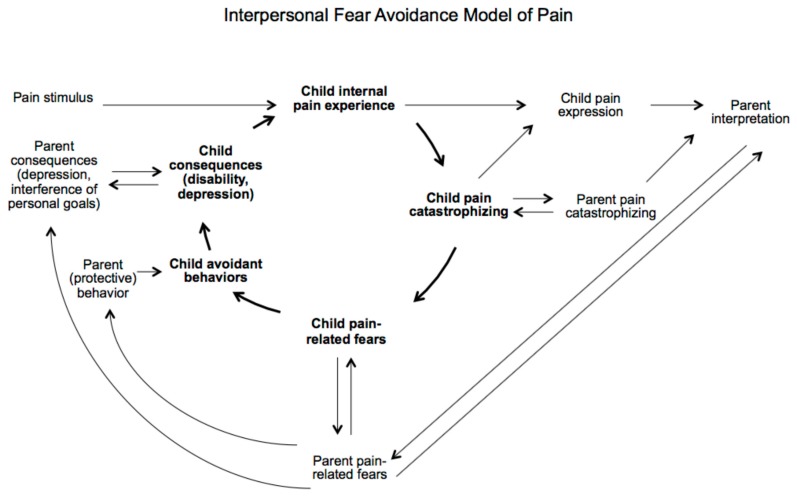
Paediatric chronic conditions, e.g., chronic pain and functional gastrointestinal disorders, are commonly diagnosed, with fatigue, pain and abdominal discomfort the most frequently reported symptoms across conditions. Regardless of whether symptoms are connected to an underlying medical diagnosis or not, they are often associated with an increased experience of psychological distress by both the ill child and their parents. While pain and embarrassing symptoms can induce increased distress, evidence is also accumulating in support of a reciprocal relationship between pain and distress. This reciprocal relationship is nicely illustrated in the fear avoidance model of pain, which has recently been found to be applicable to childhood pain experiences. The purpose of this article is to illustrate how mind (i.e., emotions) and body (i.e., physical symptoms) interact using chronic pain and gastrointestinal disorders as key examples. Despite the evidence for the connection between mind and body, the mind–body split is still a dominant position for families and health care systems, as evidenced by the artificial split between physical and mental health care. In a mission to overcome this gap, this article will conclude by providing tools on how the highlighted evidence can help to close this gap between mind and body.
Overview
The claims and statistics of this paper haven’t been checked yet.
Free: it reads the open-access text and checks the first 5 claims that cite a source we can check. Create a free account to check every claim.
Integrity signals
Registry
Cites
Statistics
Figures
Verification
Claims the paper makes
The claims and statistics of this paper haven’t been checked yet.
Free: it reads the open-access text and checks the first 5 claims that cite a source we can check. Create a free account to check every claim.
Self-check
Percentages, sums and reported differences re-computed from the paper’s own numbers.
The self-check needs the paper’s full text.
Citations
Cites
Fear-avoidance and its consequences in chronic musculoskeletal pain: a state of the art.
Vlaeyen, J. W. S., & Linton, S. J. (2000) · Pain · doi:10.1016/s0304-3959(99)00242-0 · Cited by 4,931 · cited 1×
“In turn, feelings of anxiety and depression are related to more pain-related disability, which can further intensify the pain experience [59].”
BackgroundInflammation and Its Discontents: The Role of Cytokines in the Pathophysiology of Major Depression
Miller, A. H., Maletic, V., & Raison, C. L. (2009) · Biological Psychiatry · doi:10.1016/j.biopsych.2008.11.029 · Cited by 3,848 · cited 7×
“When emotions are involved this is thought to amplify or reduce GI sensation perception and processing via the HPA, influencing how strongly or weakly sensations in the gut are experienced [45].”
BackgroundInfluentialA classification of chronic pain for ICD-11
Treede, R.-D., Rief, W., Barke, A., Aziz, Q., Bennett, M. I., Benoliel, R., Cohen, M., Evers, S., Finnerup, N. B., First, M. B., et al. (2015) · Pain · doi:10.1097/j.pain.0000000000000160 · Cited by 2,822
Functional Gastrointestinal Disorders: History, Pathophysiology, Clinical Features, and Rome IV
Drossman, D. A. (2016) · Gastroenterology · doi:10.1053/j.gastro.2016.02.032 · Cited by 2,430
Childhood Functional Gastrointestinal Disorders: Child/Adolescent
Rasquin, A., Di Lorenzo, C., Forbes, D., Guiraldes, E., Hyams, J. S., Staiano, A., & Walker, L. S. (2006) · Gastroenterology · doi:10.1053/j.gastro.2005.08.063 · Cited by 1,790
The epidemiology of chronic pain in children and adolescents revisited: A systematic review
King, S., Chambers, C. T., Huguet, A., MacNevin, R. C., McGrath, P. J., Parker, L., & MacDonald, A. J. (2011) · Pain · doi:10.1016/j.pain.2011.07.016 · Cited by 1,688 · cited 2×
“Independent of aetiology, higher prevalence rates of chronic pain are observed in girls and older children [10].”
BackgroundChildhood Functional Gastrointestinal Disorders: Child/Adolescent
Hyams, J. S., Di Lorenzo, C., Saps, M., Shulman, R. J., Staiano, A., & van Tilburg, M. (2016) · Gastroenterology · doi:10.1053/j.gastro.2016.02.015 · Cited by 1,362
Culture and Symptoms--An Analysis of Patient's Presenting Complaints
Zola, I. K. (1966) · American Sociological Review · doi:10.2307/2091854 · Cited by 766
Christie, D., & Viner, R. (2005) · BMJ · doi:10.1136/bmj.330.7486.301 · Cited by 758
Self-citationBrain–Gut Interactions in Inflammatory Bowel Disease
Bonaz, B. L., & Bernstein, C. N. (2013) · Gastroenterology · doi:10.1053/j.gastro.2012.10.003 · Cited by 667
Research works printed but not linked: 1
- 102. Bagnall A.M. Whiting P. Wright K. Sowden A. The Effectiveness of Interventions Used in the Treatment/Management of CFS and/or ME in Adults and Children NHS Centre for Review and Dissemination, University of York York, UK 2002
Cited by
Seifert, G., Jeitler, M., Stange, R., Michalsen, A., Cramer, H., Brinkhaus, B., Esch, T., Kerckhoff, A., Paul, A. E., Teut, M., et al. (2020) · Frontiers in Medicine · doi:10.3389/fmed.2020.587749 · Cited by 74
“The influence of psychological processes as well as psychological and behavioral interventions on the immune system (16, 66, 73, 74), positive psychological well-being (75), physiological functions (76, 77) as well as the mind’s impact on chronic diseases is quite wellresearched (78).”
BackgroundWong, K. P., Tse, M. Y. M., & Qin, J. (2022) · Healthcare · doi:10.3390/healthcare10102047 · Cited by 86
“Inappropriate chronic pain management often results in reduced quality of life, alcohol and drug usage, physical dysfunction and mental disorders [13,14].”
BackgroundHeffernan, M., Wilson, C., Keating, K., & McCarthy, K. (2021) · Pain Medicine · doi:10.1093/pm/pnaa245 · Cited by 21
Emotions matter: The role of emotional approach coping in chronic pain
Ziadni, M. S., You, D. S., Johnson, L., Lumley, M. A., & Darnall, B. D. (2020) · European Journal of Pain · doi:10.1002/ejp.1625 · Cited by 24
Bianco, A., Russo, F., Franco, I., Riezzo, G., Donghia, R., Curci, R., Bonfiglio, C., Prospero, L., D’Attoma, B., Ignazzi, A., et al. (2023) · Journal of Clinical Medicine · doi:10.3390/jcm12216786 · Cited by 20
“Finally, the mind–body connection is a holistic aspect that influences psychological well-being, positively impacting GI health overall [50].”
BackgroundTuran, G. B., Gür, F., Özer, Z., & Tarkan, Ç. (2023) · Pain Management Nursing · doi:10.1016/j.pmn.2023.11.009 · Cited by 21
Al‐Beltagi, M., Saeed, N. K., Bediwy, A. S., & Elbeltagi, R. M. (2025) · World Journal of Clinical Pediatrics · doi:10.5409/wjcp.v14.i2.103323 · Cited by 41
Albazee, E., Alrajehi, A., Alsahli, F. M., Alqemlas, A., Aldhaen, A., Alkandari, A., Alkandari, H., & Alkanderi, W. (2025) · Medicina · doi:10.3390/medicina61060957 · Cited by 17
“The sympathetic nervous system subsequently triggers the release of adrenomedullary catecholamines, leading to increased heart rate, blood pressure, and respiration [45,46].”
Corser, J., Caes, L., Bateman, S., Noel, M. E., & Jordan, A. L. (2023) · European Journal of Pain · doi:10.1002/ejp.2140 · Cited by 16
“…appropriate pain neuroscience education (e.g. neurophysiological and psychological models of pain, information about how context informs pain perception), as well as education about mind/body interactions (Caes et al., 2017), and importantly, developing a sense of trust (Hardin et al., 2021).”
Self-citationBruneau, A., Carrié, S., Moscaritolo, L., & Ingelmo, P. M. (2022) · Pediatric Drugs · doi:10.1007/s40272-022-00534-x · Cited by 12
“Factors such as emotional distress (depression, anxiety), traumatic experiences, and social and interpersonal difficulties will influence pain outcomes and promote the chronicity of pain [97, 100, 101].”
BackgroundMindfulness Meditation and Spaceflight: A Potential Adjunct Therapy for Astronauts
Saniotis, A., la Torre, G. G. D., Galassi, F. M., Henneberg, M., & Mohammadi, K. (2023) · THE MIND - Bulletin on Mind-Body Medicine Research · doi:10.61936/themind/202312222 · Cited by 5
Mind-Body Interactions in Chronic Pain Sufferers: A Qualitative Study on Personality Factors
Aghaziarati, A., Jun, H., & Dai, G.-S. (2023) · Journal of Personality and Psychosomatic Research · doi:10.61838/kman.jppr.1.3.5 · Cited by 3
Bateman, D., Caes, L., Noel, M. E., Gauntlett‐Gilbert, J., Jones, A., & Jordan, A. (2025) · Journal of Pain · doi:10.1016/j.jpain.2025.105436 · Cited by 2
“16 Failure to adopt an integrated approach may hamper the identification of symptoms of several disorders within the context of the adolescent ’ s broader life and ecosystem.”
Self-citationTHE MIND - Bulletin on Mind-Body Medicine Research
(2023) · THE MIND - Bulletin on Mind-Body Medicine Research · doi:10.61936/themind/ · Cited by 1
Basile, C., Gigliotti, F., Colaiori, M., & Ardizzone, I. (2021) · Psychiatria Danubina · doi:10.24869/psyd.2021.173
“…have difficulty expres- sing distress through speech, they fail to develop a more functional coping for the expression of discomfort so that they are reinforced in their ‘sick’ role; the increase in pain manifestations is correlated with a worse outcome in these disorders (Caes et al 2017).”
BackgroundGastrointestinale Erkrankungen
Kapfhammer, H. (2022) · Springer eBooks · doi:10.1007/978-3-662-65873-4_6
Büssing, A. (2023) · THE MIND - Bulletin on Mind-Body Medicine Research · doi:10.61936/themind/202312223
A Cogniceptive Model of Trauma Fixation
Büttiker, P. (2023) · THE MIND - Bulletin on Mind-Body Medicine Research · doi:10.61936/themind/202312225
The Relevance of Mind-Body Medicine for Rheumatic Diseases
Klass, M. (2023) · THE MIND - Bulletin on Mind-Body Medicine Research · doi:10.61936/themind/202312224
The Potential of Mind-Body Medicine for Prevention and Treatment of Stress and Trauma
Michaelsen, M. M., & Esch, T. (2023) · THE MIND - Bulletin on Mind-Body Medicine Research · doi:10.61936/themind/202312221
Metadata
- Authors
- Caes, L., Orchard, A., & Christie, D.
- Affiliations
- University of Stirling (GB)
- University College London Hospitals NHS Foundation Trust (GB)
- Corresponding author
- Caes, Line
- Venue
- Healthcare
- Publisher
- MDPI AG
- Published
- 2017-12-05
- Volume
- 5
- Issue
- 4
- Pages
- 93
- ISSN
- 2227-9032 (ISSN-L)
- PMC
- PMC5746727
- OpenAlex
- W2773805335
- Cited by
- 20
- References
- 99
- Citations by year
- 2025: 3 · 2023: 10 · 2022: 3 · 2021: 1 · 2020: 3
- FWCI
- 0.15
- Type
- journal article
- Language
- en
- Open access
- gold
- doi.org
- Licence
- Locations
- Healthcare (publishedVersion, cc-by)
- Europe PMC (PubMed Central) (publishedVersion, cc-by)
- PubMed Central (publishedVersion, cc-by)
- PubMed (publishedVersion)
- DOAJ (DOAJ: Directory of Open Access Journals) (submittedVersion, cc-by-sa)
- Stirling Online Research Repository (University of Stirling) (submittedVersion, cc-by)
- Topics
- Health Sciences › Medicine › Pediatrics, Perinatology and Child Health › Pediatric Pain Management Techniques
- Health Sciences › Medicine › Psychiatry and Mental health › Psychosomatic Disorders and Their Treatments
- Social Sciences › Arts and Humanities › History and Philosophy of Science › Medicine, History, and Philosophy
- Keywords
- mind-body problem, mind-body split, chronic pain, functional gastrointestinal disorders, psychological distress, emotional well-being, fear-avoidance model, fatigue, abdominal discomfort, parental distress
About these checks
Registry, retraction, Cites and statistics results are computed, not judged, with one exception: a printed reference that no index lists is read once by a model before it counts as a citation error. Claims are extracted by a model and kept only when their quote appears verbatim in the text; each cited source is then checked, with a model’s help, for whether it says what the claim relies on. Those verdicts can be wrong — read the claim’s quote and the cited source before relying on one.
Statistics and arithmetic are recomputed, not judged.
Confidence bands are shown only for fields calibrated on our annotated test set. None is calibrated yet, so no band is shown.
What counts as a claim ›How we measure confidence ›How we check this ›
Are you an author, or do you see a problem with this page? Request a review
Data sources
Bibliographic data: Semantic Scholar, OpenAlex, Crossref.
Contains information from the Semantic Scholar Academic Graph Datasets, made available under the ODC Attribution License (ODC-BY 1.0).
Semantic Scholar’s data is described in: Kinney, R., et al. (2023). The Semantic Scholar Open Data Platform. arXiv:2301.10140.
