

Connecting the Mind–Body Split: Understanding the Relationship between Symptoms and Emotional Well-Being in Chronic Pain and Functional Gastrointestinal Disorders
Open accessThe DOI matches its Crossref record; 100 of the 100 references it cites were found in a registry or an index.
Abstract
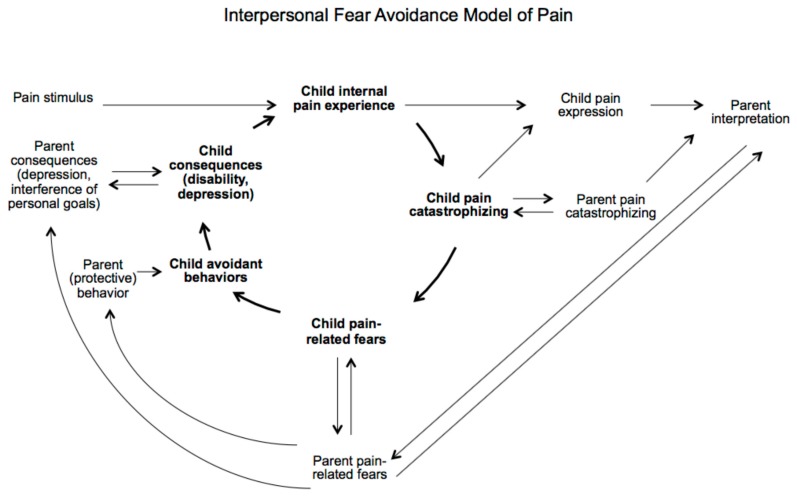
Paediatric chronic conditions, e.g., chronic pain and functional gastrointestinal disorders, are commonly diagnosed, with fatigue, pain and abdominal discomfort the most frequently reported symptoms across conditions. Regardless of whether symptoms are connected to an underlying medical diagnosis or not, they are often associated with an increased experience of psychological distress by both the ill child and their parents. While pain and embarrassing symptoms can induce increased distress, evidence is also accumulating in support of a reciprocal relationship between pain and distress. This reciprocal relationship is nicely illustrated in the fear avoidance model of pain, which has recently been found to be applicable to childhood pain experiences. The purpose of this article is to illustrate how mind (i.e., emotions) and body (i.e., physical symptoms) interact using chronic pain and gastrointestinal disorders as key examples. Despite the evidence for the connection between mind and body, the mind–body split is still a dominant position for families and health care systems, as evidenced by the artificial split between physical and mental health care. In a mission to overcome this gap, this article will conclude by providing tools on how the highlighted evidence can help to close this gap between mind and body.
Overview
The claims and statistics of this paper haven’t been checked yet.
Free: it reads the open-access text and checks the first 5 claims that cite a source we can check. Create a free account to check every claim.
Integrity signals
Registry
Cites
Statistics
Figures
Verification
Claims the paper makes
The claims and statistics of this paper haven’t been checked yet.
Free: it reads the open-access text and checks the first 5 claims that cite a source we can check. Create a free account to check every claim.
Self-check
Percentages, sums and reported differences re-computed from the paper’s own numbers.
The self-check needs the paper’s full text.
Citations
Cites
Fear-avoidance and its consequences in chronic musculoskeletal pain: a state of the art.
Vlaeyen, J. W. S., & Linton, S. J. (2000) · Pain · doi:10.1016/s0304-3959(99)00242-0 · Cited by 4,931 · cited 1×
“In turn, feelings of anxiety and depression are related to more pain-related disability, which can further intensify the pain experience [59].”
BackgroundInflammation and Its Discontents: The Role of Cytokines in the Pathophysiology of Major Depression
Miller, A. H., Maletic, V., & Raison, C. L. (2009) · Biological Psychiatry · doi:10.1016/j.biopsych.2008.11.029 · Cited by 3,848 · cited 7×
“When emotions are involved this is thought to amplify or reduce GI sensation perception and processing via the HPA, influencing how strongly or weakly sensations in the gut are experienced [45].”
BackgroundInfluentialA classification of chronic pain for ICD-11
Treede, R.-D., Rief, W., Barke, A., Aziz, Q., Bennett, M. I., Benoliel, R., Cohen, M., Evers, S., Finnerup, N. B., First, M. B., et al. (2015) · Pain · doi:10.1097/j.pain.0000000000000160 · Cited by 2,822
Functional Gastrointestinal Disorders: History, Pathophysiology, Clinical Features, and Rome IV
Drossman, D. A. (2016) · Gastroenterology · doi:10.1053/j.gastro.2016.02.032 · Cited by 2,430
Childhood Functional Gastrointestinal Disorders: Child/Adolescent
Rasquin, A., Di Lorenzo, C., Forbes, D., Guiraldes, E., Hyams, J. S., Staiano, A., & Walker, L. S. (2006) · Gastroenterology · doi:10.1053/j.gastro.2005.08.063 · Cited by 1,790
The epidemiology of chronic pain in children and adolescents revisited: A systematic review
King, S., Chambers, C. T., Huguet, A., MacNevin, R. C., McGrath, P. J., Parker, L., & MacDonald, A. J. (2011) · Pain · doi:10.1016/j.pain.2011.07.016 · Cited by 1,688 · cited 2×
“Independent of aetiology, higher prevalence rates of chronic pain are observed in girls and older children [10].”
BackgroundChildhood Functional Gastrointestinal Disorders: Child/Adolescent
Hyams, J. S., Di Lorenzo, C., Saps, M., Shulman, R. J., Staiano, A., & van Tilburg, M. (2016) · Gastroenterology · doi:10.1053/j.gastro.2016.02.015 · Cited by 1,362
Culture and Symptoms--An Analysis of Patient's Presenting Complaints
Zola, I. K. (1966) · American Sociological Review · doi:10.2307/2091854 · Cited by 766
Christie, D., & Viner, R. (2005) · BMJ · doi:10.1136/bmj.330.7486.301 · Cited by 758
Self-citationBrain–Gut Interactions in Inflammatory Bowel Disease
Bonaz, B. L., & Bernstein, C. N. (2013) · Gastroenterology · doi:10.1053/j.gastro.2012.10.003 · Cited by 667
Van Oudenhove, L., Levy, R. L., Crowell, M. D., Drossman, D. A., Halpert, A. D., Keefer, L., Lackner, J. M., Murphy, T. B., & Naliboff, B. D. (2016) · Gastroenterology · doi:10.1053/j.gastro.2016.02.027 · Cited by 512 · cited 2×
“For instance, in the context of FGID, stress has been identified as one of the largest predictors of FGID symptoms, linked to onset, maintenance and poorer recovery rates [46].”
Epidemiology of Pediatric Functional Abdominal Pain Disorders: A Meta-Analysis
Korterink, J. J., Diederen, K., Benninga, M. A., & Tabbers, M. M. (2015) · PLOS ONE · doi:10.1371/journal.pone.0126982 · Cited by 481 · cited 1×
“Beyond the clear neurological connections, living with embarrassing and/or painful symptoms also has the potential to contribute to poor body image, bullying or mood difficulties, including anxiety and depression, which can affect psychological and social well-being [42,43].”
BackgroundThe epidemiology of pain in children and adolescents: a review
Goodman, J. E., & McGrath, P. J. (1991) · Pain · doi:10.1016/0304-3959(91)90108-a · Cited by 475
Chronic pain and its impact on quality of life in adolescents and their families
Hunfeld, J. A. M. (2001) · Journal of Pediatric Psychology · doi:10.1093/jpepsy/26.3.145 · Cited by 421 · cited 1×
“Parents commonly report high levels of parental stress, anxiety, depressive symptoms, marital problems, and restrictions in personal, social and family activities [30,34].”
BackgroundEccleston, C., Crombez, G., Scotford, A., Clinch, J., & Connell, H. (2004) · Pain · doi:10.1016/j.pain.2003.11.008 · Cited by 418
Tillisch, K., Mayer, E. A., & Labus, J. S. (2011) · Gastroenterology · doi:10.1053/j.gastro.2010.07.053 · Cited by 412 · cited 1×
“When emotions are involved this is thought to amplify or reduce GI sensation perception and processing via the HPA, influencing how strongly or weakly sensations in the gut are experienced [45].”
BackgroundBehavior Problems in Children and Adolescents With Chronic Physical Illness: A Meta-Analysis
Pinquart, M., & Shen, Y. (2011) · Journal of Pediatric Psychology · doi:10.1093/jpepsy/jsr042 · Cited by 371
Psychological interventions for parents of children and adolescents with chronic illness
Eccleston, C., Palermo, T. M., Fisher, E., & Law, E. (2012) · Cochrane Database of Systematic Reviews · doi:10.1002/14651858.cd009660.pub2 · Cited by 369
Fundamentals of Neurogastroenterology: Basic Science
Vanner, S. J., Greenwood-Van Meerveld, B., Mawe, G. M., Shea-Donohue, T., Verdu, E. F., Wood, J., & Grundy, D. (2016) · Gastroenterology · doi:10.1053/j.gastro.2016.02.018 · Cited by 369
The frequency, trajectories and predictors of adolescent recurrent pain: A population-based approach
Stanford, E. A., Chambers, C. T., Biesanz, J. C., & Chen, E. (2008) · Pain · doi:10.1016/j.pain.2007.10.032 · Cited by 338
Youssef, N. N., Murphy, T. G., Langseder, A. L., & Rosh, J. R. (2006) · Pediatrics · doi:10.1542/peds.2005-0114 · Cited by 311
Hotopf, M., Carr, S., Mayou, R., Wadsworth, M., & Wessely, S. (1998) · BMJ · doi:10.1136/bmj.316.7139.1196 · Cited by 308
Fearon, P., & Hotopf, M. (2001) · BMJ · doi:10.1136/bmj.322.7295.1145 · Cited by 301
Eccleston, C., Morley, S., Williams, A., Yorke, L., & Mastroyannopoulou, K. (2002) · Pain · doi:10.1016/s0304-3959(02)00072-6 · Cited by 296
School Impairment in Adolescents With Chronic Pain
Logan, D. E., Simons, L. E., Stein, M. J., & Chastain, L. (2008) · The Journal of Pain · doi:10.1016/j.jpain.2007.12.003 · Cited by 288
Eccleston, C. (2003) · Archives of Disease in Childhood · doi:10.1136/adc.88.10.881 · Cited by 276
Functional Abdominal Pain in Childhood and Long-term Vulnerability to Anxiety Disorders
Shelby, G. D., Shirkey, K. C., Sherman, A. L., Beck, J. E., Haman, K., Shears, A. R., Horst, S. N., Smith, C. A., Garber, J., & Walker, L. S. (2013) · Pediatrics · doi:10.1542/peds.2012-2191 · Cited by 272 · cited 1×
“It is also important to consider that reduction in FGID or pain symptoms does not always resolve emotional difficulties [47].”
BackgroundLevy, R. L., Langer, S. L., Walker, L. S., Romano, J. M., Christie, D. L., Youssef, N., DuPen, M. M., Feld, A. D., Ballard, S. A., Welsh, E. M., et al. (2010) · American Journal of Gastroenterology · doi:10.1038/ajg.2010.106 · Cited by 261 · cited 1×
“For FGID it is suggested such strategies, sometimes enhanced or developed through psychological intervention with children and/or parents, can reduce HPA activation, thereby reducing symptoms [69,83,84].”
BackgroundSelf-citationThe fear avoidance model of chronic pain: Examination for pediatric application
Simons, L. E., & Kaczynski, K. J. (2012) · The Journal of Pain · doi:10.1016/j.jpain.2012.05.002 · Cited by 250 · cited 3×
“The growing evidence on the reciprocal relationship between pain and distress is the key principle of the fear avoidance model (FAM), which has recently been applied to paediatric chronic pain experiences [58].”
BackgroundInfluentialPinquart, M., & Teubert, D. (2012) · Journal of Pediatric Psychology · doi:10.1093/jpepsy/jsr106 · Cited by 243
Gauntlett-Gilbert, J., & Eccleston, C. (2007) · Pain · doi:10.1016/j.pain.2006.12.021 · Cited by 236
Children with unexplained chronic pain: substantial impairment in everyday life
Konijnenberg, A. Y. (2005) · Archives of Disease in Childhood · doi:10.1136/adc.2004.056820 · Cited by 236
Levy, R. L., Whitehead, W. E., Walker, L. S., Von Korff, M., Feld, A. D., Garner, M., & Christie, D. (2004) · The American Journal of Gastroenterology · doi:10.1111/j.1572-0241.2004.40478.x · Cited by 223
Self-citationPeterson, C. C., & Palermo, T. M. (2004) · Journal of Pediatric Psychology · doi:10.1093/jpepsy/jsh037 · Cited by 220
Psychological interventions for parents of children and adolescents with chronic illness
Eccleston, C., Fisher, E., Law, E., Bartlett, J., & Palermo, T. M. (2015) · Cochrane Database of Systematic Reviews · doi:10.1002/14651858.cd009660.pub3 · Cited by 216
Noel, M., Groenewald, C. B., Beals-Erickson, S. E., Gebert, J. T., & Palermo, T. M. (2016) · Pain · doi:10.1097/j.pain.0000000000000522 · Cited by 216
Systematic Review of Treatments for Recurrent Abdominal Pain
Weydert, J. A., Ball, T. M., & Davis, M. F. (2003) · Pediatrics · doi:10.1542/peds.111.1.e1 · Cited by 209
Physical and emotional health of mothers of youth with functional abdominal pain
Campo, J. V., Bridge, J., Lucas, A., Savorelli, S., Walker, L., Di Lorenzo, C., Iyengar, S., & Brent, D. A. (2007) · Archives of Pediatrics & Adolescent Medicine · doi:10.1001/archpedi.161.2.131 · Cited by 202 · cited 1×
“Parents commonly report high levels of parental stress, anxiety, depressive symptoms, marital problems, and restrictions in personal, social and family activities [30,34].”
BackgroundJordan, A. L., Eccleston, C., & Osborn, M. (2007) · European Journal of Pain · doi:10.1016/j.ejpain.2005.12.012 · Cited by 201 · cited 1×
“For instance, Jordan, Eccleston and Osborn (2007) found that parents caring for a child with chronic pain report a fundamentally and unexpectedly changed life characterized by the struggle to adapt to a life filled with uncertainty, fear, distress and loss [64].”
BackgroundFriedrichsdorf, S., Giordano, J., Desai Dakoji, K., Warmuth, A., Daughtry, C., & Schulz, C. (2016) · Children · doi:10.3390/children3040042 · Cited by 192
Mackner, L. M., Greenley, R. N., Szigethy, E., Herzer, M., Deer, K., & Hommel, K. A. (2013) · Journal of Pediatric Gastroenterology and Nutrition · doi:10.1097/mpg.0b013e3182841263 · Cited by 186
Caes, L., Vervoort, T., Eccleston, C., Vandenhende, M., & Goubert, L. (2011) · Pain · doi:10.1016/j.pain.2010.10.037 · Cited by 178
Self-citationRecurrent pain, emotional distress, and health service use in childhood
Campo, J. V., Comer, D. M., Jansen-McWilliams, L., Gardner, W., & Kelleher, K. J. (2002) · The Journal of Pediatrics · doi:10.1067/mpd.2002.125491 · Cited by 175
Claar, R. L., Simons, L. E., & Logan, D. E. (2008) · Pain · doi:10.1016/j.pain.2007.12.005 · Cited by 173 · cited 1×
“Children reporting high levels of distress or catastrophizing or low levels of self-worth or academic competence seem more vulnerable to the maladaptive impact of parents’ protective responses [70,72,78].”
BackgroundLee, K. J., Kim, Y. B., Kim, J. H., Kwon, H. C., Kim, D. K., & Cho, S. W. (2008) · Journal of Gastroenterology and Hepatology · doi:10.1111/j.1440-1746.2008.05574.x · Cited by 171 · cited 1×
“In FGID such responses and changes are thought to trigger increased activity between gut nerves and contribute to pain symptoms, through an amplified gut to brain/HPA loop [27,50,51].”
BackgroundAnxiety in children and adolescents with chronic physical illnesses: a meta‐analysis
Pinquart, M., & Shen, Y. (2011) · Acta Paediatrica · doi:10.1111/j.1651-2227.2011.02223.x · Cited by 170
Psychological Interventions for Irritable Bowel Syndrome and Inflammatory Bowel Diseases
Ballou, S., & Keefer, L. (2017) · Clinical and Translational Gastroenterology · doi:10.1038/ctg.2016.69 · Cited by 167
Luyckx, K., Seiffge-Krenke, I., Schwartz, S. J., Goossens, L., Weets, I., Hendrieckx, C., & Groven, C. (2008) · Journal of Adolescent Health · doi:10.1016/j.jadohealth.2008.04.005 · Cited by 160
Schmidt, C. (2015) · Nature · doi:10.1038/518s13a · Cited by 158
Social Consequences of Children's Pain: When Do They Encourage Symptom Maintenance?
Walker, L. S. (2002) · Journal of Pediatric Psychology · doi:10.1093/jpepsy/27.8.689 · Cited by 155
Chronic Pain and Emotional Distress in Children and Adolescents
VARNI, J. W., RAPOFF, M. A., WALDRON, S. A., GRAGG, R. A., BERNSTEIN, B. H., & LINDSLEY, C. B. (1996) · Journal of Developmental & Behavioral Pediatrics · doi:10.1097/00004703-199606000-00003 · Cited by 141
Laird, K. T., Tanner-Smith, E. E., Russell, A. C., Hollon, S. D., & Walker, L. S. (2017) · Clinical Psychology Review · doi:10.1016/j.cpr.2016.11.001 · Cited by 141
Clinical features of conversion disorder.
Grattan-Smith, P., Fairley, M., & Procopis, P. (1988) · Archives of Disease in Childhood · doi:10.1136/adc.63.4.408 · Cited by 135
Sleep Disturbances in School-age Children with Chronic Pain
Long, A. C., Krishnamurthy, V., & Palermo, T. M. (2007) · Journal of Pediatric Psychology · doi:10.1093/jpepsy/jsm129 · Cited by 130
Lambert, V., & Keogh, D. (2014) · Journal of Pediatric Nursing · doi:10.1016/j.pedn.2014.09.016 · Cited by 123
Health Psychology: Process and applications
Broome, A. K., & Llewelyn, S. (1995) · Springer eBooks · doi:10.1007/978-1-4899-3226-6 · Cited by 122
Personality traits and emotional patterns in irritable bowel syndrome
Muscatello, M. R. A., Bruno, A., Mento, C., Pandolfo, G., & Zoccali, R. A. (2016) · World Journal of Gastroenterology · doi:10.3748/wjg.v22.i28.6402 · Cited by 104
Anxiety and Functional Disability in a Large Sample of Children and Adolescents with Chronic Pain
Simons, L. E., Sieberg, C. B., & Claar, R. L. (2012) · Pain Research and Management · doi:10.1155/2012/420676 · Cited by 100 · cited 1×
“For instance, large-scale studies in children and adolescents with chronic pain showed that higher levels of pain-related anxiety are associated with more functional disability as well as more perceived social impairment [60,61].”
BackgroundDong, L., Dingguo, L., Xiaoxing, X., & Hanming, L. (2005) · Pediatrics · doi:10.1542/peds.2004-2764 · Cited by 94
A Selective Review of Child Psychiatric Syndromes with a Somatic Presentation
Garralda, M. E. (1992) · British Journal of Psychiatry · doi:10.1192/bjp.161.6.759 · Cited by 93
IBS: an epigenetic perspective
Dinan, T. G., Cryan, J. F., Shanahan, F., Keeling, P. W. N., & Quigley, E. M. M. (2010) · Nature Reviews Gastroenterology & Hepatology · doi:10.1038/nrgastro.2010.99 · Cited by 92
Management of functional abdominal pain and irritable bowel syndrome in children and adolescents
Chiou, E., & Nurko, S. (2010) · Expert Review of Gastroenterology & Hepatology · doi:10.1586/egh.10.28 · Cited by 87
Epidemiology of functional gastrointestinal disorders in infants and toddlers: A systematic review
Ferreira-Maia, A. P., Matijasevich, A., & Wang, Y. (2016) · World Journal of Gastroenterology · doi:10.3748/wjg.v22.i28.6547 · Cited by 83
Irritable bowel syndrome: the commonest cause of recurrent abdominal pain in children
El‐Matary, W., Spray, C. H., & Sandhu, B. (2004) · European Journal of Pediatrics · doi:10.1007/s00431-004-1503-0 · Cited by 81
Irritable bowel syndrome in children: Pathogenesis, diagnosis and evidence-based treatment
Sandhu, B., & Paul, S. P. (2014) · World Journal of Gastroenterology · doi:10.3748/wjg.v20.i20.6013 · Cited by 80
Diagnosis and treatment of hysterical conversion reactions.
Leslie, S. A. (1988) · Archives of Disease in Childhood · doi:10.1136/adc.63.5.506 · Cited by 76
Rajindrajith, S., & Devanarayana, N. M. (2012) · Journal of Neurogastroenterology and Motility · doi:10.5056/jnm.2012.18.3.298 · Cited by 73
Caes, L., Vervoort, T., Devos, P., Verlooy, J., Benoît, Y., & Goubert, L. (2013) · Clinical Journal of Pain · doi:10.1097/ajp.0000000000000028 · Cited by 73
Self-citationWhen Helping Hurts: Miscarried Helping in Families of Youth With Chronic Pain
Fales, J. L., Essner, B. S., Harris, M. A., & Palermo, T. M. (2014) · Journal of Pediatric Psychology · doi:10.1093/jpepsy/jsu003 · Cited by 70
Course and Outcome of Conversion and Somatization Disorders
Kent, D. A., Tómasson, K., & Coryell, W. H. (1995) · Psychosomatics · doi:10.1016/s0033-3182(95)71683-8 · Cited by 68
Health-care-seeking behaviors related to bowel complaints
Zuckerman, M. J., Guerra, L. G., Drossman, D. A., Foland, J. A., & Gregory, G. G. (1996) · Digestive Diseases and Sciences · doi:10.1007/bf02208587 · Cited by 63
Caes, L., Vervoort, T., Trost, Z., & Goubert, L. (2012) · Pain · doi:10.1016/j.pain.2011.12.007 · Cited by 57
Self-citationCognitive styles and processes in paediatric pain
Goubert, L., & Simons, L. E. (2013) · Oxford Textbook of Paediatric Pain · doi:10.1093/med/9780199642656.003.0010 · Cited by 56
Doctor–patient interaction for irritable bowel syndrome in primary care: a systematic perspective
Dhaliwal, S. K., & Hunt, R. H. (2004) · European Journal of Gastroenterology & Hepatology · doi:10.1097/00042737-200411000-00013 · Cited by 55
Schurman, J. V., Friesen, C. A., Dai, H. D., Danda, C. E., Hyman, P. E., & Cocjin, J. T. (2012) · BMC Gastroenterology · doi:10.1186/1471-230x-12-142 · Cited by 54
Calvert, P., & Jureidini, J. (2003) · Archives of Disease in Childhood · doi:10.1136/adc.88.5.399 · Cited by 52
Rutten, J. M., Vlieger, A. M., Frankenhuis, C., George, E. K., Groeneweg, M., Norbruis, O. F., Tjon a Ten, W., Van Wering, H., Dijkgraaf, M. G., Merkus, M. P., et al. (2014) · BMC Pediatrics · doi:10.1186/1471-2431-14-140 · Cited by 49
Foxx–Orenstein, A. E. (2016) · Therapeutic Advances in Gastroenterology · doi:10.1177/1756283x16633050 · Cited by 48
Behavioral management of conversion disorder in children
Gooch, J. L., Wolcott, R., & Speed, J. (1997) · Archives of Physical Medicine and Rehabilitation · doi:10.1016/s0003-9993(97)90031-9 · Cited by 46
Characterizing the Pain Narratives of Parents of Youth With Chronic Pain
Noel, M., Beals-Erickson, S. E., Law, E. F., Alberts, N. M., & Palermo, T. M. (2016) · The Clinical Journal of Pain · doi:10.1097/ajp.0000000000000346 · Cited by 46
Adolescent separation-individuation and family transitions.
Daniels, J. A. (1990) · PubMed · Cited by 45
Hechler, T., Dobe, M., & Zernikow, B. (2010) · Journal of Pediatric Psychology · doi:10.1093/jpepsy/jsp066 · Cited by 41
The role of pain‐related anxiety in adolescents' disability and social impairment: ALSPAC data
Caes, L., Fisher, E., Clinch, J., Tobias, J. H., & Eccleston, C. (2015) · European Journal of Pain · doi:10.1002/ejp.611 · Cited by 40 · cited 1×
“For instance, large-scale studies in children and adolescents with chronic pain showed that higher levels of pain-related anxiety are associated with more functional disability as well as more perceived social impairment [60,61].”
BackgroundSelf-citationSleep Mediates the Association Between PTSD Symptoms and Chronic Pain in Youth
Noel, M. E., Vinall, J., Tomfohr‐Madsen, L. M., Holley, A. L., Wilson, A. C., & Palermo, T. M. (2017) · Journal of Pain · doi:10.1016/j.jpain.2017.09.002 · Cited by 39
Williams, S. E., Blount, R. L., & Walker, L. S. (2010) · Journal of Pediatric Psychology · doi:10.1093/jpepsy/jsq043 · Cited by 37
Good Children Presenting with Conversion Disorder
Kozlowska, K. (2001) · Clinical Child Psychology and Psychiatry · doi:10.1177/1359104501006004011 · Cited by 35
Stone, A. L., & Walker, L. S. (2016) · Journal of Pediatric Psychology · doi:10.1093/jpepsy/jsw038 · Cited by 35
Prasko, J., Jelenova, D., & Mihal, V. (2010) · Biomedical Papers · doi:10.5507/bp.2010.046 · Cited by 34
Griffin, A., & Christie, D. (2008) · Clinical Child Psychology and Psychiatry · doi:10.1177/1359104508096769 · Cited by 34
Self-citationPediatric IBS: An Overview on Pathophysiology, Diagnosis and Treatment
Chogle, A. S., Mintjens, S., & Saps, M. (2014) · Pediatric Annals · doi:10.3928/00904481-20140325-08 · Cited by 32
Reed, B., Maddux, M. H., Deacy, A. D., Lamparyk, K., Stone, A. L., & Mackner, L. M. (2017) · Clinical Practice in Pediatric Psychology · doi:10.1037/cpp0000166 · Cited by 32
Recurrent abdominal pain and irritable bowel syndrome in children
McOmber, M. E., & Shulman, R. J. (2007) · Current Opinion in Pediatrics · doi:10.1097/mop.0b013e3282bf6ddc · Cited by 30
Fisher, E., Caes, L., Clinch, J., Tobias, J. H., & Eccleston, C. (2015) · Psychology Health & Medicine · doi:10.1080/13548506.2015.1051062 · Cited by 30
Self-citationTreating conversion disorders: Is a pediatric rehabilitation hospital the place?
Deaton, A. V. (1998) · Rehabilitation Psychology · doi:10.1037/0090-5550.43.1.56 · Cited by 19
Treating conversion disorders: Is a pediatric rehabilitation hospital the place?
Deaton, A. V. (1998) · Rehabilitation Psychology · doi:10.1037//0090-5550.43.1.56 · Cited by 17
The effect of culture on symptom reporting: Hispanics and irritable bowel syndrome
Barakzai, M. D., Gregory, J., & Fraser, D. (2007) · Journal of the American Academy of Nurse Practitioners · doi:10.1111/j.1745-7599.2007.00223.x · Cited by 16
Challenges in management of irritable bowel syndrome in children
Paul, S. P., Barnard, P., Bigwood, C., & Candy, D. C. A. (2013) · Indian Pediatrics · doi:10.1007/s13312-013-0308-5 · Cited by 14
Irritable Bowel Syndrome: A Review for General Pediatricians
Kridler, J., & Kamat, D. (2016) · Pediatric Annals · doi:10.3928/00904481-20151208-01 · Cited by 12
Calvano, C., Groß, M., & Warschburger, P. (2017) · Children · doi:10.3390/children4020013 · Cited by 10
Functional Gastrointestinal Disorders in a Primary Care Pediatric Clinic
Stein, R. E., Chelimsky, T. C., Li, H., & Chelimsky, G. G. (2015) · Global Pediatric Health · doi:10.1177/2333794x14568452 · Cited by 4
Research works printed but not linked: 1
- 102. Bagnall A.M. Whiting P. Wright K. Sowden A. The Effectiveness of Interventions Used in the Treatment/Management of CFS and/or ME in Adults and Children NHS Centre for Review and Dissemination, University of York York, UK 2002
Cited by
Seifert, G., Jeitler, M., Stange, R., Michalsen, A., Cramer, H., Brinkhaus, B., Esch, T., Kerckhoff, A., Paul, A. E., Teut, M., et al. (2020) · Frontiers in Medicine · doi:10.3389/fmed.2020.587749 · Cited by 74
“The influence of psychological processes as well as psychological and behavioral interventions on the immune system (16, 66, 73, 74), positive psychological well-being (75), physiological functions (76, 77) as well as the mind’s impact on chronic diseases is quite wellresearched (78).”
BackgroundWong, K. P., Tse, M. Y. M., & Qin, J. (2022) · Healthcare · doi:10.3390/healthcare10102047 · Cited by 86
“Inappropriate chronic pain management often results in reduced quality of life, alcohol and drug usage, physical dysfunction and mental disorders [13,14].”
BackgroundHeffernan, M., Wilson, C., Keating, K., & McCarthy, K. (2021) · Pain Medicine · doi:10.1093/pm/pnaa245 · Cited by 21
Emotions matter: The role of emotional approach coping in chronic pain
Ziadni, M. S., You, D. S., Johnson, L., Lumley, M. A., & Darnall, B. D. (2020) · European Journal of Pain · doi:10.1002/ejp.1625 · Cited by 24
Bianco, A., Russo, F., Franco, I., Riezzo, G., Donghia, R., Curci, R., Bonfiglio, C., Prospero, L., D’Attoma, B., Ignazzi, A., et al. (2023) · Journal of Clinical Medicine · doi:10.3390/jcm12216786 · Cited by 20
“Finally, the mind–body connection is a holistic aspect that influences psychological well-being, positively impacting GI health overall [50].”
Background
Metadata
- Authors
- Caes, L., Orchard, A., & Christie, D.
- Affiliations
- University of Stirling (GB)
- University College London Hospitals NHS Foundation Trust (GB)
- Corresponding author
- Caes, Line
- Venue
- Healthcare
- Publisher
- MDPI AG
- Published
- 2017-12-05
- Volume
- 5
- Issue
- 4
- Pages
- 93
- ISSN
- 2227-9032 (ISSN-L)
- PMC
- PMC5746727
- OpenAlex
- W2773805335
- Semantic Scholar
- ee7863392fd9ddd77fd3e73511a1e8dff82ed4f4
- Cited by
- 20
- References
- 99
- Citations by year
- 2025: 3 · 2023: 10 · 2022: 3 · 2021: 1 · 2020: 3
- FWCI
- 0.15
- Type
- journal article
- Language
- en
- Open access
- gold
- doi.org
- Licence
- Locations
- Healthcare (publishedVersion, cc-by)
- Europe PMC (PubMed Central) (publishedVersion, cc-by)
- PubMed Central (publishedVersion, cc-by)
- PubMed (publishedVersion)
- DOAJ (DOAJ: Directory of Open Access Journals) (submittedVersion, cc-by-sa)
- Stirling Online Research Repository (University of Stirling) (submittedVersion, cc-by)
- Topics
- Health Sciences › Medicine › Pediatrics, Perinatology and Child Health › Pediatric Pain Management Techniques
- Health Sciences › Medicine › Psychiatry and Mental health › Psychosomatic Disorders and Their Treatments
- Social Sciences › Arts and Humanities › History and Philosophy of Science › Medicine, History, and Philosophy
- Keywords
- mind-body problem, mind-body split, chronic pain, functional gastrointestinal disorders, psychological distress, emotional well-being, fear-avoidance model, fatigue, abdominal discomfort, parental distress
About these checks
Registry, retraction, Cites and statistics results are computed, not judged, with one exception: a printed reference that no index lists is read once by a model before it counts as a citation error. Claims are extracted by a model and kept only when their quote appears verbatim in the text; each cited source is then checked, with a model’s help, for whether it says what the claim relies on. Those verdicts can be wrong — read the claim’s quote and the cited source before relying on one.
Statistics and arithmetic are recomputed, not judged.
Confidence bands are shown only for fields calibrated on our annotated test set. None is calibrated yet, so no band is shown.
What counts as a claim ›How we measure confidence ›How we check this ›
Are you an author, or do you see a problem with this page? Request a review
Data sources
Bibliographic data: Semantic Scholar, OpenAlex, Crossref.
Contains information from the Semantic Scholar Academic Graph Datasets, made available under the ODC Attribution License (ODC-BY 1.0).
Semantic Scholar’s data is described in: Kinney, R., et al. (2023). The Semantic Scholar Open Data Platform. arXiv:2301.10140.
