

Technology to Support Aging in Place: Older Adults’ Perspectives
Open accessThe DOI matches its Crossref record; 29 of the 30 references it cites were found in a registry or an index.
Abstract
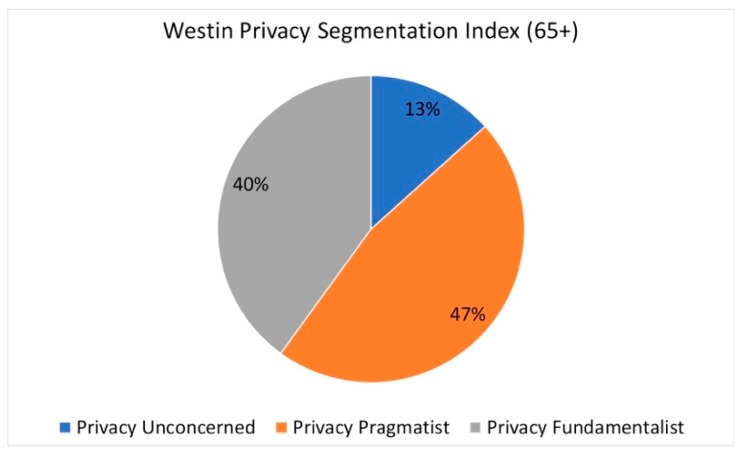
The U.S. population over 65 years of age is increasing. Most older adults prefer to age in place, and technologies, including Internet of things (IoT), Ambient/Active Assisted Living (AAL) robots and other artificial intelligence (AI), can support independent living. However, a top-down design process creates mismatches between technologies and older adults’ needs. A user-centered design approach was used to identify older adults’ perspectives regarding AAL and AI technologies and gauge interest in participating in a co-design process. A survey was used to obtain demographic characteristics and assess privacy perspectives. A convenience sample of 31 retirement community residents participated in one of two 90-min focus group sessions. The semi-structured group interview solicited barriers and facilitators to technology adoption, privacy attitudes, and interest in project co-design participation to inform technology development. Focus group sessions were audiotaped and professionally transcribed. Transcripts were reviewed and coded to identify themes and patterns. Descriptive statistics were applied to the quantitative data. Identified barriers to technology use included low technology literacy, including lack of familiarity with terminology, and physical challenges, which can make adoption difficult. Facilitators included an eagerness to learn, interest in co-design, and a desire to understand and control their data. Most participants identified as privacy pragmatics and fundamentalists, indicating that privacy is important to older adults. At the same time, they also reported a willingness to contribute to the design of technologies that would facilitate aging independently. There is a need to increase technology literacy of older adults along with aging literacy of technologists.
Overview
The claims and statistics of this paper haven’t been checked yet.
Free: it reads the open-access text and checks the first 5 claims that cite a source we can check. Create a free account to check every claim.
Integrity signals
Registry
Cites
Statistics
Figures
Verification
Claims the paper makes
The claims and statistics of this paper haven’t been checked yet.
Free: it reads the open-access text and checks the first 5 claims that cite a source we can check. Create a free account to check every claim.
Claims other papers make about this one
Each is checked against this paper’s own text: does it say what the citing paper says it does?
The source backs part of the claim, not all of it — or backs it for a different population, condition or comparison.
In the citing paper
“Older adults' use of technology has been linked to improved physical and mental health, increased quality of life and autonomy, and decreased loneliness [27,32,72,112].”
From OK Google, Let's Learn: Using Voice User Interfaces for Informal Self-Regulated Learning of Health Topics among Younger and Older Adults (2023) · cites this paper as [112]
Experimental — accuracy not yet measured
Self-check
Percentages, sums and reported differences re-computed from the paper’s own numbers.
The self-check needs the paper’s full text.
Citations
Cites
The Discovery of Grounded Theory; Strategies for Qualitative Research
Glaser, B. G., Strauss, A. L., & Strutzel, E. (1968) · Nursing Research · doi:10.1097/00006199-196807000-00014 · Cited by 39,449
Internet Users' Information Privacy Concerns (IUIPC): The Construct, the Scale, and a Causal Model
Malhotra, N. K., Kim, S. S., & Agarwal, J. (2004) · Information Systems Research · doi:10.1287/isre.1040.0032 · Cited by 3,173 · cited 1×
“One asked whether participants falsified their personal information during registration on websites and the other focused on how frequently participants heard about the potential misuse of the information collected from the internet [25].”
Background(2005) · Texas ScholarWorks (Texas Digital Library) · Cited by 1,064
Hoque, R., & Sorwar, G. (2017) · International Journal of Medical Informatics · doi:10.1016/j.ijmedinf.2017.02.002 · Cited by 1,004 · cited 1×
“However, despite playing a significant part in successful interventions, adoption of these technologies has been limited [13,14].”
BackgroundPredicting technology acceptance and adoption by the elderly: a qualitative study
Renaud, K., & van Biljon, J. (2008) · Proceedings of the 2008 annual research conference of the South African Institute of Computer Scientists and Information Technologists on IT research in developing countries: riding the wave of technology · doi:10.1145/1456659.1456684 · Cited by 378
Khosravi, P., & Ghapanchi, A. H. (2016) · International Journal of Medical Informatics · doi:10.1016/j.ijmedinf.2015.05.014 · Cited by 327 · cited 1×
“While there are a number of studies that have indicated the need for well-designed technologies that meet the needs of older adults [15], few have addressed user-related issues in the design process of these technologies.”
BackgroundPrivacy indexes : a survey of Westin's studies
Kumaraguru, P., & Cranor, L. F. (2018) · doi:10.1184/r1/6625406 · Cited by 310
A systematic approach for using qualitative methods in primary prevention research
Willms, D. G., Best, J. A., Taylor, D. W., Gilbert, J. R., Wilson, D. M. C., Lindsay, E. A., & Singer, J. (1990) · Medical Anthropology Quarterly · doi:10.1525/maq.1990.4.4.02a00020 · Cited by 310 · cited 1×
“, theory derived from data and then illustrated by characteristics examples of data) [26,27].”
BackgroundSilver surfers: Training and evaluating internet use among older adult learners
Cody, M. J., Dunn, D., Hoppin, S., & Wendt, P. (1999) · Communication Education · doi:10.1080/03634529909379178 · Cited by 269
Foundations for Designing User-Centered Systems: What System Designers Need to Know about People
Ritter, F. E., Baxter, G. D., & Churchill, E. F. (2014) · Springer eBooks · doi:10.1007/978-1-4471-5134-0 · Cited by 232
Mihailidis, A., Carmichael, B., & Boger, J. (2004) · IEEE Transactions on Information Technology in Biomedicine · doi:10.1109/titb.2004.834386 · Cited by 208
Dignity in older age: what do older people in the United Kingdom think?
Woolhead, G. (2004) · Age and Ageing · doi:10.1093/ageing/afh045 · Cited by 190
Melenhorst, A.-S., Rogers, W. A., & Caylor, E. C. (2001) · Proceedings of the Human Factors and Ergonomics Society Annual Meeting · doi:10.1177/154193120104500305 · Cited by 172 · cited 1×
“It has been suggested that a key motivation in technology adoption by older adults is the presence of a significant perceived benefit [31].”
BackgroundPeek, S. T. M., Wouters, E. J., Luijkx, K. G., & Vrijhoef, H. J. (2016) · Journal of Medical Internet Research · doi:10.2196/jmir.5253 · Cited by 168 · cited 1×
“It has been recognized that effective technologies are those that prioritize the needs and wishes of older adults, general acceptance of potential users, and suitable preconditions for its adoption [16], but this is often difficult to achieve with a top-down design methodology that fails to engage users in the design…”
BackgroundBoldy, D., Grenade, L., Lewin, G., Karol, E., & Burton, E. (2011) · Australasian Journal on Ageing · doi:10.1111/j.1741-6612.2010.00469.x · Cited by 166
Mobile health monitoring for the elderly: Designing for diversity
Lorenz, A., & Oppermann, R. (2008) · Pervasive and Mobile Computing · doi:10.1016/j.pmcj.2008.09.010 · Cited by 163
Age-Friendly Communities Initiative: Public Health Approach to Promoting Successful Aging
Jeste, D. V., Blazer, D. G., Buckwalter, K. C., Cassidy, K.-L. K., Fishman, L., Gwyther, L. P., Levin, S. M., Phillipson, C., Rao, R. R., Schmeding, E., et al. (2016) · The American Journal of Geriatric Psychiatry · doi:10.1016/j.jagp.2016.07.021 · Cited by 162 · cited 1×
“As the number of older adults increases, the World Health Organization has initiated a movement to establish age-friendly communities [32].”
BackgroundSelf-citationHarmand, M. G., Meillon, C., Rullier, L., Ávila‐Funes, J. A., Bergua, V., Dartigues, J., & Amieva, H. (2014) · Journal of the American Medical Directors Association · doi:10.1016/j.jamda.2014.02.006 · Cited by 155 · cited 1×
“This often leads to more significant mental and physical decline, as well as quality of life decline and increased cost of care, compared to older adults who continue to live independently [7].”
BackgroundManaging Decline in Assisted Living: The Key to Aging in Place
Ball, M. M., Perkins, M. M., Whittington, F. J., Connell, B. R., Hollingsworth, C., King, S. V., Elrod, C. L., & Combs, B. L. (2004) · The Journals of Gerontology Series B: Psychological Sciences and Social Sciences · doi:10.1093/geronb/59.4.s202 · Cited by 152 · cited 1×
“These declines, which can occur with advanced age, are key barriers to one’s ability to maintain an independent lifestyle [5,6].”
BackgroundFisk, D., Charness, N., Czaja, S. J., Rogers, W. A., & Sharit, J. (2004) · CRC Press eBooks · doi:10.1201/9781482284775 · Cited by 139
Preferences for Receipt of Care Among Community-Dwelling Adults
Eckert, J. K., Morgan, L. A., & Swamy, N. (2004) · Journal of Aging & Social Policy · doi:10.1300/j031v16n02_04 · Cited by 126
Chiu, C.-J., Hu, Y.-H., Lin, D.-C., Chang, F.-Y., Chang, C.-S., & Lai, C.-F. (2016) · Computers in Human Behavior · doi:10.1016/j.chb.2016.05.020 · Cited by 116
Decline in Health for Older Adults: Five-Year Change in 13 Key Measures of Standardized Health
Diehr, P. H., Thielke, S. M., Newman, A. B., Hirsch, C. H., & Tracy, R. P. (2013) · The Journals of Gerontology Series A · doi:10.1093/gerona/glt038 · Cited by 106 · cited 1×
“These declines, which can occur with advanced age, are key barriers to one’s ability to maintain an independent lifestyle [5,6].”
BackgroundElueze, I., & Quan-Haase, A. (2018) · American Behavioral Scientist · doi:10.1177/0002764218787026 · Cited by 92 · cited 2×
“citizens to gauge privacy attitudes across a variety of do ains, including health infor ation, consu er and e-co erce [29], and identified three key privacy categories: pragmatists, fundamentalists or unconcerned [24].”
BackgroundMobile health in emerging countries: A survey of research initiatives in Brazil
Iwaya, L. H., Gomes, M. A. L., Simplício, M. A., Carvalho, T. C. M. B., Dominicini, C. K., Sakuragui, R. R. M., Rebelo, M. S., Gutierrez, M. A., Näslund, M., & Håkansson, P. (2013) · International Journal of Medical Informatics · doi:10.1016/j.ijmedinf.2013.01.003 · Cited by 88
What health topics older adults want to track: a participatory design study
Davidson, J. L., & Jensen, C. (2013) · Proceedings of the 15th International ACM SIGACCESS Conference on Computers and Accessibility · doi:10.1145/2513383.2513451 · Cited by 53 · cited 1×
“A common barrier to the participatory design process involving older adults is the lack of expertise in product development and programming [33].”
BackgroundScandurra, I., & Sjölinder, M. (2013) · Medicine 2.0 · doi:10.2196/med20.2729 · Cited by 36 · cited 1×
“A design process involving end users can reveal untapped areas for improvement, which can lead to improved user satisfaction and lower adoption barriers, and ultimately to much improved support for individuals who wish to age in place [21,22].”
BackgroundJing, W., Deidra, C., Michelle, P., Sahiti, M., & Yang, G. (2016) · Studies in Health Technology and Informatics · doi:10.3233/978-1-61499-658-3-486 · Cited by 30 · cited 1×
“At the same time, they can also reduce caregiver burden, which can lead to more targeted and better quality care [12].”
BackgroundWho prefers to age in place? Cross‐sectional survey of middle‐aged people in J apan
Matsumoto, H., Naruse, T., Sakai, M., & Nagata, S. (2015) · Geriatrics and gerontology international/Geriatrics & gerontology international · doi:10.1111/ggi.12503 · Cited by 29
Research works printed but not linked: 1
- Westin A.F. Intrusions Privacy tradeoffs in a free society Public Perspect. 2000 11 8
Cited by
Nebeker, C., Torous, J., & Bartlett Ellis, R. J. (2019) · BMC Medicine · doi:10.1186/s12916-019-1377-7 · Cited by 241
Self-citationReal-Time Monitoring of Indoor Air Quality with Internet of Things-Based E-Nose
Taştan, M., & Gökozan, H. (2019) · Applied Sciences · doi:10.3390/app9163435 · Cited by 207
“This system allows the household individual to intervene for ambient assisted living (AAL) [22].”
BackgroundAre we ready for artificial intelligence health monitoring in elder care?
Ho, A. (2020) · BMC Geriatrics · doi:10.1186/s12877-020-01764-9 · Cited by 135
“One study shows that older adults are interested in co-designing these technologies and controlling their data [36].”
BackgroundFacchinetti, G., Petrucci, G., Albanesi, B., De Marinis, M. G., & Piredda, M. (2023) · International Journal of Environmental Research and Public Health · doi:10.3390/ijerph20021205 · Cited by 115
Smart home modification design strategies for ageing in place: a systematic review
Ma, C., Guerra-Santin, O., & Mohammadi, M. (2021) · Journal of Housing and the Built Environment · doi:10.1007/s10901-021-09888-z · Cited by 136
Metadata
- Authors
- Wang, S., Bolling, K., Mao, W., Reichstadt, J., Jeste, D., Kim, H.-C., & Nebeker, C.
- Affiliations
- University of California San Diego (US)
- IBM Research - Almaden (US)
- Corresponding author
- Nebeker, Camille
- Venue
- Healthcare
- Publisher
- MDPI AG
- Published
- 2019-04-10
- Volume
- 7
- Issue
- 2
- Pages
- 60
- ISSN
- 2227-9032 (ISSN-L)
- PMC
- PMC6627975
- OpenAlex
- W2939655429
- Semantic Scholar
- 3f74e8e32051c5af90f0ecd3ac3a408a36317f3d
- Cited by
- 326
- References
- 30
- Citations by year
- 2026: 40 · 2025: 65 · 2024: 61 · 2023: 54 · 2022: 40 · 2021: 38 · 2020: 23 · 2019: 5
- FWCI
- 60.15
- Type
- journal article
- Language
- en
- Open access
- gold
- dx.doi.org
- Licence
- Locations
- Healthcare (publishedVersion, cc-by)
- PubMed Central (publishedVersion, cc-by)
- PubMed (publishedVersion)
- DOAJ (DOAJ: Directory of Open Access Journals) (submittedVersion, cc-by-sa)
- eScholarship (California Digital Library) (submittedVersion)
- Funders
- UC San Diego Health Sciences (N/A)
- IBM (N/A)
- Topics
- Health Sciences › Medicine › Geriatrics and Gerontology › Technology Use by Older Adults
- Social Sciences › Life-span and Life-course Studies › Aging, Elder Care, and Social Issues
- Health Sciences › Health Professions › Occupational Therapy › Assistive Technology in Communication and Mobility
- Keywords
- aging in place, older adults, assistive technology, ambient assisted living, Internet of Things, artificial intelligence, user-centered design, co-design, technology adoption barriers, technological literacy, privacy attitudes, independent living, retirement communities
About these checks
Registry, retraction, Cites and statistics results are computed, not judged, with one exception: a printed reference that no index lists is read once by a model before it counts as a citation error. Claims are extracted by a model and kept only when their quote appears verbatim in the text; each cited source is then checked, with a model’s help, for whether it says what the claim relies on. Those verdicts can be wrong — read the claim’s quote and the cited source before relying on one.
Statistics and arithmetic are recomputed, not judged.
Confidence bands are shown only for fields calibrated on our annotated test set. None is calibrated yet, so no band is shown.
What counts as a claim ›How we measure confidence ›How we check this ›
Are you an author, or do you see a problem with this page? Request a review
Data sources
Bibliographic data: Semantic Scholar, OpenAlex, Crossref.
Contains information from the Semantic Scholar Academic Graph Datasets, made available under the ODC Attribution License (ODC-BY 1.0).
Semantic Scholar’s data is described in: Kinney, R., et al. (2023). The Semantic Scholar Open Data Platform. arXiv:2301.10140.
