

Living the Full Catastrophe: A Mindfulness-Based Program to Support Recovery from Stroke
Open accessThe DOI matches its Crossref record; 51 of the 52 references it cites were found in a registry or an index.
Abstract
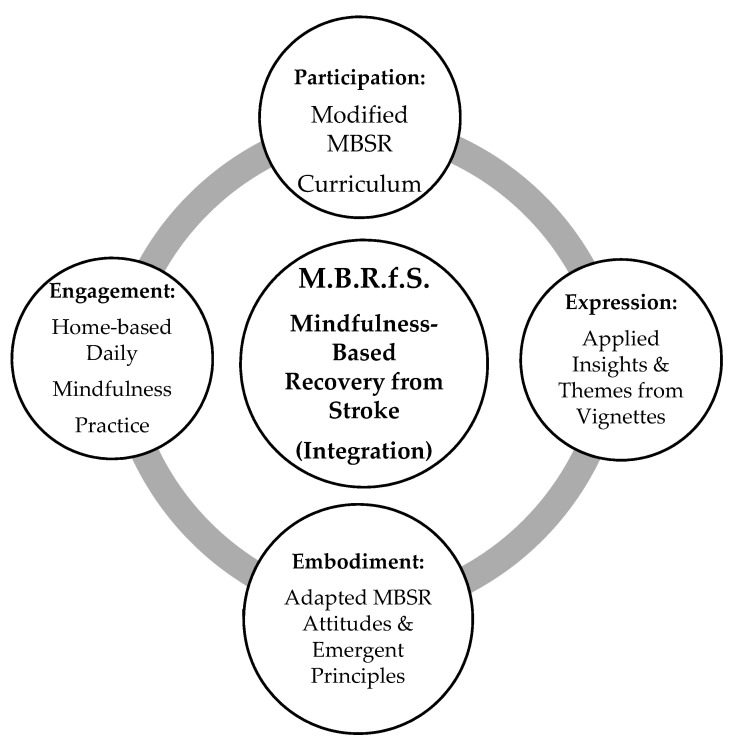
Decades of research suggest that Mindfulness-Based Stress Reduction (MBSR) training supports a greater capacity to live with chronic medical conditions and contributes to lowering stress levels. This paper introduces a model for a Mindfulness-Based Recovery from Stroke (MBRfS) for promoting stroke recovery, informed by the lived experience of the author (a stroke survivor and certified MBSR instructor), the research literature regarding MBSR training, and the specific challenges of stroke recovery. Four themes emerged from the autoethnographic analysis that informed the proposed model: Readiness to accept the stroke event and the acquired brain injury, navigating uncertainties of stroke recovery with awareness and self-responsibility for outcomes, trusting the inherent wisdom of the body as a stroke recovery “teacher”, and increased capacity to integrate complex emotions with self-compassion, and a sense of wholeness. A four-component MBRfS model is offered, which consists of an integration amongst a modified MBSR framework, emergent attitudinal themes, and insights from the autoethnographic vignettes. The MBRfS model offers a path for providing participants with a supportive experience within stroke recovery. Recommendations and suggestions for future studies are offered to support the development of MBRfS for stroke survivors and their caregivers, as well as contributing to healthcare providers.
Overview
The claims and statistics of this paper haven’t been checked yet.
Free: it reads the open-access text and checks the first 5 claims that cite a source we can check. Create a free account to check every claim.
Integrity signals
Registry
Cites
Statistics
Figures
Verification
Claims the paper makes
The claims and statistics of this paper haven’t been checked yet.
Free: it reads the open-access text and checks the first 5 claims that cite a source we can check. Create a free account to check every claim.
Claims other papers make about this one
Each is checked against this paper’s own text: does it say what the citing paper says it does?
The cited source doesn’t support the claim as written.
In the citing paper
“Such modification has been shown to be successful in retention and psychological outcomes of patients.”
From Nursing Implications of Mindfulness-Informed Interventions for Stroke Survivors and Their Families. (2022) · cites this paper as [62]
Checked by a reasoning model — may be wrong.
Experimental — accuracy not yet measured
Self-check
Percentages, sums and reported differences re-computed from the paper’s own numbers.
The self-check needs the paper’s full text.
Citations
Cites
Mindfulness-based stress reduction and health benefits
Grossman, P., Niemann, L., Schmidt, S., & Walach, H. (2004) · Journal of Psychosomatic Research · doi:10.1016/s0022-3999(03)00573-7 · Cited by 3,958
Prevention of relapse/recurrence in major depression by mindfulness-based cognitive therapy.
Teasdale, J. D., Segal, Z. V., Williams, J. M. G., Ridgeway, V. A., Soulsby, J. M., & Lau, M. A. (2000) · Journal of Consulting and Clinical Psychology · doi:10.1037/0022-006x.68.4.615 · Cited by 3,236 · cited 1×
“It may be valuable in overcoming anxiety [11], preventing depressive relapse by reducing cognitive rumination [12], nicotine addiction and impulse control regulation [13], and recovery from trauma [14].”
Background(2000) · Digital Commons - University of South Florida (University of South Florida) · Cited by 2,388
The Landscape of Qualitative Research
Denzin, N. K., & Lincoln, Y. S. (2012) · Cited by 2,039
Carmody, J., & Baer, R. A. (2008) · Journal of Behavioral Medicine · doi:10.1007/s10865-007-9130-7 · Cited by 1,823 · cited 3×
“Physician confidence in MBSR increased as patients expressed positive changes in symptomatology [2].”
BackgroundInfluentialThe clinical use of mindfulness meditation for the self-regulation of chronic pain
Kabat-Zinn, J., Lipworth, L., & Burney, R. (1985) · Journal of Behavioral Medicine · doi:10.1007/bf00845519 · Cited by 1,745 · cited 1×
“In addition to empirical evidence on MBSR’s efficacy in reducing both perceived stress levels and the impact of stress in patients and providers, there is emerging research that mindfulness meditation training specifically reduces psoriasis [4], chronic pain [5], restless legs syndrome [6], premenstrual dysphoric diso…”
BackgroundMeditation experience is associated with increased cortical thickness
Lazar, S. W., Kerr, C. E., Wasserman, R. H., Gray, J. R., Greve, D. N., Treadway, M. T., McGarvey, M., Quinn, B. T., Dusek, J. A., Benson, H., et al. (2005) · NeuroReport · doi:10.1097/01.wnr.0000186598.66243.19 · Cited by 1,698 · cited 1×
“Mindfulness meditation is also related to an increase in cortical thickness and changes in the right anterior insula, as assessed by functional MRI scans [18].”
MethodFrequency of Depression After Stroke: A Systematic Review of Observational Studies
Hackett, M. L., Yapa, C., Parag, V., & Anderson, C. S. (2005) · Stroke · doi:10.1161/01.str.0000165928.19135.35 · Cited by 1,464
Miller, J. J., Fletcher, K., & Kabat-Zinn, J. (1995) · General Hospital Psychiatry · doi:10.1016/0163-8343(95)00025-m · Cited by 1,131 · cited 1×
“It may be valuable in overcoming anxiety [11], preventing depressive relapse by reducing cognitive rumination [12], nicotine addiction and impulse control regulation [13], and recovery from trauma [14].”
BackgroundCognitive impairment after stroke: frequency, patterns, and relationship to functional abilities.
Tatemichi, T. K., Desmond, D. W., Stern, Y., Paik, M., Sano, M., & Bagiella, E. (1994) · Journal of Neurology, Neurosurgery & Psychiatry · doi:10.1136/jnnp.57.2.202 · Cited by 868 · cited 1×
“Stroke survivors also experience cognitive difficulties such as memory and attentional deficits, sensory integration difficulties (sometimes referred to as sensory flooding), and speech or language difficulties (aphasias) [22].”
BackgroundWhat defines mindfulness-based programs? The warp and the weft
Crane, R. S., Brewer, J., Feldman, C., Kabat-Zinn, J., Santorelli, S., Williams, J. M. G., & Kuyken, W. (2017) · Psychological Medicine · doi:10.1017/s0033291716003317 · Cited by 868 · cited 1×
“Remaining elements are open to thoughtful and deliberate adaptation with the intention of a better “fit” across specific populations and contexts, such as varying the program length, structure, and delivery [54].”
BackgroundSome Reflections on the Origins of MBSR, Skillful Means, and the Trouble with Maps
Kabat-Zinn, J. (2011) · Contemporary Buddhism · doi:10.1080/14639947.2011.564844 · Cited by 800 · cited 1×
“This requires not only tremendous teaching skills, but also deep teacher engagement that demonstrates the embodiment of mindfulness practice [55].”
BackgroundThe Effects of Mindfulness Meditation: A Meta-Analysis
Eberth, J., & Sedlmeier, P. (2012) · Mindfulness · doi:10.1007/s12671-012-0101-x · Cited by 791
An Autoethnography on Learning About Autoethnography
Wall, S. (2006) · International Journal of Qualitative Methods · doi:10.1177/160940690600500205 · Cited by 750 · cited 1×
“Autoethnography can be viewed as a challenge to traditional academic research, specifically those rooted in positivist and post-positivist paradigms [45,46].”
BackgroundEllis, C. (1999) · Qualitative Health Research · doi:10.1177/104973299129122153 · Cited by 481 · cited 1×
“This qualitative approach tends to break the norms of academic discourse, which hide the author by their nature and intent [47].”
BackgroundWorld Stroke Organization (WSO): Global Stroke Fact Sheet 2019
Lindsay, M. P., Norrving, B., Sacco, R. L., Brainin, M., Hacke, W., Martins, S., Pandian, J., & Feigin, V. (2019) · International Journal of Stroke · doi:10.1177/1747493019881353 · Cited by 473
Zeidan, F., Emerson, N. M., Farris, S. R., Ray, J. N., Jung, Y., McHaffie, J. G., & Coghill, R. C. (2015) · The Journal of Neuroscience · doi:10.1523/jneurosci.2542-15.2015 · Cited by 369 · cited 1×
“[16] demonstrated that mindfulness meditation, practiced for only three days, was associated with consistent changes in brain scans compared to those who were guided through three days of “sham” mindfulness meditation, where general relaxation techniques were taught instead.”
Creswell, J. D., Taren, A. A., Lindsay, E. K., Greco, C. M., Gianaros, P. J., Fairgrieve, A., Marsland, A. L., Brown, K. W., Way, B. M., Rosen, R. K., et al. (2016) · Biological Psychiatry · doi:10.1016/j.biopsych.2016.01.008 · Cited by 299 · cited 1×
“The changes in brain scans within the mindfulness meditation group indicated more communication and activity in the parts of the brain that mediate stress reactivity, as well as areas of the brain that support focus and states of calm [17].”
BackgroundBuddha's Brain: Neuroplasticity and Meditation [In the Spotlight]
Davidson, R. J., & Lutz, A. (2008) · IEEE Signal Processing Magazine · doi:10.1109/msp.2008.4431873 · Cited by 292
The Fatal Flaw: A Narrative of the Fragile Body-Self
Sparkes, A. C. (1996) · Qualitative Inquiry · doi:10.1177/107780049600200405 · Cited by 286 · cited 1×
“Autoethnography can be viewed as a challenge to traditional academic research, specifically those rooted in positivist and post-positivist paradigms [45,46].”
BackgroundLamothe, M., Rondeau, É., Malboeuf-Hurtubise, C., Duval, M., & Sultan, S. (2016) · Complementary Therapies in Medicine · doi:10.1016/j.ctim.2015.11.001 · Cited by 228 · cited 1×
“[3] suggests that MBSR training is associated with lowered stress levels, increased psychological health, and greater empathy in healthcare professionals.”
BackgroundA pilot study on mindfulness based stress reduction for smokers
Davis, J. M., Fleming, M. F., Bonus, K. A., & Baker, T. B. (2007) · BMC Complementary and Alternative Medicine · doi:10.1186/1472-6882-7-2 · Cited by 194
Sarre, S., Redlich, C., Tinker, A., Sadler, E., Bhalla, A., & McKevitt, C. (2014) · Disability and Rehabilitation · doi:10.3109/09638288.2013.814724 · Cited by 160
Social identity and stroke: ‘they don't make me feel like, there's something wrong with me’
Anderson, S. D., & Whitfield, K. Y. (2012) · Scandinavian Journal of Caring Sciences · doi:10.1111/j.1471-6712.2012.01086.x · Cited by 102 · cited 1×
“Stroke survivors may feel a deep loss of identity [25] while experiencing intense grief in the midst of the critical need to be motivated and fully engaged in their recovery.”
BackgroundYoga and Mindfulness as Therapeutic Interventions for Stroke Rehabilitation: A Systematic Review
Lazaridou, A., Philbrook, P., & Tzika, A. A. (2013) · Evidence-Based Complementary and Alternative Medicine · doi:10.1155/2013/357108 · Cited by 92
Kim, J. S. (2009) · Expert Review of Neurotherapeutics · doi:10.1586/ern.09.19 · Cited by 92 · cited 1×
“Typically, there is physical disability, often paralysis in the stroke-affected side, as well as loss of proprioception, loss of physical sensation related to touch, and a variety of stroke-related pain [21].”
BackgroundUlrichsen, K. M., Kaufmann, T., Dørum, E. S., Kolskår, K. K., Richard, G., Alnæs, D., Arneberg, T. J., Westlye, L. T., & Nordvik, J. E. (2016) · Frontiers in Psychology · doi:10.3389/fpsyg.2016.00912 · Cited by 86 · cited 1×
“Initial research for acquired brain injury patients suggests that mindfulness meditation may significantly relieve the impact of ABI-related fatigue [38,39].”
BackgroundLove, M. F., Sharrief, A., Chaoul, A., Savitz, S., & Beauchamp, J. E. S. (2019) · Stroke · doi:10.1161/strokeaha.118.021150 · Cited by 81
A pilot study of mindfulness-based stress reduction for hot flashes
Carmody, J., Crawford, S., & Churchill, L. (2006) · Menopause · doi:10.1097/01.gme.0000227402.98933.d0 · Cited by 77 · cited 1×
“In addition to empirical evidence on MBSR’s efficacy in reducing both perceived stress levels and the impact of stress in patients and providers, there is emerging research that mindfulness meditation training specifically reduces psoriasis [4], chronic pain [5], restless legs syndrome [6], premenstrual dysphoric diso…”
BackgroundIntervention Integrity in Mindfulness-Based Research
Crane, R. S., & Hecht, F. M. (2018) · Mindfulness · doi:10.1007/s12671-018-0886-3 · Cited by 75 · cited 1×
“As with all intervention research, care must be taken to uphold the integrity of the intervention to ensure that reasonable results can be replicated, while incorporating the competencies of the teacher, along with careful monitoring of intervention delivery [58].”
BackgroundZou, L., Sasaki, J. E., Zeng, N., Wang, C., & Sun, L. (2018) · Archives of Physical Medicine and Rehabilitation · doi:10.1016/j.apmr.2018.04.010 · Cited by 63 · cited 1×
“Recent studies [31,32] provide exploratory evidence to support that yoga and mindful movements support improved aspects of motor and cognitive function for stroke survivors.”
ResultThayabaranathan, T., Andrew, N. E., Immink, M. A., Hillier, S., Stevens, P. J., Stolwyk, R. J., Kilkenny, M. F., & Cadilhac, D. A.-M. (2017) · Topics in Stroke Rehabilitation · doi:10.1080/10749357.2016.1277481 · Cited by 60
Marshall, R. S., Laures‐Gore, J., & Love, K. (2018) · International Journal of Language & Communication Disorders · doi:10.1111/1460-6984.12325 · Cited by 57 · cited 1×
“Initial aphasia studies using mindfulness training offer encouraging outcomes, but need further study and attention [36,37].”
BackgroundOmidi, A., Mohammadi, A., Zargar, F., & Akbari, H. (2013) · Archives of Trauma Research · doi:10.5812/atr.8226 · Cited by 46 · cited 1×
“It may be valuable in overcoming anxiety [11], preventing depressive relapse by reducing cognitive rumination [12], nicotine addiction and impulse control regulation [13], and recovery from trauma [14].”
BackgroundJani, B. D., Simpson, R., Lawrence, M., Simpson, S., & Mercer, S. W. (2018) · Pilot and Feasibility Studies · doi:10.1186/s40814-018-0244-1 · Cited by 45
Mindfulness meditation in aphasia: A case report
Laures-Gore, J., & Marshall, R. S. (2016) · NeuroRehabilitation · doi:10.3233/nre-161323 · Cited by 44 · cited 1×
“Initial aphasia studies using mindfulness training offer encouraging outcomes, but need further study and attention [36,37].”
BackgroundBernhard, J. D., Kristeller, J. L., & Kabat‐Zinn, J. (1988) · Journal of the American Academy of Dermatology · doi:10.1016/s0190-9622(88)80329-3 · Cited by 43 · cited 1×
“In addition to empirical evidence on MBSR’s efficacy in reducing both perceived stress levels and the impact of stress in patients and providers, there is emerging research that mindfulness meditation training specifically reduces psoriasis [4], chronic pain [5], restless legs syndrome [6], premenstrual dysphoric diso…”
BackgroundBluth, K., Gaylord, S., Nguyen, K., Bunevicius, A., & Girdler, S. (2015) · Mindfulness · doi:10.1007/s12671-015-0397-4 · Cited by 42 · cited 1×
“In addition to empirical evidence on MBSR’s efficacy in reducing both perceived stress levels and the impact of stress in patients and providers, there is emerging research that mindfulness meditation training specifically reduces psoriasis [4], chronic pain [5], restless legs syndrome [6], premenstrual dysphoric diso…”
BackgroundCrane, R. S., & Kuyken, W. (2019) · Current Opinion in Psychology · doi:10.1016/j.copsyc.2018.10.004 · Cited by 42 · cited 1×
“Integrating clearer assessments of teacher skills and developmental growth, such as the Mindfulness-Based Teaching Assessment Crieteria (MBI: TAC), would also be an important component to consider [56,57].”
BackgroundWang, X., Smith, C., Ashley, L., & Hyland, M. E. (2019) · Frontiers in Psychology · doi:10.3389/fpsyg.2019.00391 · Cited by 40 · cited 1×
“A feasibility study to consider adaptations of mindfulness meditation delivery suggests that participants may prefer the flexibility to practice independently for short periods of time [40].”
BackgroundJohansson, B., Bjuhr, H., & Rönnbäck, L. (2015) · Mindfulness · doi:10.1007/s12671-013-0249-z · Cited by 34 · cited 1×
“Initial research for acquired brain injury patients suggests that mindfulness meditation may significantly relieve the impact of ABI-related fatigue [38,39].”
BackgroundResilience among stroke survivors: A cohort study of the first 6 months
Zhang, W., Liu, Z., Zhou, X., & Zhou, L. (2019) · Journal of Advanced Nursing · doi:10.1111/jan.14247 · Cited by 34
Resources for Teaching Mindfulness
Micozzi, M. S., Reibel, D. K., & McCown, D. (2016) · Springer eBooks · doi:10.1007/978-3-319-30100-6 · Cited by 26
Mindfulness Meditation Effects on Poststroke Spasticity: A Feasibility Study
Wathugala, M., Saldana, D., Juliano, J. M., Chan, J., & Liew, S.-L. (2019) · Journal of Evidence-Based Integrative Medicine · doi:10.1177/2515690x19855941 · Cited by 23 · cited 1×
“Two weeks of mindfulness meditation exercises were shown to improve post-stroke spasticity [35]; however, the study did not follow-up to assess lasting effects post-intervention.”
BackgroundPerceived benefits and barriers to yoga participation after stroke: A focus group approach
Harris, A., Austin, M., Blake, T. M., & Bird, M. (2018) · Complementary Therapies in Clinical Practice · doi:10.1016/j.ctcp.2018.11.015 · Cited by 22 · cited 1×
“Feasibility studies and systemic analyses suggest that with appropriate modifications and accessibility, yoga is perceived and experienced by stroke survivors as a valuable part of their recovery plan [33,34].”
BackgroundMindfulness-Based Stress Reduction for Restless Legs Syndrome: a Proof of Concept Trial
Bablas, V., Yap, K., Cunnington, D., Swieca, J., & Greenwood, K. M. (2015) · Mindfulness · doi:10.1007/s12671-015-0457-9 · Cited by 15 · cited 1×
“In addition to empirical evidence on MBSR’s efficacy in reducing both perceived stress levels and the impact of stress in patients and providers, there is emerging research that mindfulness meditation training specifically reduces psoriasis [4], chronic pain [5], restless legs syndrome [6], premenstrual dysphoric diso…”
BackgroundWang, M., Liao, W., & Chen, X. (2019) · Rehabilitation Nursing · doi:10.1097/rnj.0000000000000098 · Cited by 14 · cited 1×
“Another exploratory inpatient study with stroke survivors, consisting of a two-week daily mindfulness meditation, was found to significantly improve stroke survivors’ mindfulness and comfort levels [41].”
BackgroundEffect of Yoga Exercise on Cognitive Ability and Motor Function Recovery in Stroke Patients
Ji, H., & Yu, L. (2018) · NeuroQuantology · doi:10.14704/nq.2018.16.6.1545 · Cited by 13 · cited 1×
“Recent studies [31,32] provide exploratory evidence to support that yoga and mindful movements support improved aspects of motor and cognitive function for stroke survivors.”
ResultTraining Mindfulness Teachers: Principles, Practices and Challenges
Crane, R. S., & Reid, B. J. (2016) · Springer eBooks · doi:10.1007/978-3-319-30100-6_6 · Cited by 11 · cited 1×
“Integrating clearer assessments of teacher skills and developmental growth, such as the Mindfulness-Based Teaching Assessment Crieteria (MBI: TAC), would also be an important component to consider [56,57].”
BackgroundMichael, K. (2014) · Topics in Geriatric Rehabilitation · doi:10.1097/tgr.0000000000000018 · Cited by 9 · cited 1×
“This perspective points toward resiliency skills, or what is typically referred to as the ability to “bounce back” from setbacks [26].”
BackgroundAddressing the emotional needs of stroke survivors.
Vohora, R., & Ogi, L. (2008) · PubMed · Cited by 6
Research works printed but not linked: 3
- Kabat-Zinn J. Full Catastrophe Living, Revised Edition: How to Cope with Stress, Pain and Illness Using Mindfulness Meditation Little, Brown Book Group London, UK 2013 1-4055-1700-X
- Chang H. Autoethnography as Method Left Coast Press, Inc. Walnut Creek, CA, USA 2008 1-59874-123-3
- Goodall J. What is Interpretive Ethnography? Expressions of Ethnography: Novel Approaches to Qualitative Methods State University of New York Press Albany, NY, USA 2003 55 63 0-7914-5824-5
Cited by
Neurobiological Changes Induced by Mindfulness and Meditation: A Systematic Review
Calderone, A., Latella, D., Impellizzeri, F., Pasquale, P. D., Famà, F., Quartarone, A., & Calabrò, R. S. (2024) · Biomedicines · doi:10.3390/biomedicines12112613 · Cited by 219
“…neurorehabilitation, in combination with mindfulness, will result in improved sensory processing, manageable pain, emotional regulation, and cognitive control, all factors that aim to ensure better recovery and improvement in the quality of life of persons with neurological impairment [102,103].”
Geng, H., Min, L., Tang, J. Y., Lv, Q., Li, R., & Wang, L. (2022) · International Journal of Molecular Sciences · doi:10.3390/ijms231810508 · Cited by 58
Duan, H., Yan, X., Meng, S., Qiu, L., Zhang, J., Yang, C., & Liu, S. (2023) · International Journal of Environmental Research and Public Health · doi:10.3390/ijerph20020930 · Cited by 45
Nursing Implications of Mindfulness-Informed Interventions for Stroke Survivors and Their Families.
Saban, K. L., Tell, D., & De La Pena, P. (2022) · Stroke · doi:10.1161/strokeaha.122.038457 · Cited by 22
Mindfulness-based Embodied Tangible Interactions for Stroke Rehabilitation at Home
Nagaraj, P. M., Mo, W., & Holloway, C. (2024) · CHI Conference on Human Factors in Computing Systems · doi:10.1145/3613904.3642463 · Cited by 19
“Integrating mindfulness into stroke rehabilitation programs has offered a valuable avenue for enhancing recovery outcomes and well-being for stroke survivors [27].”
Background
Metadata
- Authors
- Gray, L. A.
- Affiliations
- Western Michigan University (US)
- Corresponding author
- Gray, Lori A.
- ORCID
- Gray, Lori A.
- Venue
- Healthcare
- Publisher
- MDPI AG
- Published
- 2020-11-19
- Volume
- 8
- Issue
- 4
- Pages
- 498
- ISSN
- 2227-9032 (ISSN-L)
- PMC
- PMC7711731
- OpenAlex
- W3084932654
- Semantic Scholar
- 68d21e3e573cee1a5a2c16864d9496e2c279958e
- Cited by
- 17
- References
- 52
- Citations by year
- 2026: 2 · 2025: 6 · 2024: 2 · 2023: 2 · 2022: 5
- FWCI
- 0.70
- Type
- journal article
- Language
- en
- Open access
- gold
- doi.org
- Licence
- Locations
- Healthcare (publishedVersion, cc-by)
- PubMed Central (publishedVersion, cc-by)
- PubMed (publishedVersion)
- DOAJ (DOAJ: Directory of Open Access Journals) (submittedVersion, cc-by-sa)
- Topics
- Social Sciences › Psychology › Clinical Psychology › Mindfulness and Compassion Interventions
- Health Sciences › Medicine › Rehabilitation › Stroke Rehabilitation and Recovery
- Health Sciences › Medicine › Oncology › Cancer survivorship and care
- Keywords
- stroke recovery, mindfulness-based stress reduction, stroke survivors, acquired brain injury, self-compassion, emotional integration, body wisdom, wholeness, caregiver support, program model
About these checks
Registry, retraction, Cites and statistics results are computed, not judged, with one exception: a printed reference that no index lists is read once by a model before it counts as a citation error. Claims are extracted by a model and kept only when their quote appears verbatim in the text; each cited source is then checked, with a model’s help, for whether it says what the claim relies on. Those verdicts can be wrong — read the claim’s quote and the cited source before relying on one.
Statistics and arithmetic are recomputed, not judged.
Confidence bands are shown only for fields calibrated on our annotated test set. None is calibrated yet, so no band is shown.
What counts as a claim ›How we measure confidence ›How we check this ›
Are you an author, or do you see a problem with this page? Request a review
Data sources
Bibliographic data: Semantic Scholar, OpenAlex, Crossref.
Contains information from the Semantic Scholar Academic Graph Datasets, made available under the ODC Attribution License (ODC-BY 1.0).
Semantic Scholar’s data is described in: Kinney, R., et al. (2023). The Semantic Scholar Open Data Platform. arXiv:2301.10140.
