

Strength Training versus Stretching for Improving Range of Motion: A Systematic Review and Meta-Analysis
Open accessPublished version of a preprint
The DOI matches its Crossref record; 98 of the 98 references it cites were found in a registry or an index.
Abstract
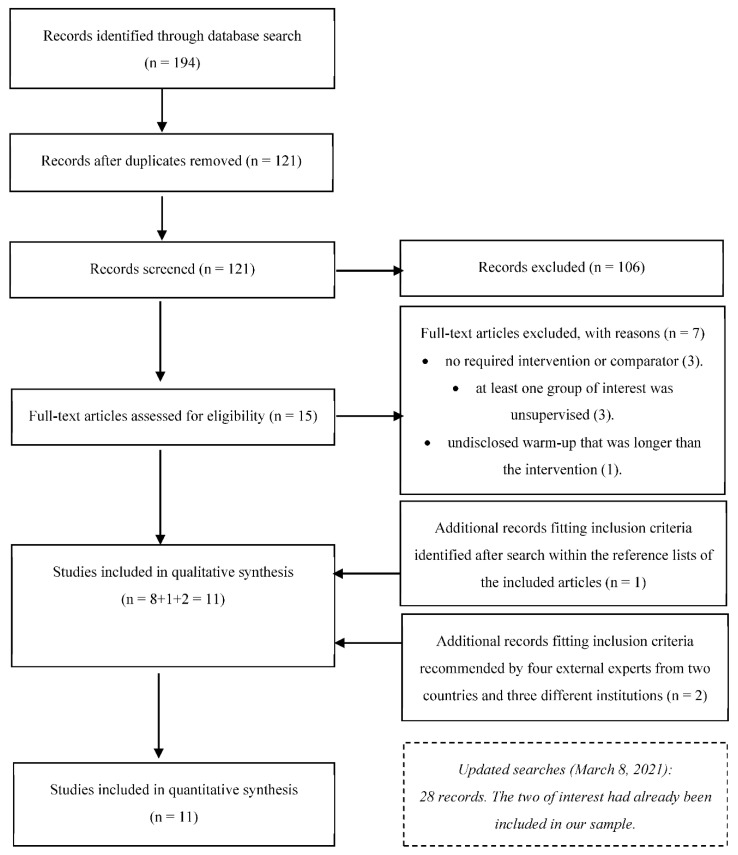
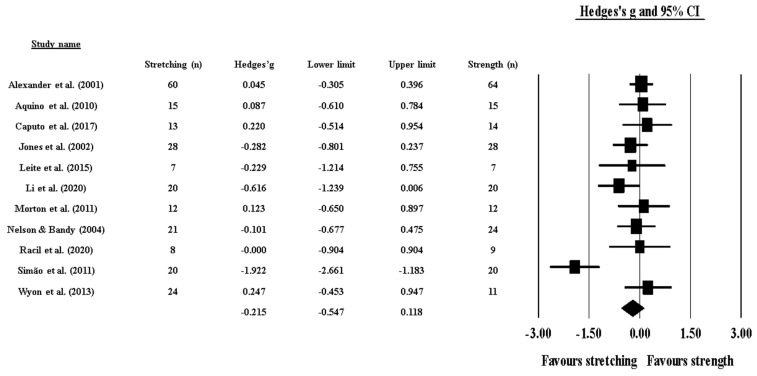
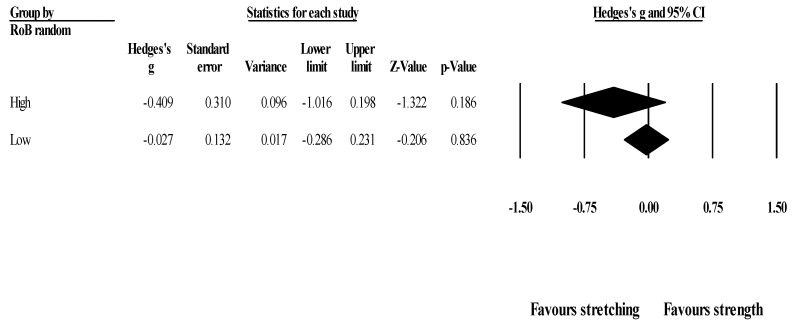
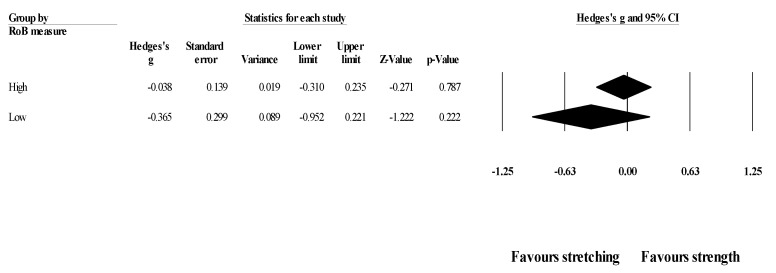
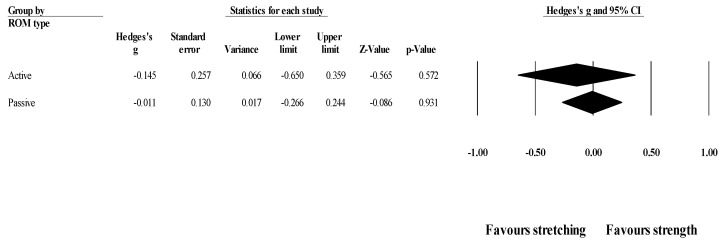
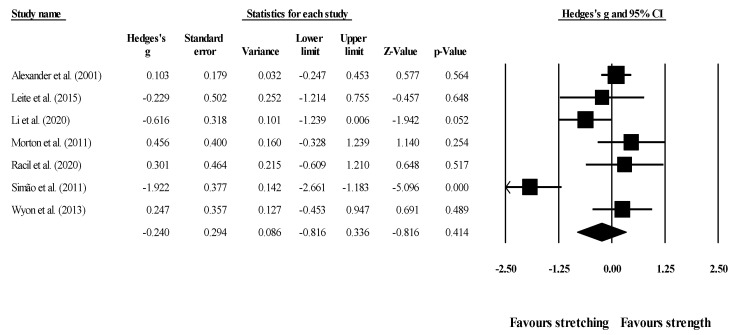
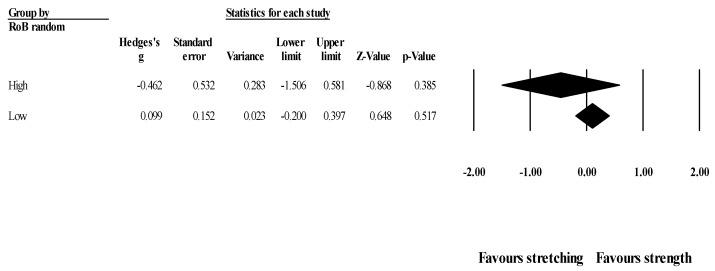
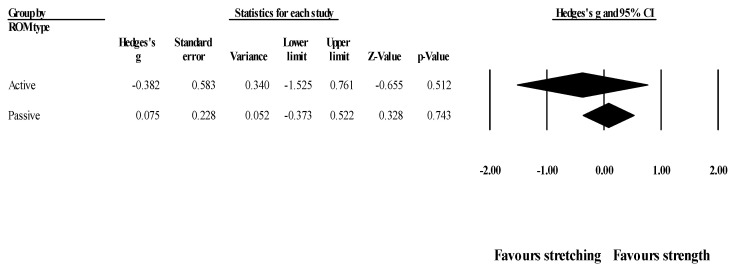
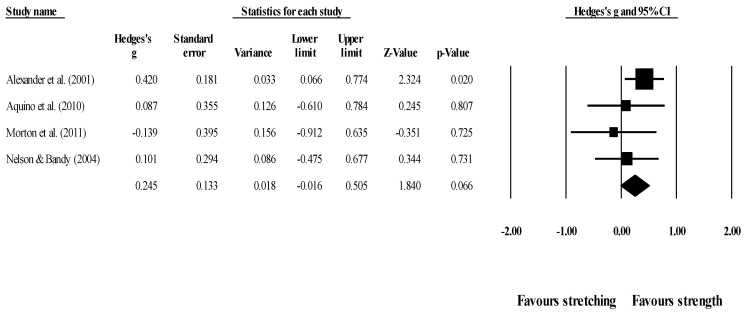
(1) Background: Stretching is known to improve range of motion (ROM), and evidence has suggested that strength training (ST) is effective too. However, it is unclear whether its efficacy is comparable to stretching. The goal was to systematically review and meta-analyze randomized controlled trials (RCTs) assessing the effects of ST and stretching on ROM (INPLASY 10.37766/inplasy2020.9.0098). (2) Methods: Cochrane Library, EBSCO, PubMed, Scielo, Scopus, and Web of Science were consulted in October 2020 and updated in March 2021, followed by search within reference lists and expert suggestions (no constraints on language or year). Eligibility criteria: (P) Humans of any condition; (I) ST interventions; (C) stretching (O) ROM; (S) supervised RCTs. (3) Results: Eleven articles (n = 452 participants) were included. Pooled data showed no differences between ST and stretching on ROM (ES = −0.22; 95% CI = −0.55 to 0.12; p = 0.206). Sub-group analyses based on risk of bias, active vs. passive ROM, and movement-per-joint analyses showed no between-protocol differences in ROM gains. (4) Conclusions: ST and stretching were not different in their effects on ROM, but the studies were highly heterogeneous in terms of design, protocols and populations, and so further research is warranted. However, the qualitative effects of all the studies were quite homogeneous.
Overview
The claims and statistics of this paper haven’t been checked yet.
Free: it reads the open-access text and checks the first 5 claims that cite a source we can check. Create a free account to check every claim.
Integrity signals
Registry
Cites
Statistics
Figures
Verification
Claims the paper makes
The claims and statistics of this paper haven’t been checked yet.
Free: it reads the open-access text and checks the first 5 claims that cite a source we can check. Create a free account to check every claim.
Claims other papers make about this one
Each is checked against this paper’s own text: does it say what the citing paper says it does?
The source backs part of the claim, not all of it — or backs it for a different population, condition or comparison.
In the citing paper
“This finding is partially in accord with Afonso et al. [89] who also reported significant improvements with RT in all joints analyzed; however, they did not make direct comparisons between joints.”
From Resistance Training Induces Improvements in Range of Motion: A Systematic Review and Meta-Analysis (2023) · cites this paper as [89]
Experimental — accuracy not yet measuredThe source backs part of the claim, not all of it — or backs it for a different population, condition or comparison.
In the citing paper
“However, neither the commentaries nor the meta-analysis evaluated the specific type of RT (i.e., free weights vs machine RT, vs Pilates, vs calisthenics) effects on ROM.”
From Resistance Training Induces Improvements in Range of Motion: A Systematic Review and Meta-Analysis (2023) · cites this paper as [12]
Experimental — accuracy not yet measuredThe cited source says what the claim attributes to it.
In the citing paper
“Recently, a meta-analysis [12] evaluated 11 studies and reported a non-significant difference between stretch training and RT with a small effect size (ES) in favor of stretching (Hedges’g = − 0.22; p = 0.21).”
From Resistance Training Induces Improvements in Range of Motion: A Systematic Review and Meta-Analysis (2023) · cites this paper as [12]
The cited source says what the claim attributes to it.
In the citing paper
“The current meta-analysis generally concurs with the findings of Nuzzo [5] and Afonso et al. [12] based on an expanded analysis of 55 studies.”
From Resistance Training Induces Improvements in Range of Motion: A Systematic Review and Meta-Analysis (2023) · cites this paper as Afonso et al. [12]
The cited source says what the claim attributes to it.
In the citing paper
“Eccentric actions demand that the muscle produce force at extended positions”
From Resistance Training Induces Improvements in Range of Motion: A Systematic Review and Meta-Analysis (2023) · cites this paper as [12]
1 more claim about this paper
Create a free account to see every claim other papers make about this one.
Self-check
Percentages, sums and reported differences re-computed from the paper’s own numbers.
The self-check needs the paper’s full text.
Citations
Cites
Preferred Reporting Items for Systematic Reviews and Meta-Analyses: the PRISMA statement
Moher, D., Liberati, A., Tetzlaff, J., Altman, D. G., & for the PRISMA Group (2009) · BMJ · doi:10.1136/bmj.b2535 · Cited by 83,823
Preferred Reporting Items for Systematic Reviews and Meta-Analyses: The PRISMA Statement
Moher, D., Liberati, A., Tetzlaff, J., Altman, D. G., & The PRISMA Group (2009) · PLoS Medicine · doi:10.1371/journal.pmed.1000097 · Cited by 64,042
Bias in meta-analysis detected by a simple, graphical test
Egger, M., Smith, G. D., Schneider, M., & Minder, C. (1997) · BMJ · doi:10.1136/bmj.315.7109.629 · Cited by 56,722
Preferred reporting items for systematic reviews and meta-analyses: The PRISMA statement
Moher, D., Liberati, A., Tetzlaff, J., Altman, D. G., & the PRISMA Group* (2009) · Annals of Internal Medicine · doi:10.7326/0003-4819-151-4-200908180-00135 · Cited by 37,554
Quantifying heterogeneity in a meta‐analysis
Higgins, J. P. T., & Thompson, S. G. (2002) · Statistics in Medicine · doi:10.1002/sim.1186 · Cited by 36,763
RoB 2: a revised tool for assessing risk of bias in randomised trials
Sterne, J. A. C., Savović, J., Page, M. J., Elbers, R. G., Blencowe, N. S., Boutron, I., Cates, C. J., Cheng, H.-Y., Corbett, M. S., Eldridge, S. M., et al. (2019) · BMJ · doi:10.1136/bmj.l4898 · Cited by 34,787
Cochrane Handbook for Systematic Reviews of Interventions: Cochrane Book Series
(2008) · doi:10.1002/9780470712184 · Cited by 25,048
Dermyshi, E., Wang, Y., Yan, C., Hong, W., Qiu, G., Gong, X., & Zhang, T. (2017) · Neonatology · doi:10.1159/000454668 · Cited by 24,451
Wang, G., Ma, R., Qiao, G., Wada, K., Aizawa, Y., & Satoh, T. (2015) · Integrative Medicine International · doi:10.1159/000368408 · Cited by 18,657
Cochrane Handbook for Systematic Reviews of Interventions
(2019) · doi:10.1002/9781119536604 · Cited by 14,828
Research works printed but not linked: 2
- Kent M. The Oxford Dictionary of Sports Science & Medicine 3rd ed. Oxford University Press Oxford, UK 2007
- Al-Wahab M.G.A. Salem E.E.S. El-Hadidy E.I. El-Barbary H.M. Effect of plyometric training on shoulder strength and active movements in children with Erb’s palsy Int. J. Pharmtech. Res. 2016 9 25 33
Cited by
Resistance Training Induces Improvements in Range of Motion: A Systematic Review and Meta-Analysis
Alizadeh, S., Daneshjoo, A., Zahiri, A., Anvar, S. H., Goudini, R., Hicks, J. P., Konrad, A., & Behm, D. G. (2023) · Sports Medicine · doi:10.1007/s40279-022-01804-x · Cited by 99
“[89] who also reported significant improvements with RT in all joints analyzed; however, they did not make direct comparisons between joints.”
Behm, D. G., Alizadeh, S., Daneshjoo, A., Anvar, S. H., Graham, A. P., Zahiri, A., Goudini, R., Edwards, C., Culleton, R., Scharf, C., et al. (2023) · Sports Medicine - Open · doi:10.1186/s40798-023-00652-x · Cited by 115
“Recent commentaries [1, 2] and systematic reviews [3, 4] have revealed that other types of stretching and other activities such as resistance training and foam rolling may provide similar acute improvements in range of motion (ROM) as static stretching.”
BackgroundSoriano‐Maldonado, A., Díez‐Fernández, D. M., Esteban‐Simón, A., Rodríguez-Pérez, M. A., Artés-Rodríguez, E., Casimiro-Artés, M. Á., Moreno-Martos, H., Toro-de-Federico, A., Hachem-Salas, N., Bartholdy, C. R., et al. (2022) · Journal of Cancer Survivorship · doi:10.1007/s11764-022-01192-1 · Cited by 103
Arntz, F., Markov, A., Behm, D. G., Behrens, M., Negra, Y., Nakamura, M., Moran, J., & Chaabene, H. (2023) · Sports Medicine · doi:10.1007/s40279-022-01806-9 · Cited by 82
Ramírez‐Campillo, R., Pérez‐Castilla, A., Thapa, R. K., Afonso, J. R., Clemente, F. M., Colado, J. C., de Villarreal, E. S., & Chaabène, H. (2022) · Sports Medicine - Open · doi:10.1186/s40798-022-00502-2 · Cited by 93
Self-citationClaudino, J. G., Afonso, J. R., Sarvestan, J., Lanza, M. B., Pennone, J., Filho, C. A. C., Serrão, J. C., Espregueira‐Mendes, J., Vasconcelos, A. L. V., de Andrade, M. P., et al. (2021) · Journal of Clinical Medicine · doi:10.3390/jcm10143184 · Cited by 60
Self-citationPhysiology of Stretch-Mediated Hypertrophy and Strength Increases: A Narrative Review
Warneke, K., Lohmann, L. H., Lima, C. D., Hollander, K., Konrad, A., Zech, A., Nakamura, M., WIRTH, K. J., Keiner, M., & Behm, D. G. (2023) · Sports Medicine · doi:10.1007/s40279-023-01898-x · Cited by 61
“…on the one hand, resistance training performed over the full range of motion seems to provide a sufficient stimulus to enhance flexibility [36, 37], while on the other hand, animal studies reported hypertrophy and strength increases by attaching weight/resistance to one wing of a quail or…”
BackgroundWarneke, K., Thomas, E., Blazevich, A. J., Afonso, J. R., Behm, D. G., Marchetti, P. H., Trajano, G. S., Nakamura, M., Ayala, F., Longo, S., et al. (2025) · Journal of sport and health science/Journal of Sport and Health Science · doi:10.1016/j.jshs.2025.101067 · Cited by 49
“Alizadeh et al. 27 and Afonso et al. 51 reported full-ROM RT to enhance ROM to at least a similar degree, especially if a focus is given to the eccentric phase.”
Self-citationAfonso, J. R., Andrade, R., Rocha‐Rodrigues, S., Nakamura, F. Y., Sarmento, H., Freitas, S. R., Silva, A. F., Laporta, L., Abarghoueinejad, M., Akyıldız, Z., et al. (2024) · Sports Medicine · doi:10.1007/s40279-024-02002-7 · Cited by 44
“However, alternative interventions may show equal or superior efficacy or effectiveness (e.g., strength training versus stretching for small ROM improvements [24, 405]).”
BackgroundSelf-citationImpact of Flexibility on Vertical Jump, Balance and Speed in Amateur Football Players
Bogalho, D., Gomes, R., Mendes, R., Dias, G., & Castro, M. A. (2022) · Applied Sciences · doi:10.3390/app12115425 · Cited by 42
A Comprehensive Review of Treatment Strategies for Early Avascular Necrosis
Lohiya, A., Dhaniwala, N. S., Dudhekar, U. J., Goyal, S., & Patel, S. K. (2023) · Cureus · doi:10.7759/cureus.50510 · Cited by 51
Bouguezzi, R., Sammoud, S., Markov, A., Negra, Y., & Chaabene, H. (2023) · Youth · doi:10.3390/youth3010010 · Cited by 23
“In addition, the effect of strength-versus-stretching exercises on flexibility has been the topic of a recent systematic review with a meta-analysis [11].”
InfluentialMeigh, N. J., Keogh, J., Schram, B. L., Hing, W. A., & Rathbone, E. N. (2022) · BMC Geriatrics · doi:10.1186/s12877-022-02958-z · Cited by 29
Stretching for Recovery from Groin Pain or Injury in Athletes: A Critical and Systematic Review
Afonso, J. R., Claudino, J. G., Fonseca, H., Moreira‐Gonçalves, D., Ferreira, V., Almeida, J. M., Clemente, F. M., & Ramírez‐Campillo, R. (2021) · Journal of Functional Morphology and Kinesiology · doi:10.3390/jfmk6030073 · Cited by 24
“Incidentally, strength training may also improve ROM [19,20].”
BackgroundSelf-citationTime to Move From Mandatory Stretching? We Need to Differentiate “Can I?” From “Do I Have To?”
Afonso, J., Olivares-Jabalera, J., & Andrade, R. (2021) · Frontiers in Physiology · doi:10.3389/fphys.2021.714166 · Cited by 21
“…ROM (Blazevich, 2018) by increasing fascicle length, improving stretch tolerance, altering pennation angles and reducing tonic reflex activity (Guissard and Duchateau, 2004; Blazevich et al., 2014), but it is not the only method capable of doing so (Saraiva et al., 2014; Afonso et al., 2021b).”
BackgroundMethodInfluentialSelf-citationKay, A. D., Baxter, B. A., Hill, M. W., & Blazevich, A. J. (2022) · Medicine & Science in Sports & Exercise · doi:10.1249/mss.0000000000003085 · Cited by 28
“However, because the previous review (22) included upper-limb studies and active ROM outcome measures, we performed a meta-analysis on the five studies (54–58) reporting 11 passive lower-limb ROMmeasures from the previous review (22) to provide a more appropriate comparison with the present review.”
BackgroundMethodInfluentialKonrad, A., Alizadeh, S., Anvar, S. H., Fischer, J. E., Seguel, J. M., & Behm, D. G. (2024) · Sports Medicine · doi:10.1007/s40279-024-02041-0 · Cited by 21
“According to previous meta-analyses, long-term stretch training and resistance training can be considered similarly effective for increasing the ROM (effect size [ES] = 0.08; p = 0.79) [8, 10].”
MethodInfluentialHernández-Martínez, J., Cid-Calfucura, I., Chiguay, C., Weinberger, M., Delgado‐Floody, P., Muñoz-Vásquez, C., Aristegui-Mondaca, J., Levín-Catrilao, Á., Herrera-Valenzuela, T., Branco, B. H. M., et al. (2024) · Experimental Gerontology · doi:10.1016/j.exger.2024.112553 · Cited by 20
“…EBT for the external and internal rotators of the shoulder joint may be necessary (Kim et al., 2021) since it is well-documented that resistance training can improve range of motion through greater stretch tolerance, greater fascicle length, and changes in pennation angle (Afonso et al., 2021).”
BackgroundHuang, W.-Y., Wu, C.-E. R., & Huang, H. (2024) · Applied Sciences · doi:10.3390/app142412015 · Cited by 24
Rasmussen, G. H. F., Kristiansen, M. V., Arroyo‐Morales, M., Voigt, M., & Madeleine, P. (2022) · Medicine & Science in Sports & Exercise · doi:10.1249/mss.0000000000003034 · Cited by 18
“Progressive resistance training (RT) has previously been shown to improve muscular strength, physical function, and quality of life in BCS (9,10), and research suggests that progressive RT may effectively improve ROM (11).”
BackgroundJochum, D., Konrad, A., Lohmann, L. H., Cochrane, D. J., Rittweger, J., Vogel, V., & Warneke, K. (2025) · Journal of sport and health science/Journal of Sport and Health Science · doi:10.1016/j.jshs.2025.101033 · Cited by 17
“…are mainly attributed to neuro-muscular and morphological aspects (e.g., stretching pain sensation and stiffness), whereby both are moderated by stretching 13,157 and resistance training, 7,20 Warneke et al. 55 discussed the relevance of mechanical tension with a potential effect on muscle length.”
Velarde-Sotres, Á., Bores-Cerezal, A., Mecías‐Calvo, M., Barcala-Furelos, M., Obregón, S. A., & Calleja-González, J. (2022) · International Journal of Environmental Research and Public Health · doi:10.3390/ijerph19020849 · Cited by 20
Warneke, K., Behm, D. G., Alizadeh, S., Hillebrecht, M., Konrad, A., & WIRTH, K. J. (2024) · Sports Medicine · doi:10.1007/s40279-024-02043-y · Cited by 20
“As described above, full ROM resistance training might be considered as dynamic loaded stretching [59], which seems interchangeable with stretching routines [5, 59, 90].”
BackgroundThe knowledge of movement experts about stretching effects: Does the science reach practice?
Warneke, K., Konrad, A., & Wilke, J. (2024) · PLoS ONE · doi:10.1371/journal.pone.0295571 · Cited by 17
Belaiba, M., Laatar, R., Borji, R., Salem, A., Sahli, S., & Rebai, H. (2024) · Perceptual and Motor Skills · doi:10.1177/00315125241244484 · Cited by 17
“The mechanisms underlying this enhancement might be a reduction in passive tension and the stiffness of tissues surrounding a joint, increased muscle fascicle length and/or reduced pain sensitivity, as Afonso et al. (2021) previously explained.”
BackgroundFavro, F., Roma, E., Gobbo, S., Bullo, V., Blasio, A. D., Cugusi, L., & Bergamin, M. (2024) · The Journal of Strength and Conditioning Research · doi:10.1519/jsc.0000000000005000 · Cited by 14
“In another recent review (5), Alizadeh et al. concluded that resistance training has a significant effect on ROM (ES 5 0.73; p , 0.001) when compared with a control group and found, similarly to Afonso et al., that resistance training has a comparable effect to stretching interventions (ES 5 0.08; p 5 0.79).”
InfluentialHuebner, M., Faber, F., Currie, K. D., & Rieger, T. (2022) · International Journal of Environmental Research and Public Health · doi:10.3390/ijerph19052708 · Cited by 13
“, running) [45] and improved range of motion [46,47], and thus it is likely that the functional balance recommendations are being met with weightlifting training.”
BackgroundRosenfeldt, M., Stien, N., Behm, D. G., Sæterbakken, A. H., & Andersen, V. S. (2024) · BMC Sports Science Medicine and Rehabilitation · doi:10.1186/s13102-024-00934-1 · Cited by 13
“While resistance training (RT) is generally associated with increased muscle cross-sectional area, force generation and neural adaptations, RT has demonstrated increased flexibility in a variety of joints and muscles [18–24].”
BackgroundThe Effect of Aerobic or Strength Training in Elderly with Cognitive Decline: The Fit4Alz Project
Silva, A. F., Clemente, F. M., Roriz, M. S., Azevedo, J. A., Jovanovic, O., Adamovic, M., Bozic, A., & Silva, R. (2025) · Journal of Sports Science and Medicine · doi:10.52082/jssm.2025.172 · Cited by 13
Self-citationKay, A. D., Blazevich, A. J., TYSOE, J. C., & Baxter, B. A. (2024) · Medicine & Science in Sports & Exercise · doi:10.1249/mss.0000000000003418 · Cited by 10
Zhang, P., Chen, J., & Xing, T. (2025) · Frontiers in Physiology · doi:10.3389/fphys.2025.1674871 · Cited by 14
Zawadka, M., Gaweł, M., Tomczyk‐Warunek, A., Turżańska, K., & Blicharski, T. (2024) · Journal of Clinical Medicine · doi:10.3390/jcm13041028 · Cited by 11
“Previous studies indicated that strength training and stretching interventions were not different in their effects on range of motion [38].”
BackgroundPal, C. P., Agarwal, V., Srivastav, R., Gupta, M., & Singh, S. K. (2023) · Journal of Bone and Joint Diseases · doi:10.4103/jbjd.jbjd_9_23 · Cited by 10
Knowledge of gym goers on myths and truths in resistance training
Unger, A., Mosgan, C., Wolte, C., Pettauer, S., & Wilke, J. (2025) · Scientific Reports · doi:10.1038/s41598-025-87485-8 · Cited by 10
“Two articles examined the effects of RT on flexibility 50,51 .”
Pan, K., Wei, Y., & Wu, Z. (2025) · Research in Autism · doi:10.1016/j.reia.2025.202668 · Cited by 9
Chen, Y., Kim, Y., & Choi, M. (2022) · Healthcare · doi:10.3390/healthcare10061090 · Cited by 8
“After absolute immobilization, it is important to restore the ROM [32].”
BackgroundThomas, E., Scardina, A., Pinto, G., Serafini, S., Nakamura, M., Konrad, A., Campa, F., Bellafiore, M., & Bianco, A. (2025) · Journal of Bodywork and Movement Therapies · doi:10.1016/j.jbmt.2025.04.026 · Cited by 7
Bernardes, R. A., Parola, V. S. D. O., Cruz, A., Correia, N. M. C., & Neves, H. L. (2024) · Muscles · doi:10.3390/muscles3040028 · Cited by 6
“Targeted stretching exercises focusing on the gastrocnemius muscle and surrounding tissues facilitate elongation and improvement of ROM, alleviating contractures and reducing discomfort [26].”
Tilp, M., Ringler, S., Mariacher, H., & Rafolt, D. (2023) · Journal of Rehabilitation Medicine · doi:10.2340/jrm.v55.3987 · Cited by 6
“This is in accordance with reports that strength training over the full ROM increases flexibility, in a similar way to stretching training (10).”
BackgroundResultSex differences in sit-and-reach flexibility in children and adolescents: A meta-analysis
Nuzzo, J. L. (2026) · Journal of Bodywork and Movement Therapies · doi:10.1016/j.jbmt.2026.05.012 · Cited by 5
Warneke, K., Afonso, J. R., Thomas, E., Rittweger, J., Konrad, A., Moser, O., Lohmann, L. H., Zech, A., Schoenfeld, B. J., & Behm, D. G. (2025) · Sports Medicine · doi:10.1007/s40279-025-02237-y · Cited by 4
“…well as functional (maximal strength) and morphological (muscle thickness) responses [19, 24] were proposed to be similar between active resistance training and passive stretch-induced overload tension [2, 25, 26], although stretching seems less promising under practical time considerations [27].”
Self-citationYu, X., Yin, H., & Zhang, J. (2026) · Scientific Reports · doi:10.1038/s41598-026-39391-w · Cited by 4
“CST programs emphasizing predominantly static or strength-focused exercises may lack the adequate stimulus to induce meaningful changes in muscle length or joint range of motion 41,42 .”
Effects of a dynamic stretching warm-up on functional movement patterns in female hip-hop dancers
Opatowicz, P., Mroczek, A., & Kaczorowska, A. (2022) · MEDICAL SCIENCE PULSE · doi:10.5604/01.3001.0015.9777 · Cited by 4
Considerations for Chronic Pain Management Based on Sex Differences: A Narrative Review
Park, H.-J. (2024) · Journal of Oral Medicine and Pain · doi:10.14476/jomp.2024.49.4.83 · Cited by 4
Prevention Strategies of Lower Limb Muscle Injuries
Afonso, J. R., Fonseca, H., Ramírez‐Campillo, R., Olivares-Jabalera, J., & Rocha‐Rodrigues, S. (2023) · Springer eBooks · doi:10.1007/978-3-030-65430-6_209-1 · Cited by 7
Self-citationKonrad, A., Warneke, K., Donti, Ο., Panidi, I., Gaspari, V., Nakamura, M., Thomas, E., & Bogdanis, G. C. (2025) · Sports Medicine - Open · doi:10.1186/s40798-025-00935-5 · Cited by 3
“Even, compared to stretch training both foam rolling [36] and resistance training [34, 37] showed to be similarly effective for chronically increasing the ROM of a joint.”
Nakamura, M., Scardina, A., Thomas, E., Warneke, K., & Konrad, A. (2024) · Frontiers in Medicine · doi:10.3389/fmed.2024.1505775 · Cited by 3
Injuries in the Fire Service: An Updated Review and Strategies for Practitioners
Martin, J. R., McCummings, N., Shaul, Y., Fyock-Martin, M. B., & McConnell, J. (2025) · Strength and conditioning journal · doi:10.1519/ssc.0000000000000919 · Cited by 2
Murakami, Y., Konrad, A., Kasahara, K., Yoshida, R., Warneke, K., Behm, D. G., & Nakamura, M. (2025) · Frontiers in Physiology · doi:10.3389/fphys.2025.1555253 · Cited by 2
Physical Activity in People with Hemophilia
Cruz‐Montecinos, C., Joaquin, C., Andersen, L. L., Daffunchio, C., Soto, V., López, M., Pérez‐Alenda, S., Chimeno‐Hernández, A., Stephensen, D., & Núñez-Cortés, R. (2025) · Seminars in Thrombosis and Hemostasis · doi:10.1055/a-2778-9890 · Cited by 3
Pamungkas, G., Rismayanthi, C., Nasrulloh, A., & Arjuna, F. (2024) · Physical Education Theory and Methodology · doi:10.17309/tmfv.2024.2.18 · Cited by 2
“A recent meta-analysis by Afonso et al. (2021) supports the notion that resistance training can enhance flexibility by increasing the range of motion (ROM) in specific joints.”
BackgroundWeldon, A., Dos’Santos, T., Bright, T. E., Sapstead, G. W., Beato, M., & Lincoln, M. A. (2025) · Strength and conditioning journal · doi:10.1519/ssc.0000000000000875 · Cited by 2
Joint mobility in physical education majors:A hierarchical clustering analysis
Cardozo, L. A., Yánez, C., Moreno-Jiménez, J., Beltrán, C. A., Kreider, R. B., & Bonilla, D. A. (2021) · Journal of Physical Education and Sport · doi:10.7752/jpes.2021.05366 · Cited by 6
Marwat, M. K., Arif, T., Iqbal, Y., Farah, H., & Ahmed, S. (2025) · Physical Education of Students · doi:10.15561/20755279.2025.0409 · Cited by 2
“1` From a physiological standpoint, stretching may facilitate neuromuscular function and contribute to reducing the likelihood of soft tissue injury.”
Kay, A. D., Baross, A., Baxter, B. A., & Blazevich, A. J. (2025) · European Journal of Applied Physiology · doi:10.1007/s00421-025-05979-9 · Cited by 2
“…meta-analysis (Kay et al. 2023) reporting a large effect ( g = 0.86) on passive lower-limb ROM that was substantially greater than the small effects ( g = 0.29–0.49) reported in another meta-analysis following traditional resistance training or muscle stretching programmes (Afonso et al. 2021).”
InfluentialPehoiu, C. (2025) · Revista Romaneasca pentru Educatie Multidimensionala · doi:10.18662/rrem/17.3/1022 · Cited by 2
“In fact, mobility reaches some of its lowest levels around the ages of 12–13 in girls and 13–14 in boys, which can impact the range of movement and the efficiency of motor actions (Afonso et al., 2021; Bayartai et al., 2022).”
Afonso, J. R., Blazevich, A. J., Behm, D. G., Tilp, M., & Warneke, K. (2026) · Sports Medicine · doi:10.1007/s40279-026-02425-4 · Cited by 1
“In the same vein, the expression “flexibility training” may include stretching but also strength training [15, 16], foam rolling [25], and other training methods [17].”
Self-citationThe effect of stretching techniques on flexibility and sports injuries: A literature review
Ihsan, F., Karyono, T., Primasoni, N., Kurniawan, F., Herwin, H., Alim, A., Budiarti, R., Sriwahyuniati, C. F., & Irianto, S. (2024) · Jorpres (Jurnal Olahraga Prestasi) · doi:10.21831/jorpres.v19i3.70745 · Cited by 5
Dilawar, S., Yaseen, A., Riffat, S., & Khalfe, S. A. H. (2022) · Pakistan Journal of Rehabilitation · doi:10.36283/pjr.zu.11.2/009 · Cited by 3
HUBUNGAN STUNTING DENGAN OVERWEIGHT DAN RANGE OF MOTION (ROM) EKSTREMITAS BAWAH PADA BALITA
Pratiwi, W., Dharmansyah, M. I., & Qolbi, Z. N. (2024) · JI-KES (Jurnal Ilmu Kesehatan) · doi:10.33006/jikes.v7i2.740 · Cited by 1
“Terganggunya ROM dapat mengakibatkan gangguan pada kebugaran, gangguan aktivitas sehari-hari dan mempengaruhi kualitas hidup (Afonso et al., 2021; Cho & Park, 2020; Doğan et al., 2019; Schoenfeld & Grgic, 2020).”
BackgroundChristofi, I., Ploutarchou, G., Savva, C., & Karagiannis, C. (2024) · Journal of Bodywork and Movement Therapies · doi:10.1016/j.jbmt.2024.10.028 · Cited by 2
López-Carrillo, G., & Robles-Palazón, F. J. (2021) · JUMP · doi:10.17561/jump.n4.4 · Cited by 2
Exercise motivations of law enforcement officers in Northeast Louisiana
Chen, Y., & Castleberry, T. J. (2022) · The Police Journal Theory Practice and Principles · doi:10.1177/0032258x221079021
“…other two important fitness indicators as the former helps increase neuromuscular coordination in a more synergistic fashion and reduce the risk of injury while the latter helps optimize one’s speed and mobility in a situation where all directions are involved (see review in Afonso et al., 2021).”
BackgroundGuía metodológica para la promoción del deporte, la recreación y la actividad física extracurricular
Ramos Bermúdez, S., Rodríguez Maya, D. S., Hurtado Cristancho, J. L., Ángel Díaz, S., González Santamaria, J. G., Posada Arbeláez, A. M., Gallo Díaz, L. M., Taborda Ortiz, P. A., Ramos Ríos, C. F., García Cardona, H. M., et al. (2011) · Universidad Tecnológica de Pereira eBooks · doi:10.22517/9789587227345
Effect of resistance training on persistent pain after breast cancer treatment
Rasmussen, G. H. F. (2022) · VBN Forskningsportal (Aalborg Universitet) · doi:10.54337/aau488129639
Augustin, N. (2023) · Springer eBooks · doi:10.1007/978-3-662-66208-3_5
Arjuna, F., Pamungkas, G., Primasoni, N., & Rahayu, T. W. (2024) · Physical Education Theory and Methodology · doi:10.17309/tmfv.2024.1.01
“These findings align with the research conducted by Afonso et al. (2021) and several other studies included in their systematic review and meta-analysis, which have demonstrated that both resistance training and stretching exercises can enhance ROM.”
ResultMohamed, M., Allah, D. S. A., & Hafez, H. A. (2024) · Egyptian Journal of Physical Therapy · doi:10.21608/ejpt.2023.183206.1112
Fuzzy PID control for sit-and-reach trainer based on magneto-rheological damper
He, W., Li, H., Ma, T., Zhao, Y., Zhao, X., & Song, Q. (2024) · International Conference on Energy and Power Engineering, Control Engineering (EPECE) · doi:10.1109/epece63428.2024.00044
“This, in turn, contributes to the flexibility of muscles and joints, thereby preventing and alleviating joint injuries and improving overall athletic performance [1-5].”
BackgroundDehnen und Beweglichkeit im Sport im Wandel der Zeit
Freiwald, J. (2024) · Sportphysio · doi:10.1055/a-2353-5624
Zwischen Stiefkind und Wunderwaffe – Dehnen im Wandel der Zeit
Freiwald, J. (2024) · physiopraxis · doi:10.1055/a-2441-2376
Bae, M., Lee, Y., & Jin, J. (2024) · European Journal of Adapted Physical Activity · doi:10.5507/euj.2024.009
Age Enhances the Effect of Flexibility on Running Economy in Recreational Endurance Runners
Wasserman, M. G., Melvin, A. C., Stump, O. E., Reed, S. I., Outwin, J. R., Chang, J., Davis, F., Lepley, A. S., Kozloff, K. M., & Lempke, A. F. D. (2025) · Journal of Sport Rehabilitation · doi:10.1123/jsr.2024-0312
Tambing, G., Amatachaya, S., Wiyanad, A., Thaweewannakij, T., Manimmanakorn, N., & Namwong, W. (2025) · Journal of Associated Medical Sciences · doi:10.12982/jams.2025.051
A critical analysis of the disconnection between science and practice in weight training
Cereda, F. (2025) · Physical Education and Sports Studies and Research · doi:10.56003/pessr.v4i1.499
“For instance, the belief that "RT reduces flexibility" traces back to outdated perceptions of rigid, limited-range movements (Afonso et al., 2021; Alizadeh et al., 2023), yet persists among gym-goers, with Unger et al. (2025) finding only 36% correctly recognized its falsity.”
Functional and Mobility Training
Mchenry, P., & Myers, C. (2025) · Springer eBooks · doi:10.1007/978-3-031-87305-8_8
The effects of static and dynamic stretching exercises on the lower extremity performance
Obmerga, C. (2025) · Journal of Allied Health Sciences & Medical Research · doi:10.53378/jahsmr.353226
Keyf, E. (2025) · Journal of Optimal Zenith Sport Sciences · doi:10.70736/jozss.2054
Kinematics-Based Diagnosis and Treatment of Hand–Finger Joint Diseases
Mzeihem, M., Amirouche, F. M. L., & Elhassan, B. T. (2025) · Springer eBooks · doi:10.1007/978-3-032-04688-8_4
Voimaharjoittelun keventäminen
Immonen, V. (2023) · Theseus (Ammattikorkeakoulujen)
Inkluusiokappalemyosiittia sairastavan fyysinen harjoittelu : itseharjoitteluopas
Heikkinen, O., & Tuomainen, J. (2024) · Theseus (Ammattikorkeakoulujen)
Kyykky alas, tulokset ylös! : nilkan liikkuvuusopas voimaharjoittelijoille
Räty, S., & Murto, V. (2024) · Theseus (Ammattikorkeakoulujen)
Effet des étirements sur la récupération après un effort en résistance
Bonnin, T., & Hamiti, M. (2023) · Dépôt institutionnel de l'Université libre de Bruxelles (Université Libre de Bruxelles)
Vpliv tehnične izvedbe na dolžino enonožnih skokov v višino in daljino
Vončina, T. (2023) · Repository of the University of Ljubljana (University of Ljubljana)
Liikkuvuusharjoittelu voimanostajien suoritustekniikan tukena : opas lajin harrastajille
Ahonen, H.-R., & Lanki, M. (2025) · Theseus (Ammattikorkeakoulujen)
Remmert, H. (2025) · Springer eBooks · doi:10.1007/978-3-662-69524-1_6
Prevenção de lesões em velejadores: protocolo de intervenção baseado em exercícios
Brochado, R. C. S. C. (2025) · Portuguese National Funding Agency for Science, Research and Technology (RCAAP Project by FCT)
Pereira, J. C. D. (2022) · Portuguese National Funding Agency for Science, Research and Technology (RCAAP Project by FCT)
Jeyaraman, N., Ramasubramanian, S., Sridhar, A. S., Nallakumarasamy, A., Muthu, S., Schäfer, L., Migliorini, F., & Jeyaraman, M. (2026) · Journal of Orthopaedics · doi:10.1016/j.jor.2026.03.031
“20 Furthermore, including aerobic exercise demonstrates significant efficacy for improving function (BASFI).”
Gazi, Ş., Birinci, T., Ziroğlu, N., Taşkıran, H., & Mutlu, E. K. (2026) · American Journal of Physical Medicine & Rehabilitation · doi:10.1097/phm.0000000000002998
Abdelrazik, R. K., Mansour, W. T., Salim, A. S. M., Fiaad, M. N., Mostafa, A. E. A., El‐Hakim, A. A. E. A., & Samir, S. M. (2026) · Retos · doi:10.47197/retos.v80.119229
“This implies that rather than the particular manual approaches, the common elements of the intervention such as heat treatment, stretching, and active exercises may be the main driver of ROM increases (Afonso et al., 2021).”
Soren, S. C., & Ghosal, A. (2026) · International Journal of Physiology Nutrition and Physical Education · doi:10.22271/journalofsport.2026.v11.i4b.3227
Michaud, L., Lavallière, M., & Tremblay, M. (2026) · International Journal of Sports Science & Coaching · doi:10.1177/17479541261459672
Kaczorowski, M., Jaskulski, K., Góra, K., Usiądek, S., Pytko, W., & Wiszomirska, I. (2026) · Journal of Clinical Medicine · doi:10.3390/jcm15155783
“In their meta-analysis, Jootier et al. [14] analyzed 11 studies, eight of which reported similar improvements in flexibility in both the resistance training and static stretching groups.”
Bodrick, M. M., Zakariya, A., Almutairi, M. B., Alsulaymi, A. Z., & Obaid, A. A. (2026) · Journal of Sports and Physical Education Studies · doi:10.32996/jspes.2026.6.3.1
“It rebuilds the architecture of connective tissues and improves joint flexibility, thereby producing a magnified overall effect (Afonso et al., 2021; Favro et al., 2025).”
Estiramientos en el fútbol: ¿amigos o enemigos del futbolista?
Rodríguez, S. (2026) · Fisioterapia · doi:10.1016/j.ft.2026.07.002
Gladović, N., Rogina, Ž. K., & Degač, N. Z. (2026) · Healthcare · doi:10.3390/healthcare14162443
“In particular, Afonso et al. [21] reported that chronic exercise interventions are capable of increasing range of motion through neuromuscular adaptations, suggesting that improvements in flexibility are not exclusively dependent on stretching exercises.”
Therapeutic aspect of Yoga therapy for musculoskeletal health of elderly: A mechanistic review
Mishra, S., & Tiwari, M. (2026) · Journal of Research in Ayurvedic Sciences · doi:10.4103/jras.jras_191_24
rancangan Design And Construction Of A Digital-Based Sit And Reach Flexibility Testing Tool
Romadhon, R., Setyadi, F., & Wili, N. S. (2026) · COMPETITOR Jurnal Pendidikan Kepelatihan Olahraga · doi:10.67322/cpjok.v18i3.1105
Metadata
- Authors
- Afonso, J., Ramirez-Campillo, R., Moscão, J., Rocha, T., Zacca, R., Martins, A., Milheiro, A. A., Ferreira, J., Sarmento, H., & Clemente, F. M.
- Affiliations
- Universidade do Porto (PT)
- Department of Physical Activity Sciences, Universidad de Los Lagos, Lord Cochrane 1046, Osorno 5290000, Chile
- REP Exercise Institute, Rua Manuel Francisco 75-A 2 °C, 2645-558 Alcabideche, Portugal
- Universidade de Leiria e Oeste (PT)
- Ministry of Education (BR)
- Universidade Técnica do Porto (PT)
- University of Coimbra (PT)
- Universidade Politécnica de Viana do Castelo (PT)
- Corresponding author
- Clemente, Filipe Manuel
- ORCID
- Venue
- Healthcare
- Publisher
- MDPI AG
- Published
- 2021-04-07
- Volume
- 9
- Issue
- 4
- Pages
- 427
- ISSN
- 2227-9032 (ISSN-L)
- PMC
- PMC8067745
- OpenAlex
- W3152076931
- Semantic Scholar
- 7f476b5a1cccc9807bab6499f2590153628878aa
- Cited by
- 88
- References
- 98
- Citations by year
- 2026: 13 · 2025: 21 · 2024: 23 · 2023: 11 · 2022: 14 · 2021: 5
- FWCI
- 2.82
- Type
- journal article
- Language
- en
- Open access
- gold
- doi.org
- Licence
- Locations
- Healthcare (publishedVersion, cc-by)
- PubMed Central (publishedVersion, cc-by)
- PubMed (publishedVersion)
- DOAJ (DOAJ: Directory of Open Access Journals) (submittedVersion, cc-by-sa)
- Estudo Geral (Universidad de Coimbra) (submittedVersion, cc-by)
- Portuguese National Funding Agency for Science, Research and Technology (RCAAP Project by FCT) (submittedVersion, other-oa)
- MetArXiv (OSF Preprints) (submittedVersion)
- MetArXiv (OSF Preprints) (submittedVersion, cc-by)
- Funders
- U.S. Department of Veterans Affairs
- National Natural Science Foundation of China (81572212)
- Ministério da Ciência, Tecnologia e Ensino Superior (UIDB50008/2020)
- Fundamental Research Funds for the Central Universities (81572212)
- National Institute on Aging
- Topics
- Health Sciences › Medicine › Orthopedics and Sports Medicine › Sports Performance and Training
- Health Sciences › Health Professions › Physical Therapy, Sports Therapy and Rehabilitation › Musculoskeletal pain and rehabilitation
- Health Sciences › Medicine › Orthopedics and Sports Medicine › Sports injuries and prevention
- Keywords
- resistance training, stretching, range of motion, flexibility, joint mobility, exercise intervention
About these checks
Registry, retraction, Cites and statistics results are computed, not judged, with one exception: a printed reference that no index lists is read once by a model before it counts as a citation error. Claims are extracted by a model and kept only when their quote appears verbatim in the text; each cited source is then checked, with a model’s help, for whether it says what the claim relies on. Those verdicts can be wrong — read the claim’s quote and the cited source before relying on one.
Statistics and arithmetic are recomputed, not judged.
Confidence bands are shown only for fields calibrated on our annotated test set. None is calibrated yet, so no band is shown.
What counts as a claim ›How we measure confidence ›How we check this ›
Are you an author, or do you see a problem with this page? Request a review
Data sources
Bibliographic data: Semantic Scholar, OpenAlex, Crossref.
Contains information from the Semantic Scholar Academic Graph Datasets, made available under the ODC Attribution License (ODC-BY 1.0).
Semantic Scholar’s data is described in: Kinney, R., et al. (2023). The Semantic Scholar Open Data Platform. arXiv:2301.10140.
