

The DOI matches its Crossref record.
Do Climate Conditions Affect the Quality of the Apiaceae Fruits’ Essential Oils?
Abstract
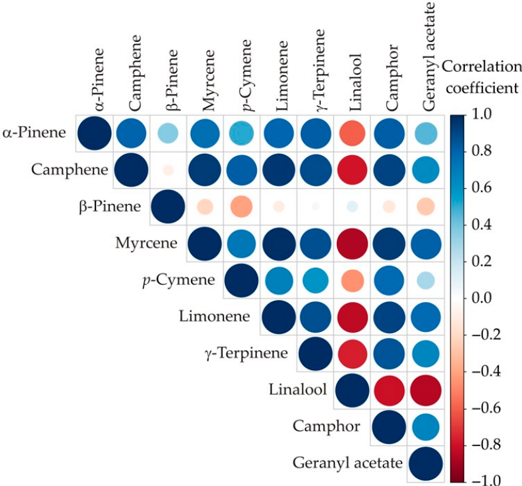
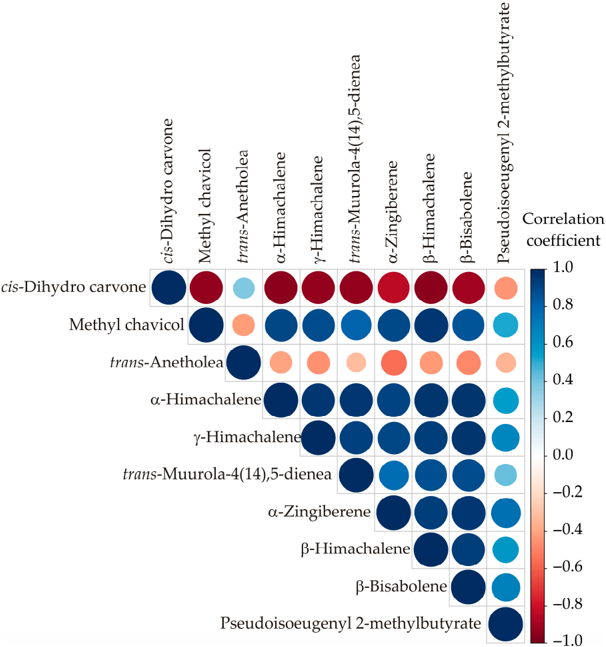
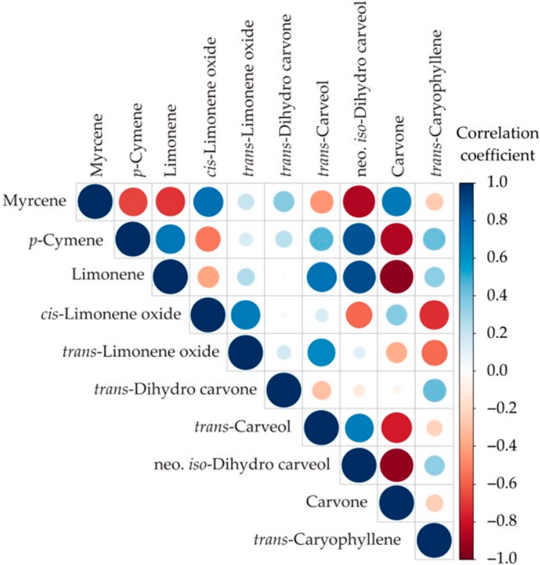
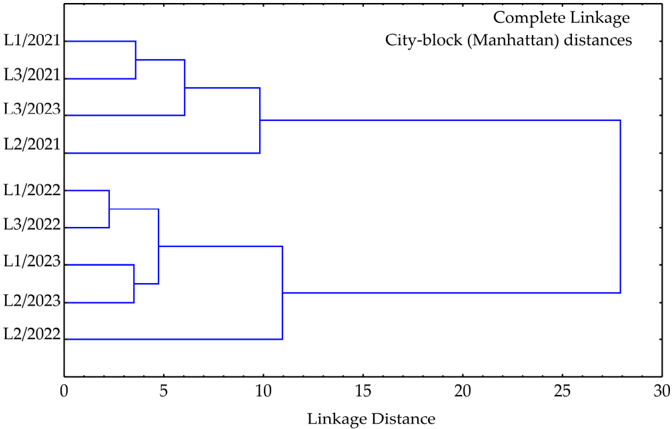
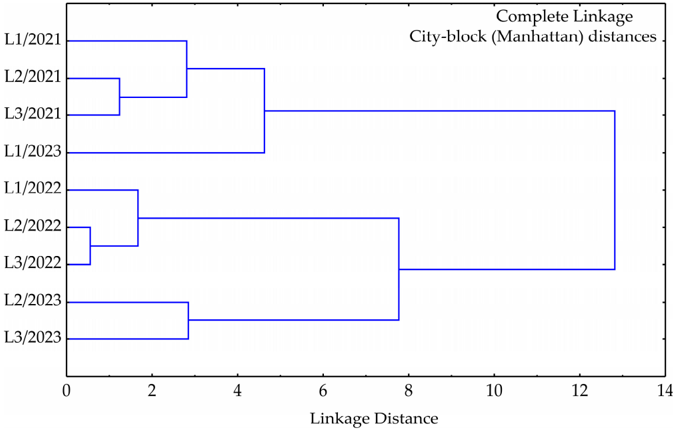
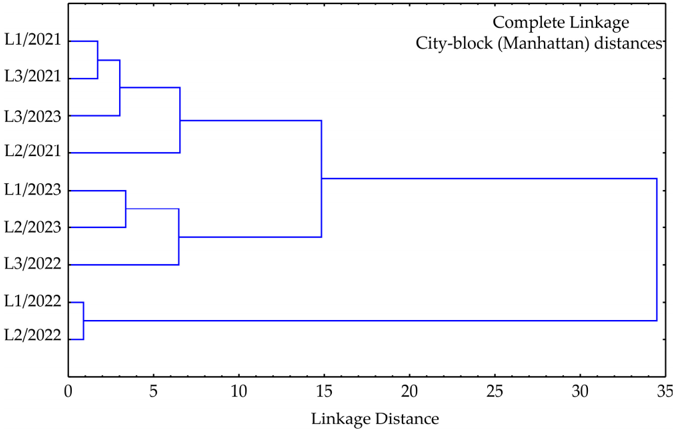
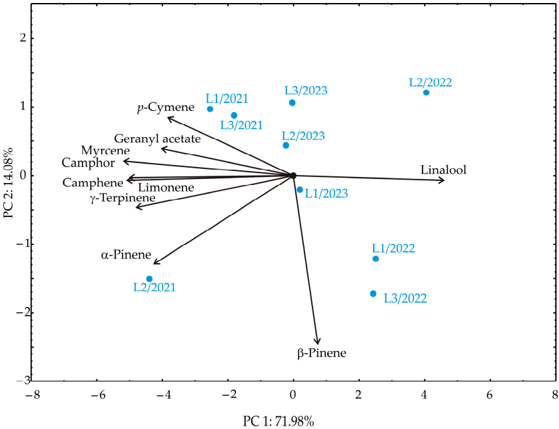
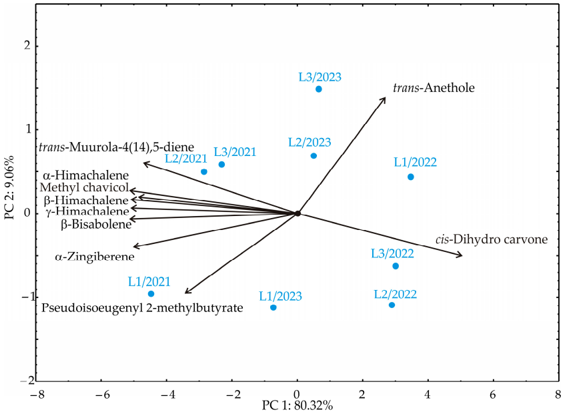
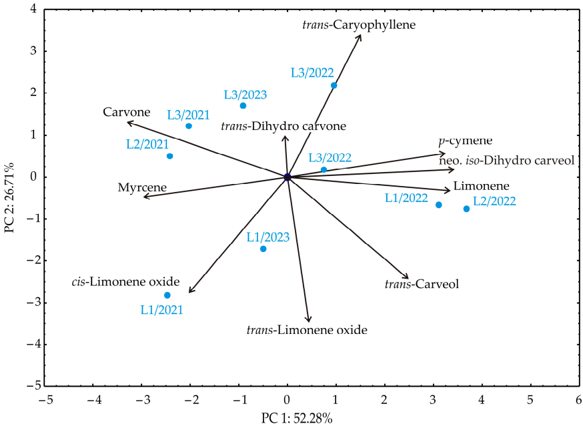
This study investigated the impact of climate conditions on the quality of essential oils extracted from Apiaceae fruits, specifically coriander (Coriandrum sativum var. microcarpum), aniseed (Pimpinella anisum), and annual caraway (Carum carvi var. annuum) grown at three distinct locations in Serbia over three consecutive years. Field experiments were conducted, and essential oils were extracted using a Clevenger-type apparatus followed by gas chromatographic–mass spectrometric analysis for compound identification. Weather conditions during the vegetation periods were recorded, and statistical analyses, including principal component analysis (PCA) and correlation analysis, were performed to assess the volatile compound compositions. Results indicate significant correlations among various compounds within each fruit type, with distinct patterns observed across different years. PCA further elucidates the influence of both year and sampling location on the chemical profiles of essential oils. Cluster analysis reveals clustering primarily based on the year of cultivation rather than geographical location, emphasizing the dominant role of weather conditions in shaping essential oil compositions. This study highlights the intricate relationship between climate conditions and the quality of essential oils in Apiaceae fruits, providing valuable insights for optimizing cultivation practices and enhancing essential oil production. In general, climate conditions strongly influence the coriander, anise, and annual caraway cultivation, and also essential oil quality.
Overview
The claims and statistics of this paper haven’t been checked yet.
Run the check — free, no account needed. It reads the open-access text and checks the sources it cites.
Integrity signals
Registry
Cites
Statistics
Figures
Verification
Claims the paper makes
The claims and statistics of this paper haven’t been checked yet.
Run the check — free, no account needed. It reads the open-access text and checks the sources it cites.
Claims other papers make about this one
Each is checked against this paper’s own text: does it say what the citing paper says it does?
In the citing paper
“These crops generally thrive in cool, dry environments with well-drained soils (Loncar et al. 2024).”
From Unlocking the Apiaceae: comprehensive advances in agronomy, biotechnology, phytochemistry, and health applications of major seed spices (2025) · cites this paper as Loncar et al. 2024
Self-check
Percentages, sums and reported differences re-computed from the paper’s own numbers.
The self-check needs the paper’s full text.
Citations
Cites
No references could be resolved yet.
Research works printed but not linked: 87
- Mérillon, J.M., and Ramawat, K. (2019). Bioactive Molecules in Food. Reference Series in Phytochemistry, Springer. · DOI
- Nouioura, 2024, Rekindling desire: Unveiling the Aphrodisiac potential of Apiaceae Elixirs, Phytomed. Plus, 4, 100530, 10.1016/j.phyplu.2024.100530 · DOI
- Sharma, N., Tan, M.A., and An, S.S.A. (2021). Mechanistic aspects of Apiaceae family spices in ameliorating Alzheimer’s disease. Antioxidants, 10. · DOI
- 2015, Apiaceae seeds as functional food, J. Agric. Sci., 60, 237
- Talou, 2017, The Apiaceae: Ethnomedicinal family as source for industrial uses, Ind. Crops Prod., 109, 661, 10.1016/j.indcrop.2017.09.027 · DOI
- Li, 2009, Extraction of Cuminum cyminum essential oil by combination technology of organic solvent with low boiling point and steam distillation, Food Chem., 115, 1114, 10.1016/j.foodchem.2008.12.091 · DOI
- Boudraa, 2021, Microwave-assisted hydrodistillation of essential oil from fennel seeds: Optimization using Plackett–Burman design and response surface methodology, J. Appl. Res. Med. Aromat. Plants, 23, 100307
- Jayakodi, 2024, Antioxidant activity of essential oils extracted from Apiaceae family plants, Agrochemicals, 3, 57, 10.3390/agrochemicals3010006 · DOI
- 2020, The chemical composition of the essential oil and volatile compounds from caraway fruit (Carum carvi L.) extracted by headspace-solid phase microextraction and the antioxidant activity, Adv. Technol., 9, 37, 10.5937/savteh2001037G · DOI
- Gladikostić, N., Ikonić, B., Teslić, N., Zeković, Z., Božović, D., Putnik, P., Bursać Kovačević, D., and Pavlić, B. (2023). Essential oils from Apiaceae, Asteraceae, Cupressaceae and Lamiaceae families grown in Serbia: Comparative chemical profiling with in vitro antioxidant activity. Plants, 12. · DOI
- Mahendra, 2011, Coriandrum sativum: A daily use spice with great medicinal effect, Pharmacogn. J., 3, 84, 10.5530/pj.2011.21.16 · DOI
- Mohammed, 2023, Pimpinella Species (Anise): Traditional use, mineral, nutrient and chemical contents, biological activities, Int. J. Tradit. Complement. Med. Res., 4, 97
- Naquibuddin, 2021, Zeera siyah (Carum carvi Linn.): A culinary spice and an important drug of unani medicine, Int. J. Herb. Med., 9, 101
- Al-Khayri, J.M., Banadka, A., Nandhini, M., Nagella, P., Al-Mssallem, M.Q., and Alessa, F.M. (2023). Essential oil from Coriandrum sativum: A review on its phytochemistry and biological activity. Molecules, 28. · DOI
- Sobhani, 2022, Ethnobotanical and phytochemical aspects of the edible herb Coriandrum sativum L., J. Food Sci., 87, 1386, 10.1111/1750-3841.16085 · DOI
- Jeya, 2019, Antimicrobial and antioxidant properties of Coriandrum sativum L. seed essential oil, Am. J. Essent. Oils Nat. Prod., 7, 06
- Sriti, 2019, Chemical composition and antioxidant activity of the coriander cake obtained by extrusion, Arab. J. Chem., 12, 1765, 10.1016/j.arabjc.2014.11.043 · DOI
- Hajlaoui, H., Arraouadi, S., Noumi, E., Aouadi, K., Adnan, M., Khan, M.A., Kadri, A., and Snoussi, M. (2021). Antimicrobial, antioxidant, anti-acetylcholinesterase, antidiabetic, and pharmacokinetic properties of Carum carvi L. and Coriandrum sativum L. essential oils alone and in combination. Molecules, 26. · DOI
- Aouini, 2024, Screening of antimicrobial and insecticidal properties of essential oils extracted from three Tunisian aromatic and medicinal plants, Int. J. Environ. Health Res., 34, 923, 10.1080/09603123.2023.2187354 · DOI
- Kajal, A., and Singh, R. (2019). Coriandrum sativum seeds extract mitigate progression of diabetic nephropathy in experimental rats via AGEs inhibition. PLoS ONE, 14. · DOI
- Samojlik, 2010, Antioxidant and hepatoprotective potential of essential oils of coriander (Coriandrum sativum L.) and caraway (Carum carvi L.) (Apiaceae), J. Agric. Food Chem., 58, 8848, 10.1021/jf101645n · DOI
- Cengiz, 2016, Hepatoprotective effects of Coriandrum sativum essential oil against acute hepatotoxicity induced by carbon tetrachloride on rats, Acta Pharm. Sci., 54, 35
- Mandal, 2015, Coriander (Coriandrum sativum L.) essential oil: Chemistry and biological activity, Asian Pac. J. Trop. Biomed., 5, 421, 10.1016/j.apjtb.2015.04.001 · DOI
- Acimovic, 2015, Compositional characteristics of the essential oil of Pimpinella anisum and Foeniculum vulgare grown in Serbia, Bot. Serb., 39, 4
- Shojaii, 2012, Review of pharmacological properties and chemical constituents of Pimpinella anisum, Int. Sch. Res. Netw., 2012, 510795
- Sun, W., Shahrajabian, M.H., and Cheng, Q. (2019). Anise (Pimpinella anisum L.), a dominant spice and traditional medicinal herb for both food and medicinal purposes. Cogent Biol., 5. · DOI
- Bourgou, 2019, Bioactive compounds and antioxidant activity of Pimpinella anisum L. accessions at different ripening stages, Sci. Hortic., 246, 453, 10.1016/j.scienta.2018.11.016 · DOI
- El-Sayed, S.M., Ahmed, N., Selim, S., Al-Khalaf, A.A., El Nahhas, N., Abdel-Hafez, S.H., Sayed, S., Emam, H.M., and Ibrahim, M.A.R. (2022). Acaricidal and antioxidant activities of anise oil (Pimpinella anisum) and the oil’s effect on protease and acetylcholinesterase in the two-spotted spider mite (Tetranychus urticae Koch). Agriculture, 12. · DOI
- Bakhshi, 2022, In vitro antibacterial effect of Pimpinella anisum essential oil on Enterococcus faecalis, Lactobacillus casei, Actinomyces naeslundii, and Aggregatibacter actinomycetemcomitans, Folia Medica, 64, 799, 10.3897/folmed.64.e64714 · DOI
- Dumitrescu, E., Muselin, F., Tîrziu, E., Folescu, M., Dumitrescu, C.S., Orboi, D.M., and Cristina, R.T. (2023). Pimpinella anisum L. essential oil a valuable antibacterial and antifungal alternative. Plants, 12. · DOI
- Iannarelli, 2018, Aniseed (Pimpinella anisum L.) essential oil reduces pro-inflammatory cytokines and stimulates mucus secretion in primary airway bronchial and tracheal epithelial cell lines, Ind. Crops Prod., 114, 81, 10.1016/j.indcrop.2018.01.076 · DOI
- 2017, Perspectives of the Apiaceae hepatoprotective effects—A review, Nat. Prod. Commun., 12, 309
- Assami, 2016, Ultrasound-assisted aromatisation with condiments as an enabling technique for olive oil flavouring and shelf life enhancement, Food Anal. Methods, 9, 982, 10.1007/s12161-015-0273-9 · DOI
- 2021, Caraway (Carum carvi L.) essential oil improves quality of dry-fermented sausages produced with different levels of sodium nitrite, J. Food Process. Preserv., 46, e15786
- Ahmad, B.S., Talou, T., Straumite, E., Sabovics, M., Kruma, Z., Saad, Z., Hijazi, A., and Merah, O. (2018). Protein bread fortification with cumin and caraway seeds and by-product flour. Foods, 7. · DOI
- Kostova, 2015, Studying the possibilities of using of essential oils in dairy products. 2. Caraway (Carum carvi L.), Indian J. Appl. Res., 5, 83
- Trifan, 2016, Antioxidant activity of essential oil from Carum carvi L. cultivated in north-eastern Romania, Rev. Med. Chir. Soc. Med. Nat., 120, 732
- Bocianowski, 2013, Microbiological activity of caraway (Carum carvi L.) essential oil obtained from different origin, Acta Sci. Agron., 35, 495
- Kamaleeswari, 2006, Dose–response efficacy of caraway (Carum carvi L.) on tissue lipid peroxidation and antioxidant profile in rat colon carcinogenesis, J. Pharm. Pharmacol., 58, 1121, 10.1211/jpp.58.8.0014 · DOI
- Alasmari, 2019, Cytotoxic effects of S-(+)-carvone on selected human cancer cell lines, J. Anal. Pharm. Res., 8, 149, 10.15406/japlr.2019.08.00330 · DOI
- Eidi, 2010, Hypoglycemic effect of ethanolic extract of Carum carvi L. seeds in normal and streptozotocin-induced diabetic rats, J. Med. Plants, 9, 106
- Haidari, 2011, The effect of oral administration of Carum carvi on weight, serum glucose, and lipid profile in streptozotocininduced diabetic rats, Saudi Med. J., 32, 695
- Karalija, 2022, Influence of climate-related environmental stresses on economically important essential oils of Mediterranean Salvia sp., Front. Plant Sci., 13, 864807, 10.3389/fpls.2022.864807 · DOI
- Grulova, 2015, Seasonal variability of the main components in essential oil of Mentha× piperita L., J. Sci. Food Agr., 95, 621, 10.1002/jsfa.6802 · DOI
- Yavari, 2010, Influence of some environmental factors on the essential oil variability of Thymus migricus, Nat. Prod. Commun., 5, 943
- Aćimović, M., Lončar, B., Stanković Jeremić, J., Cvetković, M., Pezo, L., Pezo, M., Todosijević, M., and Tešević, V. (2022). Weather conditions influence on lavandin essential oil and hydrolate quality. Horticulturae, 8. · DOI
- 2010, Effect of the selected weather conditions on essential oil, α-bisabolol and chamazulene content in flower heads of chamomile [Chamomilla recutita (L.) Rausch.], J. Essent. Oil Res., 22, 45, 10.1080/10412905.2010.9700262 · DOI
- Mohamadi, 2016, Effects of different ecological condition on the quality and quantity of essential oils of Artemisia persica Boiss. Populations from Kerman, Iran, J. Essent. Oil Bear. Plants, 19, 200, 10.1080/0972060X.2014.983994 · DOI
- Bremner, 1960, Determination of nitrogen in soil by Kjeldahl method, J. Agric. Sci., 55, 11, 10.1017/S0021859600021572 · DOI
- Egner, 1960, Untersuchungen über die chemische Bodenanalyse als Grundlage für die Beurteilung des Nahrstoffzustandes der Boden, II: Chemische Extractionsmetoden zu Phosphor-und Kaliumbestimmung, K. Lantbrukshügskolans Ann., 26, 199
- Djisalov, 2014, Evaluation of caraway essential oil from different production areas of Serbia, Hort. Sci., 41, 122, 10.17221/248/2013-HORTSCI · DOI
- Saxena, 2022, Variation in essential oil constituents of coriander (Coriandrum sativum L.) germplasm across coriander growing regions in India, J. Essent. Oil Res., 34, 173, 10.1080/10412905.2022.2036644 · DOI
- Shams, 2016, Effects of climatic factors on the quantity of essential oil and dry matter yield of coriander (Coriandrum sativum L.), Indian J. Sci. Technol., 9, 1, 10.17485/ijst/2016/v9i6/61301 · DOI
- Wang, F., Gao, Q., Ji, G., Wang, J., Ding, Y., and Wang, S. (2024). Effects of light intensity and photoperiod on morphological development and photosynthetic characteristics of coriander. Horticulturae, 10. · DOI
- 2011, Benefits of environmental conditions for growing coriander in Banat Region, Serbia, Nat. Prod. Commun., 6, 1465
- Chandrakala, 2024, Variation in seed yield and essential oil composition of coriander (Coriandrum sativum L.), J. Essent. Oil Res., 36, 222, 10.1080/10412905.2024.2330915 · DOI
- Sawargaonkar, 2019, Genotype × environment interaction and stability of indigenous coriander (Coriandrum sativum L.) genotypes for seed yield in different agro-climatic zones of Chhattisgarh, J. Spices Aromat. Crops, 28, 122
- Talebi, S.M., Naser, A., and Ghorbanpour, M. (2024). Chemical composition and antimicrobial activity of the essential oils in different populations of Coriandrum sativum L. (coriander) from Iran and Iraq. Food Sci. Nutr., 1–11. · DOI
- Freires, I.D.A., Murata, R.M., Furletti, V.F., Sartoratto, A., Alencar, S.M.D., Figueira, G.M., de Oliveira Rodrigues, J.A., Duarte, M.C.T., and Rosalen, P.L. (2014). Coriandrum sativum L. (coriander) essential oil: Antifungal activity and mode of action on Candida spp., and molecular targets affected in human whole-genome expression. PLoS ONE, 9. · DOI
- Shojaiefar, 2022, Seed yield stability with modified essential oil content and composition in self-compatible progenies of bitter fennel (Foeniculum vulgare Mill.), Ind. Crops Prod., 182, 114821, 10.1016/j.indcrop.2022.114821 · DOI
- Mehravi, S., Hanifei, M., Gholizadeh, A., and Khodadadi, M. (2023). Water deficit stress changes in physiological, biochemical and antioxidant characteristics of anise (Pimpinella anisum L.). Plant Physiol. Biochem., 201. · DOI
- 2014, Influence of ecological conditions on seeds traits and essential oil contents in anise (Pimpinella anisum L.), Not. Bot. Horti. Agrobot., 42, 232
- Iannarelli, 2017, Valorizing overlooked local crops in the era of globalization: The case of aniseed (Pimpinella anisum L.) from Castignano (central Italy), Ind. Crops Prod., 104, 99, 10.1016/j.indcrop.2017.04.028 · DOI
- Bourgou, 2018, Comparative assessment of phytochemical profiles and antioxidant properties of Tunisian and Egyptian anise (Pimpinella anisum L.) seeds, Plant Biosyst. Int. J. Deal. Asp. Plant Biol., 152, 971
- 2003, The essential oil content in caraway species (Carum carvi L.), Hort. Sci., 30, 73, 10.17221/3818-HORTSCI · DOI
- Fang, 2010, Insecticidal activity of essential oil of Carum Carvi fruits from China and its main components against two grain storage insects, Molecules, 15, 9391, 10.3390/molecules15129391 · DOI
- Kallio, 1994, Carvone and limonene in caraway fruits (Carum carvi L.) analyzed by supercritical carbon dioxide extraction-gas chromatography, J. Agric. Food Chem., 42, 2478, 10.1021/jf00047a021 · DOI
- Clark, 1989, A profile: An aroma chemical—Carvone, Perfum. Flavorist, 14, 35
- Erasto, 2008, Limonene—A review: Biosynthetic, ecological and pharmacological relevance, Nat. Prod. Commun., 3, 1193
- Bouwmeester, 1998, Biosynthesis of the monoterpenes limonene and carvone in the fruit of caraway. I. Demonstration of enzyme activities and their changes with development, Plant Physiol., 117, 901, 10.1104/pp.117.3.901 · DOI · Paper page
- Chizzola, 2014, Composition of the essential oil of wild grown caraway in meadows of the Vienna region (Austria), Nat. Prod. Commun., 9, 581
- Beleites, 2024, Genetic variation of annual and biennial caraway (Carum carvi) germplasm offers diverse opportunities for breeding, Ind. Crops Prod., 208, 117798, 10.1016/j.indcrop.2023.117798 · DOI
- Ibrahim, 2022, Climate change necessitates a change in the cultivation date of caraway (Carum carvi L.), J. Water Land Dev., 54, 39
- Solberg, 2016, Caraway essential oil composition and morphology: The role of location and genotype, Biochem. Syst. Ecol., 66, 351, 10.1016/j.bse.2016.05.012 · DOI
- Bosko, 2016, The variability of caraway (Carum carvi L.) essential oils, MendelNet, 23, 30
- Baranska, 2010, Raman analysis of caraway (Carum carvi L.) single fruits. Evaluation of essential oil content and its composition, J. Agric. Food Chem., 58, 5271, 10.1021/jf100298z · DOI · Paper page
- Dobhal, 2024, Climate-induced changes in essential oil production and terpene composition in Alpine aromatic plants, Plant Stress, 12, 100445, 10.1016/j.stress.2024.100445 · DOI
- Craker, 1993, Growth and essential oil in dill, Anethum graveolens L., in response to temperature and photoperiod, J. Herbs Spices Med. Plants, 1, 47, 10.1300/J044v01n03_05 · DOI
- Mirmohammadmakki, 2023, Quantitative changes in essential oils contents of parsley (Petroselinum crispum) harvested in three consecutive months of spring, J. Food Bioprocess Eng., 6, 48
- Pirmohammadi, 2023, Influence of agro-climatic conditions on chemical compositions and repellency effect of Mentha longifolia plant against malaria vector, Anopheles stephensi, Toxin Rev., 42, 115, 10.1080/15569543.2021.2022699 · DOI
- Aćimović, M., Zeremski, T., Šovljanski, O., Lončar, B., Pezo, L., Zheljazkov, V.D., Pezo, M., Šuput, D., and Kurunci, Z. (2022). Seasonal variations in essential oil composition of immortelle cultivated in Serbia. Horticulturae, 8. · DOI
- Kurpis, 2019, Modeling the effects of climate change on the distribution of Tagetes lucida Cav. (Asteraceae), Glob. Ecol. Conserv., 20, e00747
- Aćimović, M., Ljujić, J., Vulić, J., Zheljazkov, V.D., Pezo, L., Varga, A., and Tumbas Šaponjac, V. (2021). Helichrysum italicum (Roth) G. Don essential oil from Serbia: Chemical composition, classification and biological activity—May it be a suitable new crop for Serbia?. Agronomy, 11. · DOI
- Kiprovski, B., Zeremski, T., Varga, A., Cabarkapa, I., Filipović, J., Lončar, B., and Aćimović, M. (2023). Essential oil quality of lavender grown outside its native distribution range: A study from Serbia. Horticulturae, 9. · DOI
- 2015, The influence of environmental conditions on Carum carvi L. var. annum seed quality, Ratar. Povrt., 52, 91, 10.5937/ratpov52-8022 · DOI
- Bouwmeester, 1995, Seed yield in caraway (Carum carvi). 1. Role of pollination, J. Agric. Sci., 124, 235, 10.1017/S0021859600072907 · DOI
- Peter, K.V. (2012). Handbook of Herbs and Spicesm, Woodhead Publishing. [2nd ed.]. · DOI
Cited by
Singh, R., Choudhary, S., Kumari, V., Meena, R. S., Meena, N. K., Y, R., & Verma, A. K. (2025) · Journal of Agriculture and Ecology · doi:10.58628/jae-2521-101
Metadata
- Authors
- Lončar, B., Pezo, L., Pezo, M., Jovanović, A., Šuput, D., Radosavljević, M., & Aćimović, M.
- Affiliations
- Faculty of Technology Novi Sad, University of Novi Sad, Bulevar cara Lazara, 1, 21000 Novi Sad, Serbia
- Institute of General and Physical Chemistry, University of Belgrade, Studentski trg, 12, 11000 Belgrade, Serbia
- Department of Thermal Engineering and Energy, “Vinča” Institute of Nuclear Sciences—National Institute of the Republic of Serbia, University of Belgrade, Mike Petrovića Alasa 12–14, 11001 Belgrade, Serbia
- Institute of Field and Vegetable Crops Novi Sad, Maksima Gorkog, 30, 21000 Novi Sad, Serbia
- Venue
- Horticulturae
- Publisher
- MDPI AG
- Published
- 2024-06-01
- Volume
- 10
- Issue
- 6
- Pages
- 577
- ISSN
- 2311-7524
- Cited by
- 11
- References
- 0
- Language
- en
- Funders
- Ministry of Science, Technological Development and 463 Innovation of the Republic of Serbia (451-03-66/2024-03/200134, 451-03-66/2024-03/200051, 451-03-66/2024-03/200032)
About these checks
Registry, retraction, Cites and statistics results are computed, not judged, with one exception: a printed reference that no index lists is read once by a model before it counts as a citation error. Claims are extracted by a model and kept only when their quote appears verbatim in the text; each cited source is then checked, with a model’s help, for whether it says what the claim relies on. Those verdicts can be wrong — read the claim’s quote and the cited source before relying on one.
Statistics and arithmetic are recomputed, not judged.
Confidence bands are shown only for fields calibrated on our annotated test set. None is calibrated yet, so no band is shown.
What counts as a claim ›How we measure confidence ›How we check this ›
Are you an author, or do you see a problem with this page? Request a review
How to cite
Cite CoChat for the checks on this page, and the paper for its own findings.
- This page
- CoChat. (2026). Citation check: Do Climate Conditions Affect the Quality of the Apiaceae Fruits’ Essential Oils? https://app.cochat.ai/papers/10.3390/horticulturae10060577
- The paper
- Lončar, B., Pezo, L., Pezo, M., Jovanović, A., Šuput, D., Radosavljević, M., & Aćimović, M. (2024). Do Climate Conditions Affect the Quality of the Apiaceae Fruits’ Essential Oils? Horticulturae. https://doi.org/10.3390/horticulturae10060577
Data sources
Bibliographic data: Semantic Scholar, OpenAlex, Crossref.
Contains information from the Semantic Scholar Academic Graph Datasets, made available under the ODC Attribution License (ODC-BY 1.0).
Semantic Scholar’s data is described in: Kinney, R., et al. (2023). The Semantic Scholar Open Data Platform. arXiv:2301.10140.
