

The DOI matches its Crossref record; 84 of the 85 references it cites were found in a registry or an index, and 1 are not checked yet.
Companion Animals and Child/Adolescent Development: A Systematic Review of the Evidence
Open accessAbstract
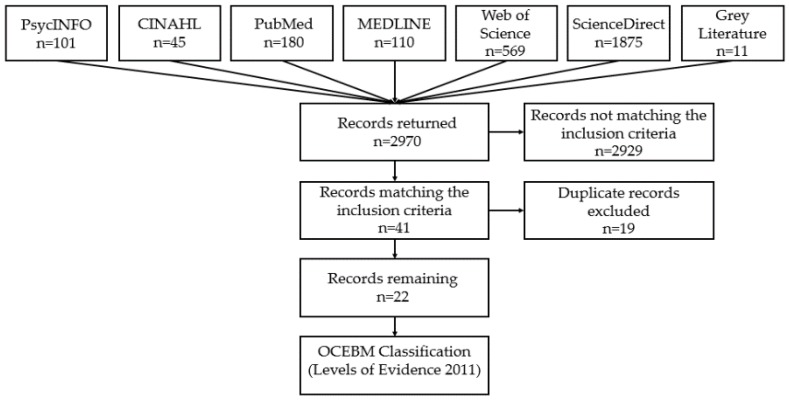
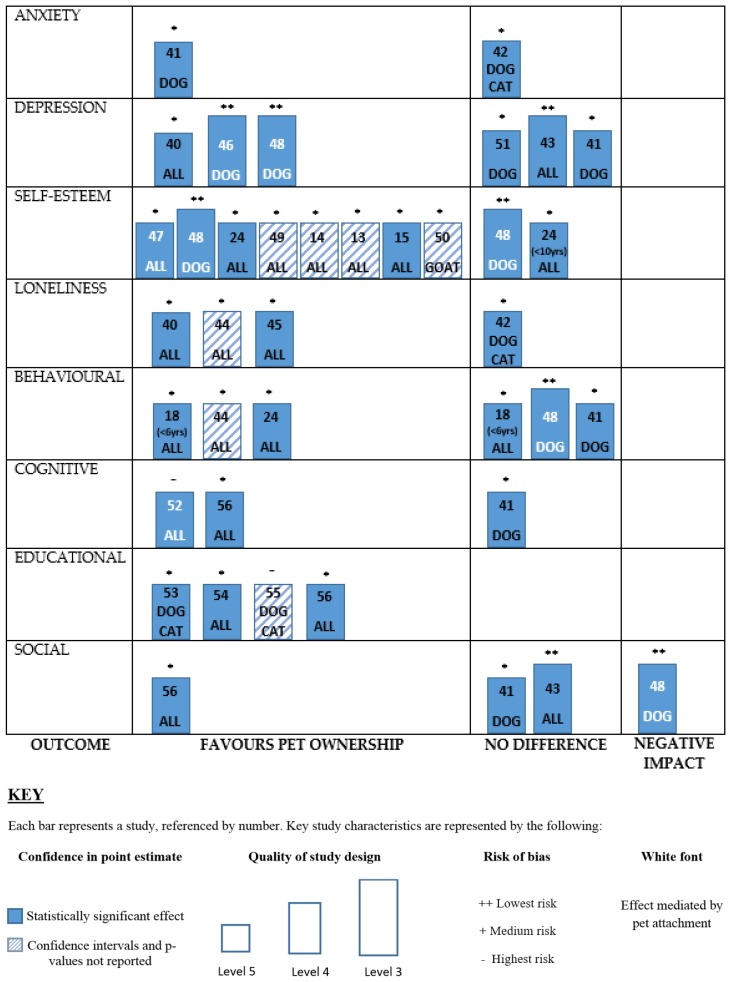
Childhood and adolescence are important developmental phases which influence health and well-being across the life span. Social relationships are fundamental to child and adolescent development; yet studies have been limited to children’s relationships with other humans. This paper provides an evidence review for the potential associations between pet ownership and emotional; behavioural; cognitive; educational and social developmental outcomes. As the field is in the early stages; a broad set of inclusion criteria was applied. A systematic search of databases and grey literature sources found twenty-two studies meeting selection criteria. The review found evidence for an association between pet ownership and a wide range of emotional health benefits from childhood pet ownership; particularly for self-esteem and loneliness. The findings regarding childhood anxiety and depression were inconclusive. Studies also showed evidence of an association between pet ownership and educational and cognitive benefits; for example, in perspective-taking abilities and intellectual development. Evidence on behavioural development was unclear due to a lack of high quality research. Studies on pet ownership and social development provided evidence for an association with increased social competence; social networks; social interaction and social play behaviour. Overall, pet ownership and the significance of children’s bonds with companion animals have been underexplored; there is a shortage of high quality and longitudinal studies in all outcomes. Prospective studies that control for a wide range of confounders are required.
Overview
The claims and statistics of this paper haven’t been checked yet.
Run the check — free, no account needed. It reads the open-access text and checks the sources it cites.
Integrity signals
Registry
Cites
Statistics
Figures
Verification
Claims the paper makes
The claims and statistics of this paper haven’t been checked yet.
Run the check — free, no account needed. It reads the open-access text and checks the sources it cites.
Claims other papers make about this one
Each is checked against this paper’s own text: does it say what the citing paper says it does?
The source backs part of the claim, not all of it — or backs it for a different population, condition or comparison.
In the citing paper
“Finally, a wide range of emotional health benefits from childhood pet ownership has been identified, particularly for those suffering from low self-esteem and loneliness.”
From A One Health Perspective on the Human-Companion Animal Relationship with Emphasis on Zoonotic Aspects. (2020) · cites this paper as [44]
Experimental — accuracy not yet measuredThe cited source says what the claim attributes to it.
In the citing paper
“There is evidence of an association between pet ownership and educational and cognitive benefits, increased social competence, social networks, social interaction, and social play behavior [43,44].”
From A One Health Perspective on the Human-Companion Animal Relationship with Emphasis on Zoonotic Aspects. (2020) · cites this paper as [44]
In the citing paper
“The central role of animals in fostering and maintaining an individual’s self-esteem and sense of identity has also been documented in studies on normal human–animal relationships and are one of the psychologically positive effects of the human–animal bond [71,301,302].”
From The Complexity of the Human–Animal Bond: Empathy, Attachment and Anthropomorphism in Human–Animal Relationships and Animal Hoarding (2022) · cites this paper as [302]
Self-check
Percentages, sums and reported differences re-computed from the paper’s own numbers.
The self-check needs the paper’s full text.
Citations
Cites
(1969) · Cited by 18,340
Stress, social support, and the buffering hypothesis
Cohen, S., & Wills, T. A. (1985) · Psychological Bulletin · doi:10.1037/0033-2909.98.2.310 · Cited by 18,093
Why Most Published Research Findings Are False
Ioannidis, J. P. A. (2005) · PLoS Medicine · doi:10.1371/journal.pmed.0020124 · Cited by 10,505
Why Most Published Research Findings Are False
Ioannidis, J. P. A. (2005) · CHANCE · doi:10.1080/09332480.2005.10722754 · Cited by 4,702 · cited 1×
“In studies investigating pet ownership on human health and development such inconsistent findings are not infrequent due to use of a wide diversity of designs, small effect sizes and small and homogeneous self-selected samples [88,89].”
Attachment and loss: Retrospect and prospect.
Bowlby, J. (1982) · American Journal of Orthopsychiatry · doi:10.1111/j.1939-0025.1982.tb01456.x · Cited by 2,930
Beetz, A., Uvnäs-Moberg, K., Julius, H., & Kotrschal, K. (2012) · Frontiers in Psychology · doi:10.3389/fpsyg.2012.00234 · Cited by 904 · cited 2×
“Physiological mechanisms, such as activation of the oxytocin system may partly explain this reduction of psychological stress for humans who are in contact with animals [17].”
Developing through relationships: origins of communication, self, and culture
(1993) · Choice Reviews Online · doi:10.5860/choice.31-2374 · Cited by 587
Dogs as catalysts for social interactions: Robustness of the effect
McNicholas, J., & Collis, G. M. (2000) · British Journal of Psychology · doi:10.1348/000712600161673 · Cited by 559
The Impact of Pets on Human Health and Psychological Well-Being: Fact, Fiction, or Hypothesis?
Herzog, H. (2011) · Current Directions in Psychological Science · doi:10.1177/0963721411415220 · Cited by 514
Pet ownership and human health: a brief review of evidence and issues
McNicholas, J., Gilbey, A., Rennie, A., Ahmedzai, S., Dono, J.-A., & Ormerod, E. (2005) · BMJ · doi:10.1136/bmj.331.7527.1252 · Cited by 442
Research works printed but not linked: 7
- Melson, G.F., and Schwarz, R. (1994, January 1). Pets as social supports for families of young children. Proceedings of the Annual Meeting of the Delta Society, New York, NY, USA.
- Melson, 1991, Children’s attachment to their pets: Links to socio-emotional development, Children’s Environ. Quart., 8, 55
- Turner, C.C.W.D.C. (1998). Companion Animals in Human Health, SAGE Publications Ltd.
- Güçlü, M. (2016, January 5). The effects of keeping pets on children. Proceedings of the Multidisciplinary Academic Conference, Melikgazi, Kayseri, Turkey.
- Piaget, J. (1969). The Mechanisms of Perception, Routledge & Kegan Paul.
- Freund, L., McCune, S., Esposito, L., Gee, N.R., and McCardle, P. (2016). The Social Neuroscience of Human-Animal Interaction, American Psychological Association. · DOI · Paper page
- Serpell, J.A., Coppinger, R., Fine, A.H., Peralta, J., and Aubrey, H. (2006). Handbook of Animal-Assisted Therapy: Theoretical Foundations and Guidelines for Practice, Academic Press.
Cited by
Sorted by citations
Overgaauw, P. A. M., Vinke, C. M., van Hagen, M. A. E., & Lipman, L. J. A. (2020) · International Journal of Environmental Research and Public Health · doi:10.3390/ijerph17113789 · Cited by 301
Variability in Human-Animal Interaction Research
Rodriguez, K. E., Herzog, H., & Gee, N. R. (2021) · Frontiers in Veterinary Science · doi:10.3389/fvets.2020.619600 · Cited by 213
Self-citationDogs Supporting Human Health and Well-Being: A Biopsychosocial Approach
Gee, N. R., Rodriguez, K. E., Fine, A. H., & Trammell, J. P. (2021) · Frontiers in Veterinary Science · doi:10.3389/fvets.2021.630465 · Cited by 199
Self-citationPrato-Previde, E., Basso Ricci, E., & Colombo, E. S. (2022) · Animals · doi:10.3390/ani12202835 · Cited by 121
Shoesmith, E., Shahab, L., Kale, D., Mills, D. S., Reeve, C., Toner, P., de Assis, L. S., & Ratschen, E. (2021) · International Journal of Environmental Research and Public Health · doi:10.3390/ijerph18030976 · Cited by 110
Pet’s influence on humans’ daily physical activity and mental health: a meta-analysis
Martins, C. F., Soares, J., Cortinhas, A., Silva, L. R., Cardoso, L., Pires, M. A., & Mota, M. P. (2023) · Frontiers in Public Health · doi:10.3389/fpubh.2023.1196199 · Cited by 124
Pet Ownership Patterns and Successful Aging Outcomes in Community Dwelling Older Adults
Friedmann, E., Gee, N. R., Simonsick, E. M., Studenski, S. A., Resnick, B. M., Barr, E. A., Kitner‐Triolo, M. H., & Hackney, A. J. (2020) · Frontiers in Veterinary Science · doi:10.3389/fvets.2020.00293 · Cited by 88
Self-citationMueller, M. K., King, E. K., Callina, K. S., Dowling‐Guyer, S., & McCobb, E. C. (2021) · Health Psychology and Behavioral Medicine · doi:10.1080/21642850.2021.1963254 · Cited by 87
Teaching Children and Parents to Understand Dog Signaling
Meints, K., Brelsford, V. L., & Keuster, T. D. (2018) · Frontiers in Veterinary Science · doi:10.3389/fvets.2018.00257 · Cited by 72
Self-citationSpotlight on the psychological basis of childhood pet attachment and its implications
Wanser, S. H., Vitale, K. R., Thielke, L. E., Brubaker, L., & Udell, M. A. R. (2019) · Psychology Research and Behavior Management · doi:10.2147/prbm.s158998 · Cited by 67
Christian, H. E., Mitrou, F., Cunneen, R., & Zubrick, S. R. (2020) · The Journal of Pediatrics · doi:10.1016/j.jpeds.2020.01.012 · Cited by 56
Humanity’s Best Friend: A Dog-Centric Approach to Addressing Global Challenges
Sykes, N., Beirne, P., Horowitz, A., Jones, I., Kalof, L., Karlsson, E. K., King, T., Litwak, H., McDonald, R. A., Murphy, L. J., et al. (2020) · Animals · doi:10.3390/ani10030502 · Cited by 60
Decolonizing Pathways towards Integrative Healing in Social Work
Bird, M. Y., & Clarke, K. (2020) · Routledge eBooks · doi:10.4324/9781315225234 · Cited by 64
McDonald, S. E., O’Connor, K. E., Matijczak, A., Tomlinson, C. A., Applebaum, J. W., Murphy, J. L., & Zsembik, B. A. (2021) · Animals · doi:10.3390/ani11030895 · Cited by 50
Hawkins, R. D., McDonald, S. E., O’Connor, K. E., Matijczak, A., Ascione, F. R., & Williams, J. H. (2019) · Child Abuse & Neglect · doi:10.1016/j.chiabu.2019.104166 · Cited by 52
McDonald, S. E., Matijczak, A., Nicotera, N., Applebaum, J. W., Kremer, L., Natoli, G., O’Ryan, R., Booth, L. J., Murphy, J. L., Tomlinson, C. A., et al. (2021) · Emerging Adulthood · doi:10.1177/21676968211025340 · Cited by 52
Dog and Cat Ownership Predicts Adolescents’ Mental Well-Being: A Population-Based Longitudinal Study
Endo, K., Yamasaki, S., Ando, S., Kikusui, T., Mogi, K., Nagasawa, M., Kamimura, I., Ishihara, J., Nakanishi, M., Usami, S., et al. (2020) · International Journal of Environmental Research and Public Health · doi:10.3390/ijerph17030884 · Cited by 47
Wenden, E. J., Lester, L., Zubrick, S. R., Ng, M., & Christian, H. E. (2020) · Pediatric Research · doi:10.1038/s41390-020-1007-2 · Cited by 48
Ly, L. H., Gordon, E. W., & Protopopova, A. (2021) · Frontiers in Veterinary Science · doi:10.3389/fvets.2021.656597 · Cited by 53
Wanser, S. H., MacDonald, M., & Udell, M. A. R. (2021) · Animal Cognition · doi:10.1007/s10071-020-01454-4 · Cited by 46
Associations Between Pet Ownership and Attitudes Toward Pets With Youth Socioemotional Outcomes
Jacobson, K. C., & Chang, L. (2018) · Frontiers in Psychology · doi:10.3389/fpsyg.2018.02304 · Cited by 50
Giraudet, C., Liu, K., McElligott, A. G., & Cobb, M. (2022) · PeerJ · doi:10.7717/peerj.14532 · Cited by 50
Hall, S. S., Wright, H. F., & Mills, D. S. (2017) · PLoS ONE · doi:10.1371/journal.pone.0185300 · Cited by 41
Barcelos, A. M., Kargas, N., & Mills, D. S. (2024) · Pets · doi:10.3390/pets1010007 · Cited by 48
The Pet Exposure Effect: Exploring the Differential Impact of Dogs Versus Cats on Consumer Mindsets
Jia, L., Yang, X., & Jiang, Y. (2022) · Journal of Marketing · doi:10.1177/00222429221078036 · Cited by 40
Interaction and Emotional Connection with Pets: A Descriptive Analysis from Puerto Rico
Aragunde-Kohl, U., Galán, J. G., Lázaro-Pérez, C., & López, J. Á. M. (2020) · Animals · doi:10.3390/ani10112136 · Cited by 37
Arhant, C., Beetz, A., & Troxler, J. (2017) · Frontiers in Veterinary Science · doi:10.3389/fvets.2017.00130 · Cited by 36
A prototype analysis of New Zealand adolescents’ conceptualizations of wellbeing
Bharara, G., Duncan, S., Jarden, A., & Hinckson, E. (2019) · International Journal of Wellbeing · doi:10.5502/ijw.v9i4.975 · Cited by 36
Hill, L., Winefield, H. R., & Bennett, P. C. (2020) · Australian Psychologist · doi:10.1111/ap.12466 · Cited by 44
Socio-demographic factors associated with pet ownership amongst adolescents from a UK birth cohort
Purewal, R., Christley, R., Kordas, K., Joinson, C. J., Meints, K., Gee, N. R., & Westgarth, C. (2019) · BMC Veterinary Research · doi:10.1186/s12917-019-2063-x · Cited by 33
Self-citationSnell‐Rood, E. C., & Snell‐Rood, C. (2020) · Philosophical Transactions of the Royal Society B Biological Sciences · doi:10.1098/rstb.2019.0491 · Cited by 33
Matijczak, A., McDonald, S. E., Tomlinson, C. A., Murphy, J. L., & O’Connor, K. E. (2020) · Behavioral Sciences · doi:10.3390/bs11010001 · Cited by 33
A systematic scoping review: What is the risk from child-dog interactions to dog’s quality of life?
Hall, S. S., Finka, L. R., & Mills, D. S. (2019) · Journal of Veterinary Behavior · doi:10.1016/j.jveb.2019.05.001 · Cited by 35
Sato, R., Fujiwara, T., Kino, S., Nawa, N., & Kawachi, I. I. (2019) · International Journal of Environmental Research and Public Health · doi:10.3390/ijerph16050758 · Cited by 31
Minatoya, M., Araki, A., Miyashita, C., Itoh, S., Kobayashi, S., Yamazaki, K., Bamai, Y. A., Saijo, Y., Ito, Y., Kishi, R., et al. (2019) · International Journal of Environmental Research and Public Health · doi:10.3390/ijerph17010205 · Cited by 29
Goh, Y. X., Tan, J. S. Q., Syn, N. L. X., Tan, B. S. W., Low, J. Y., Foo, Y. H., Fung, W., Hoong, B. Y. D., Pang, J., Phase IV CHP 2020 Group 8, et al. (2020) · Scientific Reports · doi:10.1038/s41598-020-76739-2 · Cited by 29
Rodriguez, K. E., McDonald, S. E., & Brown, S. M. (2021) · Behavioral Sciences · doi:10.3390/bs11120178 · Cited by 29
Hardie, S., Mai, D. L., & Howell, T. J. (2023) · Anthrozoös · doi:10.1080/08927936.2023.2182029 · Cited by 42
McDonald, S. E., Murphy, J. L., Tomlinson, C. A., Matijczak, A., Applebaum, J. W., Wike, T. L., & Kattari, S. K. (2021) · Youth & Society · doi:10.1177/0044118x21990044 · Cited by 30
Byström, K., Grahn, P., & Hägerhäll, C. (2019) · International Journal of Environmental Research and Public Health · doi:10.3390/ijerph16234673 · Cited by 27
Development of a Dog-Assisted Activity Program in an Elementary Classroom
Correale, C., Crescimbene, L., Borgi, M., & Cirulli, F. (2017) · Veterinary Sciences · doi:10.3390/vetsci4040062 · Cited by 27
Barker, S. B., Schubert, C. M., Barker, R. T., Kuo, S. I., Kendler, K. S., & Dick, D. M. (2018) · Applied Developmental Science · doi:10.1080/10888691.2018.1476148 · Cited by 37
Carlisle, G. K., Johnson, R. A., Mazurek, M. O., Bibbo, J. L., Tocco, F., & Cameron, G. T. (2017) · Journal of Family Social Work · doi:10.1080/10522158.2017.1394413 · Cited by 27
Bures, R. M., Mueller, M. K., & Gee, N. R. (2019) · Frontiers in Public Health · doi:10.3389/fpubh.2019.00107 · Cited by 26
Self-citationThe Association Between Companion Animal Attachment and Depression: A Systematic Review
Ellis, A., Hawkins, R. D., Stanton, S. C. E., & Loughnan, S. (2024) · Anthrozoös · doi:10.1080/08927936.2024.2384210 · Cited by 30
Rousseau, C. X., & Tardif-Williams, C. Y. (2019) · Anthrozoös · doi:10.1080/08927936.2019.1645511 · Cited by 31
Reading to dogs in schools: an exploratory study of teacher perspectives
Steel, J., Williams, J. M., & McGeown, S. P. (2021) · Educational Research · doi:10.1080/00131881.2021.1956989 · Cited by 32
Mental Health and Positive Development Prevention Interventions: Overview of Systematic Reviews
Harrison, L., Sharma, N., Irfan, O., Zaman, M., Vaivada, T., & Bhutta, Z. A. (2022) · PEDIATRICS · doi:10.1542/peds.2021-053852g · Cited by 25
Dog ownership and mental health among community‐dwelling older adults: A systematic review
Maurice, C., Engels, C., Canouï‐Poitrine, F., Lemogne, C., Fromantin, I., & Poitrine, E. (2022) · International Journal of Geriatric Psychiatry · doi:10.1002/gps.5815 · Cited by 24
Association between companion animal ownership and overall life satisfaction in Seoul, Korea
Kim, J., & Chun, B. C. (2021) · PLoS ONE · doi:10.1371/journal.pone.0258034 · Cited by 23
Therapy dogs and school wellbeing: A qualitative study
Baird, R., Berger, E., & Grové, C. (2023) · Journal of Veterinary Behavior · doi:10.1016/j.jveb.2023.08.005 · Cited by 22
In-person interventions to reduce social isolation and loneliness: An evidence and gap map
Welch, V. A., Ghogomu, E. T., Dowling, S., Barbeau, V. I., Al‐Zubaidi, A. A. A., Beveridge, E., Bondok, M., Desai, P., Doyle, R., Huang, J. X., et al. (2024) · Campbell Systematic Reviews · doi:10.1002/cl2.1408 · Cited by 30
McDonagh, A., Leibler, J. H., Mukherjee, J., Thachil, A. J., Goodman, L. B., Riekofski, C., Nee, A., Smyth, K., Forrester, J. E., & Rosenbaum, M. H. (2018) · Zoonoses and Public Health · doi:10.1111/zph.12538 · Cited by 22
Attachment to companion animals and loneliness in Australian adolescents
Hartwig, E., & Signal, T. D. (2020) · Australian Journal of Psychology · doi:10.1111/ajpy.12293 · Cited by 24
Dubin, R. J., Angliss, G., Eng, C. L., Cisneros, T., & Griffon, D. J. (2021) · Journal of the American Veterinary Medical Association · doi:10.2460/javma.21.04.0203 · Cited by 20
Human–Animal Interactions and the Promotion of Social and Emotional Competencies: A Scoping Review
Chan, M. C.-H., Schonert-Reichl, K. A., & Binfet, J.-T. (2022) · Anthrozoös · doi:10.1080/08927936.2022.2042080 · Cited by 25
Feline and Canine Rabies in New York State, USA
Brunt, S. J., Solomon, H., Brown, K. T., & Davis, A. (2021) · Viruses · doi:10.3390/v13030450 · Cited by 20
Xin, X., Cheng, L. J., Li, S., Feng, L., Xin, Y.-J., & Wang, S. (2021) · Animal Science Journal · doi:10.1111/asj.13624 · Cited by 22
Hawkins, R. D., Kuo, C.-H., & Robinson, C. (2024) · Frontiers in Psychiatry · doi:10.3389/fpsyt.2024.1355317 · Cited by 19
Compatibility of Cats With Children in the Family
Hart, L. A., Hart, B. L., Thigpen, A. P., Willits, N. H., Lyons, L. A., & Hundenski, S. (2018) · Frontiers in Veterinary Science · doi:10.3389/fvets.2018.00278 · Cited by 19
The Role of Pet Companionship in Online and Offline Social Interactions in Adolescence
Charmaraman, L., Mueller, M. K., & Richer, A. M. (2020) · Child and Adolescent Social Work Journal · doi:10.1007/s10560-020-00707-y · Cited by 23
Zou, M.-L., Huang, H.-C., Chen, Y., Jiang, C., Wu, C., Lung, S. C., Chien, L.-C., Lo, Y., & Chao, H. J. (2022) · The Science of The Total Environment · doi:10.1016/j.scitotenv.2022.160365 · Cited by 18
Garcia-Sanchez, P., Romero-Trancón, D., Sainz, T., Calvo, C., Iglesias, I., Perez-Hernando, B., Hurtado-Gallego, J., Sánchez, R., Alcolea, S., Moya, L., et al. (2024) · One Health · doi:10.1016/j.onehlt.2023.100662 · Cited by 18
McDonald, S. E., O’Connor, K. E., Matijczak, A., Murphy, J. L., Applebaum, J. W., Tomlinson, C. A., Wike, T. L., & Kattari, S. K. (2021) · Journal of the Society for Social Work and Research · doi:10.1086/713889 · Cited by 18
The Relationship Between Living with Dogs and Social and Emotional Development in Childhood
Dueñas, J.-M., Gonzàlez, L., Forcada, R., Duran-Bonavila, S., & Ferré-Rey, G. (2021) · Anthrozoös · doi:10.1080/08927936.2021.1878680 · Cited by 18
Hawkins, R. D., Robinson, C., & Brodie, Z. P. (2022) · Behavioral Sciences · doi:10.3390/bs12040109 · Cited by 18
Loneliness and Health: An Umbrella Review
Rezaei, N., & Saghazadeh, A. (2022) · Heart and Mind · doi:10.4103/hm.hm_51_22 · Cited by 18
Co-Sleeping between Adolescents and Their Pets May Not Impact Sleep Quality
Rosano, J., Howell, T. J., Conduit, R., & Bennett, P. C. (2021) · Clocks & Sleep · doi:10.3390/clockssleep3010001 · Cited by 16
Scandurra, C., Santaniello, A., Cristiano, S., Mezza, F., Garzillo, S., Pizzo, R., Menna, L. F., & Bochicchio, V. (2021) · Animals · doi:10.3390/ani11061504 · Cited by 30
Role of pets and animal assisted therapy in suicide prevention
Shoib, S., Hussaini, S. S., Chandradasa, M., Saeed, F., Khan, T. R., Swed, S., & Lengvenytė, A. (2022) · Annals of Medicine and Surgery · doi:10.1016/j.amsu.2022.104153 · Cited by 20
Ng, M., Wenden, E. J., Lester, L., Westgarth, C., & Christian, H. E. (2021) · BMC Public Health · doi:10.1186/s12889-020-10034-7 · Cited by 16
Self-citationOvercoming the social stigma of losing a pet: Considerations for counseling professionals
Crossley, M. K., & Rolland, C. (2022) · Human-Animal Interactions · doi:10.1079/hai.2022.0022 · Cited by 15
Perceived costs and benefits of companion dog keeping based on a convenience sample of dog owners
Gillet, L., Turcsán, B., & Enikö Kubinyi, B. (2025) · Scientific Reports · doi:10.1038/s41598-025-85254-1 · Cited by 15
Unveiling the Future: Opportunities in Long-Acting Injectable Drug Development for Veterinary Care
Koppisetti, H., Abdella, S., Nakmode, D. D., Abid, F., Afinjuomo, F., Kim, S., Song, Y., & Garg, S. (2025) · Pharmaceutics · doi:10.3390/pharmaceutics17050626 · Cited by 14
Liu, H., Lin, J., & Lin, W. (2024) · Frontiers in Psychology · doi:10.3389/fpsyg.2024.1354220 · Cited by 21
Bell, C., Bierstedt, L., Hu, T. (., Ogren, M., Reider, L. B., & LoBue, V. (2024) · Social and Emotional Learning Research Practice and Policy · doi:10.1016/j.sel.2024.100061 · Cited by 26
Craig, E., Nieforth, L. O., & Rosenfeld, C. P. (2020) · Western Journal of Communication · doi:10.1080/10570314.2020.1754451 · Cited by 14
Companion Animals and Adolescent Stress and Adaptive Coping During the COVID-19 Pandemic
Mueller, M. K., King, E. K., Halbreich, E. D., & Callina, K. S. (2022) · Anthrozoös · doi:10.1080/08927936.2022.2027093 · Cited by 16
Is pet ownership associated with values and attitudes towards animals?
Busch, G., Schütz, A., Hölker, S., & Spiller, A. (2022) · Animal Welfare · doi:10.7120/09627286.31.4.011 · Cited by 13
McDonald, S. E., Tomlinson, C. A., Applebaum, J. W., Moyer, S. W., Brown, S. M., Carter, C. S., & Kinser, P. A. (2021) · International Journal of Environmental Research and Public Health · doi:10.3390/ijerph181910114 · Cited by 14
Charmaraman, L., Cobas, S., Weed, J., Gu, Q., Kiel, E. J., Chin, H., Gramajo, A., & Mueller, M. K. (2022) · Behavioral Sciences · doi:10.3390/bs12050143 · Cited by 15
Gadomski, A., Scribani, M., Tallman, N., Krupa, N. L., Jenkins, P., & Wissow, L. S. (2022) · BMC Pediatrics · doi:10.1186/s12887-022-03636-0 · Cited by 20
Current Perspectives on the Challenges of Implementing Assistance Dogs in Human Mental Health Care
Foltin, S., & Glenk, L. M. (2023) · Veterinary Sciences · doi:10.3390/vetsci10010062 · Cited by 16
Canine Comfort: The Protective Effects of Dog Ownership and Support for Victimized Adolescents
Hull, K. N., Guarneri-White, M. E., & Jensen‐Campbell, L. A. (2022) · Anthrozoös · doi:10.1080/08927936.2022.2027092 · Cited by 13
Ng, M., Wenden, E. J., Lester, L., Westgarth, C., & Christian, H. E. (2022) · BMC Pediatrics · doi:10.1186/s12887-022-03336-9 · Cited by 12
Self-citationDeveloping and Assessing the Validity of a Scale to Assess Pet Dog Quality of Life: Lincoln P-QoL
Hall, S. S., Brown, B. J., & Mills, D. S. (2019) · Frontiers in Veterinary Science · doi:10.3389/fvets.2019.00326 · Cited by 14
Animals in Educational Settings Research and Practice
Gee, N. R., Fine, A. H., & Kaufmann, M. (2024) · Elsevier eBooks · doi:10.1016/b978-0-443-22346-4.15009-7 · Cited by 15
Self-citationGroenewoud, D., Enders‐Slegers, M., Leontjevas, R., van Dijke, A., de Winkel, T., & Hediger, K. (2023) · Frontiers in Psychology · doi:10.3389/fpsyg.2023.1120000 · Cited by 11
Chen, N. R. Y., Majeed, N. M., Lai, G. J., Koh, P. S., Kasturiratna, K. T. A. S., Kaur, M., Ho, A. Z. Y., Yong, J. C., & Hartanto, A. (2023) · Anthrozoös · doi:10.1080/08927936.2023.2288745 · Cited by 14
Hediger, K., Boek, F., Sachers, J., Blankenburg, U., Antonius-Kluger, E., Rist, B., Schaudeck, M., Staudt, M., & Kluger, G. J. (2020) · Neuropediatrics · doi:10.1055/s-0040-1708545 · Cited by 13
The Background to Human-Animal Interaction (HAI) Research
Beck, A. M., Barker, S. B., Gee, N. R., Griffin, J. A., & Johnson, R. A. (2018) · Human-animal interaction bulletin · doi:10.1079/hai.2018.0015 · Cited by 12
Self-citationEffects of human-animal interaction on salivary and urinary oxytocin in children and dogs
Gnanadesikan, G. E., King, K. M., Carranza, E., Flyer, A. C., Ossello, G., Smith, P. G., Steklis, N. G., Steklis, H. D., Carter, C. S., Connelly, J. J., et al. (2024) · Psychoneuroendocrinology · doi:10.1016/j.psyneuen.2024.107147 · Cited by 15
Self-citationTomlinson, C. A., Pittman, S. K., Murphy, J. L., Matijczak, A., & McDonald, S. E. (2021) · Anthrozoös · doi:10.1080/08927936.2021.1963548 · Cited by 11
Żebrowska, M., Strohmaier, S., Westgarth, C., Huttenhower, C., Erber, A. C., Haghayegh, S., Eliassen, A. H., Huang, T., Laden, F., Hart, J. E., et al. (2022) · Journal of Affective Disorders · doi:10.1016/j.jad.2022.11.070 · Cited by 10
Self-citationMueller, M. K., Callina, K. S., Richer, A. M., & Charmaraman, L. (2023) · Social Development · doi:10.1111/sode.12718 · Cited by 12
Mechanisms of Social Attachment Between Children and Pet Dogs
Reilly, O. T., Somerville, L. H., & Hecht, E. E. (2024) · Animals · doi:10.3390/ani14203036 · Cited by 10
The Value of Pets: The Quantifiable Impact of Pets on Life Satisfaction
Gmeiner, M. W., & Gschwandtner, A. (2025) · Social Indicators Research · doi:10.1007/s11205-025-03574-1 · Cited by 21
Brelsford, V. L., Dimolareva, M., Rowan, E., Gee, N. R., & Meints, K. (2022) · Frontiers in Pediatrics · doi:10.3389/fped.2022.886324 · Cited by 9
Self-citationChildren’s experiences of positive affect with pet dogs: A multi-method study
Kerns, K. A., Obeldobel, C. A., House, H., Kochendorfer, L. B., White, A., & Gastelle, M. (2023) · Human-Animal Interactions · doi:10.1079/hai.2023.0022 · Cited by 9
Comparison of serum brain-derived neurotrophic factor in dogs with and without separation anxiety
Moesta, A., Kim, G., Wilson-Frank, C. R., Weng, H., & Ogata, N. (2019) · Journal of Veterinary Behavior · doi:10.1016/j.jveb.2019.10.013 · Cited by 10
Metadata
- Authors
- Purewal, R., Christley, R., Kordas, K., Joinson, C., Meints, K., Gee, N., & Westgarth, C.
- Affiliations
- University of Liverpool (GB)
- University of Bristol (GB)
- University of Lincoln (GB)
- State University of New York (US)
- Corresponding author
- Purewal, Rebecca
- ORCID
- Venue
- International Journal of Environmental Research and Public Health
- Publisher
- MDPI AG
- Published
- 2017-02-27
- Volume
- 14
- Issue
- 3
- Pages
- 234
- ISSN
- 1660-4601 (ISSN-L)
- PMC
- PMC5369070
- OpenAlex
- W2594712267
- Cited by
- 302
- References
- 84
- Citations by year
- 2026: 25 · 2025: 39 · 2024: 44 · 2023: 32 · 2022: 55 · 2021: 38 · 2020: 29 · 2019: 19 · 2018: 16 · 2017: 5
- FWCI
- 2.42
- Type
- journal article
- Language
- en
- Open access
- gold
- doi.org
- Licence
- Locations
- International Journal of Environmental Research and Public Health (publishedVersion, cc-by)
- PubMed Central (publishedVersion, cc-by)
- PubMed (publishedVersion)
- Bristol Research (University of Bristol) (publishedVersion, cc-by)
- Explore Bristol Research (publishedVersion, cc-by)
- Lincoln Repository (University of Lincoln) (acceptedVersion)
- DOAJ (DOAJ: Directory of Open Access Journals) (submittedVersion)
- Topics
- Life Sciences › Agricultural and Biological Sciences › Animal Science and Zoology › Human-Animal Interaction Studies
- Life Sciences › Agricultural and Biological Sciences › Animal Science and Zoology › Animal Behavior and Welfare Studies
- Social Sciences › Psychology › Clinical Psychology › Child Therapy and Development
- Keywords
- pet ownership, companion animals, child development, adolescent development, emotional well-being, self-esteem, loneliness, anxiety, depression, perspective taking, intellectual development, social competence, social networks, social interaction, social play
- MeSH terms
- Adolescent, Animals, Anxiety, Child, Child Development, Depression, Humans, Loneliness, Mental Health, Self Concept, Adolescent Development, Pets
About these checks
Registry, retraction, Cites and statistics results are computed, not judged, with one exception: a printed reference that no index lists is read once by a model before it counts as a citation error. Claims are extracted by a model and kept only when their quote appears verbatim in the text; each cited source is then checked, with a model’s help, for whether it says what the claim relies on. Those verdicts can be wrong — read the claim’s quote and the cited source before relying on one.
Statistics and arithmetic are recomputed, not judged.
Confidence bands are shown only for fields calibrated on our annotated test set. None is calibrated yet, so no band is shown.
What counts as a claim ›How we measure confidence ›How we check this ›
Are you an author, or do you see a problem with this page? Request a review
