

The DOI matches its Crossref record; 87 of the 87 references it cites were found in a registry or an index.
The Policy Information Gap and Resettlers’ Well-Being: Evidence from the Anti-Poverty Relocation and Resettlement Program in China
Abstract
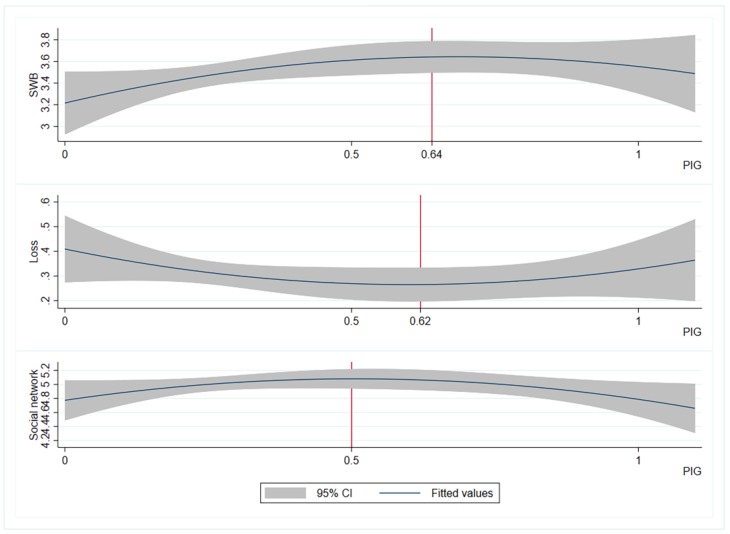
The widespread dissemination of policy information is necessary for the success of the public policy, but the distribution of information among vulnerable groups has received little attention. We examined a public policy that focuses on the poorest people in China, the anti-poverty relocation and settlement program (ARSP). The infrastructure in the region where the policy is implemented is weak, and the information literacy of resettlers is low. This study analyses the impact of the policy information gap on the subjective well-being of resettlers. We found that the distribution of policy information among the poor is uneven, and the resettlers compare the policy information they obtain with a reference group (working-age people and less-educated people in the same village/community) to generate a policy information gap. The policy information gap indirectly affects subjective well-being by affecting the probability that people will be exposed to risks due to policy. As the policy information gap increases, the subjective well-being of resettlers changes in an inverted U-shape. This impact varies significantly among different groups, policy implementation stages, and resettlement methods. Attention should be paid to the information acquisition ability of the vulnerable groups and the welfare effects of social comparison, and to improve the method of publicizing policy information, which helps to improve the well-being of resettlers.
Overview
The claims and statistics of this paper haven’t been checked yet.
Run the check — free, no account needed. It reads the open-access text and checks the sources it cites.
Integrity signals
Registry
Cites
Statistics
Figures
Verification
Claims the paper makes
The claims and statistics of this paper haven’t been checked yet.
Run the check — free, no account needed. It reads the open-access text and checks the sources it cites.
Claims other papers make about this one
Each is checked against this paper’s own text: does it say what the citing paper says it does?
In the citing paper
“residents perceive different degrees of the probability of risk and its potential consequences in the post-disaster resettlement process (both disaster risks and livelihood risks). This has led to social conflicts in the county [53,56].”
From Risk Information Seeking Behavior in Disaster Resettlement: A Case Study of Ankang City, China (2020) · cites this paper as [56]
Self-check
Percentages, sums and reported differences re-computed from the paper’s own numbers.
The self-check needs the paper’s full text.
Citations
Cites
Birds of a Feather: Homophily in Social Networks
McPherson, M., Smith-Lovin, L., & Cook, J. M. (2001) · Annual Review of Sociology · doi:10.1146/annurev.soc.27.1.415 · Cited by 18,567
Relative Income, Happiness, and Utility: An Explanation for the Easterlin Paradox and Other Puzzles
Clark, A. E., Frijters, P., & Shields, M. A. (2008) · Journal of Economic Literature · doi:10.1257/jel.46.1.95 · Cited by 3,159
Satisfaction and comparison income
Clark, A. E., & Oswald, A. J. (1996) · Journal of Public Economics · doi:10.1016/0047-2727(95)01564-7 · Cited by 2,963
Well-Being Over Time in Britain and the USA
Oswald, A. J., & Blanchflower, D. G. (1999) · Cited by 2,799
Income and well-being: an empirical analysis of the comparison income effect
Ada Ferrer-i-carbonell, A. (2004) · Journal of Public Economics · doi:10.1016/j.jpubeco.2004.06.003 · Cited by 1,981
Mass Media Flow and Differential Growth in Knowledge
Tichenor, P. J., Donohue, G. A., & Olien, C. N. (1970) · Public Opinion Quarterly · doi:10.1086/267786 · Cited by 1,537
A literature review of the anchoring effect
Furnham, A., & Boo, H. C. (2011) · The Journal of Socio-Economics · doi:10.1016/j.socec.2010.10.008 · Cited by 1,179
Developing a National Index of Subjective Wellbeing: The Australian Unity Wellbeing Index
Cummins, R. A., Eckersley, R., Pallant, J., van Vugt, J., & Misajon, R. (2003) · Social Indicators Research · doi:10.1023/a:1024704320683 · Cited by 1,061
The happiness–income paradox revisited
Easterlin, R. A., McVey, L. A., Switek, M., Sawangfa, O., & Zweig, J. S. (2010) · Proceedings of the National Academy of Sciences · doi:10.1073/pnas.1015962107 · Cited by 1,009
Income Inequality and Happiness
Oishi, S., Kesebir, S., & Diener, E. (2011) · Psychological Science · doi:10.1177/0956797611417262 · Cited by 869
Research works printed but not linked: 5
- Stone, A.A., and Mackie, C.E. (2013). Subjective Well-Being: Measuring Happiness, Suffering, and Other Dimensions of Experience, National Academies Press.
- Martin, 1974, Editorial Comment: Black English and Black History-Continuing Themes, J. Negro Educ., 43, 263
- Clark, 2009, Economic Satisfaction and Income Rank in Small Neighbourhoods, J. Eur. Econ. Assoc., 7, 519, 10.1162/JEEA.2009.7.2-3.519 · DOI
- Zhao, 2008, Social Network and People’s Wellbeing in Urban and Rural Areas, Society, 28, 1
- Xiaotian, 2008, Resettlement Forms, Interpersonal Communication, and Migrants’ Adaptation: A Comparative Study on the 343 Rural Migrant Households from the Three Gorges that Resettled in the Provinces of Jiangsu and Zhejiang, Society, 28, 152
Cited by
Risk Information Seeking Behavior in Disaster Resettlement: A Case Study of Ankang City, China
Shi, J., Hu, X., Guo, X., & Lian, C. (2020) · International Journal of Environmental Research and Public Health · doi:10.3390/ijerph17197352 · Cited by 17
Metadata
- Authors
- Li, C., & Li, M.
- Affiliations
- School of Economics and Finance, Xi’an Jiaotong University, Xi’an 710061, China
- Venue
- International Journal of Environmental Research and Public Health
- Publisher
- MDPI AG
- Published
- 2020-04-24
- Volume
- 17
- Issue
- 8
- Pages
- 2957
- ISSN
- 1660-4601
- PMC
- PMC7215849
- Cited by
- 12
- References
- 87
- Language
- en
- Funders
- National Natural Science Foundation of China (71673219, 71803149, 71973104)
- the State Key Laboratory of Urban and Regional Ecology of China (SKLURE2019-2-2)
About these checks
Registry, retraction, Cites and statistics results are computed, not judged, with one exception: a printed reference that no index lists is read once by a model before it counts as a citation error. Claims are extracted by a model and kept only when their quote appears verbatim in the text; each cited source is then checked, with a model’s help, for whether it says what the claim relies on. Those verdicts can be wrong — read the claim’s quote and the cited source before relying on one.
Statistics and arithmetic are recomputed, not judged.
Confidence bands are shown only for fields calibrated on our annotated test set. None is calibrated yet, so no band is shown.
What counts as a claim ›How we measure confidence ›How we check this ›
Are you an author, or do you see a problem with this page? Request a review
Data sources
Bibliographic data: Semantic Scholar, OpenAlex, Crossref.
Contains information from the Semantic Scholar Academic Graph Datasets, made available under the ODC Attribution License (ODC-BY 1.0).
Semantic Scholar’s data is described in: Kinney, R., et al. (2023). The Semantic Scholar Open Data Platform. arXiv:2301.10140.
