

A Systematic Review of Job Demands and Resources Associated with Compassion Fatigue in Mental Health Professionals
Open accessThe DOI matches its Crossref record; 123 of the 129 references it cites were found in a registry or an index.
Abstract
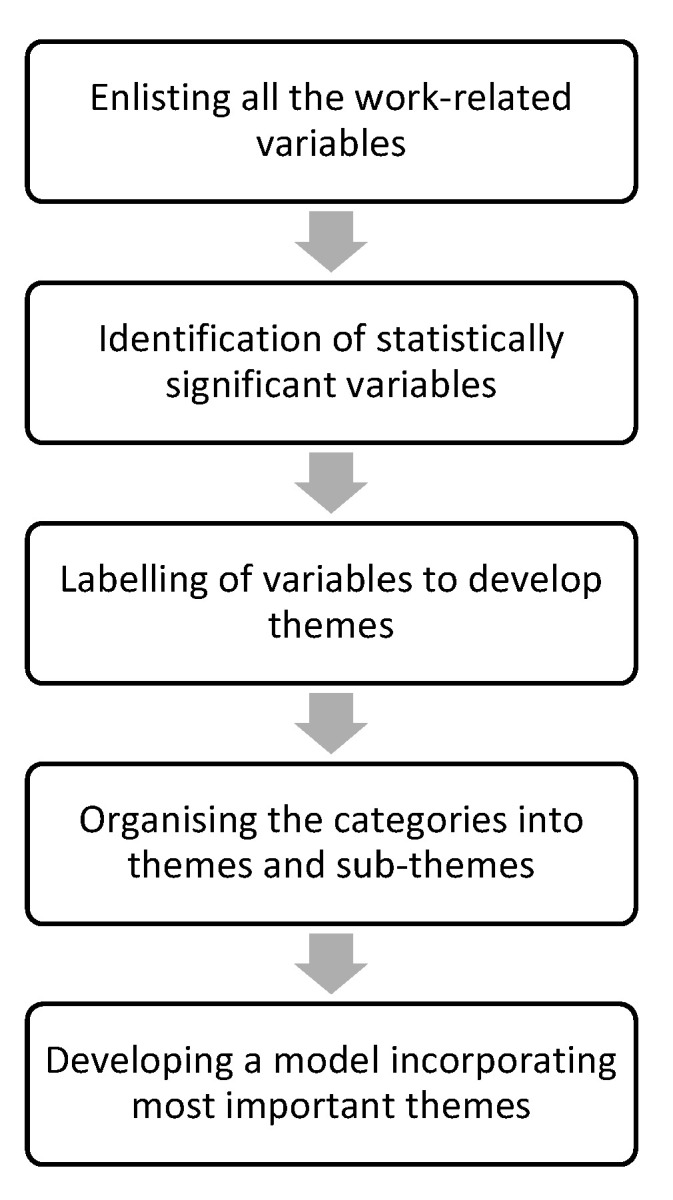
Psychosocial hazards in mental healthcare contribute to the development of compassion fatigue in mental health professionals. Compassion fatigue has a negative impact on the mental health and wellbeing of professionals that can impair the quality of services provided to clients. The majority of research on compassion fatigue has focused on individual-level variables such as gender, history of trauma and age, among others. It is also imperative to understand the role played by alterable work-related characteristics in contributing to the development of compassion fatigue in order to attenuate its impact on mental health professionals and their clients. The present review examined articles exploring work-related factors associated with compassion fatigue. Fifteen quantitative studies were included and their quality was assessed using a checklist. An inductive content-analysis approach was adopted to synthesise the themes emerging from the data. The results suggested a theoretical model consistent with the Job Demands-Resources model, wherein job demands (such as workplace trauma, workload and therapeutic settings) are associated with compassion fatigue, and job resources (such as supervisors’, coworkers’ and organisational support) mitigate the impact of job demands. In addition to person-oriented factors, work-related factors are critical for the prevention of compassion fatigue.
Overview
The claims and statistics of this paper haven’t been checked yet.
Free: it reads the open-access text and checks the first 5 claims that cite a source we can check. Create a free account to check every claim.
Integrity signals
Registry
Cites
Statistics
Figures
Verification
Claims the paper makes
The claims and statistics of this paper haven’t been checked yet.
Free: it reads the open-access text and checks the first 5 claims that cite a source we can check. Create a free account to check every claim.
Claims other papers make about this one
Each is checked against this paper’s own text: does it say what the citing paper says it does?
The source backs part of the claim, not all of it — or backs it for a different population, condition or comparison.
In the citing paper
“One of the most consistent predictors of EBS across healthcare providers is high caseload/client contact [10, 136–138].”
From Interventions to address empathy-based stress in mental health workers: A scoping review and research agenda (2024) · cites this paper as [136]
Experimental — accuracy not yet measuredThe source backs part of the claim, not all of it — or backs it for a different population, condition or comparison.
In the citing paper
“Existing research suggests there are key recurring organisational factors that can lead to EBS, with high caseloads being the most consistent, e.g. Singh et al [136].”
From Interventions to address empathy-based stress in mental health workers: A scoping review and research agenda (2024) · cites this paper as [136]
Experimental — accuracy not yet measuredThe cited source says what the claim attributes to it.
In the citing paper
“Developed by Demerouti and Bakker, the JD-R model is a validated theoretical model showing a pathway between job demands and resources to work-related stress, burnout and compassion fatigue [32] and, inversely, positive and fulfilling engagement in work [34, 35].”
From Paramedics’ perceptions of job demands and resources in Finnish emergency medical services: a qualitative study (2022) · cites this paper as [32]
The cited source says what the claim attributes to it.
In the citing paper
“The use of Job Demands and Resource model was based on strong validation from within the occupational health literature [32, 33].”
From Paramedics’ perceptions of job demands and resources in Finnish emergency medical services: a qualitative study (2022) · cites this paper as [32]
The cited source says what the claim attributes to it.
In the citing paper
“For example [136], demonstrated job-related factors including work environment, workload and workplace trauma were associated with CF in MHWs.”
From Interventions to address empathy-based stress in mental health workers: A scoping review and research agenda (2024) · cites this paper as [136]
Self-check
Percentages, sums and reported differences re-computed from the paper’s own numbers.
The self-check needs the paper’s full text.
Citations
Cites
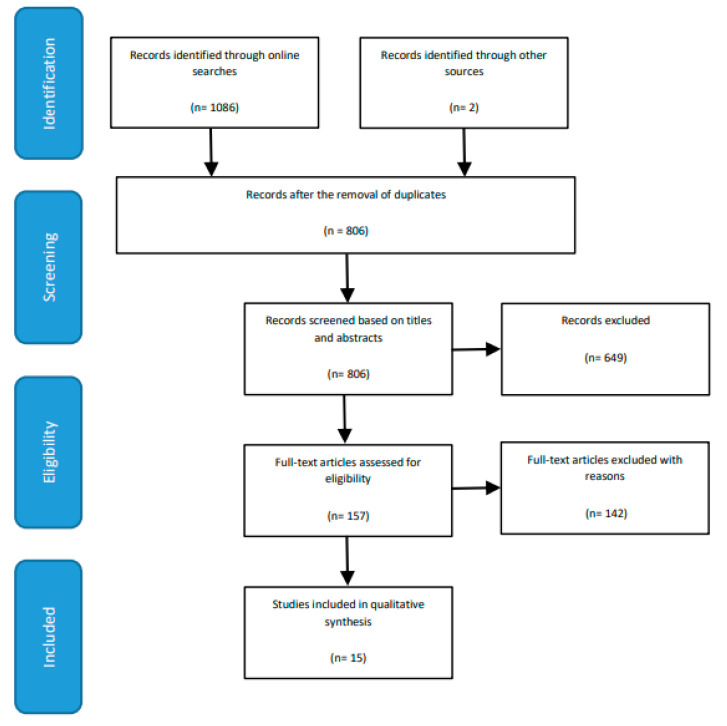
Preferred Reporting Items for Systematic Reviews and Meta-Analyses: the PRISMA statement
Moher, D., Liberati, A., Tetzlaff, J., Altman, D. G., & for the PRISMA Group (2009) · BMJ · doi:10.1136/bmj.b2535 · Cited by 83,823
Podsakoff, P. M., MacKenzie, S. B., Lee, J.-Y., & Podsakoff, N. P. (2003) · Journal of Applied Psychology · doi:10.1037/0021-9010.88.5.879 · Cited by 82,194 · cited 1×
“In addition, all the studies included in the present review adopted a cross-sectional design which inhibits the establishment of causal relationships and temporal order [138], and is vulnerable to common-method variance bias [139].”
BackgroundPreferred Reporting Items for Systematic Reviews and Meta-Analyses: The PRISMA Statement
Moher, D., Liberati, A., Tetzlaff, J., Altman, D. G., & The PRISMA Group (2009) · PLoS Medicine · doi:10.1371/journal.pmed.1000097 · Cited by 64,042 · cited 7×
“In the present review, although the protocol was peer-reviewed, each stage in the PRISMA cycle [62] was carried out independently by a single reviewer (JS).”
BackgroundMethodInfluentialPreferred reporting items for systematic reviews and meta-analyses: the PRISMA Statement.
(2009) · PubMed Central · Cited by 44,859
A guideline of selecting and reporting intraclass correlation coefficients for reliability research
Koo, T. K., & Li, M. Y. (2016) · Journal of Chiropractic Medicine · doi:10.1016/j.jcm.2016.02.012 · Cited by 31,709 · cited 3×
“24, IBM, Armonk, New York, USA) [73] based on a mean rating (k = 3), two-way, mixed effects, consistency multiple raters model [74].”
BackgroundMethodResultInfluentialConservation of resources: A new attempt at conceptualizing stress
Hobfoll, S. E. (1989) · American Psychologist · doi:10.1037/0003-066x.44.3.513 · Cited by 18,187 · cited 2×
“According to the conservation of resources (COR) model [114], threat to personal resources (such as energy or individual traits) propel avoidance or escape behaviour to protect or conserve the existing, depleting repository of resources [114].”
BackgroundMethodThe measurement of experienced burnout
Maslach, C., & Jackson, S. E. (1981) · Journal of Organizational Behavior · doi:10.1002/job.4030020205 · Cited by 14,496 · cited 2×
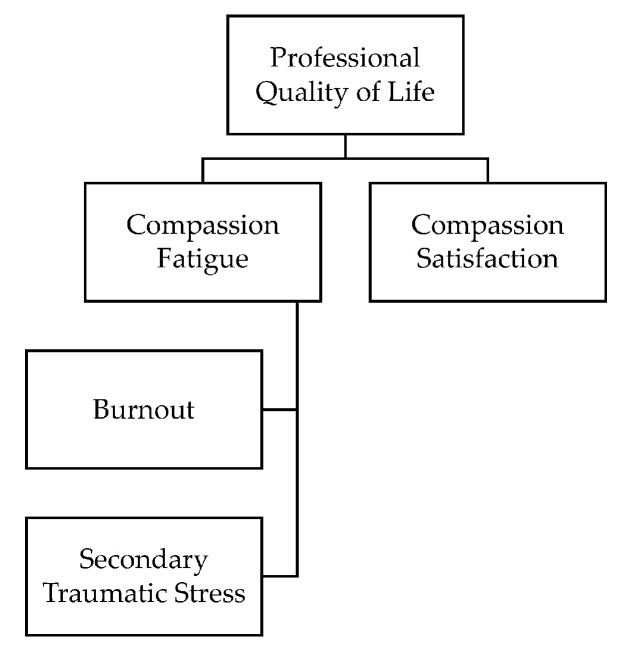
“Burnout involves a feeling of being emotionally drained, a sense of detachment towards the recipients of one’s care and a plummeting sense of competence [15].”
BackgroundThe job demands-resources model of burnout.
Demerouti, E., Bakker, A. B., Nachreiner, F., & Schaufeli, W. B. (2001) · Journal of Applied Psychology · doi:10.1037/0021-9010.86.3.499 · Cited by 13,643 · cited 7×
“These major tenets of the JD-R model [92] have been supported by several empirical studies [93–95] and recently by a meta-analytic review of longitudinal studies based on the model [96].”
MethodResultInfluentialA General Inductive Approach for Analyzing Qualitative Evaluation Data
Thomas, D. R. (2006) · American Journal of Evaluation · doi:10.1177/1098214005283748 · Cited by 10,858 · cited 4×
“In contrast, a deductive approach aims to examine whether the emerging data are consistent with a priori assumptions or established theories or models [75].”
BackgroundMethodInfluentialApplied Longitudinal Data Analysis: Modeling Change and Event Occurrence
Singer, J. D., & Willett, J. B. (2003) · doi:10.1093/acprof:oso/9780195152968.001.0001 · Cited by 10,647
Research works printed but not linked: 13
- Gladding S.T. Counseling: A Comprehensive Profession Pearson New York, NY, USA 2013
- Kohut H. On Empathy Int. J. Psychoanal. Self Psychol. 2010 5 122 131
- Beck A.T. Cognitive Therapy of Depression Guilford Press New York, NY, USA 1979
- Freud S. 1856–1939 The Standard Edition of the Complete Psychological Works of Sigmund Freud: Early Psycho-Analytic Publications. Moses and Monotheism, An Outline of Psycho-Analysis Other Works Vintage London, UK 2001 Volume 23 1937 1939
- Stamm B. Secondary Traumatic Stress: Self-Care Issues for Clinicians, Researchers, and Educators Sidran Press Baltimore, MD, USA 1999
- Mathieu F. Running on empty: Compassion fatigue in health professionals Rehab Community Care Med. 2007 4 1 7
- Singh J. Hassard J. Emotional Labour, Emotional Regulation, and Secondary Traumatic Stress among Allied Mental Health Professionals in the UK: A Pilot Study, Proceedings of the 14th European Academy of Occupational Health Psychology Conference: ‘Promoting Healthy and Sustainable Work’, Cyprus, Cyprus, 2–4 September 2020 European Academy of Occupational Health Psychology Nottingham, UK 2020 188
- Gough D. Oliver S. Thomas J. An Introduction to Systematic Reviews SAGE Los Angeles, CA, USA London, UK 2017
- Leahey T.H. A History of Psychology: Main Currents in Psychological Thought Pearson Prentice Hall Upper Saddle River, NJ, USA 2004
- Kelloway E.K. Francis L. Longitudinal Research and Data Analysis Routledge/Taylor & Francis Group New York, NY, USA 2013 374 394
- D’Oria L. The SAGE Encyclopedia of Industrial and Organizational Psychology 2nd ed. SAGE Publications, Inc. Thousand Oaks, CA, USA 2020 1371 1372
- Vanderplasschen W. De Maeyer J. Theory-Driven Interventions Encyclopedia of Quality of Life and Well-being Research Michalos A.C. Springer The Netherlands 2014 6629 6632 Available online: https://www.springer.com/gp/book/9789400707528 (accessed on 18 August 2020)
- Neuman W.L. Social Research Methods Pearson Boston, MA, USA 2014 1 640
Cited by
Compassion fatigue, burnout and compassion satisfaction among emergency nurses: A path analysis
Yu, H., & Gui, L. (2021) · Journal of Advanced Nursing · doi:10.1111/jan.15034 · Cited by 128
Employee engagement at a private higher education institution during the COVID-19 pandemic
Cassim, N., Botha, C. J., Botha, D., & Bisschoff, C. (2023) · Boloka Institutional Repository (North-west University) · doi:10.4102/sajhrm · Cited by 93
Marzocchi, I., Nielsen, K. M., Tecco, C. D., Vignoli, M., Ghelli, M., Ronchetti, M., & Iavicoli, S. (2024) · Work & Stress · doi:10.1080/02678373.2024.2308812 · Cited by 65
“Finally, Singh et al. (2020) explored which are the key JDs (workplace trauma, workload and setting) and JRs for the onset or prevention of compassion fatigue among mental health professionals.”
Sangal, R. B., Bray, A., Reid, E. A., Ulrich, A. S., Liebhardt, B., Venkatesh, A. K., & King, M. D. (2021) · Healthcare · doi:10.1016/j.hjdsi.2021.100577 · Cited by 67
Whitt‐Woosley, A., Sprang, G., & Eslinger, J. G. (2021) · Child Abuse & Neglect · doi:10.1016/j.chiabu.2021.105444 · Cited by 52
Metadata
- Authors
- Singh, J., Karanika-Murray, M., Baguley, T., & Hudson, J.
- Affiliations
- Nottingham Trent University (GB)
- Department of Psychology, School of Social Sciences, Nottingham Trent University, Nottingham NG1 4FQ, UK
- Corresponding author
- Singh, Jasmeet
- Venue
- International Journal of Environmental Research and Public Health
- Publisher
- MDPI AG
- Published
- 2020-09-24
- Volume
- 17
- Issue
- 19
- Pages
- 6987
- ISSN
- 1660-4601 (ISSN-L)
- PMC
- PMC7579573
- OpenAlex
- W3088079406
- Cited by
- 132
- References
- 129
- Citations by year
- 2026: 20 · 2025: 38 · 2024: 31 · 2023: 23 · 2022: 11 · 2021: 9
- FWCI
- 1.73
- Type
- journal article
- Language
- en
- Open access
- gold
- doi.org
- Licence
- Locations
- International Journal of Environmental Research and Public Health (publishedVersion, cc-by)
- PubMed Central (publishedVersion, cc-by)
- PubMed (publishedVersion)
- Nottingham Trent University's Institutional Repository (Nottingham Trent Repository) (acceptedVersion)
- RePEc: Research Papers in Economics (submittedVersion)
- DOAJ (DOAJ: Directory of Open Access Journals) (submittedVersion, cc-by-sa)
- Topics
- Social Sciences › Psychology › Social Psychology › Stress and Burnout Research
- Health Sciences › Medicine › Public Health, Environmental and Occupational Health › Occupational Health and Burnout
- Health Sciences › Health Professions › General Health Professions › Healthcare professionals’ stress and burnout
- Keywords
- compassion fatigue, mental health professionals, job demands-resources model, workplace trauma, workload, organizational support, supervisor support, coworker support, psychosocial risks, employee well-being
- MeSH terms
- Compassion Fatigue, Burnout, Professional, Child, Female, Health Personnel, Humans, Job Satisfaction, Male, Mental Health, Quality of Life, Surveys and Questionnaires, Workplace
About these checks
Registry, retraction, Cites and statistics results are computed, not judged, with one exception: a printed reference that no index lists is read once by a model before it counts as a citation error. Claims are extracted by a model and kept only when their quote appears verbatim in the text; each cited source is then checked, with a model’s help, for whether it says what the claim relies on. Those verdicts can be wrong — read the claim’s quote and the cited source before relying on one.
Statistics and arithmetic are recomputed, not judged.
Confidence bands are shown only for fields calibrated on our annotated test set. None is calibrated yet, so no band is shown.
What counts as a claim ›How we measure confidence ›How we check this ›
Are you an author, or do you see a problem with this page? Request a review
Data sources
Bibliographic data: Semantic Scholar, OpenAlex, Crossref.
Contains information from the Semantic Scholar Academic Graph Datasets, made available under the ODC Attribution License (ODC-BY 1.0).
Semantic Scholar’s data is described in: Kinney, R., et al. (2023). The Semantic Scholar Open Data Platform. arXiv:2301.10140.
