

Effect of Different Exercise Methods on Non-Alcoholic Fatty Liver Disease: A Meta-Analysis and Meta-Regression
Open accessThe DOI matches its Crossref record; 28 of the 28 references it cites were found in a registry or an index.
Abstract
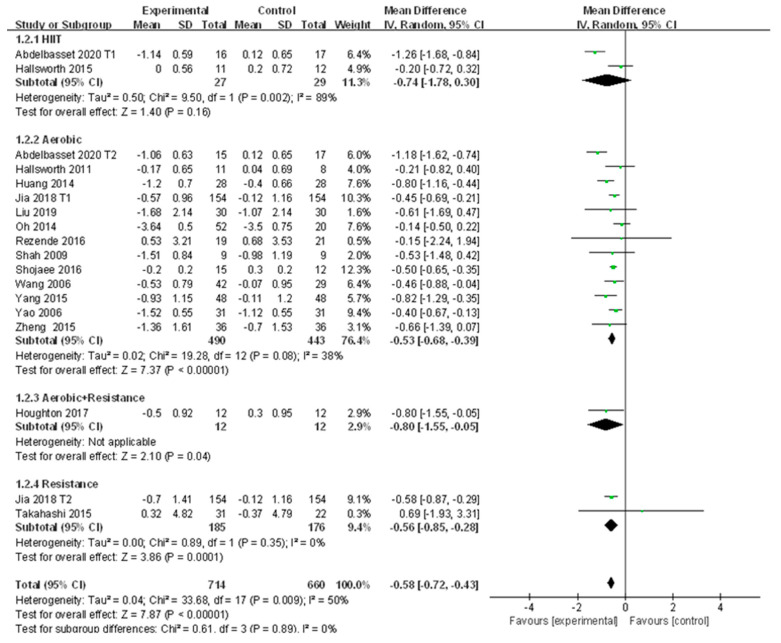
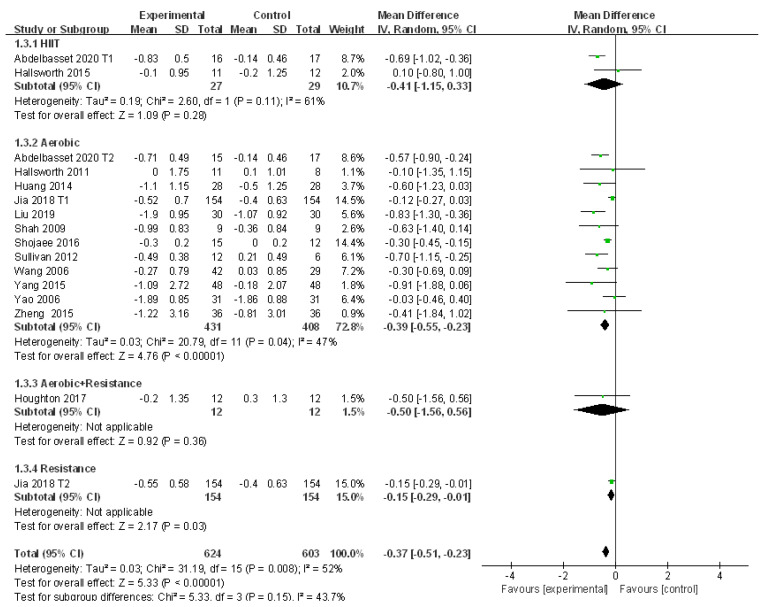
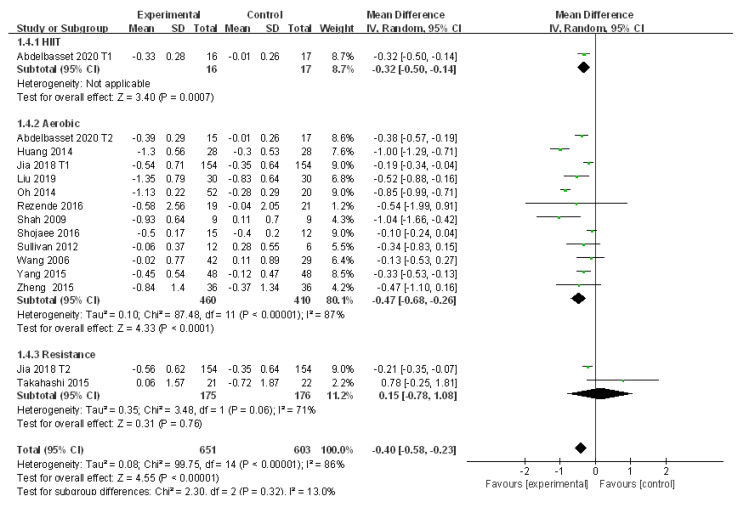
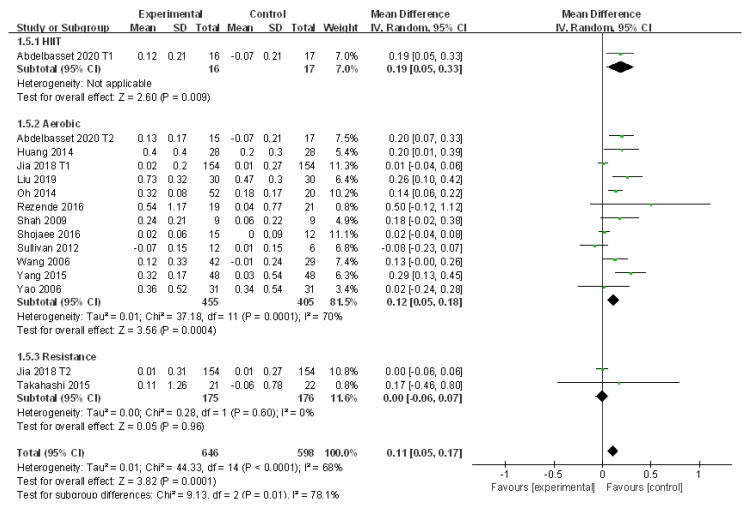
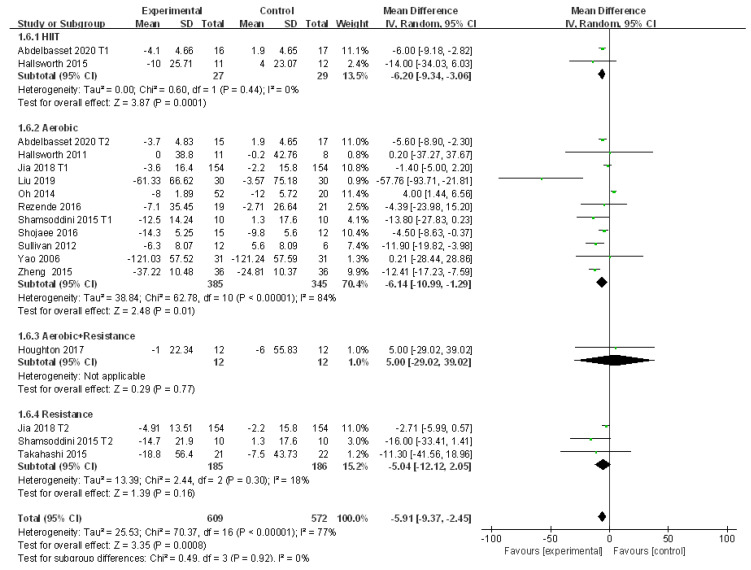
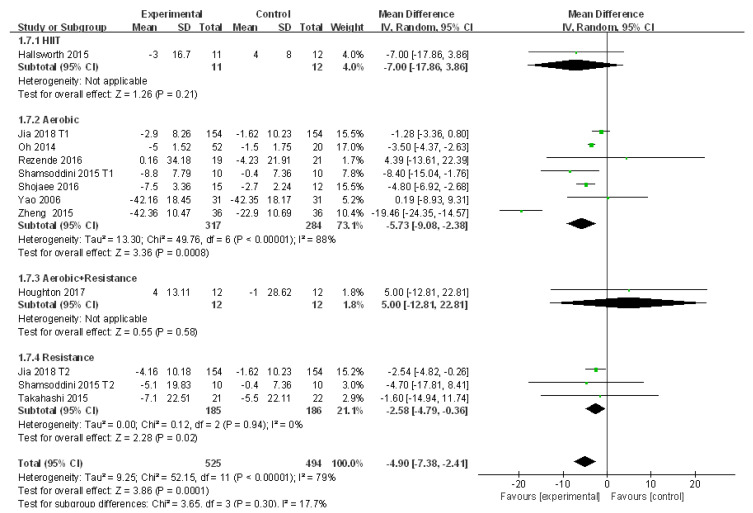
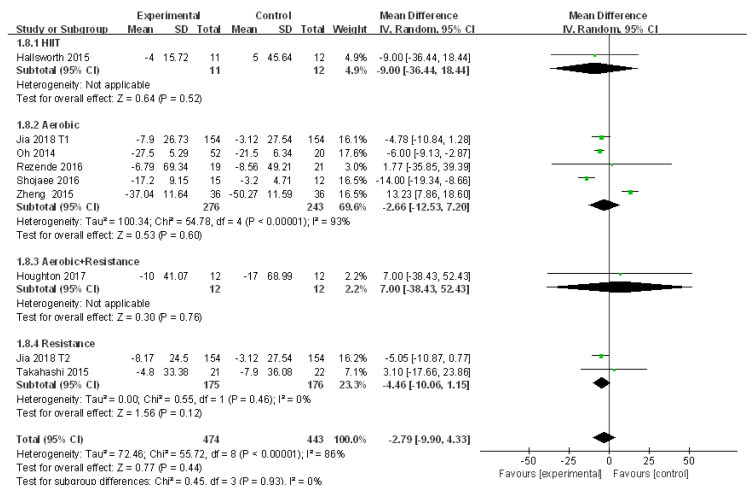
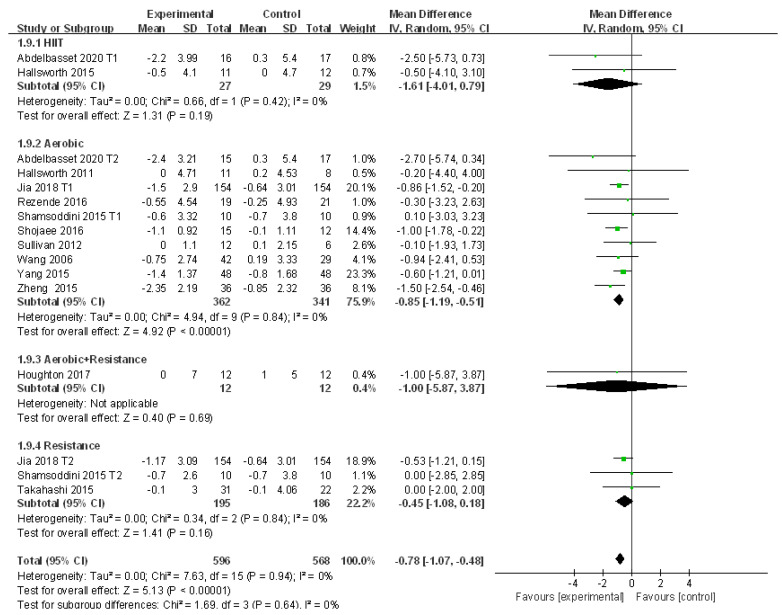
Exercise could alleviate non-alcoholic fatty liver disease (NAFLD), but it was not clear which exercise methods could effectively treat NAFLD. The purpose of this systematic review and meta-analysis was to evaluate the effects of different exercise patterns on eight indicators in patients with NAFLD. We searched PubMed, Scopus, Web of Science, China National Knowledge Infrastructure, and the Wanfang Data from its inception to 30 June 2020. This review includes all randomized controlled trials (RCT) that assessed and compared the effects of different exercise on eight indicator parameters in patients with NAFLD. The results indicate that aerobic exercises could significantly improve the eight indicators in patients with NAFLD including triglycerides (TG, weighted mean difference (WMD) = −0.53, 95%CI: −0.68~−0.39, Z = 7.37, p < 0.01), total cholesterol (TC, WMD = −0.39, 95%CI: −0.55~−0.23, Z = 4.76, p < 0.01), low density lipoprotein (LDL, WMD = −0.47, 95%CI: −0.68~−0.26, Z = 4.33, p < 0.01), high density lipoprotein (HDL, WMD = 0.12, 95%CI: 0.05~0.18, Z = 3.56, p < 0.01), alanine aminotransferase (ALT, WMD = −6.14, 95%CI: −10.99~−1.29, Z = 2.48, p < 0.05), aspartate aminotransferase (AST, WMD = −5.73, 95%CI: −9.08~−2.38, Z = 3.36, p < 0.01), and body mass index (BMI, WMD = −0.85, 95%CI: −1.19~−0.51, Z = 4.92, p < 0.01). Resistance exercises could significantly reduce the levels of TG (WMD = −0.56, 95%CI: −0.85~−0.28, Z = 3.86, p < 0.01) and AST (WMD = −2.58, 95%CI: −4.79~−0.36, Z = 2.28, p < 0.05) in the patients. High-intensity interval training could significantly improve the level of ALT (WMD = −6.20, 95%CI: −9.34~−3.06, Z = 3.87, p < 0.01) in patients with NAFLD. These three exercise methods had different effects on the eight indexes of NAFLD in our present meta-analysis, providing some reference for the establishment of exercise prescription for patients with NAFLD.
Overview
The claims and statistics of this paper haven’t been checked yet.
Free: it reads the open-access text and checks the first 5 claims that cite a source we can check. Create a free account to check every claim.
Integrity signals
Registry
Cites
Statistics
Figures
Verification
Claims the paper makes
The claims and statistics of this paper haven’t been checked yet.
Free: it reads the open-access text and checks the first 5 claims that cite a source we can check. Create a free account to check every claim.
Claims other papers make about this one
Each is checked against this paper’s own text: does it say what the citing paper says it does?
The cited source says what the claim attributes to it.
In the citing paper
“Similarly, the evidence surrounding exercise interventions for MASLD remains heterogeneous.”
Self-check
Percentages, sums and reported differences re-computed from the paper’s own numbers.
The self-check needs the paper’s full text.
Citations
Cites
PRISMA-P Group, Moher, D., Shamseer, L., Clarke, M., Ghersi, D., Liberati, A., Petticrew, M., Shekelle, P., & Stewart, L. A. (2015) · Systematic Reviews · doi:10.1186/2046-4053-4-1 · Cited by 26,223
Cochrane Handbook for Systematic Reviews of Interventions
(2019) · doi:10.1002/9781119536604 · Cited by 14,828
Cumpston, M., Li, T., Page, M. J., Chandler, J., Welch, V. A., Higgins, J. P., & Thomas, J. (2019) · Cochrane Database of Systematic Reviews · doi:10.1002/14651858.ed000142 · Cited by 7,218 · cited 1×
“tion was performed regarding randomization methods, allocation concealment, blinding of patients and physicians, outcome evaluations, the integrality of data, selective reporting, and other sources of bias [13].”
MethodChalasani, N., Younossi, Z., Lavine, J. E., Diehl, A. M., Brunt, E. M., Cusi, K., Charlton, M., & Sanyal, A. J. (2012) · Hepatology · doi:10.1002/hep.25762 · Cited by 3,803
Estes, C., Anstee, Q. M., Arias-Loste, M. T., Bantel, H., Bellentani, S., Caballeria, J., Colombo, M., Craxi, A., Crespo, J., Day, C. P., et al. (2018) · Journal of Hepatology · doi:10.1016/j.jhep.2018.05.036 · Cited by 1,980 · cited 1×
“By then, NAFLD will be the largest burden in the control and prevention of chronic diseases [4].”
BackgroundEpidemiological Features of NAFLD From 1999 to 2018 in China
Zhou, J., Zhou, F., Wang, W., Zhang, X., Ji, Y., Zhang, P., She, Z., Zhu, L., Cai, J., & Li, H. (2020) · Hepatology · doi:10.1002/hep.31150 · Cited by 678
Exercise and non-alcoholic fatty liver disease: A systematic review and meta-analysis
Keating, S. E., Hackett, D. A., George, J., & Johnson, N. A. (2012) · Journal of Hepatology · doi:10.1016/j.jhep.2012.02.023 · Cited by 537 · cited 1×
“A previous study revealed that exercise could effectively reduce levels of liver fat and serum alanine aminotransferase (ALT), which is an efficacious treatment for NAFLD with low expense and high cost-effectiveness [8].”
BackgroundHallsworth, K., Fattakhova, G., Hollingsworth, K. G., Thoma, C., Moore, S., Taylor, R., Day, C. P., & Trenell, M. I. (2011) · Gut · doi:10.1136/gut.2011.242073 · Cited by 529
Sullivan, S., Kirk, E. P., Mittendorfer, B., Patterson, B. W., & Klein, S. (2012) · Hepatology · doi:10.1002/hep.25548 · Cited by 301
Orci, L. A., Gariani, K., Oldani, G., Delaune, V., Morel, P., & Toso, C. (2016) · Clinical Gastroenterology and Hepatology · doi:10.1016/j.cgh.2016.04.036 · Cited by 209 · cited 1×
“However, considering individual heterogeneity remains a challenge to developing appropriate exercise prescriptions for patients with NAFLD [29].”
Background
Research works printed but not linked: 6
- Shu J.R. Li A.Q. Liu Q. Epidemiology of nonalcoholic fatty liver disease and related risk factors J. Clin. Hepatol. 2019 35 2085 2090
- Zheng Y.C. Jia W. Research progress of exercise prescription for nonalcoholic fatty liver disease Occup. Health 2020 36 569 572
- Huang K. Lu H.Y. Yang J.Q. Exercise therapy combined with dietary regulation on fatty liver effect of lowering blood pressure and regulating lipid in patients with hypertension Chin. Hepatol. 2014 19 525 527
- Liu F. Effects of aerobic exercise on liver function and blood lipids in patients with non-alcoholic fatty liver effect analysis Chin. Foreign Med Res. 2019 17 147 148 10.14033/j.cnki.cfmr.2019.10.072 · doi:10.14033/j.cnki.cfmr.2019.10.072
- Yang Y.H. Wang F.L. Mao J.J. Comprehensive exploration on the effectiveness of aerobic exercise for patients with non-alcoholic fatty liver Mod. Pract. Med. 2015 27 1055 1057 10.3969/j.issn.1671-0800.2015.08.045 · doi:10.3969/j.issn.1671-0800.2015.08.045
- Zheng Y.C. Chen L. Lu F.L. Yan Q.Q. Observation of the clinical effect of exercise therapy on non-alcoholic fatty liver Chin. Hepatol. 2015 20 51 53
Cited by
Lifestyle interventions in nonalcoholic fatty liver disease
Younossi, Z. M., Zelber-Sagi, S., Henry, L., & Gerber, L. H. (2023) · Nature Reviews Gastroenterology & Hepatology · doi:10.1038/s41575-023-00800-4 · Cited by 281
“…in liver enzymes, serum levels and liver inflammation, further research is needed (studies with longer-term follow-up) to determine the effects of physical activity on the regression of fibrosis, as fibrosis in NAFLD is dynamic and can regress and progress differently between patients 131,137 .”
BackgroundMethodKeating, S. E., Sabag, A., Hallsworth, K., Hickman, I. J., Macdonald, G. A., Stine, J. G., George, J., & Johnson, N. A. (2023) · Sports Medicine · doi:10.1007/s40279-023-01918-w · Cited by 119
“Specific to the included reviews (in MAFLD populations), the available evidence appears to demonstrate that regular exercise improves BMI by a small amount in people with MAFLD or related populations reporting liver outcomes [55, 64, 70–74, 121, 123, 126].”
InfluentialPοlyzos, S. A., Kechagias, S., & Tsochatzis, E. A. (2021) · Alimentary Pharmacology & Therapeutics · doi:10.1111/apt.16575 · Cited by 99
Yin, C., Li, Z., Xiang, Y., Peng, H., Yang, P., Yuan, S., Zhang, X., Wu, Y., Huang, M., & Li, J. (2021) · Frontiers in Nutrition · doi:10.3389/fnut.2021.709683 · Cited by 74
Xue, Y., Peng, Y., Zhang, L., Ba, Y., Jin, G., & Liu, G. (2024) · Scientific Reports · doi:10.1038/s41598-024-51470-4 · Cited by 61
“Many studies have shown that exercise intervention is effective for NAFLD patients 22,74,75 .”
Background
Metadata
- Authors
- Xiong, Y., Peng, Q., Cao, C., Xu, Z., & Zhang, B.
- Affiliations
- Tsinghua University (CN)
- Huaihua University (CN)
- Corresponding author
- Zhang, Bing
- Venue
- International Journal of Environmental Research and Public Health
- Publisher
- MDPI AG
- Published
- 2021-03-21
- Volume
- 18
- Issue
- 6
- Pages
- 3242
- ISSN
- 1660-4601 (ISSN-L)
- PMC
- PMC8004001
- OpenAlex
- W3136096993
- Cited by
- 53
- References
- 28
- Citations by year
- 2026: 9 · 2025: 12 · 2024: 10 · 2023: 13 · 2022: 6 · 2021: 3
- FWCI
- 1.22
- Type
- journal article
- Language
- en
- Open access
- gold
- doi.org
- Licence
- Locations
- International Journal of Environmental Research and Public Health (publishedVersion, cc-by)
- PubMed Central (publishedVersion, cc-by)
- PubMed (publishedVersion)
- RePEc: Research Papers in Economics (submittedVersion)
- DOAJ (DOAJ: Directory of Open Access Journals) (submittedVersion)
- Funders
- The Ministry of Education of the People’s Republic of China (20194180050)
- Topics
- Health Sciences › Medicine › Hepatology › Liver Disease Diagnosis and Treatment
- Health Sciences › Medicine › Public Health, Environmental and Occupational Health › Physical Activity and Health
- Health Sciences › Medicine › Pathology and Forensic Medicine › Alcohol Consumption and Health Effects
- Keywords
- non-alcoholic fatty liver disease, exercise therapy, aerobic exercise, resistance training, lipid profile, alanine aminotransferase, aspartate aminotransferase, body mass index, triglycerides, total cholesterol, HDL cholesterol, LDL cholesterol, liver enzymes, NAFLD progression, NAFLD severity
- MeSH terms
- Alanine Transaminase, Aspartate Aminotransferases, China, Humans, Exercise, Non-alcoholic Fatty Liver Disease
About these checks
Registry, retraction, Cites and statistics results are computed, not judged, with one exception: a printed reference that no index lists is read once by a model before it counts as a citation error. Claims are extracted by a model and kept only when their quote appears verbatim in the text; each cited source is then checked, with a model’s help, for whether it says what the claim relies on. Those verdicts can be wrong — read the claim’s quote and the cited source before relying on one.
Statistics and arithmetic are recomputed, not judged.
Confidence bands are shown only for fields calibrated on our annotated test set. None is calibrated yet, so no band is shown.
What counts as a claim ›How we measure confidence ›How we check this ›
Are you an author, or do you see a problem with this page? Request a review
Data sources
Bibliographic data: Semantic Scholar, OpenAlex, Crossref.
Contains information from the Semantic Scholar Academic Graph Datasets, made available under the ODC Attribution License (ODC-BY 1.0).
Semantic Scholar’s data is described in: Kinney, R., et al. (2023). The Semantic Scholar Open Data Platform. arXiv:2301.10140.
