

The Evolution of Balanced Scorecard in Healthcare: A Systematic Review of Its Design, Implementation, Use, and Review
Open accessThe DOI matches its Crossref record; 93 of the 103 references it cites were found in a registry or an index; 36 of the 99 sources its claims cite were checked for support.
Abstract
During the last few years, the interest in performance measurement increased within the healthcare sector. Due to the COVID-19 pandemic, healthcare systems needed to boost performance measurement systems to become more resilient and improve their capability in monitoring key performance indicators. Since the 1990s, the Balanced Scorecard (BSC) model has been widely used among private and public organizations as it is the most adopted model to measure performance. The current paper aims at understanding the evolution of BSC in healthcare. The systematic literature review has been carried out by searching keywords according to PRISMA guidelines. By analyzing papers through one classification of BSC adoption phases, the results reveal that studies focused mainly on the BSC design process, rather than BSC implementation, use, or review. However, there is no agreement about the perspectives to be adopted in healthcare. Concerning BSC implementation and use, on one side especially leadership, culture and communication enable the BSC implementation. On the other side, monitoring and strategic decision-making are the most widespread objectives for using BSC. Concerning BSC review, however, the paper highlights a need for additional research. Finally, the paper provides further research opportunities concerning the phases suitable for implementing a BSC in healthcare.
Overview
CoChat Summary
## TL;DR
This systematic review maps how balanced scorecard (BSC) research in healthcare evolved across four adoption phases: design, implementation, use, and review. Across 40 included papers, the literature is still dominated by BSC design, with comparatively little explicit work on implementation, use, and especially review.
## Key findings
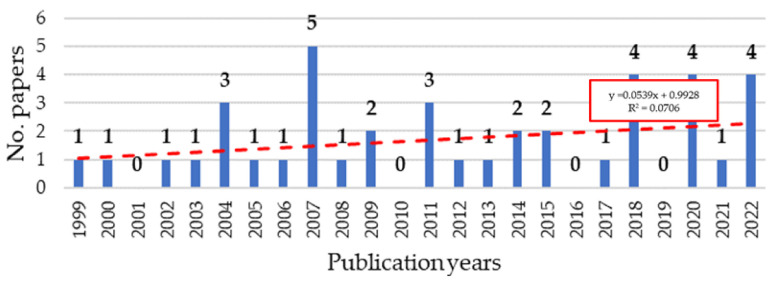
- The review included 40 papers from 1999 to 2022; 34 of the 40 focused on BSC design, and only 5 papers explicitly included BSC review.
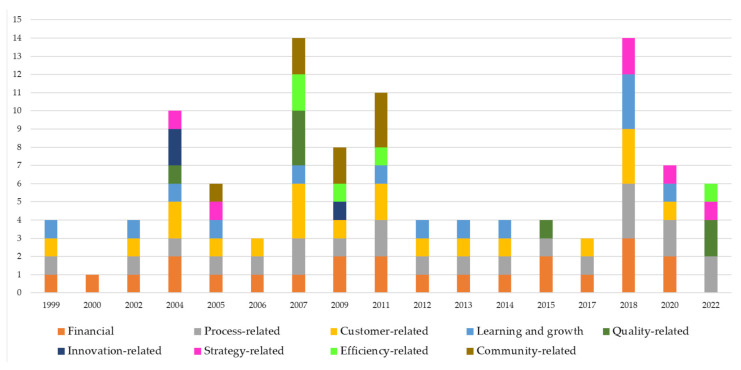
- The financial, customer, process, and learning/growth perspectives remained the main BSC design lenses; the paper says 30 of the studies recognized these four perspectives as the most suitable for BSC implementation, and financial was still the most analyzed.
- On implementation, the main drivers were communication, leadership support, and training; on the barrier side, leadership and organizational culture could also hinder adoption if commitment, participation, or culture were weak.
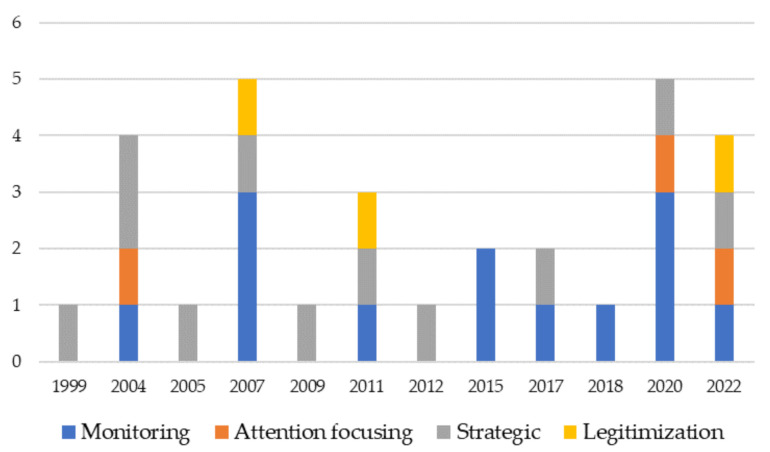
- For BSC use, the paper identifies monitoring and strategic decision-making as the most widespread uses; it reports 13 papers concerning monitoring and 11 concerning strategic decision-making.
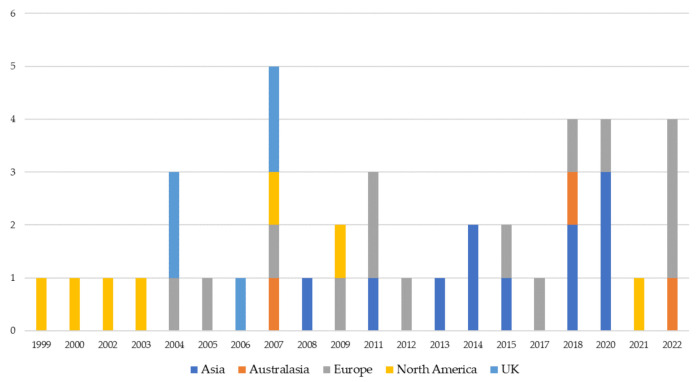
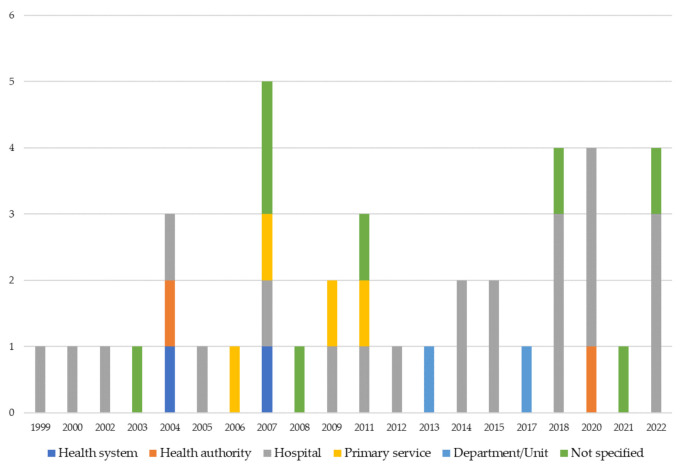
- The hospital level dominated the evidence base: papers focused on hospitals represented 55% of the total, and 28 papers considered public services.
## Methods
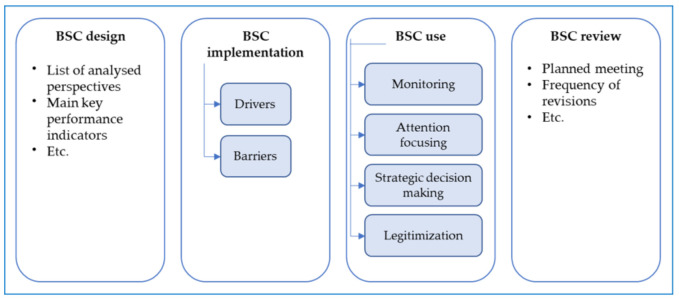
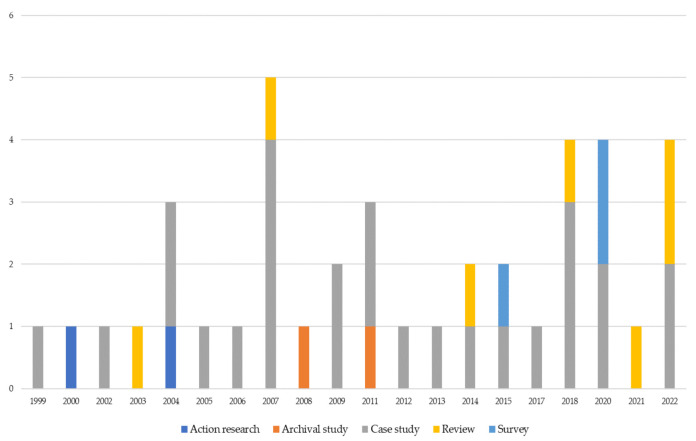
- Design: Systematic literature review guided by PRISMA, using Bourne et al.’s BSC adoption phases: design, implementation, use, review.
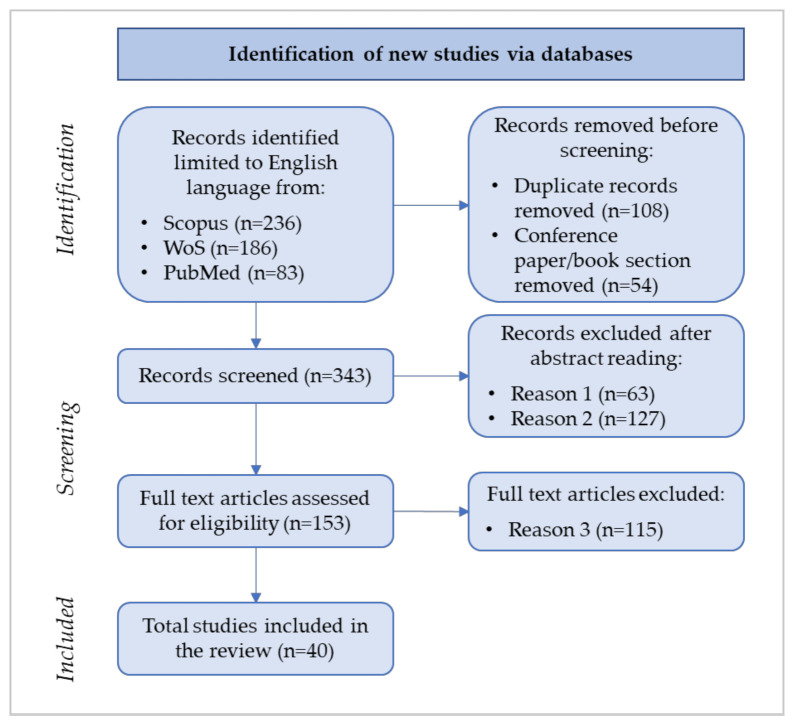
- Data/sample: Searches were run in Scopus, Web of Science, and PubMed in April 2022, limited to English-language journal papers; the final sample was 40 selected papers.
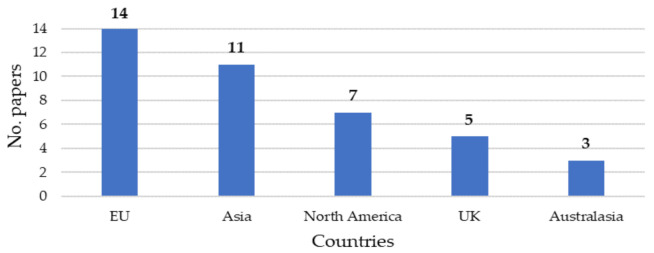
- Analysis: The authors extracted publication year, country, methodology, typology of service, and unit of analysis, then analyzed the papers by BSC phase and summarized patterns descriptively.
## Limitations
- The paper states that limiting the search to keywords in Scopus and Web of Science and title-only in PubMed “has limited the results.”
- It also states that including only scientific journals may introduce an academic bias.
- Evidence from the text also suggests a limitation: several implementation/use factors were mentioned only in a few papers, and many papers did not explicitly state how BSC was used, which the authors note makes those phases hard to assess.
Model-written summary. Check it against the paper before relying on it.
Integrity signals
Registry
Cites
Statistics
Figures
Verification
Claims the paper makes
22 Valid · 4 Not valid · 28 Not checked · 62 Own results and interpretations
Some cited sources support this claim and some don’t — read each source’s verdict below.
In the paper
“However, even if healthcare organizations need to fulfil government constraints about budget, expenditures, costs, etc. [50,68,84], the financial perspective is not at the top of BSC perspectives.”
§ The Evolution of Balanced Scorecard in Healthcare: A Systematic Review of Its Design, Implementation, Use, and Review > 3. Results > 3.2. The BSC Phases
What the sources say
- Supportedcites [50] Catuogno S. Arena C. Saggese S. Sarto F. Balanced Performance Measurement in Research Hospitals: The Participative Case Study of a Haematology Department BMC Health Serv. Res. 2017 17 522 10.1186/s12913-017-2479-6 28774295 PMC5543732 source
In Results (‘The development of the BSC for research hospitals’), the authors say they placed the stakeholder perspective, rather than the financial perspective, at the top of their BSC. The Discussion reiterates that positioning. They distinguish this adapted healthcare BSC from the traditional formulation, which places finance at the top. (LLM, conf=0.91)
- Supportedcites [68] Aujirapongpan S. Meesook K. Theinsathid P. Maneechot C. Performance Evaluation of Community Hospitals in Thailand: An Analysis Based on the Balanced Scorecard Concept Iran. J. Public Health 2020 49 906 10.18502/ijph.v49i5.3207 32953678 PMC7475617 source
The Materials and Methods section says that for government and nonprofit organisations, financial success is not the main objective, so the original BSC arrangement with the financial perspective at the top is difficult to apply. It says the customer perspective should instead be placed at the top. The source supports the claim in this healthcare and nonprofit context. (LLM, conf=0.90)
- Disputedcites [84] Gao H. Chen H. Feng J. Qin X. Wang X. Liang S. Zhao J. Feng Q. Balanced Scorecard-Based Performance Evaluation of Chinese County Hospitals in Underdeveloped Areas J. Int. Med. Res. 2018 46 1947 1962 10.1177/0300060518757606 29562812 PMC5991253 sourceExperimental — accuracy not yet measured
The Discussion section (“Analysis of performance evaluation indicator system”; page unavailable) explicitly ranks the BSC perspectives by weight as Financial > Internal Business Process > Customer > Learning and Growth. Financial is therefore at the top in this paper’s evaluation, contrary to the attributed claim. (LLM, conf=0.94)
Checked by a reasoning model — may be wrong.
plain- Asserted: passes — The authors put it forward as true.
- Checkable: passes — It can be checked against evidence.
- Load-bearing: unclear — It is unclear whether the paper’s conclusions depend on it.
- Based: passes — The paper gives a reason why it holds.
- Supported
The cited sources support only part of this claim — read each source’s verdict below.
In the paper
“only a few research explicitly emphasizes how organizations use BSC [42,48] according to the adopted classification of BSC usage [49].”
§ The Evolution of Balanced Scorecard in Healthcare: A Systematic Review of Its Design, Implementation, Use, and Review > 1. Introduction
What the sources say
- Partly supportedcites [42] Bassani G. Leardini C. Campedelli B. Moggi S. The Dynamic Use of a Balanced Scorecard in an Italian Public Hospital Int. J. Health Plann. Manag. 2022 37 1781 1798 10.1002/hpm.3440 PMC9307018 35187699 sourceExperimental — accuracy not yet measured
The Introduction (page unavailable) says most BSC studies in healthcare focus on design and implementation, leaving little description of how the system works in practice. That supports the claim for healthcare organizations, but the cited paper does not establish the same scarcity across organizations generally. (LLM, conf=0.82)
- Not checked — no full text of the sourcecites [48] Chang L. The NHS Performance Assessment Framework as a Balanced Scorecard Approach: Limitations and Implications Int. J. Public Sect. Manag. 2007 20 101 117 10.1108/09513550710731472 source
- Not checked — no full text of the sourcecites [49] Henri J. Organisational Culture and Performance Measurement System Account. Organ. Soc. 2006 31 77 103 10.1016/j.aos.2004.10.003 source
plain- Asserted: passes — The authors put it forward as true.
- Checkable: passes — It can be checked against evidence.
- Load-bearing: passes — The paper’s conclusions depend on it.
- Based: passes — The paper gives a reason why it holds.
- Partly supported
The sources with a verdict support this claim; the rest weren’t checked yet, have no full text we could read, or their verdicts aren’t rated yet.
In the paper
“The traditional BSC perspectives [32] are not always able to catch the new needs, such as the environmental dimension [41], or integrated care and humanization [42].”
§ The Evolution of Balanced Scorecard in Healthcare: A Systematic Review of Its Design, Implementation, Use, and Review > 1. Introduction
What the sources say
- Not checked yetcites [32] Kaplan R. Norton D. The Balanced Scorecard-Measures That Drive Performance Harv. Bus. Rev. 1992 70 71 79 10119714
- Not checked — no full text of the sourcecites [41] Khalid S.K. Beattie C. Sands J.S. Barriers and Motivations to Integrating Environmental Performance in the BSC: A Case Study in Health Care Sustain. Account. Manag. Policy J. 2021 13 297 319 10.1108/SAMPJ-09-2020-0325 source
- Supportedcites [42] Bassani G. Leardini C. Campedelli B. Moggi S. The Dynamic Use of a Balanced Scorecard in an Italian Public Hospital Int. J. Health Plann. Manag. 2022 37 1781 1798 10.1002/hpm.3440 PMC9307018 35187699 source
In the IUH case findings, Table 4 shows that the hospital expanded its BSC from four perspectives to seven, adding integrated care processes and humanization. This supports the example attached to this source’s citation; the environmental dimension is attached to a different citation in the citing sentence. Our copy provides no page number for Table 4. (LLM, conf=0.90)
hedged- Asserted: passes — The authors put it forward as true.
- Checkable: passes — It can be checked against evidence.
- Load-bearing: passes — The paper’s conclusions depend on it.
- Based: passes — The paper gives a reason why it holds.
The cited sources support only part of this claim — read each source’s verdict below.
In the paper
“The financial perspective has been adopted by most of the studies that focus on BSC design [50,68,69,77].”
§ The Evolution of Balanced Scorecard in Healthcare: A Systematic Review of Its Design, Implementation, Use, and Review > 3. Results > 3.2. The BSC Phases
What the sources say
- Partly supportedcites [50] Catuogno S. Arena C. Saggese S. Sarto F. Balanced Performance Measurement in Research Hospitals: The Participative Case Study of a Haematology Department BMC Health Serv. Res. 2017 17 522 10.1186/s12913-017-2479-6 28774295 PMC5543732 sourceExperimental — accuracy not yet measured
The Results section (page not provided) says the traditional BSC places the economic and financial dimension at the top. The Discussions and conclusions section (page not provided) also describes healthcare BSC designs with a financial quadrant. These passages support the use of a financial perspective, but do not establish that most studies of BSC design adopted it. (LLM, conf=0.82)
- Partly supportedcites [68] Aujirapongpan S. Meesook K. Theinsathid P. Maneechot C. Performance Evaluation of Community Hospitals in Thailand: An Analysis Based on the Balanced Scorecard Concept Iran. J. Public Health 2020 49 906 10.18502/ijph.v49i5.3207 32953678 PMC7475617 sourceExperimental — accuracy not yet measured
The Introduction describes the financial perspective as one of the standard BSC perspectives, and Materials and Methods includes financial indicators in this study’s BSC. The paper does not establish that most studies focused on BSC design adopted that perspective. (LLM, conf=0.82)
- Partly supportedcites [69] Pham C.D. VU S.T. Pham Y.T.K. Vu N.T. Evaluating Performance of Vietnamese Public Hospitals Based on Balanced Scorecard J. Asian Financ. Econ. Bus. 2020 7 339 349 10.13106/jafeb.2020.vol7.no6.339 sourceExperimental — accuracy not yet measured
The Literature Review identifies Finance as one of the four standard BSC perspectives and says many studies apply that model. It does not establish that most studies focused on BSC design adopt the financial perspective; its discussion concerns applications rather than a count of design studies. Page numbers are not available in our copy. (LLM, conf=0.84)
- Partly supportedcites [77] Rahimi H. Bahmaei J. Shojaei P. Kavosi Z. Khavasi M. Developing a Strategy Map to Improve Public Hospitals Performance with Balanced Scorecard and Dematel Approach J. DEMO Neoscriber V3 Single 2018 19 e64056 10.5812/semj.64056 sourceExperimental — accuracy not yet measured
The Background identifies financial as one of the four BSC perspectives, and Methods and Results (section 4.1) show that this study adopted it. The paper does not establish that most studies focusing on BSC design have adopted the financial perspective; that prevalence claim is unsupported. (LLM, conf=0.82)
plainstates an association- Asserted: passes — The authors put it forward as true.
- Checkable: passes — It can be checked against evidence.
- Load-bearing: unclear — It is unclear whether the paper’s conclusions depend on it.
- Based: passes — The paper gives a reason why it holds.
- Partly supported
Every source the paper cites for this claim was checked and supports it.
In the paper
“Additionally, leadership has been identified by many studies as a driver for the implementation of the BSC [46,61].”
§ The Evolution of Balanced Scorecard in Healthcare: A Systematic Review of Its Design, Implementation, Use, and Review > 3. Results > 3.2. The BSC Phases
What the sources say
- Supportedcites [46] Bohm V. Lacaille D. Spencer N. Barber C.E.H. Scoping Review of Balanced Scorecards for Use in Healthcare Settings: Development and Implementation BMJ Open Qual. 2021 10 e001293 10.1136/bmjoq-2020-001293 PMC8273481 34244173 source
The Results section (‘Lessons learned in scorecard development’) says leadership support was believed to be key to successful BSC efforts, citing four studies (36–39). This supports the claim that multiple studies identified leadership as a driver of implementation. (LLM, conf=0.91)
- Supportedcites [61] Edward A. Kumar B. Kakar F. Salehi A.S. Burnham G. Peters D.H. Configuring Balanced Scorecards for Measuring Health System Performance: Evidence from 5 Years’ Evaluation in Afghanistan PLoS Med. 2011 8 e1001066 10.1371/journal.pmed.1001066 21814499 PMC3144209 source
The Discussion section, “Leadership and Transparency” (page not provided), says lack of leadership support has often been cited as a barrier to successful scorecard implementation. It also identifies executive leadership support as a key enabling factor in Afghanistan, supporting the citing sentence’s broader point. (LLM, conf=0.88)
plainstates a cause- Asserted: passes — The authors put it forward as true.
- Checkable: passes — It can be checked against evidence.
- Load-bearing: unclear — It is unclear whether the paper’s conclusions depend on it.
- Based: passes — The paper gives a reason why it holds.
- Supported
59 more claims · 8 with their cited sources checked
Create a free account to see all 116 claims and to verify the 13 references still open.
- Probably not a substantial claim. 38
- It may state two separate claims as one. 21
- The quote only partly states this claim. 2
- Borderline: one of the tests for a substantial claim is unclear. 1
Self-check
Percentages, sums and reported differences re-computed from the paper’s own numbers.
Each contradiction between two passages listed here was confirmed by an independent check.
Rated minor: it would not touch a result — a value no result rests on, a p-value that stays on the same side of the significance level, or a conflict that is clerical, resolved elsewhere in the paper, or outside its own findings.
In the paper
§ The Evolution of Balanced Scorecard in Healthcare: A Systematic Review of Its Design, Implementation, Use, and Review > 3. Results > 3.2. The BSC Phases
“Only five papers include explicitly also BSC review [41,47,74,75,80,94].”
§ The Evolution of Balanced Scorecard in Healthcare: A Systematic Review of Its Design, Implementation, Use, and Review > 4. Discussion
“Only a few papers explicitly mentioned it [41,47,74,75,80,94].”
Citations
Cites
Preferred reporting items for systematic reviews and meta-analyses: The PRISMA statement
Moher, D., Liberati, A., Tetzlaff, J., Altman, D. G., & the PRISMA Group* (2009) · Annals of Internal Medicine · doi:10.7326/0003-4819-151-4-200908180-00135 · Cited by 37,554
Page, M. J., Moher, D., Bossuyt, P. M., Boutron, I., Hoffmann, T. C., Mulrow, C. D., Shamseer, L., Tetzlaff, J. M., Akl, E. A., Brennan, S. E., et al. (2021) · BMJ · doi:10.1136/bmj.n160 · Cited by 13,262
The balanced scorecard : measures that drive performance
Caplan, R. S. (1992) · Harvard business review · Cited by 12,085
The PRISMA 2020 Statement: An Updated Guideline for Reporting Systematic Reviews
Page, M. J., McKenzie, J. E., Bossuyt, P. M., Boutron, I., Hoffmann, T. C., Mulrow, C. D., Shamseer, L., Tetzlaff, J. M., Akl, E. A., Brennan, S. E., et al. (2021) · International Journal of Surgery · doi:10.1016/j.ijsu.2021.105906 · Cited by 11,748
(1992) · PubMed · Cited by 7,979
Using the balanced scorecard as a strategic management system
Kaplan, R. S., & Norton, D. P. (1996) · Harvard business review · Cited by 5,015
Of strategies, deliberate and emergent
Mintzberg, H., & Waters, J. A. (1985) · Strategic Management Journal · doi:10.1002/smj.4250060306 · Cited by 4,547 · cited 1×
“In that context, such in other previously analyzed contexts (see [28]), the strategy can be defined as an entrepreneurial strategy [29] where the leader, in this case, the strategic task force, takes decisions autonomously.”
BackgroundPerformance measurement system design: A literature review and research agenda
Neely, A., Gregory, M., & Platts, K. (1995) · International Journal of Operations & Production Management · doi:10.1108/01443579510083622 · Cited by 3,259
Transforming the Balanced Scorecard from Performance Measurement to Strategic Management: Part I
Kaplan, R. S., & Norton, D. P. (2001) · Accounting Horizons · doi:10.2308/acch.2001.15.1.87 · Cited by 1,898 · cited 4×
“Notwithstanding the recognized relevance of this perspective in traditional BSC [32,34] and in BSC built for healthcare, several studies neglect it.”
InfluentialLinking the Balanced Scorecard to Strategy
Kaplan, R. S., & Norton, D. P. (1996) · California Management Review · doi:10.2307/41165876 · Cited by 1,815 · cited 1×
“Monitoring and strategic use of BSC are the most widespread in line with the traditional use of BSC [32,93].”
Research works printed but not linked: 1
- Yin R. Case Study Research and Applications: Design and Methods 6th ed. SAGE Los Angeles, CA, USA 2018 1506336167
Cited by
Assessing Digital Transformation of Cost Accounting Tools in Healthcare
Vărzaru, A. A. (2022) · International Journal of Environmental Research and Public Health · doi:10.3390/ijerph192315572 · Cited by 68
“In line with the findings of other researchers [3,69,81], the investigation of the H4 hypothesis confirmed the influence, especially of perceived innovative CAT improved through DT usefulness on the healthcare organizations’ performance through better management of the organizational costs.”
BackgroundResultReisberger, T., Reisberger, P., Copuš, L., Madzík, P., & Falát, L. (2024) · Journal of the Knowledge Economy · doi:10.1007/s13132-024-02027-3 · Cited by 66
Vărzaru, A. A. (2022) · International Journal of Environmental Research and Public Health · doi:10.3390/ijerph192215155 · Cited by 48
“In the last two decades, various researchers addressed the implementation of BSC by leading companies in various sectors [38], including the public sector [35,40,41] or the healthcare sector [14,16,19].”
BackgroundImpact of visualising healthcare quality performance: a systematic review
Yang, Z., Alveyn, E., Dey, M., Arumalla, N., Russell, M., Norton, S., & Galloway, J. B. (2024) · BMJ Open · doi:10.1136/bmjopen-2023-083620 · Cited by 17
Performance measurement and critical success factors: a case study of a national health service
Sardi, A., Sorano, E., Tradori, V., & Ceruzzi, P. (2024) · International Journal of Productivity and Performance Management · doi:10.1108/ijppm-05-2023-0238 · Cited by 20
Self-citationAlamad, T., Alrawashedh, N. H., Alhawamdeh, H., Harahshehd, A., Zraqat, O., Hussien, L. F., Zureigat, Q., & Alkhawaldeh, B. Y. (2024) · Periodicals of Engineering and Natural Sciences (PEN) · doi:10.21533/pen.v12i2.4013 · Cited by 41
“BSC achieves a balance between short-and long-term goals [9] and focuses on financial and non-financial performance [10].”
Williams, S. (2024) · Cambridge University Press eBooks · doi:10.1017/9781009325271 · Cited by 11
Guo, F., Huang, Y. S., & Nemoto, M. (2024) · Frontiers in Public Health · doi:10.3389/fpubh.2024.1485683 · Cited by 18
Prenestini, A., Calciolari, S., & Rota, A. (2024) · Journal of Health Organization and Management · doi:10.1108/jhom-09-2023-0287 · Cited by 22
Febriyanti, D., Widianingsih, I., Sumaryana, A., & Buchari, R. A. (2024) · Cogent Business & Management · doi:10.1080/23311975.2024.2315681 · Cited by 21
“Besides, there are also five papers written in the global context (Betto et al., 2022; Domokos & szolnoki, 2020; J. Kumar et al., 2022; lemire et al., 2013; Zheng et al., 2019). interestingly, there are many papers from italy discussing the reformation of the government that force the public sector…”
Huang, Y. S., Ito, K., & Nemoto, M. (2023) · Sustainability · doi:10.3390/su151310111 · Cited by 14
Petrie, S., Makanjuola, O., Laur, C. V., Burke, E., Rios, P. D. L., Bhattacharyya, O. K., & Mukerji, G. (2025) · Journal of Medical Internet Research · doi:10.2196/38657 · Cited by 6
“To address this gap, a balanced scorecard for virtual care could provide a set of quality indicators to guide performance assessments across broad quality domains [15,16].”
Design and assistive technology: a tinder match waiting to happen
Phillips, H., Renda, G., & McDonald, R. L. (2024) · Design Science · doi:10.1017/dsj.2024.2 · Cited by 7
“…components have been related to the four performance measures of the Balanced Scorecard (Kaplan 1992; Choy, Kuys & Renda 2020), which has historically been successfully implemented within healthcare (Bohm et al. 2021; Betto et al. 2022) including understanding issues in AT (Hemphill et al. 2019).”
BackgroundMartínez-Salazar, J., & Toledano‐Toledano, F. (2023) · Cancers · doi:10.3390/cancers15184649 · Cited by 6
“Finally, a systematic review of the BSC model found that articles mainly focus on its design process rather than its implementation, use and results [32].”
MethodSuitability of referenced models for designing balanced scorecards in Healthcare Organizations
Roselló, T., Ribas, I., & Caro, C. (2025) · Journal of Industrial Engineering and Management · doi:10.3926/jiem.6793 · Cited by 4
“However, research has demonstrated that in HCO, quality indicators are an independent quality-related perspective (Betto, et al., 2022).”
Spasić, K., Čečević, B. N., & Antić, L. (2024) · Bizinfo Blace · doi:10.5937/bizinfo2402039s · Cited by 9
Iannone, B., & Anceschi, A. (2024) · Thunderbird International Business Review · doi:10.1002/tie.22420 · Cited by 9
Strategic Analysis in the Public Sector Using Semantic Web Technologies
Antunes, A. L., Barateiro, J., & Cardoso, E. (2024) · Digital Government Research and Practice · doi:10.1145/3656587 · Cited by 10
“The BSC has been successfully applied in many industries, including Higher Education [6, 8], Healthcare [2, 39, 44], and Tourism [9], improving organizational performance, enhancing strategic alignment, and facilitating communication and coordination across different departments and organizational…”
Lim, J. Y., & Kim, S. K. (2025) · BMC Health Services Research · doi:10.1186/s12913-025-13256-w · Cited by 7
“These studies highlight the following key performance indicators (KPIs) commonly used for each perspective of the BSC model in healthcare settings: • Learning and Growth : Employee satisfaction [18–20], staff competency [20, 21], and education [20, 21].”
Sustainable Transformation: A Case Study of an Engineering-to-Order Additive Manufacturing Firm
Larsson, D., & Ratnayake, R. M. C. (2024) · Applied Sciences · doi:10.3390/app14209417 · Cited by 5
Fradj, A. B., Asli, N. E., Boukherroub, T., & Olivier, C. (2023) · F1000Research · doi:10.12688/f1000research.138430.1 · Cited by 5
Cordeaux, E., Marcinow, M. L., Smith, K. M., & Kuluski, K. (2025) · SSM - Health Systems · doi:10.1016/j.ssmhs.2025.100091 · Cited by 3
The Balanced Scorecard and Hospital Performance: A Qualitative Study Using Nvivo
Ahsina, K., & LAASSILIA, F. Z. (2025) · INTERNATIONAL JOURNAL OF AUDITING AND ACCOUNTING STUDIES · doi:10.47509/ijaas.2025.v07i01.01 · Cited by 3
The Balanced Scorecard Ontology: A Semantic Approach to Enhance Strategy Management
Antunes, A. L., Cardoso, E., & Barateiro, J. (2024) · IEEE Engineering Management Review · doi:10.1109/emr.2024.3439880 · Cited by 6
“The BSC has been successfully applied in many industries, including Higher Education [7], [8],Healthcare [9],[10],[11],and Tourism [12].”
Alamad, T., Alrawashedh, N. H., Alhawamdeh, H. M., Harahsheh, A. A., Zraqat, O., Hussien, L. F., Zureigat, Q. M., & Alkhawaldeh, B. Y. (2024) · Research Square · doi:10.21203/rs.3.rs-4146562/v1 · Cited by 2
Quesado, P. R., Duarte, M., & Sousa, B. B. (2024) · Advances in human resources management and organizational development book series · doi:10.4018/979-8-3693-1322-0.ch011 · Cited by 2
Bassani, G., Orsini, L. P., & Leardini, C. (2025) · Health Services Management Research · doi:10.1177/09514848251374955 · Cited by 5
Nunes, C. E., Gomes, P., & Santana, J. (2025) · Journal of Health Organization and Management · doi:10.1108/jhom-10-2024-0404 · Cited by 3
Head Ward Nurse Core Competencies: A Mixed-Method Study
Mozzarelli, F. (2025) · Fundamental and Management Nursing Journal · doi:10.20473/fmnj.v8i1.45371 · Cited by 1
Analysis of Organisational Performance Utilizing the Balanced Scorecard Approach
Kurniawan, H., & Shaura, R. K. (2023) · ATESTASI Jurnal Ilmiah Akuntansi · doi:10.57178/atestasi.v6i1.672 · Cited by 1
Nemoto, M. (2026) · Administrative Sciences · doi:10.3390/admsci16100466
Shaikh, Z. M. (2026) · Poornaprajna International Journal of Management Education & Social Science (PIJMESS) · doi:10.64818/pijmess.3107.4626.0069 · Cited by 3
Kholonyuk, O. (2026) · Ukrainian Journal of Applied Economics and Technology · doi:10.36887/2415-8453-2026-3-91
Wongwejwiwat, K., & Kanchanapoo, J. (2026) · International Journal of Healthcare Management · doi:10.1080/20479700.2026.2700353
Balanced Scorecard 5.0: a socio-technical performance measurement architecture for Industry 5.0
Habibi, M. (2026) · Computers & Industrial Engineering · doi:10.1016/j.cie.2026.112224
Berger, D., Moran, J. M., Chuamsaamarkkee, K., Titus, L., Anderson, S., Adhikari, K. P., Carvalho, H. A., & Knoll, P. (2026) · Journal of Cancer Policy · doi:10.1016/j.jcpo.2026.100766 · Cited by 1
Zhou, B., Niu, J., & Wang, Q. (2026) · Medicine · doi:10.1097/md.0000000000048364
“[10,11] Studies have shown that BSC implementation in clinical laboratories can enhance strategic alignment, improve resource allocation, and facilitate continuous quality improvement.”
Pain, G. C. F., Chaves, R., Zhao, W., Haren, M. T., Gartner, J., Bergeron, F., & Cote, A. (2026) · BMJ Open · doi:10.1136/bmjopen-2025-113841
“15 15–17 Despite the BSC’s financial orientation, these perspectives could potentially support sustainable objectives in social and environmental dimensions.”
Rheumatology in the Era of Carbon Pricing: Low‐Carbon Care and Cost Stewardship
Kuo, G.-N., & Tsaih, R. (2026) · International Journal of Rheumatic Diseases · doi:10.1111/1756-185x.70647
“…Rate) HTA [3] Internal Processes Establish data-driven low-carbon clinical decision-making processes: minimizing low-value care and expanding high-quality care [20] – [25, 26] dosing and monitoring, and improving supply-chain efficiency— rather than restricting access to high-efficacy therapies.”
7E Model: integration of management frameworks in the perioperative context
Rincón‐Valenzuela, D. A. (2026) · Colombian Journal of Anesthesiology · doi:10.5554/22562087.e1181
“Sin embargo, en el ámbito asistencial su aplicación ha tendido a volverse rígida, privilegiando métricas agregadas que describen el desempeño organizacional, pero capturan de forma limitada la complejidad y los riesgos inherentes a los procesos clínicos (3).”
TDABC sebagai Strategi Akuntansi Manajemen terhadap Kinerja Rumah Sakit: Suatu Kajian Literatur
Setiatin, T., Safitri, N., Suaebah, E., Siregar, M., Aritonang, R. W., & Zaky, M. (2026) · Jurnal Proaksi · doi:10.32534/jpk.v13i1.8159 · Cited by 2
Alanazi, M. H. (2025) · Journal of strategy and management · doi:10.1108/jsma-05-2025-0172 · Cited by 3
Wu, F., & Zhang, C. (2025) · Research Square · doi:10.21203/rs.3.rs-7708749/v1 · Cited by 3
Exploring the Implementation of the Balanced Scorecard: A Systematic and Bibliometric Synthesis
Patel, D. (2025) · Srusti Management Review · doi:10.63340/samt/10015
Yusmar, M. R. (2025) · Global Journal of Health Administration · doi:10.30651/gjha.v1i1.26839 · Cited by 1
“The COVID-19 pandemic underscored the need for strong, adaptable systems with reliable KPIs to guide swift, high-quality responses during crises (Betto et al., 2022).”
Petrie, S. R., Makanjuola, O., Laur, C. V., et al. (2024) · doi:10.2196/preprints.38657
Weeks, R., Vishwanath, P., Stewart, K. A., Liang, C. Y., Efe-Aluta, O., Olayinka, F., Kim, C., Macarayan, E. R. K., Niehaus, L., Bar‐Zeev, N., et al. (2024) · Vaccines · doi:10.3390/vaccines12020193
“This is aligned with the function of the balanced scorecard in healthcare settings, which effectively focuses the attention of managers on the achievement of core objectives [31].”
Background
Metadata
- Authors
- Betto, F., Sardi, A., Garengo, P., & Sorano, E.
- Affiliations
- University of Padua (IT)
- University of Turin (IT)
- Corresponding author
- Betto, Frida
- Venue
- International Journal of Environmental Research and Public Health
- Publisher
- MDPI AG
- Published
- 2022-08-18
- Volume
- 19
- Issue
- 16
- Pages
- 10291
- ISSN
- 1660-4601 (ISSN-L)
- PMC
- PMC9408109
- OpenAlex
- W4292247416
- Semantic Scholar
- c4e2668e09343f8e849e48e536681c680d69d4cb
- Cited by
- 49
- References
- 103
- Citations by year
- 2026: 13 · 2025: 12 · 2024: 18 · 2023: 4 · 2022: 2
- FWCI
- 2.64
- Type
- journal article
- Language
- en
- Open access
- gold
- doi.org
- Licence
- Locations
- International Journal of Environmental Research and Public Health (publishedVersion, cc-by)
- PubMed Central (publishedVersion, cc-by)
- PubMed (publishedVersion)
- Institutional Research Information System University of Turin (University of Turin) (submittedVersion, other-oa)
- RePEc: Research Papers in Economics (submittedVersion)
- DOAJ (DOAJ: Directory of Open Access Journals) (submittedVersion, cc-by-sa)
- Padua Research Archive (University of Padova) (submittedVersion, cc-by)
- Topics
- Social Sciences › Business, Management and Accounting › Accounting › Accounting and Organizational Management
- Health Sciences › Medicine › Public Health, Environmental and Occupational Health › Healthcare Quality and Management
- Social Sciences › Business, Management and Accounting › Management Information Systems › Information Technology Governance and Strategy
- Keywords
- balanced scorecard, healthcare performance measurement, BSC implementation, key performance indicators, strategic management, leadership, organizational culture, COVID-19 pandemic, healthcare resilience
- MeSH terms
- COVID-19, Delivery of Health Care, Health Facilities, Humans, Leadership, Pandemics
About these checks
Registry, retraction, Cites and statistics results are computed, not judged, with one exception: a printed reference that no index lists is read once by a model before it counts as a citation error. Claims are extracted by a model and kept only when their quote appears verbatim in the text; each cited source is then checked, with a model’s help, for whether it says what the claim relies on. Those verdicts can be wrong — read the claim’s quote and the cited source before relying on one.
The claim verdicts this report counts are experimental: their accuracy is not yet measured.
A language model drew the claims from the paper on 2026-10-10, under version 3 of the claim definition (model deepseek-v4.1-flash, prompt extract-v3).
A second model labelled each claim on 2026-10-10 (model jev-1.13-20260917, definition revision gold-guideline-v0.2).
Cited sources are checked with a language model’s help (gpt-6-sol).
Statistics and arithmetic are recomputed, not judged.
Confidence bands are shown only for fields calibrated on our annotated test set. None is calibrated yet, so no band is shown.
What counts as a claim ›How we measure confidence ›How we check this ›
Are you an author, or do you see a problem with this page? Request a review
Data sources
Bibliographic data: Semantic Scholar, OpenAlex, Crossref.
Contains information from the Semantic Scholar Academic Graph Datasets, made available under the ODC Attribution License (ODC-BY 1.0).
Semantic Scholar’s data is described in: Kinney, R., et al. (2023). The Semantic Scholar Open Data Platform. arXiv:2301.10140.
