

Acceptance and Commitment Therapy for Destructive Experiential Avoidance (ACT-DEA): A Feasibility Study
Open accessThe DOI matches its Crossref record; 44 of the 49 references it cites were found in a registry or an index; 9 of the 22 sources its claims cite were checked for support.
Abstract
Background: This study is a preliminary study on an acceptance and commitment therapy (ACT) program that mitigates destructive experiential avoidance (DEA) behaviors, including self-harm behavior and addiction; Methods: Twenty participants aged 15–25 years who had confirmed DEA behavior within the last month participated in a total of six sessions of ACT. Demographic characteristics, history of psychiatric illness, and TYPES and patterns of DEA behavior were confirmed in the baseline survey. The severity of clinical symptoms, frequency of DEA behavior and impulsivity, characteristics of experiential avoidance (EA) behavior, depression, and quality of life (QOL) were measured before and after the program for comparative statistical tests using the intention-to-treat method. Furthermore, the severity of clinical symptoms was evaluated after each program, along with the frequency of DEA behavior and trends in impulsivity, which were investigated based on the behavior log; Results: After the ACT program, both the frequency of DEA behavior and impulsivity and the severity of clinical symptoms, depression, and anxiety decreased significantly. Furthermore, among the EA characteristics, pain aversion, distraction and inhibition, and delayed behavior significantly improved. Moreover, the overall QOL, psychological and social relationships, and QOL regarding the environment also improved; Conclusions: The results of this feasibility study demonstrate the potential of the ACT program as an effective intervention in DEA behavior. The results of this study may be used as preliminary data for future large-scale randomized studies. © 2022 by the authors.
Overview
CoChat Summary
## TL;DR
This quasi-experimental feasibility study tested a 6-session ACT-based program for destructive experiential avoidance (ACT-DEA) in 20 adolescents and young adults aged 15–25 years recruited from psychiatric clinics in South Korea. After the program, the paper reports significant reductions in DEA behavior and several mental health symptom measures, alongside improvements in most quality-of-life domains.
## Key findings
- Of 20 participants, 15 (75.0%) completed the ACT-DEA program; 3 dropped out due to acute psychiatric hospitalization and 2 for undisclosed reasons.
- Post-intervention, the frequency and urge to engage in overall DEA and self-mutilation were significantly lower than at baseline, with lower total scores on the K-MEAQ-24, PHQ-9, GAD-7, and CGI-S (all p < 0.05).
- Among K-MEAQ-24 subdomains, distress aversion, distraction/suppression, procrastination, and distress endurance improved significantly (all p < 0.05), while behavioral avoidance and repression/denial did not show significant change (all p > 0.05).
- Most WHOQOL-BREF domains improved after the program (all p < 0.05), except physical health, which was not significant (p = 0.061).
## Methods
- Quasi-experimental feasibility study conducted from September 2019 to February 2020, intended as preparation for a future randomized controlled trial.
- Sample: 20 eligible participants (5 males, 15 females), aged 15–25 years, recruited from several psychiatric clinics in South Korea; all had shown DEA behavior for the previous three months and had clinically assessed DEA.
- Intervention: a 6-week ACT-DEA program with six weekly 40-minute sessions; main analysis compared pre- and post-intervention outcomes using the Wilcoxon signed-ranks test, with intent-to-treat analysis and last-observation-carried-forward.
## Limitations
- The paper states that the study was small and single-arm, limiting generalizability.
- Medication treatment was not controlled, so factors other than ACT-DEA may have influenced outcomes.
- Dropout may have affected the results, and long-term effects could not be established because no follow-up assessment was conducted after treatment.
Model-written summary. Check it against the paper before relying on it.
Integrity signals
Registry
Cites
Statistics
Figures
Verification
Claims the paper makes
8 Valid · 0 Not valid · 8 Not checked · 27 Own results and interpretations
The cited sources support only part of this claim — read each source’s verdict below.
In the paper
“This is the result of the effects of the main processes of ACT: acceptance, mindfulness, and committed actions with values [44].”
§ Acceptance and Commitment Therapy for Destructive Experiential Avoidance (ACT-DEA): A Feasibility Study > 4. Discussion
What the sources say
- Partly supportedcites [44] Hayes, 2006, Acceptance and Commitment Therapy: Model, processes and outcomes, Behav. Res. Ther. sourceExperimental — accuracy not yet measured
The “Committed action” section (pp. 9–10) identifies acceptance and mindfulness processes, values, and committed action as central to ACT. It does not establish that these processes caused improvements in the specified K-MEAQ subscales; the “Research on ACT” section (p. 13) describes the available process measures as limited. (LLM, conf=0.88)
plainstates a cause- Asserted: passes — The authors put it forward as true.
- Checkable: passes — It can be checked against evidence.
- Load-bearing: passes — The paper’s conclusions depend on it.
- Based: passes — The paper gives a reason why it holds.
- Partly supported
The cited sources support only part of this claim — read each source’s verdict below.
In the paper
“Furthermore, adolescents are severely negatively affected on their mental health development and growth due to DEA behaviors [13].”
§ Acceptance and Commitment Therapy for Destructive Experiential Avoidance (ACT-DEA): A Feasibility Study > 1. Introduction Experiential avoidance (EA) refers to an intentional behavior to avoid or escape from aversive internal experiences such as affect, thoughts, memories, and bodily sensations among private events [1]. In the short term, these intentional efforts may have immediate relief and reinforcing effects; however, in the long term, avoidance results in devastating outcomes of dysfunctioning and decreased quality of life (QOL) [2]. Various studies have reported the adverse consequences of destructive and rigid EA, which are reflected in transdiagnostic mental illnesses such as depressive disorders [3], anxiety disorders [4], obsessive–compulsive disorder [5], substance use disorder, [6] eating disorders [7], and post-traumatic stress disorder [8]. In particular, non-suicidal self-injury may occur in extreme cases of destructive experiential avoidance (DEA) behaviors [9]. In this context, the Research Domain Criteria (RDoC) conducted by the National Institute of Mental Health in the United States defined EA as a behavioral factor in the negative valence system affect and reduced approach motivation and approach behavior in positive valence, which have high treatment approach possibilities [10]. The RDoC also suggests EA as an area to be studied in mental health research and clinical practice [11]. In particular, adolescence is the period when DEA behavior, including self-mutilation behavior, begins, and adolescents have the highest prevalence rates for these behaviors compared with other age groups [12]. Furthermore, adolescents are severely negatively affected on their mental health development and growth due to DEA behaviors [13]. Meanwhile, serious and widespread substance use disorders such as alcohol, tobacco, and opioid analgesics have raised awareness in society in recent years [14]. Moreover, behavioral addictions such as gambling disorder, internet gaming disorder, and eating disorders are also increasing in severity among adolescents [15]. As previous studies indicated, DEA behaviors in adolescents also increase the public health burden, such as rehospitalizations and emergency department visits [16,17]. In this context, it has been required to develop therapeutic interventions for DEA behaviors in adolescents. For instance, a meta-analysis reported the therapeutic possibility of various psychological interventions, including cognitive behavioral therapy (CBT), dialectical behavior therapy (DBT), and mentalization-based therapy (MBT), in reducing non-suicidal self-injury in adolescents [18]. However, there remains an urgent need to identify specific and transdiagnostic approaches to overall DEA behaviors. Acceptance and commitment therapy (ACT) has been introduced in various mental health areas as one of the third-wave cognitive behavioral therapies [19]. The unique and ultimate goal of ACT is to promote one’s psychological flexibility as a critical process of human adaptation and well-being [20]. Specifically, ACT helps individuals alter the impact of their inner experiences on behavior by using its six core processes: acceptance, cognitive defusion, contact with the present moment, self-as-context, values, and committed action [21]. Through randomized controlled studies, there is empirical evidence of ACT on anxiety disorder and depressive disorder [22]. The efficacy of ACT has also been confirmed in studies on substance use disorder [23], post-traumatic stress disorder [24], and comorbid psychiatric disorders that are considered significant challenges for clinicians and practitioners [25]. Although previous studies have indicated that ACT-based interventions effectively reduce symptoms of each psychiatric disorder, few studies evaluate ACT in DEA as a transdiagnostic factor of mental disorders. Therefore, the development of a new ACT-based treatment program focusing on DEA in various clinical areas and the evaluation of the efficacy of such a program are necessary for advancing the treatment strategies for individuals with DEA behaviors. In addition, cultural differences and various mental healthcare systems in different countries need to be considered [26], and a design based on contextual behavioral science, which is the fundamental philosophy of ACT that fulfills the purpose of the treatment program [27], is required. Through a feasibility study of a structured ACT program that alleviates DEA behaviors for adolescents with clinically significant levels of mental health issues, this study investigated its efficacy and feasibility.
What the sources say
- Partly supportedcites [13] Steinhoff, 2021, Self-injury from early adolescence to early adulthood: Age-related course, recurrence, and services use in males and females from the community, Eur. Child Adolesc. Psychiatr. sourceExperimental — accuracy not yet measured
The Discussion describes potential long-term negative consequences of adolescent self-injury and says early self-injury can be followed by long-term psychiatric impairments. It does not identify self-injury as “destructive experiential avoidance” or establish that such behaviors cause severe harm to adolescents’ mental health development and growth generally. (LLM, conf=0.84)
plainstates a cause- Asserted: passes — The authors put it forward as true.
- Checkable: passes — It can be checked against evidence.
- Load-bearing: passes — The paper’s conclusions depend on it.
- Based: passes — The paper gives a reason why it holds.
- Partly supported
The sources with a verdict support this claim; the rest weren’t checked yet, have no full text we could read, or their verdicts aren’t rated yet.
In the paper
“Various studies have reported the adverse consequences of destructive and rigid EA, which are reflected in transdiagnostic mental illnesses such as depressive disorders [3], anxiety disorders [4], obsessive–compulsive disorder [5], substance use disorder, [6] eating disorders [7], and post-traumatic stress disorder [8].”
§ Acceptance and Commitment Therapy for Destructive Experiential Avoidance (ACT-DEA): A Feasibility Study > 1. Introduction Experiential avoidance (EA) refers to an intentional behavior to avoid or escape from aversive internal experiences such as affect, thoughts, memories, and bodily sensations among private events [1]. In the short term, these intentional efforts may have immediate relief and reinforcing effects; however, in the long term, avoidance results in devastating outcomes of dysfunctioning and decreased quality of life (QOL) [2]. Various studies have reported the adverse consequences of destructive and rigid EA, which are reflected in transdiagnostic mental illnesses such as depressive disorders [3], anxiety disorders [4], obsessive–compulsive disorder [5], substance use disorder, [6] eating disorders [7], and post-traumatic stress disorder [8]. In particular, non-suicidal self-injury may occur in extreme cases of destructive experiential avoidance (DEA) behaviors [9]. In this context, the Research Domain Criteria (RDoC) conducted by the National Institute of Mental Health in the United States defined EA as a behavioral factor in the negative valence system affect and reduced approach motivation and approach behavior in positive valence, which have high treatment approach possibilities [10]. The RDoC also suggests EA as an area to be studied in mental health research and clinical practice [11]. In particular, adolescence is the period when DEA behavior, including self-mutilation behavior, begins, and adolescents have the highest prevalence rates for these behaviors compared with other age groups [12]. Furthermore, adolescents are severely negatively affected on their mental health development and growth due to DEA behaviors [13]. Meanwhile, serious and widespread substance use disorders such as alcohol, tobacco, and opioid analgesics have raised awareness in society in recent years [14]. Moreover, behavioral addictions such as gambling disorder, internet gaming disorder, and eating disorders are also increasing in severity among adolescents [15]. As previous studies indicated, DEA behaviors in adolescents also increase the public health burden, such as rehospitalizations and emergency department visits [16,17]. In this context, it has been required to develop therapeutic interventions for DEA behaviors in adolescents. For instance, a meta-analysis reported the therapeutic possibility of various psychological interventions, including cognitive behavioral therapy (CBT), dialectical behavior therapy (DBT), and mentalization-based therapy (MBT), in reducing non-suicidal self-injury in adolescents [18]. However, there remains an urgent need to identify specific and transdiagnostic approaches to overall DEA behaviors. Acceptance and commitment therapy (ACT) has been introduced in various mental health areas as one of the third-wave cognitive behavioral therapies [19]. The unique and ultimate goal of ACT is to promote one’s psychological flexibility as a critical process of human adaptation and well-being [20]. Specifically, ACT helps individuals alter the impact of their inner experiences on behavior by using its six core processes: acceptance, cognitive defusion, contact with the present moment, self-as-context, values, and committed action [21]. Through randomized controlled studies, there is empirical evidence of ACT on anxiety disorder and depressive disorder [22]. The efficacy of ACT has also been confirmed in studies on substance use disorder [23], post-traumatic stress disorder [24], and comorbid psychiatric disorders that are considered significant challenges for clinicians and practitioners [25]. Although previous studies have indicated that ACT-based interventions effectively reduce symptoms of each psychiatric disorder, few studies evaluate ACT in DEA as a transdiagnostic factor of mental disorders. Therefore, the development of a new ACT-based treatment program focusing on DEA in various clinical areas and the evaluation of the efficacy of such a program are necessary for advancing the treatment strategies for individuals with DEA behaviors. In addition, cultural differences and various mental healthcare systems in different countries need to be considered [26], and a design based on contextual behavioral science, which is the fundamental philosophy of ACT that fulfills the purpose of the treatment program [27], is required. Through a feasibility study of a structured ACT program that alleviates DEA behaviors for adolescents with clinically significant levels of mental health issues, this study investigated its efficacy and feasibility.
What the sources say
- Not checked — no full text of the sourcecites [3] Cribb, 2006, Rumination and Experiential Avoidance in Depression, Behav. Chang. source
- Supportedcites [4] Newman, 2011, A novel theory of experiential avoidance in generalized anxiety disorder: A review and synthesis of research supporting a contrast avoidance model of worry, Clin. Psychol. Rev. source
Citation [4] is attached to the anxiety-disorders portion of the sentence, not the full list of disorders. Section 5 describes avoidance of negative emotional contrast through persistent worry in generalized anxiety disorder, supporting that portion of the claim. The paper does not need to address the other listed disorders for this citation to serve that role. (LLM, conf=0.87)
- Not checked — no full text of the sourcecites [5] Angelakis, 2021, Association between obsessive-compulsive and related disorders and experiential avoidance: A systematic review and meta-analysis, J. Psychiatr. Res. source
plainstates an association- Asserted: passes — The authors put it forward as true.
- Checkable: passes — It can be checked against evidence.
- Load-bearing: passes — The paper’s conclusions depend on it.
- Based: passes — The paper gives a reason why it holds.
Every source the paper cites for this claim was checked and supports it.
In the paper
“Through randomized controlled studies, there is empirical evidence of ACT on anxiety disorder and depressive disorder [22].”
§ Acceptance and Commitment Therapy for Destructive Experiential Avoidance (ACT-DEA): A Feasibility Study > 1. Introduction Experiential avoidance (EA) refers to an intentional behavior to avoid or escape from aversive internal experiences such as affect, thoughts, memories, and bodily sensations among private events [1]. In the short term, these intentional efforts may have immediate relief and reinforcing effects; however, in the long term, avoidance results in devastating outcomes of dysfunctioning and decreased quality of life (QOL) [2]. Various studies have reported the adverse consequences of destructive and rigid EA, which are reflected in transdiagnostic mental illnesses such as depressive disorders [3], anxiety disorders [4], obsessive–compulsive disorder [5], substance use disorder, [6] eating disorders [7], and post-traumatic stress disorder [8]. In particular, non-suicidal self-injury may occur in extreme cases of destructive experiential avoidance (DEA) behaviors [9]. In this context, the Research Domain Criteria (RDoC) conducted by the National Institute of Mental Health in the United States defined EA as a behavioral factor in the negative valence system affect and reduced approach motivation and approach behavior in positive valence, which have high treatment approach possibilities [10]. The RDoC also suggests EA as an area to be studied in mental health research and clinical practice [11]. In particular, adolescence is the period when DEA behavior, including self-mutilation behavior, begins, and adolescents have the highest prevalence rates for these behaviors compared with other age groups [12]. Furthermore, adolescents are severely negatively affected on their mental health development and growth due to DEA behaviors [13]. Meanwhile, serious and widespread substance use disorders such as alcohol, tobacco, and opioid analgesics have raised awareness in society in recent years [14]. Moreover, behavioral addictions such as gambling disorder, internet gaming disorder, and eating disorders are also increasing in severity among adolescents [15]. As previous studies indicated, DEA behaviors in adolescents also increase the public health burden, such as rehospitalizations and emergency department visits [16,17]. In this context, it has been required to develop therapeutic interventions for DEA behaviors in adolescents. For instance, a meta-analysis reported the therapeutic possibility of various psychological interventions, including cognitive behavioral therapy (CBT), dialectical behavior therapy (DBT), and mentalization-based therapy (MBT), in reducing non-suicidal self-injury in adolescents [18]. However, there remains an urgent need to identify specific and transdiagnostic approaches to overall DEA behaviors. Acceptance and commitment therapy (ACT) has been introduced in various mental health areas as one of the third-wave cognitive behavioral therapies [19]. The unique and ultimate goal of ACT is to promote one’s psychological flexibility as a critical process of human adaptation and well-being [20]. Specifically, ACT helps individuals alter the impact of their inner experiences on behavior by using its six core processes: acceptance, cognitive defusion, contact with the present moment, self-as-context, values, and committed action [21]. Through randomized controlled studies, there is empirical evidence of ACT on anxiety disorder and depressive disorder [22]. The efficacy of ACT has also been confirmed in studies on substance use disorder [23], post-traumatic stress disorder [24], and comorbid psychiatric disorders that are considered significant challenges for clinicians and practitioners [25]. Although previous studies have indicated that ACT-based interventions effectively reduce symptoms of each psychiatric disorder, few studies evaluate ACT in DEA as a transdiagnostic factor of mental disorders. Therefore, the development of a new ACT-based treatment program focusing on DEA in various clinical areas and the evaluation of the efficacy of such a program are necessary for advancing the treatment strategies for individuals with DEA behaviors. In addition, cultural differences and various mental healthcare systems in different countries need to be considered [26], and a design based on contextual behavioral science, which is the fundamental philosophy of ACT that fulfills the purpose of the treatment program [27], is required. Through a feasibility study of a structured ACT program that alleviates DEA behaviors for adolescents with clinically significant levels of mental health issues, this study investigated its efficacy and feasibility.
What the sources say
- Supportedcites [22] Twohig, 2017, Acceptance and commitment therapy as a treatment for anxiety and depression: A review, Psychiatr. Clin. North Am. source
The Anxiety Disorders section says ACT generally has positive effects on symptom measures across a variety of anxiety disorders and reviews the RCTs. The section on depression RCTs reports improvements relative to waitlist and treatment-as-usual conditions. No page numbers are available in our copy. (LLM, conf=0.92)
plainstates a cause- Asserted: passes — The authors put it forward as true.
- Checkable: passes — It can be checked against evidence.
- Load-bearing: unclear — It is unclear whether the paper’s conclusions depend on it.
- Based: passes — The paper gives a reason why it holds.
- Supported
A result the paper reports from its own data — it cites no other source for it, so there is none to check. The quote shows it is in the paper.
In the paper
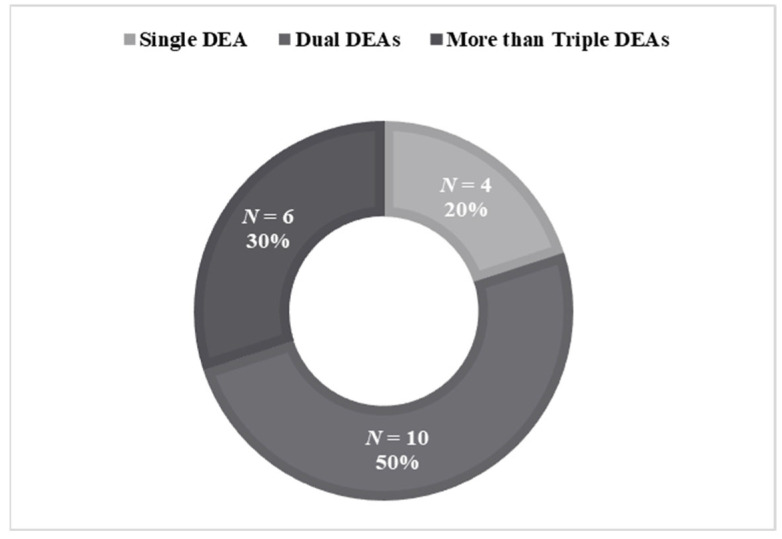
“Most (n = 16; 80.0%) participants engaged in two or more DEAs (Figure 1).”
§ Acceptance and Commitment Therapy for Destructive Experiential Avoidance (ACT-DEA): A Feasibility Study > 3. Results > 3.2. Characteristics of Destructive Experiential Avoidance
plainn = 16- Asserted: passes — The authors put it forward as true.
- Checkable: passes — It can be checked against evidence.
- Load-bearing: unclear — It is unclear whether the paper’s conclusions depend on it.
- Based: passes — The paper gives a reason why it holds.
- Rests on an assumption not shown here.
15 more claims
Create a free account to see all 43 claims and every source verdict.
- Probably not a substantial claim. 12
- It may state two separate claims as one. 14
Citations
Cites
Diagnostic and Statistical Manual of Mental Disorders
American Psychiatric Association (2013) · doi:10.1176/appi.books.9780890425596 · Cited by 116,369
Acceptance and commitment therapy: model, processes and outcomes
Hayes, S. C., Luoma, J. B., Bond, F. W., Masuda, A., & Lillis, J. (2006) · Behaviour Research and Therapy · doi:10.1016/j.brat.2005.06.006 · Cited by 6,587 · cited 3×
“Through ACT-DEA, acceptance with mindfulness is improved, instead of escape/avoidance and the attachment with conceptualized self or past/future; and the tendency to practice behavior consistent with one’s values is increased even in difficult situations [44].”
BackgroundInfluentialHayes, S. C., Wilson, K. G., Gifford, E. V., Follette, V. M., & Strosahl, K. (1996) · Journal of Consulting and Clinical Psychology · doi:10.1037//0022-006x.64.6.1152 · Cited by 3,595 · cited 11×
“In addition, clinical features such as depression, anxiety, overall clinical severity, and QOL, as well as most EA characteristics, improved after the program.”
BackgroundInfluentialThe clinical global impressions scale: applying a research tool in clinical practice.
Busner, J., & Targum, S. D. (2007) · PubMed · Cited by 2,759
Measuring experiential avoidance: A preliminary test of a working model
Hayes, S. C., Strosahl, K., Wilson, K. G., Bissett, R. T., Pistorello, J., Toarmino, D., Polusny, M. A., Dykstra, T. A., Batten, S. V., Bergan, J., et al. (2004) · The Psychological Record · doi:10.1007/bf03395492 · Cited by 2,140
Hayes, S. C., Levin, M. E., Plumb-Vilardaga, J., Villatte, J. L., & Pistorello, J. (2013) · Behavior Therapy · doi:10.1016/j.beth.2009.08.002 · Cited by 1,120 · cited 1×
“In addition, cultural differences and various mental healthcare systems in different countries need to be considered [26], and a design based on contextual behavioral science, which is the fundamental philosophy of ACT that fulfills the purpose of the treatment program [27], is required.”
BackgroundA Practical Guide to Acceptance and Commitment Therapy
(2004) · doi:10.1007/978-0-387-23369-7 · Cited by 875
Socioeconomic Status and Mental Illness: Tests of the Social Causation and Selection Hypotheses.
Hudson, C. G. (2005) · American Journal of Orthopsychiatry · doi:10.1037/0002-9432.75.1.3 · Cited by 707 · cited 2×
“Previous studies have reported that a relatively low socioeconomic status is a factor for mental illness [41], and a commu‐ nity approach is necessary for these environments for the prevention and intervention of adolescent mental illness and mental health risks [42].”
BackgroundBlakemore, S.-J. (2019) · The Lancet · doi:10.1016/s0140-6736(19)31013-x · Cited by 670 · cited 2×
“Previous studies have reported that a relatively low socioeconomic status is a factor for mental illness [41], and a commu‐ nity approach is necessary for these environments for the prevention and intervention of adolescent mental illness and mental health risks [42].”
BackgroundNewman, M. G., & Llera, S. J. (2011) · Clinical Psychology Review · doi:10.1016/j.cpr.2011.01.008 · Cited by 598 · cited 1×
“Various studies have reported the adverse consequences of destructive and rigid EA, which are reflected in transdiagnostic mental illnesses such as depressive disorders [3], anxiety disorders [4], obsessive–compulsive disorder [5], substance use disorder, [6] eating disorders [7], and posttraumatic stress disorder [8].”
Background
Research works printed but not linked: 3
- Hayes, S.C., Strosahl, K.D., and Wilson, K.G. (1999). In Acceptance and Commitment Therapy, Guilford Press. [2nd ed.].
- Fisher, J. (2022, November 08). The Work of Stabilization in Trauma Treatment. In Proceedings of the Trauma Center Lecture Series, Boston, MA, USA. Available online: https://www.smchealth.org/sites/main/files/file-attachments/tic_stabilize.pdf.
- Kim, 1991, The preliminary study of the Korean alcoholism screening test (III), J. Korean Neuropsychiatr. Assoc., 30, 569
Cited by
Wang, J., Wang, N., Liu, P., & Liu, Y. (2025) · BMC Psychology · doi:10.1186/s40359-025-02372-1 · Cited by 52
Wang, J., Wang, N., Liu, Y., & Zhou, Z. (2025) · Behaviour and Information Technology · doi:10.1080/0144929x.2025.2455406 · Cited by 45
Wang, J., Tang, L., Liu, Y., Wu, X., Zhou, Z., & Zhu, S. (2025) · Scientific Reports · doi:10.1038/s41598-025-07487-4 · Cited by 32
Lam, S. K. K., Ng, A. S. Y., Zhou, C. R., Hung, S. L., & Fung, H. W. (2023) · Journal of Loss and Trauma · doi:10.1080/15325024.2023.2267433 · Cited by 22
“For example, acceptance and commitment therapy, body-oriented interventions, and mindfulness may be beneficial in reducing experiential avoidance (Classen et al., 2021; Li et al., 2023; Na et al., 2022).”
BackgroundA systematic review of treatment for impulsivity and compulsivity
Yamuza, B. A., Trenados, Y., Herruzo, C., Osuna, M. J. P., & Herruzo, J. (2024) · Frontiers in Psychiatry · doi:10.3389/fpsyt.2024.1430409 · Cited by 24
Metadata
- Authors
- Na, E., Lee, K., Jeon, B.-H., Jo, C., Kwak, U.-H., Jeon, Y., Yang, K., Lee, E. J., & Jeong, J.
- Affiliations
- Presbyterian Medical Center (KR)
- Kangwon National University Hospital (KR)
- Mind with Mind Psychiatric Clinic, Changwon 51436, Republic of Korea
- Maum Gonggam Psychiatric Clinic, Goyang 10497, Republic of Korea
- Kangbuk Samsung Hospital (KR)
- Jeong Jin Psychiatric Clinic, Suwon 16489, Republic of Korea
- Corresponding author
- Na, Euihyeon
- Venue
- International Journal of Environmental Research and Public Health
- Publisher
- MDPI AG
- Published
- 2022-12-07
- Volume
- 19
- Issue
- 24
- Pages
- 16434
- ISSN
- 1660-4601 (ISSN-L)
- PMC
- PMC9779048
- OpenAlex
- W4311853492
- Cited by
- 21
- References
- 49
- Citations by year
- 2026: 4 · 2025: 10 · 2024: 6 · 2023: 2
- FWCI
- 3.56
- Type
- journal article
- Language
- en
- Open access
- gold
- doi.org
- Licence
- Locations
- International Journal of Environmental Research and Public Health (publishedVersion, cc-by)
- PubMed (publishedVersion)
- PubMed Central (submittedVersion, cc-by)
- RePEc: Research Papers in Economics (submittedVersion)
- DOAJ (DOAJ: Directory of Open Access Journals) (submittedVersion)
- Funders
- Korean Foundation of Neuropsychiatric Research
- Topics
- Social Sciences › Psychology › Clinical Psychology › Mindfulness and Compassion Interventions
- Social Sciences › Psychology › Clinical Psychology › Psychological Treatments and Assessments
- Social Sciences › Psychology › Experimental and Cognitive Psychology › Anxiety, Depression, Psychometrics, Treatment, Cognitive Processes
- Keywords
- acceptance and commitment therapy, self-harm, addiction, impulsivity, depression, anxiety, quality of life, pain aversion
- MeSH terms
- Affect, Anxiety, Feasibility Studies, Humans, Quality of Life, Acceptance and Commitment Therapy
About these checks
Registry, retraction, Cites and statistics results are computed, not judged, with one exception: a printed reference that no index lists is read once by a model before it counts as a citation error. Claims are extracted by a model and kept only when their quote appears verbatim in the text; each cited source is then checked, with a model’s help, for whether it says what the claim relies on. Those verdicts can be wrong — read the claim’s quote and the cited source before relying on one.
The claim verdicts this report counts are experimental: their accuracy is not yet measured.
A language model drew the claims from the paper on 2026-10-11, under version 3 of the claim definition (model deepseek-v4.1-flash, prompt extract-v3).
A second model labelled each claim on 2026-10-11 (model jev-1.13-20260917, definition revision gold-guideline-v0.2).
Cited sources are checked with a language model’s help (gpt-6-sol).
Statistics and arithmetic are recomputed, not judged.
Confidence bands are shown only for fields calibrated on our annotated test set. None is calibrated yet, so no band is shown.
What counts as a claim ›How we measure confidence ›How we check this ›
Are you an author, or do you see a problem with this page? Request a review
How to cite
Cite CoChat for the checks on this page, and the paper for its own findings.
- This page
- CoChat. (2026). Citation check: Acceptance and Commitment Therapy for Destructive Experiential Avoidance (ACT-DEA): A Feasibility Study. https://app.cochat.ai/papers/10.3390/ijerph192416434
- The paper
- Na, E., Lee, K., Jeon, B.-H., Jo, C., Kwak, U.-H., Jeon, Y., Yang, K., Lee, E. J., & Jeong, J. (2022). Acceptance and Commitment Therapy for Destructive Experiential Avoidance (ACT-DEA): A Feasibility Study. International Journal of Environmental Research and Public Health. https://doi.org/10.3390/ijerph192416434
Data sources
Bibliographic data: Semantic Scholar, OpenAlex, Crossref.
Contains information from the Semantic Scholar Academic Graph Datasets, made available under the ODC Attribution License (ODC-BY 1.0).
Semantic Scholar’s data is described in: Kinney, R., et al. (2023). The Semantic Scholar Open Data Platform. arXiv:2301.10140.
