

The DOI matches its Crossref record; 200 of the 201 references it cites were found in a registry or an index, and 1 are not checked yet.
Environmental Exposure to Per- and Polyfluorylalkyl Substances (PFASs) and Reproductive Outcomes in the General Population: A Systematic Review of Epidemiological Studies
Open accessAbstract
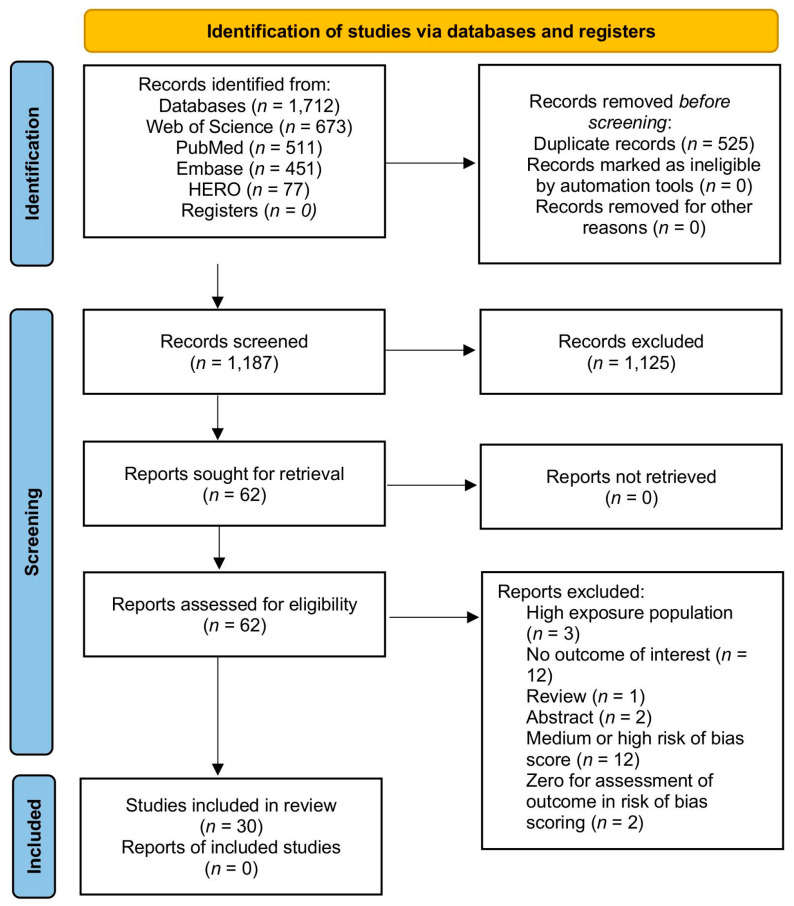
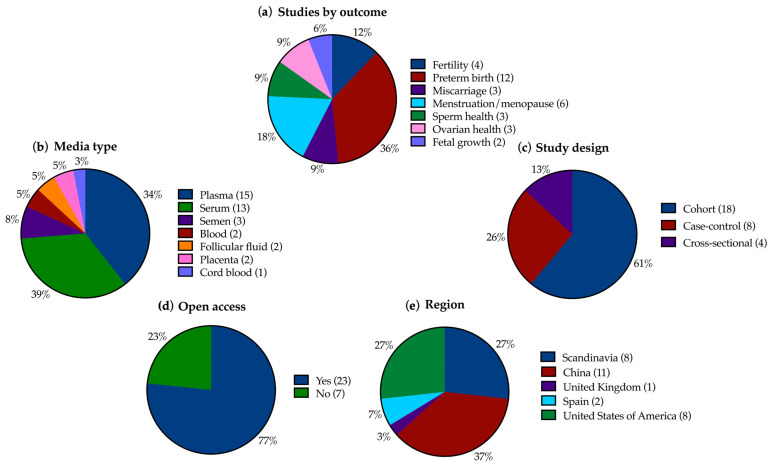
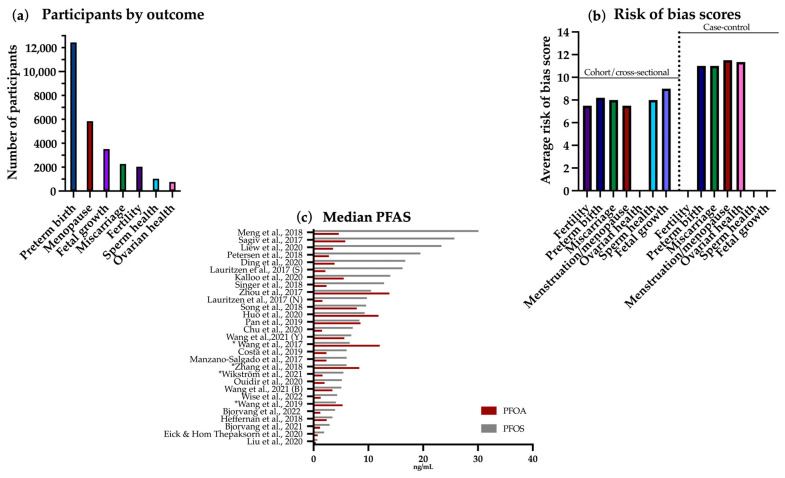
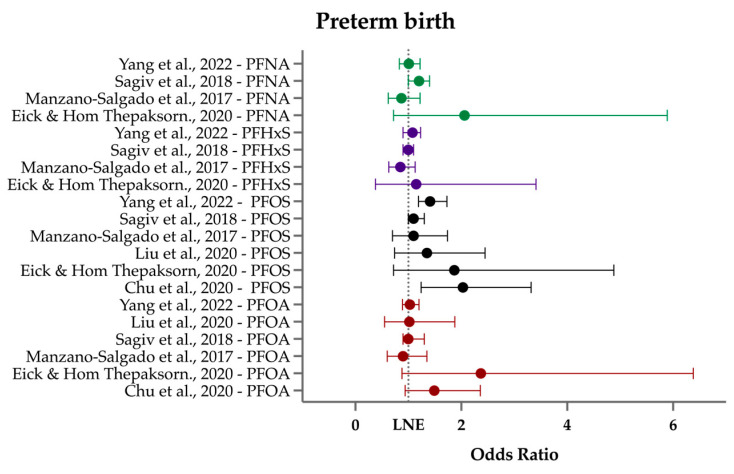
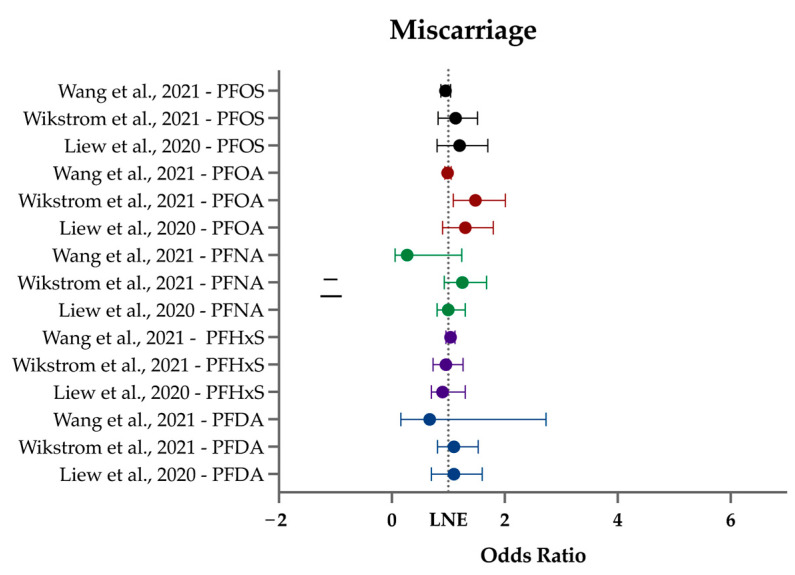
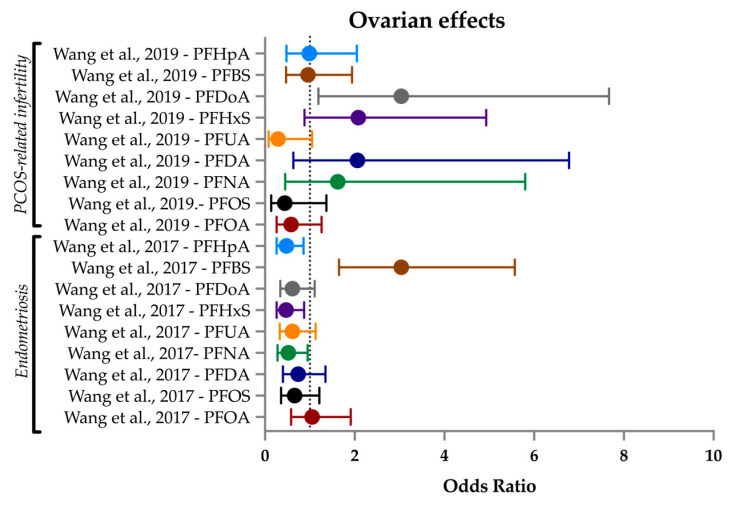
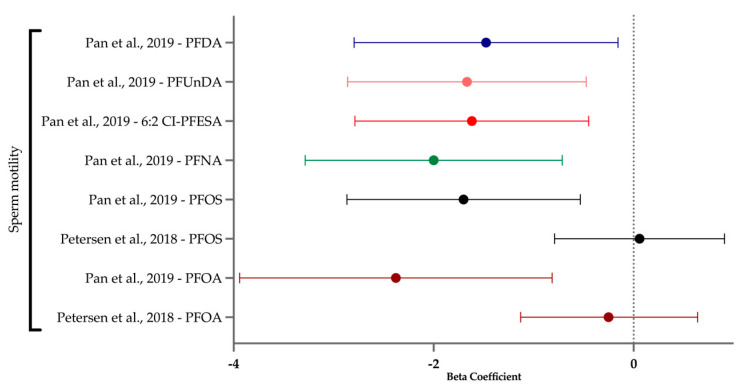
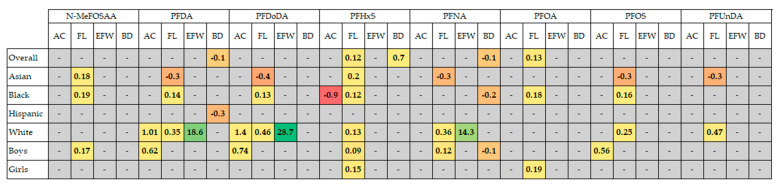
This Preferred Reporting Items for Systematic Reviews and Meta-Analyses (PRISMA) systematic review synthesized effects of background levels of per- and polyfluorylalkyl substance (PFAS) levels on reproductive health outcomes in the general public: fertility, preterm birth, miscarriage, ovarian health, menstruation, menopause, sperm health, and in utero fetal growth. The inclusion criteria included original research (or primary) studies, human subjects, and investigation of outcomes of interest following non-occupational exposures. It drew from four databases (Web of Science, PubMed, Embase and Health and Environmental Research Online (HERO)) using a standardized search string for all studies published between 1 January 2017 and 13 April 2022. Risk of bias was assessed by two independent reviewers. Data were extracted and reviewed by multiple reviewers. Each study was summarized under its outcome in terms of methodology and results and placed in context, with recommendations for future research. Of 1712 records identified, 30 were eligible, with a total of 27,901 participants (33 datasets, as three studies included multiple outcomes). There was no effect of background levels of PFAS on fertility. There were weakly to moderately increased odds of preterm birth with higher perfluorooctane sulfonic acid (PFOS) levels; the same for miscarriage with perfluorooctanoic acid (PFOA) levels. There was limited yet suggestive evidence for a link between PFAS and early menopause and primary ovarian insufficiency; menstrual cycle characteristics were inconsistent. PFAS moderately increased odds of PCOS- and endometriosis-related infertility, respectively. Sperm motility and DNA health were moderately impaired by multiple PFAS. Fetal growth findings were inconsistent. This review may be used to inform forthcoming drinking water standards and policy initiatives regarding PFAS compounds and drinking water. Future reviews would benefit from more recent studies. Larger studies in these areas are warranted. Future studies should plan large cohorts and open access data availability to capture small effects and serve the public. Funding: Great Lakes Water Authority (Detroit, MI), the Erb Family Foundation through Healthy Urban Waters at Wayne State University (Detroit, MI), and Wayne State University CLEAR Superfund Research (NIH P42ES030991).
Overview
The claims and statistics of this paper haven’t been checked yet.
Run the check — free, no account needed. It reads the open-access text and checks the sources it cites.
Integrity signals
Registry
Cites
Statistics
Figures

Verification
Claims the paper makes
The claims and statistics of this paper haven’t been checked yet.
Run the check — free, no account needed. It reads the open-access text and checks the sources it cites.
Claims other papers make about this one
Each is checked against this paper’s own text: does it say what the citing paper says it does?
The source backs part of the claim, not all of it — or backs it for a different population, condition or comparison.
In the citing paper
“| Reproductive | Impaired fertility, miscarriage, developmental issues. | High | Pregnant women, children | Long-term fertility issues | [224] |”
From Industrial Applications, Environmental Fate, Human Exposure, and Health Effects of PFAS (2025) · cites this paper as [224]
Experimental — accuracy not yet measured
Self-check
Percentages, sums and reported differences re-computed from the paper’s own numbers.
The self-check needs the paper’s full text.
Citations
Cites
The PRISMA 2020 statement: An updated guideline for reporting systematic reviews
Page, M. J., McKenzie, J. E., Bossuyt, P. M., Boutron, I., Hoffmann, T. C., Mulrow, C. D., Shamseer, L., Tetzlaff, J. M., Akl, E. A., Brennan, S. E., et al. (2021) · BMJ · doi:10.1136/bmj.n71 · Cited by 108,283
(2014) · Medical Entomology and Zoology · Cited by 17,633
The Rotterdam ESHRE/ASRM-sponsored PCOS consensus workshop group (2004) · Human Reproduction · doi:10.1093/humrep/deh098 · Cited by 6,138
Understanding organofluorine chemistry. An introduction to the C–F bond
O’Hagan, D. (2007) · Chemical Society Reviews · doi:10.1039/b711844a · Cited by 4,148
Persistent epigenetic differences associated with prenatal exposure to famine in humans
Heijmans, B. T., Tobi, E. W., Stein, A. D., Putter, H., Blauw, G. J., Susser, E. S., Slagboom, P. E., & Lumey, L. H. (2008) · Proceedings of the National Academy of Sciences · doi:10.1073/pnas.0806560105 · Cited by 3,082
INFANT MORTALITY, CHILDHOOD NUTRITION, AND ISCHAEMIC HEART DISEASE IN ENGLAND AND WALES
BARKER, D. (1986) · The Lancet · doi:10.1016/s0140-6736(86)91340-1 · Cited by 2,892
World Health Organization reference values for human semen characteristics*‡
Cooper, T. G., Noonan, E., von Eckardstein, S., Auger, J., Baker, H. W. G., Behre, H. M., Haugen, T. B., Kruger, T., Wang, C., Mbizvo, M. T., et al. (2010) · Human Reproduction Update · doi:10.1093/humupd/dmp048 · Cited by 2,827
Estimation of fetal weight with the use of head, body, and femur measurements—A prospective study
Hadlock, F. P., Harrist, R. B., Sharman, R. S., Deter, R. L., & Park, S. K. (1985) · American Journal of Obstetrics and Gynecology · doi:10.1016/0002-9378(85)90298-4 · Cited by 2,682
Sources, fate and transport of perfluorocarboxylates
Prevedouros, K., Cousins, I. T., Buck, R. C., & Korzeniowski, S. H. (2006) · Environmental Science & Technology · doi:10.1021/es0512475 · Cited by 2,594
Fenton, S. E., Ducatman, A., Boobis, A., DeWitt, J. C., Lau, C., Ng, C., Smith, J. S., & Roberts, S. M. (2020) · Environmental Toxicology and Chemistry · doi:10.1002/etc.4890 · Cited by 2,445
Research works printed but not linked: 1
- The BMJ (2024, September 14). Correlation and Regression. Available online: https://www.bmj.com/about-bmj/resources-readers/publications/statistics-square-one/11-correlation-and-regression.
Cited by
Sorted by citations
Epigenetic Consequences of In Utero PFAS Exposure: Implications for Development and Long-Term Health
Abdulkadir, A., Kandel, S., Lewis, N., D’Auvergne, O., Rosby, R., & Hossain, E. (2025) · International Journal of Environmental Research and Public Health · doi:10.3390/ijerph22060917 · Cited by 29
Industrial Applications, Environmental Fate, Human Exposure, and Health Effects of PFAS
Hasan, M., Habib, A., Alam, M., Islam, S., & Halim, E. (2025) · Pollutants · doi:10.3390/pollutants5040043 · Cited by 21
Brander, S. M., Swan, S. H., Mehinto, A. C., Kidd, K. A., Weis, J. S., Belcher, S. M., DeWitt, J. C., Harper, S. L., & Helbing, C. C. (2026) · npj Emerging Contaminants · doi:10.1038/s44454-026-00032-6 · Cited by 5
Stone, A. M., Fung, G., Joseph, A., Biernat, M. M., Camp, O. G., & Abu‐Soud, H. M. (2026) · Reproductive Toxicology · doi:10.1016/j.reprotox.2026.109239 · Cited by 4
Reindl, A. R., & Zduńczuk, J. A. (2026) · Toxics · doi:10.3390/toxics14060528 · Cited by 3
Metadata
- Authors
- Haimbaugh, A., Meyer, D. N., Connell, M. L., Blount-Pacheco, J., Tolofari, D., Gonzalez, G., Banerjee, D., Norton, J., Miller, C. J., & Baker, T. R.
- Affiliations
- Wayne State University (US)
- University of Florida Health (US)
- Great Lakes Water Authority (US)
- Corresponding author
- Baker, Tracie R.
- ORCID
- Venue
- International Journal of Environmental Research and Public Health
- Publisher
- MDPI AG
- Published
- 2024-12-02
- Volume
- 21
- Issue
- 12
- Pages
- 1615
- ISSN
- 1660-4601 (ISSN-L)
- PMC
- PMC11675763
- OpenAlex
- W4404915882
- Cited by
- 21
- References
- 200
- Citations by year
- 2026: 16 · 2025: 5
- FWCI
- 0.67
- Type
- journal article
- Language
- en
- Open access
- gold
- doi.org
- Licence
- Locations
- International Journal of Environmental Research and Public Health (publishedVersion, cc-by)
- PubMed Central (publishedVersion, cc-by)
- PubMed (publishedVersion)
- RePEc: Research Papers in Economics (submittedVersion)
- Funders
- Great Lakes Water Authority (GLWA) (NIH P42ES030991)
- Erb Family Foundation through Healthy Urban Waters at Wayne State University, and Wayne State University CLEAR Superfund Research (NIH P42ES030991)
- NIH Superfund (NIH P42ES030991)
- Topics
- Physical Sciences › Environmental Science › Environmental Chemistry › Per- and polyfluoroalkyl substances research
- Physical Sciences › Environmental Science › Health, Toxicology and Mutagenesis › Effects and risks of endocrine disrupting chemicals
- Physical Sciences › Materials Science › Polymers and Plastics › Synthesis and properties of polymers
- Keywords
- per- and polyfluoroalkyl substances, PFAS exposure, reproductive outcomes, fertility, preterm birth, miscarriage, perfluorooctanoic acid, PFOS, early menopause, primary ovarian insufficiency, menstrual cycle, polycystic ovary syndrome, endometriosis, sperm motility, sperm DNA damage, fetal growth, drinking water standards, general population
- MeSH terms
- Environmental Exposure, Environmental Pollutants, Female, Fluorocarbons, Humans, Male, Pregnancy, Reproduction
About these checks
Registry, retraction, Cites and statistics results are computed, not judged, with one exception: a printed reference that no index lists is read once by a model before it counts as a citation error. Claims are extracted by a model and kept only when their quote appears verbatim in the text; each cited source is then checked, with a model’s help, for whether it says what the claim relies on. Those verdicts can be wrong — read the claim’s quote and the cited source before relying on one.
Statistics and arithmetic are recomputed, not judged.
Confidence bands are shown only for fields calibrated on our annotated test set. None is calibrated yet, so no band is shown.
What counts as a claim ›How we measure confidence ›How we check this ›
Are you an author, or do you see a problem with this page? Request a review
