

Effects of Low Doses of Ionizing Radiation Exposures on Stress-Responsive Gene Expression in Human Embryonic Stem Cells
Open accessThe DOI matches its Crossref record; 82 of the 86 references it cites were found in a registry or an index.
Abstract
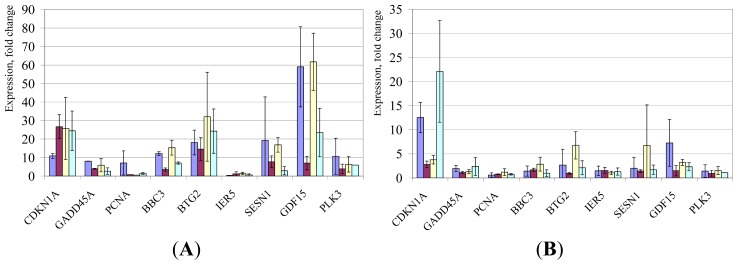
There is a great deal of uncertainty on how low (≤0.1 Gy) doses of ionizing radiation (IR) affect human cells, partly due to a lack of suitable experimental model systems for such studies. The uncertainties arising from low-dose IR human data undermine practical societal needs to predict health risks emerging from diagnostic medical tests’ radiation, natural background radiation, and environmental radiological accidents. To eliminate a variability associated with remarkable differences in radioresponses of hundreds of differentiated cell types, we established a novel, human embryonic stem cell (hESC)-based model to examine the radiobiological effects in human cells. Our aim is to comprehensively elucidate the gene expression changes in a panel of various hESC lines following low IR doses of 0.01; 0.05; 0.1 Gy; and, as a reference, relatively high dose of 1 Gy of IR. Here, we examined the dynamics of transcriptional changes of well-established IR-responsive set of genes, including CDKN1A, GADD45A, etc. at 2 and 16 h post-IR, representing “early” and “late” radioresponses of hESCs. Our findings suggest the temporal- and hESC line-dependence of stress gene radioresponses with no statistically significant evidence for a linear dose-response relationship within the lowest doses of IR exposures.
Overview
The claims and statistics of this paper haven’t been checked yet.
Free: it reads the open-access text and checks the first 5 claims that cite a source we can check. Create a free account to check every claim.
Integrity signals
Registry
Cites
Statistics
Figures
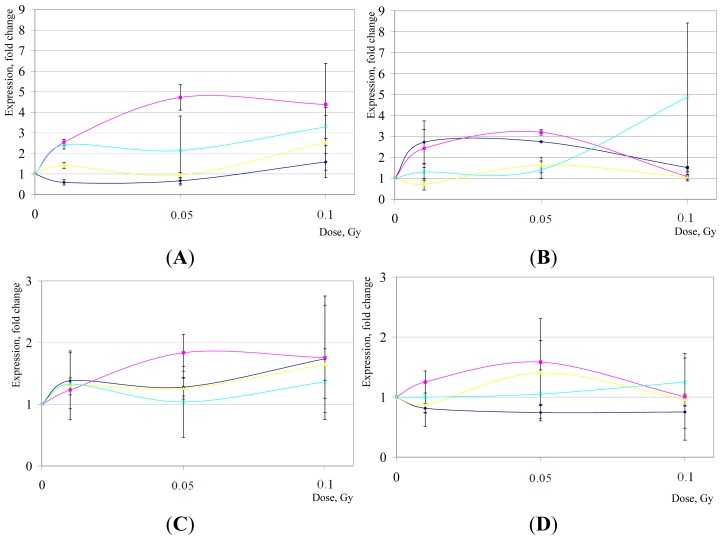
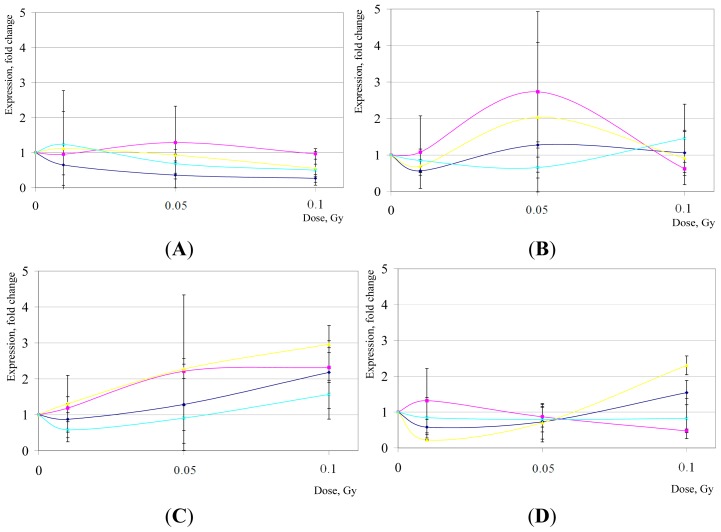
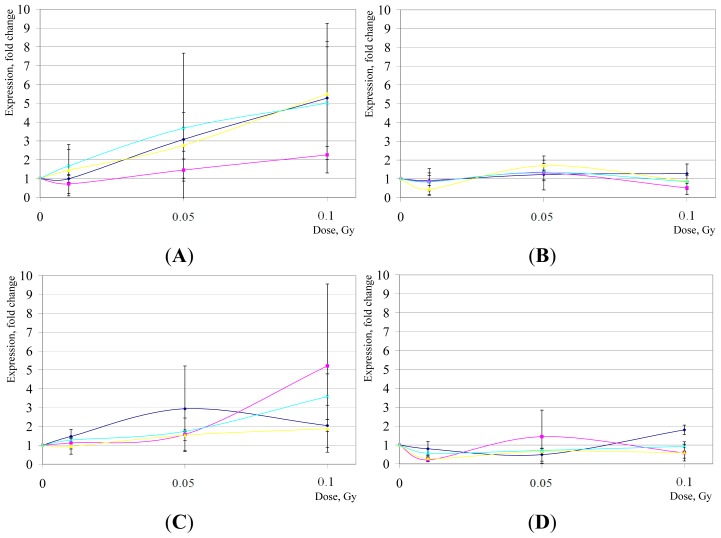
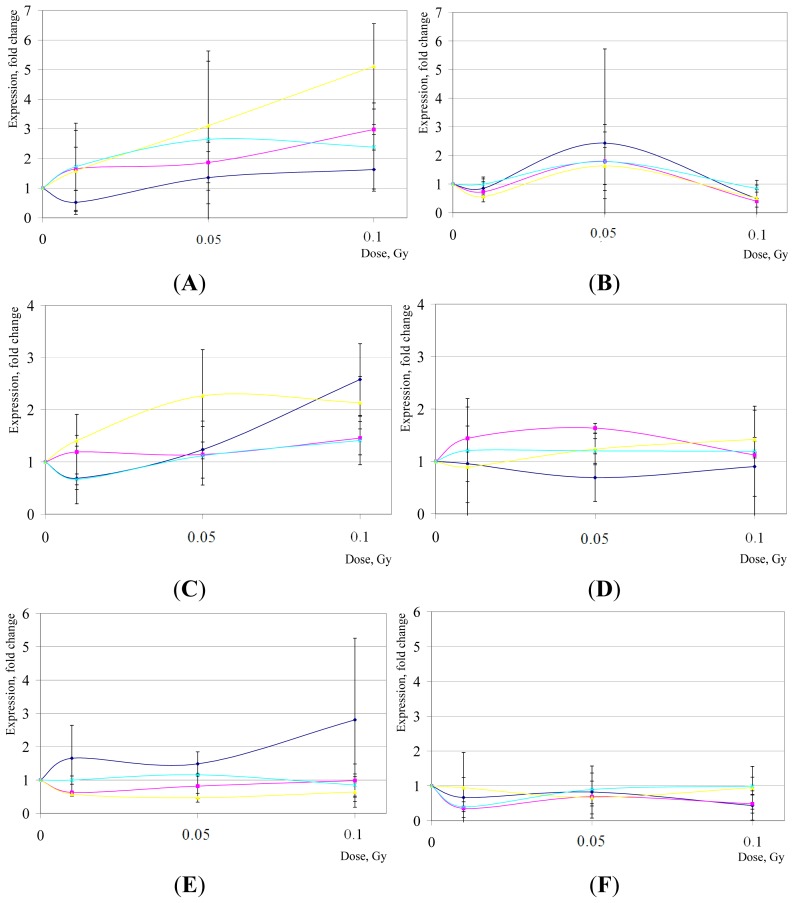
Verification
Claims the paper makes
The claims and statistics of this paper haven’t been checked yet.
Free: it reads the open-access text and checks the first 5 claims that cite a source we can check. Create a free account to check every claim.
Claims other papers make about this one
Each is checked against this paper’s own text: does it say what the citing paper says it does?
The check wasn’t confident either way, so it gives no verdict — never disputed.
In the citing paper
“It was shown that damage to ESC DNA by low-dose ionizing radiation significantly induced DSBs-mediated chromatin modifications and that DSBs may also be passed on to their differentiated cell lineages [44].”
From Ultraviolet Radiation‐Induced Skin Aging: The Role of DNA Damage and Oxidative Stress in Epidermal Stem Cell Damage Mediated Skin Aging (2016) · cites this paper as [44]
Experimental — accuracy not yet measured
Self-check
Percentages, sums and reported differences re-computed from the paper’s own numbers.
The self-check needs the paper’s full text.
Citations
Cites
Computed Tomography — An Increasing Source of Radiation Exposure
Brenner, D. J., & Hall, E. J. (2007) · New England Journal of Medicine · doi:10.1056/nejmra072149 · Cited by 8,748 · cited 1×
“Low dose exposures are without doubt far more common than exposures to high doses (HD) of IR (mostly from therapeutic treatments) [3].”
BackgroundDi Leonardo, A., Linke, S. P., Clarkin, K., & Wahl, G. M. (1994) · Genes & Development · doi:10.1101/gad.8.21.2540 · Cited by 1,215 · cited 1×
“CDKN1A is one of the potent cyclin-dependent kinase inhibitors, and is necessary for robust activation of G1/S checkpoint after IR exposures of different types of human cells in vitro [33].”
BackgroundEvidence for beneficial low level radiation effects and radiation hormesis
Feinendegen, L. E. (2005) · The British Journal of Radiology · doi:10.1259/bjr/63353075 · Cited by 467 · cited 1×
“The occurrence of non-targeted effects of IR, often observed following LD IR, such as adaptive responses, bystander effects and low-dose hypersensitivity, and the potentially beneficial hormetic effects of at least some LD exposures, presents additional levels of complexity to LD radiobiology [7–11].”
BackgroundSelf‐renewal of human embryonic stem cells is supported by a shortened G1 cell cycle phase
Becker, K. A., Ghule, P. N., Therrien, J. A., Lian, J. B., Stein, J. L., van Wijnen, A. J., & Stein, G. S. (2006) · Journal of Cellular Physiology · doi:10.1002/jcp.20776 · Cited by 464 · cited 2×
“For example, the same group reported that CDKN1A was overexpressed either about 250-fold [61] or”
BackgroundRouault, J.-P., Falette, N., Guéhenneux, F., Guillot, C., Rimokh, R., Wang, Q., Berthet, C., Moyret-Lalle, C., Savatier, P., Pain, B., et al. (1996) · Nature Genetics · doi:10.1038/ng1296-482 · Cited by 434
Development of Gene Expression Signatures for Practical Radiation Biodosimetry
Paul, S., & Amundson, S. A. (2008) · International Journal of Radiation Oncology*Biology*Physics · doi:10.1016/j.ijrobp.2008.03.043 · Cited by 246 · cited 1×
“Moreover, all or some of these genes were shown to constitute an essential part of a consensus IR dose-response signatures reported previously [39,47,56]; and subgroup of these genes, namely CDKN1A, GADD45A, PCNA, and BBC3 discriminated profiles of IR-responsive biomarkers from those triggered by other stimuli, such a…”
BackgroundRegulation of Apoptosis and Differentiation by p53 in Human Embryonic Stem Cells
Qin, H., Yu, T., Qing, T., Liu, Y., Zhao, Y., Cai, J., Li, J., Song, Z., Qu, X., Zhou, P., et al. (2007) · Journal of Biological Chemistry · doi:10.1074/jbc.m610464200 · Cited by 245 · cited 1×
“Interestingly, UV radiation exposures were shown to result either in a decrease in expression of transcripts of CDKN1A in undifferentiated H1 hESCs [62], or, in a marked contrast, a robust CDKN1A increase (about 27-fold upregulation in low-passage hESC cultures) [63].”
Background(1995) · PubMed · Cited by 237
Differential responses of stress genes to low dose-rate gamma irradiation.
Amundson, S. A., Lee, R. A., Koch-Paiz, C. A., Bittner, M. L., Meltzer, P. S., Trent, J. M., & Fornace, A. J. (2003) · PubMed · Cited by 234
Non-targeted effects of ionising radiation—Implications for low dose risk
Kadhim, M., Salomaa, S., Wright, E., Hildebrandt, G., Belyakov, O. V., Prise, K. M., & Little, M. P. (2013) · Mutation Research/Reviews in Mutation Research · doi:10.1016/j.mrrev.2012.12.001 · Cited by 229 · cited 1×
“The occurrence of non-targeted effects of IR, often observed following LD IR, such as adaptive responses, bystander effects and low-dose hypersensitivity, and the potentially beneficial hormetic effects of at least some LD exposures, presents additional levels of complexity to LD radiobiology [7–11].”
Background
Research works printed but not linked: 1
- Cleaver J.E. Biology and genetics in the biological effects of ionizing radiation (BEIR VII) report Health Phys 2005 89 S32
Cited by
Panich, U., Sittithumcharee, G., Rathviboon, N., & Jirawatnotai, S. (2016) · Stem Cells International · doi:10.1155/2016/7370642 · Cited by 374
“It was shown that damage to ESC DNA by low-dose ionizing radiation significantly induced DSBs-mediated chromatin modifications and that DSBs may also be passed on to their differentiated cell lineages [44].”
Sokolov, M. V., & Neumann, R. D. (2015) · International Journal of Molecular Sciences · doi:10.3390/ijms17010055 · Cited by 82
“1 Gy exposures; and, as a reference, relative to HDIR of 1 Gy [46].”
BackgroundSelf-citationAdvances in the Current Understanding of How Low-Dose Radiation Affects the Cell Cycle
Khan, M. G. M., & Wang, Y. (2022) · Cells · doi:10.3390/cells11030356 · Cited by 67
“This study revealed that LDIR exposure to 20 mGy and 50 mGy of γ-rays resulted in the overexpression of CDKN1A (encoding p21Waf1) and GADD45A (encoding GADD45 alpha protein) genes without any detectable increase in apoptosis and showed that such an LDIR dose range is sufficient to induce a transient cell cycle arrest…”
BackgroundInfluentialVerreet, T., Verslegers, M., Quintens, R., Baatout, S., & Benotmane, M. A. (2016) · Neural Plasticity · doi:10.1155/2016/1243527 · Cited by 63
“In this respect, evidence is culminating over the years which disputes a LNT relationship for low radiation doses, in terms of both carcinogenic and noncarcinogenic effects [179–182].”
BackgroundSquillaro, T., Galano, G., Rosa, R. D., Peluso, G., & Galderisi, U. (2018) · Stem Cells · doi:10.1002/stem.2836 · Cited by 51
Qian, Q., Cao, X., Shen, F., & Wang, Q. (2015) · Radiation Protection Dosimetry · doi:10.1093/rpd/ncv290 · Cited by 40
Jain, V. K., & Das, B. (2017) · PLoS ONE · doi:10.1371/journal.pone.0187274 · Cited by 31
Saeed, A., Murshed, M. N., & Al-Shahari, E. A. (2020) · Environmental Science and Pollution Research · doi:10.1007/s11356-020-10085-8 · Cited by 19
Low dose radiation, inflammation, cancer and chemoprevention
Rashid, A. M., Ramalingam, L., Aljawadi, A., Moustaïd‐Moussa, N., & Moussa, H. M. (2018) · International Journal of Radiation Biology · doi:10.1080/09553002.2018.1484194 · Cited by 19
“…models were based on assessing the totality of biological data, which does not hold well for LDR since the LNT hypothesis is based on the premise that damaging stochastic effects like cancer risk increase as a linear threshold function of absorbed radiation dose (Sokolov and Neumann 2014).”
BackgroundDüzenli, U., Altun, Z. S., Olgun, Y., Aktaş, S., Pamukoğlu, A., Çetinayak, O., Bayrak, A. F., & Olgun, L. (2018) · International Journal of Radiation Biology · doi:10.1080/09553002.2019.1547847 · Cited by 13
“Cdkn1a (p21) is a cyclin-dependent kinase inhibitor that arrests the cell cycle during the course of cell damage and directs the cell to DNA repair (Sokolov and Neumann 2014).”
BackgroundSokolov, M. V., Nguyen, V. D., & Neumann, R. D. (2015) · International Journal of Molecular Sciences · doi:10.3390/ijms160714737 · Cited by 12
“05, and 1 Gy of γ-radiation, and then allowed to recover in a CO2 incubator for either 2 or 16 h, as in [11].”
InfluentialSelf-citationPossible scenarios of the influence of low-dose ionizing radiation on neural functioning
Zakhvataev, V. E. (2015) · Medical Hypotheses · doi:10.1016/j.mehy.2015.10.020 · Cited by 11
“expression, including key stress-responsive genes [17,12,18].”
Genetic stability of pluripotent stem cells during anti-cancer therapies
Suchorska, W. M., Augustyniak, E., & Łukjanow, M. (2016) · Experimental and Therapeutic Medicine · doi:10.3892/etm.2016.2993 · Cited by 10
“This may indicate the existence of a threshold for changes in gene expression in certain human ESC genomes for low doses of IR (55).”
BackgroundLow-dose irradiation of mouse embryos increases Smad-p21 pathway activity and preserves pluripotency
Hayashi, M., Yoshida, K., Kitada, K., Kizu, A., Tachibana, D., Fukui, M., Morita, T., & Koyama, M. (2018) · Journal of Assisted Reproduction and Genetics · doi:10.1007/s10815-018-1156-y · Cited by 9
Jing, L., Zhao, Y., Jiang, L., Song, F., An, L., Qi, E., Fu, X., Chen, J., & Ma, J. (2025) · Molecules · doi:10.3390/molecules30081668 · Cited by 6
“Persistent UV radiation, a physical stressor, depletes skin stem cells and leads to premature skin aging [2–4].”
Predictive DNA damage signaling for low‑dose ionizing radiation
Park, J., Jung, S.-Y., Song, K., Lee, D., Ahn, J., Hwang, S., Jung, I.-S., Lim, D.-S., & Song, J. Y. (2024) · International Journal of Molecular Medicine · doi:10.3892/ijmm.2024.5380 · Cited by 7
“Accumulating evidence has substantiated the involvement of several genes, notably CDKN1A, GADD45A, BTG2, BBC3, PCNA, SESN1, IER5, GDF15 and PLK3 (4).”
Suchorska, W. M., Augustyniak, E., & Łukjanow, M. (2017) · Molecular Medicine Reports · doi:10.3892/mmr.2017.6270 · Cited by 6
“Sokolov and Neumann (38) and Sokolov et al (39) investigated the effects of low doses (up to 0.”
InfluentialChanges in human pluripotent stem cell gene expression after genotoxic stress exposures
Sokolov, M. V., & Neumann, R. D. (2014) · World Journal of Stem Cells · doi:10.4252/wjsc.v6.i5.598 · Cited by 4
Self-citationA study of radiation workers: Dosimetry, chromosomal aberrations, and cancer risk
Farkas, G., Király, R., Székely, G., Kocsis, Z. S., Sándor, G. O., Pesznyák, C., Major, T., Nagy, Z., & Jurányi, Z. (2025) · Mutation Research/Genetic Toxicology and Environmental Mutagenesis · doi:10.1016/j.mrgentox.2025.503869 · Cited by 3
Tran, K. N., & Choi, J. (2018) · International Journal of Radiation Biology · doi:10.1080/09553002.2018.1455009 · Cited by 1
“…fidelity, repair of DNA, and suppression of cell growth (Hollander et al. 1999) in response to a number of genotoxic stresses, including ultraviolet radiation (Fayolle et al. 2008), DNA alkylating agents (Fornace et al. 1988), and, especially, IR (Daino et al. 2003; Sokolov and Neumann 2014).”
BackgroundInfluentialRadiation Stress Changes the Size of Side Population of Human Epithelial Cells
Semochkina, Y. P., & Moskaleva, E. Y. (2016) · Bulletin of Experimental Biology and Medicine · doi:10.1007/s10517-016-3523-y
“Despite their rapid repair [13], these injuries activate signaling cascades stimulating cell proliferation [2,6,14] and modulating gene expression [8,12].”
Effect of exposure to ionizing radiation on competitive proliferation and differentiation of hESC
Panyutin, I. V., Wakim, P., Maass‐Moreno, R., Pritchard, W. F., Neumann, R. D., & Panyutin, I. G. (2022) · International Journal of Radiation Biology · doi:10.1080/09553002.2023.2146231
Self-citationSafe Augmented Reality Experimentation on Cloud Chamber Radioactive Materials Decay
Wildan, A., Abid, H. A., Gunasekara, I., Goh, S. Y., & Ng, T. W. (2025) · Journal of Chemical Education · doi:10.1021/acs.jchemed.5c00649
Metadata
- Authors
- Sokolov, M., & Neumann, R.
- Affiliations
- National Institutes of Health (US)
- Corresponding author
- Sokolov, Mykyta
- Venue
- International Journal of Molecular Sciences
- Publisher
- MDPI AG
- Published
- 2014-01-06
- Volume
- 15
- Issue
- 1
- Pages
- 588-604
- ISSN
- 1422-0067 (ISSN-L)
- PMC
- PMC3907827
- OpenAlex
- W2090190697
- Cited by
- 23
- References
- 86
- Citations by year
- 2025: 3 · 2024: 1 · 2022: 2 · 2020: 1 · 2018: 5 · 2017: 2 · 2016: 4 · 2015: 4 · 2014: 1
- FWCI
- 2.87
- Type
- journal article
- Language
- en
- Open access
- gold
- doi.org
- Licence
- Locations
- International Journal of Molecular Sciences (publishedVersion, cc-by)
- Europe PMC (PubMed Central) (publishedVersion, cc-by)
- PubMed Central (publishedVersion, cc-by)
- PubMed (publishedVersion)
- DOAJ (DOAJ: Directory of Open Access Journals) (submittedVersion, cc-by-sa)
- Funders
- National Institutes of Health
- Topics
- Health Sciences › Medicine › Radiology, Nuclear Medicine and Imaging › Effects of Radiation Exposure
- Physical Sciences › Physics and Astronomy › Radiation › Radiation Therapy and Dosimetry
- Health Sciences › Medicine › Radiology, Nuclear Medicine and Imaging › Radiation Dose and Imaging
- Keywords
- low-dose radiation, human embryonic stem cells, stress-responsive gene expression, radiation response, p21, GADD45A, linear no-threshold model, dose-response relationship, radiation risk assessment, cell line dependence
- MeSH terms
- GADD45 Proteins, Cell Line, Dose-Response Relationship, Radiation, Humans, Immunohistochemistry, Nuclear Proteins, Proto-Oncogene Proteins, Radiation, Ionizing, Gene Expression, Cell Cycle Proteins, Cyclin-Dependent Kinase Inhibitor p21, Apoptosis Regulatory Proteins, Embryonic Stem Cells
About these checks
Registry, retraction, Cites and statistics results are computed, not judged, with one exception: a printed reference that no index lists is read once by a model before it counts as a citation error. Claims are extracted by a model and kept only when their quote appears verbatim in the text; each cited source is then checked, with a model’s help, for whether it says what the claim relies on. Those verdicts can be wrong — read the claim’s quote and the cited source before relying on one.
Statistics and arithmetic are recomputed, not judged.
Confidence bands are shown only for fields calibrated on our annotated test set. None is calibrated yet, so no band is shown.
What counts as a claim ›How we measure confidence ›How we check this ›
Are you an author, or do you see a problem with this page? Request a review
Data sources
Bibliographic data: Semantic Scholar, OpenAlex, Crossref.
Contains information from the Semantic Scholar Academic Graph Datasets, made available under the ODC Attribution License (ODC-BY 1.0).
Semantic Scholar’s data is described in: Kinney, R., et al. (2023). The Semantic Scholar Open Data Platform. arXiv:2301.10140.
