

The DOI matches its Crossref record; 129 of the 129 references it cites were found in a registry or an index.
Deep Artificial Neural Networks and Neuromorphic Chips for Big Data Analysis: Pharmaceutical and Bioinformatics Applications
Open accessAbstract
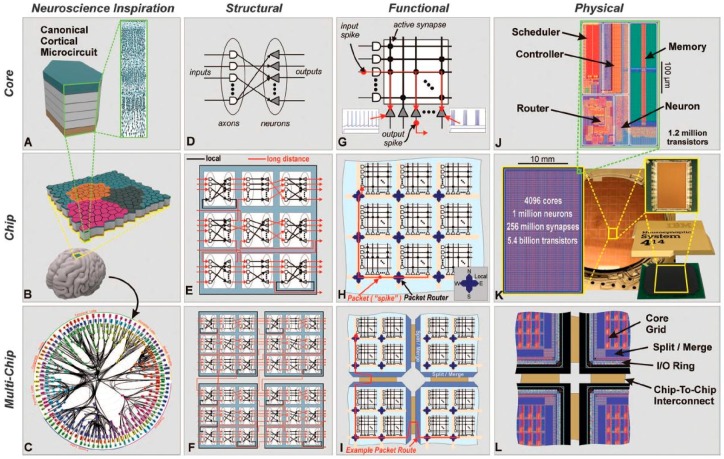
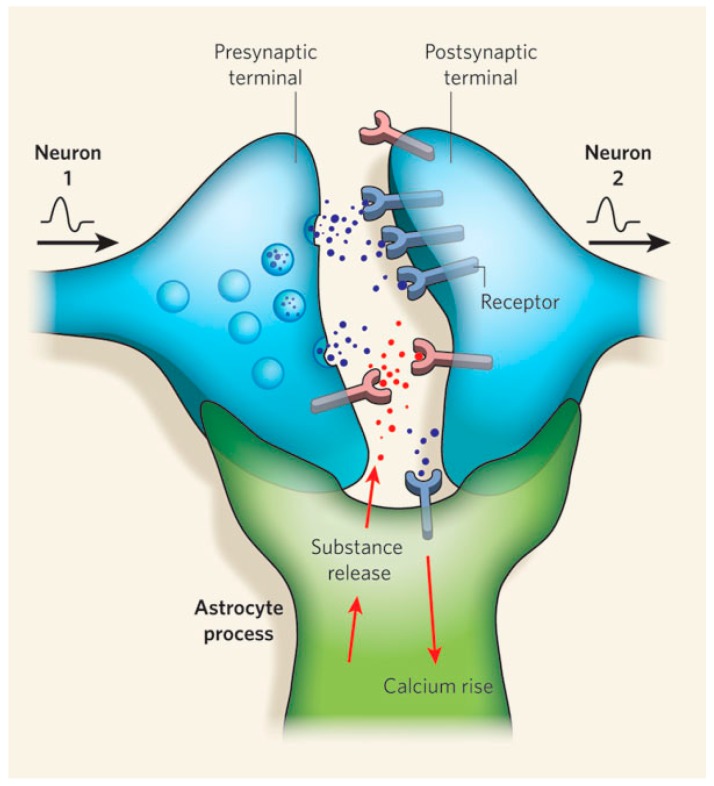
Over the past decade, Deep Artificial Neural Networks (DNNs) have become the state-of-the-art algorithms in Machine Learning (ML), speech recognition, computer vision, natural language processing and many other tasks. This was made possible by the advancement in Big Data, Deep Learning (DL) and drastically increased chip processing abilities, especially general-purpose graphical processing units (GPGPUs). All this has created a growing interest in making the most of the potential offered by DNNs in almost every field. An overview of the main architectures of DNNs, and their usefulness in Pharmacology and Bioinformatics are presented in this work. The featured applications are: drug design, virtual screening (VS), Quantitative Structure–Activity Relationship (QSAR) research, protein structure prediction and genomics (and other omics) data mining. The future need of neuromorphic hardware for DNNs is also discussed, and the two most advanced chips are reviewed: IBM TrueNorth and SpiNNaker. In addition, this review points out the importance of considering not only neurons, as DNNs and neuromorphic chips should also include glial cells, given the proven importance of astrocytes, a type of glial cell which contributes to information processing in the brain. The Deep Artificial Neuron–Astrocyte Networks (DANAN) could overcome the difficulties in architecture design, learning process and scalability of the current ML methods.
Overview
The claims and statistics of this paper haven’t been checked yet.
Run the check — free, no account needed. It reads the open-access text and checks the sources it cites.
Integrity signals
Registry
Cites
Statistics
Figures

Verification
Claims the paper makes
The claims and statistics of this paper haven’t been checked yet.
Run the check — free, no account needed. It reads the open-access text and checks the sources it cites.
Claims other papers make about this one
Each is checked against this paper’s own text: does it say what the citing paper says it does?
In the citing paper
“due to its capacity of extracting complex and abstract features in pharmacology and bioinformatics applications [160]”
From Machine Learning Based Toxicity Prediction: From Chemical Structural Description to Transcriptome Analysis (2018) · cites this paper as [160]
Self-check
Percentages, sums and reported differences re-computed from the paper’s own numbers.
The self-check needs the paper’s full text.
Citations
Cites
LeCun, Y., Bengio, Y., & Hinton, G. (2015) · Nature · doi:10.1038/nature14539 · Cited by 84,126
Reducing the dimensionality of data with neural networks
Hinton, G. E., & Salakhutdinov, R. R. (2006) · Science · doi:10.1126/science.1127647 · Cited by 20,928
Deep learning in neural networks: an overview
Schmidhuber, J. (2015) · Neural Networks · doi:10.1016/j.neunet.2014.09.003 · Cited by 18,570
A fast learning algorithm for deep belief nets
Hinton, G. E., Osindero, S., & Teh, Y.-W. (2006) · Neural Computation · doi:10.1162/neco.2006.18.7.1527 · Cited by 16,336
Representation Learning: A Review and New Perspectives
Bengio, Y., Courville, A., & Vincent, P. (2013) · IEEE Transactions on Pattern Analysis and Machine Intelligence · doi:10.1109/tpami.2013.50 · Cited by 13,001
Bidirectional recurrent neural networks
Schuster, M., & Paliwal, K. K. (1997) · IEEE Transactions on Signal Processing · doi:10.1109/78.650093 · Cited by 10,172
Receptive fields and functional architecture of monkey striate cortex
Hubel, D. H., & Wiesel, T. N. (1968) · The Journal of Physiology · doi:10.1113/jphysiol.1968.sp008455 · Cited by 6,685
A million spiking-neuron integrated circuit with a scalable communication network and interface
Merolla, P. A., Arthur, J. V., Alvarez-Icaza, R., Cassidy, A. S., Sawada, J., Akopyan, F., Jackson, B. L., Imam, N., Chen, G., Nakamura, Y., et al. (2014) · Science · doi:10.1126/science.1254642 · Cited by 4,270
Deep Learning: Methods and Applications
Deng, L., & Yu, D. (2014) · Foundations and Trends® in Signal Processing · doi:10.1561/2000000039 · Cited by 3,480
Long short-term memory recurrent neural network architectures for large scale acoustic modeling
Sak, H., Senior, A., & Beaufays, F. (2014) · Interspeech 2014 · doi:10.21437/interspeech.2014-80 · Cited by 2,973
Research works printed but not linked: 13
- Puri, M., Pathak, Y., Sutariya, V.K., Tipparaju, S., and Moreno, W. (2015). Artificial Neural Network for Drug Design, Delivery and Disposition, Elsevier Science.
- Lipton, Z.C. A Critical Review of Recurrent Neural Networks for Sequence Learning. Available online: http://arXiv Prepr arXiv1506.00019.
- Arenas, M.G., Mora, A.M., Romero, G., and Castillo, P.A. (2011). Advances in Computational Intelligence, Springer.
- Unterthiner, T., Mayr, A., Klambauer, G., Steijaert, M., Wegner, J.K., Ceulemans, H., and Hochreiter, S. (2014, January 8–13). Deep learning as an opportunity in virtual screening. Proceedings of the Deep Learning Workshop at NIPS, Montreal, QC, Canada.
- Dahl, G.E., Jaitly, N., and Salakhutdinov, R. Multi-Task Neural Networks for QSAR Predictions. Available online: http://arxiv.org/abs/1406.1231. · arXiv
- Pascanu, R., Gulcehre, C., Cho, K., and Bengio, Y. How to construct deep recurrent neural networks. Available online: http://arXiv Prepr arXiv1312.6026.
- Mead, C., and Conway, L. (1980). Introduction to VLSI Systems, Addison-Wesley.
- Dehaene, S. (2014). Consciousness and the Brain: Deciphering How the Brain Codes Our Thoughts, Viking Press.
- Wong, 2012, “1014” IBM Research Divsion, Research Report RJ10502, 2012, IBM J. Rep., 10502, 13
- Diehl, P.U., Pedroni, B.U., Cassidy, A., Merolla, P., Neftci, E., and Zarrella, G. TrueHappiness: Neuromorphic Emotion Recognition on Truenorth. Available online: http://arxiv.org/abs/1601.04183. · arXiv
- Serrano- Gotarredona, T., Linares-Barranco, B., Galluppi, F., Plana, L., and Furber, S. (2015). 2015 IEEE International Symposium on Circuits and Systems (ISCAS), IEEE.
- Koob, A. (2009). The Root of Thought: Unlocking Glia—The Brain Cell That Will Help Us Sharpen Our Wits, Heal Injury, and Treat Brain Disease, FT Press.
- Porto, A., Pazos, A., and Araque, A. (2005). Computational Intelligence and Bioinspired Systems, Springer.
Cited by
Sorted by citations
Deep Learning for Health Informatics
Ravì, D., Wong, C., Deligianni, F., Berthelot, M., Andreu-Perez, J., Lo, B., & Yang, G.-Z. (2017) · IEEE Journal of Biomedical and Health Informatics · doi:10.1109/jbhi.2016.2636665 · Cited by 2,000
The BioGRID interaction database: 2017 update
Chatr‐aryamontri, A., Oughtred, R., Boucher, L., Rust, J., Chang, C., Kolas, N. K., O’Donnell, L., Oster, S. K., Theesfeld, C. L., Sellam, A., et al. (2016) · Nucleic Acids Research · doi:10.1093/nar/gkw1102 · Cited by 985
Reinforced Adversarial Neural Computer for de Novo Molecular Design
Lane, E., Asadulaev, A., Ivanenkov, Y. A., Aladinskiy, V., Sánchez-Lengeling, B., Aspuru‐Guzik, A., & Zhavoronkov, A. A. (2018) · Journal of Chemical Information and Modeling · doi:10.1021/acs.jcim.7b00690 · Cited by 388
Jing, Y., Bian, Y., Hu, Z., Wang, L., & Xie, X.-Q. S. (2018) · The AAPS Journal · doi:10.1208/s12248-018-0210-0 · Cited by 360
Current status and applications of Artificial Intelligence (AI) in medical field: An overview
Haleem, A., Javaid, M., & Khan, I. H. (2019) · Current Medicine Research and Practice · doi:10.1016/j.cmrp.2019.11.005 · Cited by 285
Metadata
- Authors
- Pastur-Romay, L., Cedrón, F., Pazos, A., & Porto-Pazos, A.
- Affiliations
- Universidade da Coruña (ES)
- Corresponding author
- Porto-Pazos, Ana
- Venue
- International Journal of Molecular Sciences
- Publisher
- MDPI AG
- Published
- 2016-08-11
- Volume
- 17
- Issue
- 8
- Pages
- 1313
- ISSN
- 1422-0067 (ISSN-L)
- PMC
- PMC5000710
- OpenAlex
- W2517582793
- Cited by
- 109
- References
- 127
- Citations by year
- 2026: 2 · 2025: 11 · 2024: 10 · 2023: 15 · 2022: 12 · 2021: 11 · 2020: 9 · 2019: 11 · 2018: 17 · 2017: 6 · 2016: 5
- FWCI
- 1.00
- Type
- journal article
- Language
- en
- Open access
- gold
- doi.org
- Licence
- Locations
- International Journal of Molecular Sciences (publishedVersion, cc-by)
- PubMed Central (publishedVersion, cc-by)
- PubMed (publishedVersion)
- LA Referencia (Red Federada de Repositorios Institucionales de Publicaciones Científicas) (submittedVersion, cc-by)
- RUC (Universidade Da Coruña) (submittedVersion, cc-by)
- Funders
- European Commission (2013-2016)
- Xunta de Galicia (R2014/039, GRC2014/049)
- Instituto de Salud Carlos III (2013-2016, PI13/00280)
- Spanish National Plan for Scientific and Technical Research and Innovation
- Center for Innovative Medicine
- Topics
- Life Sciences › Pharmacology, Toxicology and Pharmaceutics › Drug Discovery › Computational Drug Discovery Methods
- Physical Sciences › Computer Science › Artificial Intelligence › Neural Networks and Applications
- Physical Sciences › Engineering › Electrical and Electronic Engineering › Advanced Memory and Neural Computing
- Keywords
- deep neural network, neuromorphic hardware, drug design, virtual screening, QSAR, protein structure prediction, SpiNNaker, astrocytes, glial cells, bioinformatics
- MeSH terms
- Algorithms, Animals, Humans, Neural Networks, Computer, Computational Biology, Quantitative Structure-Activity Relationship
About these checks
Registry, retraction, Cites and statistics results are computed, not judged, with one exception: a printed reference that no index lists is read once by a model before it counts as a citation error. Claims are extracted by a model and kept only when their quote appears verbatim in the text; each cited source is then checked, with a model’s help, for whether it says what the claim relies on. Those verdicts can be wrong — read the claim’s quote and the cited source before relying on one.
Statistics and arithmetic are recomputed, not judged.
Confidence bands are shown only for fields calibrated on our annotated test set. None is calibrated yet, so no band is shown.
What counts as a claim ›How we measure confidence ›How we check this ›
Are you an author, or do you see a problem with this page? Request a review
