

The DOI matches its Crossref record; 121 of the 123 references it cites were found in a registry or an index.
Understanding the Molecular Genetics of Basal Cell Carcinoma
Open accessAbstract
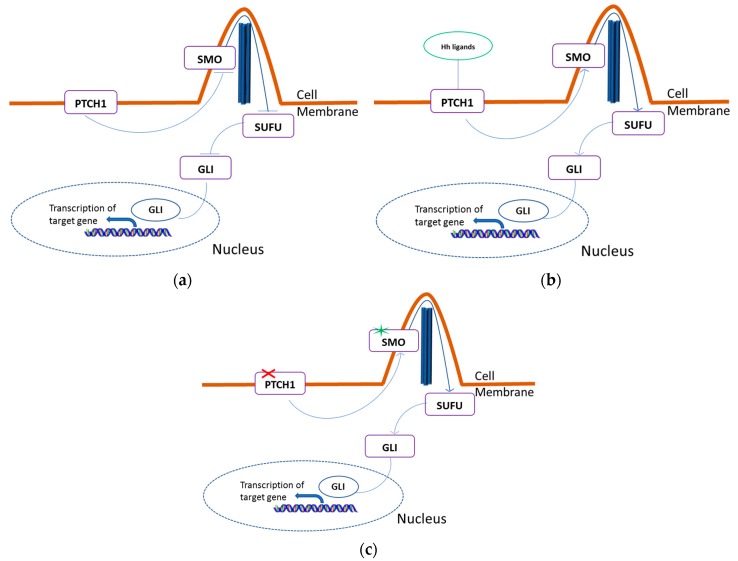
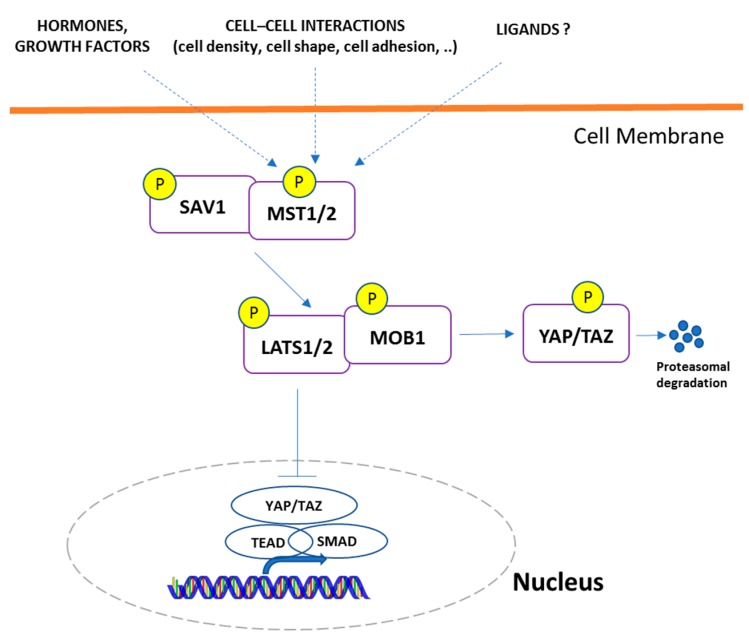
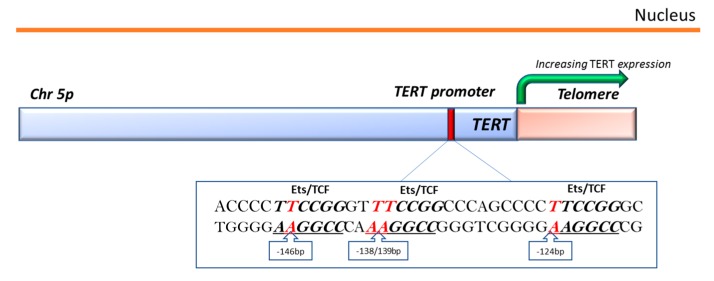
Basal cell carcinoma (BCC) is the most common human cancer and represents a growing public health care problem. Several tumor suppressor genes and proto-oncogenes have been implicated in BCC pathogenesis, including the key components of the Hedgehog pathway, PTCH1 and SMO, the TP53 tumor suppressor, and members of the RAS proto-oncogene family. Aberrant activation of the Hedgehog pathway represents the molecular driver in basal cell carcinoma pathogenesis, with the majority of BCCs carrying somatic point mutations, mainly ultraviolet (UV)-induced, and/or copy-loss of heterozygosis in the PTCH1 gene. Recent advances in sequencing technology allowed genome-scale approaches to mutation discovery, identifying new genes and pathways potentially involved in BCC carcinogenesis. Mutational and functional analysis suggested PTPN14 and LATS1, both effectors of the Hippo–YAP pathway, and MYCN as new BCC-associated genes. In addition, emerging reports identified frequent non-coding mutations within the regulatory promoter sequences of the TERT and DPH3-OXNAD1 genes. Thus, it is clear that a more complex genetic network of cancer-associated genes than previously hypothesized is involved in BCC carcinogenesis, with a potential impact on the development of new molecular targeted therapies. This article reviews established knowledge and new hypotheses regarding the molecular genetics of BCC pathogenesis.
Overview
The claims and statistics of this paper haven’t been checked yet.
Run the check — free, no account needed. It reads the open-access text and checks the sources it cites.
Integrity signals
Registry
Cites
Statistics
Figures
Verification
Claims the paper makes
The claims and statistics of this paper haven’t been checked yet.
Run the check — free, no account needed. It reads the open-access text and checks the sources it cites.
Claims other papers make about this one
Each is checked against this paper’s own text: does it say what the citing paper says it does?
In the citing paper
“Overexposure to sunlight is directly connected the with onset of skin cancers such as basal cell carcinoma (BSC) [165], squamous cell carcinoma (SCC) [166,167], and malignant melanoma (MM) [168,169].”
From Focus on UV-Induced DNA Damage and Repair—Disease Relevance and Protective Strategies (2020) · cites this paper as [165]
Self-check
Percentages, sums and reported differences re-computed from the paper’s own numbers.
The self-check needs the paper’s full text.
Citations
Cites
Lane, D. P. (1992) · Nature · doi:10.1038/358015a0 · Cited by 5,138
A landscape of driver mutations in melanoma
Hodis, E., Watson, I. R., Kryukov, G. V., Arold, S. T., Imielinski, M., Theurillat, J.-P., Nickerson, E., Auclair, D., Li, L., Place, C., et al. (2012) · Cell · doi:10.1016/j.cell.2012.06.024 · Cited by 2,610
Mutations of the Human Homolog of Drosophila patched in the Nevoid Basal Cell Carcinoma Syndrome
Hahn, H., Wicking, C., Zaphiropoulos, P. G., Gailani, M. R., Shanley, S., Chidambaram, A., Vořechovský, I., Holmberg, E., Undén, A. B., Gillies, S. A., et al. (1996) · Cell · doi:10.1016/s0092-8674(00)81268-4 · Cited by 2,018
Human Homolog of patched , a Candidate Gene for the Basal Cell Nevus Syndrome
Johnson, R. L., Rothman, A., Xie, J., Goodrich, L. V., Bare, J. W., Bonifas, J. M., Quinn, A., Myers, R., Cox, D., Epstein, E. H., et al. (1996) · Science · doi:10.1126/science.272.5268.1668 · Cited by 1,856
TERT Promoter Mutations in Familial and Sporadic Melanoma
Horn, S., Figl, A., Rachakonda, P. S., Fischer, C., Sucker, A., Gast, A., Kadel, S., Moll, I., Nagore, E., Hemminki, K., et al. (2013) · Science · doi:10.1126/science.1230062 · Cited by 1,799
The mechanisms of Hedgehog signalling and its roles in development and disease
Briscoe, J., & Thérond, P. P. (2013) · Nature Reviews Molecular Cell Biology · doi:10.1038/nrm3598 · Cited by 1,751
Regulation of the Hippo-YAP Pathway by G-Protein-Coupled Receptor Signaling
Yu, F.-X., Zhao, B., Panupinthu, N., Jewell, J. L., Lian, I., Wang, L. H., Zhao, J., Yuan, H., Tumaneng, K., Li, H., et al. (2012) · Cell · doi:10.1016/j.cell.2012.06.037 · Cited by 1,628
Liu-Chittenden, Y., Huang, B., Shim, J. S., Chen, Q., Lee, S.-J., Anders, R. A., Liu, J. O., & Pan, D. (2012) · Genes & Development · doi:10.1101/gad.192856.112 · Cited by 1,452
Patched1 Regulates Hedgehog Signaling at the Primary Cilium
Rohatgi, R., Milenkovic, L., & Scott, M. P. (2007) · Science · doi:10.1126/science.1139740 · Cited by 1,426
Activating Smoothened mutations in sporadic basal-cell carcinoma
Xie, J., Murone, M., Luoh, S.-M., Ryan, A. M., Gu, Q., Zhang, C., Bonifas, J. M., Lam, C.-W., Hynes, M., Goddard, A. D., et al. (1998) · Nature · doi:10.1038/34201 · Cited by 1,333
Research works printed but not linked: 2
- White, 1894, Multiple benign cystic epitheliomas, J. Cutan. Genitourin. Dis., 12, 477
- Jarisch, 1894, On the doctrine of skin tumors, Arch. Dermatol. Syphilol., 18, 162
Cited by
Sorted by citations
Peris, K., Fargnoli, M. C., Garbe, C., Kaufmann, R., Bastholt, L., Basset‐Séguin, N., Bataille, V. A., del Mármol, V., Dummer, R., Harwood, C. A., et al. (2019) · European Journal of Cancer · doi:10.1016/j.ejca.2019.06.003 · Cited by 600
Self-citationPeris, K., Fargnoli, M. C., Kaufmann, R., Arenberger, P., Bastholt, L., Basset‐Séguin, N., Bataille, V. A., Brochez, L., del Mármol, V., Dummer, R., et al. (2023) · European Journal of Cancer · doi:10.1016/j.ejca.2023.113254 · Cited by 354
Self-citationSkin cancer biology and barriers to treatment: Recent applications of polymeric micro/nanostructures
Khan, N. H., Mir, M., Qian, L., Baloch, M., Khan, M. F. A., Rehman, A. U., Ngowi, E. E., Wu, D., & Ji, X. (2021) · Journal of Advanced Research · doi:10.1016/j.jare.2021.06.014 · Cited by 254
The Pathobiology of Skin Aging
Russell-Goldman, E. E., & Murphy, G. F. (2020) · American Journal Of Pathology · doi:10.1016/j.ajpath.2020.03.007 · Cited by 224
Basal Cell Carcinoma: A Comprehensive Review
Dika, E., Scarfì, F., Ferracin, M., Broseghini, E., Marcelli, E., Bortolani, B., Campione, E., Riefolo, M., Ricci, C., & Lambertini, M. (2020) · International Journal of Molecular Sciences · doi:10.3390/ijms21155572 · Cited by 205
Metadata
- Authors
- Pellegrini, C., Maturo, M., Di Nardo, L., Ciciarelli, V., Gutiérrez García-Rodrigo, C., & Fargnoli, M.
- Affiliations
- University of L'Aquila (IT)
- Department of Dermatology, Department of Biotechnological and Applied Clinical Sciences, University of L’Aquila, 67100 L’Aquila, Italy
- Corresponding author
- Fargnoli, Maria
- Venue
- International Journal of Molecular Sciences
- Publisher
- MDPI AG
- Published
- 2017-11-22
- Volume
- 18
- Issue
- 11
- Pages
- 2485
- ISSN
- 1422-0067 (ISSN-L)
- PMC
- PMC5713451
- OpenAlex
- W2770311193
- Cited by
- 242
- References
- 123
- Citations by year
- 2026: 15 · 2025: 22 · 2024: 25 · 2023: 27 · 2022: 41 · 2021: 46 · 2020: 37 · 2019: 20 · 2018: 8
- FWCI
- 2.35
- Type
- journal article
- Language
- en
- Open access
- gold
- doi.org
- Licence
- Locations
- International Journal of Molecular Sciences (publishedVersion, cc-by)
- Europe PMC (PubMed Central) (publishedVersion, cc-by)
- PubMed Central (publishedVersion, cc-by)
- PubMed (publishedVersion)
- Archivio Istituzionale della Ricerca - Università degli Studi dell Aquila (submittedVersion, public-domain)
- DOAJ (DOAJ: Directory of Open Access Journals) (submittedVersion)
- PubliCatt (Università Cattolica del Sacro Cuore) (submittedVersion, other-oa)
- Topics
- Health Sciences › Medicine › Dermatology › Nonmelanoma Skin Cancer Studies
- Life Sciences › Biochemistry, Genetics and Molecular Biology › Molecular Biology › Hedgehog Signaling Pathway Studies
- Health Sciences › Medicine › Dermatology › Cancer and Skin Lesions
- Keywords
- basal cell carcinoma, tumor suppressor, proto-oncogenes, Hedgehog signaling, PTCH1, SMO, TP53, Ras family, UV-induced mutations, PTPN14, LATS1, Hippo signaling pathway, MYCN, TERT promoter mutation, carcinogenesis, targeted therapy
- MeSH terms
- Proto-Oncogene Mas, Animals, Basal Cell Carcinoma, Cell Transformation, Neoplastic, Humans, Mutation, Skin Neoplasms, Genetic Therapy, Signal Transduction, Biomarkers, Gene Expression Regulation, Neoplastic, Loss of Heterozygosity, Genetic Predisposition to Disease
About these checks
Registry, retraction, Cites and statistics results are computed, not judged, with one exception: a printed reference that no index lists is read once by a model before it counts as a citation error. Claims are extracted by a model and kept only when their quote appears verbatim in the text; each cited source is then checked, with a model’s help, for whether it says what the claim relies on. Those verdicts can be wrong — read the claim’s quote and the cited source before relying on one.
Statistics and arithmetic are recomputed, not judged.
Confidence bands are shown only for fields calibrated on our annotated test set. None is calibrated yet, so no band is shown.
What counts as a claim ›How we measure confidence ›How we check this ›
Are you an author, or do you see a problem with this page? Request a review
