

Epithelial-Mesenchymal Transition and Metastasis under the Control of Transforming Growth Factor β
Open accessThe DOI matches its Crossref record; 169 of the 170 references it cites were found in a registry or an index.
Abstract
Metastasis of tumor cells from primary sites of malignancy to neighboring stromal tissue or distant localities entails in several instances, but not in every case, the epithelial-mesenchymal transition (EMT). EMT weakens the strong adhesion forces between differentiated epithelial cells so that carcinoma cells can achieve solitary or collective motility, which makes the EMT an intuitive mechanism for the initiation of tumor metastasis. EMT initiates after primary oncogenic events lead to secondary secretion of cytokines. The interaction between tumor-secreted cytokines and oncogenic stimuli facilitates EMT progression. A classic case of this mechanism is the cooperation between oncogenic Ras and the transforming growth factor β (TGFβ). The power of TGFβ to mediate EMT during metastasis depends on versatile signaling crosstalk and on the regulation of successive waves of expression of many other cytokines and the progressive remodeling of the extracellular matrix that facilitates motility through basement membranes. Since metastasis involves many organs in the body, whereas EMT affects carcinoma cell differentiation locally, it has frequently been debated whether EMT truly contributes to metastasis. Despite controversies, studies of circulating tumor cells, studies of acquired chemoresistance by metastatic cells, and several (but not all) metastatic animal models, support a link between EMT and metastasis, with TGFβ, often being a common denominator in this link. This article aims at discussing mechanistic cases where TGFβ signaling and EMT facilitate tumor cell dissemination.
Overview
The claims and statistics of this paper haven’t been checked yet.
Free: it reads the open-access text and checks the first 5 claims that cite a source we can check. Create a free account to check every claim.
Integrity signals
Registry
Cites
Statistics
Figures
Verification
Claims the paper makes
The claims and statistics of this paper haven’t been checked yet.
Free: it reads the open-access text and checks the first 5 claims that cite a source we can check. Create a free account to check every claim.
Claims other papers make about this one
Each is checked against this paper’s own text: does it say what the citing paper says it does?
The source backs part of the claim, not all of it — or backs it for a different population, condition or comparison.
In the citing paper
“TGF-β1 plays a crucial role in promoting EMT, a key process involved in modulating alveolar epithelial cell plasticity [87,88].”
From Chronic Inflammation, Oxidative Stress and Metabolic Plasticity: Three Players Driving the Pro-Tumorigenic Microenvironment in Malignant Mesothelioma (2023) · cites this paper as [88]
Experimental — accuracy not yet measured
Self-check
Percentages, sums and reported differences re-computed from the paper’s own numbers.
The self-check needs the paper’s full text.
Citations
Cites
1 retracted
Maitah, M. Y., Ali, S. S., Ahmad, A., Gadgeel, S. M., & Sarkar, F. H. (2011) · PLoS ONE · doi:10.1371/journal.pone.0016068 · Cited by 142 · cited 1×
“Furthermore, TGFβ can induce the expression of Wnt family and sonic hedgehog (Shh) ligands in hepatocellular or lung adenocarcinoma cells; the action of Wnt or Shh is critical for the establishment of the EMT in these cancer cells under the influence of TGFβ [63,64].”
BackgroundRetractedShrestha, S., & Offer, S. M. (2016) · Medical Epigenetics · doi:10.1159/000444713 · Cited by 8,914
Nieto, M. A., Huang, R. Y.-J., Jackson, R. A., & Thiery, J. P. (2016) · Cell · doi:10.1016/j.cell.2016.06.028 · Cited by 4,492
Gregory, P. A., Bert, A. G., Paterson, E. L., Barry, S. C., Tsykin, A., Farshid, G., Vadas, M. A., Khew-Goodall, Y., & Goodall, G. J. (2008) · Nature Cell Biology · doi:10.1038/ncb1722 · Cited by 3,863
A multigenic program mediating breast cancer metastasis to bone
Kang, Y., Siegel, P. M., Shu, W., Drobnjak, M., Kakonen, S. M., Cordón-Cardo, C., Guise, T. A., & Massagué, J. (2003) · Cancer Cell · doi:10.1016/s1535-6108(03)00132-6 · Cited by 2,597 · cited 4×
“In the target bone tissue, breast carcinoma cells that extravasate from the bone marrow fenestrated vessels, respond to stromal TGFβ and turn on the expression of IL-11 and Parathyroid Hormone-Related Protein, which act on osteoblasts and mobilize the secretion of the cytokine RANKL, which finally leads to osteoclast…”
BackgroundInfluentialMetastatic colonization by circulating tumour cells
Massagué, J., & Obenauf, A. C. (2016) · Nature · doi:10.1038/nature17038 · Cited by 2,062 · cited 3×
“Once a primary tumor acquires invasive power in a primary site, malignant cells invade the blood vessels (intravasation) [123].”
BackgroundInfluentialZheng, X., Carstens, J. L., Kim, J., Scheible, M., Kaye, J., Sugimoto, H., Wu, C.-C., LeBleu, V. S., & Kalluri, R. (2015) · Nature · doi:10.1038/nature16064 · Cited by 2,032 · cited 3×
“However, reports of carefully designed genetic models in mice have demonstrated that EMT is not required for cancer metastasis but is important for chemoresistance development in pancreatic and breast cancer mouse models [132,133].”
BackgroundResultBrabletz, T., Kalluri, R., Nieto, M. A., & Weinberg, R. A. (2018) · Nature Reviews Cancer · doi:10.1038/nrc.2017.118 · Cited by 1,961 · cited 5×
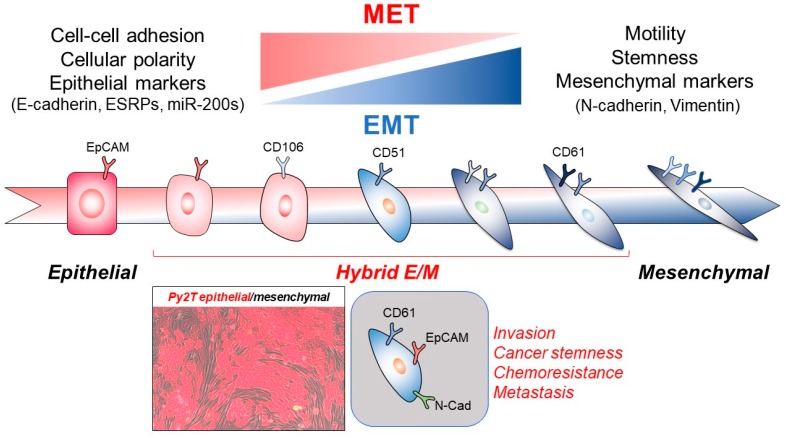
“The new emphasis of an old hypothesis [4], the “metastable” or “hybrid EMT” or “partial EMT” (Figure 1) recently gained some attention and proposed at least partial solutions to the previously analyzed problems [6,7].”
BackgroundInfluentialLabelle, M., Begum, S., & Hynes, R. O. (2011) · Cancer Cell · doi:10.1016/j.ccr.2011.09.009 · Cited by 1,833 · cited 1×
“Then, additional cells, including mature platelets, protect the CTCs from further destruction by the immune system and facilitate extravasation [124].”
BackgroundFischer, K. R., Durrans, A., Lee, S., Sheng, J., Li, F., Wong, S. T. C., Choi, H., El Rayes, T., Ryu, S., Troeger, J., et al. (2015) · Nature · doi:10.1038/nature15748 · Cited by 1,791 · cited 8×
“Using transgenic EMT reporter mice, which is a triple-transgenic breast cancer mouse model (MMTV-PyMT/Rosa26-loxP-RFP-loxP-GFP/Fsp1-Cre) with the following features: the oncogene Polyoma Virus middle T antigen under the direction of the mouse mammary tumor virus (MMTV-PyMT) causes breast tumorigenesis; the Cre-switcha…”
Influential
Cited by
Angiogenic signaling pathways and anti-angiogenic therapy for cancer
Liu, Z.-L., Chen, H.-H., Zheng, L.-L., Sun, L.-P., & Shi, L. (2023) · Signal Transduction and Targeted Therapy · doi:10.1038/s41392-023-01460-1 · Cited by 1,300
Exosomes: key players in cancer and potential therapeutic strategy
Dai, J., Su, Y., Zhong, S., Cong, L., Liu, B., Yang, J., Tao, Y., He, Z., Chen, C., & Jiang, Y. (2020) · Signal Transduction and Targeted Therapy · doi:10.1038/s41392-020-00261-0 · Cited by 1,186
Advances on immunotherapy for osteosarcoma
Yu, S., & Yao, X. (2024) · Molecular Cancer · doi:10.1186/s12943-024-02105-9 · Cited by 270
TGFβ-induced metabolic reprogramming during epithelial-to-mesenchymal transition in cancer
Hua, W., ten Dijke, P., Kostidis, S., Giera, M., & Hornsveld, M. (2020) · Cellular and Molecular Life Sciences · doi:10.1007/s00018-019-03398-6 · Cited by 238
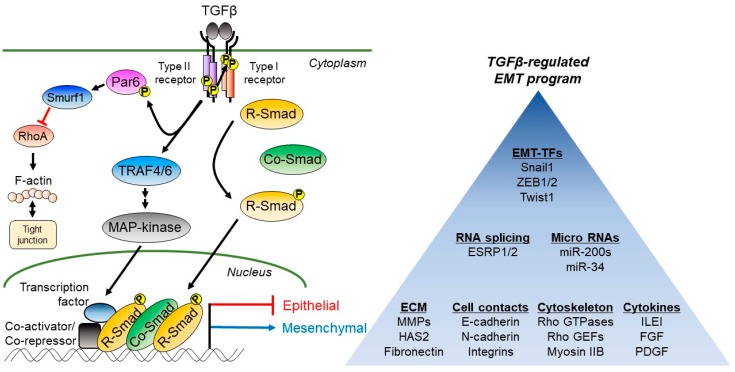
“TGFβ-induced SMADs bind to the promotors of SNAI1, TWIST1/2 and ZEB1 and increase their expression [42, 43].”
BackgroundTGF-beta: a master immune regulator
Larson, C., Oronsky, B., Carter, C. A., Oronsky, A., Knox, S. J., Sher, D., & Reid, T. R. (2020) · Expert Opinion on Therapeutic Targets · doi:10.1080/14728222.2020.1744568 · Cited by 210
“TGF-βinduced EMT, in which cells lose their epithelial characteristics, including polarity, and acquire a stem cell like phenotype [98,99] is linked with downregulation of antigen presentationassociated pathway proteins and resistance to T-cell mediated killing.”
Background
Metadata
- Authors
- Tsubakihara, Y., & Moustakas, A.
- Affiliations
- Uppsala University (SE)
- Corresponding author
- Moustakas, Aristidis
- ORCID
- Moustakas, Aristidis
- Venue
- International Journal of Molecular Sciences
- Publisher
- MDPI AG
- Published
- 2018-11-20
- Volume
- 19
- Issue
- 11
- Pages
- 3672
- ISSN
- 1422-0067 (ISSN-L)
- PMC
- PMC6274739
- OpenAlex
- W2900585188
- Cited by
- 160
- References
- 170
- Citations by year
- 2026: 8 · 2025: 10 · 2024: 21 · 2023: 22 · 2022: 22 · 2021: 31 · 2020: 29 · 2019: 17
- FWCI
- 1.89
- Type
- journal article
- Language
- en
- Open access
- gold
- dx.doi.org
- Licence
- Locations
- International Journal of Molecular Sciences (publishedVersion, cc-by)
- Europe PMC (PubMed Central) (publishedVersion, cc-by)
- PubMed Central (publishedVersion, cc-by)
- PubMed (publishedVersion)
- Uppsala University Publications (Uppsala University) (submittedVersion, other-oa)
- DOAJ (DOAJ: Directory of Open Access Journals) (submittedVersion, cc-by-sa)
- Funders
- Ludwig Institute for Cancer Research (Uppsala Branch)
- Cancerfonden (CAN 2015/438)
- Vetenskapsrådet (K2013-66X-14936-10-5 to AM)
- Topics
- Life Sciences › Biochemistry, Genetics and Molecular Biology › Molecular Biology › TGF-β signaling in diseases
- Health Sciences › Medicine › Oncology › Cancer Cells and Metastasis
- Life Sciences › Biochemistry, Genetics and Molecular Biology › Molecular Biology › Mechanisms of cancer metastasis
- Keywords
- epithelial-mesenchymal transition, metastasis, TGF-beta, TGF-beta signaling, oncogenic Ras, cytokine signaling, signaling crosstalk, extracellular matrix remodeling, collective cell migration, circulating tumor cells, chemoresistance, tumor cell dissemination
- MeSH terms
- Animals, Humans, Models, Biological, Neoplasm Metastasis, Transcription Factors, Signal Transduction, Transforming Growth Factor beta, Epithelial-Mesenchymal Transition
About these checks
Registry, retraction, Cites and statistics results are computed, not judged, with one exception: a printed reference that no index lists is read once by a model before it counts as a citation error. Claims are extracted by a model and kept only when their quote appears verbatim in the text; each cited source is then checked, with a model’s help, for whether it says what the claim relies on. Those verdicts can be wrong — read the claim’s quote and the cited source before relying on one.
Statistics and arithmetic are recomputed, not judged.
Confidence bands are shown only for fields calibrated on our annotated test set. None is calibrated yet, so no band is shown.
What counts as a claim ›How we measure confidence ›How we check this ›
Are you an author, or do you see a problem with this page? Request a review
Data sources
Bibliographic data: Semantic Scholar, OpenAlex, Crossref.
Contains information from the Semantic Scholar Academic Graph Datasets, made available under the ODC Attribution License (ODC-BY 1.0).
Semantic Scholar’s data is described in: Kinney, R., et al. (2023). The Semantic Scholar Open Data Platform. arXiv:2301.10140.
