

The DOI matches its Crossref record; 31 of the 32 references it cites were found in a registry or an index.
Chemical, Thermal, Time, and Enzymatic Stability of Silk Materials with Silk I Structure
Open accessAbstract
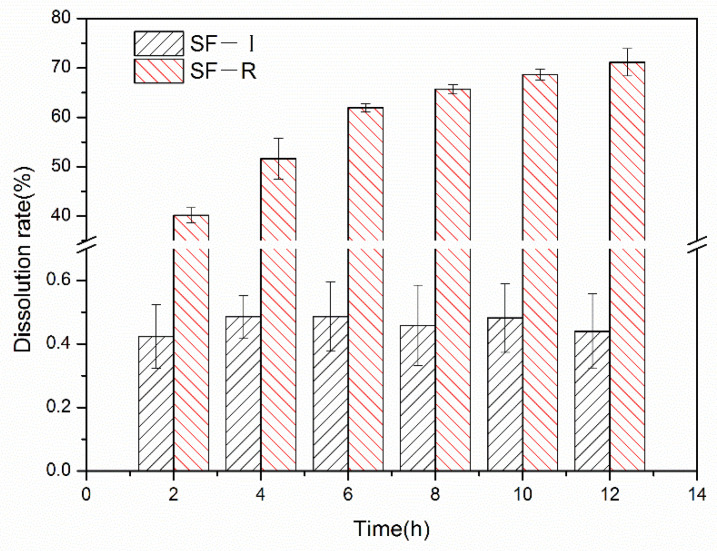
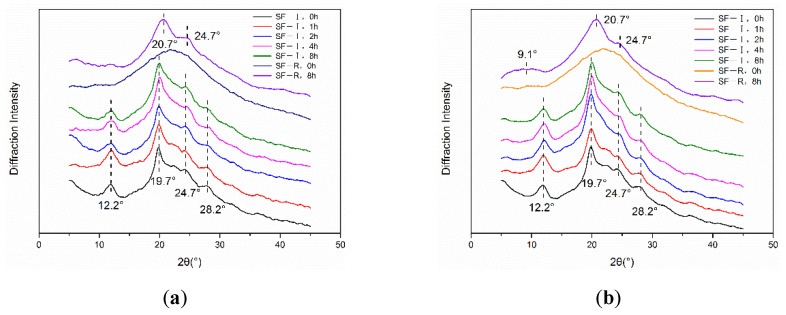
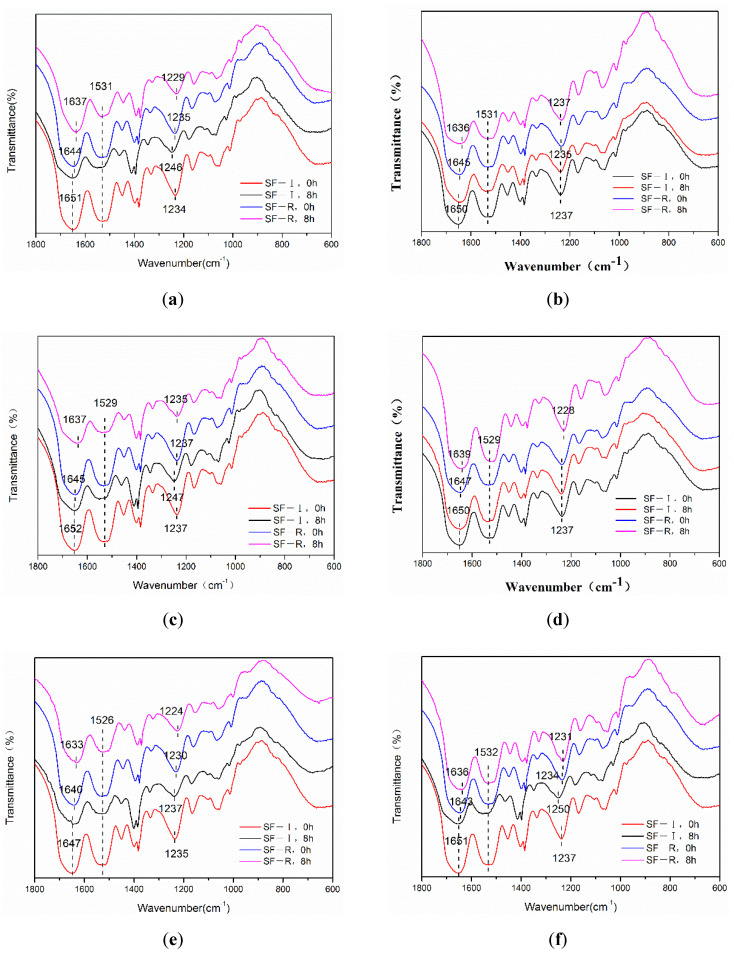
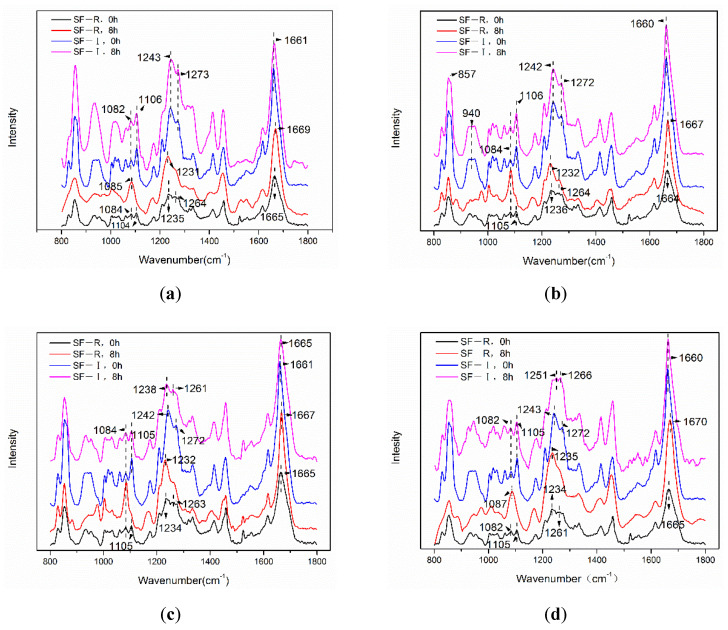
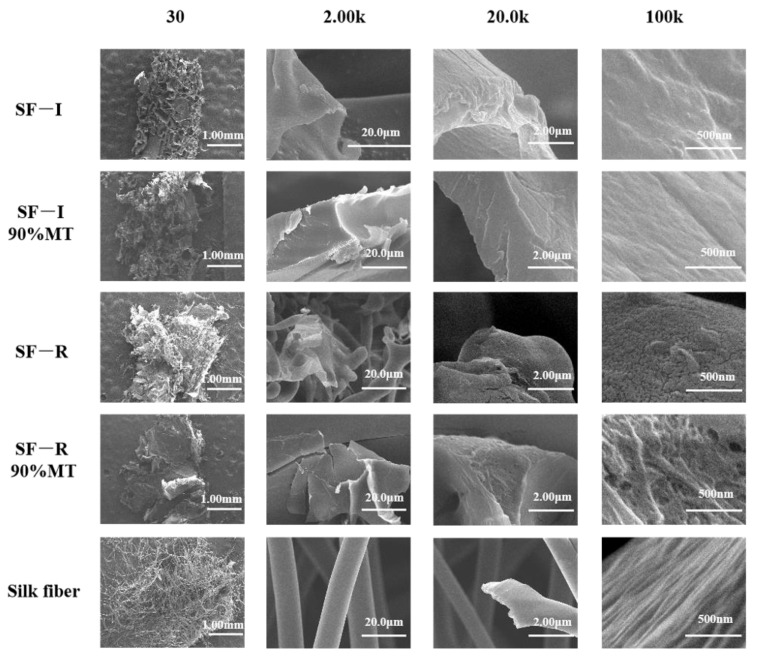
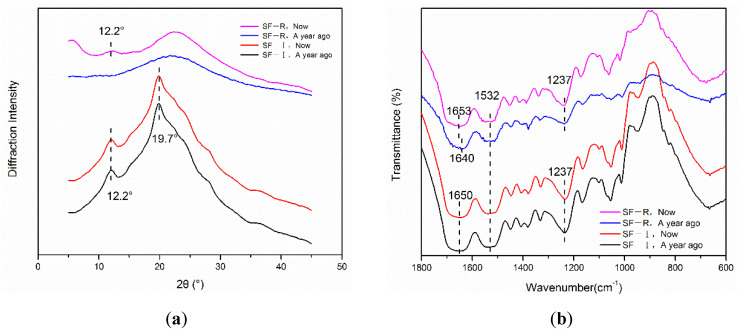
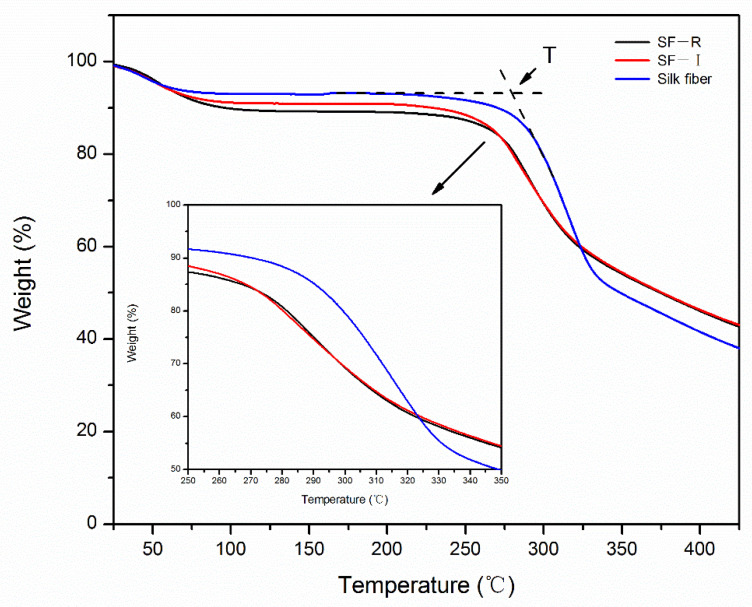
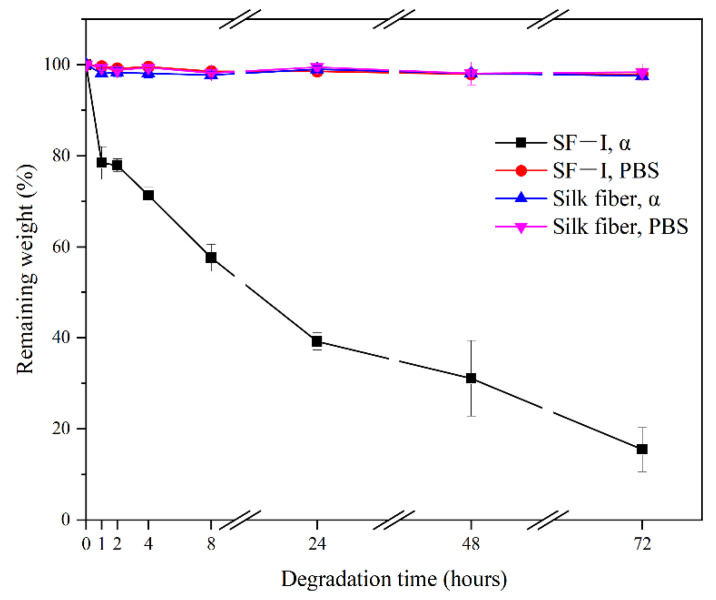
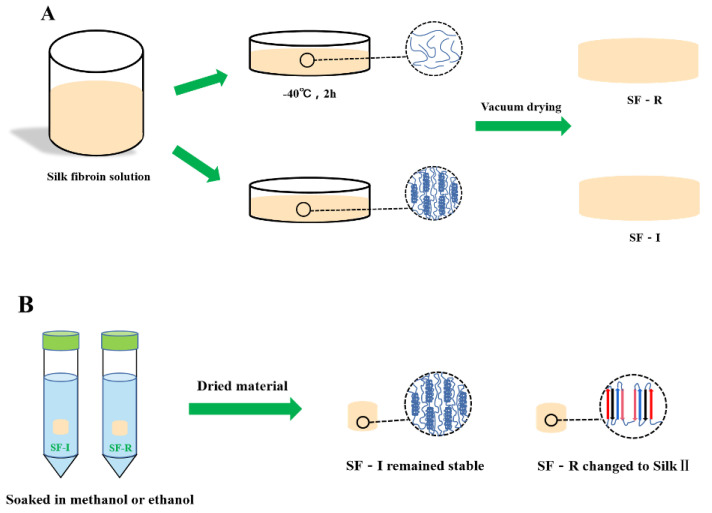
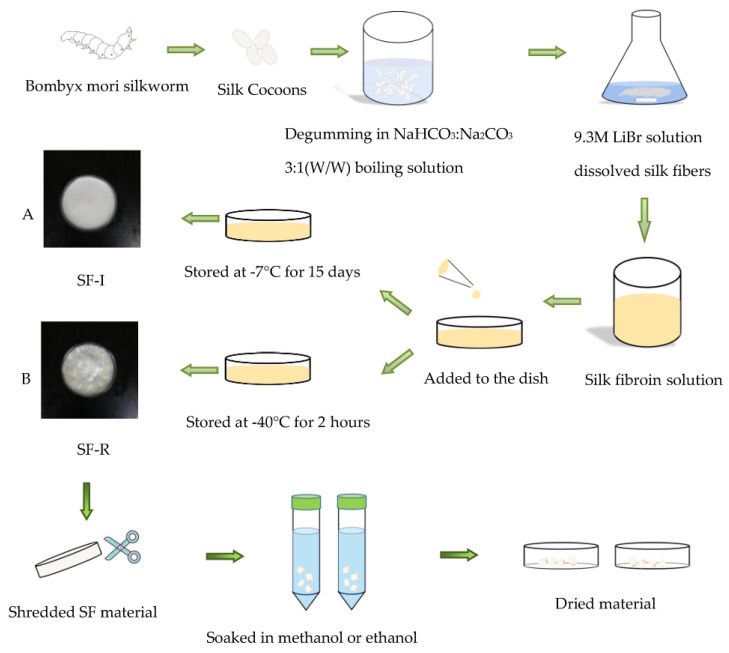
The crystalline structure of silk fibroin Silk I is generally considered to be a metastable structure; however, there is no definite conclusion under what circumstances this crystalline structure is stable or the crystal form will change. In this study, silk fibroin solution was prepared from B. Mori silkworm cocoons, and a combined method of freeze-crystallization and freeze-drying at different temperatures was used to obtain stable Silk I crystalline material and uncrystallized silk material, respectively. Different concentrations of methanol and ethanol were used to soak the two materials with different time periods to investigate the effect of immersion treatments on the crystalline structure of silk fibroin materials. X-ray diffraction (XRD), Fourier transform infrared spectroscopy (FTIR), Raman scattering spectroscopy (Raman), Scanning electron microscope (SEM), and Thermogravimetric analysis (TGA) were used to characterize the structure of silk fibroin before and after the treatments. The results showed that, after immersion treatments, uncrystallized silk fibroin material with random coil structure was transformed into Silk II crystal structure, while the silk material with dominated Silk I crystal structure showed good long-term stability without obvious transition to Silk II crystal structure. α-chymotrypsin biodegradation study showed that the crystalline structure of silk fibroin Silk I materials is enzymatically degradable with a much lower rate compared to uncrystallized silk materials. The crystalline structure of Silk I materials demonstrate a good long-term stability, endurance to alcohol sterilization without structural changes, and can be applied to many emerging fields, such as biomedical materials, sustainable materials, and biosensors.
Overview
The claims and statistics of this paper haven’t been checked yet.
Run the check — free, no account needed. It reads the open-access text and checks the sources it cites.
Integrity signals
Registry
Cites
Statistics
Figures
Verification
Claims the paper makes
The claims and statistics of this paper haven’t been checked yet.
Run the check — free, no account needed. It reads the open-access text and checks the sources it cites.
Claims other papers make about this one
Each is checked against this paper’s own text: does it say what the citing paper says it does?
The source backs part of the claim, not all of it — or backs it for a different population, condition or comparison.
In the citing paper
“The principal thermal degradation event for SF and SFMA occurred at 293.0 and 292.0 °C, respectively, corresponding to the breakdown of the protein backbone and the degradation of both amorphous regions and β-sheet crystalline domains [55].”
From Montmorillonite-reinforced methacrylated collagen/methacrylated silk fibroin hydrogel-based inks: rheological and physicochemical characterization for bone scaffold applications (2026) · cites this paper as [55]
Experimental — accuracy not yet measured
Self-check
Percentages, sums and reported differences re-computed from the paper’s own numbers.
The self-check needs the paper’s full text.
Citations
Cites
Materials fabrication from Bombyx mori silk fibroin
Rockwood, D. N., Preda, R. C., Yücel, T., Wang, X., Lovett, M. L., & Kaplan, D. L. (2011) · Nature Protocols · doi:10.1038/nprot.2011.379 · Cited by 3,149
Vepari, C., & Kaplan, D. L. (2007) · Progress in Polymer Science · doi:10.1016/j.progpolymsci.2007.05.013 · Cited by 2,579
Yang, H., Yang, S., Kong, J., Dong, A., & Yu, S. (2015) · Nature Protocols · doi:10.1038/nprot.2015.024 · Cited by 1,310
Silk fibroin: Structural implications of a remarkable amino acid sequence
Zhou, C.-Z., Confalonieri, F., Jacquet, M., Perasso, R., Li, Z.-G., & Janin, J. (2001) · Proteins: Structure, Function, and Bioinformatics · doi:10.1002/prot.1078 · Cited by 737
Fine organization of Bombyx mori fibroin heavy chain gene
Zhou, C. (2000) · Nucleic Acids Research · doi:10.1093/nar/28.12.2413 · Cited by 710
Water-insoluble silk films with silk I structure
Lu, Q., Hu, X., Wang, X., Kluge, J. A., Lu, S., Cebe, P., & Kaplan, D. L. (2010) · Acta Biomaterialia · doi:10.1016/j.actbio.2009.10.041 · Cited by 654
Self-citationRegulation of Silk Material Structure by Temperature-Controlled Water Vapor Annealing
Hu, X., Shmelev, K., Sun, L., Gil, E. S., Park, S., Cebe, P., & Kaplan, D. L. (2011) · Biomacromolecules · doi:10.1021/bm200062a · Cited by 651
Self-citationWater‐Stable Silk Films with Reduced β‐Sheet Content
Jin, H., Park, J., Karageorgiou, V., Kim, U.-J., Valluzzi, R., Cebe, P., & Kaplan, D. L. (2005) · Advanced Functional Materials · doi:10.1002/adfm.200400405 · Cited by 610
In vivo bioresponses to silk proteins
Thurber, A. E., Omenetto, F. G., & Kaplan, D. L. (2015) · Biomaterials · doi:10.1016/j.biomaterials.2015.08.039 · Cited by 455
Cai, S., & Singh, B. R. (1999) · Biophysical Chemistry · doi:10.1016/s0301-4622(99)00060-5 · Cited by 366
Degradation mechanism and control of silk fibroin
Lu, Q., Zhang, B., Li, M., Zuo, B., Kaplan, D. L., Huang, Y., & Zhu, H. (2011) · Biomacromolecules · doi:10.1021/bm101422j · Cited by 344
Mechanical Properties of Electrospun Silk Fibers
Wang, M., Jin, H., Kaplan, D. L., & Rutledge, G. C. (2004) · Macromolecules · doi:10.1021/ma048988v · Cited by 314
Mechanism of enzymatic degradation of beta-sheet crystals
Numata, K., Cebe, P., & Kaplan, D. L. (2009) · Biomaterials · doi:10.1016/j.biomaterials.2009.12.026 · Cited by 279
Silk Self-Assembly Mechanisms and Control From Thermodynamics to Kinetics
Lü, Q., Zhu, H., Zhang, C., Zhang, F., Zhang, B., & Kaplan, D. L. (2012) · Biomacromolecules · doi:10.1021/bm201731e · Cited by 233
Insoluble and Flexible Silk Films Containing Glycerol
Lu, S., Wang, X., Lü, Q., Zhang, X., Kluge, J. A., Uppal, N., Omenetto, F. G., & Kaplan, D. L. (2009) · Biomacromolecules · doi:10.1021/bm900993n · Cited by 220
Self-citationEffect of water on the thermal properties of silk fibroin
Hu, X., Kaplan, D. L., & Cebe, P. (2006) · Thermochimica Acta · doi:10.1016/j.tca.2006.12.011 · Cited by 202
Self-citationZhou, P., Xie, X., Knight, D. P., Zong, X.-H., Deng, F., & Yao, W.-H. (2004) · Biochemistry · doi:10.1021/bi049344i · Cited by 177
Macroporous Silk Fibroin Cryogels
Ak, F., Öztoprak, Z., Karakutuk, I., & Okay, O. (2013) · Biomacromolecules · doi:10.1021/bm3018033 · Cited by 160
Raman spectroscopic characterization of Bombyx mori silk fibroin: Raman spectrum of Silk I
Monti, P., Taddei, P., Freddi, G., Asakura, T., & Tsukada, M. (2001) · Journal of Raman Spectroscopy · doi:10.1002/jrs.675 · Cited by 160
Silk I and Silk II studied by fast scanning calorimetry
Cebe, P., Partlow, B. P., Kaplan, D. L., Wurm, A., Zhuravlev, E., & Schick, C. H. (2017) · Acta Biomaterialia · doi:10.1016/j.actbio.2017.04.001 · Cited by 149
Improvements of the physical properties of fibroin membranes with sodium alginate
Liang, C. X., & Hirabayashi, K. (1992) · Journal of Applied Polymer Science · doi:10.1002/app.1992.070451108 · Cited by 135
Orientation of silk III at the air-water interface
Valluzzi, R., Gido, S. P., Muller, W. S., & Kaplan, D. L. (1999) · International Journal of Biological Macromolecules · doi:10.1016/s0141-8130(99)00002-1 · Cited by 117
Combined Silk Fibroin Microneedles for Insulin Delivery
Zhu, M., Liu, Y., Jiang, F., Cao, J., Kundu, S. C., & Lu, S. (2020) · ACS Biomaterials Science & Engineering · doi:10.1021/acsbiomaterials.0c00273 · Cited by 113
Self-citationPhase Behavior and Hydration of Silk Fibroin
Sohn, S., Strey, H. H., & Gido, S. P. (2004) · Biomacromolecules · doi:10.1021/bm0343693 · Cited by 62
An Unstable Lattice in Silk Fibroin
Kratky, O., Schauenstein, E., & Sekora, A. (1950) · Nature · doi:10.1038/165319a0 · Cited by 60
The influence of the hydrophilic–lipophilic environment on the structure of silk fibroin protein
Lu, S., Li, J., Zhang, S., Yin, Z., Xing, T., & Kaplan, D. L. (2015) · Journal of Materials Chemistry B · doi:10.1039/c4tb01873g · Cited by 54
Self-citationProbing the microstructure of Nafion-117 using positron annihilation spectroscopy
Sodaye, H. S., Pujari, P. K., Goswami, A., & Manohar, S. Β. (1997) · Journal of Polymer Science Part B Polymer Physics · doi:10.1002/(sici)1099-0488(19970415)35:5 · Cited by 50
Influence of ethanol post-treatments on the properties of silk protein materials
Puerta, M., Arango, M. C., Jaramillo‐Quiceno, N., Álvarez‐López, C., & Restrepo‐Osorio, A. (2019) · SN Applied Sciences · doi:10.1007/s42452-019-1486-0 · Cited by 27
Nanoscale X-Ray Diffraction of Silk Fibers
Riekel, C., Burghammer, M. C., & Rosenthal, M. (2019) · Frontiers in Materials · doi:10.3389/fmats.2019.00315 · Cited by 26
Study on Silk I Porous 3-D Scaffolds
Lu, S., Feng, L., Li, M. Z., Di, C. X., & Bai, L. (2007) · Key engineering materials · doi:10.4028/www.scientific.net/kem.342-343.233 · Cited by 5
Self-citation- Self-citation
Research works printed but not linked: 1
- Tu, A.T. (1982). Raman Spectroscopie in Biology. Principles and Applications, A Wiley-Interscience Publication, John Wiley and Sons.
Cited by
Sorted by citations
Multifunctional Hydrogel Based on Silk Fibroin Promotes Tissue Repair and Regeneration
Lin, D., Li, M., Wang, L., Cheng, J., Yang, Y., Wang, H., Ye, J., & Liu, Y. (2024) · Advanced Functional Materials · doi:10.1002/adfm.202405255 · Cited by 147
Beckingham, B., Apintiloaiei, A., Moore, C. R., & Brandes, J. A. (2023) · Microplastics and Nanoplastics · doi:10.1186/s43591-023-00056-4 · Cited by 136
Bucciarelli, A., & Motta, A. (2022) · Biomaterials Advances · doi:10.1016/j.bioadv.2022.212982 · Cited by 122
Silk Fibroin Combined with Electrospinning as a Promising Strategy for Tissue Regeneration
Chen, K., Li, Y., Li, Y., Pan, W., & Tan, G. (2022) · Macromolecular Bioscience · doi:10.1002/mabi.202200380 · Cited by 84
A comprehensive review on silk fibroin as a persuasive biomaterial for bone tissue engineering
Li, M., You, J., Qin, Q., Liu, M., Yang, Y., Jia, K., Zhang, Y., & Zhou, Y. (2023) · International Journal of Molecular Sciences · doi:10.3390/ijms24032660 · Cited by 64
Metadata
- Authors
- Zhao, M., Qi, Z., Tao, X., Newkirk, C., Hu, X., & Lu, S.
- Affiliations
- Soochow University (CN)
- Rowan University (US)
- Corresponding author
- Hu, Xiao
- Lu, Shenzhou
- ORCID
- Venue
- International Journal of Molecular Sciences
- Publisher
- MDPI AG
- Published
- 2021-04-16
- Volume
- 22
- Issue
- 8
- Pages
- 4136
- ISSN
- 1422-0067 (ISSN-L)
- PMC
- PMC8073524
- OpenAlex
- W3153480078
- Cited by
- 130
- References
- 32
- Citations by year
- 2026: 36 · 2025: 34 · 2024: 24 · 2023: 18 · 2022: 16 · 2021: 2
- FWCI
- 3.92
- Type
- journal article
- Language
- en
- Open access
- gold
- doi.org
- Licence
- Locations
- International Journal of Molecular Sciences (publishedVersion, cc-by)
- PubMed Central (publishedVersion, cc-by)
- PubMed (publishedVersion)
- Rowan Digitals Works (Rowan University) (submittedVersion, cc-by)
- DOAJ (DOAJ: Directory of Open Access Journals) (submittedVersion, cc-by-sa)
- Funders
- National Natural Science Foundation of China (51973144)
- Six Talent Peaks Project in Jiangsu Province (SWYY-038)
- College Nature Science Research Project of Jiangsu Province (20KJA540002)
- US Natural Science Foundation Biomaterials Program (DMR-1809541)
- Topics
- Physical Sciences › Materials Science › Biomaterials › Silk-based biomaterials and applications
- Life Sciences › Agricultural and Biological Sciences › Insect Science › Silkworms and Sericulture Research
- Physical Sciences › Materials Science › Polymers and Plastics › Dyeing and Modifying Textile Fibers
- Keywords
- silk fibroin, freeze crystallization, freeze-drying, random coil, enzymatic degradation, thermal stability, chemical stability, Bombyx mori
- MeSH terms
- Chymotrypsin, Fibroins, Hot Temperature, Protein Denaturation, Protein Stability, Proteolysis
About these checks
Registry, retraction, Cites and statistics results are computed, not judged, with one exception: a printed reference that no index lists is read once by a model before it counts as a citation error. Claims are extracted by a model and kept only when their quote appears verbatim in the text; each cited source is then checked, with a model’s help, for whether it says what the claim relies on. Those verdicts can be wrong — read the claim’s quote and the cited source before relying on one.
Statistics and arithmetic are recomputed, not judged.
Confidence bands are shown only for fields calibrated on our annotated test set. None is calibrated yet, so no band is shown.
What counts as a claim ›How we measure confidence ›How we check this ›
Are you an author, or do you see a problem with this page? Request a review
