

The DOI matches its Crossref record; 56 of the 56 references it cites were found in a registry or an index.
High Molecular Weight Kininogen: A Review of the Structural Literature
Open accessPublished version of a preprint
Abstract
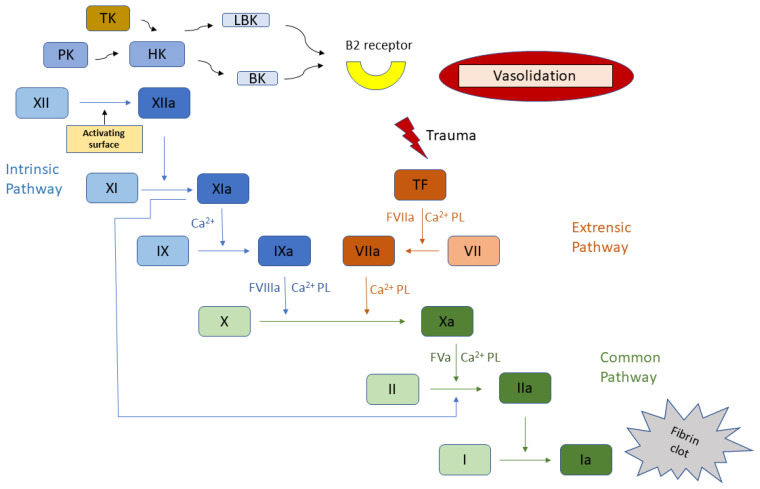
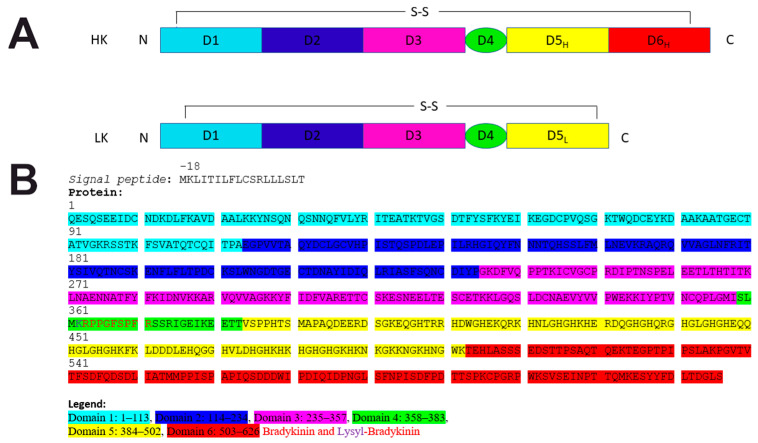
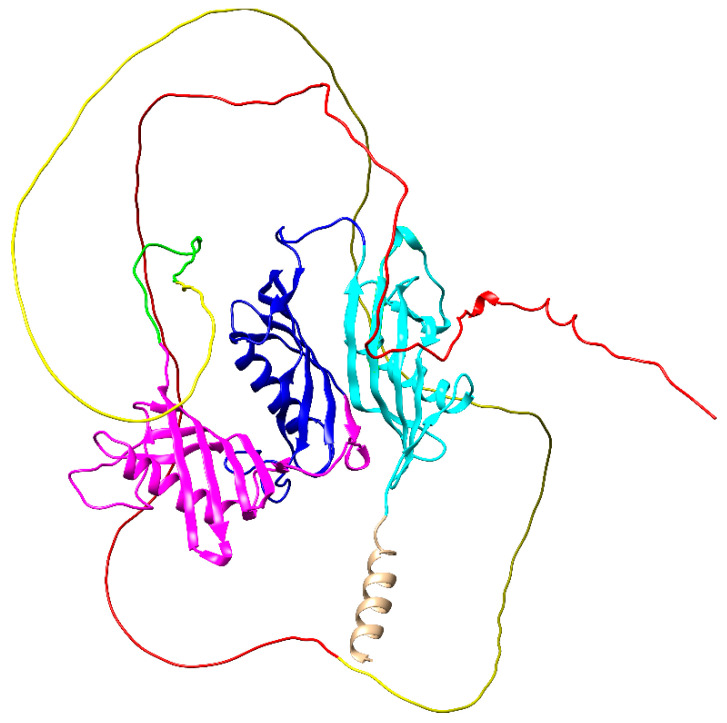
Kininogens are multidomain glycoproteins found in the blood of most vertebrates. High molecular weight kininogen demonstrate both carrier and co-factor activity as part of the intrinsic pathway of coagulation, leading to thrombin generation. Kininogens are the source of the vasoactive nonapeptide bradykinin. To date, attempts to crystallize kininogen have failed, and very little is known about the shape of kininogen at an atomic level. New advancements in the field of cryo-electron microscopy (cryoEM) have enabled researchers to crack the structure of proteins that has been refractory to traditional crystallography techniques. High molecular weight kininogen is a good candidate for structural investigation by cryoEM. The goal of this review is to summarize the findings of kininogen structural studies.
Overview
The claims and statistics of this paper haven’t been checked yet.
Run the check — free, no account needed. It reads the open-access text and checks the sources it cites.
Integrity signals
Registry
Cites
Statistics
Figures
Verification
Claims the paper makes
The claims and statistics of this paper haven’t been checked yet.
Run the check — free, no account needed. It reads the open-access text and checks the sources it cites.
Self-check
Percentages, sums and reported differences re-computed from the paper’s own numbers.
The self-check needs the paper’s full text.
Citations
Cites
UCSF Chimera—A visualization system for exploratory research and analysis
Pettersen, E. F., Goddard, T. D., Huang, C. C., Couch, G. S., Greenblatt, D. M., Meng, E. C., & Ferrin, T. E. (2004) · Journal of Computational Chemistry · doi:10.1002/jcc.20084 · Cited by 45,828
Highly accurate protein structure prediction with AlphaFold
Jumper, J., Evans, R., Pritzel, A., Green, T., Figurnov, M., Ronneberger, O., Tunyasuvunakool, K., Bates, R., Žídek, A., Potapenko, A., et al. (2021) · Nature · doi:10.1038/s41586-021-03819-2 · Cited by 43,764
The Pfam Protein Families Database
Bateman, A. (2002) · Nucleic Acids Research · doi:10.1093/nar/30.1.276 · Cited by 14,000
Pfam: The protein families database in 2021
Mistry, J., Chuguransky, S., Williams, L., Qureshi, M., Salazar, G. A., Sonnhammer, E. L. L., Tosatto, S. C. E., Paladin, L., Raj, S., Richardson, L. J., et al. (2021) · Nucleic Acids Research · doi:10.1093/nar/gkaa913 · Cited by 7,452
The Pfam protein families database in 2019
El-Gebali, S., Mistry, J., Bateman, A., Eddy, S. R., Luciani, A., Potter, S. C., Qureshi, M., Richardson, L. J., Salazar, G. A., Smart, A., et al. (2019) · Nucleic Acids Research · doi:10.1093/nar/gky995 · Cited by 4,602
The Pfam protein families database
Punta, M., Coggill, P. C., Eberhardt, R. Y., Mistry, J., Tate, J., Boursnell, C., Pang, N., Forslund, K., Ceric, G., Clements, J., et al. (2012) · Nucleic Acids Research · doi:10.1093/nar/gkr1065 · Cited by 3,719
The Pfam protein families database
Bateman, A. (2004) · Nucleic Acids Research · doi:10.1093/nar/gkh121 · Cited by 3,127
The Pfam protein families database
Finn, R. D., Mistry, J., Tate, J., Coggill, P., Heger, A., Pollington, J. E., Gavin, O. L., Gunasekaran, P., Ceric, G., Forslund, K., et al. (2010) · Nucleic Acids Research · doi:10.1093/nar/gkp985 · Cited by 2,694
Pfam: clans, web tools and services
Finn, R. D. (2006) · Nucleic Acids Research · doi:10.1093/nar/gkj149 · Cited by 2,302
20 years of the SMART protein domain annotation resource
Letunic, I., & Bork, P. (2018) · Nucleic Acids Research · doi:10.1093/nar/gkx922 · Cited by 2,020
Research works printed but not linked: 1
- Waterhouse, 2004, UCSF Chimera—A visualization system for exploratory research and analysis, J. Biol. Chem., 25, 1605
Metadata
- Authors
- Ponczek, M. B.
- Affiliations
- Department of General Biochemistry, Faculty of Biology and Environmental Protection, University of Lodz, Pomorska 141/143, 90-236 Lodz, Poland
- ORCID
- Ponczek, Michał B.
- Venue
- International Journal of Molecular Sciences
- Publisher
- MDPI AG
- Published
- 2021-12-13
- Volume
- 22
- Issue
- 24
- Pages
- 13370
- ISSN
- 1422-0067 (ISSN-L)
- PMC
- PMC8706920
- OpenAlex
- W4200368767
- Cited by
- 45
- References
- 56
- Citations by year
- 2026: 11 · 2025: 10 · 2024: 3 · 2023: 15 · 2022: 6
- FWCI
- 0.85
- Type
- journal article
- Language
- en
- Open access
- gold
- doi.org
- Licence
- Locations
- International Journal of Molecular Sciences (publishedVersion, cc-by)
- Preprints.org (acceptedVersion, cc-by)
- PubMed Central (publishedVersion, cc-by)
- PubMed (publishedVersion)
- DOAJ (DOAJ: Directory of Open Access Journals) (submittedVersion, cc-by-sa)
- Funders
- Saint Louis University
- National Institutes of Health
- University of California, San Francisco
- National Center for Research Resources (P41RR001081)
- Topics
- Health Sciences › Medicine › Hematology › Coagulation, Bradykinin, Polyphosphates, and Angioedema
- Life Sciences › Immunology and Microbiology › Immunology › Complement system in diseases
- Life Sciences › Biochemistry, Genetics and Molecular Biology › Structural Biology › Enzyme Structure and Function
- Keywords
- high molecular weight kininogen, intrinsic coagulation pathway, thrombin generation, bradykinin, protein structure, cryo-electron microscopy
- MeSH terms
- Animals, Bradykinin, Humans, Kallikreins, Kininogens, Structure-Activity Relationship, Kininogen, High-Molecular-Weight, Cryoelectron Microscopy
About these checks
Registry, retraction, Cites and statistics results are computed, not judged, with one exception: a printed reference that no index lists is read once by a model before it counts as a citation error. Claims are extracted by a model and kept only when their quote appears verbatim in the text; each cited source is then checked, with a model’s help, for whether it says what the claim relies on. Those verdicts can be wrong — read the claim’s quote and the cited source before relying on one.
Statistics and arithmetic are recomputed, not judged.
Confidence bands are shown only for fields calibrated on our annotated test set. None is calibrated yet, so no band is shown.
What counts as a claim ›How we measure confidence ›How we check this ›
Are you an author, or do you see a problem with this page? Request a review
How to cite
Cite CoChat for the checks on this page, and the paper for its own findings.
- This page
- CoChat. (2026). Citation check: High Molecular Weight Kininogen: A Review of the Structural Literature. https://app.cochat.ai/papers/10.3390/ijms222413370
- The paper
- Ponczek, M. B. (2021). High Molecular Weight Kininogen: A Review of the Structural Literature. International Journal of Molecular Sciences. https://doi.org/10.3390/ijms222413370
Data sources
Bibliographic data: Semantic Scholar, OpenAlex, Crossref.
Contains information from the Semantic Scholar Academic Graph Datasets, made available under the ODC Attribution License (ODC-BY 1.0).
Semantic Scholar’s data is described in: Kinney, R., et al. (2023). The Semantic Scholar Open Data Platform. arXiv:2301.10140.
