

The Effect of Intensity-Modulated Radiotherapy to the Head and Neck Region on the Oral Innate Immune Response and Oral Microbiome: A Prospective Cohort Study of Head and Neck Tumour Patients
Open accessThe DOI matches its Crossref record; 39 of the 39 references it cites were found in a registry or an index.
Abstract
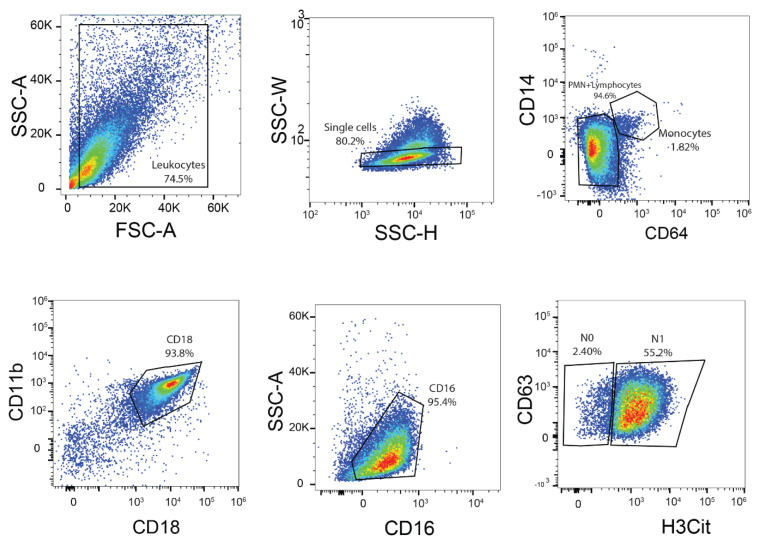
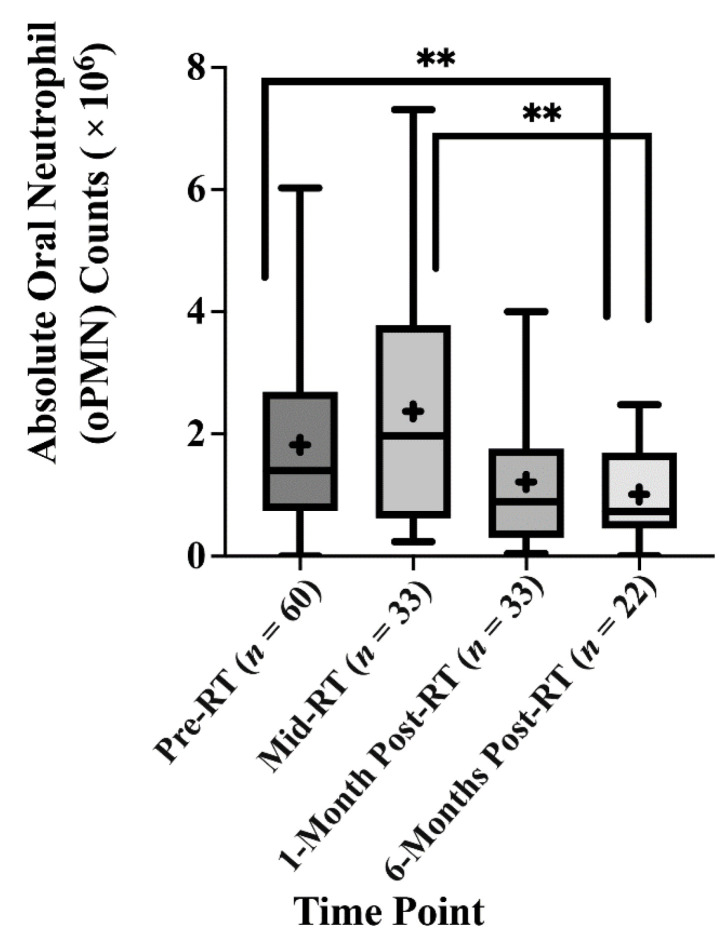
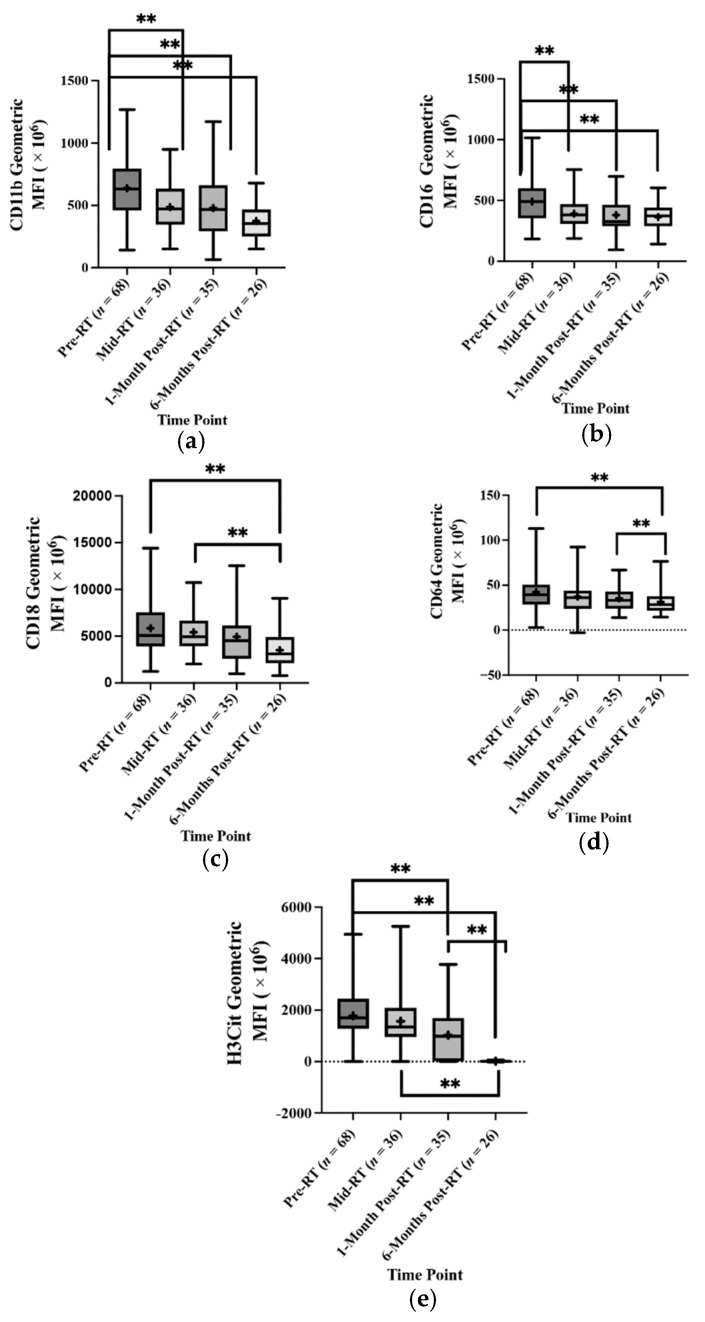
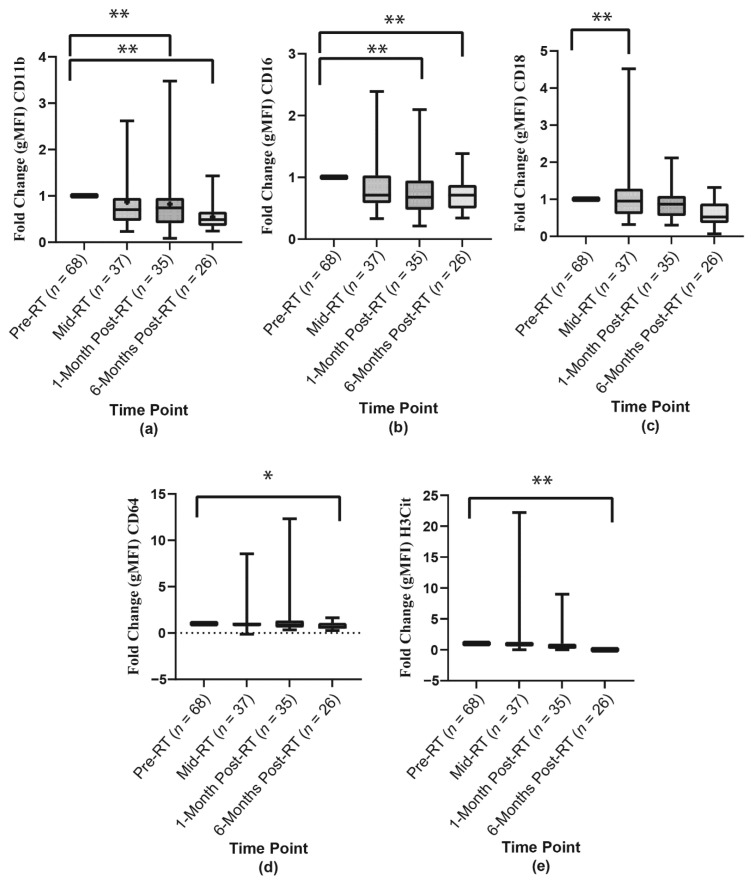
Neutrophils, also known as polymorphonuclear leukocytes (PMNs), form a significant component of the innate host response, and the consequence of the interaction between the oral microbiota and PMNs is a crucial determinant of oral health status. The impact of radiation therapy (RT) for head and neck tumour (HNT) treatment on the oral innate immune system, neutrophils in particular, and the oral microbiome has not been thoroughly investigated. Therefore, the objective of this study was to characterize RT-mediated changes in oral neutrophils (oPMNs) and the oral microbiome in patients undergoing RT to treat HNTs. Oral rinse samples were collected prior to, during and post-RT from HNT patients receiving RT at Dental Oncology at Princess Margaret Cancer Centre. The oPMNs counts and activation states were analysed using flow cytometry, and the oral microbiome was analysed using 16S rRNA gene sequencing. Statistically significant (p < 0.05) drops in oPMN counts and the activation states of the CD11b, CD16, CD18, CD64 and H3Cit markers from pre-RT to post-RT were observed. Moreover, exposure to RT caused a significant reduction in the relative abundance of commensal Gram-negative bacteria and increased the commensal Gram-positive microbes. Ionizing radiation for the treatment of HNTs simultaneously decreased the recruitment of oPMNs into the oral cavity and suppressed their activation state. The oral microbiome composition post-RT was altered significantly due to RT which may favour the colonization of specific microbial communities unfavourable for the long-term development of a balanced oral microbiome.
Overview
The claims and statistics of this paper haven’t been checked yet.
Free: it reads the open-access text and checks the first 5 claims that cite a source we can check. Create a free account to check every claim.
Integrity signals
Registry
Cites
Statistics
Figures
Verification
Claims the paper makes
The claims and statistics of this paper haven’t been checked yet.
Free: it reads the open-access text and checks the first 5 claims that cite a source we can check. Create a free account to check every claim.
Self-check
Percentages, sums and reported differences re-computed from the paper’s own numbers.
The self-check needs the paper’s full text.
Citations
Cites
QIIME allows analysis of high-throughput community sequencing data
Caporaso, J. G., Kuczynski, J., Stombaugh, J., Bittinger, K., Bushman, F. D., Costello, E. K., Fierer, N., Peña, A. G., Goodrich, J. K., Gordon, J. I., et al. (2010) · Nature Methods · doi:10.1038/nmeth.f.303 · Cited by 34,887 · cited 2×
“Caporaso, J.G.; Kuczynski, J.; Stombaugh, J.; Bittinger, K.; Bushman, F.D.; Costello, E.K.; Fierer, N.; Peña, A.G.; Goodrich, J.K.; Gordon, J.I.; et al. QIIME allows analysis of high-throughput community sequencing data.”
Ultra-high-throughput microbial community analysis on the Illumina HiSeq and MiSeq platforms
Caporaso, J. G., Lauber, C. L., Walters, W. A., Berg-Lyons, D., Huntley, J., Fierer, N., Owens, S. M., Betley, J., Fraser, L., Bauer, M., et al. (2012) · The ISME Journal · doi:10.1038/ismej.2012.8 · Cited by 8,839 · cited 3×
“Caporaso, J.G.; Kuczynski, J.; Stombaugh, J.; Bittinger, K.; Bushman, F.D.; Costello, E.K.; Fierer, N.; Peña, A.G.; Goodrich, J.K.; Gordon, J.I.; et al. QIIME allows analysis of high-throughput community sequencing data.”
MethodChow, L. Q. M. (2020) · New England Journal of Medicine · doi:10.1056/nejmra1715715 · Cited by 2,075
DNA damage and the balance between survival and death in cancer biology
Roos, W. P., Thomas, A. D., & Kaina, B. (2016) · Nature Reviews Cancer · doi:10.1038/nrc.2015.2 · Cited by 1,189
Tissue-Specific Immunity at the Oral Mucosal Barrier
Moutsopoulos, N. M., & Konkel, J. E. (2018) · Trends in Immunology · doi:10.1016/j.it.2017.08.005 · Cited by 409 · cited 1×
“Circulating neutrophils (cPMNs) that are recruited to the oral cavity and become oPMNs, carry out an immune surveillance function and symbiotically interact with commensal microbiota to maintain homeostasis [11].”
BackgroundMao, L., Hong, W. K., & Papadimitrakopoulou, V. A. (2004) · Cancer Cell · doi:10.1016/s1535-6108(04)00090-x · Cited by 365 · cited 1×
“Head and neck tumours (HNTs) can either be malignant or benign [4] with the most common type of head and neck cancer being epithelial in origin called squamous cell carcinomas (SCCs); its progression includes the accumulation of genetic and epigenetic modifications occurring throughout multiple steps [5].”
BackgroundOral complications of radiotherapy
Sciubba, J. J., & Goldenberg, D. (2006) · The Lancet Oncology · doi:10.1016/s1470-2045(06)70580-0 · Cited by 358
Modern radiotherapy for head and neck cancer
Alterio, D., Marvaso, G., Ferrari, A., Volpe, S., Orecchia, R., & Jereczek-Fossa, B. A. (2019) · Seminars in Oncology · doi:10.1053/j.seminoncol.2019.07.002 · Cited by 295
Effect of Radiation-Induced Xerostomia on Human Oral Microflora
Brown, L. R., Dreizen, S., Handler, S., & Johnston, D. A. (1975) · Journal of Dental Research · doi:10.1177/00220345750540040801 · Cited by 291
Radiation sensitivity of human and murine peripheral blood lymphocytes, stem and progenitor cells
Heylmann, D., Rödel, F., Kindler, T., & Kaina, B. (2014) · Biochimica et Biophysica Acta (BBA) - Reviews on Cancer · doi:10.1016/j.bbcan.2014.04.009 · Cited by 227 · cited 1×
“The radiosensitivity of oPMNs has not been studied intensively; however, studies on circulatory hemopoietic cells have shown that lymphocytes had the greatest sensitivity to radiation, followed by neutrophils and monocytes, then platelets and finally, erythrocytes [24].”
Background
Cited by
From Pathogenesis to Intervention: The Importance of the Microbiome in Oral Mucositis
Bruno, J. S., Al-Qadami, G. H., Laheij, A. M. G. A., Bossi, P., Fregnani, E. R., & Wardill, H. R. (2023) · International Journal of Molecular Sciences · doi:10.3390/ijms24098274 · Cited by 59
“…diversity and compositional changes has been observed following radiotherapy, with changes observed in several oral taxa, including Lactobacillus, Streptococcus, Gemella, Leptotrichia, Neisseria, Capnocytophaga, Neisseria, Olsenella, Parviomonas, Tannerella and Capnocytophaga [29–31] (Table 1).”
BackgroundThe Role of the Innate Immune Response in Oral Mucositis Pathogenesis
Bowen, J. M., & Cross, C. (2023) · International Journal of Molecular Sciences · doi:10.3390/ijms242216314 · Cited by 23
“The compositional changes to the oral microbiome observed across prior studies have varied, with reduction and expansion of differing microbial species being identified following treatment [71,72].”
BackgroundAnti-cancer management of head and neck cancers and oral microbiome—what can we clinically obtain?
Makarewicz, J., Kaźmierczak-Siedlecka, K., Sobocki, B. K., Dobrucki, I. T., Kalinowski, L., & Stachowska, E. (2024) · Frontiers in Cellular and Infection Microbiology · doi:10.3389/fcimb.2024.1329057 · Cited by 24
Liao, X., Si, H., Lai, Y., Zhang, X., Feng, Y., Zhou, T., Feng, Y., & Yu, L. (2025) · Journal of Oral Microbiology · doi:10.1080/20002297.2025.2482924 · Cited by 20
“Moreover, the accumulation of the pathogens could exacerbate pre-existing periodontal lesions and ultimately trigger osteonecrosis of the jaw; Whereas periodontal inflammation is the contributing factor for systemic infections [54,55].”
Oral microbiome alterations after cancer treatment: a scoping review and analysis
Boksa, F. A., Leinbach, L. I., Mody, D. P., Ganesan, S. M., & Mays, J. W. (2025) · Medical Oncology · doi:10.1007/s12032-025-02998-6 · Cited by 19
Probiotics in the management of radiation-induced oral mucositis
Li, Y., Li, Z., Zheng, S., & Xu, X. (2024) · Frontiers in Cellular and Infection Microbiology · doi:10.3389/fcimb.2024.1477143 · Cited by 25
Agurto, M. I. G., Valenzuela, N. O., Canedo-Marroquín, G., Espinoza, D., & Tortora, S. C. (2024) · Cancers · doi:10.3390/cancers16203545 · Cited by 17
“Additionally, alterations in the microbiome composition were associated with changes in the profile of secondary metabolites present in the saliva [92].”
BackgroundThe Oral Microbiome and Head and Neck Cancer: A Narrative Review
Golusińska-Kardach, E., Yadav, H., Jain, S., Masternak, M. M., & Golusiński, W. (2025) · Cancers · doi:10.3390/cancers17172736 · Cited by 16
“Radiotherapy has been shown to disrupt gut microbial balance by increasing levels of harmful bacteria (e.g., Enterobacteriaceae and Bacteroides ) while decreasing beneficial microbes such as Bifidobacterium , Faecalibacterium prausnitzii , and Clostridium cluster XIVa [48,51].”
Pereira-Riveros, T., Salas, E. J., Borbalas, A. L., Aguilera-Muñoz, F., & Vinuesa, T. (2025) · Cancers · doi:10.3390/cancers17152459 · Cited by 9
“Collectively, these clinical risk factors highlight the importance of exploring adjuvant , such as probiotic supplementation, to mitigate the adverse effects of cancer therapy on the oral environment [30–32].”
Kalimuthu, S., Leung, Y. Y., & Neelakantan, P. (2026) · Critical Reviews in Oncology/Hematology · doi:10.1016/j.critrevonc.2026.105282 · Cited by 8
Prognostic utility of oral neutrophil counts in high-risk periodontitis: A retrospective study
Prete, B. R. J., Barbour, A., Sun, C., Tenenbaum, H. C., Goldberg, M. B., & Glogauer, M. (2025) · Journal of Periodontology · doi:10.1002/jper.11360 · Cited by 5
Self-citationBruno, J. S., Heidrich, V., Restini, F. C. F., Alves, T. M. M. T., Miranda‐Silva, W., Knebel, F. H., Coser, E. M., Inoue, L. T., Asprino, P. F., Camargo, A. A., et al. (2025) · mSphere · doi:10.1128/msphere.00257-25 · Cited by 7
Palkovský, M., Modráčková, N., Bunešová, V., Liberko, M., & Soumarová, R. (2024) · In Vivo · doi:10.21873/invivo.13803 · Cited by 8
“Interestingly, these alterations did not recover to baseline within 6 months after RT (24).”
Cultrera, G., Franco, S., Spoto, G., Libra, M., & Falzone, L. (2025) · Critical Reviews™ in Oncogenesis · doi:10.1615/critrevoncog.2025059551 · Cited by 3
Role of Human Microbiome in Development and Management of Head and Neck Squamous Cell Carcinoma
Palkovský, M., Modráčková, N., Bunešová, V., Liberko, M., Hlodáková, A., & Soumarová, R. (2025) · Cancers · doi:10.3390/cancers17132238 · Cited by 2
“They observed an increased relative abundance of the genera Streptococcus , Lactobacillus , Treponema , and Prevotella [14].”
Meiller, T. F., Fraser, C. M., Grant-Beurmann, S., Humphrys, M. S., Tallon, L. J., Sadzewicz, L., Jabra‐Rizk, M. A., Alfaifi, A. A., Kensara, A. A., Molitoris, J. K., et al. (2024) · Journal of Cancer & Allied Specialties · doi:10.37029/jcas.v10i1.579 · Cited by 3
“[4,5] Consequently, an oral dysbiotic state and direct insult from the effects of radiation therapy may increase the risk of highly morbid radiation-induced iatrogenic conditions such as oral mucositis and radiation-induced salivary hypofunction and xerostomia.”
BackgroundHan, Z., Li, C., Wang, S., Wu, Z., Xie, M., Tang, Q., Sun, Y., Wang, S., & Yang, H. (2025) · Ear Nose & Throat Journal · doi:10.1177/01455613251329686 · Cited by 1
Evaluating microbial regulation as a preventive strategy for radiation-related caries: A review
Ou, H.-X., Chen, Y., Zheng, D., Lu, Y., & Gan, R.-H. (2025) · Head & Face Medicine · doi:10.1186/s13005-025-00542-5 · Cited by 2
“Current evidence demonstrates significant elevation of Lactobacillus proliferation in HNC patients undergoing radiotherapy, persisting post-treatment with selective enrichment of hyperacidogenic strains [43, 46–48 ,”
InfluentialDaniell, H., Wakade, G., Singh, R., Nair, S. K., Basak, S. K., Srivatsan, E. S., Bur, A. M., Thomas, S. M., & Wang, M. B. (2026) · Scientific Reports · doi:10.1038/s41598-026-39062-w · Cited by 1
In reply to Zhu W et al. (doi: 10.1111/odi.14376)
Topkan, E., Somay, E., & Yılmaz, B. (2023) · Oral Diseases · doi:10.1111/odi.14578 · Cited by 1
Bruno, J. S., Heidrich, V., Restini, F. C. F., Alves, T. M. M. T., Miranda‐Silva, W., Knebel, F. H., Coser, E. M., Inoue, L. T., Asprino, P. F., Camargo, A. A., et al. (2024) · Research Square · doi:10.21203/rs.3.rs-4824173/v1 · Cited by 1
Parotid preservation or immune protection? The dual dilemma in head and neck cancer radiotherapy
Qin, J., Zhang, F., Zhang, W., Song, Y., Yang, B., Xie, T., Zhang, H., Wan, M., & Li, H. (2025) · Frontiers in Immunology · doi:10.3389/fimmu.2025.1634522
Fenske, J., Wollenberger, E., Nikolaidou, E., Zips, D., Heiland, M., Beck, M., & Rendenbach, C. (2026) · Clinical Oral Investigations · doi:10.1007/s00784-026-06825-8
“…microcirculatory changes, infectious complications must be considered when interpreting free flap ORN pathogenesis, which are common following microvascular reconstruction in irradiated patients, and may impair wound healing through chronic inflammation and unfavorable bacterial colonization [35].”
Ayoubi, S., Rahmanian, M., Hakimiha, N., Rezaei–Tavirani, M., & Jahani‐Sherafat, S. (2026) · Journal of lasers in medical sciences · doi:10.34172/jlms.2026.06
Whole Mouth Fluid Microbiome: A New Frontier in Cancer Research
Gopinath, D., Issa, A. W., Liu, J., & Li, Z. (2026) · Current Oral Health Reports · doi:10.1007/s40496-026-00434-w
“Post-treatment monitoring shows that radiotherapy/chemotherapy reduces Neisseria , Capnocytophaga , and Lepto-trichia while increasing Lactobacillaceae [48, 49].”
Topkan, E., Topkan, D., Somay, E., Öztürk, D., Başçıl, S., & Selek, U. (2026) · Radiation · doi:10.3390/radiation6030026
“RT-induced dysbiosis shifts the oral microbiome toward pathogen enrichment [45].”
Zhang, Y., Xie, S., Sun, Q., Chen, K., & Meng, L. (2026) · Frontiers in Immunology · doi:10.3389/fimmu.2026.1881390
“Rather, CRP and ESR primarily re fl ect hepatic acute-phase responses to systemic cytokines such as IL-6 (38), whereas neutrophils can directly promote tissue catabolism through the release of proteases and reactive oxygen species (30, 31).”
Vaira, L. A., Qadeer, H., Maglitto, F., Consorti, G., Cirignaco, G., Salzano, G., & RIU, G. D. (2026) · Journal of Personalized Medicine · doi:10.3390/jpm16080413
“Prospective studies have demonstrated persistent post-radiotherapy changes in oral microbiota and innate immune responses, while comparisons of osteoradionecrosis lesions with contralateral tissues have identified differences in microbial abundance and diversity [30,31].”
Bęben, A., Juszczuk, K., Kwapisz, E., Chojnowska, O., Ordyniec-Kwaśnica, I., & Garbacz, K. (2026) · Journal of Oral Microbiology · doi:10.1080/20002297.2026.2698177
“Systematic and prospective microbiome studies in head and neck cancer patients have shown that radiotherapy can indirectly alter the oral ecosystem through mechanisms such as salivary gland dysfunction, mucosal injury, and immune dysregulation [36,37].”
Metadata
- Authors
- Mojdami, Z. D., Barbour, A., Oveisi, M., Sun, C., Fine, N., Saha, S., Marks, C., Elebyary, O., Watson, E., Tenenbaum, H., Azarpazhooh, A., & Glogauer, M.
- Affiliations
- University Health Network (CA)
- University of Toronto (CA)
- Mount Sinai Hospital (CA)
- Corresponding author
- Barbour, Abdelahhad
- Glogauer, Michael
- ORCID
- Venue
- International Journal of Molecular Sciences
- Publisher
- MDPI AG
- Published
- 2022-08-24
- Volume
- 23
- Issue
- 17
- Pages
- 9594
- ISSN
- 1422-0067 (ISSN-L)
- PMC
- PMC9456060
- OpenAlex
- W4292998511
- Semantic Scholar
- 761a86743a69fb24524ccafbdd4498a4c0f3d891
- Cited by
- 29
- References
- 38
- Citations by year
- 2026: 9 · 2025: 11 · 2024: 6 · 2023: 3
- FWCI
- 3.23
- Type
- journal article
- Language
- en
- Open access
- gold
- doi.org
- Licence
- Locations
- International Journal of Molecular Sciences (publishedVersion, cc-by)
- PubMed Central (publishedVersion, cc-by)
- PubMed (publishedVersion)
- TSpace (University of Toronto) (submittedVersion, cc-by)
- DOAJ (DOAJ: Directory of Open Access Journals) (submittedVersion, cc-by-sa)
- Topics
- Health Sciences › Dentistry › General Dentistry › Oral health in cancer treatment
- Health Sciences › Dentistry › Periodontics › Oral microbiology and periodontitis research
- Health Sciences › Medicine › Otorhinolaryngology › Head and Neck Cancer Studies
- Keywords
- intensity-modulated radiotherapy, head and neck cancer, oral microbiota, innate immunity, Gram-negative bacteria, Gram-positive bacteria, mouthwash, dental oncology
- MeSH terms
- Head and Neck Neoplasms, Humans, Immunity, Innate, Prospective Studies, Radiotherapy, RNA, Ribosomal, 16S, Radiotherapy, Intensity-Modulated, Microbiota
About these checks
Registry, retraction, Cites and statistics results are computed, not judged, with one exception: a printed reference that no index lists is read once by a model before it counts as a citation error. Claims are extracted by a model and kept only when their quote appears verbatim in the text; each cited source is then checked, with a model’s help, for whether it says what the claim relies on. Those verdicts can be wrong — read the claim’s quote and the cited source before relying on one.
Statistics and arithmetic are recomputed, not judged.
Confidence bands are shown only for fields calibrated on our annotated test set. None is calibrated yet, so no band is shown.
What counts as a claim ›How we measure confidence ›How we check this ›
Are you an author, or do you see a problem with this page? Request a review
Data sources
Bibliographic data: Semantic Scholar, OpenAlex, Crossref.
Contains information from the Semantic Scholar Academic Graph Datasets, made available under the ODC Attribution License (ODC-BY 1.0).
Semantic Scholar’s data is described in: Kinney, R., et al. (2023). The Semantic Scholar Open Data Platform. arXiv:2301.10140.
