

Lovastatin Treatment Inducing Apoptosis in Human Pancreatic Cancer Cells by Inhibiting Cholesterol Rafts in Plasma Membrane and Mitochondria
Open accessThe DOI matches its Crossref record; 40 of the 40 references it cites were found in a registry or an index.
Abstract
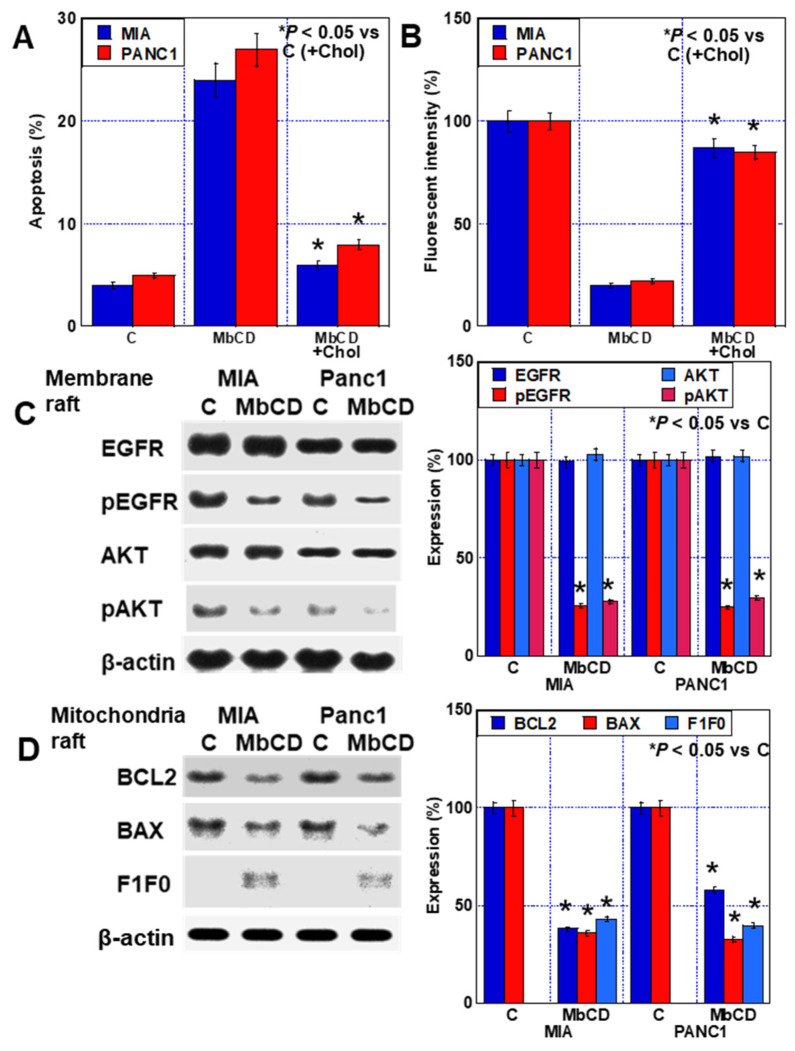
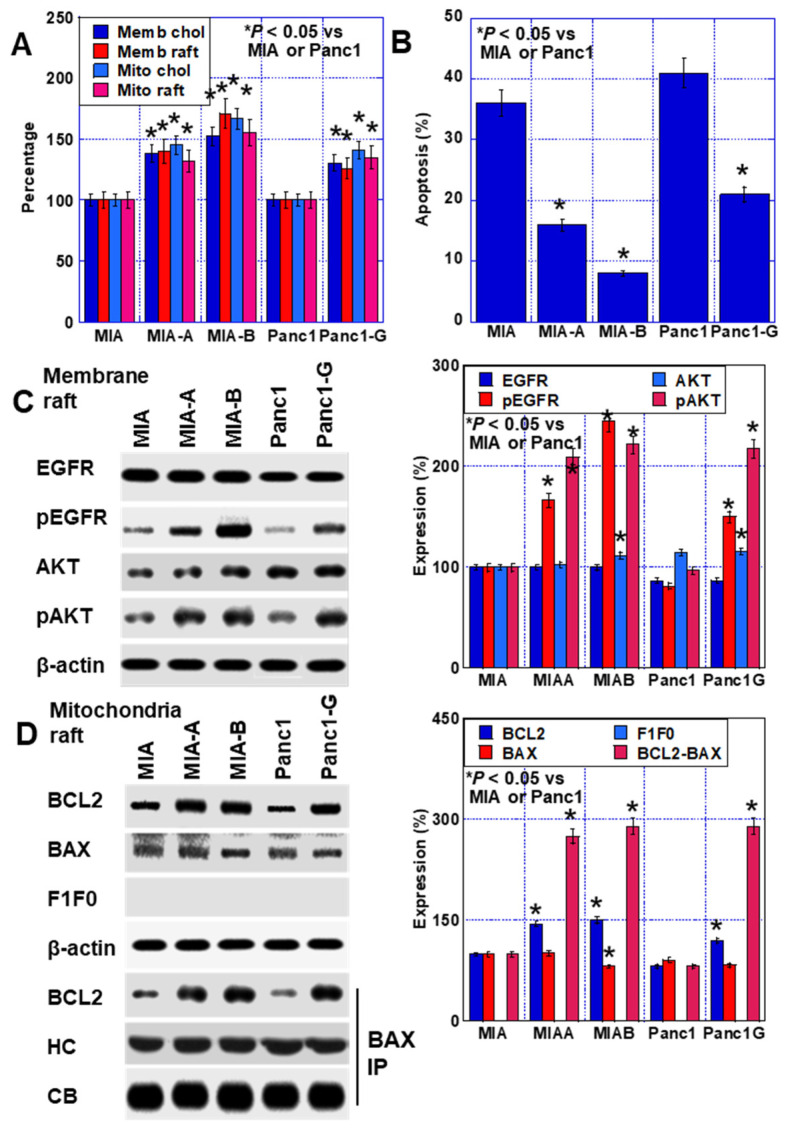
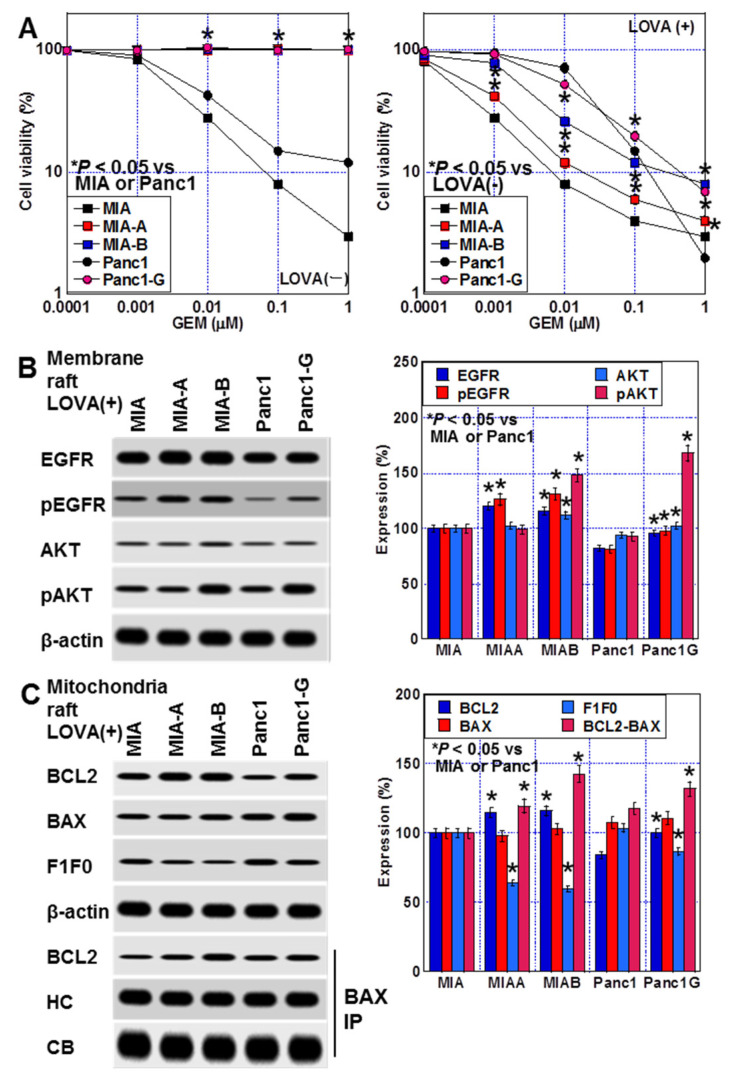
Resistance to anticancer drugs is a problem in the treatment of pancreatic ductal carcinoma (PDAC) and overcoming it is an important issue. Recently, it has been reported that statins induce apoptosis in cancer cells but the mechanism has not been completely elucidated. We investigated the antitumor mechanisms of statins against PDAC and their impact on resistance to gemcitabine (GEM). Lovastatin (LOVA) increased mitochondrial oxidative stress in PDAC cells, leading to apoptosis. LOVA reduced lipid rafts in the plasma membrane and mitochondria, suppressed the activation of epithelial growth factor receptor (EGFR) and AKT in plasma membrane rafts, and reduced B-cell lymphoma 2 (BCL2)-Bcl-2-associated X protein (BAX) binding and the translocation of F1F0 ATPase in mitochondrial rafts. In the three GEM-resistant cell lines derived from MIA and PANC1, the lipid rafts in the cell membrane and the mitochondria were increased to activate EGFR and AKT and to increase BCL2-BAX binding, which suppressed apoptosis. LOVA abrogated these anti-apoptotic effects by reducing the rafts in the resistant cells. By treating the resistant cells with LOVA, GEM sensitivity improved to the level of the parental cells. Therefore, cholesterol rafts contribute to drug resistance in PDAC. Further clinical research is warranted on overcoming anticancer drug resistance by statin-mediated intracellular cholesterol regulation.
Overview
The claims and statistics of this paper haven’t been checked yet.
Free: it reads the open-access text and checks the first 5 claims that cite a source we can check. Create a free account to check every claim.
Integrity signals
Registry
Cites
Statistics
Figures
Verification
Claims the paper makes
The claims and statistics of this paper haven’t been checked yet.
Free: it reads the open-access text and checks the first 5 claims that cite a source we can check. Create a free account to check every claim.
Claims other papers make about this one
Each is checked against this paper’s own text: does it say what the citing paper says it does?
The source backs part of the claim, not all of it — or backs it for a different population, condition or comparison.
In the citing paper
“Gyoten et al. observed, in three gemcitabine-resistant PDAC cell lines, an increased activity of the epidermal growth factor receptor (EGFR)-Akt axis, which in turn increased the binding of B-cell lymphoma 2 (BCL2)-Bcl-2-associated X protein (BAX), thus suppressing apoptosis.”
From The antitumoral effect of statins in pancreatic ductal adenocarcinoma: a scoping review (2026) · cites this paper as Gyoten et al., 2023
Experimental — accuracy not yet measuredThe cited source says what the claim attributes to it.
In the citing paper
“A convergent mechanism identified across multiple studies is the disruption of plasma membrane lipid rafts by statins through intracellular cholesterol depletion (Duranti et al., 2025; Gyoten et al., 2023).”
From The antitumoral effect of statins in pancreatic ductal adenocarcinoma: a scoping review (2026) · cites this paper as Gyoten et al., 2023
The cited source says what the claim attributes to it.
In the citing paper
“This effect was countered by the lovastatin treatment, by disrupting the lipid rafts in the cell and mitochondria membranes, and by increasing mitochondrial oxidative stress (Gyoten et al., 2023).”
From The antitumoral effect of statins in pancreatic ductal adenocarcinoma: a scoping review (2026) · cites this paper as Gyoten et al., 2023
Self-check
Percentages, sums and reported differences re-computed from the paper’s own numbers.
The self-check needs the paper’s full text.
Citations
Cites
Kleeff, J., Korc, M., Apte, M., La Vecchia, C., Johnson, C. D., Biankin, A. V., Neale, R. E., Tempero, M., Tuveson, D. A., Hruban, R. H., et al. (2016) · Nature Reviews Disease Primers · doi:10.1038/nrdp.2016.22 · Cited by 1,982
Park, W., Chawla, A., & O’Reilly, E. M. (2021) · JAMA · doi:10.1001/jama.2021.13027 · Cited by 1,882 · cited 2×
“The early detection of PDAC remains challenging and radical resection is often difficult to perform due to anatomical factors [1].”
BackgroundHyperlipidemia as a Risk Factor for Cardiovascular Disease
Nelson, R. H. (2013) · Primary Care: Clinics in Office Practice · doi:10.1016/j.pop.2012.11.003 · Cited by 1,093 · cited 1×
“Statin use improves hyperlipidemia, especially hypercholesterolemia, and plays a major role in the prevention of arteriosclerosis and cardiovascular diseases [12,13].”
BackgroundBax, Bak and beyond — mitochondrial performance in apoptosis
Peña‐Blanco, A., & García‐Sáez, A. J. (2018) · The FEBS Journal · doi:10.1111/febs.14186 · Cited by 930
Statins: mechanism of action and effects
Stancu, C., & Sima, A. (2001) · Journal of Cellular and Molecular Medicine · doi:10.1111/j.1582-4934.2001.tb00172.x · Cited by 911 · cited 1×
“Statins inhibit the rate-limiting reaction of cholesterol synthesis in which 3-hydroxy-3-methylglutaryl coenzyme A (HMGC) is converted to mevalonate by HMGC reductase [14].”
BackgroundChemoresistance in Pancreatic Cancer
Zeng, S., Pöttler, M., Lan, B., Grützmann, R., Pilarsky, C., & Yang, H. (2019) · International Journal of Molecular Sciences · doi:10.3390/ijms20184504 · Cited by 611 · cited 1×
“Drug 2 of 15 resistance genes and microRNAs [6], the stemness of cancer cells [7], the abundant stroma interacting with cancer cells, and the cancer microenvironment, including the occurrence of hypoxia, are the primary factors that contribute to drug resistance [8].”
BackgroundTumor Microenvironment in Pancreatic Cancer Pathogenesis and Therapeutic Resistance
Sherman, M. H., & Beatty, G. L. (2023) · Annual Review of Pathology: Mechanisms of Disease · doi:10.1146/annurev-pathmechdis-031621-024600 · Cited by 467 · cited 1×
“These factors are difficult to overcome [9].”
Oxidative Stress, Redox Signaling, and Autophagy: Cell Death Versus Survival
Navarro-Yepes, J., Burns, M., Anandhan, A., Khalimonchuk, O., del Razo, L. M., Quintanilla-Vega, B., Pappa, A., Panayiotidis, M. I., & Franco, R. (2014) · Antioxidants & Redox Signaling · doi:10.1089/ars.2014.5837 · Cited by 449
Statins: a repurposed drug to fight cancer
Jiang, W., Hu, J.-W., He, X.-R., Jin, W.-L., & He, X.-Y. (2021) · Journal of Experimental & Clinical Cancer Research · doi:10.1186/s13046-021-02041-2 · Cited by 417
Gemcitabine resistance in pancreatic ductal adenocarcinoma
Binenbaum, Y., Na’ara, S., & Gil, Z. (2015) · Drug Resistance Updates · doi:10.1016/j.drup.2015.10.002 · Cited by 414 · cited 2×
“However, the increased likelihood of anticancer drug resistance makes treatment difficult [4].”
Background
Cited by
Oyón, D., López-Pascual, A., Castelló-Uribe, B., Uriarte, I., Orsi, G., Llorente, S., Elurbide, J., Adán-Villaescusa, E., Valbuena-Goiricelaya, E., Irigaray-Miramon, A., et al. (2025) · Journal of Experimental & Clinical Cancer Research · doi:10.1186/s13046-024-03268-5 · Cited by 26
“In this context, treatment of PDAC cells with lovastatin, an inhibitor of 3-hydroxy-3-meth-ylglutaryl-CoA (HMG-CoA) reductase, the rate-limiting enzyme in cholesterol synthesis, has been demonstrated to promote apoptosis [45].”
Karthikeyan, S., Somasundaram, P., Karimi, I., Lagunas‐Rangel, F. A., Alsehli, A. M., Fredriksson, R., Jonsson, J., & Schiöth, H. B. (2025) · Pharmacological Research · doi:10.1016/j.phrs.2025.107912 · Cited by 26
“A recent study has suggested that lovastatin treatment induced apoptosis in human pancreatic cancer cells by depleting cholesterol from LRs in both the plasma membrane and mitochondria [162].”
Caveolae: Metabolic Platforms at the Crossroads of Health and Disease
Stea, D. M., & D’Alessio, A. (2025) · International Journal of Molecular Sciences · doi:10.3390/ijms26072918 · Cited by 21
Zabielska, J., Stelmańska, E., Szrok-Jurga, S., Kobiela, J., & Czumaj, A. (2025) · International Journal of Molecular Sciences · doi:10.3390/ijms26031186 · Cited by 14
Li, W., Xu, J., Long, Y., Zhang, H., Rong, X., & Su, Z. (2025) · Genes & Diseases · doi:10.1016/j.gendis.2025.101945 · Cited by 10
Wang, R., Gao, C., Fan, Z., Qin, Q., & Zhan, H. (2025) · Cancer Letters · doi:10.1016/j.canlet.2025.217965 · Cited by 9
Duranti, C., Iorio, J., Manganelli, V., Bagni, G., Colasurdo, R., Lottini, T., Martinelli, M., Capitani, C., Boso, G., D’Alessandro, F. N., et al. (2025) · Cell Death Discovery · doi:10.1038/s41420-025-02321-2 · Cited by 8
“The WBs relative to the inputs are in fi gure and in Supplementary Fig. that the latter effect can occur because statins alter the structure of LRs in cancer cells [56, 57] and in turn inhibit the signaling function of integrin-centered macromolecular complexes which involve the ion channel hERG1.”
InfluentialManabe, O., Oda, S., Norikane, T., Aikawa, T., Otaki, Y., & Tamaki, N. (2025) · Annals of Nuclear Medicine · doi:10.1007/s12149-025-02092-x · Cited by 8
SQLE drives bladder cancer progression by boosting mitochondrial oxidative phosphorylation
Dong, Y., Jiang, X., Yang, X., Zhang, J., Fu, Q., Zhou, Y., Xun, Y., Fu, Y., Hou, Y., Li, M., et al. (2025) · Oncogene · doi:10.1038/s41388-025-03626-3 · Cited by 8
“This knowledge gap is particularly notable given that pharmacological agents like lovastatin that modulate mitochondrial cholesterol show anti-tumor ef fi cacy [19].”
Bu, F., Zhong, J., & Guan, R. (2025) · Frontiers in Molecular Biosciences · doi:10.3389/fmolb.2025.1506961 · Cited by 6
Miao, H., Zhang, B., Li, Y., Ma, X., Yang, Y., Lin, Z., & Liu, Y. (2025) · Cellular Signalling · doi:10.1016/j.cellsig.2025.111753 · Cited by 5
Manjunath, K., Fayek, F. H., Sadik, S., Sreeharsha, N., Kurmi, S. P. C., & Thapa, S. (2025) · Natural Product Communications · doi:10.1177/1934578x251404284 · Cited by 4
“8 Moreover, the use of autophagy inhibitors has been found to enhance the susceptibility of KRAS-mutant human colorectal cancer cells to a combination treatment involving 2-deoxy-D-glucose and Lovastatin, thus suggesting a potential strategy for combination therapies.”
How relevant are sterols in the mode of action of prymnesins?
Prause, H.-C., Berk, D., Alves‐de‐Souza, C., Hansen, P. J., Larsen, T. O., Marko, D., Favero, G. D., Place, A. R., & Varga, E. (2024) · Aquatic Toxicology · doi:10.1016/j.aquatox.2024.107080 · Cited by 4
Carbene-Catalyzed [3 + 3] Annulation of Enals and Vinyl Sulfoxonium Ylides
Feng, S., Zhang, H., Liu, J., Shi, D., Yang, W., Zhu, H., Zhang, X., & Fu, Z. (2024) · The Journal of Organic Chemistry · doi:10.1021/acs.joc.4c01587 · Cited by 4
Wan, M., Zhou, J., Xue, N., Mei, J., Zhou, J., Zong, X., Ding, J., Li, Q., He, Z., & Zhu, Y. (2024) · International Immunopharmacology · doi:10.1016/j.intimp.2024.113637 · Cited by 2
Wang, R., Hu, C., Zhao, Y., Wu, S., Shujuan, C., Xu, L., Yin, D., & Tan, S. (2025) · Biomolecules · doi:10.3390/biom16010038 · Cited by 2
“Some pro-apoptotic proteins (e.g., Bax) translocate to DRMs upon apoptotic stimulation, which promotes the formation of apoptotic vesicles [38,39].”
Wang, Z., Wu, D. P., Zhang, Y. ‐., 陈卫波, Fan, S., Yang, Y., Yang, Y., Zu, G., An, Y., Jin, Y., et al. (2026) · Cellular Oncology · doi:10.1007/s13402-026-01164-y · Cited by 2
“The study by Momoko et al. demonstrated that cholesterol-rich lipid rafts contribute to the drug resistance mechanism in PDAC, proposing the modulation of intracellular cholesterol levels via statins to overcome anticancer drug resistance [11 ].”
Lipid metabolism in cancer is regulated by the integrated natural product–miRNA–target axis
Chuang, Y.-T., Yen, C.-Y., Tsai, Y., Chang, F., Farooqi, A. A., & Chang, H.-W. (2025) · Seminars in Cancer Biology · doi:10.1016/j.semcancer.2025.11.024 · Cited by 1
Zhang, F., Luo, K., Xuan, S., Chen, T., Chen, Z., Yang, J., Zhou, Y., Feng, T., Zhu, Y., & Wang, Z. (2026) · Scientific Reports · doi:10.1038/s41598-026-36920-5 · Cited by 1
Oresanya, Z. O., Eleanya, G. C., Akande, T., Jesugbemi, T. M., & Kanmodi, R. (2026) · Discover Chemistry. · doi:10.1007/s44371-026-00478-y · Cited by 1
The antitumoral effect of statins in pancreatic ductal adenocarcinoma: a scoping review
Pîntea, A.-I., Croitoru, A. E., Dinu-Pîrvu, C. E., & Dima, S. O. (2026) · Frontiers in Pharmacology · doi:10.3389/fphar.2026.1815366
“A convergent mechanism identified across multiple studies is the disruption of plasma membrane lipid rafts by statins through intracellular cholesterol depletion (Duranti et al., 2025; Gyoten et al., 2023).”
InfluentialAlshaer, W., Ijjeh, Y., Alsarayreh, N., Alqudah, D. A., Rifai, A., Abu-Siniyeh, A. A., & Alsalem, M. (2025) · Pharmaceutics · doi:10.3390/pharmaceutics17101275
“Since lipid rafts play a critical role in cancer cell proliferation, adhesion, and migration [42], the inhibition of these microdomains’ production by cholesterol depletion has antitumor effects [43].”
Visualizing Dynamics of Methyl‐β‐Cyclodextrin‐Induced Apoptosis Using Single‐Cell Imaging
Wu, Z., Ye, Q., Fan, M., Huang, Y., Lin, X., Wu, F., Xie, S., Weng, G., & Feng, S. (2025) · Journal of Sensors · doi:10.1155/js/5535048
Mancini, V., Manganelli, V., Garofalo, T., Sorice, M., Raffa, S., Scullari, D., Ranieri, D., & Belleudi, F. (2026) · Cell Death and Disease · doi:10.1038/s41419-026-08513-7
“This is also the case of cell survival in PDAC cells, which is triggered by a sustained EGFR/Akt axis, resulting from lipid raft-mediated inhibition of EGFR endocytosis [26].”
Anti-Tumor Effects of Statins in Pancreatic Ductal Adenocarcinoma Cells
Kucháriková, V., Hatoková, Z., Baranovičová, E., Baďurová, B., Pavlisova, T., Kotulova, L., Kalman, M., Marcinek, J., Chodelkova, O., Nováková, S., et al. (2026) · International Journal of Molecular Sciences · doi:10.3390/ijms27072972
“Several statins, particularly lipophilic compounds, have been shown to inhibit proliferation and clonogenic growth and to induce mitochondrial dysfunction in pancreatic cancer cell lines [1,15,18].”
InfluentialAghazadeh, E., Ghahremani, M. H., Ostad, S. N., & Shadboorestan, A. (2026) · Jundishapur Journal of Natural Pharmaceutical Products · doi:10.5812/jjnpp-171667
Ye, Q., Liu, H.-Z., Wang, X., Hu, L.-P., Li, H. L., Gong, S.-Z., Tao, Y.-T., Wu, Z., Liu, W. D., Han, F., et al. (2026) · Oncogene · doi:10.1038/s41388-026-03864-z
Cholesterol metabolism implications for cancer and therapy
Lin, L., Song, P., Xie, W., & Guo, J. (2026) · The Innovation Nutrition · doi:10.59717/j.xinn-nutri.2026.100025
Liu, W., Huang, Q., & Han, X. (2026) · Biochimica et Biophysica Acta (BBA) - Reviews on Cancer · doi:10.1016/j.bbcan.2026.189730
Lipid Raft Remodeling in Cancer Drug Resistance and Emerging Therapeutic Target
Dong, J., Du, Z., Liu, H., Kuang, Y., Tao, N., Yang, Y., Zuo, K., Lei, L., Ou, S., Tang, F., et al. (2026) · Drug Design Development and Therapy · doi:10.2147/dddt.s649561
Metadata
- Authors
- Gyoten, M., Luo, Y., Fujiwara-Tani, R., Mori, S., Ogata, R., Kishi, S., & Kuniyasu, H.
- Affiliations
- Nara Medical University (JP)
- Nantong University (CN)
- Department of Molecular Pathology, Nara Medical University, 840 Shijo-cho, Kashihara 634-8521, Nara, Japan
- Nozaki Tokushukai Hospital (JP)
- Corresponding author
- Kuniyasu, Hiroki
- Venue
- International Journal of Molecular Sciences
- Publisher
- MDPI AG
- Published
- 2023-11-27
- Volume
- 24
- Issue
- 23
- Pages
- 16814
- ISSN
- 1422-0067 (ISSN-L)
- PMC
- PMC10706654
- OpenAlex
- W4389048098
- Cited by
- 28
- References
- 40
- Citations by year
- 2026: 9 · 2025: 16 · 2024: 3
- FWCI
- 3.55
- Type
- journal article
- Language
- en
- Open access
- gold
- doi.org
- Licence
- Locations
- International Journal of Molecular Sciences (publishedVersion, cc-by)
- PubMed Central (publishedVersion, cc-by)
- PubMed (publishedVersion)
- Funders
- MEXT KAKENHI (19K16564, 20K21659, 23K16621, 23K19900)
- Topics
- Life Sciences › Biochemistry, Genetics and Molecular Biology › Cancer Research › Cancer, Lipids, and Metabolism
- Health Sciences › Medicine › Oncology › Pancreatic and Hepatic Oncology Research
- Life Sciences › Biochemistry, Genetics and Molecular Biology › Cell Biology › Caveolin-1 and cellular processes
- Keywords
- lovastatin, statins, pancreatic ductal carcinoma, apoptosis, lipid rafts, gemcitabine resistance, mitochondrial oxidative stress, EGFR, Akt, chemoresistance
- MeSH terms
- Gemcitabine, Antineoplastic Agents, Cell Membrane, Cholesterol, Humans, Lovastatin, Mitochondria, Pancreatic Neoplasms, Apoptosis, Hydroxymethylglutaryl-CoA Reductase Inhibitors, Carcinoma, Pancreatic Ductal, Membrane Microdomains, Cell Line, Tumor, bcl-2-Associated X Protein, Proto-Oncogene Proteins c-akt, ErbB Receptors
About these checks
Registry, retraction, Cites and statistics results are computed, not judged, with one exception: a printed reference that no index lists is read once by a model before it counts as a citation error. Claims are extracted by a model and kept only when their quote appears verbatim in the text; each cited source is then checked, with a model’s help, for whether it says what the claim relies on. Those verdicts can be wrong — read the claim’s quote and the cited source before relying on one.
Statistics and arithmetic are recomputed, not judged.
Confidence bands are shown only for fields calibrated on our annotated test set. None is calibrated yet, so no band is shown.
What counts as a claim ›How we measure confidence ›How we check this ›
Are you an author, or do you see a problem with this page? Request a review
Data sources
Bibliographic data: Semantic Scholar, OpenAlex, Crossref.
Contains information from the Semantic Scholar Academic Graph Datasets, made available under the ODC Attribution License (ODC-BY 1.0).
Semantic Scholar’s data is described in: Kinney, R., et al. (2023). The Semantic Scholar Open Data Platform. arXiv:2301.10140.
