

The DOI matches its Crossref record; 66 of the 66 references it cites were found in a registry or an index.
The Impact of AI-Driven Application Programming Interfaces (APIs) on Educational Information Management
Open accessAbstract
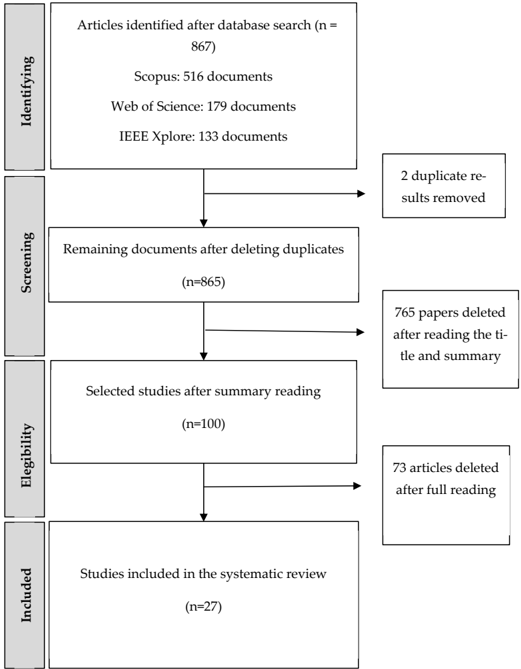
In today’s digitalized educational landscape, the intelligent use of information is essential for personalizing learning, improving assessment accuracy, and supporting data-driven pedagogical decisions. This systematic review examines the integration of Application Programming Interfaces (APIs) powered by Artificial Intelligence (AI) to enhance educational information management and learning processes. A total of 27 peer-reviewed studies published between 2013 and 2025 were analyzed. First, a general description of the selected works was provided, followed by a breakdown by dimensions in order to identify recurring patterns, stated interests and gaps in the current scientific literature on the use of AI-driven APIs in Education. The findings highlight five main benefits: data interoperability, personalized learning, automated feedback, real-time student monitoring, and predictive performance analytics. All studies addressed personalization, 74.1% focused on platform integration, and 37% examined automated feedback. Reported outcomes include improvements in engagement (63%), comprehension (55.6%), and academic achievement (48.1%). However, the review also identifies concerns about privacy, algorithmic bias, and limited methodological rigor in existing research. The study concludes with a conceptual model that synthesizes these findings from pedagogical, technological, and ethical perspectives, providing guidance for more adaptive, inclusive, and responsible uses of AI in education.
Overview
The claims and statistics of this paper haven’t been checked yet.
Free: it reads the open-access text and checks the first 5 claims that cite a source we can check. Create a free account to check every claim.
Integrity signals
Registry
Cites
Statistics
Figures






Verification
Claims the paper makes
The claims and statistics of this paper haven’t been checked yet.
Free: it reads the open-access text and checks the first 5 claims that cite a source we can check. Create a free account to check every claim.
Claims other papers make about this one
Each is checked against this paper’s own text: does it say what the citing paper says it does?
The source backs part of the claim, not all of it — or backs it for a different population, condition or comparison.
In the citing paper
“Other studies highlight risks and tensions such as privacy concerns (particularly when exhaustive logs are required), equity (unequal access to tools), and unintended consequences (strategic disclosure, stigmatization, informal penalization) [5,7,9,21].”
From Transparency Mechanisms for Generative AI Use in Higher Education Assessment: A Systematic Scoping Review (2022–2026) (2026) · cites this paper as [21]
Experimental — accuracy not yet measured
Self-check
Percentages, sums and reported differences re-computed from the paper’s own numbers.
The self-check needs the paper’s full text.
Citations
Cites
BAİDOO-ANU, D., & OWUSU ANSAH, L. (2023) · Journal of AI · doi:10.61969/jai.1337500 · Cited by 3,939
Baidoo-Anu, D., & Owusu Ansah, L. (2023) · doi:10.2139/ssrn.4337484 · Cited by 3,004
Declaración PRISMA 2020: una guía actualizada para la publicación de revisiones sistemáticas
Page, M. J., McKenzie, J. E., Bossuyt, P. M., Boutron, I., Hoffmann, T. C., Mulrow, C. D., Shamseer, L., Tetzlaff, J. M., Akl, E. A., Brennan, S. E., et al. (2021) · Revista Española de Cardiología · doi:10.1016/j.recesp.2021.06.016 · Cited by 2,095
What if the devil is my guardian angel: ChatGPT as a case study of using chatbots in education
Tlili, A., Shehata, B., Adarkwah, M. A., Bozkurt, A., Hickey, D. T., Huang, R., & Agyemang, B. (2023) · Smart Learning Environments · doi:10.1186/s40561-023-00237-x · Cited by 2,003
Reliability of Nominal Data Based on Qualitative Judgments
Perreault, W. D., & Leigh, L. E. (1989) · Journal of Marketing Research · doi:10.2307/3172601 · Cited by 1,575
Ethics of AI in Education: Towards a Community-Wide Framework
Holmes, W., Porayska-Pomsta, K., Holstein, K., Sutherland, E., Baker, T., Shum, S. B., Santos, O. C., Rodrigo, M. T., Cukurova, M., Bittencourt, I. I., et al. (2022) · International Journal of Artificial Intelligence in Education · doi:10.1007/s40593-021-00239-1 · Cited by 1,437
Let’s not forget: Learning analytics are about learning
Gašević, D., Dawson, S., & Siemens, G. (2015) · TechTrends · doi:10.1007/s11528-014-0822-x · Cited by 1,049
Historical threads, missing links, and future directions in AI in education
Williamson, B., & Eynon, R. (2020) · Learning, Media and Technology · doi:10.1080/17439884.2020.1798995 · Cited by 981
ChatGPT User Experience: Implications for Education
Zhai, X. (2023) · doi:10.2139/ssrn.4312418 · Cited by 935
Artificial intelligence literacy in higher and adult education: A scoping literature review
Laupichler, M. C., Aster, A., Schirch, J., & Raupach, T. (2022) · Computers and Education Artificial Intelligence · doi:10.1016/j.caeai.2022.100101 · Cited by 658
Research works printed but not linked: 9
- 2023, Impacto de la Educación Física en las Competencias Ciudadanas: Una Revisión Bibliométrica, Cienc. Y Deporte, 8, 507
- Brown, T.B., Mann, B., Ryder, N., Subbiah, M., Kaplan, J., Dhariwal, P., Neelakantan, A., Shyam, P., Sastry, G., and Askell, A. (2020). Language Models are few-Shot Learners. arXiv.
- Berggren, 2021, Virtual assistants in higher education—From research to practice, Educ. Inf. Technol., 26, 2865
- Figaredo, 2020, Analítica del aprendizaje; educación basada en datos: Un campo en expansión, RIED-Rev. Iberoam. Educ. Distancia, 23, 33
- Zambrano, 2025, El desarrollo de interfaces de programación de aplicaciones (APIs) dinamiza el acceso a contenidos en plataformas de educación virtual: The development of application programming interfaces (APIs) streamlines access to content on virtual education platforms, LATAM Rev. Latinoam. Cienc. Soc. Humanidades, 6, 3039
- Castillo, 2023, Impacto de la inteligencia artificial en el proceso de enseñanza aprendizaje en la educación secundaria, LATAM Rev. Latinoam. Cienc. Soc. Humanidades, 4, 515
- 2024, Inteligencia Artificial para la Educación: Formar en tiempos de incertidumbre para adelantar el futuro, Areté Rev. Digit. Dr. Educ., 10, 1
- Gharbi, 2025, Personalizing mooc assessments with ai: Fine-tuning chatgpt for scalable learning, Int. J. Tech. Phys. Probl. Eng., 17, 192
- Okonkwo, 2020, Python-bot: A chatbot for teaching python programming, Eng. Lett., 29, 25
Cited by
Reconceptualizing Quality Teaching: Insights Based on a Systematic Literature Review
Halfon, E. (2025) · Education Sciences · doi:10.3390/educsci16010037 · Cited by 14
Pérez-Pérez, I., González-Afonso, M. C., Plasencia-Carballo, Z., & Pérez-Jorge, D. (2026) · Computers · doi:10.3390/computers15020111 · Cited by 10
“…privacy risks and surveillance escalation; (3) the level of rigor should be proportional to the pedagogical purpose and the weight of the task [21]; and (4) when the normative framework is ambiguous or perceived as punitive, it is advisable to anticipate unintended effects such as…”
Self-citationAI-Powered Learning: Revolutionizing Education and Automated Code Evaluation
Bernik, A., Radošević, D., & Čep, A. (2025) · Information · doi:10.3390/info16111015 · Cited by 10
Trust and AI Adoption for Mobile Learning in Higher Education: Evidence from Tanzanian Universities
Mushi, R. M. (2025) · Advances in Mobile Learning Educational Research · doi:10.25082/amler.2025.02.014 · Cited by 2
Interacting with Student Information on Google Sheets Using the RAG Technique
Lertyosbordin, C., Panyapakdeewong, N., & Singhadoung, P. (2025) · International Workshop on Artificial Intelligence and Education (WAIE) · doi:10.1109/waie67422.2025.11381035 · Cited by 1
Metadata
- Authors
- Pérez-Jorge, D., González-Afonso, M. C., Santos-Álvarez, A. G., Plasencia-Carballo, Z., & Perdomo-López, C. D. L. Á.
- Affiliations
- Department of Didactics and Educational Research, Faculty of Education, University of La Laguna, 38204 San Cristóbal de La Laguna, Spain
- Universidad de La Laguna (ES)
- Department of Specific Didactics, Faculty of Education, University of La Laguna, 38204 San Cristóbal de La Laguna, Spain
- ORCID
- Venue
- Information
- Publisher
- MDPI AG
- Published
- 2025-06-25
- Volume
- 16
- Issue
- 7
- Pages
- 540
- ISSN
- 2078-2489 (ISSN-L)
- OpenAlex
- W4411669399
- Cited by
- 9
- References
- 64
- Citations by year
- 2026: 3 · 2025: 6
- FWCI
- 9.44
- Type
- journal article
- Language
- en
- Open access
- gold
- doi.org
- Licence
- Locations
- Information (publishedVersion, cc-by)
- DOAJ (DOAJ: Directory of Open Access Journals) (submittedVersion, cc-by-sa)
- Funders
- Universidad de La Laguna
- Topics
- Social Sciences › Education › Artificial Intelligence in Education
- Physical Sciences › Computer Science › Computer Science Applications › Online Learning and Analytics
- Physical Sciences › Computer Science › Artificial Intelligence › Intelligent Tutoring Systems and Adaptive Learning
- Keywords
- educational information management, personalized learning, automated feedback, data interoperability, student engagement, student privacy, algorithmic bias, conceptual model
About these checks
Registry, retraction, Cites and statistics results are computed, not judged, with one exception: a printed reference that no index lists is read once by a model before it counts as a citation error. Claims are extracted by a model and kept only when their quote appears verbatim in the text; each cited source is then checked, with a model’s help, for whether it says what the claim relies on. Those verdicts can be wrong — read the claim’s quote and the cited source before relying on one.
Statistics and arithmetic are recomputed, not judged.
Confidence bands are shown only for fields calibrated on our annotated test set. None is calibrated yet, so no band is shown.
What counts as a claim ›How we measure confidence ›How we check this ›
Are you an author, or do you see a problem with this page? Request a review
How to cite
Cite CoChat for the checks on this page, and the paper for its own findings.
- This page
- CoChat. (2026). Citation check: The Impact of AI-Driven Application Programming Interfaces (APIs) on Educational Information Management. https://app.cochat.ai/papers/10.3390/info16070540
- The paper
- Pérez-Jorge, D., González-Afonso, M. C., Santos-Álvarez, A. G., Plasencia-Carballo, Z., & Perdomo-López, C. D. L. Á. (2025). The Impact of AI-Driven Application Programming Interfaces (APIs) on Educational Information Management. Information. https://doi.org/10.3390/info16070540
Data sources
Bibliographic data: Semantic Scholar, OpenAlex, Crossref.
Contains information from the Semantic Scholar Academic Graph Datasets, made available under the ODC Attribution License (ODC-BY 1.0).
Semantic Scholar’s data is described in: Kinney, R., et al. (2023). The Semantic Scholar Open Data Platform. arXiv:2301.10140.
