

The DOI matches its Crossref record; 52 of the 52 references it cites were found in a registry or an index.
Performance of Sustainable Geopolymer Concrete Made of Different Alkaline Activators
Open accessAbstract
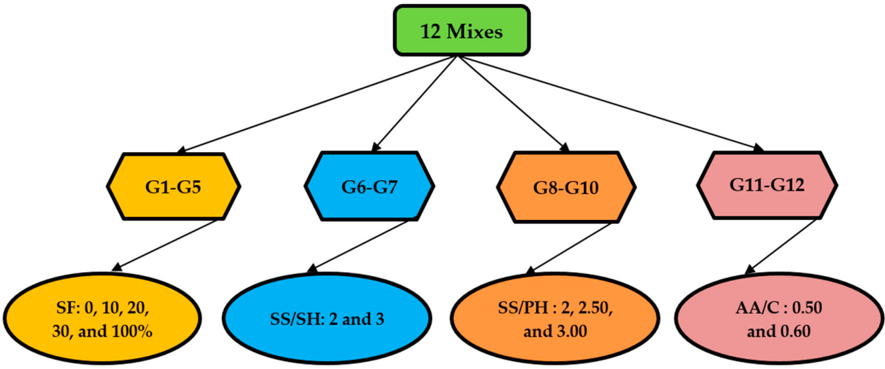
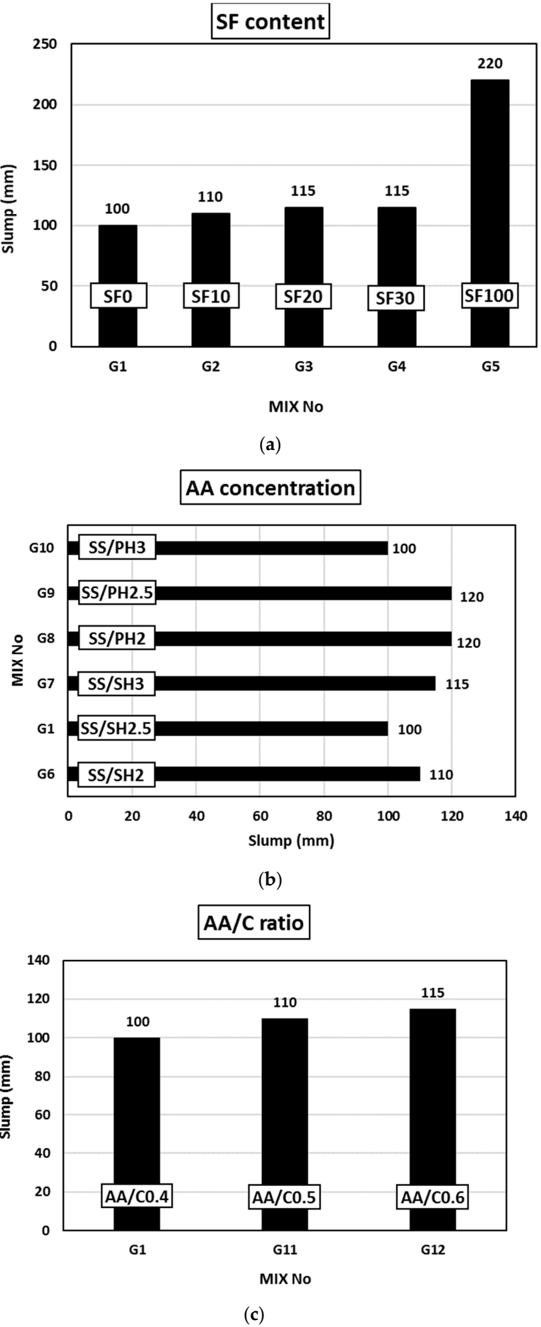
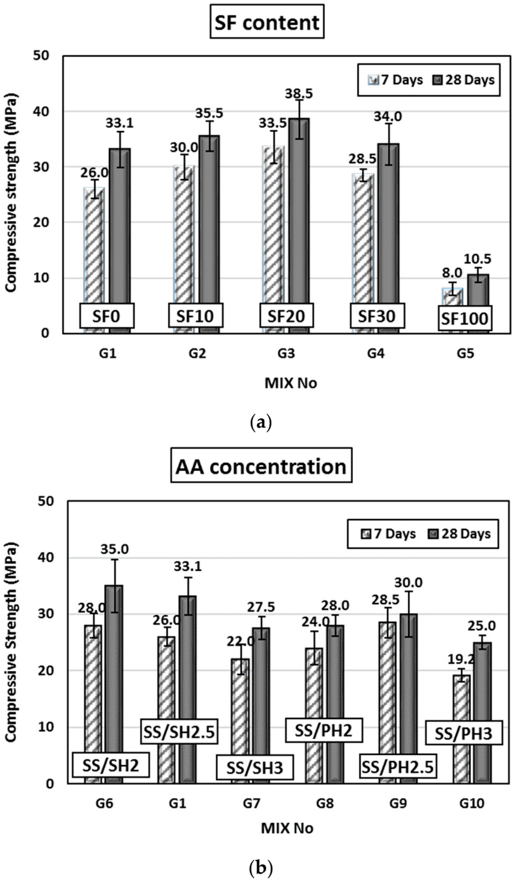
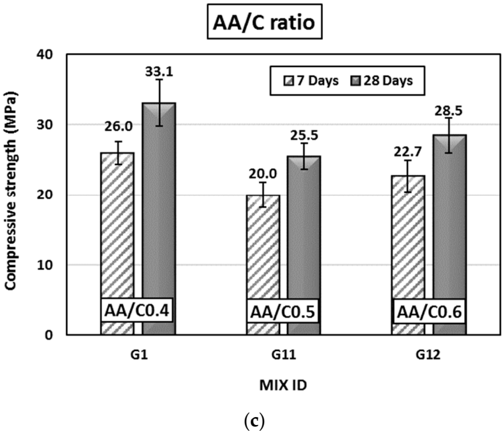
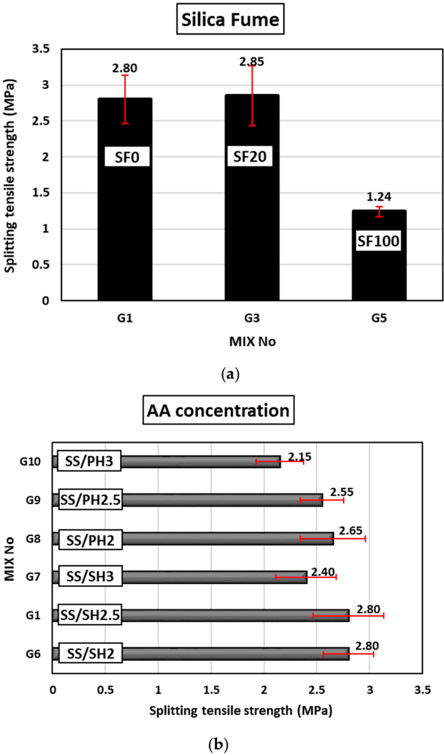
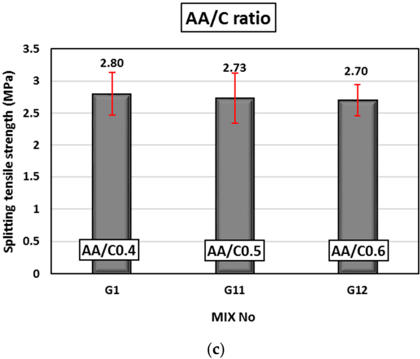
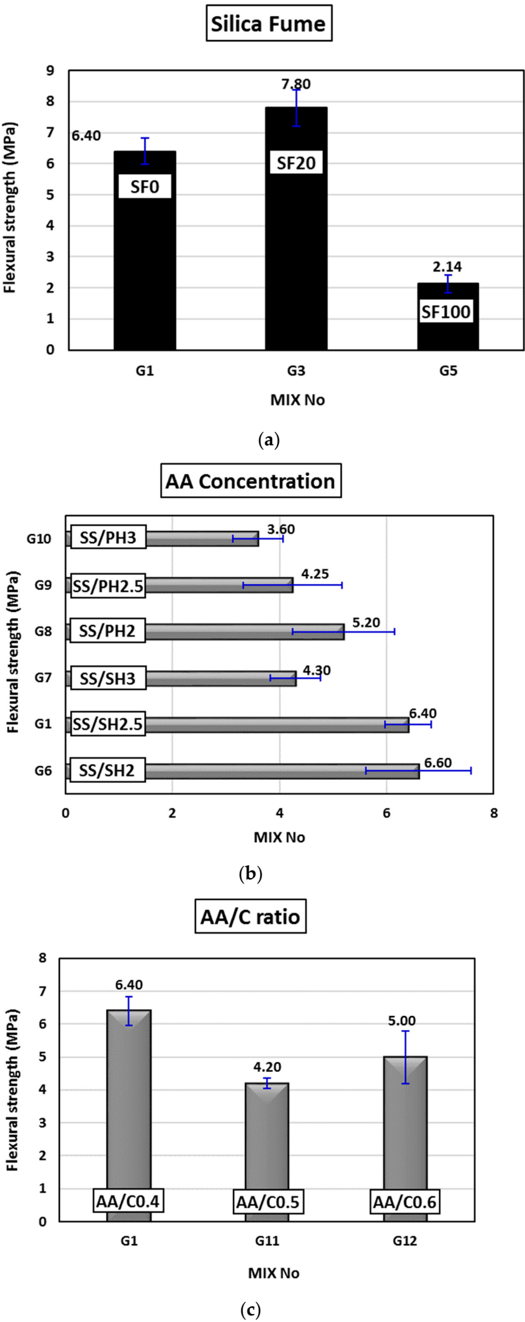
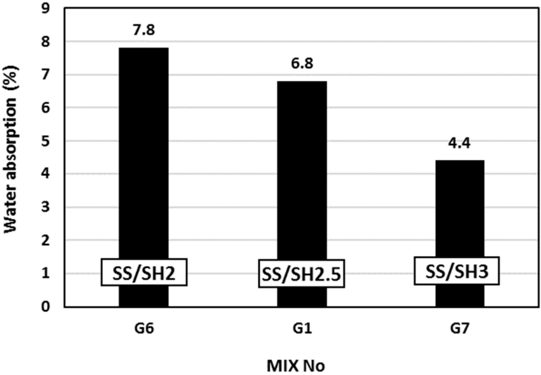
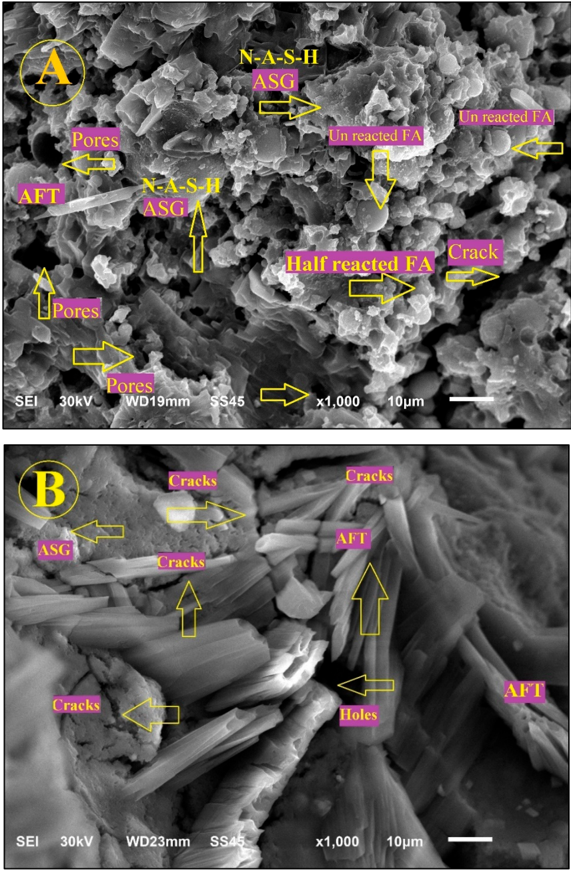
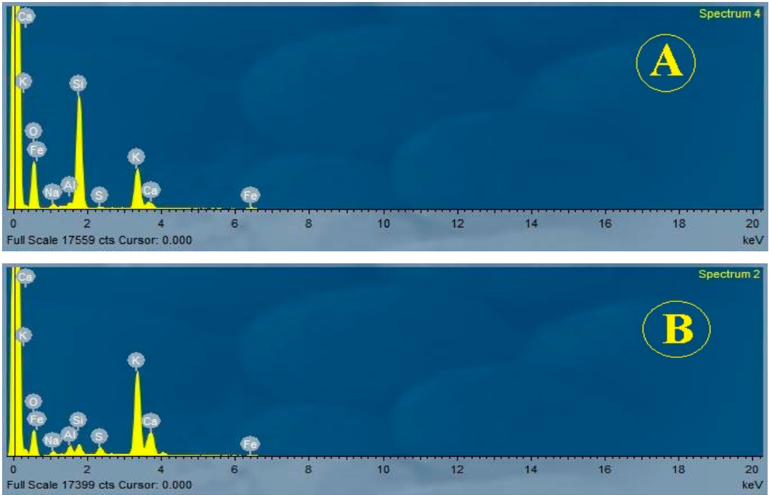
A major challenge in modern infrastructure is the excessive reliance on traditional Portland cement, which contributes significantly to environmental degradation and durability issues. This study addresses the need for sustainable and durable construction materials by investigating geopolymer concrete as an eco-friendly alternative, optimizing its mechanical and microstructural properties to enhance long-term performance in infrastructure applications. The performance of sustainable geopolymer concrete made with silica fume (SF) and fly ash (FA) and utilizing different alkaline activators (AAs) was examined in this study. The alkaline activators included sodium hydroxide (SH), potassium hydroxide (PH), and sodium silicate (SS) solutions. A total of twelve geopolymer concrete mixes were prepared and evaluated. The study considered several variables, including SF content (ranging from 10% to 100%), type of AA (SH+SS or PH+SS), AA concentration, and the AA to cementitious materials (AA/C) ratio. Workability, compressive strength, bending strength, tensile strength, and water absorption were among the mechanical characteristics of the concrete that were assessed, both in fresh and hardened states of the proposed concrete. The geopolymer concrete microstructure was also examined by performing X-ray diffraction (XRD), energy dispersive X-ray (EDX), and scanning electron microscopy (SEM) investigations on a few chosen mixes. The findings showed that when SF content was 10%, 20%, 30%, and 100% as a replacement of FA, the concrete slump rose by 10%, 15%, 15%, and 120%, respectively. However, the compressive strength was increased only with up to 20% SF. Geopolymer concrete with PH as the alkaline activator exhibited up to 13% lower compressive strength compared to SH. The geopolymer concrete microstructure was influenced by the presence of SF, leading to the formation of ettringite. Some FA particles that remained unreacted or were only partially reacted, along with voids, were observed. The findings from this study contribute to the development of sustainable geopolymer concrete, offering a promising solution for green structural applications.
Overview
The claims and statistics of this paper haven’t been checked yet.
Run the check — free, no account needed. It reads the open-access text and checks the sources it cites.
Integrity signals
Registry
Cites
Statistics
Figures
Verification
Claims the paper makes
The claims and statistics of this paper haven’t been checked yet.
Run the check — free, no account needed. It reads the open-access text and checks the sources it cites.
Claims other papers make about this one
Each is checked against this paper’s own text: does it say what the citing paper says it does?
In the citing paper
“On the other hand, Na 2 CO 3 by itself frequently causes early-age impaired strength due to the development of phases such as gaylussite [15].”
From Experimental and Statistical Optimization of Low-carbon Binder Concrete under Varying Alkaline Activator Conditions (2026) · cites this paper as [15]
Self-check
Percentages, sums and reported differences re-computed from the paper’s own numbers.
The self-check needs the paper’s full text.
Citations
Cites
The role of inorganic polymer technology in the development of ‘green concrete’
Duxson, P., Provis, J. L., Lukey, G. C., & van Deventer, J. S. J. (2007) · Cement and Concrete Research · doi:10.1016/j.cemconres.2007.08.018 · Cited by 2,055
Remediation of Concrete Using Microorganisms
Ramachandran, S. K., Ramakrishnan, V., & Bang, S. S. (2001) · ACI Materials Journal · doi:10.14359/10154 · Cited by 869
Hassan, A., Arif, M., & Shariq, M. (2019) · Journal of Cleaner Production · doi:10.1016/j.jclepro.2019.03.051 · Cited by 642
Physical evolution of Na-geopolymer derived from metakaolin up to 1000 °C
Duxson, P., Lukey, G. C., & van Deventer, J. S. J. (2007) · Journal of Materials Science · doi:10.1007/s10853-006-0535-4 · Cited by 503
Alkali activation of Australian slag cements
Bakharev, T., Sanjayan, J., & Cheng, Y. (1999) · Cement and Concrete Research · doi:10.1016/s0008-8846(98)00170-7 · Cited by 489
Mechanical and microstructural properties of alkali-activated fly ash geopolymers
Komljenović, M. M., Baščarević, Z., & Bradic, V. (2010) · Journal of Hazardous Materials · doi:10.1016/j.jhazmat.2010.04.064 · Cited by 468
Shrinkage characteristics of alkali-activated fly ash/slag paste and mortar at early ages
Lee, N. K., Jang, J. G., & Lee, H. K. (2014) · Cement and Concrete Composites · doi:10.1016/j.cemconcomp.2014.07.007 · Cited by 465
Cement Manufacture and the Environment. Part II: Environmental Challenges and Opportunities
van Oss, H. G., & Padovani, A. C. (2003) · Journal of Industrial Ecology · doi:10.1162/108819803766729212 · Cited by 413
Microanalysis of calcium silicate hydrate gel formed within a geopolymeric binder
Yip, C. K., & van Deventer, J. S. J. (2003) · Journal of Materials Science · doi:10.1023/a:1025904905176 · Cited by 373
Liu, Y., Shi, C., Zhang, Z., Li, N., & Shi, D. (2020) · Cement and Concrete Composites · doi:10.1016/j.cemconcomp.2020.103665 · Cited by 357
Research works printed but not linked: 1
- Niu, 2022, Experimental Research on the Influence of Magnetized Water on the Compressive Strength of Concrete, Int. Core J. Eng., 8, 176
Cited by
Sorted by citations
Research Progress and Trend Analysis of Solid Waste Resource Utilization in Geopolymer Concrete
Wang, J., Zhu, L., Wan, D., & Xue, Y. (2025) · Buildings · doi:10.3390/buildings15183370 · Cited by 14
A Comprehensive Review of Geopolymer Concrete: Applications, Properties, and Future Directions
Bellum, R. R., Durga, C. S. S., Karumanchi, M., Kumar, N. S. V., Chaitanya, B. K., & Venkatesh, C. (2025) · Silicon · doi:10.1007/s12633-025-03532-z · Cited by 13
Alnadish, A. M. (2026) · Archives of Computational Methods in Engineering · doi:10.1007/s11831-026-10515-9 · Cited by 13
Wijesekara, K. K. D. A., Sadique, M., Carnacina, I., Fielding, A. J., & Chronowska-Bojczuk, G. (2025) · Cleaner Waste Systems · doi:10.1016/j.clwas.2025.100322 · Cited by 9
Stel’makh, S. A., Beskopylny, A. N., Shcherban’, E. M., El'shaeva, D. M., Chernil'nik, A. A., Kuimov, D. N., Evtushenko, A., & Oganesyan, S. (2025) · Polymers · doi:10.3390/polym17121710 · Cited by 9
Review of Geopolymer Concrete: Reaction Mechanisms, Mechanical Behavior, and Environmental Benefits
Oumar, A. I. (2025) · Journal of Civil Engineering and Urbanism · doi:10.54203/jceu.2025.4 · Cited by 9
Khatoon, S., Kaliluthin, A. K., & Sapkota, S. C. (2025) · Asian Journal of Civil Engineering · doi:10.1007/s42107-025-01562-x · Cited by 8
Assessing Engineering Behavior of Fly Ash-Based Geopolymer Concrete: Empirical Modeling
Malkawi, A. B. (2025) · Infrastructures · doi:10.3390/infrastructures10070168 · Cited by 7
Chaudhary, S., Dubey, S. K., & Sharma, A. (2025) · Journal of Inorganic and Organometallic Polymers and Materials · doi:10.1007/s10904-025-03823-3 · Cited by 6
Stel’makh, S. A., Shcherban’, E. M., Beskopylny, A. N., Маилян, Л. Р., Shilov, A. A., Razveeva, I., Oganesyan, S., Pogrebnyak, A., Chernil'nik, A. A., & El'shaeva, D. M. (2025) · Polymers · doi:10.3390/polym17152119 · Cited by 6
Al‐Kheetan, M. J. (2026) · Journal of Composites Science · doi:10.3390/jcs10070375 · Cited by 3
Ganesan, Y., & Panruti Thangaraj, R. (2026) · Periodica Polytechnica Civil Engineering · doi:10.3311/ppci.41876 · Cited by 2
“On the other hand, Na 2 CO 3 by itself frequently causes early-age impaired strength due to the development of phases such as gaylussite [15].”
Geopolymerization of fly ash: effect of sodium and potassium
RISCADO, A. L. L. D. M., Vieira, C. M. F., de Azevedo, A. R. G., & Marvila, M. T. (2025) · Innovative Infrastructure Solutions · doi:10.1007/s41062-025-02288-0 · Cited by 2
Trajković, D. V., Milojković, N., Mijatović, N. N., Popović, A. S., Veljovic, D. N., Perić‐Grujić, A. A., & Živojinović, D. Z. (2025) · Sustainable Chemistry · doi:10.3390/suschem6040045 · Cited by 1
Adamu, M., Choudhari, S. M., Raut, A. N., Ibrahim, Y. E., & Kelechi, S. E. (2026) · Journal of Composites Science · doi:10.3390/jcs10020076 · Cited by 1
Selvakumar, G., & Ravichandran, P. T. (2026) · Next Materials · doi:10.1016/j.nxmate.2026.102888 · Cited by 1
RESEARCH ON THE PROPERTIES OF SILICATE COMPOSITES FOR OPEN-ENVIRONMENT OBJECTS
Dotsenko, Y., & Sydorova, N. (2025) · Modern construction and architecture · doi:10.31650/2786-6696-2025-14-70-77
Athobaiti, T., Tahwia, A. M., Abousnina, R. M., Mortagi, M., & Youssf, O. (2026) · Infrastructures · doi:10.3390/infrastructures11030074
Self-citationDr. M. Adil Khan, D. A. (2026) · Policy Research Journal · doi:10.5281/zenodo.21097245
Fan, L. F., Hu, Y. Q., & Yang, Q. H. (2026) · Journal of Building Engineering · doi:10.1016/j.jobe.2026.117061
Explainable ensemble learning for predicting tensile strength of fly ash-based geopolymer concrete
Malkawi, A. B., Ismail, R. M. A., Al–Mattarneh, H., & Alyahya, L. (2026) · Results in Engineering · doi:10.1016/j.rineng.2026.112620
Özkılıç, Y. O., Yılmaz, F., Stel’makh, S. A., Çeli̇k, A. İ., & Yildizel, S. A. (2026) · Materials · doi:10.3390/ma19214554
Metadata
- Authors
- Hamed, Y. R., Keshta, M. M., Elshikh, M. M. Y., Elshami, A. A., Matthana, M. H. S., & Youssf, O.
- Affiliations
- Structural Engineering Department, Mansoura University, Mansoura 35516, Egypt
- Civil Engineering Department, Higher Institute for Engineering and Technology, Manzala 35642, Egypt
- Mansoura University (EG)
- Housing and Building National Research Center (EG)
- Corresponding author
- Youssf, Osama
- Venue
- Infrastructures
- Publisher
- MDPI AG
- Published
- 2025-02-16
- Volume
- 10
- Issue
- 2
- Pages
- 41
- ISSN
- 2412-3811 (ISSN-L)
- OpenAlex
- W4407625799
- Cited by
- 19
- References
- 52
- Citations by year
- 2026: 8 · 2025: 11
- FWCI
- 6.89
- Type
- journal article
- Language
- en
- Open access
- gold
- doi.org
- Licence
- Locations
- Infrastructures (publishedVersion, cc-by)
- DOAJ (DOAJ: Directory of Open Access Journals) (submittedVersion)
- Topics
- Physical Sciences › Engineering › Civil and Structural Engineering › Concrete and Cement Materials Research
- Physical Sciences › Engineering › Civil and Structural Engineering › Innovative concrete reinforcement materials
- Physical Sciences › Environmental Science › Environmental Engineering › Microbial Applications in Construction Materials
- Keywords
- geopolymer concrete, alkaline activator, sodium hydroxide, potassium hydroxide, sodium silicate, silica fume, fly ash, compressive strength, workability, water absorption, ettringite, microstructure, cement replacement, sustainable construction materials
About these checks
Registry, retraction, Cites and statistics results are computed, not judged, with one exception: a printed reference that no index lists is read once by a model before it counts as a citation error. Claims are extracted by a model and kept only when their quote appears verbatim in the text; each cited source is then checked, with a model’s help, for whether it says what the claim relies on. Those verdicts can be wrong — read the claim’s quote and the cited source before relying on one.
Statistics and arithmetic are recomputed, not judged.
Confidence bands are shown only for fields calibrated on our annotated test set. None is calibrated yet, so no band is shown.
What counts as a claim ›How we measure confidence ›How we check this ›
Are you an author, or do you see a problem with this page? Request a review
