

The DOI matches its Crossref record; the references it cites are not checked yet.
Larvicidal Activity of Hemp Extracts and Cannabidiol against the Yellow Fever Mosquito Aedes aegypti
Open accessAbstract
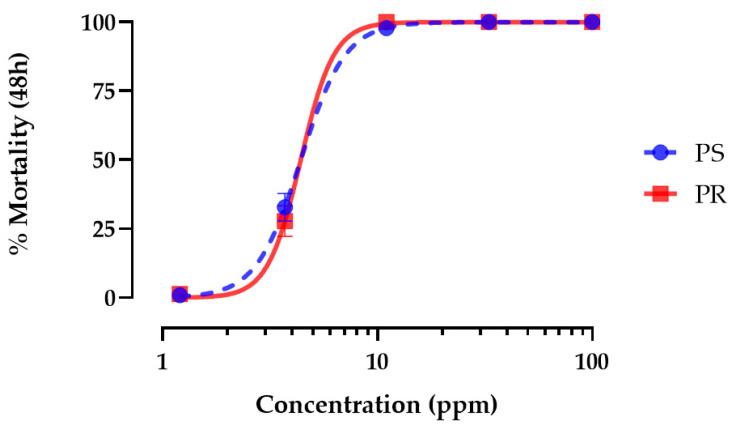
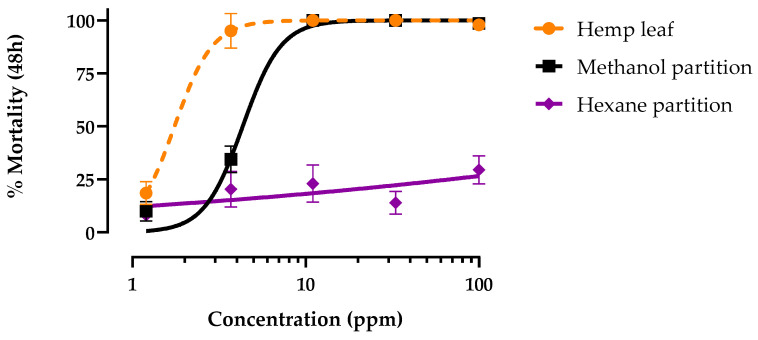
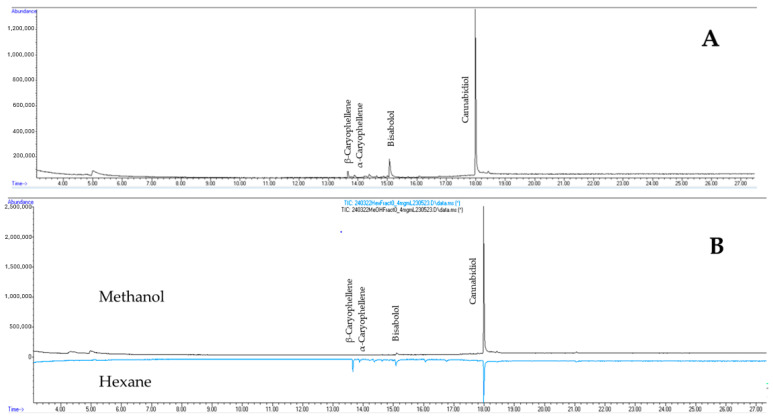
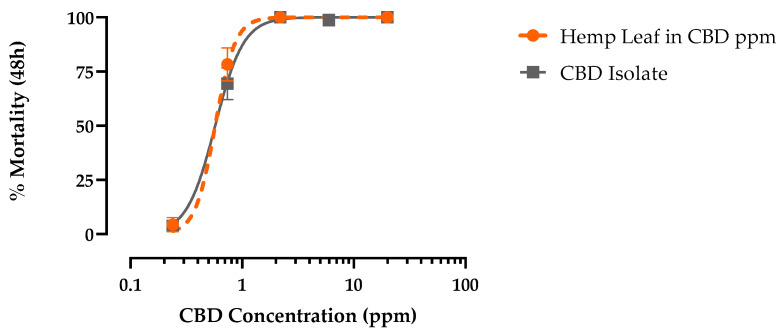
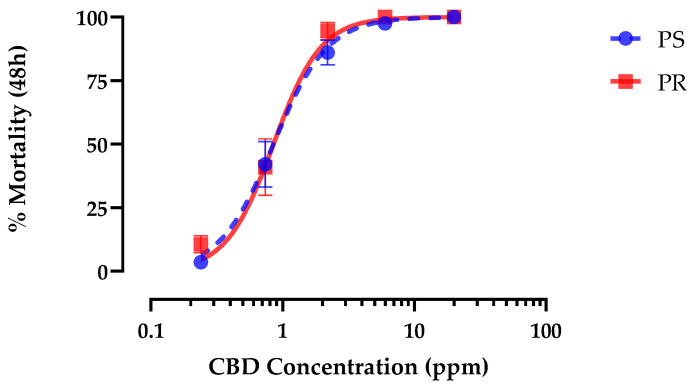
To mitigate pyrethroid resistance in mosquito vectors of emerging and re-emerging human pathogens, there is an urgent need to discover insecticides with novel modes of action. Natural alternatives, such as extracts derived from plants, may serve as substitutes for traditional synthetic insecticides if they prove to be sustainable, cost-effective, and safe for non-target organisms. Hemp (Cannabis sativa) is a sustainable plant known to produce various secondary metabolites with insecticidal properties, including terpenoids and flavonoids. The goal of this study was to assess the larvicidal activity of hemp leaf extract on mosquito larvae from both pyrethroid-susceptible (PS) and pyrethroid-resistant (PR) strains of Aedes aegypti. Another goal was to identify which components of the extract were responsible for any observed larvicidal activity. We found that a methanol extract of hemp leaves induced similar concentration-dependent larvicidal activity against PS (LC50: 4.4 ppm) and PR (LC50: 4.3 ppm) strains within 48 h. Partitioning of the leaf extract between methanol and hexane fractions revealed that full larvicidal activity was restricted to the methanol fraction. Analysis of this fraction by gas chromatography–mass spectrometry and nuclear magnetic resonance showed it to be dominated by cannabidiol (CBD). Larvicidal assays using authentic CBD confirmed this compound was primarily responsible for the toxicity of the hemp leaf extract against both strains. We conclude that hemp leaf extracts and CBD have the potential to serve as viable sources for the development of novel mosquito larvicides.
Overview
The claims and statistics of this paper haven’t been checked yet.
Run the check — free, no account needed. It reads the open-access text and checks the sources it cites.
Integrity signals
Registry
Cites
Statistics
Figures
Verification
Claims the paper makes
The claims and statistics of this paper haven’t been checked yet.
Run the check — free, no account needed. It reads the open-access text and checks the sources it cites.
Claims other papers make about this one
Each is checked against this paper’s own text: does it say what the citing paper says it does?
The cited source says what the claim attributes to it.
In the citing paper
“Hemp leaf extract containing CBD has demonstrated larvicidal properties against mosquito larvae, including strains resistant to conventional insecticides (Martínez Rodríguez et al. 2024).”
From A critical review of industrial fiber hemp anatomy, agronomic practices, and valorization into sustainable bioproducts (2025) · cites this paper as Martínez Rodríguez et al. 2024
Self-check
Percentages, sums and reported differences re-computed from the paper’s own numbers.
The self-check needs the paper’s full text.
Citations
The citation lists haven’t been fetched yet
References 55 · Cited by 11
Research works printed but not linked: 53
- Unlu, 2010, Evidence of Vertical Transmission of West Nile Virus in Field-Collected Mosquitoes, J. Vector Ecol., 35, 95, 10.1111/j.1948-7134.2010.00064.x · DOI
- Karema, 2020, History of Malaria Control in Rwanda: Implications for Future Elimination in Rwanda and Other Malaria-Endemic Countries, Malar. J., 19, 356, 10.1186/s12936-020-03407-1 · DOI
- Guzman, 2016, Dengue Infection, Nat. Rev. Dis. Primers., 2, 16055, 10.1038/nrdp.2016.55 · DOI
- Federico, 2020, Mosquito Diversity and Dog Heartworm Prevalence in Suburban Areas, Parasites Vectors, 13, 12, 10.1186/s13071-019-3874-0 · DOI
- Estep, 2017, Resistance Status and Resistance Mechanisms in a Strain of Aedes Aegypti (Diptera: Culicidae) From Puerto Rico, J. Med. Entomol., 54, 1643, 10.1093/jme/tjx143 · DOI
- Gan, 2021, Dengue Fever and Insecticide Resistance in Aedes Mosquitoes in Southeast Asia: A Review, Parasites Vectors, 14, 315, 10.1186/s13071-021-04785-4 · DOI
- Vontas, 2012, Insecticide Resistance in the Major Dengue Vectors Aedes albopictus and Aedes aegypti, Pestic. Biochem. Physiol., 104, 126, 10.1016/j.pestbp.2012.05.008 · DOI
- Malik, A., Grohmann, E., and Akhtar, R. (2014). Environmental Deterioration and Human Health: Natural and Anthropogenic Determinants, Springer. · DOI
- Ashraf, M.A., Iqbal, M., Rasheed, R., Hussain, I., Riaz, M., and Arif, M.S. (2018). Environmental Stress and Secondary Metabolites in Plants. Plant Metabolites and Regulation Under Environmental Stress, Elsevier. · DOI
- Rattan, 2010, Mechanism of Action of Insecticidal Secondary Metabolites of Plant Origin, Crop Prot., 29, 913, 10.1016/j.cropro.2010.05.008 · DOI
- Sobieralski, 2016, The Effect of Hemp Essential Oil on Mortality Aulacorthum solani Kalt. And Tetranychus Urticae Koch, Ecol. Chem. Eng. S, 23, 505
- Fang, 2011, Genomics Grand for Diversified Plant Secondary Metabolites, Plant Divers. Resour., 33, 53
- Nahuel, 2020, Adulticidal Effect of Seven Terpenes and a Binary Combination against Aedes aegypti, J. Vector Borne Dis., 57, 356, 10.4103/0972-9062.313975 · DOI
- Kang, 2009, Spray Adulticidal Effects of Plant Oils against House Mosquito, Culex pipiens Pallens (Diptera: Culicidae), J. Pestic. Sci., 34, 100, 10.1584/jpestics.G08-45 · DOI
- Ramzi, A., El Ouali Lalami, A., Annemer, S., Ez zoubi, Y., Assouguem, A., Almutairi, M.H., Kamel, M., Peluso, I., Ercisli, S., and Farah, A. (2022). Synergistic Effect of Bioactive Monoterpenes against the Mosquito, Culex pipiens (Diptera: Culicidae). Molecules, 27. · DOI
- Park, 2019, Contrasting Roles of Cannabidiol as an Insecticide and Rescuing Agent for Ethanol–Induced Death in the Tobacco Hornworm Manduca Sexta, Sci. Rep., 9, 10481, 10.1038/s41598-019-47017-7 · DOI
- Stack, 2023, Cannabinoids Function in Defense against Chewing Herbivores in Cannabis sativa L., Hortic. Res., 10, uhad207, 10.1093/hr/uhad207 · DOI
- Mantzoukas, S., Ntoukas, A., Lagogiannis, I., Kalyvas, N., Eliopoulos, P., and Poulas, K. (2020). Larvicidal Action of Cannabidiol Oil and Neem Oil against Three Stored Product Insect Pests: Effect on Survival Time and in Progeny. Biology, 9. · DOI
- Pavela, 2009, Larvicidal Property of Essential Oils against Culex quinquefasciatus Say (Diptera: Culicidae), Ind. Crops Prod., 30, 311, 10.1016/j.indcrop.2009.06.005 · DOI
- Benelli, 2018, The Crop-Residue of Fiber Hemp Cv. Futura 75: From a Waste Product to a Source of Botanical Insecticides, Environ. Sci. Pollut. Res., 25, 10515, 10.1007/s11356-017-0635-5 · DOI
- Bedini, 2016, Cannabis sativa and Humulus lupulus Essential Oils as Novel Control Tools against the Invasive Mosquito Aedes albopictus and Fresh Water Snail Physella acuta, Ind. Crops Prod., 85, 318, 10.1016/j.indcrop.2016.03.008 · DOI
- Maurya, 2008, Larval Susceptibility of Aloe barbadensis and Cannabis sativa against Culex quinquefasciatus, the Filariasis Vector, J. Environ. Biol., 29, 941
- McPartland, 2018, A Review of Cannabis sativa-Based Insecticides, Miticides, and Repellents, J. Entomol. Zool. Stud., 6, 1288
- Shaalan, 2005, A Review of Botanical Phytochemicals with Mosquitocidal Potential, Environ. Int., 31, 1149, 10.1016/j.envint.2005.03.003 · DOI
- Barthlott, I., Scharinger, A., Golombek, P., Kuballa, T., and Lachenmeier, D. (2021). A Quantitative 1H NMR Method for Screening Cannabinoids in CBD Oils. Toxics, 9. · DOI
- Inocente, E.A., Shaya, M., Acosta, N., Rakotondraibe, L.H., and Piermarini, P.M. (2018). A Natural Agonist of Mosquito TRPA1 from the Medicinal Plant Cinnamosma fragrans That Is Toxic, Antifeedant, and Repellent to the Yellow Fever Mosquito Aedes aegypti. PLoS Negl. Trop. Dis., 12. · DOI
- Martínez Rodríguez, E.J., Evans, P., Kalsi, M., Rosenblatt, N., Stanley, M., and Piermarini, P.M. (2022). Larvicidal Activity of Carbon Black against the Yellow Fever Mosquito Aedes aegypti. Insects, 13. · DOI
- Pridgeon, 2009, A High-Throughput Screening Method to Identify Potential Pesticides for Mosquito Control, J. Med. Entomol., 46, 335, 10.1603/033.046.0219 · DOI
- Abbott, 1925, A Method of Computing the Effectiveness of an Insecticide, J. Econ. Entomol., 18, 265, 10.1093/jee/18.2.265a · DOI
- Cerceau, 2016, A Validated 1H NMR Method for Quantitative Analysis of α-Bisabolol in Essential Oils of Eremanthus erythropappus, Talanta, 161, 71, 10.1016/j.talanta.2016.08.032 · DOI
- Benelli, 2018, The Essential Oil from Industrial Hemp (Cannabis sativa L.) by-Products as an Effective Tool for Insect Pest Management in Organic Crops, Ind. Crops Prod., 122, 308, 10.1016/j.indcrop.2018.05.032 · DOI
- Şengül Demirak, M.Ş., and Canpolat, E. (2022). Plant-Based Bioinsecticides for Mosquito Control: Impact on Insecticide Resistance and Disease Transmission. Insects, 13. · DOI
- Reid, 2014, Transcriptional Analysis of Four Family 4 P450s in a Puerto Rico Strain of Aedes aegypti (Diptera: Culicidae) Compared With an Orlando Strain and Their Possible Functional Roles in Permethrin Resistance, J. Med. Entomol., 51, 605, 10.1603/ME13228 · DOI
- Pavela, 2016, Essential Oils as Ecofriendly Biopesticides? Challenges and Constraints, Trends Plant Sci., 21, 1000, 10.1016/j.tplants.2016.10.005 · DOI · Paper page
- Acheuk, F., Basiouni, S., Shehata, A.A., Dick, K., Hajri, H., Lasram, S., Yilmaz, M., Emekci, M., Tsiamis, G., and Spona-Friedl, M. (2022). Status and Prospects of Botanical Biopesticides in Europe and Mediterranean Countries. Biomolecules, 12. · DOI
- Kleinhenz, 2020, Nutrient Concentrations, Digestibility, and Cannabinoid Concentrations of Industrial Hemp Plant Components, Appl. Anim. Sci., 36, 489, 10.15232/aas.2020-02018 · DOI
- Hod, 2020, Terpenes/Terpenoids in Cannabis: Are They Important?, Med. Cannabis Cannabinoids, 3, 25, 10.1159/000509733 · DOI
- Namdar, 2018, Variation in the Compositions of Cannabinoid and Terpenoids in Cannabis Sativa Derived from Inflorescence Position along the Stem and Extraction Methods, Ind. Crops Prod., 113, 376, 10.1016/j.indcrop.2018.01.060 · DOI
- Jackson, B., Gilbert, L., Tolosa, T., Henry, S., Volkis, V., and Zebelo, S. (2021). The Impact of Insect Herbivory in the Level of Cannabinoids in CBD Hemp Varieties, in review. · DOI
- Abendroth, 2023, Cannabidiol Reduces Fall Armyworm (Spodoptera frugiperda) Growth by Reducing Consumption and Altering Detoxification and Nutritional Enzyme Activity in a Dose-Dependent Manner, Arthropod-Plant Interact., 17, 195, 10.1007/s11829-023-09948-x · DOI
- Fine, 2013, The Endocannabinoid System, Cannabinoids, and Pain, Rambam. Maimonides Med. J., 4, e0022, 10.5041/RMMJ.10129 · DOI
- McPartland, 2001, Cannabinoid Receptors Are Absent in Insects, J. Comp. Neurol., 436, 423, 10.1002/cne.1078 · DOI
- Berman, 2023, Parallel Evolution of Cannabinoid Biosynthesis, Nat. Plants, 9, 817, 10.1038/s41477-023-01402-3 · DOI
- Norris, 2019, Plant Essential Oils Synergize Various Pyrethroid Insecticides and Antagonize Malathion in Aedes aegypti, Med. Vet Entomol., 33, 453, 10.1111/mve.12380 · DOI
- Ghovanloo, 2022, Cannabidiol and Sodium Channel Pharmacology: General Overview, Mechanism, and Clinical Implications, Neuroscientist, 28, 318, 10.1177/10738584211017009 · DOI
- Puopolo, 2022, Inhibitory Effects of Cannabinoids on Acetylcholinesterase and Butyrylcholinesterase Enzyme Activities, Med. Cannabis Cannabinoids, 5, 85, 10.1159/000524086 · DOI
- Ghovanloo, 2018, Inhibitory Effects of Cannabidiol on Voltage-Dependent Sodium Currents, J. Biol. Chem., 293, 16546, 10.1074/jbc.RA118.004929 · DOI
- Fiorini, 2019, Valorizing Industrial Hemp (Cannabis Sativa L.) by-Products: Cannabidiol Enrichment in the Inflorescence Essential Oil Optimizing Sample Pre-Treatment Prior to Distillation, Ind. Crops Prod., 128, 581, 10.1016/j.indcrop.2018.10.045 · DOI
- Adesina, I., Bhowmik, A., Sharma, H., and Shahbazi, A. (2020). A Review on the Current State of Knowledge of Growing Conditions, Agronomic Soil Health Practices and Utilities of Hemp in the United States. Agriculture, 10. · DOI · Paper page
- Wang, Y., Gao, J., Cheng, C., Lv, J., Lambo, M.T., Zhang, G., Li, Y., and Zhang, Y. (2022). Nutritional Values of Industrial Hemp Byproducts for Dairy Cattle. Animals, 12. · DOI
- Ranalli, 2004, Hemp as a Raw Material for Industrial Applications, Euphytica, 140, 1, 10.1007/s10681-004-4749-8 · DOI
- Schluttenhofer, 2017, Challenges towards Revitalizing Hemp: A Multifaceted Crop, Trends Plant Sci., 22, 917, 10.1016/j.tplants.2017.08.004 · DOI · Paper page
- Izzo, L., Castaldo, L., Narváez, A., Graziani, G., Gaspari, A., Rodríguez-Carrasco, Y., and Ritieni, A. (2020). Analysis of Phenolic Compounds in Commercial Cannabis sativa L. Inflorescences Using UHPLC-Q-Orbitrap HRMS. Molecules, 25. · DOI · Paper page
Metadata
- Authors
- Martínez Rodríguez, E. J., Phelan, P. L., Canas, L., Acosta, N., Rakotondraibe, H. L., & Piermarini, P. M.
- Affiliations
- College of Food, Agriculture and Environmental Sciences, The Ohio State University, Wooster, OH 44691, USA
- The Ohio State University (US)
- College of Pharmacy, The Ohio State University, Columbus, OH 43210, USA
- Corresponding author
- Piermarini, Peter M.
- Venue
- Insects
- Publisher
- MDPI AG
- Published
- 2024-07-10
- Volume
- 15
- Issue
- 7
- Pages
- 517
- ISSN
- 2075-4450 (ISSN-L)
- PMC
- PMC11276947
- OpenAlex
- W4400518185
- Cited by
- 11
- References
- 55
- Citations by year
- 2026: 7 · 2025: 4
- FWCI
- 2.68
- Type
- journal article
- Language
- en
- Open access
- gold
- doi.org
- Licence
- Locations
- Insects (publishedVersion, cc-by)
- Preprints.org (acceptedVersion, cc-by)
- PubMed Central (publishedVersion, cc-by)
- PubMed (publishedVersion)
- DOAJ (DOAJ: Directory of Open Access Journals) (submittedVersion)
- Funders
- Infectious Diseases Institute (idi.osu.edu) of The Ohio State University (OSU) (2023-043)
- OSU College of Food, Agricultural, and Environmental Sciences (CFAES), (2023-043)
- OSU CFAES Wooster Campus (2023-043)
- Topics
- Life Sciences › Agricultural and Biological Sciences › Plant Science › Insect Pest Control Strategies
- Life Sciences › Biochemistry, Genetics and Molecular Biology › Molecular Biology › Insect Resistance and Genetics
- Health Sciences › Medicine › Public Health, Environmental and Occupational Health › Dengue and Mosquito Control Research
- Keywords
- larvicidal activity, cannabidiol, Aedes aegypti, pyrethroid resistance, mosquito vector control, natural insecticides, methanol fraction, terpenoids, flavonoids
About these checks
Registry, retraction, Cites and statistics results are computed, not judged, with one exception: a printed reference that no index lists is read once by a model before it counts as a citation error. Claims are extracted by a model and kept only when their quote appears verbatim in the text; each cited source is then checked, with a model’s help, for whether it says what the claim relies on. Those verdicts can be wrong — read the claim’s quote and the cited source before relying on one.
Statistics and arithmetic are recomputed, not judged.
Confidence bands are shown only for fields calibrated on our annotated test set. None is calibrated yet, so no band is shown.
What counts as a claim ›How we measure confidence ›How we check this ›
Are you an author, or do you see a problem with this page? Request a review
How to cite
Cite CoChat for the checks on this page, and the paper for its own findings.
- This page
- CoChat. (2026). Citation check: Larvicidal Activity of Hemp Extracts and Cannabidiol against the Yellow Fever Mosquito Aedes aegypti. https://app.cochat.ai/papers/10.3390/insects15070517
- The paper
- Martínez Rodríguez, E. J., Phelan, P. L., Canas, L., Acosta, N., Rakotondraibe, H. L., & Piermarini, P. M. (2024). Larvicidal Activity of Hemp Extracts and Cannabidiol against the Yellow Fever Mosquito Aedes aegypti. Insects. https://doi.org/10.3390/insects15070517
