

Biomarkers of Post-COVID Depression
Open accessThe DOI matches its Crossref record; 235 of the 241 references it cites were found in a registry or an index.
Abstract
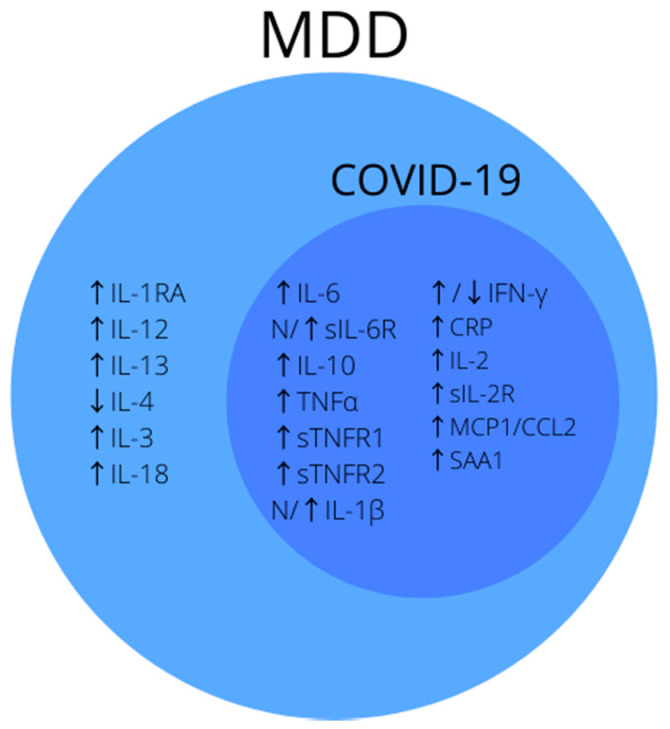
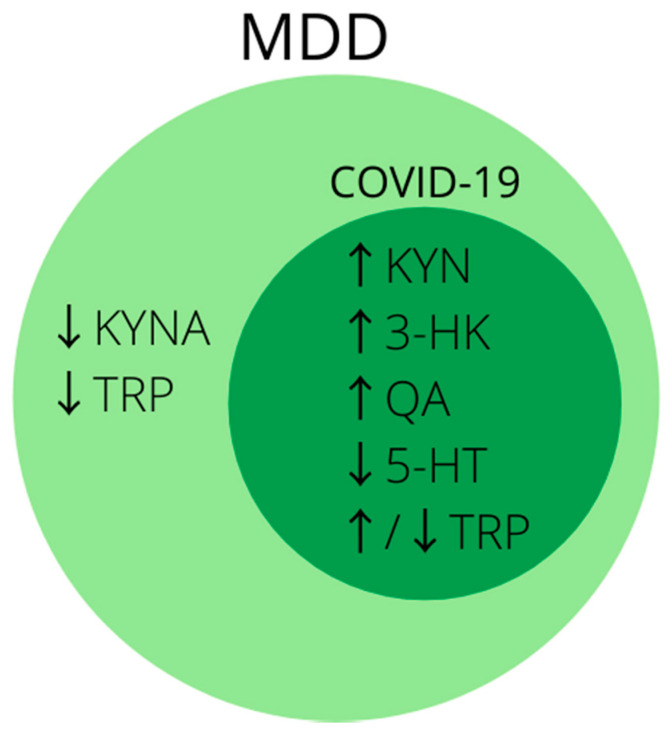
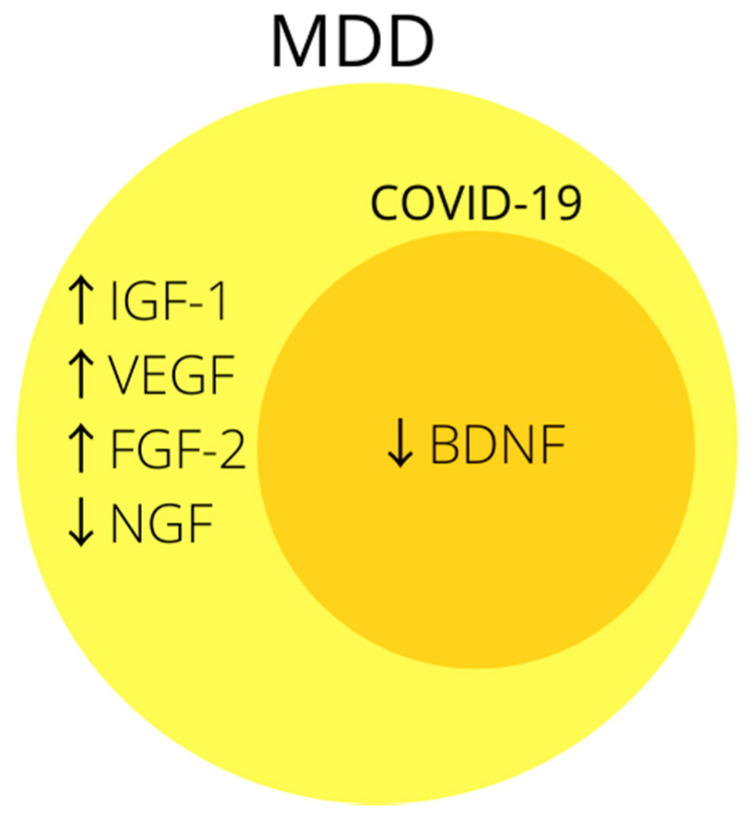
The COVID-19 pandemic is spreading around the world and 187 million people have already been affected. One of its after-effects is post-COVID depression, which, according to the latest data, affects up to 40% of people who have had SARS-CoV-2 infection. A very important issue for the mental health of the general population is to look for the causes of this complication and its biomarkers. This will help in faster diagnosis and effective treatment of the affected patients. In our work, we focused on the search for major depressive disorder (MDD) biomarkers, which are also present in COVID-19 patients and may influence the development of post-COVID depression. For this purpose, we searched PubMed, Scopus and Google Scholar scientific literature databases using keywords such as 'COVID-19', 'SARS-CoV-2', 'depression', 'post-COVID', 'biomarkers' and others. Among the biomarkers found, the most important that were frequently described are increased levels of interleukin 6 (IL-6), soluble interleukin 6 receptor (sIL-6R), interleukin 1 β (IL-1β), tumor necrosis factor α (TNF-α), interferon gamma (IFN-γ), interleukin 10 (IL-10), interleukin 2 (IL-2), soluble interleukin 2 receptor (sIL-2R), C-reactive protein (CRP), Monocyte Chemoattractant Protein-1 (MCP-1), serum amyloid a (SAA1) and metabolites of the kynurenine pathway, as well as decreased brain derived neurotrophic factor (BDNF) and tryptophan (TRP). The biomarkers identified by us indicate the etiopathogenesis of post-COVID depression analogous to the leading inflammatory hypothesis of MDD.
Overview
The claims and statistics of this paper haven’t been checked yet.
Free: it reads the open-access text and checks the first 5 claims that cite a source we can check. Create a free account to check every claim.
Integrity signals
Registry
Cites
Statistics
Figures
Verification
Claims the paper makes
The claims and statistics of this paper haven’t been checked yet.
Free: it reads the open-access text and checks the first 5 claims that cite a source we can check. Create a free account to check every claim.
Claims other papers make about this one
Each is checked against this paper’s own text: does it say what the citing paper says it does?
The cited source says what the claim attributes to it.
In the citing paper
“This investigation underlines the importance of identifying and prioritizing the distinctive demands and individual preferences of depression patients; this is in contrast to previous research with a focus on objective representation (76).”
From Anti-stigmatizing: a collaborative autoethnography on recovery from depression (2024) · cites this paper as [76]
Self-check
Percentages, sums and reported differences re-computed from the paper’s own numbers.
The self-check needs the paper’s full text.
Citations
Cites
Items 201–235 of 235
Why Severe COVID-19 Patients Are at Greater Risk of Developing Depression: A Molecular Perspective
Bouças, A. P., Rheinheimer, J., & Lagopoulos, J. (2020) · The Neuroscientist · doi:10.1177/1073858420967892 · Cited by 61
Zinellu, A., Paliogiannis, P., Carru, C., & Mangoni, A. A. (2021) · International Journal of Infectious Diseases · doi:10.1016/j.ijid.2021.03.025 · Cited by 61
The emergence of cognitive COVID
Ritchie, K. A., & Chan, D. (2021) · World Psychiatry · doi:10.1002/wps.20837 · Cited by 60
Villacampa, N., Almolda, B., Vilella, A., Campbell, I. L., González, B., & Castellano, B. (2015) · Glia · doi:10.1002/glia.22807 · Cited by 58
Increased Soluble TNF Receptor 2 in Antidepressant-Free Patients with Late-Life Depression
Diniz, B. S., Teixeira, A. L., Talib, L. L., Mendonça, V. A., Gattaz, W. F., & Forlenza, O. V. (2010) · Journal of Psychiatric Research · doi:10.1016/j.jpsychires.2010.02.008 · Cited by 54
Chocano-Bedoya, P. O., Mirzaei, F., O’Reilly, E. J., Lucas, M., Okereke, O. I., Hu, F. B., Rimm, E. B., & Ascherio, A. (2014) · Journal of Affective Disorders · doi:10.1016/j.jad.2014.03.023 · Cited by 53
iTRAQ technology-based identification of human peripheral serum proteins associated with depression
Wang, Q., Su, X., Jiang, X., Dong, X., Fan, Y., Zhang, J., Yu, C., Gao, W., Shi, S., Jiang, J., et al. (2016) · Neuroscience · doi:10.1016/j.neuroscience.2016.05.055 · Cited by 53
Tumor Necrosis Factor Alpha: A Major Cytokine of Brain Neuroinflammation
Muhammad, M. (2019) · IntechOpen eBooks · doi:10.5772/intechopen.85476 · Cited by 52
Postolache, T. T., Benros, M. E., & Brenner, L. A. (2021) · JAMA Psychiatry · doi:10.1001/jamapsychiatry.2020.2795 · Cited by 52
Major depression in primary care: making the diagnosis
Ng, C., How, C., & Ng, Y. (2016) · Singapore Medical Journal · doi:10.11622/smedj.2016174 · Cited by 51
Nabbé, P., Reste, J. Y. L., Guillou-Landréat, M., Perez, M. A. M., Argyriadou, S., Clavería, A., Martin, M., Czachowski, S., Lingner, H., Lygidakis, C., et al. (2016) · European Psychiatry · doi:10.1016/j.eurpsy.2016.08.004 · Cited by 48
Increased levels of plasma IL-1b and BDNF can predict resistant depression patients
Uint, L., Bastos, G. M., Thurow, H. S., Borges, J. B., Hirata, T. D. C., França, J. Í. D., Hirata, M. H., & Sousa, A. (2019) · Revista da Associação Médica Brasileira · doi:10.1590/1806-9282.65.3.361 · Cited by 48
Serum Interferon-Gamma Level Is Associated with Drug-Naïve Major Depressive Disorder
Daria, S., Proma, M. A., Shahriar, M., Islam, S. M. A., Bhuiyan, M. A., & Islam, M. R. (2020) · SAGE Open Medicine · doi:10.1177/2050312120974169 · Cited by 46
Recovery from SARS-CoV-2 infection is associated with serum BDNF restoration
Azoulay, D., Shehadeh, M., Chepa, S. R., Shaoul, E., Baroum, M., Horowitz, N. A., & Kaykov, E. (2020) · Journal of Infection · doi:10.1016/j.jinf.2020.06.038 · Cited by 44
Serum Amyloid A Protein as a useful biomarker to predict COVID-19 patients severity and prognosis
Pieri, M., Ciotti, M., Nuccetelli, M., Perrone, M. A., Caliò, M. T., Lia, M. S., Minieri, M., & Bernardini, S. (2021) · International Immunopharmacology · doi:10.1016/j.intimp.2021.107512 · Cited by 44
Biomarkers of Major Depressive Disorder: Knowing is Half the Battle
Malik, S., Singh, R., Arora, G., Dangol, A., & Goyal, S. (2021) · Clinical Psychopharmacology and Neuroscience · doi:10.9758/cpn.2021.19.1.12 · Cited by 42
Tryptophan and Kynurenine Metabolites: Are They Related to Depression?
Pompili, M., Lionetto, L., Curto, M., Forte, A. M., Erbuto, D., Montebovi, F., Seretti, M. E., Berardelli, I., Serafini, G., Innamorati, M., et al. (2018) · Neuropsychobiology · doi:10.1159/000491604 · Cited by 37
Iacob, E., Light, K. C., Tadler, S. C., Weeks, H. R., White, A. T., Hughen, R. W., VanHaitsma, T. A., Bushnell, L., & Light, A. R. (2013) · BMC Psychiatry · doi:10.1186/1471-244x-13-273 · Cited by 36
Early risk factors of the exacerbation of coronavirus disease 2019 pneumonia
Wang, C. J., Hu, S., Wang, L., Li, M., & Li, H. (2020) · Journal of Medical Virology · doi:10.1002/jmv.26071 · Cited by 36
Serum Amyloid A Differentially Activates Microglia and Astrocytes via the PI3K Pathway
Yu, Y., Liu, J., Li, S.-Q., Peng, L., & Ye, R. D. (2013) · Journal of Alzheimer's Disease · doi:10.3233/jad-130818 · Cited by 35
Teixeira, A. L., Souza, R. T. D. A., Zanetti, M. V., Brunoni, A. R., Busatto, G. F., Zarate, C. A., Gattaz, W. F., & Machado‐Vieira, R. (2015) · Human Psychopharmacology Clinical and Experimental · doi:10.1002/hup.2450 · Cited by 34
Immunological changes in depression
Srivastava, K., Goyal, S., Kodange, C., & Bhat, P. S. (2017) · Industrial Psychiatry Journal · doi:10.4103/ipj.ipj_22_18 · Cited by 30
An altered peripheral IL6 response in major depressive disorder
Money, K. M., Galik-Olah, Z., Korade, Ž., Garbett, K. A., Shelton, R. C., & Mirnics, K. (2016) · Neurobiology of Disease · doi:10.1016/j.nbd.2016.01.015 · Cited by 29
The acute‐phase mediator serum amyloid A is associated with symptoms of depression and fatigue
Bryleva, E. Y., Keaton, S. A., Grit, J. L., Madaj, Z. B., Sauro‐Nagendra, A., Smart, L., Halstead, S. B., Achtyes, E. D., & Brundin, L. (2017) · Acta Psychiatrica Scandinavica · doi:10.1111/acps.12730 · Cited by 29
Associations between serum amyloid A, interleukin‐6, and COVID‐19: A cross‐sectional study
Liu, Q., Dai, Y., Feng, M., Wang, X., Liang, W., & Yang, F. (2020) · Journal of Clinical Laboratory Analysis · doi:10.1002/jcla.23527 · Cited by 29
The Potential Role of Monocyte Chemoattractant Protein-1 for Major Depressive Disorder
Pae, C.-U. (2014) · Psychiatry Investigation · doi:10.4306/pi.2014.11.3.217 · Cited by 25
Gender‐specificity of resilience in major depressive disorder
Perlis, R. H., Ognyanova, K., Quintana, A., Green, J., Santillana, M., Lin, J. A.-J., Druckman, J. N., Lazer, D. M. J., Simonson, M. D., Baum, M., et al. (2021) · Depression and Anxiety · doi:10.1002/da.23203 · Cited by 24
Kaya, H., Kaji, M., & Usuda, D. (2021) · International Journal of Infectious Diseases · doi:10.1016/j.ijid.2021.03.011 · Cited by 19
Immunological Interfaces: The COVID-19 Pandemic and Depression
Perlmutter, A. (2021) · Frontiers in Neurology · doi:10.3389/fneur.2021.657004 · Cited by 18
Proteomic Markers for Depression
Silva-Costa, L. C., Carlson, P. T., Guest, P. C., de Almeida, V., & Martins‐de‐Souza, D. (2019) · Advances in experimental medicine and biology · doi:10.1007/978-3-030-05542-4_10 · Cited by 17
Comparison of post-COVID depression and major depressive disorderPreprint
Perlis, R. H., Santillana, M., Ognyanova, K., Green, J., Druckman, J. N., Lazer, D. M. J., & Baum, M. (2021) · medRxiv · doi:10.1101/2021.03.26.21254425 · Cited by 16
Chirico, M., Custer, J., Shoyombo, I., Cooper, C. M., Meldrum, S., Dantzer, R., Trivedi, M. H., Rathouz, P. J., & Toups, M. S. P. (2020) · Brain Behavior & Immunity - Health · doi:10.1016/j.bbih.2020.100126 · Cited by 15
Biomarkers of Oxidative Stress in Major Depressive Disorder
Hamed, R. A., Elmalt, H. A., Salama, A., Abozaid, S. Y., & Ahmed, A. (2020) · Open Access Macedonian Journal of Medical Sciences · doi:10.3889/oamjms.2020.4144 · Cited by 15
Spigna, G. D., Cernia, D. S., Vargas, M., Buonavolontà, L., Servillo, G., & Postiglione, L. (2020) · Clinical and Medical Investigations · doi:10.15761/cmi.1000211 · Cited by 15
Mohamed, A. E., El-Latif, R. A., Youssef, A. M., & Ibrahim, A. (2020) · Middle East Current Psychiatry · doi:10.1186/s43045-020-00038-9 · Cited by 14
Cited by
Post-COVID-19 Depressive Symptoms: Epidemiology, Pathophysiology, and Pharmacological Treatment
Mazza, M. G., Palladini, M., Poletti, S., & Benedetti, F. (2022) · CNS Drugs · doi:10.1007/s40263-022-00931-3 · Cited by 220
“0001), and correlated positively with disease severity [76], but its role has not yet been investigated in the pathogenesis of post-COVID-19 depression.”
BackgroundNeuroinflammation—A Crucial Factor in the Pathophysiology of Depression—A Comprehensive Review
Sălcudean, A., Bodo, C.-R., Popovici, R. A., Lica, M. M., Păcurar, M., Crăciun, R.-E., Crișan, A., ENĂTESCU, V. R., Marinescu, I. P., Cîmpian, D. M., et al. (2025) · Biomolecules · doi:10.3390/biom15040502 · Cited by 202
“C-C motif chemokine ligand 2 (CCL2), also known as monocyte chemoattractant protein-1 (MCP-1), is significantly elevated in individuals with MDD. CCL2 has been associated with heightened neuroinflammation and blood–brain barrier dysfunction, making it a promising target for biomarker research [295].”
Persistent Autoimmune Activation and Proinflammatory State in Post-Coronavirus Disease 2019 Syndrome
Acosta-Ampudia, Y., Monsalve, D. M., Rojas, M., Rodríguez, Y., Zapata, E., Ramírez-Santana, C., & Anaya, J.-M. (2022) · The Journal of Infectious Diseases · doi:10.1093/infdis/jiac017 · Cited by 168
“Other biomarkers such as IL-1β, TNF-α, IFN-γ, IL-10, IL-2, CRP, MCP-1, serum amyloid A, and metabolites of the kynurenine pathway may contribute to this symptomatology in PCS [27].”
BackgroundCOVID-19 2022 update: transition of the pandemic to the endemic phase
Biancolella, M., Colona, V. L., Mehrian‐Shai, R., Watt, J. L., Luzzatto, L., Novelli, G., & Reichardt, J. K. V. (2022) · Human Genomics · doi:10.1186/s40246-022-00392-1 · Cited by 159
“Among the major complications, however, those mostly described were the presence of diffuse brain damage of inflammatory [52] or acute metabolic origins (toxic-metabolic encephalopathies) [53], Guillain-Barré syndrome [54, 55], Miller-Fisher syndrome [56], ischemic vasculitis [57], dysautonomic dysfunctions [55, 58, 5…”
BackgroundVisco, V., Vitale, C., Rispoli, A., Izzo, C., Virtuoso, N., Ferruzzi, G. J., Santopietro, M., Melfi, A., Rusciano, M. R., Maglio, A., et al. (2022) · Journal of Clinical Medicine · doi:10.3390/jcm11030524 · Cited by 125
“These variations facilitate neurotoxicity, neurodegeneration and reduction in neurogenesis and synaptic plasticity [99].”
BackgroundInfluential
Metadata
- Authors
- Lorkiewicz, P., & Waszkiewicz, N.
- Affiliations
- Medical University of Białystok (PL)
- Corresponding author
- Lorkiewicz, Piotr
- Venue
- Journal of Clinical Medicine
- Publisher
- MDPI AG
- Published
- 2021-09-14
- Volume
- 10
- Issue
- 18
- Pages
- 4142
- ISSN
- 2077-0383 (ISSN-L)
- PMC
- PMC8470902
- OpenAlex
- W3200359909
- Cited by
- 102
- References
- 241
- Citations by year
- 2026: 5 · 2025: 16 · 2024: 24 · 2023: 27 · 2022: 28 · 2021: 2
- FWCI
- 1.91
- Type
- journal article
- Language
- en
- Open access
- gold
- doi.org
- Licence
- Locations
- Journal of Clinical Medicine (publishedVersion, cc-by)
- Europe PMC (PubMed Central) (publishedVersion, other-oa)
- PubMed Central (publishedVersion, cc-by)
- PubMed (publishedVersion)
- DOAJ (DOAJ: Directory of Open Access Journals) (submittedVersion, cc-by-sa)
- Funders
- the Medical University of Bialystok (SUB/1/DN/21/001/1147)
- Topics
- Life Sciences › Neuroscience › Biological Psychiatry › Tryptophan and brain disorders
- Health Sciences › Medicine › Clinical Neurology › Long-Term Effects of COVID-19
- Social Sciences › Psychology › Clinical Psychology › COVID-19 and Mental Health
- Keywords
- post-COVID depression, major depressive disorder, biomarkers, SARS-CoV-2, COVID-19 pandemic, cytokines, interleukin-6, C-reactive protein, brain-derived neurotrophic factor, tryptophan, kynurenine pathway, serum amyloid A, MCP-1, neuroinflammation
About these checks
Registry, retraction, Cites and statistics results are computed, not judged, with one exception: a printed reference that no index lists is read once by a model before it counts as a citation error. Claims are extracted by a model and kept only when their quote appears verbatim in the text; each cited source is then checked, with a model’s help, for whether it says what the claim relies on. Those verdicts can be wrong — read the claim’s quote and the cited source before relying on one.
Statistics and arithmetic are recomputed, not judged.
Confidence bands are shown only for fields calibrated on our annotated test set. None is calibrated yet, so no band is shown.
What counts as a claim ›How we measure confidence ›How we check this ›
Are you an author, or do you see a problem with this page? Request a review
Data sources
Bibliographic data: Semantic Scholar, OpenAlex, Crossref.
Contains information from the Semantic Scholar Academic Graph Datasets, made available under the ODC Attribution License (ODC-BY 1.0).
Semantic Scholar’s data is described in: Kinney, R., et al. (2023). The Semantic Scholar Open Data Platform. arXiv:2301.10140.
