

Evaluating Osteoporosis in Chronic Kidney Disease: Both Bone Quantity and Quality Matter
Open accessThe DOI matches its Crossref record; 129 of the 129 references it cites were found in a registry or an index.
Abstract
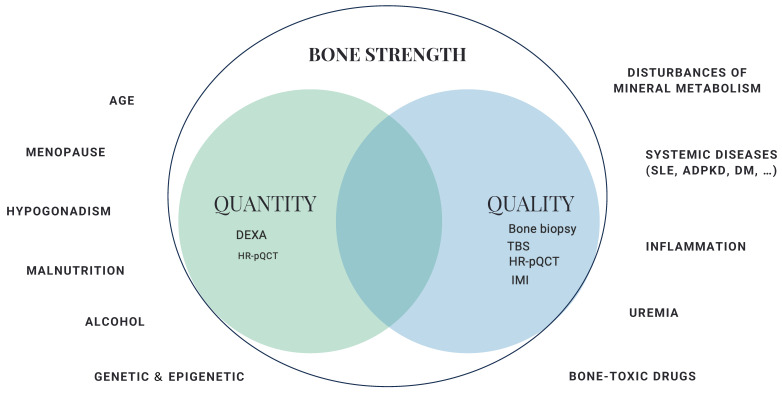
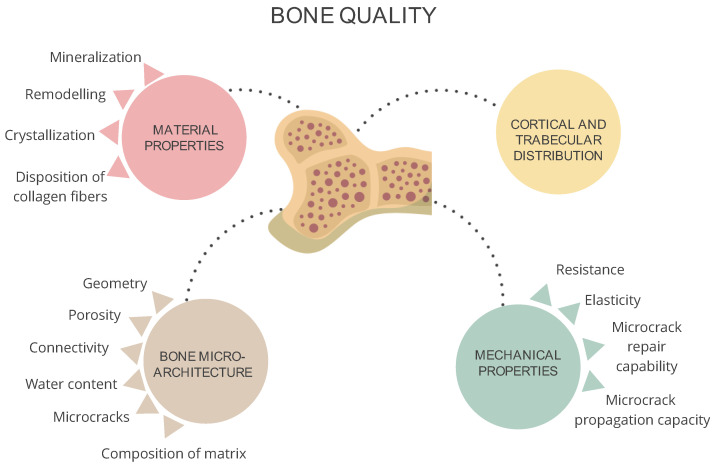
Bone strength is determined not only by bone quantity [bone mineral density (BMD)] but also by bone quality, including matrix composition, collagen fiber arrangement, microarchitecture, geometry, mineralization, and bone turnover, among others. These aspects influence elasticity, the load-bearing and repair capacity of bone, and microcrack propagation and are thus key to fractures and their avoidance. In chronic kidney disease (CKD)-associated osteoporosis, factors traditionally associated with a lower bone mass (advanced age or hypogonadism) often coexist with non-traditional factors specific to CKD (uremic toxins or renal osteodystrophy, among others), which will have an impact on bone quality. The gold standard for measuring BMD is dual-energy X-ray absorptiometry, which is widely accepted in the general population and is also capable of predicting fracture risk in CKD. Nevertheless, a significant number of fractures occur in the absence of densitometric World Health Organization (WHO) criteria for osteoporosis, suggesting that methods that also evaluate bone quality need to be considered in order to achieve a comprehensive assessment of fracture risk. The techniques for measuring bone quality are limited by their high cost or invasive nature, which has prevented their implementation in clinical practice. A bone biopsy, high-resolution peripheral quantitative computed tomography, and impact microindentation are some of the methods established to assess bone quality. Herein, we review the current evidence in the literature with the aim of exploring the factors that affect both bone quality and bone quantity in CKD and describing available techniques to assess them.
Overview
The claims and statistics of this paper haven’t been checked yet.
Free: it reads the open-access text and checks the first 5 claims that cite a source we can check. Create a free account to check every claim.
Integrity signals
Registry
Cites
Statistics
Figures
Verification
Claims the paper makes
The claims and statistics of this paper haven’t been checked yet.
Free: it reads the open-access text and checks the first 5 claims that cite a source we can check. Create a free account to check every claim.
Self-check
Percentages, sums and reported differences re-computed from the paper’s own numbers.
The self-check needs the paper’s full text.
Citations
Cites
Osteoporosis Prevention, Diagnosis, and Therapy
NIH Consensus Development Panel on Osteoporosis Prevention, D. (2001) · JAMA: The Journal of the American Medical Association · doi:10.1001/jama.285.6.785 · Cited by 5,529
De Rosa, S., Samoni, S., Villa, G., & Ronco, C. (2017) · Blood Purification · doi:10.1159/000452650 · Cited by 5,007
Global Prevalence of Chronic Kidney Disease – A Systematic Review and Meta-Analysis
Hill, N. R., Fatoba, S. T., Oke, J. L., Hirst, J. A., O’Callaghan, C. A., Lasserson, D. S., & Hobbs, F. D. R. (2016) · PLOS ONE · doi:10.1371/journal.pone.0158765 · Cited by 4,030 · cited 1×
“Worldwide, the prevalence of CKD is >10% [4], and it increases with age (28% among those aged > 70 to 80 years) [5].”
BackgroundEpidemiology of chronic kidney disease: an update 2022
Kovesdy, C. P. (2022) · Kidney International Supplements · doi:10.1016/j.kisu.2021.11.003 · Cited by 2,973
European guidance for the diagnosis and management of osteoporosis in postmenopausal women
Kanis, J. A., McCloskey, E. V., Johansson, H., Cooper, C., Rizzoli, R., Reginster, J.-Y., & on behalf of the Scientific Advisory Board of the European Society for Clinical and Economic Aspects of Osteoporosis and Osteoarthritis (ESCEO) and the Committee of Scientific Advisors of the International Osteoporosis Foundation (IOF) (2013) · Osteoporosis International · doi:10.1007/s00198-012-2074-y · Cited by 2,948
MacLeod, A. M. (2009) · Kidney International · Cited by 2,219
Bone Quality — The Material and Structural Basis of Bone Strength and Fragility
Seeman, E., & Delmas, P. D. (2006) · New England Journal of Medicine · doi:10.1056/nejmra053077 · Cited by 2,080 · cited 1×
“Hypogonadism also increases remodeling speed, which leads to cortical thinning and porosity [28].”
BackgroundMoe, S., Drüeke, T., Cunningham, J., Goodman, W., Martin, K., Olgaard, K., Ott, S., Sprague, S., Lameire, N., & Eknoyan, G. (2006) · Kidney International · doi:10.1038/sj.ki.5000414 · Cited by 1,993 · cited 1×
“Classification based on bone turnover, mineralization, and volume (TMV) was described in 2006 with the aim of aiding the interpretation of bone biopsy results with respect to both bone quantity (volume) and bone quality (turnover and mineralization) in patients with ROD [92].”
Method(2017) · Kidney International Supplements · doi:10.1016/j.kisu.2017.04.001 · Cited by 1,956
European guidance for the diagnosis and management of osteoporosis in postmenopausal women
on behalf of the Scientific Advisory Board of the European Society for Clinical and Economic Aspects of Osteoporosis (ESCEO) and the Committees of Scientific Advisors and National Societies of the International Osteoporosis Foundation (IOF), Kanis, J. A., Cooper, C., Rizzoli, R., & Reginster, J.-Y. (2019) · Osteoporosis International · doi:10.1007/s00198-018-4704-5 · Cited by 1,900 · cited 3×
“European guidance for the diagnosis and management of osteoporosis in postmenopausal women recommends that (where resources for BMD testing are adequate) BMD tests can be undertaken in women with any clinical risk factors [62].”
BackgroundInfluential
Cited by
Glucose-dependent insulinotropic polypeptide (GIP)
Müller, T. D., Adriaenssens, A. E., Ahrén, B., Blüher, M., Birkenfeld, A. L., Campbell, J. E., Coghlan, M. P., D’Alessio, D. D., Deacon, C. F., DelPrato, S., et al. (2025) · Molecular Metabolism · doi:10.1016/j.molmet.2025.102118 · Cited by 114
Salera, D., Merkel, N., Bellasi, A., & de Borst, M. H. (2025) · Clinical Kidney Journal · doi:10.1093/ckj/sfae431 · Cited by 62
“Noninvasive imaging techniques like dual-energy X-ray absorptiometry ( DXA) and high-resolution peripheral quantitative computed tomography ( HR-pQCT) offer valuable insights into bone mineral density and microarchitecture, respectively [101 ].”
Gut hormones and bone homeostasis: potential therapeutic implications
Bouvard, B., & Mabilleau, G. (2024) · Nature Reviews Endocrinology · doi:10.1038/s41574-024-01000-z · Cited by 29
“Resistance to fracture is determined by two main factors: bone quantity and bone quality 2 .”
Waitupu, A., Pratiwi, L., Sutanto, H., Santoso, D., & Hertanto, D. M. (2025) · Experimental Physiology · doi:10.1113/ep092401 · Cited by 22
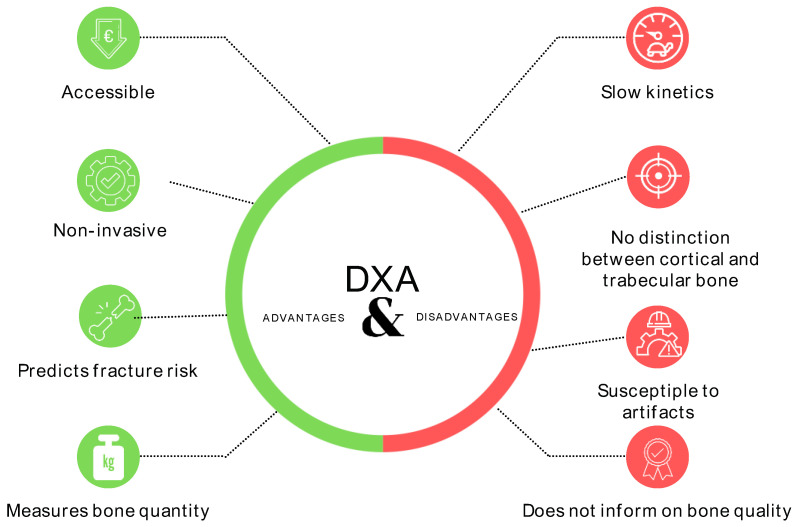
“Additionally,DEXAcannotdifferentiatebetweencorticaland trabecular bone, which is relevant in CKD-MBD as cortical bone loss is particularly prominent in these patients (Lloret et al., 2024; Malluche et al., 2013).”
Ten tips on how to assess bone health in patients with chronic kidney disease
Jørgensen, H. S., Lloret, M. J., Lalayiannis, A. D., Shroff, R. C., Evenepoel, P., Bacchetta, J., Bravenboer, N., Ferreira, A., Fusaro, M., Haarhaus, M. L., et al. (2024) · Clinical Kidney Journal · doi:10.1093/ckj/sfae093 · Cited by 19
“Derived from these parameters are estimates of bone strength and load-bearing capacity [111 , 112 ].”
BackgroundSelf-citation
Metadata
- Authors
- Lloret, M. J., Fusaro, M., Jørgensen, H. S., Haarhaus, M., Gifre, L., Alfieri, C. M., Massó, E., D’Marco, L., Evenepoel, P., & Bover, J.
- Affiliations
- Nephrology Department, Fundació Puigvert, Cartagena 340-350, 08025 Barcelona, Spain
- University of Padua (IT)
- Aarhus University (DK)
- Karolinska University Hospital (SE)
- Universitat Autònoma de Barcelona (ES)
- University of Milan (IT)
- Universidad Cardenal Herrera CEU (ES)
- KU Leuven (BE)
- ORCID
- Venue
- Journal of Clinical Medicine
- Publisher
- MDPI AG
- Published
- 2024-02-09
- Volume
- 13
- Issue
- 4
- Pages
- 1010
- ISSN
- 2077-0383 (ISSN-L)
- PMC
- PMC10889712
- OpenAlex
- W4391679484
- Cited by
- 32
- References
- 129
- Citations by year
- 2026: 16 · 2025: 13 · 2024: 3
- FWCI
- 3.41
- Type
- journal article
- Language
- en
- Open access
- gold
- doi.org
- Licence
- Locations
- Journal of Clinical Medicine (publishedVersion, cc-by)
- PubMed Central (publishedVersion, cc-by)
- PubMed (publishedVersion)
- Dipòsit Digital de Documents de la UAB (Universitat Autònoma de Barcelona) (submittedVersion, cc-by)
- Lirias (submittedVersion, cc-by)
- VBN Forskningsportal (Aalborg Universitet) (submittedVersion, cc-by)
- Archivio Istituzionale della Ricerca (Universita Degli Studi Di Milano) (submittedVersion, other-oa)
- CEU Repositorio Institucional (Fundación Universitaria San Pablo CEU) (submittedVersion, cc-by-nc-nd)
- Funders
- JMC Legacy Research Fund of Germans Trias i Pujol University Hospital
- Topics
- Health Sciences › Medicine › Orthopedics and Sports Medicine › Bone health and osteoporosis research
- Health Sciences › Medicine › Nephrology › Parathyroid Disorders and Treatments
- Life Sciences › Biochemistry, Genetics and Molecular Biology › Molecular Biology › Bone Metabolism and Diseases
- Keywords
- chronic kidney disease, CKD-mineral and bone disorder, osteoporosis, bone quality, bone quantity, bone mineral density, fracture risk, dual-energy X-ray absorptiometry, high-resolution peripheral quantitative computed tomography, bone biopsy, uremic toxins, bone turnover, bone microarchitecture
About these checks
Registry, retraction, Cites and statistics results are computed, not judged, with one exception: a printed reference that no index lists is read once by a model before it counts as a citation error. Claims are extracted by a model and kept only when their quote appears verbatim in the text; each cited source is then checked, with a model’s help, for whether it says what the claim relies on. Those verdicts can be wrong — read the claim’s quote and the cited source before relying on one.
Statistics and arithmetic are recomputed, not judged.
Confidence bands are shown only for fields calibrated on our annotated test set. None is calibrated yet, so no band is shown.
What counts as a claim ›How we measure confidence ›How we check this ›
Are you an author, or do you see a problem with this page? Request a review
How to cite
Cite CoChat for the checks on this page, and the paper for its own findings.
- This page
- CoChat. (2026). Citation check: Evaluating Osteoporosis in Chronic Kidney Disease: Both Bone Quantity and Quality Matter. https://app.cochat.ai/papers/10.3390/jcm13041010
- The paper
- Lloret, M. J., Fusaro, M., Jørgensen, H. S., Haarhaus, M., Gifre, L., Alfieri, C. M., Massó, E., D’Marco, L., Evenepoel, P., & Bover, J. (2024). Evaluating Osteoporosis in Chronic Kidney Disease: Both Bone Quantity and Quality Matter. Journal of Clinical Medicine. https://doi.org/10.3390/jcm13041010
Data sources
Bibliographic data: Semantic Scholar, OpenAlex, Crossref.
Contains information from the Semantic Scholar Academic Graph Datasets, made available under the ODC Attribution License (ODC-BY 1.0).
Semantic Scholar’s data is described in: Kinney, R., et al. (2023). The Semantic Scholar Open Data Platform. arXiv:2301.10140.
