

Hydrops Fetalis Caused by Congenital Syphilis: Case Series and a Comprehensive Review
Open accessThe DOI matches its Crossref record; 33 of the 34 references it cites were found in a registry or an index, and 1 are not checked yet.
Abstract
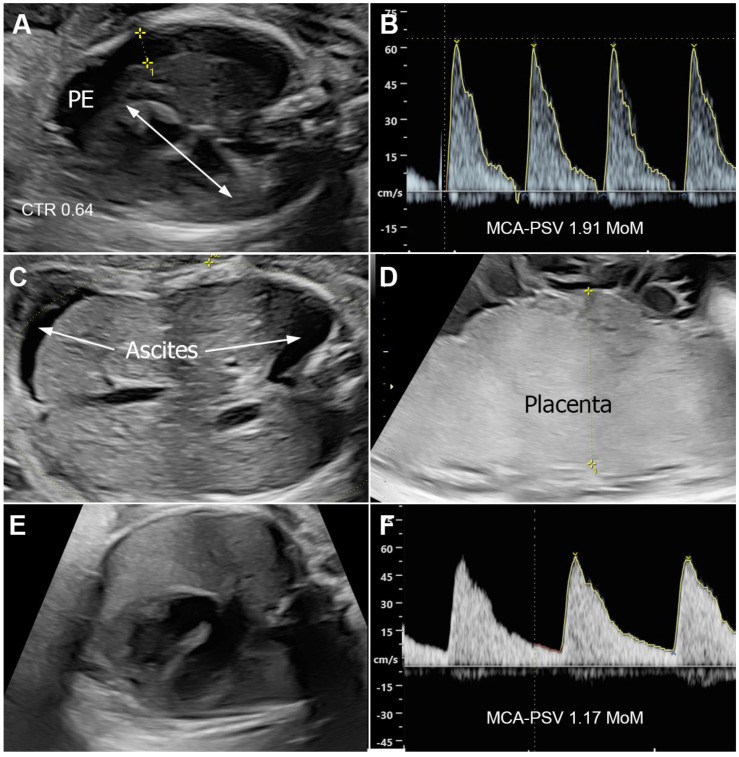
A total of 30 hydropic fetuses, including 25 cases from published reports and 5 from our own series, were reviewed, validated, and analyzed. This review yielded the following key findings: (1) Unlike most cases of nonimmune hydrops fetalis (NIHF), hydrops caused by syphilis is not only preventable but also treatable, with complete resolution possible when appropriately managed. (2) Syphilis-associated hydrops carries a poor prognosis if timely and appropriate treatment is not administered. (3) Based on limited data, intravenous penicillin G is probably more effective than intramuscular benzathine penicillin in treating hydropic fetuses. (4) Middle cerebral artery peak systolic velocity (MCA-PSV) measurements are increasingly used as a reliable and noninvasive tool for assessing fetal anemia, determining the need for intrauterine transfusion (IUT), and monitoring treatment response. (5) A significant number of cases did not receive prenatal treatment due to false-negative serologic results caused by the prozone effect, as well as the omission of syphilis from the differential diagnosis of NIHF, leading to missed prenatal diagnoses. (6) IUT may help mitigate cellular damage in developing vital organs caused by anemic hypoxia, particularly while awaiting the effects of medical treatment. In conclusion, the modern approach to managing this ancient disease includes: (1) prioritizing intensive intravenous penicillin G therapy over conventional intramuscular benzathine penicillin G; (2) utilizing MCA-PSV in conjunction with other indicators of anemia to monitor its severity; and (3) implementing IUT to prevent anemic hypoxic injury in cases where the hematocrit falls below 30%.
Overview
The claims and statistics of this paper haven’t been checked yet.
Free: it reads the open-access text and checks the first 5 claims that cite a source we can check. Create a free account to check every claim.
Integrity signals
Registry
Cites
Statistics
Figures
Verification
Claims the paper makes
The claims and statistics of this paper haven’t been checked yet.
Free: it reads the open-access text and checks the first 5 claims that cite a source we can check. Create a free account to check every claim.
Claims other papers make about this one
Each is checked against this paper’s own text: does it say what the citing paper says it does?
The source backs part of the claim, not all of it — or backs it for a different population, condition or comparison.
In the citing paper
“Two women received intravenous aqueous crystalline penicillin G; both neonates responded favorably. Of the three women who received intramuscular benzathine penicillin G, two delivered neonates with congenital syphilis and one neonate responded to treatment.”
From Efectividad del tratamiento de la sífilis gestacional en el último trimestre sobre la incidencia de sífilis congénita: revisión sistemática y metanálisis (2025) · cites this paper as [38]
Experimental — accuracy not yet measuredThe source backs part of the claim, not all of it — or backs it for a different population, condition or comparison.
In the citing paper
“The third case series 38 reported five cases of congenital syphilis with hydrops fetalis. Four were diagnosed at 26 weeks’ gestation, and one beyond 28 weeks.”
From Efectividad del tratamiento de la sífilis gestacional en el último trimestre sobre la incidencia de sífilis congénita: revisión sistemática y metanálisis (2025) · cites this paper as [38]
Experimental — accuracy not yet measuredThe check wasn’t confident either way, so it gives no verdict — never disputed.
In the citing paper
“The case series scored 6/10 (37), 7/10 (36), and 9/10 (38) on the Joanna Briggs Institute checklist”
From Efectividad del tratamiento de la sífilis gestacional en el último trimestre sobre la incidencia de sífilis congénita: revisión sistemática y metanálisis (2025) · cites this paper as [38]
Experimental — accuracy not yet measured
Self-check
Percentages, sums and reported differences re-computed from the paper’s own numbers.
The self-check needs the paper’s full text.
Citations
Cites
Sexually Transmitted Infections Treatment Guidelines, 2021
Workowski, K. A., Bachmann, L. H., Chan, P. A., Johnston, C. M., Muzny, C. A., Park, I., Reno, H., Zenilman, J. M., & Bolan, G. A. (2021) · MMWR. Recommendations and Reports · doi:10.15585/mmwr.rr7004a1 · Cited by 3,018 · cited 1×
“In such cases, the optimal penicillin regimen remains uncertain [11].”
RETIRED: Society for Maternal-Fetal Medicine (SMFM) Clinical Guideline #7: nonimmune hydrops fetalis
Norton, M. E., Chauhan, S. P., & Dashe, J. S. (2015) · American Journal of Obstetrics and Gynecology · doi:10.1016/j.ajog.2014.12.018 · Cited by 309 · cited 1×
“Current obstetrical guidelines for the evaluation of non-immune hydrops fetalis (NIHF) provide vague recommendations [12], increasing the risk of missed syphilis diagnoses during NIHF investigations, with significant implications for both individual patient outcomes and public health.”
Mari, G., Norton, M. E., Stone, J., Berghella, V., Sciscione, A. C., Tate, D., & Schenone, M. H. (2015) · American Journal of Obstetrics and Gynecology · doi:10.1016/j.ajog.2015.01.059 · Cited by 232 · cited 1×
“…guidelines exist for IUT in syphilis-associated hydrops fetalis, the approach recommended by the Society for Maternal–Fetal Medicine (SMFM) [32] and the American College of Obstetricians and Gynecologists (ACOG) [33] for fetal anemia secondary to Rh isoimmunization or parvovirus B19 may…”
Syphilis during pregnancy: a preventable threat to maternal-fetal health
Rac, M. W. F., Revell, P. A., & Eppes, C. S. (2016) · American Journal of Obstetrics and Gynecology · doi:10.1016/j.ajog.2016.11.1052 · Cited by 181
The resurgence of syphilis in high-income countries in the 2000s: a focus on Europe
Spiteri, G., Unemo, M., Mårdh, O., & Amato-Gauci, A. J. (2019) · Epidemiology and Infection · doi:10.1017/s0950268819000281 · Cited by 162 · cited 1×
“A similar resurgence has also been documented in several European countries [4–6].”
Fetal syphilis: clinical and laboratory characteristics
Hollier, L. (2001) · Obstetrics & Gynecology · doi:10.1016/s0029-7844(01)01367-9 · Cited by 160 · cited 1×
“Cases of fetal treatment failure have been reported, particularly in the presence of sonographic abnormalities such as hydrops fetalis, hepatomegaly, ascites, and placentomegaly [10].”
ACOG Practice Bulletin No. 192: Management of Alloimmunization During Pregnancy
(2018) · Obstetrics and Gynecology · doi:10.1097/aog.0000000000002528 · Cited by 125 · cited 1×
“…fetalis, the approach recommended by the Society for Maternal–Fetal Medicine (SMFM) [32] and the American College of Obstetricians and Gynecologists (ACOG) [33] for fetal anemia secondary to Rh isoimmunization or parvovirus B19 may reasonably be applied in cases of syphilis-associated anemia.”
Antibiotics for syphilis diagnosed during pregnancy
Walker, G. J. (2001) · Cochrane Database of Systematic Reviews · doi:10.1002/14651858.cd001143 · Cited by 103 · cited 1×
“However, the specific regimen used for treating syphilis during pregnancy varies across countries and remains a subject of debate [8].”
Berkowitz, K. M., Baxi, L., & Fox, H. E. (1990) · American Journal of Obstetrics and Gynecology · doi:10.1016/0002-9378(90)91107-n · Cited by 84 · cited 3×
“Notably, five cases exhibited false non-reactive results in prenatal testing due to the prozone effect [13,14].”
Progression of ultrasound findings of fetal syphilis after maternal treatment
Rac, M. W. F., Bryant, S. N., McIntire, D. D., Cantey, J. B., Twickler, D. M., Wendel, G. D., & Sheffield, J. S. (2014) · American Journal of Obstetrics and Gynecology · doi:10.1016/j.ajog.2014.05.049 · Cited by 67 · cited 2×
“Some experts, such as Rac et al. [1,2], do not recommend IUT, as adequate treat-ment with BPG is believed to reverse the hematologic abnormalities associated with fetal syphilis [1,29].”
(1993) · PubMed · Cited by 66
Fetal Syphilis: Clinical and Laboratory Characteristics
Hollier, L. M., Harstad, T. W., Sánchez, P. J., Twickler, D. M., & Wendel, G. D. (2001) · Obstetrics and Gynecology · doi:10.1097/00006250-200106000-00015 · Cited by 47
Nonimmune hydrops fetalis associated with maternal infection with syphilis
Barton, J. R., Thorpe, E. M., Shaver, D. C., Hager, W. D., & Sibai, B. M. (1992) · American Journal of Obstetrics and Gynecology · doi:10.1016/s0002-9378(11)91625-1 · Cited by 34 · cited 1×
“Notably, five cases exhibited false non-reactive results in prenatal testing due to the prozone effect [13,14].”
Levine, Z., Sherer, D., Jacobs, A., & Rotenberg, O. (1998) · American Journal of Perinatology · doi:10.1055/s-2007-993933 · Cited by 31 · cited 2×
“(4) A significant number of cases were affected by the prozone effect, leading to false-negative results and subsequent lack of prenatal treatment [13,18].”
Carbonne, B., Nguyen, A. Q., Cynober, E., Castaigne, V., Cortey, A., & BROSSARD, Y. (2008) · Obstetrics and Gynecology · doi:10.1097/aog.0b013e3181656a11 · Cited by 29
Furegato, M., Fifer, H., Mohammed, H. P., Simms, I., Vanta, P., Webb, S., Foster, K., Kingston, M., Charlett, A., Vishram, B., et al. (2017) · Eurosurveillance · doi:10.2807/1560-7917.es.2017.22.49.17-00750 · Cited by 24 · cited 1×
“A similar resurgence has also been documented in several European countries [4–6].”
Chen, I., Chandra, S., Singh, A. E., Kumar, M., Jain, V., & Turnell, R. W. (2010) · Journal of Obstetrics and Gynaecology Canada · doi:10.1016/s1701-2163(16)34658-8 · Cited by 20 · cited 2×
“Similarly, Chen et al. [20] successfully treated a fetus with NIHF secondary to syphilis using a 14-day IV PG regimen in conjunction with IUT, resulting in complete resolution of hydrops within two weeks.”
Primary syphilis and nonimmune fetal hydrops in a penicillin-allergic woman. A case report.
Eltabbakh, G. H., Elejalde, B. R., & Broekhuizen, F. F. (1994) · PubMed · Cited by 19
Fetal anemia as a signal of congenital syphilis
Macé, G., Castaigne, V., Trabbia, A., Guigue, V., Cynober, E., Cortey, A., Lalande, V., & Carbonne, B. (2013) · The Journal of Maternal-Fetal & Neonatal Medicine · doi:10.3109/14767058.2013.853288 · Cited by 17
Non-immune Hydrops Fetalis and Hepatic Dysfunction in a Preterm Infant With Congenital Syphilis
Duby, J., Bitnun, A., Shah, V. S., Shannon, P. T., Shinar, S., & Whyte, H. E. A. (2019) · Frontiers in Pediatrics · doi:10.3389/fped.2019.00508 · Cited by 15
Rising Stillbirth Rates Related to Congenital Syphilis in the United States From 2016 to 2022
Machefsky, A. M., Hufstetler, K., Bachmann, L. H., Barbee, L. A., Miele, K., & O’Callaghan, K. P. (2024) · Obstetrics and Gynecology · doi:10.1097/aog.0000000000005700 · Cited by 15 · cited 1×
“The rising stillbirth rate associated with congenital syphilis in the United States has been well documented in recent years, occurring in more than 1 in 20 pregnancies complicated by the infection [7].”
Syphilis Infection: An Uncommon Etiology of Infectious Nonimmune Fetal Hydrops with Anemia
Fuchs, F., Michaux, K., Rousseau, C., Ovetchkine, P., & Audibert, F. (2014) · Fetal Diagnosis and Therapy · doi:10.1159/000364804 · Cited by 14 · cited 2×
“Moreover, some cases were diagnosed prenatally at an advanced stage, when the likelihood of therapeutic response was low, especially in fetuses exhibiting distress, such as a sinusoidal pattern, prior to treatment initiation [23].”
Nonimmune hydrops fetalis and fetal congenital syphilis. A case report.
Hallak, M., Peipert, J. F., Ludomirsky, A., & Byers, J. (1992) · PubMed · Cited by 13
HEMOPHAGOCYTOSIS: The Cause of Anemia and Thrombocytopenia in Congenital Syphilis
Yaralı, N., Balaban, İ., Akyürek, N., Uçar, Ş., & Zorlu, P. (2009) · Pediatric Hematology and Oncology · doi:10.3109/08880010903091897 · Cited by 11 · cited 1×
“Some experts, such as Rac et al. [1,2], do not recommend IUT, as adequate treat-ment with BPG is believed to reverse the hematologic abnormalities associated with fetal syphilis [1,29].”
Júnior, E. A., Santana, E. F. M., Rôlo, L. C., Nardozza, L. M. M., & Moron, A. F. (2012) · Case Reports in Infectious Diseases · doi:10.1155/2012/478436 · Cited by 11
Intravenous Penicillin for Antenatal Syphilotherapy
Galan, H. L., Yandell, P. M., & Knight, A. B. (1992) · Infectious Diseases in Obstetrics and Gynecology · doi:10.1155/s1064744993000031 · Cited by 8 · cited 2×
“This concern is exemplified by a case reported by Galan et al. [16], in which a fetus with NIHF secondary to syphilis was initially treated with intramuscular BPG.”
Lehman, A. C., Olson, N., Foster, J., & Contag, S. A. (2024) · Sexually Transmitted Diseases · doi:10.1097/olq.0000000000002093 · Cited by 8 · cited 1×
“Surprisingly, over the past 2 decades, congenital syphilis cases have risen 11-fold in the United States [3].”
Kingston, M., French, P., Fifer, H., Hughes, G., & Wilson, J. (2017) · International Journal of STD & AIDS · doi:10.1177/0956462417733866 · Cited by 5
Camacho-Montaño, A. M., Niño-Alba, R., & Páez-Castellanos, E. (2021) · Revista Colombiana de Obstetricia y Ginecología · doi:10.18597/rcog.3591 · Cited by 5
Complete Resolution of Nonimmune Hydrops Fetalis Secondary to Maternal Syphilis Infection
Dinicu, A., Penalosa, P. J., Crosland, A., & Steller, J. G. (2023) · American Journal of Perinatology Reports · doi:10.1055/a-2028-7727 · Cited by 5 · cited 1×
“Additional noteworthy observations include the following: (1) Unlike NIHF caused by other etiologies, which is typically irreversible, hydrops secondary to syphilis is reversible and can completely resolve with appropriate treatment [16,20,26,28].”
Hydrops fetalis caused by congenital syphilis: An ancient disease?
Fernández, S. M. R., Alsina-Casanova, M., Herranz, A., Aldecoa‐Bilbao, V., Borràs‐Novell, C., & Salvia-Roges, D. (2019) · International Journal of STD & AIDS · doi:10.1177/0956462419876487 · Cited by 4 · cited 1×
“However, without intervention, the prognosis is extremely poor [13,18,19,25].”
Exploring management of antenatally diagnosed fetal syphilis infection
Rosenthal, M. A., & Poliquin, V. (2022) · Canada Communicable Disease Report · doi:10.14745/ccdr.v48i23a09 · Cited by 2 · cited 1×
“The final case involved severe hydrops fetalis, leading to termination one week after the initiation of treatment [27].”
Luewan, S., Apaijai, N., Chattipakorn, N., Chattipakorn, S. C., & Tongsong, T. (2024) · BMC Pregnancy and Childbirth · doi:10.1186/s12884-023-06232-x · Cited by 2
Self-citationCongenital syphilis as a cause of hydrops fetalis in a woman with spyhilis incognito
Taner, M. Z., Akçin, Ü., Taşkıran, Ç., Önder, M., Himmetoğlu, Ö., & Onan, M. A. (2004) · Cited by 1
Cited by
Gutiérrez-Tamayo, A. M., Mirama-Calderón, L. V., Vallejo- Ortega, M. T., & Gaitán-Duarte, H. G. (2025) · Revista Colombiana de Obstetricia y Ginecología · doi:10.18597/rcog.4268 · Cited by 1
Graf, N. S., Moghimi, A., Yachmenikova, V., & Smet, M.-E. (2026) · Pathology · doi:10.1016/j.pathol.2026.06.002 · Cited by 2
Congenital scrub typhus presenting as non-immune hydrops fetalis
Tamilarasan, S., Sathyamoorthy, V., & Murugesan, A. (2026) · BMJ Case Reports · doi:10.1136/bcr-2026-272103
Metadata
- Authors
- Yanase, Y., Sirilert, S., Jatavan, P., Pomrop, M., Phirom, K., & Tongsong, T.
- Affiliations
- Nakornping Hospital (TH)
- Chiang Mai University (TH)
- Sirindhorn Hospital (TH)
- Corresponding author
- Sirilert, Sirinart
- Tongsong, Theera
- Venue
- Journal of Clinical Medicine
- Publisher
- MDPI AG
- Published
- 2025-05-23
- Volume
- 14
- Issue
- 11
- Pages
- 3671
- ISSN
- 2077-0383 (ISSN-L)
- PMC
- PMC12155325
- OpenAlex
- W4410643067
- Semantic Scholar
- edc59f5b3772053e98dc96f41de167a4f65500f9
- Cited by
- 3
- References
- 33
- Citations by year
- 2026: 2 · 2025: 1
- FWCI
- 0.39
- Type
- journal article
- Language
- en
- Open access
- gold
- doi.org
- Licence
- Locations
- Journal of Clinical Medicine (publishedVersion, cc-by)
- PubMed Central (publishedVersion, cc-by)
- PubMed (publishedVersion)
- Funders
- Chiang Mai University Research Fund (CMU-2568)
- Topics
- Health Sciences › Medicine › Infectious Diseases › Syphilis Diagnosis and Treatment
- Health Sciences › Medicine › Hematology › Blood groups and transfusion
- Health Sciences › Medicine › Pediatrics, Perinatology and Child Health › Neonatal and Maternal Infections
- Keywords
- congenital syphilis, hydrops fetalis, non-immune hydrops fetalis, fetal anemia, benzathine penicillin, middle cerebral artery peak systolic velocity, intrauterine transfusion, prozone phenomenon, false-negative serology, anemic hypoxia, fetal therapy
About these checks
Registry, retraction, Cites and statistics results are computed, not judged, with one exception: a printed reference that no index lists is read once by a model before it counts as a citation error. Claims are extracted by a model and kept only when their quote appears verbatim in the text; each cited source is then checked, with a model’s help, for whether it says what the claim relies on. Those verdicts can be wrong — read the claim’s quote and the cited source before relying on one.
Statistics and arithmetic are recomputed, not judged.
Confidence bands are shown only for fields calibrated on our annotated test set. None is calibrated yet, so no band is shown.
What counts as a claim ›How we measure confidence ›How we check this ›
Are you an author, or do you see a problem with this page? Request a review
Data sources
Bibliographic data: Semantic Scholar, OpenAlex, Crossref.
Contains information from the Semantic Scholar Academic Graph Datasets, made available under the ODC Attribution License (ODC-BY 1.0).
Semantic Scholar’s data is described in: Kinney, R., et al. (2023). The Semantic Scholar Open Data Platform. arXiv:2301.10140.
