

The DOI matches its Crossref record; 45 of the 45 references it cites were found in a registry or an index; none of the 39 sources its claims cite is checked for support yet.
A Meta-Analysis of the Clinical Use of Curcumin for Irritable Bowel Syndrome (IBS)
Open accessAbstract
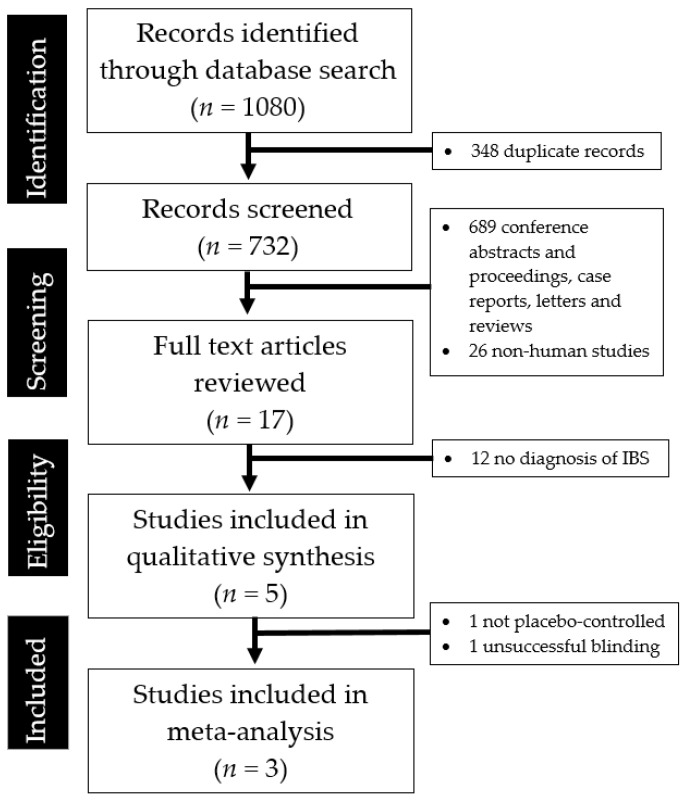
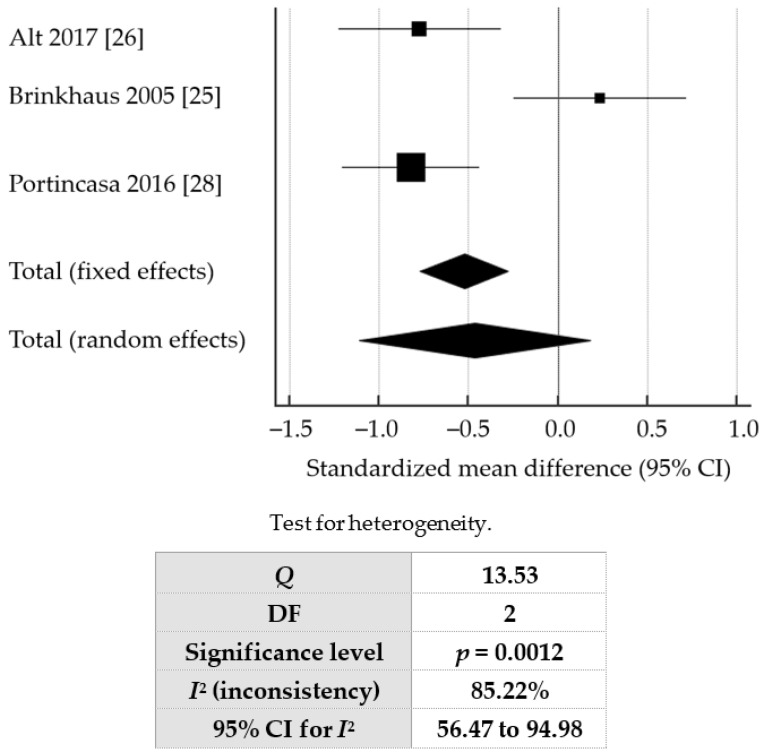
Irritable bowel syndrome (IBS) remains a prevalent and difficult-to-manage gastrointestinal condition. There is growing interest in the use of traditional medicine to manage IBS. In particular, curcumin, a biologically active phytochemical, has demonstrated anti-inflammatory and anti-oxidant properties and mucosal protective effects in rat models of colitis. This meta-analysis thus aimed to investigate the hypothesis that curcumin improves IBS symptoms. Using the keywords (curcumin OR turmeric OR Indian saffron OR diferuloylmethane OR curcuminoid) AND (irritable bowel syndrome OR IBS), a preliminary search on the PubMed, Medline, Embase, PsychINFO, Web of Science, and Google Scholar databases yielded 1080 papers published in English between 1 January 1988 and 1 May 2018. Five randomized, controlled trials were systematically reviewed and 3 were included in the final meta-analysis. Random-effects meta-analysis based on three studies and 326 patients found curcumin to have a beneficial albeit not statistically significant effect on IBS symptoms (pooled standardized mean difference from baseline IBS severity rating −0.466, 95% CI: −1.113 to 0.182, p = 0.158). This is the first meta-analysis to examine the use of curcumin in IBS. With its unique anti-oxidant and anti-inflammatory activities and ability to modulate gut microbiota, curcumin is a potentially useful addition to our armamentarium of agents for IBS. It also appears safe and well-tolerated, with no adverse events reported in the available trials. However, current findings are based on a considerably limited evidence base with marked heterogeneity. More robust clinical trials involving a standardized curcumin preparation and larger sample sizes should be encouraged.
Overview
CoChat Summary
TL;DR
This first meta-analysis of curcumin for IBS pooled three randomized controlled trials and found a beneficial but non-significant effect on IBS symptoms compared with placebo. Curcumin appeared safe and well tolerated, but the evidence base was limited and heterogeneous.
Key findings
- In the random-effects meta-analysis of 3 studies and 326 patients, curcumin produced a pooled standardized mean difference from baseline IBS severity rating of −0.466 (95% CI: −1.113 to 0.182, p = 0.158), a beneficial but not statistically significant effect.
- Heterogeneity was high (I² = 85.22%).
- Of the 5 clinical trials reviewed, 3 reported positive and significant effects for curcumin-containing products, while 2 found no significant effects compared with placebo and advised against curcumin monotherapy.
- No adverse events were reported in any of the trials reviewed; the paper notes curcumin is generally safe, with occasional reports of slight giddiness, nausea, and diarrhoea, and possible interactions with anticoagulants at higher doses.
Methods
- Systematic search of PubMed, Medline, Embase, PsychINFO, Web of Science, and Google Scholar using curcumin/turmeric terms AND IBS terms yielded 1080 papers published in English between 1 January 1988 and 1 May 2018; grey literature was searched via Google.
- Inclusion criteria were randomized controlled trial, curcumin as active intervention, participants with IBS, and available efficacy outcome measures; non-placebo-controlled trials were excluded. Five studies were systematically reviewed and 3 were included in the final meta-analysis.
- The primary outcome was the standardized mean difference for mean reduction in IBS symptoms from baseline with curcumin, using per-protocol analysis; estimates were pooled with a random-effects model, and heterogeneity was assessed with I² and Cochran’s Q.
Limitations
- Stated: only three studies were available, so funnel plot and sensitivity analyses were not feasible; inter-study variability in curcumin formulation and IBS diagnosis likely contributed to heterogeneity; curcumin was mixed with at least one other therapeutic or potentially therapeutic material in two analyzed trials, making a curcumin-attributable SMD difficult to quantify; longer follow-up is needed because IBS is chronic and relapsing, and current studies ranged only from 8 to 18 weeks.
- Stated: more robust clinical trials involving a standardized curcumin preparation and larger sample sizes are warranted.
- Evident from the text: the small evidence base, marked heterogeneity, and co-interventions limit confidence in the pooled estimate and in attributing any benefit specifically to curcumin.
Model-written summary. Check it against the paper before relying on it.
Integrity signals
Registry
Cites
Statistics
Figures
Verification
Claims the paper makes
0 Valid · 0 Not valid · 21 Not checked · 16 Own results and interpretations
A result the paper reports from its own data — it cites no other source for it, so there is none to check. The quote shows it is in the paper.
In the paper
“A random-effects model was applied due to the high degree of heterogeneity observed (I2 = 85.22%).”
- Also stated in: § 2. Methods · plain
“Heterogeneity amongst the different studies pooled was examined using the I2 statistic and Cochran’s Q test. I2 > 50% indicates substantial heterogeneity.”
§ A Meta-Analysis of the Clinical Use of Curcumin for Irritable Bowel Syndrome (IBS) > 3. Results
plain- Asserted: passes — The authors put it forward as true.
- Checkable: passes — It can be checked against evidence.
- Load-bearing: passes — The paper’s conclusions depend on it.
- Based: passes — The paper gives a reason why it holds.
- Also stated in: § 2. Methods · plain
A result the paper reports from its own data — it cites no other source for it, so there is none to check. The quote shows it is in the paper.
In the paper
“Five randomized, controlled trials were systematically reviewed and 3 were included in the final meta-analysis.”
- Also stated in: § 3. Results · plain
“Five studies were systematically reviewed and their key findings were summarised in Table 1.”
§ A Meta-Analysis of the Clinical Use of Curcumin for Irritable Bowel Syndrome (IBS) > Abstract
plain- Asserted: passes — The authors put it forward as true.
- Checkable: passes — It can be checked against evidence.
- Load-bearing: passes — The paper’s conclusions depend on it.
- Based: passes — The paper gives a reason why it holds.
- Also stated in: § 3. Results · plain
A result the paper reports from its own data — it cites no other source for it, so there is none to check. The quote shows it is in the paper.
In the paper
“A total of three studies with a total of 326 individuals with IBS were included in the final meta-analysis.”
- Also stated in: § Abstract · plain
“Five randomized, controlled trials were systematically reviewed and 3 were included in the final meta-analysis.”
§ A Meta-Analysis of the Clinical Use of Curcumin for Irritable Bowel Syndrome (IBS) > 3. Results
plainn = 326- Asserted: passes — The authors put it forward as true.
- Checkable: passes — It can be checked against evidence.
- Load-bearing: passes — The paper’s conclusions depend on it.
- Based: passes — The paper gives a reason why it holds.
- Also stated in: § Abstract · plain
A result the paper states — it cites no source for it, so there is none to check. The quote shows it is in the paper.
In the paper
“This is the first meta-analysis to examine the use of curcumin in IBS.”
- Also stated in: § 1. Introduction · plain
“As no meta-analysis has been done up till now to investigate the efficacy of curcumin in patients with IBS, this meta-analysis is, thus, timely and necessary to summarise current evidence and generate hypotheses for further research.”
- Also stated in: § 4. Discussion · hedged
“To the best of our knowledge, no prior meta-analysis has been done to investigate the efficacy of curcumin on IBS symptoms.”
§ A Meta-Analysis of the Clinical Use of Curcumin for Irritable Bowel Syndrome (IBS) > Abstract
plain- Asserted: passes — The authors put it forward as true.
- Checkable: passes — It can be checked against evidence.
- Load-bearing: passes — The paper’s conclusions depend on it.
- Based: passes — The paper gives a reason why it holds.
- Also stated in: § 1. Introduction · plain
None of the sources cited for this claim have been checked yet.
In the paper
“It was encouraging that curcumin had demonstrated positive effects in the other two placebo-controlled trials [24,28], which recruited male and female patients with at least moderate symptom severity (IBS-SSS ranging from 250 to 300).”
§ A Meta-Analysis of the Clinical Use of Curcumin for Irritable Bowel Syndrome (IBS) > 4. Discussion
What the sources say
- Not checked yetcites [24] Bundy, 2004, Turmeric extract may improve irritable bowel syndrome symptomology in otherwise healthy adults: A pilot study, J. Altern. Complement. Med. source
- Not checked yetcites [28] Portincasa, 2016, Curcumin and Fennel Essential Oil Improve Symptoms and Quality of Life in Patients with Irritable Bowel Syndrome, J. Gastrointestin. Liver Dis. source
boostedstates a cause- Asserted: passes — The authors put it forward as true.
- Checkable: passes — It can be checked against evidence.
- Load-bearing: passes — The paper’s conclusions depend on it.
- Based: passes — The paper gives a reason why it holds.
10 more claims
Create a free account to see all 37 claims and to verify the 39 references still open.
- It may state two separate claims as one. 17
- Probably not a substantial claim. 7
Self-check
Percentages, sums and reported differences re-computed from the paper’s own numbers.
Each contradiction between two passages listed here was confirmed by an independent check.
Rated minor: it would not touch a result — a value no result rests on, a p-value that stays on the same side of the significance level, or a conflict that is clerical, resolved elsewhere in the paper, or outside its own findings.
In the paper
§ A Meta-Analysis of the Clinical Use of Curcumin for Irritable Bowel Syndrome (IBS) > 3. Results
“another study [25] was excluded as the sample size was limited and there was a high drop-out rate (11 out of 32 participants)”
§ A Meta-Analysis of the Clinical Use of Curcumin for Irritable Bowel Syndrome (IBS) > 4. Discussion
“In the other study by Lauche et al. [27], which found non-significant effects compared to placebo, the sample size was limited and there was a high drop-out rate (11 out of 32 participants)”
Rated minor: it would not touch a result — a value no result rests on, a p-value that stays on the same side of the significance level, or a conflict that is clerical, resolved elsewhere in the paper, or outside its own findings.
In the paper
§ A Meta-Analysis of the Clinical Use of Curcumin for Irritable Bowel Syndrome (IBS) > 3. Results
“One study [24] was excluded as it was only partially blinded and was not placebo-controlled”
§ A Meta-Analysis of the Clinical Use of Curcumin for Irritable Bowel Syndrome (IBS) > 4. Discussion
“the other two placebo-controlled trials [24,28]”
Citations
Cites
The Cochrane Collaboration's tool for assessing risk of bias in randomised trials
Higgins, J. P. T., Altman, D. G., Gotzsche, P. C., Juni, P., Moher, D., Oxman, A. D., Savovic, J., Schulz, K. F., Weeks, L., Sterne, J. A. C., et al. (2011) · BMJ · doi:10.1136/bmj.d5928 · Cited by 33,817
Dermyshi, E., Wang, Y., Yan, C., Hong, W., Qiu, G., Gong, X., & Zhang, T. (2017) · Neonatology · doi:10.1159/000454668 · Cited by 24,451
Functional Gastrointestinal Disorders: History, Pathophysiology, Clinical Features, and Rome IV
Drossman, D. A. (2016) · Gastroenterology · doi:10.1053/j.gastro.2016.02.032 · Cited by 2,588
Global Prevalence of and Risk Factors for Irritable Bowel Syndrome: A Meta-analysis
Lovell, R. M., & Ford, A. C. (2012) · Clinical Gastroenterology and Hepatology · doi:10.1016/j.cgh.2012.02.029 · Cited by 2,155
Aggarwal, B. B., & Harikumar, K. B. (2009) · The International Journal of Biochemistry & Cell Biology · doi:10.1016/j.biocel.2008.06.010 · Cited by 1,716
Antioxidant and radical scavenging properties of curcumin
Ak, T., & Gülçin, İ. (2008) · Chemico-Biological Interactions · doi:10.1016/j.cbi.2008.05.003 · Cited by 1,651
Ammon, H., & Wahl, M. (1991) · Planta Medica · doi:10.1055/s-2006-960004 · Cited by 1,347
Safety and Anti-Inflammatory Activity of Curcumin: A Component of Tumeric ( Curcuma longa )
Chainani-Wu, N. (2003) · The Journal of Alternative and Complementary Medicine · doi:10.1089/107555303321223035 · Cited by 1,106
Irritable Bowel Syndrome: A Clinical Review
Chey, W. D., Kurlander, J., & Eswaran, S. (2015) · JAMA · doi:10.1001/jama.2015.0954 · Cited by 1,081
Pace, T. W. W., Mletzko, T. C., Alagbe, O., Musselman, D. L., Nemeroff, C. B., Miller, A. H., & Heim, C. M. (2006) · American Journal of Psychiatry · doi:10.1176/ajp.2006.163.9.1630 · Cited by 810
Cited by
Peng, Y., Ao, M., BaoHua, D., Jiang, Y., Yu, L., Chen, Z., Hu, C.-J., & Xu, R. (2021) · Drug Design Development and Therapy · doi:10.2147/dddt.s327378 · Cited by 933
Fuloria, S., Mehta, J., Chandel, A., Sekar, M., Rani, N. N. I. M., Begum, M. Y., Subramaniyan, V., Chidambaram, K., Thangavelu, L., Nordin, R., et al. (2022) · Frontiers in Pharmacology · doi:10.3389/fphar.2022.820806 · Cited by 481
Antioxidant Potential of Curcumin—A Meta-Analysis of Randomized Clinical Trials
Jakubczyk, K., Drużga, A., Janda, K., & Skonieczna‐Żydecka, K. (2020) · Antioxidants · doi:10.3390/antiox9111092 · Cited by 390
Phytochemicals as modifiers of gut microbial communities
Dingeo, G., Alex Brito, O., Samouda, H., Iddir, M., Frano, M. R. L., & Bohn, T. (2020) · Food & Function · doi:10.1039/d0fo01483d · Cited by 175
Saffron: The Golden Spice with Therapeutic Properties on Digestive Diseases
Ashktorab, H., Soleimani, A., Singh, G., Amin, A., Tabtabaei, S., Latella, G., Stein, U., Akhondzadeh, S., Solanki, N., Gondré‐Lewis, M. C., et al. (2019) · Nutrients · doi:10.3390/nu11050943 · Cited by 151
Metadata
- Authors
- Ng, Q., Soh, A., Loke, W., Venkatanarayanan, N., Lim, D., & Yeo, W.-S.
- Affiliations
- National University Hospital (SG)
- MOH Holdings (SG)
- University of Nottingham (GB)
- Institute of Mental Health (SG)
- Corresponding author
- Ng, Qin
- Venue
- Journal of Clinical Medicine
- Publisher
- MDPI AG
- Published
- 2018-09-22
- Volume
- 7
- Issue
- 10
- Pages
- 298
- ISSN
- 2077-0383 (ISSN-L)
- PMC
- PMC6210149
- OpenAlex
- W2892282120
- Semantic Scholar
- 87495cf029e9e906ed1903c286e2c2231bc5ccbc
- Cited by
- 95
- References
- 45
- Citations by year
- 2026: 4 · 2025: 10 · 2024: 7 · 2023: 13 · 2022: 13 · 2021: 13 · 2020: 16 · 2019: 16 · 2018: 3
- FWCI
- 1.06
- Type
- journal article
- Language
- en
- Open access
- gold
- dx.doi.org
- Licence
- Locations
- Journal of Clinical Medicine (publishedVersion, cc-by)
- Europe PMC (PubMed Central) (publishedVersion, other-oa)
- PubMed (publishedVersion)
- PubMed Central (publishedVersion, cc-by)
- Topics
- Life Sciences › Biochemistry, Genetics and Molecular Biology › Molecular Medicine › Curcumin's Biomedical Applications
- Health Sciences › Medicine › Gastroenterology › Gastrointestinal motility and disorders
- Life Sciences › Pharmacology, Toxicology and Pharmaceutics › Pharmacology › Saffron Plant Research Studies
- Keywords
- curcumin, irritable bowel syndrome, turmeric, phytochemicals, anti-inflammatory activity, antioxidant activity, gut microbiota, IBS symptom severity, traditional medicine, safety and tolerability
About these checks
Registry, retraction, Cites and statistics results are computed, not judged, with one exception: a printed reference that no index lists is read once by a model before it counts as a citation error. Claims are extracted by a model and kept only when their quote appears verbatim in the text; each cited source is then checked, with a model’s help, for whether it says what the claim relies on. Those verdicts can be wrong — read the claim’s quote and the cited source before relying on one.
A language model drew the claims from the paper on 2026-11-14, under version 3 of the claim definition (model deepseek-v4.1-flash, prompt extract-v3).
A second model labelled each claim on 2026-11-14 (model jev-1.13-20260917, definition revision gold-guideline-v0.2).
Statistics and arithmetic are recomputed, not judged.
Confidence bands are shown only for fields calibrated on our annotated test set. None is calibrated yet, so no band is shown.
What counts as a claim ›How we measure confidence ›How we check this ›
Are you an author, or do you see a problem with this page? Request a review
How to cite
Cite CoChat for the checks on this page, and the paper for its own findings.
- This page
- CoChat. (2026). Citation check: A Meta-Analysis of the Clinical Use of Curcumin for Irritable Bowel Syndrome (IBS). https://app.cochat.ai/papers/10.3390/jcm7100298
- The paper
- Ng, Q., Soh, A., Loke, W., Venkatanarayanan, N., Lim, D., & Yeo, W.-S. (2018). A Meta-Analysis of the Clinical Use of Curcumin for Irritable Bowel Syndrome (IBS). Journal of Clinical Medicine. https://doi.org/10.3390/jcm7100298
Data sources
Bibliographic data: Semantic Scholar, OpenAlex, Crossref.
Contains information from the Semantic Scholar Academic Graph Datasets, made available under the ODC Attribution License (ODC-BY 1.0).
Semantic Scholar’s data is described in: Kinney, R., et al. (2023). The Semantic Scholar Open Data Platform. arXiv:2301.10140.
