

The DOI matches its Crossref record; 97 of the 97 references it cites were found in a registry or an index.
Exploring Psilocybe cubensis Strains: Cultivation Techniques, Psychoactive Compounds, Genetics and Research Gaps
Open accessAbstract
Psilocybe cubensis, a widely recognized psychoactive mushroom species, has played a significant role in both historical and modern therapeutic practices. This review explores the complex interplay between genetic diversity, strain variability and environmental factors that shape the biosynthesis of key psychoactive compounds, including psilocybin and psilocin. With many strains exhibiting substantial variability in their phenotypic characteristics and biochemical content, understanding and documenting this diversity is crucial for optimizing therapeutic applications. The review also highlights advances in cultivation techniques, such as submerged fermentation of the mycelium, and innovative analytical methodologies that have improved the precision of compound quantification and extraction. Although there is limited scientific information on P. cubensis due to nearly four decades of regulatory restrictions on psychedelic research, recent developments in genetic and biochemical studies are beginning to provide valuable insights into its therapeutic potential. Furthermore, this review emphasizes key knowledge gaps and offers insights into future research directions to advance the cultivation, scientific documentation of strain diversity, regulatory considerations and therapeutic use of P. cubensis.
Overview
The claims and statistics of this paper haven’t been checked yet.
Free: it reads the open-access text and checks the first 5 claims that cite a source we can check. Create a free account to check every claim.
Integrity signals
Registry
Cites
Statistics
Figures


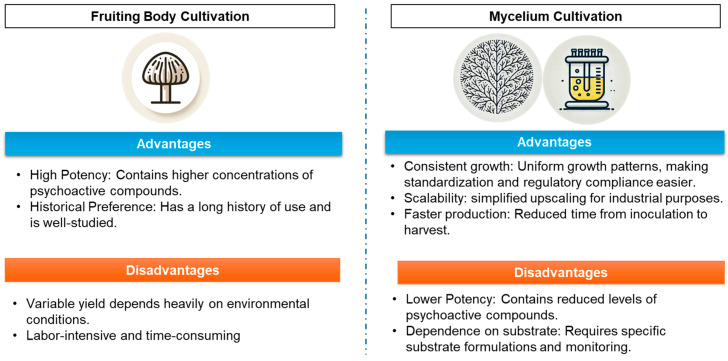
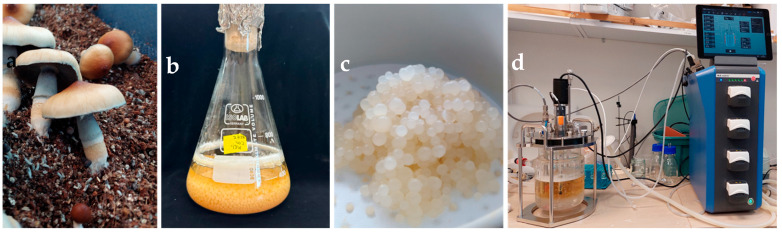
Verification
Claims the paper makes
The claims and statistics of this paper haven’t been checked yet.
Free: it reads the open-access text and checks the first 5 claims that cite a source we can check. Create a free account to check every claim.
Claims other papers make about this one
Each is checked against this paper’s own text: does it say what the citing paper says it does?
The source backs part of the claim, not all of it — or backs it for a different population, condition or comparison.
In the citing paper
“The tryptamine concentration in the “Mak IND” strain is higher than previously reported for other P. cubensis strains [4,11,12].”
From Surprising Variability in Tryptamine Profiles of Psilocybe cubensis Fruiting Bodies: Inter- and Intra-Strain Differences Across 14 Strains Cultivated Under Controlled Conditions (2026) · cites this paper as [4]
Experimental — accuracy not yet measuredThe cited source says what the claim attributes to it.
In the citing paper
“Variation in alkaloid production is documented not only across distinct Psilocybe species collected from natural environments but also among strains of the same species maintained under laboratory conditions, particularly in P. cubensis, a species widely cultivated in both domestic and research contexts [4].”
Self-check
Percentages, sums and reported differences re-computed from the paper’s own numbers.
The self-check needs the paper’s full text.
Citations
Cites
Nichols, D. E. (2016) · Pharmacological Reviews · doi:10.1124/pr.115.011478 · Cited by 1,762
REBUS and the anarchic brain: Toward a unified model of the brain action of psychedelics
Carhart-Harris, R. L., & Friston, K. J. (2019) · Pharmacological Reviews · doi:10.1124/pr.118.017160 · Cited by 1,180
Bogenschutz, M. P., Ross, S., Bhatt, S., Baron, T., Forcehimes, A. A., Laska, E., Mennenga, S. E., O’Donnell, K., Owens, L. T., Podrebarac, S., et al. (2022) · JAMA Psychiatry · doi:10.1001/jamapsychiatry.2022.2096 · Cited by 711 · cited 1×
“Modern research suggests that psychoactive compounds, such as psilocin, have high potential to catalyze therapeutic transformations in treating resistant psychiatric disorders such as depression, anxiety and post-traumatic stress disorder (PTSD) and addiction [5–9].”
Homological scaffolds of brain functional networks
Petri, G., Expert, P., Turkheimer, F., Carhart-Harris, R., Nutt, D., Hellyer, P. J., & Vaccarino, F. (2014) · Journal of The Royal Society Interface · doi:10.1098/rsif.2014.0873 · Cited by 675
Psychedelic drugs: neurobiology and potential for treatment of psychiatric disorders
Vollenweider, F. X., & Preller, K. H. (2020) · Nature Reviews Neuroscience · doi:10.1038/s41583-020-0367-2 · Cited by 570
Single-Dose Psilocybin Treatment for Major Depressive Disorder: A Randomized Clinical Trial
Raison, C. L., Sanacora, G., Woolley, J., Heinzerling, K., Dunlop, B. W., Brown, R. T., Kakar, R., Hassman, M., Trivedi, R. P., Robison, R., et al. (2023) · JAMA · doi:10.1001/jama.2023.14530 · Cited by 545 · cited 1×
“In light of the above, study designs of newer trials have been duly adapted: some use factorial designs [67] of clinical trials to control for expectations and unblinding, while others use active comparators or compare high versus low doses instead of using an inactive placebo, etc. [68,69].”
The subjective effects of psychedelics are necessary for their enduring therapeutic effects
Yaden, D. B., & Griffiths, R. R. (2021) · ACS Pharmacology & Translational Science · doi:10.1021/acsptsci.0c00194 · Cited by 541 · cited 2×
“Most studies consistently show that the intensity of experience, its positive valence or the ability to achieve mystical experiences are predictors of a long-lasting response [63,64].”
Madsen, M. K., Fisher, P. M., Burmester, D., Dyssegaard, A., Stenbæk, D. S., Kristiansen, S., Johansen, S. S., Lehel, S., Linnet, K., Svarer, C., et al. (2019) · Neuropsychopharmacology · doi:10.1038/s41386-019-0324-9 · Cited by 517
Psychedelics promote neuroplasticity through the activation of intracellular 5-HT2A receptors
Vargas, M. V., Dunlap, L. E., Dong, C., Carter, S. J., Tombari, R. J., Jami, S. A., Cameron, L. P., Patel, S. D., Hennessey, J. J., Saeger, H. N., et al. (2023) · Science · doi:10.1126/science.adf0435 · Cited by 489
The pharmacology of psilocybin
Passie, T., Seifert, J., Schneider, U., & Emrich, H. M. (2002) · Addiction Biology · doi:10.1080/1355621021000005937 · Cited by 465
Research works printed but not linked: 6
- (2024, December 01). PubMed: A Database of Biomedical Literature, Available online: https://pubmed.ncbi.nlm.nih.gov/.
- Mandrake, K., and Haze, V. (2016). The Psilocybin Mushroom Bible: The Definitive Guide to Growing and Using Magic Mushrooms, Green Candy Press.
- Stijve, 1993, Macromycetes from the state of Paraná, Brazil. 4. The psychoactive species, Braz. Arch. Biol. Technol., 36, 313
- (2024, December 01). GenBank: Genetic Sequence Database of the National Institutes of Health, Available online: https://www.ncbi.nlm.nih.gov/genbank/.
- Kurzbaum, E., Azerrad, S., Rosenberg, A., Lewinsohn, D., and Dekel, Y. (2024, January 24–27). Enhancing the Bioactive Components in Psilocybe cubensis Mycelium: The Influence of Submerged Fermentation Conditions [Abstract]. Proceedings of the 12th International Medicinal Mushrooms Conference, Bari, Italy.
- (2024, December 01). EMA Multistakeholder Workshop on Psychedelics: Workshop Report, 16–17 April 2024. European Medicines Agency. Available online: https://www.euda.europa.eu/event/2024/04/ema-multi-stakeholder-workshop-psychedelics-towards-eu-regulatory-framework_en.
Cited by
Global mushroom market: Bioactive compounds of major species and biotechnology applications
Tavares, Y. V., Contato, A. G., & Conte-Junior, C. A. (2025) · Journal of Future Foods · doi:10.1016/j.jfutfo.2025.11.010 · Cited by 11
Murray, Z., Lewies, A., Wentzel, J. F., Schutte‐Smith, M., Erasmus, E., Noreljaleel, A. E. M., Visser, H. G., Wilhelm, A., & Issahaku, A. R. (2026) · Scientific Reports · doi:10.1038/s41598-026-39483-7 · Cited by 7
Novel qNMR Method to Quantify Psilocybin and Psilocin in Psychedelic Mushrooms
Rodríguez, L. C., Morera, G., Lupo, S., Davyt, D., Carrera, I., & Dossi, G. H. (2025) · ACS Omega · doi:10.1021/acsomega.5c07092 · Cited by 3
Gandía, A., & Christiansen, S. L. M. (2025) · bioRxiv (Cold Spring Harbor Laboratory) · doi:10.1101/2025.04.21.649716 · Cited by 2
Sharchaton, A., Parsha, S., Azerrad, S. P., Dekel, Y., Rabah, N., Páleníček, T., & Kurzbaum, E. (2026) · Journal of Fungi · doi:10.3390/jof12070486 · Cited by 1
Self-citation
Metadata
- Authors
- Kurzbaum, E., Páleníček, T., Sharchaton, A., Azerrad, S., & Dekel, Y.
- Affiliations
- Tel Hai Academic College (IL)
- Charles University (CZ)
- University of Haifa (IL)
- Corresponding author
- Kurzbaum, Eyal
- Venue
- Journal of Fungi
- Publisher
- MDPI AG
- Published
- 2025-01-28
- Volume
- 11
- Issue
- 2
- Pages
- 99
- ISSN
- 2309-608X (ISSN-L)
- PMC
- PMC11856550
- OpenAlex
- W4406904437
- Cited by
- 15
- References
- 95
- Citations by year
- 2026: 8 · 2025: 7
- FWCI
- 3.30
- Type
- journal article
- Language
- en
- Update notices
- correction (2025-01-28)
- Open access
- gold
- doi.org
- Licence
- Locations
- Journal of Fungi (publishedVersion, cc-by)
- PubMed Central (publishedVersion, cc-by)
- PubMed (publishedVersion)
- DOAJ (DOAJ: Directory of Open Access Journals) (submittedVersion, cc-by-sa)
- Funders
- Israeli Ministry of Innovation, Science and Technology (1001802444)
- Topics
- Social Sciences › Psychology › Clinical Psychology › Psychedelics and Drug Studies
- Health Sciences › Medicine › Pharmacology (medical) › Fungal Biology and Applications
- Life Sciences › Immunology and Microbiology › Applied Microbiology and Biotechnology › Microbial Natural Products and Biosynthesis
- Keywords
- Psilocybe cubensis, psilocybin, psilocin, psychedelic mushrooms, strain differences, genetic diversity, submerged fermentation, psychedelic therapy
About these checks
Registry, retraction, Cites and statistics results are computed, not judged, with one exception: a printed reference that no index lists is read once by a model before it counts as a citation error. Claims are extracted by a model and kept only when their quote appears verbatim in the text; each cited source is then checked, with a model’s help, for whether it says what the claim relies on. Those verdicts can be wrong — read the claim’s quote and the cited source before relying on one.
Statistics and arithmetic are recomputed, not judged.
Confidence bands are shown only for fields calibrated on our annotated test set. None is calibrated yet, so no band is shown.
What counts as a claim ›How we measure confidence ›How we check this ›
Are you an author, or do you see a problem with this page? Request a review
How to cite
Cite CoChat for the checks on this page, and the paper for its own findings.
- This page
- CoChat. (2026). Citation check: Exploring Psilocybe cubensis Strains: Cultivation Techniques, Psychoactive Compounds, Genetics and Research Gaps. https://app.cochat.ai/papers/10.3390/jof11020099
- The paper
- Kurzbaum, E., Páleníček, T., Sharchaton, A., Azerrad, S., & Dekel, Y. (2025). Exploring Psilocybe cubensis Strains: Cultivation Techniques, Psychoactive Compounds, Genetics and Research Gaps. Journal of Fungi. https://doi.org/10.3390/jof11020099
Data sources
Bibliographic data: Semantic Scholar, OpenAlex, Crossref.
Contains information from the Semantic Scholar Academic Graph Datasets, made available under the ODC Attribution License (ODC-BY 1.0).
Semantic Scholar’s data is described in: Kinney, R., et al. (2023). The Semantic Scholar Open Data Platform. arXiv:2301.10140.
