

Fungal Strategies to Evade the Host Immune Recognition
Open accessThe DOI matches its Crossref record; 223 of the 223 references it cites were found in a registry or an index.
Abstract
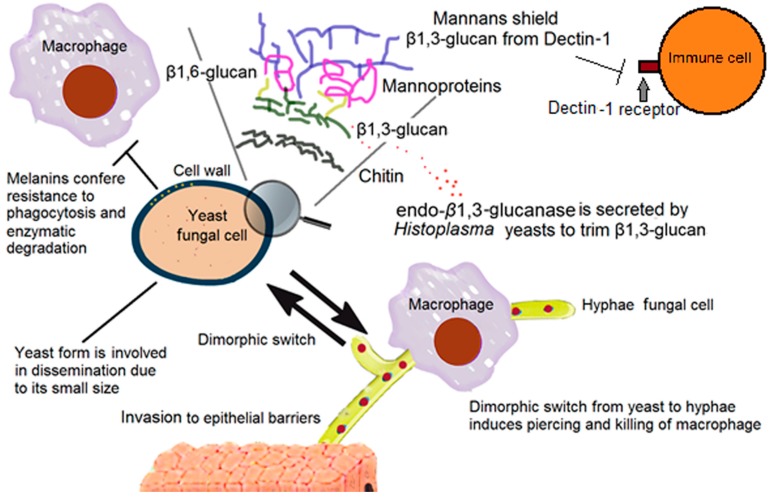
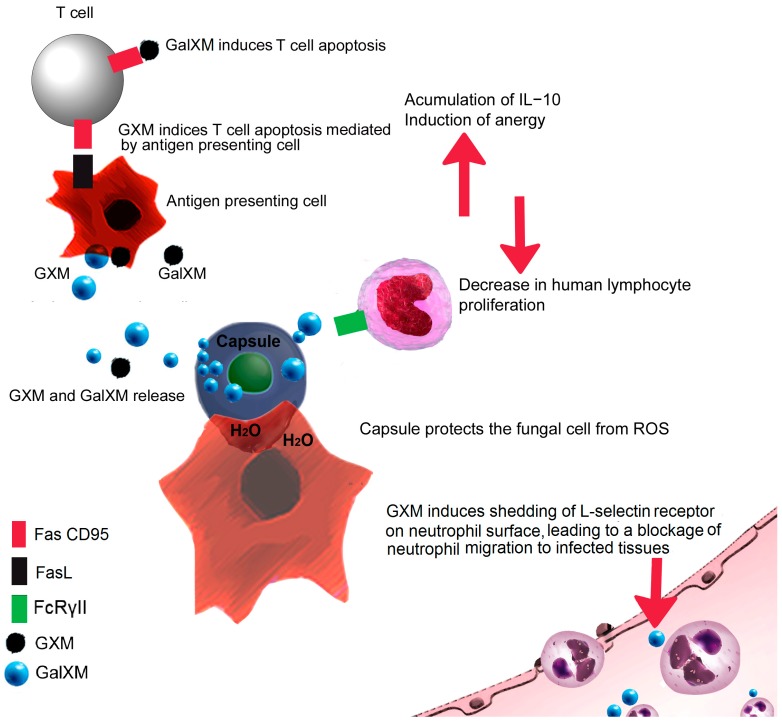
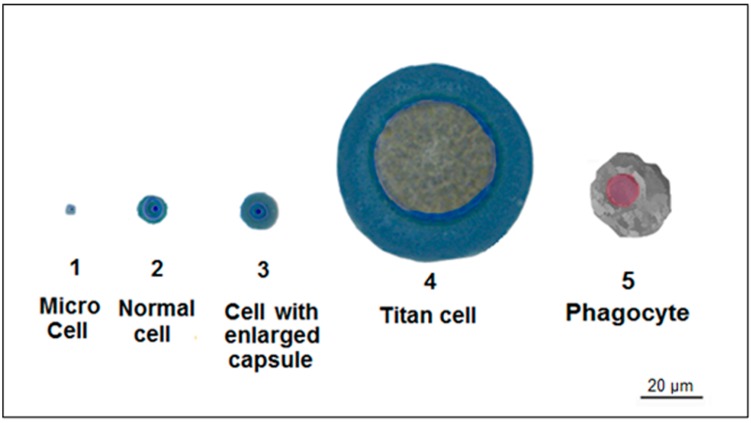
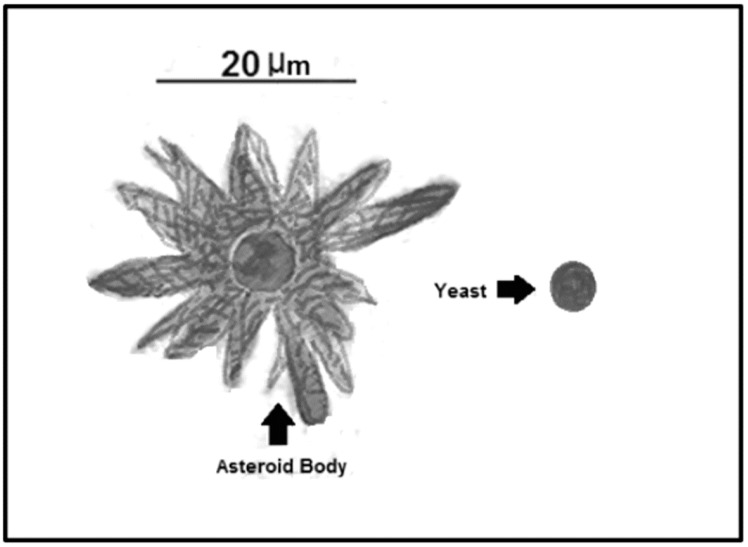
The recognition of fungal cells by the host immune system is key during the establishment of a protective anti-fungal response. Even though the immune system has evolved a vast number of processes to control these organisms, they have developed strategies to fight back, avoiding the proper recognition by immune components and thus interfering with the host protective mechanisms. Therefore, the strategies to evade the immune system are as important as the virulence factors and attributes that damage the host tissues and cells. Here, we performed a thorough revision of the main fungal tactics to escape from the host immunosurveillance processes. These include the composition and organization of the cell wall, the fungal capsule, the formation of titan cells, biofilms, and asteroid bodies; the ability to undergo dimorphism; and the escape from nutritional immunity, extracellular traps, phagocytosis, and the action of humoral immune effectors.
Overview
The claims and statistics of this paper haven’t been checked yet.
Free: it reads the open-access text and checks the first 5 claims that cite a source we can check. Create a free account to check every claim.
Integrity signals
Registry
Cites
Statistics
Figures
Verification
Claims the paper makes
The claims and statistics of this paper haven’t been checked yet.
Free: it reads the open-access text and checks the first 5 claims that cite a source we can check. Create a free account to check every claim.
Claims other papers make about this one
Each is checked against this paper’s own text: does it say what the citing paper says it does?
The source backs part of the claim, not all of it — or backs it for a different population, condition or comparison.
In the citing paper
“The dynamic structure of the C. albicans cell wall is crucial for cell shape, viability, pathogenesis, interaction with other microbial species, and evasion of host immune cells [7].”
From High iron-mediated increased oral fungal burden, oral-to-gut transmission, and changes to pathogenicity of Candida albicans in oropharyngeal candidiasis (2022) · cites this paper as [7]
Experimental — accuracy not yet measured
Self-check
Percentages, sums and reported differences re-computed from the paper’s own numbers.
The self-check needs the paper’s full text.
Citations
Cites
Bacterial Biofilms: A Common Cause of Persistent Infections
Costerton, J. W., Stewart, P. S., & Greenberg, E. P. (1999) · Science · doi:10.1126/science.284.5418.1318 · Cited by 12,167
Neutrophil Extracellular Traps Kill Bacteria
Brinkmann, V., Reichard, U., Goosmann, C., Fauler, B., Uhlemann, Y., Weiss, D. S., Weinrauch, Y., & Zychlinsky, A. (2004) · Science · doi:10.1126/science.1092385 · Cited by 10,268 · cited 1×
“Netosis occurs upon contact with a variety of pathogens or with many host factors, such as activated platelets, inflammatory stimuli, or chemical compounds [180].”
Biofilms: Survival Mechanisms of Clinically Relevant Microorganisms
Donlan, R. M., & Costerton, J. W. (2002) · Clinical Microbiology Reviews · doi:10.1128/cmr.15.2.167-193.2002 · Cited by 6,644
Meijer, L., Nelson, D. J., Riazanski, V., Gabdoulkhakova, A. G., Hery-Arnaud, G., Le Berre, R., Loaëc, N., Oumata, N., Galons, H., Nowak, E., et al. (2016) · Journal of Innate Immunity · doi:10.1159/000444256 · Cited by 4,992
Hidden Killers: Human Fungal Infections
Brown, G. D., Denning, D. W., Gow, N. A. R., Levitz, S. M., Netea, M. G., & White, T. C. (2012) · Science Translational Medicine · doi:10.1126/scitranslmed.3004404 · Cited by 4,284 · cited 1×
“Although superficial mycoses are regarded as low-concern infections in humans, subcutaneous and systemic mycoses are often related to high morbidity and mortality rates, especially in patients with temporal or permanent impairments in the immune response [1].”
Andrews, N. C. (1999) · New England Journal of Medicine · doi:10.1056/nejm199912233412607 · Cited by 2,130 · cited 1×
“This is the reason why, despite the high amount of iron in the bloodstream, this metal is mainly sequestered by hemoglobin or bound to plasma transferrin [184].”
Nonfilamentous C. albicans Mutants Are Avirulent
Lo, H.-J., Köhler, J. R., DiDomenico, B., Loebenberg, D., Cacciapuoti, A., & Fink, G. R. (1997) · Cell · doi:10.1016/s0092-8674(00)80358-x · Cited by 1,809 · cited 1×
“[90], because mutants that are unable to produce both morphologies are avirulent [91,92].”
Collaborative Induction of Inflammatory Responses by Dectin-1 and Toll-like Receptor 2
Gantner, B. N., Simmons, R. M., Canavera, S. J., Akira, S., & Underhill, D. M. (2003) · The Journal of Experimental Medicine · doi:10.1084/jem.20021787 · Cited by 1,643 · cited 1×
“This immune response is, in fact, the product of a collaborative work with Toll-like receptor 2 (TLR2) [11], which, together with other Toll-like receptors, contributes to the recognition of different cell wall-decorating polysaccharides, such as GXM, α-1,4-glucans, and phospholipomannans, depending on the invading fu…”
Mechanisms for copper acquisition, distribution and regulation
Kim, B.-E., Nevitt, T., & Thiele, D. J. (2008) · Nature Chemical Biology · doi:10.1038/nchembio.72 · Cited by 1,588 · cited 1×
“Copper is a metal ion that functions as a structural and catalytic cofactor for enzymes involved in energy generation, oxygen transport, cellular metabolism, and iron acquisition [200].”
Brown, G. D., & Gordon, S. (2001) · Nature · doi:10.1038/35092620 · Cited by 1,579 · cited 1×
“The β-1,3-glucan is a highly immunogenic molecule, and unlike other fungal cell wall polysaccharides, it has its own very specific PRR on the surface of the host’s immune cells, named Dectin-1 [10].”
Cited by
The Fungal Cell Wall: Candida, Cryptococcus, and Aspergillus Species
Garcia-Rubio, R., de Oliveira, H. C., Rivera, J., & Trevijano-Contador, N. (2020) · Frontiers in Microbiology · doi:10.3389/fmicb.2019.02993 · Cited by 917
“Furthermore, since the outer mannan layer covers the inner layers of the cell wall, it has been described to be important in immune evasion concealing β-glucans from host immune detection (Hernandez-Chavez et al., 2017).”
BackgroundModulation of Immune Responses by Particle Size and Shape
Baranov, M. V., Kumar, M., Sacanna, S., Thutupalli, S., & van den Bogaart, G. (2021) · Frontiers in Immunology · doi:10.3389/fimmu.2020.607945 · Cited by 324
“Once reaching the host organism, the pathogenic fungi Paracoccidioides brasiliensis and Paracoccidioides lutzii can impede phagocytosis by creating so called asteroid bodies which are round colonies with radial symmetry of mother cells (~30 μm(2)) surrounded by daughter cells reaching an area that ranges from 75 μm(2)…”
BackgroundFouché, S., Badet, T., Oggenfuss, U., Plissonneau, C., Francisco, C. S., & Croll, D. (2019) · Molecular Biology and Evolution · doi:10.1093/molbev/msz216 · Cited by 150
Fungal infections: Pathogenesis, antifungals and alternate treatment approaches
Reddy, G. K. K., Padmavathi, A. R., & Nancharaiah, Y. V. (2022) · Current Research in Microbial Sciences · doi:10.1016/j.crmicr.2022.100137 · Cited by 193
“Fungal mannan, melanin, α− 1,3-glucan, and hydrophobin (Aspergillus RodA) layers shield the surface polysaccharides that act as PAMPs, thereby evade the host immune system (Hernández-Chávez et al., 2017).”
BackgroundDermatophytosis in companion animals: A review
Paryuni, A. D., Indarjulianto, S., & Widyarini, S. (2020) · Veterinary World · doi:10.14202/vetworld.2020.1174-1181 · Cited by 115
“ognized by pattern recognition receptors (PRRs), including toll-like receptors (TLRs), which expressed by phagocytes and dendritic cells (DCs) [36,41-43].”
Background
Metadata
- Authors
- Hernández-Chávez, M., Pérez-García, L., Niño-Vega, G., & Mora-Montes, H.
- Affiliations
- Universidad de Guanajuato (MX)
- Autonomous University of San Luis Potosí (MX)
- Departamento de Biología, División de Ciencias Naturales y Exactas, Campus Guanajuato, Universidad de Guanajuato, Noria Alta s/n, col. Noria Alta, C.P., Guanajuato Gto. 36050, México
- Venue
- Journal of Fungi
- Publisher
- MDPI AG
- Published
- 2017-09-23
- Volume
- 3
- Issue
- 4
- Pages
- 51
- ISSN
- 2309-608X (ISSN-L)
- PMC
- PMC5753153
- OpenAlex
- W2758263956
- Cited by
- 173
- References
- 222
- Citations by year
- 2026: 21 · 2025: 30 · 2024: 20 · 2023: 19 · 2022: 21 · 2021: 21 · 2020: 20 · 2019: 12 · 2018: 8 · 2017: 1
- FWCI
- 1.72
- Type
- journal article
- Language
- en
- Open access
- gold
- doi.org
- Licence
- Locations
- Journal of Fungi (publishedVersion, cc-by)
- PubMed Central (publishedVersion, cc-by)
- PubMed (publishedVersion)
- DOAJ (DOAJ: Directory of Open Access Journals) (submittedVersion, cc-by-sa)
- Funders
- Consejo Nacional de Ciencia y Tecnología (CB2011/166860, PDCPN2014-247109, FC 2015-02-834)
- Universidad de Guanajuato (000025/11, 0087/13, 1025/2016, Convocatoria Institucional para Fortalecer la Excelencia Académica 2015)
- Programa de Mejoramiento del Profesorado (UGTO-PTC-261)
- Red Temática Glicociencia en Salud (2015-2016)
- Topics
- Health Sciences › Medicine › Infectious Diseases › Antifungal resistance and susceptibility
- Health Sciences › Medicine › Infectious Diseases › Fungal Infections and Studies
- Life Sciences › Biochemistry, Genetics and Molecular Biology › Molecular Biology › Fungal and yeast genetics research
- Keywords
- fungal immune evasion, host immune recognition, fungal cell wall, fungal capsule, titan cells, biofilm, asteroid bodies, dimorphism, nutritional immunity, extracellular traps, phagocytosis, fungal virulence factors
About these checks
Registry, retraction, Cites and statistics results are computed, not judged, with one exception: a printed reference that no index lists is read once by a model before it counts as a citation error. Claims are extracted by a model and kept only when their quote appears verbatim in the text; each cited source is then checked, with a model’s help, for whether it says what the claim relies on. Those verdicts can be wrong — read the claim’s quote and the cited source before relying on one.
Statistics and arithmetic are recomputed, not judged.
Confidence bands are shown only for fields calibrated on our annotated test set. None is calibrated yet, so no band is shown.
What counts as a claim ›How we measure confidence ›How we check this ›
Are you an author, or do you see a problem with this page? Request a review
Data sources
Bibliographic data: Semantic Scholar, OpenAlex, Crossref.
Contains information from the Semantic Scholar Academic Graph Datasets, made available under the ODC Attribution License (ODC-BY 1.0).
Semantic Scholar’s data is described in: Kinney, R., et al. (2023). The Semantic Scholar Open Data Platform. arXiv:2301.10140.
