

Immunomodulation as a Therapy for Aspergillus Infection: Current Status and Future Perspectives
Open accessThe DOI matches its Crossref record; 124 of the 126 references it cites were found in a registry or an index.
Abstract
Invasive aspergillosis (IA) is the most serious life-threatening infectious complication of intensive remission induction chemotherapy and allogeneic stem cell transplantation in patients with a variety of hematological malignancies. Aspergillus fumigatus is the most commonly isolated species from cases of IA. Despite the various improvements that have been made with preventative strategies and the development of antifungal drugs, there is an urgent need for new therapeutic approaches that focus on strategies to boost the host’s immune response, since immunological recovery is recognized as being the major determinant of the outcome of IA. Here, we aim to summarize current knowledge about a broad variety of immunotherapeutic approaches against IA, including therapies based on the transfer of distinct immune cell populations, and the administration of cytokines and antibodies.
Overview
The claims and statistics of this paper haven’t been checked yet.
Free: it reads the open-access text and checks the first 5 claims that cite a source we can check. Create a free account to check every claim.
Integrity signals
Registry
Cites
Statistics
Figures
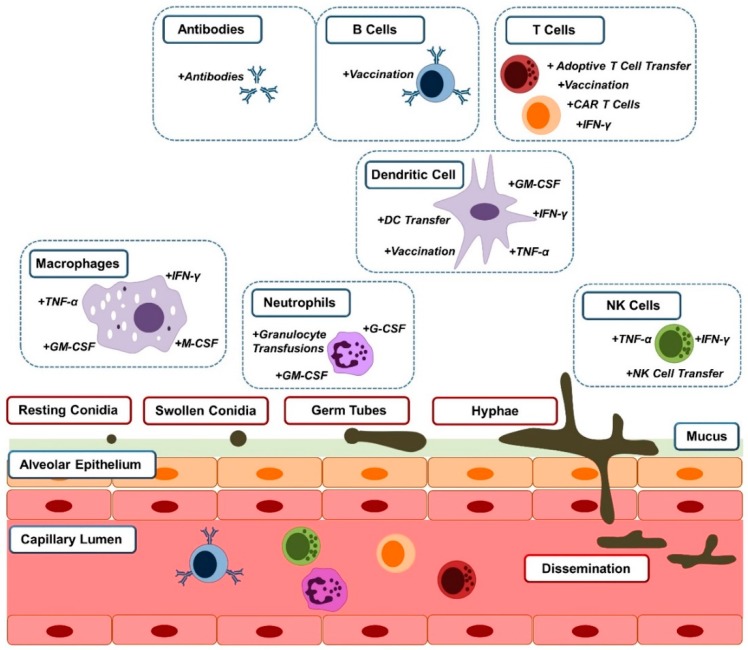
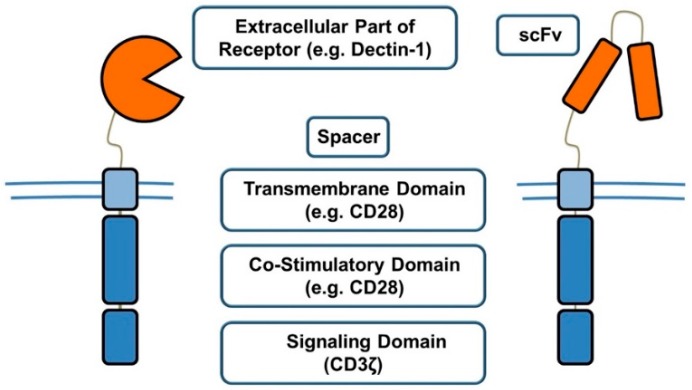
Verification
Claims the paper makes
The claims and statistics of this paper haven’t been checked yet.
Free: it reads the open-access text and checks the first 5 claims that cite a source we can check. Create a free account to check every claim.
Claims other papers make about this one
Each is checked against this paper’s own text: does it say what the citing paper says it does?
The source backs part of the claim, not all of it — or backs it for a different population, condition or comparison.
In the citing paper
“Many preclinical studies over the past 30 years have successfully employed different immunotherapeutic approaches”
From Aspergillus fumigatus and Aspergillosis in 2019 (2019) · cites this paper as [708]
Experimental — accuracy not yet measuredThe source backs part of the claim, not all of it — or backs it for a different population, condition or comparison.
In the citing paper
“Many preclinical studies over the past 30 years have successfully employed different immunotherapeutic approaches”
From Aspergillus fumigatus and Aspergillosis in 2019 (2019) · cites this paper as [708]
Experimental — accuracy not yet measured
Self-check
Percentages, sums and reported differences re-computed from the paper’s own numbers.
The self-check needs the paper’s full text.
Citations
Cites
Patterson, T. F., Thompson, G. R., Denning, D. W., Fishman, J. A., Hadley, S., Herbrecht, R., Kontoyiannis, D. P., Marr, K. A., Morrison, V. A., Nguyen, M. H., et al. (2016) · Clinical Infectious Diseases · doi:10.1093/cid/ciw326 · Cited by 2,926
Tomblyn, M., Chiller, T., Einsele, H., Gress, R., Sepkowitz, K., Storek, J., Wingard, J. R., Young, J.-A. H., & Boeckh, M. A. (2009) · Biology of Blood and Marrow Transplantation · doi:10.1016/j.bbmt.2009.06.019 · Cited by 1,797 · cited 1×
“After allo-SCT, the reconstitution of the adaptive immune system takes several months [110].”
BackgroundSelf-citationSmith, T. J., Khatcheressian, J., Lyman, G. H., Ozer, H., Armitage, J. O., Balducci, L., Bennett, C. L., Cantor, S. B., Crawford, J., Cross, S. J., et al. (2006) · Journal of Clinical Oncology · doi:10.1200/jco.2006.06.4451 · Cited by 1,636 · cited 2×
“Research shows that G‐CSF shortens neutropenia in patients, but more studies investigating the effects of G‐CSF on the prevalence and outcomes of Aspergillus infections have to be conducted [69,70].”
BackgroundA Controlled Trial of Interferon Gamma to Prevent Infection in Chronic Granulomatous Disease
The International Chronic Granulomatous Disease Cooperative Study Group* (1991) · New England Journal of Medicine · doi:10.1056/nejm199102213240801 · Cited by 830
Surface hydrophobin prevents immune recognition of airborne fungal spores
Aimanianda, V., Bayry, J., Bozza, S., Kniemeyer, O., Perruccio, K., Elluru, S. R., Clavaud, C., Paris, S., Brakhage, A. A., Kaveri, S. V., et al. (2009) · Nature · doi:10.1038/nature08264 · Cited by 792 · cited 1×
“In the alveoli, inert spores swell, germinate, and grow into lung tissue, becoming subsequently angioinvasive and lastly undergoing hematogenous dissemination [5].”
BackgroundHume, D. A., & MacDonald, K. P. A. (2012) · Blood · doi:10.1182/blood-2011-09-379214 · Cited by 763 · cited 1×
“Its main function is the stimulation of macrophage growth [71].”
BackgroundDesign and development of therapies using chimeric antigen receptor‐expressing T cells
Dotti, G., Gottschalk, S., Savoldo, B., & Brenner, M. K. (2014) · Immunological Reviews · doi:10.1111/imr.12131 · Cited by 508 · cited 1×
“MHC unrestricted antigen recognition and the capability to recognize glycoproteins and lipids are only two of the many advantages of this approach [58,59].”
BackgroundTreatment of patients with advanced cancer with the natural killer cell line NK-92
Tonn, T., Schwabe, D., Klingemann, H. G., Becker, S., Esser, R., Koehl, U., Suttorp, M., Seifried, E., Ottmann, O. G., & Bug, G. (2013) · Cytotherapy · doi:10.1016/j.jcyt.2013.06.017 · Cited by 467
Tzannou, I., Papadopoulou, A., Naik, S., Leung, K., Martinez, C. A., Ramos, C. A., Carrum, G., Sasa, G., Lulla, P., Watanabe, A., et al. (2017) · Journal of Clinical Oncology · doi:10.1200/jco.2017.73.0655 · Cited by 457 · cited 1×
“They were found to be safe and only rarely caused mild GvHD (grade 1) [52].”
BackgroundEngineering Natural Killer Cells for Cancer Immunotherapy
Rezvani, K., Rouce, R., Liu, E., & Shpall, E. (2017) · Molecular Therapy · doi:10.1016/j.ymthe.2017.06.012 · Cited by 453 · cited 1×
“In the future, this fight might involve the use of new NK CAR technology, a tool that can be used as an allogeneic “off-the-shelf” product [118].”
Method
Cited by
Aspergillus fumigatus and Aspergillosis in 2019
Latgé, J.-P., & Chamilos, G. (2019) · Clinical Microbiology Reviews · doi:10.1128/cmr.00140-18 · Cited by 1,400
Hoenigl, M., Arastehfar, A. A., Arendrup, M. C., Brüggemann, R. J. M., Carvalho, A., Chiller, T. M., Chen, W., Egger, M., Feys, S., Gangneux, J., et al. (2024) · Clinical Microbiology Reviews · doi:10.1128/cmr.00074-23 · Cited by 187
Natural Killer Cells in Antifungal Immunity
Schmidt, S., Tramsen, L., & Lehrnbecher, T. (2017) · Frontiers in Immunology · doi:10.3389/fimmu.2017.01623 · Cited by 99
Wurster, S., Watowich, S. S., & Kontoyiannis, D. P. (2022) · Frontiers in Immunology · doi:10.3389/fimmu.2022.1018202 · Cited by 81
Treatment of Invasive Aspergillosis: How It’s Going, Where It’s Heading
Boyer, J., Feys, S., Zsifkovits, I., Hoenigl, M., & Egger, M. (2023) · Mycopathologia · doi:10.1007/s11046-023-00727-z · Cited by 78
“The largest issue to overcome to make vaccination a viable strategy to prevent IA is the requirement of a sufficiently working group of B- and T-cells, which is a problem in many severely immunocompromised IA patients [136].”
Wurster, S., Albert, N. D., Bharadwaj, U., Kasembeli, M. M., Tarrand, J. J., Daver, N. G., & Kontoyiannis, D. P. (2022) · Frontiers in Immunology · doi:10.3389/fimmu.2022.838344 · Cited by 67
Innate Inspiration: Antifungal Peptides and Other Immunotherapeutics From the Host Immune Response
Mercer, D. K., & O'Neil, D. A. (2020) · Frontiers in Immunology · doi:10.3389/fimmu.2020.02177 · Cited by 50
Immunomodulation for the Treatment of Fungal Infections: Opportunities and Challenges
Ademe, M. (2020) · Frontiers in Cellular and Infection Microbiology · doi:10.3389/fcimb.2020.00469 · Cited by 47
“Tumor Necrosis Factor α (TNF-α) TNF-α stimulates polymorphonuclear neutrophils (PMNs), which in turn increase oxygen radical release and cause enhanced hyphal damage against fungal infections (Lauruschkat et al., 2018).”
BackgroundInfluentialZhang, Y., Gómez‐Redondo, M., Jiménez‐Osés, G., Ardá, A., Overkleeft, H. S., van der Marel, G. A., Jiménez‐Barbero, J., & Codée, J. D. C. (2020) · Angewandte Chemie International Edition · doi:10.1002/anie.202003951 · Cited by 46
Unconventional T cells – New players in antifungal immunity
Dunne, M. R., Wagener, J., Loeffler, J., Doherty, D. G., & Rogers, T. R. (2021) · Clinical Immunology · doi:10.1016/j.clim.2021.108734 · Cited by 22
“recipients, therefore boosting this process via cell- or cytokine-based immunotherapies has been proposed as a therapeutic avenue to reducing invasive fungal infections [7,41,124].”
BackgroundSelf-citationThe role of Aspergillus fumigatus polysaccharides in host–pathogen interactions
Zacharias, C. A., & Sheppard, D. C. (2019) · Current Opinion in Microbiology · doi:10.1016/j.mib.2019.04.006 · Cited by 21
Aspergillosis: A comprehensive review of pathogenesis, drug resistance, and emerging therapeutics
Singh, A., Singh, J., & Kumar, S. (2025) · Journal of Food and Drug Analysis · doi:10.38212/2224-6614.3547 · Cited by 20
“Immunotherapeutic therapeutic strategies work to boost immune system response against Aspergillus infections [69].”
InfluentialRafique, A., Sharmin, S., Raj, A., Mohiuddin, A. L., Mahmud, M. I. A., & Omer, H. B. M. (2025) · Journal of Infection and Public Health · doi:10.1016/j.jiph.2025.103070 · Cited by 18
Thakur, R., Shishodia, S. K., Sharma, A., Chauhan, A., Kaur, S., & Shankar, J. (2024) · Current Research in Microbial Sciences · doi:10.1016/j.crmicr.2024.100220 · Cited by 16
“Consequently, enhance the cellular response to combat fungal infections (Lauruschkat et al., 2018).”
BackgroundAncuceanu, R., Hovaneț, M. V., Maria, C.-T., Anghel, A.-I., & Dinu, M. (2022) · International Journal of Molecular Sciences · doi:10.3390/ijms232012543 · Cited by 15
Fabri, J. H. T. M., Rocha, M. C., & Malavazi, I. (2019) · Current Protein and Peptide Science · doi:10.2174/1389203720666190705164203 · Cited by 13
Khapuinamai, A., Rudraprasad, D., Pandey, S., Gandhi, J., Mishra, D. K., & Joseph, J. (2024) · Investigative Ophthalmology & Visual Science · doi:10.1167/iovs.65.4.44 · Cited by 10
Aspergillus and Aspergillosis in the Post-Pandemic Era
Yuan, C., Gao, R., & Lu, L. (2026) · iFungi · doi:10.26599/ifungi.2026.9670006 · Cited by 9
Zhang, W., He, D., Wei, Y., Shang, S., Li, D., & Wang, L. (2022) · Frontiers in Microbiology · doi:10.3389/fmicb.2022.837776 · Cited by 9
Zhang, Y., Gómez‐Redondo, M., Jiménez‐Osés, G., Ardá, A., Overkleeft, H. S., van der Marel, G. A., Jiménez‐Barbero, J., & Codée, J. D. C. (2020) · Angewandte Chemie · doi:10.1002/ange.202003951 · Cited by 8
Immunotherapy as an Antifungal Strategy in Immune Compromised Hosts
Posch, W., Wilflingseder, D., & Lass‐Flörl, C. (2020) · Current Clinical Microbiology Reports · doi:10.1007/s40588-020-00141-9 · Cited by 8
“, Aspergillus conidia is high and hundreds are inhaled every day by each person, immunocompetent individuals are protected due to mucociliary clearance and the presence of phagocytic cells in the lungs [4, 5].”
BackgroundPage, L., Wallstabe, J., Lother, J., Bauser, M., Kniemeyer, O., Strobel, L., Voltersen, V., Teutschbein, J., Hortschansky, P., Morton, C. O., et al. (2021) · Frontiers in Immunology · doi:10.3389/fimmu.2021.659752 · Cited by 7
Self-citationSaleki, K., Razi, S., & Rezaei, N. (2023) · Elsevier eBooks · doi:10.1016/b978-0-12-818006-8.00007-4 · Cited by 7
Ameli, N., Babazadeh, D., Seifdavati, B., Sangar, S. G., Babayi, M. M., Soltani, D., & Omranzadeh, A. (2025) · Archives of Razi Institute · doi:10.32592/ari.2025.80.1.1 · Cited by 6
Pharmacological management of invasive mold infections in solid organ transplant recipients
Fernández‐Ruiz, M. (2024) · Expert Opinion on Pharmacotherapy · doi:10.1080/14656566.2024.2326507 · Cited by 6
“Recombinant interferon (IFN)-γ is expected to contribute to the host immune response against fungal pathogens [145].”
BackgroundNeoh, C. F., Chen, S. C. ‐., Kong, D. C. M., Hamilton, K., Nguyen, Q. A., Spelman, T. D., Tew, M., Harvey, E. L., Ho, S. A., Saunders, N. R., et al. (2023) · Journal of Antimicrobial Chemotherapy · doi:10.1093/jac/dkad345 · Cited by 5
Jiang, F., Li, X., Qiao, Q., Zhang, G., Zhang, Y., & Su, L. (2024) · Canadian Respiratory Journal · doi:10.1155/carj/6199860 · Cited by 4
Blastemia portrays a poor prognosis in acute leukemia patients with invasive pulmonary aspergillosis
Cho, S., Wurster, S., Jiang, Y., Bazinet, A., Yang, H., Lewis, R. E., Matsuo, T., Albert, N. D., Garcia‐Manero, G., & Kontoyiannis, D. P. (2025) · Journal of Infection · doi:10.1016/j.jinf.2025.106535 · Cited by 4
“28,29 Our study has limitations that may affect its generalizability.”
From bench to bedside - translational approaches in anti-fungal immunology
Seif, M., Häder, A., Löffler, J., & Kurzai, O. (2020) · Current Opinion in Microbiology · doi:10.1016/j.mib.2020.10.004 · Cited by 2
Exploring Emerging Antifungal Drugs Regime for Aspergillus-Associated Infections
Thakur, R. (2025) · Mikrobiolohichnyi Zhurnal · doi:10.15407/microbiolj87.04.073 · Cited by 1
Immunotherapeutic Approaches to Invasive Fungal Disease in the Immunocompromised Child
Schmidt, S., Bochennek, K., Rudolph, H., & Lehrnbecher, T. (2026) · Current Fungal Infection Reports · doi:10.1007/s12281-026-00534-1 · Cited by 1
“Cytokines such as IFN-γ or TNF-α increase the antifungal immunity by enhancing the hyphal damage of macrophages and neutrophils [87, 88].”
Finkina, E. I., Shevchenko, O. V., Gerasimova, А. А., Fateeva, S. I., Баландин, С. В., & Ovchinnikova, T. V. (2026) · International Journal of Molecular Sciences · doi:10.3390/ijms27188141 · Cited by 1
“Transfusion of A. fumigatus -specific T cells enhances protection in preclinical models [148–150] and small clinical trials [151,152].”
Research Progress of CD4+T Lymphocytes in Invasive Pulmonary Fungal Infection
高, 亚. (2023) · Advances in Clinical Medicine · doi:10.12677/acm.2023.134921
Rio-Ropero, A., González-Camuesco, A., Mackey, A. I., Caldeira, I., Lepas, M., Lucas-Vadillo, E., Cunha, C., Carvalho, A., Anderson, M. Z., & Amich, J. (2026) · iScience · doi:10.1016/j.isci.2026.117452
Hua, T., Bott, N., & Phan, H. (2026) · Springer eBooks · doi:10.1007/978-981-95-2300-9_10-1
Zhang, W., He, D., Wei, Y., Shang, S., Li, D., & Wang, L. (2022) · doi:10.3389/fmicb.2022.837776.s001
Wurster, S., Albert, N. D., Bharadwaj, U., Kasembeli, M. M., Tarrand, J. J., Daver, N., & Kontoyiannis, D. P. (2022) · doi:10.3389/fimmu.2022.838344.s001
Metadata
- Authors
- Lauruschkat, C. D., Einsele, H., & Loeffler, J.
- Affiliations
- Universitätsklinikum Würzburg (DE)
- Corresponding author
- Loeffler, Juergen
- Venue
- Journal of Fungi
- Publisher
- MDPI AG
- Published
- 2018-12-14
- Volume
- 4
- Issue
- 4
- Pages
- 137
- ISSN
- 2309-608X (ISSN-L)
- PMC
- PMC6308942
- OpenAlex
- W2903750794
- Cited by
- 32
- References
- 126
- Citations by year
- 2026: 4 · 2025: 2 · 2024: 5 · 2023: 4 · 2022: 4 · 2021: 3 · 2020: 6 · 2019: 3
- FWCI
- 0.44
- Type
- journal article
- Language
- en
- Open access
- gold
- dx.doi.org
- Licence
- Locations
- Journal of Fungi (publishedVersion, cc-by)
- Europe PMC (PubMed Central) (publishedVersion, cc-by)
- PubMed Central (publishedVersion, cc-by)
- PubMed (publishedVersion)
- DOAJ (DOAJ: Directory of Open Access Journals) (submittedVersion, cc-by-sa)
- Online Publication Service of Würzburg University (Würzburg University) (submittedVersion, cc-by)
- Topics
- Health Sciences › Medicine › Infectious Diseases › Antifungal resistance and susceptibility
- Life Sciences › Immunology and Microbiology › Immunology › Immunodeficiency and Autoimmune Disorders
- Health Sciences › Medicine › Oncology › Neutropenia and Cancer Infections
- Keywords
- invasive aspergillosis, immunomodulation, immunotherapy, Aspergillus fumigatus, hematologic malignancies, allogeneic stem cell transplantation, induction chemotherapy, cytokines, immunoglobulins, host immune response
About these checks
Registry, retraction, Cites and statistics results are computed, not judged, with one exception: a printed reference that no index lists is read once by a model before it counts as a citation error. Claims are extracted by a model and kept only when their quote appears verbatim in the text; each cited source is then checked, with a model’s help, for whether it says what the claim relies on. Those verdicts can be wrong — read the claim’s quote and the cited source before relying on one.
Statistics and arithmetic are recomputed, not judged.
Confidence bands are shown only for fields calibrated on our annotated test set. None is calibrated yet, so no band is shown.
What counts as a claim ›How we measure confidence ›How we check this ›
Are you an author, or do you see a problem with this page? Request a review
Data sources
Bibliographic data: Semantic Scholar, OpenAlex, Crossref.
Contains information from the Semantic Scholar Academic Graph Datasets, made available under the ODC Attribution License (ODC-BY 1.0).
Semantic Scholar’s data is described in: Kinney, R., et al. (2023). The Semantic Scholar Open Data Platform. arXiv:2301.10140.
