

N-Acetylglucosamine (GlcNAc) Sensing, Utilization, and Functions in Candida albicans
Open accessThe DOI matches its Crossref record; 94 of the 97 references it cites were found in a registry or an index.
Abstract
The sensing and efficient utilization of environmental nutrients are critical for the survival of microorganisms in environments where nutrients are limited, such as within mammalian hosts. Candida albicans is a common member of the human microbiota as well as an opportunistic fungal pathogen. The amide derivative sugar N-acetlyglucosamine (GlcNAc) is an important signaling molecule for C. albicans that could be a major nutrient source for this fungus in host settings. In this article, we review progress made over the past two decades on GlcNAc utilization, sensing, and functions in C. albicans and its related fungal species. GlcNAc sensing and catabolic pathways have been intensively studied in C. albicans. The C. albicans protein Ngt1 represents the first identified GlcNAc-specific transporter in eukaryotic organisms. In C. albicans, GlcNAc not only induces morphological transitions including the yeast to hyphal transition and the white to opaque phenotypic switch, but it also promotes fungal cell death. The Ras-cAMP/PKA signaling pathway plays critical roles in regulating these processes. Given the importance of GlcNAc sensing and utilization in C. albicans, targeting GlcNAc associated pathways and key pathway components could be promising in the development of new antifungal strategies.
Overview
The claims and statistics of this paper haven’t been checked yet.
Free: it reads the open-access text and checks the first 5 claims that cite a source we can check. Create a free account to check every claim.
Integrity signals
Registry
Cites
Statistics
Figures
Verification
Claims the paper makes
The claims and statistics of this paper haven’t been checked yet.
Free: it reads the open-access text and checks the first 5 claims that cite a source we can check. Create a free account to check every claim.
Self-check
Percentages, sums and reported differences re-computed from the paper’s own numbers.
The self-check needs the paper’s full text.
Citations
Cites
Role of the microbiota in immunity and inflammation.
Belkaid, Y., & Hand, T. W. (2014) · Cell · doi:10.1016/j.cell.2014.03.011 · Cited by 5,385 · cited 1×
“albicans, contains many commensal bacteria that contain peptidoglycans in their cell walls [85,86].”
BackgroundRecognition of peptidoglycan from the microbiota by Nod1 enhances systemic innate immunity
Clarke, T. B., Davis, K. M., Lysenko, E. S., Zhou, A. Y., Yu, Y., & Weiser, J. N. (2010) · Nature Medicine · doi:10.1038/nm.2087 · Cited by 1,154 · cited 1×
“albicans, contains many commensal bacteria that contain peptidoglycans in their cell walls [85,86].”
BackgroundPfaller, M. A., Diekema, D. J., Turnidge, J. D., Castanheira, M., & Jones, R. N. (2019) · Open Forum Infectious Diseases · doi:10.1093/ofid/ofy358 · Cited by 825
Transcriptional Response of Candida albicans upon Internalization by Macrophages
Lorenz, M. C., Bender, J. A., & Fink, G. R. (2004) · Eukaryotic Cell · doi:10.1128/ec.3.5.1076-1087.2004 · Cited by 712 · cited 1×
“Consistent with the latter finding, transcriptomic analysis showed that the expression of NGT1 and GlcNAc catabolism-associated genes were upregulated upon macrophage engulfment [18].”
ResultLysM, a widely distributed protein motif for binding to (peptido)glycans
Buist, G., Steen, A., Kok, J., & Kuipers, O. P. (2008) · Molecular Microbiology · doi:10.1111/j.1365-2958.2008.06211.x · Cited by 628 · cited 1×
“Fungal LysM domain-containing proteins often bind to chitin or GlcNAc and function as effectors to suppress plant and insect host immune responses [89,90].”
Background"White-opaque transition": a second high-frequency switching system in Candida albicans
Slutsky, B., Staebell, M., Anderson, J., Risen, L., Pfaller, M., & Soll, D. R. (1987) · Journal of Bacteriology · doi:10.1128/jb.169.1.189-197.1987 · Cited by 570 · cited 1×
“albicans, white and opaque cells differ in colony and cell morphologies, mating competencies, virulence, and transcriptomic profiles [38,40,42,43].”
BackgroundMiller, M. G., & Johnson, A. D. (2002) · Cell · doi:10.1016/s0092-8674(02)00837-1 · Cited by 568 · cited 6×
“The white–opaque switch in C. albicans is controlled by the mating type locus (MTL) [45].”
BackgroundInfluentialCandida albicans cell-type switching and functional plasticity in the mammalian host
Noble, S. M., Gianetti, B. A., & Witchley, J. N. (2017) · Nature Reviews Microbiology · doi:10.1038/nrmicro.2016.157 · Cited by 521 · cited 2×
“Morphological changes are often associated with virulence and adaptation to the continuously changing host environment [40].”
BackgroundBiswas, S., Van Dijck, P., & Datta, A. (2007) · Microbiology and Molecular Biology Reviews · doi:10.1128/mmbr.00009-06 · Cited by 516
Carbon nutrition of Escherichia coli in the mouse intestine
Chang, D.-E., Smalley, D. J., Tucker, D. L., Leatham, M. P., Norris, W. E., Stevenson, S. J., Anderson, A. B., Grissom, J. E., Laux, D. C., Cohen, P. S., et al. (2004) · Proceedings of the National Academy of Sciences · doi:10.1073/pnas.0307888101 · Cited by 512 · cited 2×
“A study by Chang et al. (2004) suggested that GlcNAc is a major nutrient carbon source for Escherichia coli in the mouse gastrointestinal tract [87].”
BackgroundToda, T., Cameron, S., Sass, P., Zoller, M., Scott, J. D., McMullen, B., Hurwitz, M., Krebs, E. G., & Wigler, M. (1987) · Molecular and Cellular Biology · doi:10.1128/mcb.7.4.1371 · Cited by 493 · cited 1×
“The PKA regulatory subunit Bcy1 acts as a negative regulator of the cAMP signaling pathway [70,71].”
BackgroundN-Acetylglucosamine Functions in Cell Signaling
Konopka, J. B. (2012) · Scientifica · doi:10.6064/2012/489208 · Cited by 414
Fungal Adenylyl Cyclase Integrates CO2 Sensing with cAMP Signaling and Virulence
Klengel, T., Liang, W.-J., Chaloupka, J., Ruoff, C., Schröppel, K., Naglik, J. R., Eckert, S. E., Mogensen, E. G., Haynes, K., Tuite, M. F., et al. (2005) · Current Biology · doi:10.1016/j.cub.2005.10.040 · Cited by 409
High-Frequency Switching of Colony Morphology in Candida albicans
Slutsky, B., Buffo, J., & Soll, D. R. (1985) · Science · doi:10.1126/science.3901258 · Cited by 399
Pfaller, M. A., Andes, D. R., Diekema, D. J., Horn, D. L., Reboli, A. C., Rotstein, C., Franks, B., & Azie, N. E. (2014) · PLoS ONE · doi:10.1371/journal.pone.0101510 · Cited by 396
Rocha, C. R. C., Schröppel, K., Harcus, D., Marcil, A., Dignard, D., Taylor, B. N., Thomas, D. Y., Whiteway, M., & Leberer, E. (2001) · Molecular Biology of the Cell · doi:10.1091/mbc.12.11.3631 · Cited by 344
Pande, K., Chen, C., & Noble, S. M. (2013) · Nature Genetics · doi:10.1038/ng.2710 · Cited by 306
Zordan, R. E., Galgoczy, D. J., & Johnson, A. D. (2006) · Proceedings of the National Academy of Sciences · doi:10.1073/pnas.0605138103 · Cited by 304
Bistable expression of WOR1 , a master regulator of white–opaque switching in Candida albicans
Huang, G., Wang, H., Chou, S., Nie, X., Chen, J., & Liu, H. (2006) · Proceedings of the National Academy of Sciences · doi:10.1073/pnas.0605270103 · Cited by 293
Self-citationInterlocking Transcriptional Feedback Loops Control White-Opaque Switching in Candida albicans
Zordan, R. E., Miller, M. G., Galgoczy, D. J., Tuch, B. B., & Johnson, A. D. (2007) · PLoS Biology · doi:10.1371/journal.pbio.0050256 · Cited by 292
RIM101-Dependent and -Independent Pathways Govern pH Responses in Candida albicans
Davis, D., Wilson, R. B., & Mitchell, A. P. (2000) · Molecular and Cellular Biology · doi:10.1128/mcb.20.3.971-978.2000 · Cited by 285
Metabolic specialization associated with phenotypic switching in Candida albicans
Lan, C.-Y., Newport, G., Murillo, L. A., Jones, T., Scherer, S., Davis, R. W., & Agabian, N. (2002) · Proceedings of the National Academy of Sciences · doi:10.1073/pnas.232566499 · Cited by 275
Fungal LysM effectors: extinguishers of host immunity?
de Jonge, R., & Thomma, B. P. H. J. (2009) · Trends in Microbiology · doi:10.1016/j.tim.2009.01.002 · Cited by 256
Unique phenotype of opaque cells in the white-opaque transition of Candida albicans
Anderson, J. M., & Soll, D. R. (1987) · Journal of Bacteriology · doi:10.1128/jb.169.12.5579-5588.1987 · Cited by 237
Kutty, S. N., & Philip, R. (2008) · Yeast · doi:10.1002/yea.1599 · Cited by 233 · cited 1×
“tropicalis, is widespread in the environment and is known to contain several genes that encode LysM domain-containing proteins [91,92].”
BackgroundYeast-mycelial conversion induced by N-acetyl-D-glucosamine in Candida albicans
SIMONETTI, N., STRIPPOLI, V., & CASSONE, A. (1974) · Nature · doi:10.1038/250344a0 · Cited by 220 · cited 3×
“The earliest observation for a role of GlcNAc in C. albicans morphological transitions was reported over forty years ago by Simonetti et al. (1974) [4].”
BackgroundInfluentialTOS9 Regulates White-Opaque Switching in Candida albicans
Srikantha, T., Borneman, A. R., Daniels, K. J., Pujol, C., Wu, W., Seringhaus, M. R., Gerstein, M., Yi, S., Snyder, M., & Soll, D. R. (2006) · Eukaryotic Cell · doi:10.1128/ec.00252-06 · Cited by 209
The Flo8 Transcription Factor Is Essential for Hyphal Development and Virulence in Candida albicans
Cao, F., Lane, S., Raniga, P. P., Lu, Y., Zhou, Z., Ramon, K., Chen, J., & Liu, H. (2006) · Molecular Biology of the Cell · doi:10.1091/mbc.e05-06-0502 · Cited by 207
N-Acetylglucosamine Induces White to Opaque Switching, a Mating Prerequisite in Candida albicans
Huang, G., Yi, S., Sahni, N., Daniels, K. J., Srikantha, T., & Soll, D. R. (2010) · PLoS Pathogens · doi:10.1371/journal.ppat.1000806 · Cited by 204 · cited 6×
“We found that GlcNAc not only induces white to opaque switching, but that it also stabilizes the opaque cell type at human physiological temperatures (typically, opaque cells would convert en masse to the white cell type under these conditions) [5].”
BackgroundInfluentialSelf-citationAdaptation to environmental pH in Candida albicans and its relation to pathogenesis
Davis, D. (2003) · Current Genetics · doi:10.1007/s00294-003-0415-2 · Cited by 196
Bockmühl, D. P., Krishnamurthy, S., Gerads, M., Sonneborn, A., & Ernst, J. F. (2001) · Molecular Microbiology · doi:10.1046/j.1365-2958.2001.02688.x · Cited by 193
The Ras/cAMP/PKA signaling pathway and virulence in Candida albicans
Hogan, D. A., & Sundstrom, P. (2009) · Future Microbiology · doi:10.2217/fmb.09.106 · Cited by 186
CO2 Regulates White-to-Opaque Switching in Candida albicans
Huang, G., Srikantha, T., Sahni, N., Yi, S., & Soll, D. R. (2009) · Current Biology · doi:10.1016/j.cub.2009.01.018 · Cited by 180
Self-citationHagler, A. N., & Mendonça-Hagler, L. C. (1981) · Applied and Environmental Microbiology · doi:10.1128/aem.41.1.173-178.1981 · Cited by 173 · cited 1×
“tropicalis, is widespread in the environment and is known to contain several genes that encode LysM domain-containing proteins [91,92].”
BackgroundRegulation of phenotypic transitions in the fungal pathogen Candida albicans
Huang, G. (2012) · Virulence · doi:10.4161/viru.20010 · Cited by 163
Self-citationTao, L., Du, H., Guan, G., Dai, Y., Nobile, C. J., Liang, W., Cao, C., Zhang, Q., Zhong, J., & Huang, G. (2014) · PLoS Biology · doi:10.1371/journal.pbio.1001830 · Cited by 157
Self-citationAlvarez, F. J., & Konopka, J. B. (2007) · Molecular Biology of the Cell · doi:10.1091/mbc.e06-10-0931 · Cited by 140
Control of cell division in Saccharomyces cerevisiae by methionyl-tRNA.
Unger, M. W., & Hartwell, L. H. (1976) · Proceedings of the National Academy of Sciences · doi:10.1073/pnas.73.5.1664 · Cited by 131 · cited 2×
“cerevisiae cells has been shown to act as a signal for abundant nutrient availability, inducing rapid cell growth [81,82].”
BackgroundWhy does Candida albicans switch?
Soll, D. R. (2009) · FEMS Yeast Research · doi:10.1111/j.1567-1364.2009.00562.x · Cited by 129
Xie, J., Tao, L., Nobile, C. J., Tong, Y., Guan, G., Sun, Y., Cao, C., Hernday, A. D., Johnson, A. D., Zhang, L., et al. (2013) · PLoS Biology · doi:10.1371/journal.pbio.1001525 · Cited by 128
Self-citationMolecular Phylogenetics and Epidemiology of Candida Albicans
Odds, F. C. (2010) · Future Microbiology · doi:10.2217/fmb.09.113 · Cited by 125
Sugar-induced apoptosis in yeast cells
GRANOT, D., LEVINE, A., & DORHEFETZ, E. (2003) · FEMS Yeast Research · doi:10.1016/s1567-1356(03)00154-5 · Cited by 123 · cited 1×
“In general, this phenomenon is called sugar-induced cell death (SICD) and shares characteristics with programmed cell death such as nuclear DNA fragmentation and phosphatidylserine externalization [84].”
BackgroundFimia, G. M., & Sassone-Corsi, P. (2001) · Journal of Cell Science · doi:10.1242/jcs.114.11.1971 · Cited by 122
An N-acetylglucosamine transporter required for arbuscular mycorrhizal symbioses in rice and maize
Nadal, M., Sawers, R. J. H., Naseem, S., Bassin, B., Kulicke, C. A., Sharman, A., An, G., An, K., Ahern, K. R., Romag, A., et al. (2017) · Nature Plants · doi:10.1038/nplants.2017.73 · Cited by 116 · cited 3×
“Interestingly, in the maize plant, Zea mays, Nope1 was identified as the first plasma membrane GlcNAc transporter in plants [20].”
BackgroundInfluentialMultiple roles and diverse regulation of the Ras/cAMP/protein kinase A pathway in Candida albicans
Huang, G., Huang, Q., Wei, Y., Wang, Y., & Du, H. (2019) · Molecular Microbiology · doi:10.1111/mmi.14148 · Cited by 116
Self-citationGranot, D., & Snyder, M. (1991) · Proceedings of the National Academy of Sciences · doi:10.1073/pnas.88.13.5724 · Cited by 103 · cited 4×
“cerevisiae cells has been shown to act as a signal for abundant nutrient availability, inducing rapid cell growth [81,82].”
BackgroundInfluentialFactors Affecting the Morphogenetic Switch in Yarrowia lipolytica
Pérez-Campo, F. M., & Domínguez, Á. (2001) · Current Microbiology · doi:10.1007/s002840010333 · Cited by 102 · cited 1×
“It regulates a variety of biological processes including morphological transitions, virulence, response to oxidative stresses and antifungal agents, and cell death in several fungal species such as Candida albicans [1,4–7], Candida tropicalis [8–10], Yarrowia lipolytica [11], and Histoplasma capsulatum [12].”
BackgroundNaseem, S., Gunasekera, A., Araya, E., & Konopka, J. B. (2011) · Journal of Biological Chemistry · doi:10.1074/jbc.m111.249854 · Cited by 92 · cited 4×
“albicans, it does not appear to be required for GlcNAc-induced filamentation in vitro [19,56,57].”
BackgroundInfluentialWilliams, R. B., & Lorenz, M. C. (2020) · mBio · doi:10.1128/mbio.03070-19 · Cited by 87
Yamada‐Okabe, T., Sakamori, Y., Mio, T., & Yamada‐Okabe, H. (2001) · European Journal of Biochemistry · doi:10.1046/j.1432-1327.2001.02135.x · Cited by 83
Castilla, R., Passeron, S., & Cantore, M. L. (1998) · Cellular Signalling · doi:10.1016/s0898-6568(98)00015-1 · Cited by 81 · cited 3×
“Earlier studies showed that the permeable PKA inhibitors, MyrPKI and H-89, inhibit both GlcNAc- and serum-induced filamentation in a concentration-dependent manner [57].”
BackgroundKumar, M. J., Jamaluddin, M. S., Natarajan, K., Kaur, D., & Datta, A. (2000) · Proceedings of the National Academy of Sciences · doi:10.1073/pnas.250452997 · Cited by 78 · cited 3×
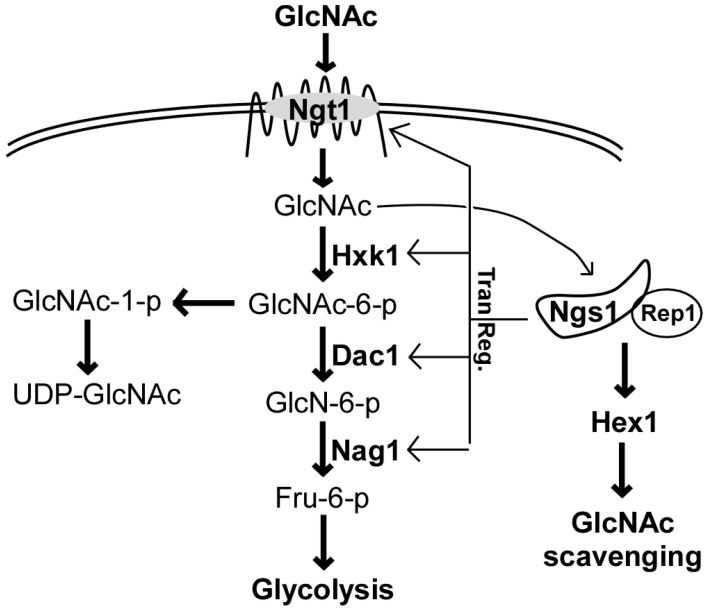
“6), which are encoded by HXK1, DAC1, and NAG1, respectively (Figure 1) [19,22,23].”
BackgroundMolecular cloning and expression of the Candida albicans beta-N-acetylglucosaminidase (HEX1) gene
Cannon, R. D., Niimi, K., Jenkinson, H. F., & Shepherd, M. G. (1994) · Journal of Bacteriology · doi:10.1128/jb.176.9.2640-2647.1994 · Cited by 76 · cited 1×
“albicans GlcNAc scavenging during an infection [26,27].”
Gilmore, S. A., Naseem, S., Konopka, J. B., & Sil, A. (2013) · PLoS Genetics · doi:10.1371/journal.pgen.1003799 · Cited by 75
Xie, J., Du, H., Guan, G., Tong, Y., Kourkoumpetis, T. K., Zhang, L., Bai, F.-Y., & Huang, G. (2012) · Eukaryotic Cell · doi:10.1128/ec.00047-12 · Cited by 74
Self-citationCloutier, M. (2003) · Fungal Genetics and Biology · doi:10.1016/s1087-1845(02)00520-0 · Cited by 72 · cited 1×
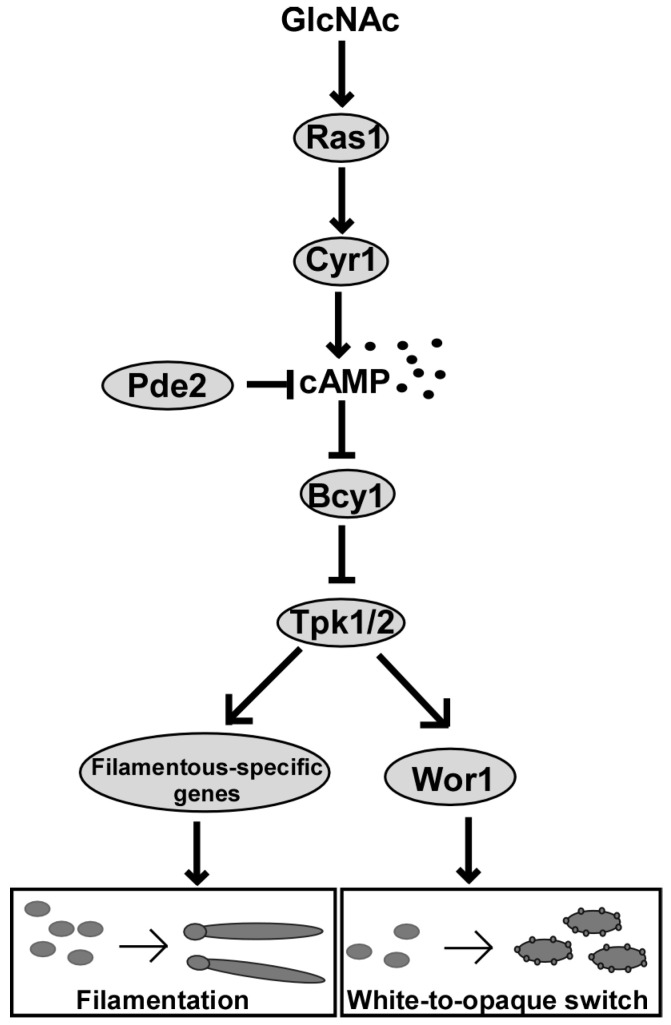
“albicans through activation of the Ras1-cAMP/PKA pathway [5,57,61,65,66].”
BackgroundCao, C., Wu, M., Bing, J., Tao, L., Ding, X., Liu, X., & Huang, G. (2017) · Molecular Microbiology · doi:10.1111/mmi.13681 · Cited by 70
Self-citationRoles of Ras1 Membrane Localization during Candida albicans Hyphal Growth and Farnesol Response
Piispanen, A. E., Bonnefoi, O., Carden, S., Deveau, A., Bassilana, M., & Hogan, D. A. (2011) · Eukaryotic Cell · doi:10.1128/ec.05153-11 · Cited by 68
Berman, J. G. (2012) · Current Biology · doi:10.1016/j.cub.2012.05.043 · Cited by 68
Ras Signaling Gets Fine-Tuned: Regulation of Multiple Pathogenic Traits of Candida albicans
Inglis, D. O., & Sherlock, G. (2013) · Eukaryotic Cell · doi:10.1128/ec.00094-13 · Cited by 66 · cited 1×
“albicans, and constitutive activation of Ras1 via a G13V substitution (Ras1V13) leads to an increase in membrane localization and filamentous growth in the presence of GlcNAc [65,67].”
BackgroundSu, C., Lu, Y., & Liu, H. (2016) · Nature Communications · doi:10.1038/ncomms12916 · Cited by 64 · cited 1×
“albicans cells in the presence of GlcNAc, suggesting that the expression of HEX1 is controlled in an Ngs1-dependent transcriptional induction manner [24,25] (Figure 1).”
BackgroundNovel roles for GlcNAc in cell signaling
Naseem, S., Parrino, S. M., Buenten, D. M., & Konopka, J. B. (2012) · Communicative & Integrative Biology · doi:10.4161/cib.19034 · Cited by 58 · cited 1×
“GlcNAc is an abundant carbon source in the environment and within a mammalian host and is utilized as a nutrient and signaling molecule in organisms ranging from bacteria to fungi to humans [1,3].”
BackgroundThe transcription factor Flo8 mediates CO2sensing in the human fungal pathogen Candida albicans
Du, H., Guan, G., Xie, J., Cottier, F., Sun, Y., Jia, W., Mühlschlegel, F. A., & Huang, G. (2012) · Molecular Biology of the Cell · doi:10.1091/mbc.e12-02-0094 · Cited by 55
Self-citationJain, N., Hasan, F., & Fries, B. C. (2008) · Current Fungal Infection Reports · doi:10.1007/s12281-008-0026-y · Cited by 54
Kappel, L., Gaderer, R., Flipphi, M. J. A., & Seidl‐Seiboth, V. (2015) · Molecular Microbiology · doi:10.1111/mmi.13256 · Cited by 51
Jung, W. H., Warn, P., Ragni, E., Popolo, L., Nunn, C. D., Turner, M. P., & Stateva, L. (2005) · Yeast · doi:10.1002/yea.1199 · Cited by 50
Naseem, S., Min, K., Spitzer, D., Gardin, J., & Konopka, J. B. (2017) · Genetics · doi:10.1534/genetics.117.201491 · Cited by 49 · cited 1×
“albicans cells in the presence of GlcNAc, suggesting that the expression of HEX1 is controlled in an Ngs1-dependent transcriptional induction manner [24,25] (Figure 1).”
BackgroundMin, K., Biermann, A., Hogan, D. A., & Konopka, J. B. (2018) · mSphere · doi:10.1128/msphere.00545-18 · Cited by 46 · cited 5×
“Taken tog ther, these results suggest that Ron1 could function as a negative re ulator of filamentation i the absenc of Ndt80 [28].”
BackgroundInfluentialRegulation of filamentation in the human fungal pathogen Candida tropicalis
Zhang, Q., Tao, L., Guan, G., Yue, H., Liang, W., Cao, C., Dai, Y., & Huang, G. (2016) · Molecular Microbiology · doi:10.1111/mmi.13247 · Cited by 45
Self-citationDu, H., Guan, G., Li, X., Gulati, M., Tao, L., Cao, C., Johnson, A. D., Nobile, C. J., & Huang, G. (2015) · mBio · doi:10.1128/mbio.01376-15 · Cited by 44 · cited 4×
“albicans due to the accumulation of ROS and its associated cell damage [6].”
BackgroundInfluentialSelf-citationN-acetylglucosamine affects Cryptococcus neoformans cell-wall composition and melanin architecture
Camacho, E., Chrissian, C., Cordero, R. J. B., Liporagi-Lopes, L. C., Stark, R. E., & Casadevall, A. (2017) · Microbiology · doi:10.1099/mic.0.000552 · Cited by 44 · cited 1×
“Recent studies have shown that GlcNAc also regulates morphology changes and virulence in other fungal species that have pathogenic potential in humans, such as the environmental fungus Cryptococcus neoformans [54] as well as the thermal dimorphic fungi Histoplasma capsulatum and Blastomyces dermatitidis [12].”
BackgroundNatarajan, K., & Datta, A. (1993) · Journal of Biological Chemistry · doi:10.1016/s0021-9258(18)98337-7 · Cited by 43 · cited 1×
“6), which are encoded by HXK1, DAC1, and NAG1, respectively (Figure 1) [19,22,23].”
BackgroundWang, Y. (2013) · PLoS Pathogens · doi:10.1371/journal.ppat.1003612 · Cited by 43 · cited 1×
“albicans adenylyl cyclase Cyr1 contains a Ras-binding domain and multiple domains responsible for sensing distinct environmental signals [64].”
BackgroundHyphal growth in Candida albicans does not require induction of hyphal-specific gene expression
Naseem, S., Araya, E., & Konopka, J. B. (2015) · Molecular Biology of the Cell · doi:10.1091/mbc.e14-08-1312 · Cited by 43 · cited 1×
“albicans by activating the Rim101-mediated pH sensing pathway [74,75].”
BackgroundN -Acetylglucosamine Metabolism Promotes Survival of Candida albicans in the Phagosome
Vesely, E. M., Williams, R. B., Konopka, J. B., & Lorenz, M. C. (2017) · mSphere · doi:10.1128/msphere.00357-17 · Cited by 41 · cited 1×
“albicans to survive within macrophages [76].”
Rao, K. H., Ghosh, S., Natarajan, K., & Datta, A. (2013) · PLoS ONE · doi:10.1371/journal.pone.0053638 · Cited by 38
N-Acetylglucosamine Regulates Morphogenesis and Virulence Pathways in Fungi
Min, K., Naseem, S., & Konopka, J. B. (2019) · Journal of Fungi · doi:10.3390/jof6010008 · Cited by 38
cAMP‐independent signal pathways stimulate hyphal morphogenesis in Candida albicans
Parrino, S. M., Si, H., Naseem, S., Groudan, K., Gardin, J., & Konopka, J. B. (2017) · Molecular Microbiology · doi:10.1111/mmi.13588 · Cited by 36
Ding, X., Cao, C., Zheng, Q., & Huang, G. (2017) · Frontiers in Microbiology · doi:10.3389/fmicb.2016.02127 · Cited by 29 · cited 1×
“Consistent with the function of Bcy1 in repressing the cAMP/PKA signaling pathway, deletion of BCY1 results in enhanced filamentation as well as various pleiotropic phenotypes in GlcNAc-containing medium [73].”
BackgroundSelf-citationHuang, G., Yi, S. S., Sahni, N., Daniels, K. J., Srikantha, T., & Soll, D. R. (2010) · PLoS Pathogens · doi:10.1371/annotation/ed4d1473-cf80-4e85-ad9d-7a390be260f6 · Cited by 27
Self-citationGuan, G., Wang, H., Liang, W., Cao, C., Li, T., Naseem, S., Konopka, J. B., Wang, Y., & Huang, G. (2015) · Fungal Genetics and Biology · doi:10.1016/j.fgb.2015.01.006 · Cited by 26 · cited 1×
“albicans MCU1 was also found to be essential for GlcNAc utilization and filamentation in several filament-inducing conditions as well as for virulence in a mouse systemic infection model [88].”
BackgroundSelf-citationEnvironmental and genetic regulation of white‐opaque switching in Candida tropicalis
Zheng, Q., Zhang, Q., Bing, J., Ding, X., & Huang, G. (2017) · Molecular Microbiology · doi:10.1111/mmi.13862 · Cited by 26
Self-citationGranot, D., & Dai, N. (1997) · Cell Death and Differentiation · doi:10.1038/sj.cdd.4400280 · Cited by 24 · cited 1×
“cerevisiae is dependent on the cAMP signaling pathway and the rate of sugar phosphorylation [81,83].”
BackgroundEFG1 Mutations, Phenotypic Switching, and Colonization by Clinical a/α Strains of Candida albicans
Park, Y., Conway, K., Pujol, C., Daniels, K. J., & Soll, D. R. (2020) · mSphere · doi:10.1128/msphere.00795-19 · Cited by 24
In vivo role of Candida albicans β‐hexosaminidase ( HEX 1) in carbon scavenging
Ruhela, D., Kamthan, M., Saha, P., Majumdar, S. S., Datta, K., Abdin, M. Z., & Datta, A. (2015) · MicrobiologyOpen · doi:10.1002/mbo3.274 · Cited by 20
Rao, K. H., Ghosh, S., Natarajan, K., & Datta, A. (2013) · PLoS ONE · doi:10.1371/annotation/c381f4a0-efa6-41e5-8bb5-172c714510b5 · Cited by 18
Zhang, Q., Xu, L., Yuan, S., Zhou, Q., Wang, X., Wang, L., Hu, Z., & Yan, Y. (2020) · International Journal of Molecular Sciences · doi:10.3390/ijms21114036 · Cited by 16 · cited 1×
“tropicalis, GlcNAc suppresses filamentous growth, and consistently, Ngt1 is required for this repression [55].”
BackgroundGiacometti, R., Souto, G., Silberstein, S., Giasson, L., Cantore, M. L., & Passeron, S. (2005) · Biochimica et Biophysica Acta (BBA) - Molecular Cell Research · doi:10.1016/j.bbamcr.2005.11.016 · Cited by 15 · cited 1×
“The PKA regulatory subunit Bcy1 acts as a negative regulator of the cAMP signaling pathway [70,71].”
BackgroundPark, Y., Conway, K., Conway, T. P., Daniels, K. J., & Soll, D. R. (2019) · mSphere · doi:10.1128/msphere.00703-18 · Cited by 15
Cao, C., Guan, G., Du, H., Li, T., & Huang, G. (2016) · Fungal Genetics and Biology · doi:10.1016/j.fgb.2016.05.001 · Cited by 14
Self-citationRao, K. H., Ruhela, D., Ghosh, S., Abdin, M. Z., & Datta, A. (2014) · Biochemical and Biophysical Research Communications · doi:10.1016/j.bbrc.2014.01.123 · Cited by 13
N-acetylglucosamine increases symptoms and fungal burden in a murine model of oral candidiasis
Ishijima, S. A., Hayama, K., Takahashi, M., Holmes, A. R., Cannon, R. D., & Abe, S. (2012) · Medical Mycology · doi:10.3109/13693786.2011.598194 · Cited by 13
Tong, Y., Cao, C., Xie, J., Ni, J., Guan, G., Li, T., Zhang, L., & Huang, G. (2013) · Fungal Genetics and Biology · doi:10.1016/j.fgb.2013.10.005 · Cited by 9 · cited 3×
“albicans, and both are required for inducing switching to the opaque for in medium containing glucose as the sole carbon source [78,79].”
BackgroundInfluentialSelf-citationGenetic regulation of the development of mating projections in Candida albicans
Liang, W., Guan, G., Li, C., Nobile, C. J., Li, T., & Huang, G. (2020) · Emerging Microbes & Infections · doi:10.1080/22221751.2020.1729067 · Cited by 8
Self-citation
Cited by
Amino Acid Sensing and Assimilation by the Fungal Pathogen Candida albicans in the Human Host
Silao, F. G. S., & Ljungdahl, P. O. (2021) · Pathogens · doi:10.3390/pathogens11010005 · Cited by 40
Padder, S. A., Ramzan, A., Tahir, I., Rehman, R. U., & Shah, A. H. (2022) · Critical Reviews in Microbiology · doi:10.1080/1040841x.2021.1935447 · Cited by 27
Rao, K. H., Paul, S., & Ghosh, S. (2021) · Journal of Fungi · doi:10.3390/jof7010065 · Cited by 25
Qiu, L., Song, J.-Z., Li, J., Zhang, T.-S., Li, Z., Hu, S.-J., Liu, J., Dong, J.-C., Cheng, W., & Wang, J.-J. (2022) · International Journal of Biological Macromolecules · doi:10.1016/j.ijbiomac.2022.03.037 · Cited by 16
N-acetylglucosamine-mediated morphological transition in Candida albicans and Candida tropicalis
Lew, S. Q., & Lin, C. (2021) · Current Genetics · doi:10.1007/s00294-020-01138-z · Cited by 11
Metadata
- Authors
- Du, H., Ennis, C. L., Hernday, A. D., Nobile, C. J., & Huang, G.
- Affiliations
- Fudan University (CN)
- University of California, Merced (US)
- Corresponding author
- Huang, Guanghua
- Venue
- Journal of Fungi
- Publisher
- MDPI AG
- Published
- 2020-08-07
- Volume
- 6
- Issue
- 3
- Pages
- 129
- ISSN
- 2309-608X (ISSN-L)
- PMC
- PMC7558947
- OpenAlex
- W3047010790
- Cited by
- 30
- References
- 97
- Citations by year
- 2026: 3 · 2025: 10 · 2024: 7 · 2022: 3 · 2021: 7
- FWCI
- 0.24
- Type
- journal article
- Language
- en
- Open access
- gold
- doi.org
- Licence
- Locations
- Journal of Fungi (publishedVersion, cc-by)
- PubMed Central (publishedVersion, cc-by)
- PubMed (publishedVersion)
- eScholarship (California Digital Library) (submittedVersion, cc-by)
- DOAJ (DOAJ: Directory of Open Access Journals) (submittedVersion, cc-by-sa)
- eScholarship (California Digital Library) (submittedVersion)
- Funders
- National Natural Science Foundation of China (31930005 and 31625002)
- Natural Science Foundation of Shanghai award (19ZR1405100)
- National Institutes of Health (R15AI37975)
- Kamangar family in the form of an endowed chair (na)
- NIH fellowship (F31DE028488)
- Topics
- Life Sciences › Biochemistry, Genetics and Molecular Biology › Molecular Biology › Fungal and yeast genetics research
- Health Sciences › Medicine › Infectious Diseases › Antifungal resistance and susceptibility
- Health Sciences › Medicine › Infectious Diseases › Fungal Infections and Studies
- Keywords
- N-acetylglucosamine, Candida albicans, nutrient sensing, yeast-to-hypha transition, white-opaque switching, fungal cell death, antifungal drug targets, opportunistic fungal pathogens
About these checks
Registry, retraction, Cites and statistics results are computed, not judged, with one exception: a printed reference that no index lists is read once by a model before it counts as a citation error. Claims are extracted by a model and kept only when their quote appears verbatim in the text; each cited source is then checked, with a model’s help, for whether it says what the claim relies on. Those verdicts can be wrong — read the claim’s quote and the cited source before relying on one.
Statistics and arithmetic are recomputed, not judged.
Confidence bands are shown only for fields calibrated on our annotated test set. None is calibrated yet, so no band is shown.
What counts as a claim ›How we measure confidence ›How we check this ›
Are you an author, or do you see a problem with this page? Request a review
Data sources
Bibliographic data: Semantic Scholar, OpenAlex, Crossref.
Contains information from the Semantic Scholar Academic Graph Datasets, made available under the ODC Attribution License (ODC-BY 1.0).
Semantic Scholar’s data is described in: Kinney, R., et al. (2023). The Semantic Scholar Open Data Platform. arXiv:2301.10140.
