

The DOI matches its Crossref record; 4 of the 4 references it cites were found in a registry or an index.
Mechanisms of Allergen Immunotherapy and Potential Biomarkers for Clinical Evaluation
Abstract
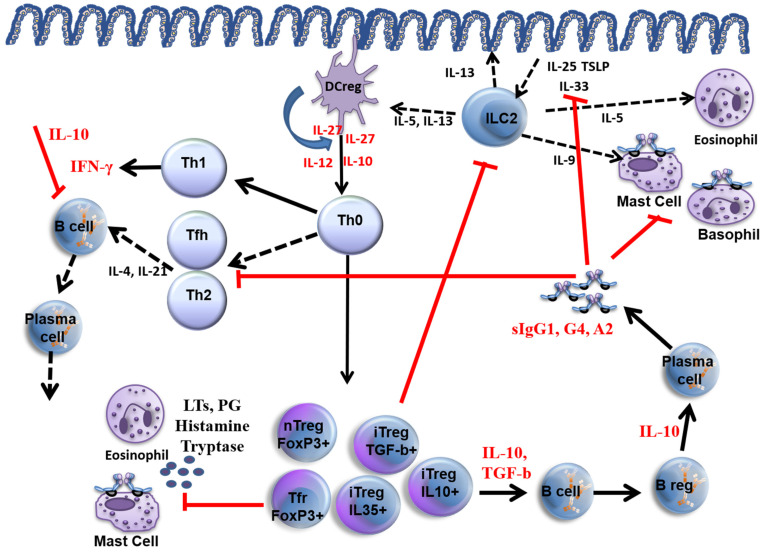
Allergen-immunotherapy (AIT) is an efficacious and disease-modifying treatment option for IgE-mediated diseases. Among these allergic rhinitis, insect venom allergy, food allergy, and allergic asthma are the most common candidates for AIT. AIT gives rise to clinical immunotolerance which may last for years after the treatment cessation. Mechanisms of AIT include suppression of allergic inflammation in target tissues and stimulation of the production of blocking antibodies, especially IgG4 and IgA. These mechanisms are followed by a reduction of underlying allergen-specific Th2 cell-driven responses to the allergens. Tolerance induction takes place through the desensitization of effector cells and stimulation of regulatory T cells that show their effects by mechanisms involving cell-cell cross-talk, but also other mechanisms, e.g., by the production of immunomodulatory cytokines such as, e.g., IL-10 and TGF-beta. From a personalized medical perspective, there is a need for clinical biomarkers of value in selecting responders and optimizing patient care during AIT. Also, a deeper understanding of underlying mechanistic processes will improve AIT’s future outcomes. In this paper, the current knowledge of mechanisms in AIT is reviewed with a special focus on biomarkers of this therapy.
Overview
The claims and statistics of this paper haven’t been checked yet.
Run the check — free, no account needed. It reads the open-access text and checks the sources it cites.
Integrity signals
Registry
Cites
Statistics
Figures
Verification
Claims the paper makes
The claims and statistics of this paper haven’t been checked yet.
Run the check — free, no account needed. It reads the open-access text and checks the sources it cites.
Claims other papers make about this one
Each is checked against this paper’s own text: does it say what the citing paper says it does?
In the citing paper
“The potential utility of measuring IgG 4 and IgA levels lies in their ability to serve as biomarkers for predicting and monitoring OIT success.”
From Pollen–Food Allergy Syndrome: Allergens, Clinical Insights, Diagnostic and Therapeutic Challenges (2024) · cites this paper as [226]
In the citing paper
“By tracking the rise in these immunoglobulins during treatment, clinicians can assess the progression toward tolerance and adjust therapy accordingly.”
From Pollen–Food Allergy Syndrome: Allergens, Clinical Insights, Diagnostic and Therapeutic Challenges (2024) · cites this paper as [226]
Self-check
Percentages, sums and reported differences re-computed from the paper’s own numbers.
The self-check needs the paper’s full text.
Citations
Cites
Allergen immunotherapy: A practice parameter third update
Cox, L., Nelson, H., Lockey, R., Calabria, C., Chacko, T., Finegold, I., Nelson, M., Weber, R., Bernstein, D. I., Blessing-Moore, J., et al. (2011) · Journal of Allergy and Clinical Immunology · doi:10.1016/j.jaci.2010.09.034 · Cited by 1,256
Monitoring human basophil activation via CD63 monoclonal antibody 435
Knol, E. F., Mul, F. P. J., Jansen, H., Calafat, J., & Roos, D. (1991) · Journal of Allergy and Clinical Immunology · doi:10.1016/0091-6749(91)90094-5 · Cited by 421
Bühring, H.-J., Streble, A., & Valent, P. (2004) · International Archives of Allergy and Immunology · doi:10.1159/000077351 · Cited by 231
Rösner-Friese, K., Kaul, S., Vieths, S., & Pfaar, O. (2015) · Journal of Allergy and Clinical Immunology · doi:10.1016/j.jaci.2014.10.045 · Cited by 66
Self-citation
Research works printed but not linked: 109
- Pfaar, 2022, One hundred and ten years of Allergen Immunotherapy: A journey from empiric observation to evidence, Allergy, 77, 454, 10.1111/all.15023 · DOI
- Hise, 2020, Oral Immunotherapy for Food Allergy-a US Regulatory Perspective, Curr. Allergy Asthma Rep., 20, 77, 10.1007/s11882-020-00973-x · DOI
- Akdis, 2020, Allergen Immunotherapy User’s Guide, Pediatr. Allergy Immunol., 31, 1, 10.1111/pai.13189 · DOI
- Sturm, 2018, EAACI guidelines on allergen immunotherapy: Hymenoptera venom allergy, Allergy, 73, 744, 10.1111/all.13262 · DOI
- Dhami, 2017, Allergen immunotherapy for allergic rhinoconjunctivitis: A systematic review and meta-analysis, Allergy, 72, 1597, 10.1111/all.13201 · DOI
- Incorvaia, 2022, Venom Immunotherapy and Aeroallergen Immunotherapy: How Do Their Outcomes Differ?, Front. Allergy, 3, 854080, 10.3389/falgy.2022.854080 · DOI
- Shamji, 2017, Biomarkers for monitoring clinical efficacy of allergen immunotherapy for allergic rhinoconjunctivitis and allergic asthma: An EAACI Position Paper, Allergy, 72, 1156, 10.1111/all.13138 · DOI · Paper page
- Shamji, 2017, Mechanisms of allergen immunotherapy for inhaled allergens and predictive biomarkers, J. Allergy Clin. Immunol., 140, 1485, 10.1016/j.jaci.2017.10.010 · DOI
- Burks, 2013, Update on allergy immunotherapy: American Academy of Allergy, Asthma & Immunology/European Academy of Allergy and Clinical Immunology/PRACTALL consensus report, J. Allergy Clin. Immunol., 131, 1288, 10.1016/j.jaci.2013.01.049 · DOI
- Shamji, 2015, Basophil expression of diamine oxidase: A novel biomarker of allergen immunotherapy response, J. Allergy Clin. Immunol., 135, 913, 10.1016/j.jaci.2014.09.049 · DOI
- Didier, 2007, Optimal dose, efficacy, and safety of once-daily sublingual immunotherapy with a 5-grass pollen tablet for seasonal allergic rhinitis, J. Allergy Clin. Immunol., 120, 1338, 10.1016/j.jaci.2007.07.046 · DOI
- Dahl, 2008, Sublingual grass allergen tablet immunotherapy provides sustained clinical benefit with progressive immunologic changes over 2 years, J. Allergy Clin. Immunol., 121, 512, 10.1016/j.jaci.2007.10.039 · DOI
- Huoman, 2019, Sublingual immunotherapy alters salivary IgA and systemic immune mediators in timothy allergic children, Pediatr. Allergy Immunol., 30, 522, 10.1111/pai.13047 · DOI
- Shamji, 2021, Differential induction of allergen-specific IgA responses following timothy grass subcutaneous and sublingual immunotherapy, J. Allergy Clin. Immunol., 148, 1061, 10.1016/j.jaci.2021.03.030 · DOI
- Ishizaka, 1976, IgA and IgG anti-ragweed antibodies in nasal secretions. Quantitative measurements of antibodies and correlation with inhibition of histamine release, J. Clin. Investig., 57, 1041, 10.1172/JCI108346 · DOI
- Reisinger, 2005, Allergen-specific nasal IgG antibodies induced by vaccination with genetically modified allergens are associated with reduced nasal allergen sensitivity, J. Allergy Clin. Immunol., 116, 347, 10.1016/j.jaci.2005.04.003 · DOI
- Ranno, 1999, Double-blind placebo-controlled evaluation of sublingual-swallow immunotherapy with standardized Parietaria judaica extract in children with allergic rhinoconjunctivitis, J. Allergy Clin. Immunol., 104, 425, 10.1016/S0091-6749(99)70388-X · DOI
- Troise, 1995, Sublingual immunotherapy in Parietaria pollen-induced rhinitis: A double-blind study, J. Investig. Allergol. Clin. Immunol., 5, 25
- Bahceciler, 2005, Impact of sublingual immunotherapy on specific antibody levels in asthmatic children allergic to house dust mites, Int. Arch. Allergy Immunol., 136, 287, 10.1159/000083956 · DOI
- James, 2011, Long-term tolerance after allergen immunotherapy is accompanied by selective persistence of blocking antibodies, J. Allergy Clin. Immunol., 127, 509, 10.1016/j.jaci.2010.12.1080 · DOI
- Sahiner, 2019, Hymenoptera Venom Allergy: How Does Venom Immunotherapy Prevent Anaphylaxis From Bee and Wasp Stings?, Front. Immunol., 10, 1959, 10.3389/fimmu.2019.01959 · DOI
- Kim, 2011, Sublingual immunotherapy for peanut allergy: Clinical and immunologic evidence of desensitization, J. Allergy Clin. Immunol., 127, 640, 10.1016/j.jaci.2010.12.1083 · DOI
- Vickery, 2014, Sustained unresponsiveness to peanut in subjects who have completed peanut oral immunotherapy, J. Allergy Clin. Immunol., 133, 468, 10.1016/j.jaci.2013.11.007 · DOI
- Jones, 2016, Long-term treatment with egg oral immunotherapy enhances sustained unresponsiveness that persists after cessation of therapy, J. Allergy Clin. Immunol., 137, 1117, 10.1016/j.jaci.2015.12.1316 · DOI
- Varshney, 2011, A randomized controlled study of peanut oral immunotherapy: Clinical desensitization and modulation of the allergic response, J. Allergy Clin. Immunol., 127, 654, 10.1016/j.jaci.2010.12.1111 · DOI
- Baloh, 2022, Biomarkers and mechanisms of tolerance induction in food allergic patients drive new therapeutic approaches, Front. Immunol., 13, 972103, 10.3389/fimmu.2022.972103 · DOI
- Tsai, 2020, Sustained successful peanut oral immunotherapy associated with low basophil activation and peanut-specific IgE, J. Allergy Clin. Immunol., 145, 885, 10.1016/j.jaci.2019.10.038 · DOI
- Plewako, 2006, Basophil interleukin 4 and interleukin 13 production is suppressed during the early phase of rush immunotherapy, Int. Arch. Allergy Immunol., 141, 346, 10.1159/000095461 · DOI
- Przybilla, 2010, Serum concentration of baseline mast cell tryptase: Evidence for a decline during long-term immunotherapy for Hymenoptera venom allergy, Clin. Exp. Allergy, 40, 643, 10.1111/j.1365-2222.2009.03436.x · DOI
- Kulis, 2019, High- and low-dose oral immunotherapy similarly suppress pro-allergic cytokines and basophil activation in young children, Clin. Exp. Allergy, 49, 180, 10.1111/cea.13256 · DOI
- Jones, 2017, Epicutaneous immunotherapy for the treatment of peanut allergy in children and young adults, J. Allergy Clin. Immunol., 139, 1242, 10.1016/j.jaci.2016.08.017 · DOI
- Keet, 2012, The safety and efficacy of sublingual and oral immunotherapy for milk allergy, J. Allergy Clin. Immunol., 129, 448, 10.1016/j.jaci.2011.10.023 · DOI
- Patil, 2019, Early decrease in basophil sensitivity to Ara h 2 precedes sustained unresponsiveness after peanut oral immunotherapy, J. Allergy Clin. Immunol., 144, 1310, 10.1016/j.jaci.2019.07.028 · DOI
- Gorelik, 2015, Suppression of the immunologic response to peanut during immunotherapy is often transient, J. Allergy Clin. Immunol., 135, 1283, 10.1016/j.jaci.2014.11.010 · DOI
- Jones, 2022, Efficacy and safety of oral immunotherapy in children aged 1–3 years with peanut allergy (the Immune Tolerance Network IMPACT trial): A randomised placebo-controlled study, Lancet, 399, 359, 10.1016/S0140-6736(21)02390-4 · DOI
- Jutel, 2016, International Consensus on Allergen Immunotherapy II: Mechanisms, standardization, and pharmacoeconomics, J. Allergy Clin. Immunol., 137, 358, 10.1016/j.jaci.2015.12.1300 · DOI
- Akdis, 1998, Role of interleukin 10 in specific immunotherapy, J. Clin. Investig., 102, 98, 10.1172/JCI2250 · DOI
- Nasser, 2001, Interleukin-10 levels increase in cutaneous biopsies of patients undergoing wasp venom immunotherapy, Eur. J. Immunol., 31, 3704, 10.1002/1521-4141(200112)31:12<3704::AID-IMMU3704>3.0.CO;2-3 · DOI
- Patil, 2015, Peanut oral immunotherapy transiently expands circulating Ara h 2-specific B cells with a homologous repertoire in unrelated subjects, J Allergy Clin. Immunol., 136, 125, 10.1016/j.jaci.2015.03.026 · DOI
- Hoh, 2016, Single B-cell deconvolution of peanut-specific antibody responses in allergic patients, J. Allergy Clin. Immunol., 137, 157, 10.1016/j.jaci.2015.05.029 · DOI
- Komlosi, 2020, Mechanisms of Subcutaneous and Sublingual Aeroallergen Immunotherapy: What is New?, Immunol. Allergy Clin. N Am., 40, 1, 10.1016/j.iac.2019.09.009 · DOI
- Golebski, 2021, Induction of IL-10-producing type 2 innate lymphoid cells by allergen immunotherapy is associated with clinical response, Immunity, 54, 291, 10.1016/j.immuni.2020.12.013 · DOI
- Globinska, 2018, Mechanisms of allergen-specific immunotherapy: Diverse mechanisms of immune tolerance to allergens, Ann. Allergy Asthma Immunol., 121, 306, 10.1016/j.anai.2018.06.026 · DOI
- Keskin, 2006, The effects of grass pollen allergoid immunotherapy on clinical and immunological parameters in children with allergic rhinitis, Pediatr. Allergy Immunol., 17, 396, 10.1111/j.1399-3038.2006.00442.x · DOI
- Durham, 2006, Sublingual immunotherapy with once-daily grass allergen tablets: A randomized controlled trial in seasonal allergic rhinoconjunctivitis, J. Allergy Clin. Immunol., 117, 802, 10.1016/j.jaci.2005.12.1358 · DOI
- Gehlhar, 1999, Monitoring allergen immunotherapy of pollen-allergic patients: The ratio of allergen-specific IgG4 to IgG1 correlates with clinical outcome, Clin. Exp. Allergy, 29, 497, 10.1046/j.1365-2222.1999.00525.x · DOI
- Kopp, 2005, Lack of detectable alterations in immune responses during sublingual immunotherapy in children with seasonal allergic rhinoconjunctivitis to grass pollen, Int. Arch. Allergy Immunol., 136, 134, 10.1159/000083320 · DOI
- Mansueto, 2009, Evaluation of serum s-IgE/total IgE ratio in predicting clinical response to allergen-specific immunotherapy, J. Allergy Clin. Immunol., 123, 1103, 10.1016/j.jaci.2009.02.012 · DOI · Paper page
- Shamji, 2012, Functional rather than immunoreactive levels of IgG4 correlate closely with clinical response to grass pollen immunotherapy, Allergy, 67, 217, 10.1111/j.1398-9995.2011.02745.x · DOI
- 2020, Clinical utility of microarray B-cell epitope mapping in food allergies: A systematic review, Pediatr. Allergy Immunol., 31, 175, 10.1111/pai.13141 · DOI
- Vickery, 2013, Peanut oral immunotherapy modifies IgE and IgG4 responses to major peanut allergens, J. Allergy Clin. Immunol., 131, 128, 10.1016/j.jaci.2012.10.048 · DOI
- Savilahti, 2014, Use of IgE and IgG4 epitope binding to predict the outcome of oral immunotherapy in cow’s milk allergy, Pediatr. Allergy Immunol., 25, 227, 10.1111/pai.12186 · DOI
- Cerecedo, 2015, Identification of novel peptide biomarkers to predict safety and efficacy of cow’s milk oral immunotherapy by peptide microarray, Clin. Exp. Allergy, 45, 1071, 10.1111/cea.12528 · DOI
- Shamji, 2006, The IgE-facilitated allergen binding (FAB) assay: Validation of a novel flow-cytometric based method for the detection of inhibitory antibody responses, J. Immunol. Methods, 317, 71, 10.1016/j.jim.2006.09.004 · DOI
- Shamji, 2013, Cell-free detection of allergen-IgE cross-linking with immobilized phase CD23: Inhibition by blocking antibody responses after immunotherapy, J. Allergy Clin. Immunol., 132, 1003, 10.1016/j.jaci.2013.05.025 · DOI
- Petersen, 2004, Performance evaluation of a specific IgE assay developed for the ADVIA centaur immunoassay system, Clin. Biochem., 37, 882, 10.1016/j.clinbiochem.2004.06.010 · DOI
- Blaiss, 2011, Efficacy and safety of timothy grass allergy immunotherapy tablets in North American children and adolescents, J. Allergy Clin. Immunol., 127, 64, 10.1016/j.jaci.2010.11.034 · DOI
- Corzo, 2014, Tolerability during double-blind randomized phase I trials with the house dust mite allergy immunotherapy tablet in adults and children, J. Investig. Allergol. Clin. Immunol., 24, 154
- Wachholz, 2003, Inhibition of allergen-IgE binding to B cells by IgG antibodies after grass pollen immunotherapy, J. Allergy Clin. Immunol., 112, 915, 10.1016/S0091-6749(03)02022-0 · DOI
- Wikborg, 1999, Blocking antibodies induced by specific allergy vaccination prevent the activation of CD4+ T cells by inhibiting serum-IgE-facilitated allergen presentation, J. Immunol., 163, 2944, 10.4049/jimmunol.163.5.2944 · DOI
- Kepley, 2000, Negative regulation of FcepsilonRI signaling by FcgammaRII costimulation in human blood basophils, J. Allergy Clin. Immunol., 106, 337, 10.1067/mai.2000.107931 · DOI
- Ebo, 2012, Analyzing histamine release by flow cytometry (HistaFlow): A novel instrument to study the degranulation patterns of basophils, J. Immunol. Methods, 375, 30, 10.1016/j.jim.2011.09.003 · DOI
- Nullens, 2013, Basophilic histamine content and release during venom immunotherapy: Insights by flow cytometry, Cytom. B Clin. Cytom., 84, 173, 10.1002/cyto.b.21084 · DOI
- Cosmi, 2006, Sublingual immunotherapy with Dermatophagoides monomeric allergoid down-regulates allergen-specific immunoglobulin E and increases both interferon-gamma- and interleukin-10-production, Clin. Exp. Allergy, 36, 261, 10.1111/j.1365-2222.2006.02429.x · DOI
- Fanta, 1999, Systemic immunological changes induced by administration of grass pollen allergens via the oral mucosa during sublingual immunotherapy, Int. Arch. Allergy Immunol., 120, 218, 10.1159/000024270 · DOI
- Jutel, 2003, IL-10 and TGF-beta cooperate in the regulatory T cell response to mucosal allergens in normal immunity and specific immunotherapy, Eur. J. Immunol., 33, 1205, 10.1002/eji.200322919 · DOI
- Bohle, 2007, Sublingual immunotherapy induces IL-10-producing T regulatory cells, allergen-specific T-cell tolerance, and immune deviation, J. Allergy Clin. Immunol., 120, 707, 10.1016/j.jaci.2007.06.013 · DOI
- Francis, 2003, Induction of IL-10+CD4+CD25+ T cells by grass pollen immunotherapy, J. Allergy Clin. Immunol., 111, 1255, 10.1067/mai.2003.1570 · DOI
- Wachholz, 2002, Grass pollen immunotherapy for hayfever is associated with increases in local nasal but not peripheral Th1:Th2 cytokine ratios, Immunology, 105, 56, 10.1046/j.1365-2567.2002.01338.x · DOI
- Plewako, 2008, A follow-up study of immunotherapy-treated birch-allergic patients: Effect on the expression of chemokines in the nasal mucosa, Clin. Exp. Allergy., 38, 1124, 10.1111/j.1365-2222.2008.03005.x · DOI
- Makino, 2010, Apolipoprotein A-IV is a candidate target molecule for the treatment of seasonal allergic rhinitis, J. Allergy Clin. Immunol., 126, 1163, 10.1016/j.jaci.2010.06.031 · DOI
- Salmivesi, 2016, Changes in biomarkers during a six-month oral immunotherapy intervention for cow’s milk allergy, Acta Paediatr., 105, 1349, 10.1111/apa.13550 · DOI
- Li, 2015, Cytokine Responses to Specific Immunotherapy in House Dust Mite-Induced Allergic Rhinitis Patients, Inflammation, 38, 2216, 10.1007/s10753-015-0204-3 · DOI
- Scadding, 2015, Effect of grass pollen immunotherapy on clinical and local immune response to nasal allergen challenge, Allergy, 70, 689, 10.1111/all.12608 · DOI
- Ciprandi, 2009, Adipokines and sublingual immunotherapy: Preliminary report, Hum. Immunol., 70, 73, 10.1016/j.humimm.2008.10.001 · DOI
- Ciprandi, 2008, Relationship between soluble HLA-G and HLA-A,-B,-C serum levels, and interferon-gamma production after sublingual immunotherapy in patients with allergic rhinitis, Hum. Immunol., 69, 409, 10.1016/j.humimm.2008.05.009 · DOI
- 2017, The role of regulatory B cells in allergen immunotherapy, Curr. Opin. Allergy Clin. Immunol., 17, 447, 10.1097/ACI.0000000000000400 · DOI
- Sindher, 2018, The Use of Biomarkers to Predict Aero-Allergen and Food Immunotherapy Responses, Clin. Rev. Allergy Immunol., 55, 190, 10.1007/s12016-018-8678-z · DOI
- Zieglmayer, 2022, Update on the use of allergen challenge chambers in immunotherapy: Clinical implications, Curr. Opin. Allergy Clin. Immunol., 22, 132, 10.1097/ACI.0000000000000808 · DOI
- Pfaar, 2021, Technical standards in allergen exposure chambers worldwide—An EAACI Task Force Report, Allergy, 76, 3589, 10.1111/all.14957 · DOI
- Arenas, 2022, The Lights and the Shadows of Controlled Sting Challenge With Hymenoptera, J. Investig. Allergol. Clin. Immunol., 32, 357, 10.18176/jiaci.0838 · DOI
- Urbanek, 1986, Sub-class of IgG anti-bee venom antibody produced during bee venom immunotherapy and its relationship to long-term protection from bee stings and following termination of venom immunotherapy, Clin. Allergy, 16, 317, 10.1111/j.1365-2222.1986.tb01963.x · DOI
- Golden, 1996, Discontinuing venom immunotherapy: Outcome after five years, J. Allergy Clin. Immunol., 97, 579, 10.1016/S0091-6749(96)70302-0 · DOI
- Burgers, 1997, Discontinuation of yellow jacket venom immunotherapy: Follow-up of 75 patients by means of deliberate sting challenge, J. Allergy Clin. Immunol., 100, 767, 10.1016/S0091-6749(97)70271-9 · DOI
- Fischer, 2013, Tolerated wasp sting challenge improves health-related quality of life in patients allergic to wasp venom, J. Allergy Clin. Immunol., 132, 489, 10.1016/j.jaci.2013.03.010 · DOI
- Swamy, 2012, Epigenetic modifications and improved regulatory T-cell function in subjects undergoing dual sublingual immunotherapy, J. Allergy Clin. Immunol., 130, 215, 10.1016/j.jaci.2012.04.021 · DOI · Paper page
- Shi, 2020, Clinical Efficacy Evaluation of 1-Year Subcutaneous Immunotherapy for Artemisia sieversiana Pollen Allergic Rhinitis by Serum Metabolomics, Front. Pharmacol., 11, 305, 10.3389/fphar.2020.00305 · DOI
- Zheng, 2021, Metabolomics reveals a correlation between hydroxyeicosatetraenoic acids and allergic asthma: Evidence from three years’ immunotherapy, Pediatr. Allergy Immunol., 32, 1654, 10.1111/pai.13569 · DOI
- Pfaar, 2018, Perspectives in allergen immunotherapy: 2017 and beyond, Allergy, 73, 5, 10.1111/all.13355 · DOI
- Durham, 1999, Long-term clinical efficacy of grass-pollen immunotherapy, N. Engl. J. Med., 341, 468, 10.1056/NEJM199908123410702 · DOI
- Pilette, 2007, Grass pollen immunotherapy induces an allergen-specific IgA2 antibody response associated with mucosal TGF-beta expression, J. Immunol., 178, 4658, 10.4049/jimmunol.178.7.4658 · DOI
- Fujimura, 2011, Increase of regulatory T cells and the ratio of specific IgE to total IgE are candidates for response monitoring or prognostic biomarkers in 2-year sublingual immunotherapy (SLIT) for Japanese cedar pollinosis, Clin. Immunol., 139, 65, 10.1016/j.clim.2010.12.022 · DOI
- Eifan, 2010, Clinical efficacy and immunological mechanisms of sublingual and subcutaneous immunotherapy in asthmatic/rhinitis children sensitized to house dust mite: An open randomized controlled trial, Clin. Exp. Allergy, 40, 922, 10.1111/j.1365-2222.2009.03448.x · DOI
- Li, 2014, Predictive factors for clinical response to allergy immunotherapy in children with asthma and rhinitis, Int. Arch. Allergy Immunol., 164, 210, 10.1159/000365630 · DOI
- Gomez, 2015, Initial immunological changes as predictors for house dust mite immunotherapy response, Clin. Exp. Allergy, 45, 1542, 10.1111/cea.12578 · DOI
- Moverare, 2002, Development of new IgE specificities to allergenic components in birch pollen extract during specific immunotherapy studied with immunoblotting and Pharmacia CAP System, Allergy, 57, 423, 10.1034/j.1398-9995.2002.13248.x · DOI
- Nelson, 2011, Efficacy and safety of timothy grass allergy immunotherapy tablet treatment in North American adults, J. Allergy Clin. Immunol., 127, 72, 10.1016/j.jaci.2010.11.035 · DOI
- Wollmann, 2015, Reduction in allergen-specific IgE binding as measured by microarray: A possible surrogate marker for effects of specific immunotherapy, J. Allergy Clin. Immunol., 136, 806, 10.1016/j.jaci.2015.02.034 · DOI
- Wachholz, 2004, Grass pollen immunotherapy induces mucosal and peripheral IL-10 responses and blocking IgG activity, J. Immunol., 172, 3252, 10.4049/jimmunol.172.5.3252 · DOI
- Durham, 2012, SQ-standardized sublingual grass immunotherapy: Confirmation of disease modification 2 years after 3 years of treatment in a randomized trial, J. Allergy Clin. Immunol., 129, 717, 10.1016/j.jaci.2011.12.973 · DOI
- Wurtzen, 2008, A double-blind placebo-controlled birch allergy vaccination study II: Correlation between inhibition of IgE binding, histamine release and facilitated allergen presentation, Clin. Exp. Allergy, 38, 1290, 10.1111/j.1365-2222.2008.03020.x · DOI
- Reich, 2011, Immunologic effects and tolerability profile of in-season initiation of a standardized-quality grass allergy immunotherapy tablet: A phase III, multicenter, randomized, double-blind, placebo-controlled trial in adults with grass pollen-induced rhinoconjunctivitis, Clin. Ther., 33, 828, 10.1016/j.clinthera.2011.06.006 · DOI
- Horiot, 2011, Changes in basophil activation during grass-pollen sublingual immunotherapy do not correlate with clinical efficacy, Allergy, 66, 1530, 10.1111/j.1398-9995.2011.02696.x · DOI
- Hennersdorf, 2005, Identification of CD13, CD107a, and CD164 as novel basophil-activation markers and dissection of two response patterns in time kinetics of IgE-dependent upregulation, Cell Res., 15, 325, 10.1038/sj.cr.7290301 · DOI
- Sin, 2014, Short-term preseasonal immunotherapy: Is early clinical efficacy related to the basophil response?, Int. Arch. Allergy Immunol., 164, 237, 10.1159/000365628 · DOI
- Aasbjerg, 2014, Immunological comparison of allergen immunotherapy tablet treatment and subcutaneous immunotherapy against grass allergy, Clin. Exp. Allergy, 44, 417, 10.1111/cea.12241 · DOI
- Ceuppens, 2009, Immunotherapy with a modified birch pollen extract in allergic rhinoconjunctivitis: Clinical and immunological effects, Clin. Exp. Allergy, 39, 1903, 10.1111/j.1365-2222.2009.03379.x · DOI
- Gueguen, 2016, Changes in markers associated with dendritic cells driving the differentiation of either TH2 cells or regulatory T cells correlate with clinical benefit during allergen immunotherapy, J. Allergy Clin. Immunol., 137, 545, 10.1016/j.jaci.2015.09.015 · DOI
- Scadding, 2017, Effect of 2 Years of Treatment With Sublingual Grass Pollen Immunotherapy on Nasal Response to Allergen Challenge at 3 Years among Patients With Moderate to Severe Seasonal Allergic Rhinitis: The GRASS Randomized Clinical Trial, JAMA, 317, 615, 10.1001/jama.2016.21040 · DOI · Paper page
Cited by
Sorted by citations
Pollen–Food Allergy Syndrome: Allergens, Clinical Insights, Diagnostic and Therapeutic Challenges
Haidar, L., Bănărescu, C. F., Uța, C., Moldovan, S. I., Zimbru, E.-L., Zimbru, R.-I., Ciurariu, E., Georgescu, M., & Panaitescu, C. (2024) · Applied Sciences · doi:10.3390/app15010066 · Cited by 21
Advance in Managing Indoor Cat Allergen Proteins: Molecular Insights, Detection, and Control
Jiang, Y., Tian, X., Fu, X., Ma, B., Wang, Z., Han, B., Tao, H., Wang, J., & Wang, X. (2025) · International Journal of Molecular Sciences · doi:10.3390/ijms262210913 · Cited by 3
“Fourth, allergen immunotherapy induces immune tolerance through prolonged, gradually increased exposure to allergens; however, its application is limited by extended treatment periods and heterogeneous patient responses [25,26].”
Metadata
- Authors
- Sahiner, U. M., Giovannini, M., Escribese, M. M., Paoletti, G., Heffler, E., Alvaro Lozano, M., Barber, D., Canonica, G. W., & Pfaar, O.
- Venue
- Journal of Personalized Medicine
- Publisher
- MDPI AG
- Published
- 2023-05-17
- Volume
- 13
- Issue
- 5
- Pages
- 845
- ISSN
- 2075-4426
- PMC
- PMC10223594
- Cited by
- 66
- References
- 4
- Language
- en
About these checks
Registry, retraction, Cites and statistics results are computed, not judged, with one exception: a printed reference that no index lists is read once by a model before it counts as a citation error. Claims are extracted by a model and kept only when their quote appears verbatim in the text; each cited source is then checked, with a model’s help, for whether it says what the claim relies on. Those verdicts can be wrong — read the claim’s quote and the cited source before relying on one.
Statistics and arithmetic are recomputed, not judged.
Confidence bands are shown only for fields calibrated on our annotated test set. None is calibrated yet, so no band is shown.
What counts as a claim ›How we measure confidence ›How we check this ›
Are you an author, or do you see a problem with this page? Request a review
How to cite
Cite CoChat for the checks on this page, and the paper for its own findings.
- This page
- CoChat. (2026). Citation check: Mechanisms of Allergen Immunotherapy and Potential Biomarkers for Clinical Evaluation. https://app.cochat.ai/papers/10.3390/jpm13050845
- The paper
- Sahiner, U. M., Giovannini, M., Escribese, M. M., Paoletti, G., Heffler, E., Alvaro Lozano, M., Barber, D., Canonica, G. W., & Pfaar, O. (2023). Mechanisms of Allergen Immunotherapy and Potential Biomarkers for Clinical Evaluation. Journal of Personalized Medicine. https://doi.org/10.3390/jpm13050845
