

The Future of Origin of Life Research: Bridging Decades-Old Divisions
Open accessThe DOI matches its Crossref record; 220 of the 226 references it cites were found in a registry or an index; 40 of the 129 sources its claims cite were checked for support.
Abstract
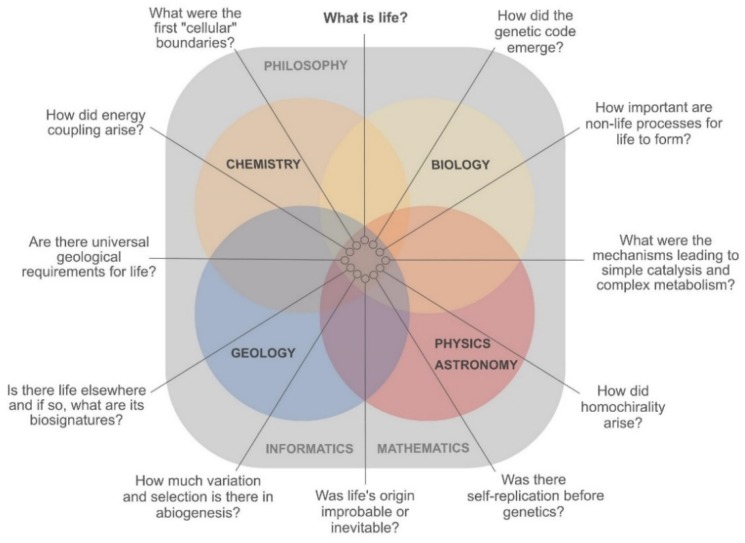
Research on the origin of life is highly heterogeneous. After a peculiar historical development, it still includes strongly opposed views which potentially hinder progress. In the 1st Interdisciplinary Origin of Life Meeting, early-career researchers gathered to explore the commonalities between theories and approaches, critical divergence points, and expectations for the future. We find that even though classical approaches and theories—e.g., bottom-up and top-down, RNA world vs. metabolism-first—have been prevalent in origin of life research, they are ceasing to be mutually exclusive and they can and should feed integrating approaches. Here we focus on pressing questions and recent developments that bridge the classical disciplines and approaches, and highlight expectations for future endeavours in origin of life research.
Overview
CoChat Summary
TL;DR
This meeting report from the 1st Interdisciplinary Origin of Life Meeting argues that classical origin-of-life divisions, such as bottom-up versus top-down and RNA world versus metabolism-first, are ceasing to be mutually exclusive and should feed integrating approaches. It highlights cross-disciplinary bridges and proposes future dialogue, standards, and shared tools for origin-of-life research.
Key findings
The authors conclude that classical OoL approaches and theories are ceasing to be mutually exclusive and can and should feed integrating approaches, including bottom-up/top-down and RNA world/metabolism-first. They note shared constraints: earliest undisputed fossil evidence places life prior to 3.35 Ga, molecular clocks suggest an origin prior to the late heavy bombardment >3.9 Ga, and LUCA is dated to >3.9 Ga. Examples of bridge-building include mixed-amphiphile vesicles resilient to extreme salinity and pH, protometabolism in lipid vesicles, DNA amplification inducing lipid vesicle growth and division, RNA/DNA building blocks as metabolic intermediates, and mineral surfaces or hydrothermal pores selecting longer oligonucleotides. The paper recommends interdisciplinary conferences and education, user-friendly computational tools, curated data exchange, and nomenclature standards such as ChEBI, KEGG, and BiGG, and use of IDA and LUCA.
Methods
Perspective/meeting report based on discussions at the 1st Interdisciplinary Origin of Life meeting for early-career researchers (IOoL); the authors state it is not a comprehensive review. It synthesizes classical OoL literature and experimental/theoretical examples from the past decade to identify divisions, bridges, and future directions. No primary experimental sample, new dataset, or statistical analysis is reported; the argument is conceptual and literature-based.
Limitations
Stated: OoL hypotheses are virtually non-falsifiable; there is no commonly accepted definition of life; researchers cannot wait hundreds of thousands of years to observe OoL in real time; and experiments carry bias in defining “plausible” prebiotic conditions and which biomolecules are central. Stated: the article focuses on life as we know it—cells with metabolism, genetic inheritance, and compartmentalization—and does not exclude but does not address alternative life forms. Evident: as a meeting report/perspective, it is not a systematic review or primary study, so its conclusions reflect the authors’ synthesis and selected examples rather than exhaustive evidence.
Model-written summary. Check it against the paper before relying on it.
Integrity signals
Registry
Cites
Statistics
Figures
Verification
Claims the paper makes
23 Valid · 4 Not valid · 47 Not checked · 35 Own results and interpretations
Every source the paper cites for this claim was checked and supports it.
In the paper
“First, the earliest undisputed fossil evidence places life on Earth prior to 3.35 Ga [3] and molecular clocks suggest an origin prior to the late heavy bombardment >3.9 Ga [4].”
§ The Future of Origin of Life Research: Bridging Decades-Old Divisions > 1. Introduction
What the sources say
- Supportedcites [4] Betts H.C. Puttick M.N. Clark J.W. Williams T.A. Donoghue P.C.J. Pisani D. Integrated genomic and fossil evidence illuminates life’s early evolution and eukaryote origin Nat. Ecol. Evol. 2018 2 1556 1562 10.1038/s41559-018-0644-x 30127539 PMC6152910 source
The Abstract of our copy states directly that 'the last universal common ancestor of cellular life (LUCA) predated the end of late heavy bombardment (>3.9 Ga)', derived from their combined reappraisal of the fossil record with new molecular clock analyses. The Results (p. corresponding section) reinforce this: 'The joint 95% credibility intervals reject a post late heavy bombardment (~3900 Ma) emergence of LUCA (4519-4477 Ma).' The claim's 'origin of life' is the paper's LUCA/emergence of cellular life, so the paraphrase matches, including the >3.9 Ga qualifier and the clock-based (probabilistic, 'suggest') hedging. (LLM, conf=0.90)
hedgedstates a cause- Asserted: passes — The authors put it forward as true.
- Checkable: passes — It can be checked against evidence.
- Load-bearing: unclear — It is unclear whether the paper’s conclusions depend on it.
- Based: passes — The paper gives a reason why it holds.
- Supported
Every source the paper cites for this claim was checked and supports it.
In the paper
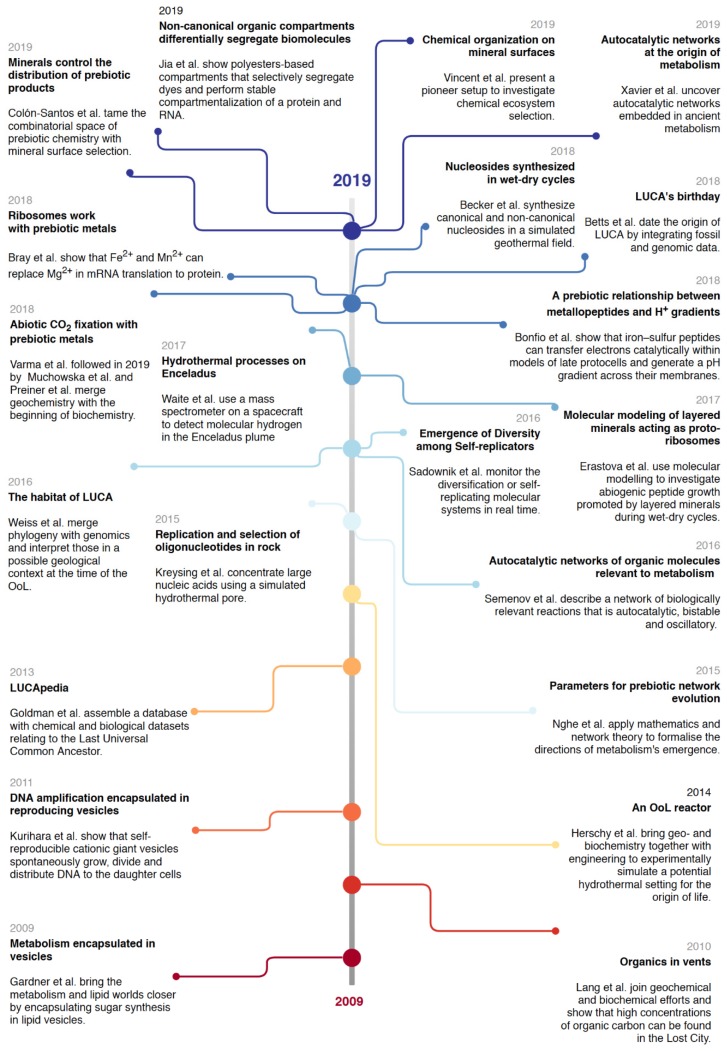
“If one considers that the accumulation of biomolecules is a biological invention, optimizing for certain geochemical and/or biochemical properties [119], then compounds such as aHAs may have played a role in some form of nascent biology not conserved in modern biology [142].”
§ The Future of Origin of Life Research: Bridging Decades-Old Divisions > 3. Building Bridges > 3.2. On the Right Track? Looking at the Past Decade
What the sources say
- Supportedcites [142] Chandru K. Mamajanov I. Cleaves H.J. 2nd Jia T.Z. Polyesters as a Model System for Building Primitive Biologies from Non-Biological Prebiotic Chemistry Life 2020 10 6 10.3390/life10010006 31963928 PMC7175156 source
The Introduction (p. 1, sec. 1) states that simple non-biomolecule monomers, 'best experimentally demonstrated so far using α-hydroxy acids (αHAs)', form macromolecular assemblages with self-assembly and catalytic functions that could have facilitated abiotic chemistries in a pre-genomic/progenote world, and defines non-biomolecules as compounds that 'could have played much more important roles in previous biological or proto-biological states' (sec. 1). Section 2 adds that polyester/αHA systems 'might still be distant relatives of biochemistry and could have provided functions that promoted primitive molecular assembly and dynamics essential for the emergence of biology.' The non-conservation in modern biology is covered in the Prospective (sec. 4), which argues many transitional mechanisms 'have left no easily discernible trace in modern biology.' The claim's hedge ('may have played a role') matches the source's own hedged framing; the preceding clause about biomolecule accumulation is credited to a different citation and is not judged here. (LLM, conf=0.88)
hedgedstates a possible cause- Asserted: passes — The authors put it forward as true.
- Checkable: passes — It can be checked against evidence.
- Load-bearing: passes — The paper’s conclusions depend on it.
- Based: passes — The paper gives a reason why it holds.
- Supported
The cited sources support only part of this claim — read each source’s verdict below.
In the paper
“Considering the ‘messy’ nature (meaning the inherent diversity) of prebiotic chemistry [143,144], this may have been the case, and the utility of central biomolecules such as RNA and ubiquitous metabolites to elucidate the OoL may be partial, despite their omnipresence in modern life.”
§ The Future of Origin of Life Research: Bridging Decades-Old Divisions > 3. Building Bridges > 3.2. On the Right Track? Looking at the Past Decade
What the sources say
- Partly supportedcites [143] Guttenberg N. Virgo N. Chandru K. Scharf C. Mamajanov I. Bulk measurements of messy chemistries are needed for a theory of the origins of life Philos. Trans. Royal Soc. A. 2017 375 10.1098/rsta.2016.0347 29133446 PMC5686404 sourceExperimental — accuracy not yet measured
Our copy fully supports the framing the citation is bolted to — the Introduction (p.1) states that many prebiotic systems are 'qualitatively messy', producing 'large assortments of compounds through a wide variety of mechanisms' (tar/asphalt from formaldehyde or HCN), and Section 2 argues a theory of the OoL 'must ultimately consist of more than a list of compounds and the prebiotic reactions that synthesized them'. That underwrites the idea that a molecule-centric approach is insufficient. However, the specific assertion audited — that central biomolecules such as RNA and ubiquitous metabolites are of only partial utility for elucidating the OoL despite their omnipresence in modern life — is not made in our copy: RNA appears only in a reference title (Benner et al. 2012), and the paper never contrasts modern-day ubiquity of biomolecules with their explanatory limits. Searches for 'RNA', 'metabolites', 'central biomolecules', 'modern life/biochemistry' returned only the messy-vs-clean passages and metabolomics as an example of a successful bulk approach. (LLM, conf=0.72)
- Not checked yetcites [144] Schmitt-Kopplin P. Gabelica Z. Gougeon R.D. Fekete A. Kanawati B. Harir M. Gebefuegi I. Eckel G. Hertkorn N. High molecular diversity of extraterrestrial organic matter in Murchison meteorite revealed 40 years after its fall Proc. Natl. Acad. Sci. USA 2010 107 2763 2768 10.1073/pnas.0912157107 20160129 PMC2840304 source
hedgedstates a possible cause- Asserted: passes — The authors put it forward as true.
- Checkable: passes — It can be checked against evidence.
- Load-bearing: passes — The paper’s conclusions depend on it.
- Based: passes — The paper gives a reason why it holds.
- Partly supported
Every source the paper cites for this claim was checked and supports it.
In the paper
“Recent work has shown that aHAs easily form combinatorial polyesters under wet-dry conditions that may have played a role in the catalytic landscape within which they were formed [140].”
§ The Future of Origin of Life Research: Bridging Decades-Old Divisions > 3. Building Bridges > 3.2. On the Right Track? Looking at the Past Decade
What the sources say
- Supportedcites [140] Chandru K. Guttenberg N. Giri C. Hongo Y. Butch C. Mamajanov I. Cleaves H.J. Simple prebiotic synthesis of high diversity dynamic combinatorial polyester libraries Commun. Chem. 2018 1 30 10.1038/s42004-018-0031-1 source
The Introduction (p. 2) states that αHAs facilely and spontaneously form extremely complex dynamic combinatorial libraries of polyesters, and that this 'facile unactivated synthesis ... suggests that prebiotic and early biological systems may have had access to large swathes of catalytic organic polymer space' — matching the claim's hedged catalytic-landscape role. The wet-dry aspect is directly supported by the Results (p. 3), where 'drying reactions were rehydrated every 24 h', and by the Discussion (p. 7) summary that 'α HAs polymerize easily to give high molecular weight polymers under simple low temperature drying and aqueous conditions, and near complete sequence libraries appear to be obtainable.' (LLM, conf=0.90)
hedgedstates a possible cause- Asserted: passes — The authors put it forward as true.
- Checkable: passes — It can be checked against evidence.
- Load-bearing: unclear — It is unclear whether the paper’s conclusions depend on it.
- Based: passes — The paper gives a reason why it holds.
- Supported
The sources with a verdict support this claim; the rest weren’t checked yet, have no full text we could read, or their verdicts aren’t rated yet.
In the paper
“Experimentation with origins in hydrothermal vents [147,148,149] and geothermal fields [150,151,152] have taken into consideration geological insights in their OoL scenarios.”
§ The Future of Origin of Life Research: Bridging Decades-Old Divisions > 3. Building Bridges > 3.2. On the Right Track? Looking at the Past Decade
What the sources say
- Not checked yetcites [147] Lang S.Q. Butterfield D.A. Schulte M. Kelley D.S. Lilley M.D. Elevated concentrations of formate, acetate and dissolved organic carbon found at the Lost City hydrothermal field Geochim. Cosmochim. Acta 2010 74 941 952 10.1016/j.gca.2009.10.045 source
- Supportedcites [148] Herschy B. Whicher A. Camprubi E. Watson C. Dartnell L. Ward J. Evans J.R.G. Lane N. An origin-of-life reactor to simulate alkaline hydrothermal vents J. Mol. Evol. 2014 79 213 227 10.1007/s00239-014-9658-4 25428684 PMC4247476 source
The cited paper belongs to the hydrothermal-vent group of citations, not the geothermal-field group. In “An Electrochemical Reactor to Simulate Alkaline Hydrothermal Vents,” it reports building and testing a reactor for origin-of-life experiments; “Design and Fabrication” describes how the reactor simulates the open-flow, heated alkaline fluids of a vent. Its “Early Vents as Electrochemical Reactors” section also grounds the scenario in geological features of vents. (LLM, conf=0.91)
- Not checked yetcites [149] Weiss M.C. Sousa F.L. Mrnjavac N. Neukirchen S. Roettger M. Nelson-Sathi S. Martin W.F. The physiology and habitat of the last universal common ancestor Nat. Microbiol. 2016 1 16116 10.1038/nmicrobiol.2016.116 27562259 source
- Supportedcites [150] Mulkidjanian A.Y. Bychkov A.Y. Dibrova D.V. Galperin M.Y. Koonin E.V. Origin of first cells at terrestrial, anoxic geothermal fields Proc. Natl. Acad. Sci. USA 2012 109 E821 E830 10.1073/pnas.1117774109 22331915 PMC3325685 source
The Conclusions state that the geothermal-field origin scenario builds on geochemical data and that reconstructing early-Earth conditions is important for experimental modeling. They also describe experiments compatible with reconstructed conditions at anoxic geothermal fields, supporting the claim that geological insights inform such origin-of-life scenarios. (LLM, conf=0.88)
- Supportedcites [151] Milshteyn D. Damer B. Havig J. Deamer D. Amphiphilic Compounds Assemble into Membranous Vesicles in Hydrothermal Hot Spring Water but Not in Seawater Life 2018 8 11 10.3390/life8020011 29748464 PMC6027054 source
The Introduction frames hydrothermal hot springs as a possible origin-of-life setting, and Methods §2.1 describes experiments using water collected from geothermal pools with measured temperatures, pH, and ionic composition. The Discussion (§4.1) relates those field-water properties to proposed origin-of-life conditions. The paper therefore exemplifies geothermal-field experimentation that incorporates geological and geochemical insights; it does not serve as evidence for the sentence’s separate hydrothermal-vent citations. (LLM, conf=0.90)
- Supportedcites [152] Becker S. Schneider C. Okamura H. Crisp A. Amatov T. Dejmek M. Carell T. Wet-dry cycles enable the parallel origin of canonical and non-canonical nucleosides by continuous synthesis Nat. Commun. 2018 9 163 10.1038/s41467-017-02639-1 29323115 PMC5765019 source
The Introduction describes an experimental synthesis based on wet–dry cycles in a prebiotically plausible geochemical environment and places the proposed origin in a hydrothermal setting on land. The Results (Nitroso-pyrimidine formation) explicitly model soil heating and identify volcanic activity in geothermal fields as a plausible heat source. This supports the geothermal-fields portion of the citing sentence. (LLM, conf=0.89)
plainstates an association- Asserted: passes — The authors put it forward as true.
- Checkable: passes — It can be checked against evidence.
- Load-bearing: unclear — It is unclear whether the paper’s conclusions depend on it.
- Based: passes — The paper gives a reason why it holds.
41 more claims · 10 with their cited sources checked
Create a free account to see all 109 claims and to verify the 89 references still open.
- It may state two separate claims as one. 30
- Probably not a substantial claim. 42
Claims other papers make about this one
Each is checked against this paper’s own text: does it say what the citing paper says it does?
In the citing paper
“However, gene-by-gene, or gene family-by-gene family, or functional system-by-functional system phylogenetic approaches to top-down analysis have proven challenging [1,53,54].”
From ‘Whole Organism’, Systems Biology, and Top-Down Criteria for Evaluating Scenarios for the Origin of Life (2021) · cites this paper as [1]
Citations
Cites
KEGG: new perspectives on genomes, pathways, diseases and drugs
Kanehisa, M., Furumichi, M., Tanabe, M., Sato, Y., & Morishima, K. (2017) · Nucleic Acids Research · doi:10.1093/nar/gkw1092 · Cited by 8,865 · cited 2×
“Standards that can be used by different disciplines are heavily required, particularly in chemical, biochemical and genetic nomenclature—we recommend Chebi [167], KEGG [168] or BiGG [169].”
BackgroundSelforganization of matter and the evolution of biological macromolecules
Eigen, M. (1971) · Die Naturwissenschaften · doi:10.1007/bf00623322 · Cited by 3,788 · cited 1×
“Looking for the origin of natural selection and evolution is to look for the origin of an inheritance system that must maintain the capacity to produce new combinations, while keeping fidelity in information transfer [196,197].”
BackgroundA Production of Amino Acids Under Possible Primitive Earth Conditions
Miller, S. L. (1953) · Science · doi:10.1126/science.117.3046.528 · Cited by 3,522 · cited 1×
“Building Bridges”), synthesizing a mixture of organic compounds (including essential amino acids) from water, methane, ammonia and hydrogen using electric discharges [11,12].”
BackgroundGilbert, W. (1986) · Nature · doi:10.1038/319618a0 · Cited by 2,721 · cited 1×
“Based on earlier suggestions [41], RNA emerged among all biomolecules in a privileged metaphor that would cement and permeate OoL research for decades to come—the ‘RNA world’ [42].”
BackgroundThe RNA moiety of ribonuclease P is the catalytic subunit of the enzyme
Guerrier-Takada, C., Gardiner, K., Marsh, T., Pace, N., & Altman, S. (1983) · Cell · doi:10.1016/0092-8674(83)90117-4 · Cited by 2,684
Kruger, K., Grabowski, P. J., Zaug, A. J., Sands, J., Gottschling, D. E., & Cech, T. R. (1982) · Cell · doi:10.1016/0092-8674(82)90414-7 · Cited by 2,331
Methanogenic archaea: ecologically relevant differences in energy conservation
Thauer, R. K., Kaster, A.-K., Seedorf, H., Buckel, W., & Hedderich, R. (2008) · Nature Reviews Microbiology · doi:10.1038/nrmicro1931 · Cited by 2,184
Mayr, E. (1961) · Science · doi:10.1126/science.134.3489.1501 · Cited by 1,950
Hydrothermal vents and the origin of life
Martin, W., Baross, J., Kelley, D., & Russell, M. J. (2008) · Nature Reviews Microbiology · doi:10.1038/nrmicro1991 · Cited by 1,608
Miller, S. L., & Urey, H. C. (1959) · Science · doi:10.1126/science.130.3370.245 · Cited by 1,405
Cited by
Possible chemical and physical scenarios towards biological homochirality
Sallembien, Q., Bouteiller, L., Crassous, J., & Raynal, M. (2022) · Chemical Society Reviews · doi:10.1039/d1cs01179k · Cited by 186
The Legend of ATP: From Origin of Life to Precision Medicine
Chu, X., Xu, Y., Tong, X., Wang, G., & Zhang, H. (2022) · Metabolites · doi:10.3390/metabo12050461 · Cited by 51
A robotic prebiotic chemist probes long term reactions of complexifying mixtures
Asche, S., Cooper, G. J. T., Keenan, G., Mathis, C., & Cronin, L. (2021) · Nature Communications · doi:10.1038/s41467-021-23828-z · Cited by 52
Self-citationThresholds in Origin of Life Scenarios
Jeancolas, C., Malaterre, C., & Nghe, P. (2020) · iScience · doi:10.1016/j.isci.2020.101756 · Cited by 44
A Constructive Way to Think about Different Hydrothermal Environments for the Origins of Life
Omran, A. P., & Pasek, M. A. (2020) · Life · doi:10.3390/life10040036 · Cited by 41
Small-molecule autocatalytic networks are universal metabolic fossils
Xavier, J. C., & Kauffman, S. (2022) · Philosophical Transactions of the Royal Society A: Mathematical, Physical and Engineering Sciences · doi:10.1098/rsta.2021.0244 · Cited by 34
Self-citationAdsorption mechanism of aliphatic amino acids on kaolinite surfaces
Kasprzhitskii, A., Лазоренко, Г. И., Kharytonau, D. S., Osipenko, M. A., Kasach, A. A., & Курило, И. И. (2022) · Applied Clay Science · doi:10.1016/j.clay.2022.106566 · Cited by 35
Prebiotic oligomerization and self-assembly of structurally diverse xenobiological monomers
Chandru, K., Jia, T. Z., Mamajanov, I., Bapat, N. V., & Cleaves, H. J. (2020) · Scientific Reports · doi:10.1038/s41598-020-74223-5 · Cited by 35
Self-citationWimmer, J. L. E., Vieira, A. D. N., Xavier, J. C., Kleinermanns, K., Martin, W. F., & Preiner, M. (2021) · Microorganisms · doi:10.3390/microorganisms9020458 · Cited by 32
“They hinge upon definitions about what qualifies as being alive, what one assumes to be the habitat that brought forth the first biochemical reactions, what came first, small molecule metabolism and proteins or nucleic acids and genetics, what the nature of first energy source(s) was that the early life forms harnesse…”
BackgroundSelf-citationQutbuddin, Y., Guinart, A., Gavrilović, S., Nahas, K. A., Feringa, B. L., & Schwille, P. (2024) · Advanced Materials · doi:10.1002/adma.202311176 · Cited by 33
A Short History of Panspermia from Antiquity Through the Mid-1970s
Mitton, S. (2022) · Astrobiology · doi:10.1089/ast.2022.0032 · Cited by 30
Vincent, L., Colón‐Santos, S. M., Cleaves, H. J., Baum, D., & Maurer, S. (2021) · Life · doi:10.3390/life11111221 · Cited by 29
Quantifying Catalysis at the Origin of Life**
de Graaf, R., Decker, Y. D., Sojo, V., & Hudson, R. (2023) · Chemistry - A European Journal · doi:10.1002/chem.202301447 · Cited by 37
Searching for Life, Mindful of Lyfe’s Possibilities
Wong, M. L., Bartlett, S., Chen, S., & Tierney, L. (2022) · Life · doi:10.3390/life12060783 · Cited by 35
Helicase-like functions in phosphate loop containing beta-alpha polypeptides
Vyas, P., Trofimyuk, O., Longo, L. M., Deshmukh, F. K., Sharon, M., & Tawfik, D. S. (2021) · Proceedings of the National Academy of Sciences · doi:10.1073/pnas.2016131118 · Cited by 26
Biology transcends the limits of computation
Marshall, P. (2021) · Progress in Biophysics and Molecular Biology · doi:10.1016/j.pbiomolbio.2021.04.006 · Cited by 33
Subcompartmentalization and Pseudo‐Division of Model Protocells
Spustová, K., Köksal, E. S., Ainla, A., & Gözen, İ. (2020) · Small · doi:10.1002/smll.202005320 · Cited by 25
Brunk, C. F., & Marshall, C. R. (2021) · Life · doi:10.3390/life11070690 · Cited by 23
“Nonetheless, the appeal of the problem, fueled by its inherent difficulty, has led to both decades-old divisions [1,2] and a huge literature—a Google Scholar search from 2001–2020 for ‘origin of life’ yields 25,400 results.”
BackgroundTreur, J. (2024) · Lecture notes in computer science · doi:10.1007/978-3-031-70819-0_29 · Cited by 32
To unravel the origin of life, treat findings as pieces of a bigger puzzle
Lane, N. J., & Xavier, J. C. (2024) · Nature · doi:10.1038/d41586-024-00544-4 · Cited by 33
Self-citationChemically Driven Division of Protocells by Membrane Budding
Zambrano, P., Chen, X., Kriebisch, C. M. E., Kriebisch, B. A. K., Zozulia, O., & Boekhoven, J. (2024) · Journal of the American Chemical Society · doi:10.1021/jacs.4c08226 · Cited by 25
Astrobiology in Space: A Comprehensive Look at the Solar System
Mol, M. L. D. (2023) · Life · doi:10.3390/life13030675 · Cited by 26
Peptides En Route from Prebiotic to Biotic Catalysis
Hlouchová, K. (2024) · Accounts of Chemical Research · doi:10.1021/acs.accounts.4c00137 · Cited by 24
Linking Catalysis in Biochemical and Geochemical CO2 Fixation at the Emergence of Life
Belthle, K. S., & Tüysüz, H. (2023) · ChemCatChem · doi:10.1002/cctc.202201462 · Cited by 17
Xeno Amino Acids: A Look into Biochemistry as We Do Not Know It
Brown, S. M., Mayer-Bacon, C., & Freeland, S. J. (2023) · Life · doi:10.3390/life13122281 · Cited by 22
Recent Developments of Exploration and Detection of Shallow-Water Hydrothermal Systems
Zhang, Z., Fan, W., Bao, W., Chen, C. A., Liu, S., & Cai, Y. (2020) · Sustainability · doi:10.3390/su12219109 · Cited by 22
Whole genome–based comparative analysis of the genus Streptomyces reveals many misclassifications
Mispelaere, M., Rop, A.-S. D., Hermans, C., et al. (2024) · Applied Microbiology and Biotechnology · doi:10.1007/s00253-024-13290-4 · Cited by 15
A material‐based panspermia hypothesis: The potential of polymer gels and membraneless droplets
Sithamparam, M., Satthiyasilan, N., Chen, C., Jia, T. Z., & Chandru, K. (2022) · Biopolymers · doi:10.1002/bip.23486 · Cited by 17
Self-citationThe Moon‐Forming Impact and the Autotrophic Origin of Life
Mrnjavac, N., Wimmer, J. L. E., Brabender, M., Schwander, L., & Martin, W. F. (2023) · ChemPlusChem · doi:10.1002/cplu.202300270 · Cited by 13
Compartmentalization as a ubiquitous feature of life: from origins of life to biomimetics
Das, S., Patki, G. M., Sridhar, V., Mulewar, S. S., Roy, R., Bandyopadhyay, U., Kulshreshtha, N. N., & Rajamani, S. (2024) · The European Physical Journal Special Topics · doi:10.1140/epjs/s11734-024-01203-5 · Cited by 15
White and green rust chimneys accumulate RNA in a ferruginous chemical garden
Helmbrecht, V., Weingart, M., Klein, F., Braun, D., & Orsi, W. D. (2023) · Geobiology · doi:10.1111/gbi.12572 · Cited by 14
Hybrid Life : Integrating biological, artificial, and cognitive systems
Baltieri, M., Iizuka, H., Witkowski, O., Sinapayen, L., & Suzuki, K. (2023) · Wiley Interdisciplinary Reviews Cognitive Science · doi:10.1002/wcs.1662 · Cited by 28
Codispoti, S., Yamaguchi, T., Makarov, M., Giacobelli, V. G., Mašek, M., Kolář, M. H., Sánchez-Rocha, A. C., Fujishima, K., Zanchetta, G., & Hlouchová, K. (2024) · Nucleic Acids Research · doi:10.1093/nar/gkae823 · Cited by 19
Do-Nothing Prebiotic Chemistry: Chemical Kinetics as a Window into Prebiotic Plausibility
White, S. B., & Rimmer, P. B. (2024) · Accounts of Chemical Research · doi:10.1021/acs.accounts.4c00247 · Cited by 15
A Bayesian Analysis of Technological Intelligence in Land and Oceans
Lingam, M., Balbi, A., & Mahajan, S. M. (2023) · The Astrophysical Journal · doi:10.3847/1538-4357/acb6fa · Cited by 11
Despotović, D., & Tawfik, D. S. (2021) · ChemSystemsChem · doi:10.1002/syst.202100002 · Cited by 8
On the Evolutionary Development of Biological Organization from Complex Prebiotic Chemistry
Ruiz‐Mirazo, K., & Moreno, Á. (2023) · History, philosophy and theory of the life sciences · doi:10.1007/978-3-031-38968-9_9 · Cited by 13
The fats of the matter: Lipids in prebiotic chemistry and in origin of life studies
Santos, T. C. B., & Futerman, A. H. (2023) · Progress in Lipid Research · doi:10.1016/j.plipres.2023.101253 · Cited by 11
Groundwater-Driven Evolution of Prebiotic Alkaline Lake Environments
Tutolo, B. M., Perrin, R., Lauer, R. M., Bossaer, S., Tosca, N. J., Hutchings, A. M., Sevgen, S., Nightingale, M. J., Ilg, D., Mott, E. B., et al. (2024) · Life · doi:10.3390/life14121624 · Cited by 8
Stewart, S., & Erastova, V. (2024) · Accounts of Chemical Research · doi:10.1021/acs.accounts.4c00173 · Cited by 9
Self-citationMalaterre, C., Javaux, E., & López‐García, P. (2023) · Perspectives on Science · doi:10.1162/posc_a_00590 · Cited by 24
Streamer Discharges in the Atmosphere of Primordial Earth
Köhn, C., Chanrion, O., Enghoff, M. B., & Dujko, S. (2022) · Geophysical Research Letters · doi:10.1029/2021gl097504 · Cited by 12
The History and Origins of Directed Panspermia
Ginsburg, I., & Lingam, M. (2021) · Research Notes of the AAS · doi:10.3847/2515-5172/ac0f5a · Cited by 8
Radványi, Á., & Kun, Á. (2021) · Scientific Reports · doi:10.1038/s41598-021-90440-y · Cited by 8
Self-citationHelicase-like functions in phosphate loop containing beta-alpha polypeptidesPreprint
Vyas, P., Trofimyuk, O., Longo, L., Deshmukh, F., Sharon, M., & Tawfik, D. S. (2020) · Proceedings of the National Academy of Sciences of the United States of America · doi:10.1101/2020.07.30.228619 · Cited by 25
Encoding Multiple Reactivity Modes within a Single Synthetic Replicator
Robertson, C. C., Kosikova, T., & Philp, D. (2020) · Journal of the American Chemical Society · doi:10.1021/jacs.0c03527 · Cited by 6
Asche, S., Pow, R., Mehr, S. H. M., Cooper, G. J. T., Sharma, A., & Cronin, L. (2024) · ChemSystemsChem · doi:10.1002/syst.202400006 · Cited by 8
Self-citationScientific progress, normative discussions, and the pragmatic account of definitions of life
Schoenmakers, L. L. J. (2023) · Synthese · doi:10.1007/s11229-023-04085-7 · Cited by 8
The origin of genetic and metabolic systems: Evolutionary structuralinsights
Deng, S. (2023) · Heliyon · doi:10.1016/j.heliyon.2023.e14466 · Cited by 7
The requirement of cellularity for abiogenesis
Caliari, A., Xu, J. C., & Yomo, T. (2021) · Computational and Structural Biotechnology Journal · doi:10.1016/j.csbj.2021.04.030 · Cited by 10
Vyas, P., Santra, K., Preeyanka, N., Gupta, A., Weil‐Ktorza, O., Zhu, Q., Metanis, N., Fransson, J., Longo, L. M., & Naaman, R. (2025) · The Journal of Physical Chemistry B · doi:10.1021/acs.jpcb.5c01150 · Cited by 7
Hueck, C. J. (2025) · History & Philosophy of the Life Sciences · doi:10.1007/s40656-024-00649-z · Cited by 8
Marine Science Can Contribute to the Search for Extra-Terrestrial Life
Aguzzi, J., Cuadros, J., Dartnell, L. R., Costa, C., Violino, S., Canfora, L., Danovaro, R., Robinson, N. J., Giovannelli, D., Flögel, S., et al. (2024) · Life · doi:10.3390/life14060676 · Cited by 8
Kotsyurbenko, O. R., Kompanichenko, V. N., Brouchkov, A. V., Khrunyk, Y. Y., Karlov, S. P., Sorokin, V. V., & Анатольевич, С. Д. (2024) · Astrobiology · doi:10.1089/ast.2022.0117 · Cited by 7
Recent progress in primitive polyester synthesis and membraneless microdroplet assembly
Jia, T. Z., & Chandru, K. (2023) · Biophysics and Physicobiology · doi:10.2142/biophysico.bppb-v20.0012 · Cited by 10
Self-citationRevisiting the Extinction of the RNA World
Forster, A. C. (2022) · Biochemistry · doi:10.1021/acs.biochem.2c00121 · Cited by 7
The interplay of heterogeneity and product detachment in templated polymer copying
Guntoro, J., Qureshi, B., & Ouldridge, T. E. (2025) · The Journal of Chemical Physics · doi:10.1063/5.0245687 · Cited by 7
Coenzyme-Protein Interactions since Early LifePreprint
Sánchez-Rocha, A. C., Makarov, M., Pravda, L., Novotný, M., & Hlouchová, K. (2024) · eLife · doi:10.7554/elife.94174.1 · Cited by 5
Radványi, Á., & Kun, Á. (2021) · Life · doi:10.3390/life11080773 · Cited by 6
Self-citationThe Continuity Principle and the Evolution of Replication Fidelity
GARTE, S. J. (2020) · Acta Biotheoretica · doi:10.1007/s10441-020-09399-4 · Cited by 5
Colombet, J., Fuster, M., Billard, H., & Sime‐Ngando, T. (2020) · Viruses · doi:10.3390/v12080881 · Cited by 11
Evolution of protein-RNA interactions
Kolář, M. H., & Hlouchová, K. (2025) · Current Opinion in Structural Biology · doi:10.1016/j.sbi.2025.103109 · Cited by 5
Selection in molecular evolution
Abel, D. L. (2024) · Studies in History and Philosophy of Science Part A · doi:10.1016/j.shpsa.2024.07.004 · Cited by 9
A Bayesian Analysis of the Probability of the Origin of Life Per Site Conducive to Abiogenesis
Lingam, M., Nichols, R., & Balbi, A. (2024) · Astrobiology · doi:10.1089/ast.2024.0037 · Cited by 7
Strategic Management for Innovation in Life Sciences: A Comprehensive Overview
Saha, S., Hannothiaux, V., Sarkar, M., & Ameloot, S. (2024) · Management for professionals · doi:10.1007/978-3-031-47768-3_11 · Cited by 5
Catalysis at the Origin of LifePreprint
de Graaf, R., Sojo, V., & Hudson, R. (2022) · ChemRxiv · doi:10.26434/chemrxiv-2022-xhmzj · Cited by 4
Soft Matter Science in Prebiotic Chemistry and the Origins of Life
Li, W., Kee, T. P., & Chandru, K. (2022) · Royal Society of Chemistry eBooks · doi:10.1039/9781839164798-00145 · Cited by 4
Self-citationMcMahon, S. (2021) · Oxford University Press eBooks · doi:10.1093/acrefore/9780190647926.013.1 · Cited by 5
Making headway with the mysteries of life’s origins
Mann, A. (2021) · Proceedings of the National Academy of Sciences · doi:10.1073/pnas.2105383118 · Cited by 5
Garte, S. (2021) · BioCosmos · doi:10.2478/biocosmos-2021-0002 · Cited by 4
Polymerization and replication of primordial RNA induced by clay-water interface dynamics
Alejandre, C., Aguirre‐Tamaral, A., Briones, C., & Aguirre, J. (2025) · Communications Chemistry · doi:10.1038/s42004-025-01632-w · Cited by 8
Self-organization in computation and chemistry: Return to AlChemy
Mathis, C., Patel, D., Weimer, W. R., & Forrest, S. (2024) · Chaos An Interdisciplinary Journal of Nonlinear Science · doi:10.1063/5.0207358 · Cited by 10
Singh, R. S. (2024) · Journal of Molecular Evolution · doi:10.1007/s00239-024-10169-w · Cited by 3
Did organs precede organisms in the origin of life?
Baquero, F., Bever, G. S., de Lorenzo, V., Lanza, V. F., & Briones, C. (2024) · microLife · doi:10.1093/femsml/uqae025 · Cited by 3
Progress and persistent questions in understanding the origin of life on Earth
Ansari, A. H. (2026) · Discover Life · doi:10.1007/s11084-026-09753-5 · Cited by 2
Understanding life – how we know the reality of self-formation, teleology, and agency of an organism
Hueck, C. J. (2026) · Phenomenology and the Cognitive Sciences · doi:10.1007/s11097-026-10139-1 · Cited by 4
Experimental Models on the Prebiotic Formation of Biopolymer Building Blocks
Menor-Salván, C., & Ruiz‐Bermejo, M. (2025) · Astrobiology · doi:10.1177/15311074251365950 · Cited by 6
Aguilar-Cámara, A., Miranda, I., Nadel, O., Nayfach, S., Pestana, L. R., Segall, A. M., Rohwer, F. L., Roux, S., White, S. J., & Luque, A. (2025) · bioRxiv (Cold Spring Harbor Laboratory) · doi:10.1101/2025.06.18.659913 · Cited by 2
Shedding Light on the Kinetics of the Carboxysulfitic Scenario
White, S. B., Rimmer, P. B., & Liu, Z. (2024) · ACS Earth and Space Chemistry · doi:10.1021/acsearthspacechem.4c00083 · Cited by 3
Coenzyme-Protein Interactions since Early LifePreprint
Sánchez-Rocha, A. C., Makarov, M., Pravda, L., Novotný, M., & Hlouchová, K. (2024) · eLife · doi:10.7554/elife.94174.2 · Cited by 2
Chemically Driven Self-Division in Protocells Models.Preprint
Zambrano, P., Chen, X., Kriebisch, C. M. E., et al. (2024) · ChemRxiv · doi:10.26434/chemrxiv-2024-sxv4k-v2 · Cited by 2
Wohlgemuth, R. (2024) · Preprints.org · doi:10.20944/preprints202401.1912.v1 · Cited by 2
Coenzyme-protein interactions since early life
Sánchez-Rocha, A. C., Makarov, M., Pravda, L., Novotný, M., & Hlouchová, K. (2025) · eLife · doi:10.1101/2023.10.28.563965 · Cited by 9
A Law of Redundancy Compounds the Problem of Cancer and Precision Medicine
Singh, R. S. (2023) · Journal of Molecular Evolution · doi:10.1007/s00239-023-10131-2 · Cited by 3
A Comprehensive Evolutionary Theory Deduced from ThermodynamicsPreprint
Chen, J. (2021) · Preprints.org · doi:10.20944/preprints202010.0004.v8 · Cited by 1
Rogers, K. L., Pedreira-Segade, U., Fox, P., Shelley, J. T., Steele, A., & Trail, D. (2021) · doi:10.3847/25c2cfeb.72d8166e · Cited by 2
Who is the “Matchmaker” between Proteins and Nucleic Acids?Preprint
Xie, P. (2021) · Preprints.org · doi:10.20944/preprints202003.0419.v10 · Cited by 2
A Comprehensive Evolutionary Theory Deduced from ThermodynamicsPreprint
Chen, J. (2021) · Preprints.org · doi:10.20944/preprints202010.0004.v7 · Cited by 1
Asche, S., Bautista, C., Blanco, C., Boulesteix, D., Champagne-Ruel, A., Mathis, C., Markovitch, O., Peng, Z., Dass, A. V., Adams, A., et al. (2026) · Cell Reports Physical Science · doi:10.1016/j.xcrp.2026.103211 · Cited by 2
Self-citationResearch forefronts in Earth science
Zheng, Y. (2025) · Chinese Science Bulletin (Chinese Version) · doi:10.1360/csb-2025-5248 · Cited by 1
Biological evolution is dead in the water of Darwin's warm little pond
Brown, O. R., & Hullender, D. A. (2024) · Progress in Biophysics and Molecular Biology · doi:10.1016/j.pbiomolbio.2024.08.003 · Cited by 2
How biophysics shapes the origins of life: a 21st IUPAB/62nd BSJ joint congress symposium overview
Jia, T. Z., & Mizuuchi, R. (2024) · Biophysical Reviews · doi:10.1007/s12551-024-01210-9 · Cited by 2
Rethinking life and predicting its origin
Gonçalves, D. (2024) · Theory in Biosciences · doi:10.1007/s12064-024-00420-9 · Cited by 3
Chemically Driven Self-Division in Protocells Models.Preprint
Zambrano, P., Chen, X., Kriebisch, C. M. E., Kriebisch, B. A. K., & Boekhoven, J. (2024) · ChemRxiv · doi:10.26434/chemrxiv-2024-sxv4k · Cited by 2
Egel, R. (2024) · Preprints.org · doi:10.20944/preprints202405.0555.v1
Wohlgemuth, R. (2024) · Life · doi:10.3390/life14030364 · Cited by 2
The Fundamental Underpinning of Biological Theory of Spontaneous Generation in Biology
Hejran, A. B., Sarwari, A., Hassand, M. H., Ihsas, R., & Kakar, U. M. (2024) · European Journal of Theoretical and Applied Sciences · doi:10.59324/ejtas.2024.2(2).23 · Cited by 3
Codispoti, S., Yamaguchi, T., Makarov, M., et al. (2024) · bioRxiv (Cold Spring Harbor Laboratory) · doi:10.1101/2024.01.29.577748 · Cited by 1
Metadata
- Authors
- Preiner, M., Asche, S., Becker, S., Betts, H. C., Boniface, A., Camprubi, E., Chandru, K., Erastova, V., Garg, S. G., Khawaja, N., Kostyrka, G., Machné, R., Moggioli, G., Muchowska, K. B., Neukirchen, S., Peter, B., Pichlhöfer, E., Radványi, Á., Rossetto, D., Salditt, A., Schmelling, N. M., Sousa, F. L., Tria, F. D. K., Vörös, D., & Xavier, J. C.
- Affiliations
- Heinrich Heine University Düsseldorf (DE)
- University of Glasgow (GB)
- University of Cambridge (GB)
- University of Bristol (GB)
- École Centrale de Lyon (FR)
- Origins Center, Department of Earth Sciences, Utrecht University, 3584 CB Utrecht, The Netherlands
- National Space Agency (MY)
- University of Edinburgh (GB)
- Freie Universität Berlin (DE)
- Lycée Colbert, BP 50620 59208 Tourcoing Cedex, France
- Queen Mary University of London (GB)
- Centre National de la Recherche Scientifique (FR)
- University of Vienna (AT)
- Max Planck Institute of Biochemistry (DE)
- Eötvös Loránd University (HU)
- University of Trento (IT)
- Ludwig-Maximilians-Universität München (DE)
- University of Cologne (DE)
- Corresponding author
- Preiner, Martina
- Xavier, Joana C.
- ORCID
- Preiner, Martina
- Asche, Silke
- Becker, Sidney
- Betts, Holly C.
- Camprubi, Eloi
- Chandru, Kuhan
- Erastova, Valentina
- Garg, Sriram G.
- Khawaja, Nozair
- Kostyrka, Gladys
- Machné, Rainer
- Muchowska, Kamila B.
- Neukirchen, Sinje
- Radványi, Ádám
- Rossetto, Daniele
- Salditt, Annalena
- Schmelling, Nicolas M.
- Sousa, Filipa L.
- Tria, Fernando D. K.
- Vörös, Dániel
- Xavier, Joana C.
- Venue
- Life
- Publisher
- MDPI AG
- Published
- 2020-02-26
- Volume
- 10
- Issue
- 3
- Pages
- 20
- ISSN
- 2075-1729 (ISSN-L)
- PMC
- PMC7151616
- OpenAlex
- W3007934451
- Cited by
- 140
- References
- 226
- Citations by year
- 2026: 12 · 2025: 12 · 2024: 36 · 2023: 22 · 2022: 13 · 2021: 25 · 2020: 20
- FWCI
- 8.91
- Type
- journal article
- Language
- en
- Open access
- gold
- doi.org
- Licence
- Locations
- Life (publishedVersion, cc-by)
- PubMed Central (publishedVersion, cc-by)
- PubMed (publishedVersion)
- Kölner Universitäts PublikationsServer (Universität zu Köln) (publishedVersion)
- ENLIGHTEN (Jurnal Bimbingan dan Konseling Islam) (acceptedVersion, cc-by-sa)
- HAL (submittedVersion, other-oa)
- DOAJ (DOAJ: Directory of Open Access Journals) (submittedVersion, cc-by-sa)
- Utrecht University Repository (Utrecht University) (submittedVersion, other-oa)
- Edinburgh Research Explorer (University of Edinburgh) (submittedVersion, cc-by)
- MPG.PuRe (Max Planck Society) (submittedVersion, other-oa)
- Refubium (Universitätsbibliothek der Freien Universität Berlin) (submittedVersion, cc-by)
- Apollo (University of Cambridge) (submittedVersion, cc-by)
- Universitätsbibliothek der FU Berlin Hochschulschriftenstelle u. Dokumentenserver (cc-by)
- Apollo (cc-by)
- Funders
- Deutsche Forschungsgemeinschaft (MA-1426/21-1)
- European Research Council (666053, 803768, 724908)
- Volkswagen Foundation (93046)
- European Structural and Investment Funds Operational Programme (C.Z. 02.2.69/0.0/0.0/16_027/0008351)
- Research Encouragement Fund UKM (GGP-2019-029)
- Vienna Science and Technology Fund (VRG15-007)
- National Research, Development and Innovation Office (GINOP 2.3.2-15-2016-00057)
- Topics
- Physical Sciences › Physics and Astronomy › Astronomy and Astrophysics › Origins and Evolution of Life
- Life Sciences › Biochemistry, Genetics and Molecular Biology › Molecular Biology › RNA and protein synthesis mechanisms
- Life Sciences › Biochemistry, Genetics and Molecular Biology › Genetics › Evolution and Genetic Dynamics
- Keywords
- origin of life, interdisciplinary research, RNA world, metabolism-first hypothesis, top-down and bottom-up approaches, early-career researchers, future research directions
About these checks
Registry, retraction, Cites and statistics results are computed, not judged, with one exception: a printed reference that no index lists is read once by a model before it counts as a citation error. Claims are extracted by a model and kept only when their quote appears verbatim in the text; each cited source is then checked, with a model’s help, for whether it says what the claim relies on. Those verdicts can be wrong — read the claim’s quote and the cited source before relying on one.
The claim verdicts this report counts are experimental: their accuracy is not yet measured.
A language model drew the claims from the paper on 2026-10-04, under version 3 of the claim definition (model deepseek-v4.1-flash, prompt extract-v3).
A second model labelled each claim on 2026-10-04 (model jev-1.13-20260917, definition revision gold-guideline-v0.2).
Cited sources are checked with a language model’s help (qwen3.8-omni-flash and gpt-6-sol).
Statistics and arithmetic are recomputed, not judged.
Confidence bands are shown only for fields calibrated on our annotated test set. None is calibrated yet, so no band is shown.
What counts as a claim ›How we measure confidence ›How we check this ›
Are you an author, or do you see a problem with this page? Request a review
Data sources
Bibliographic data: Semantic Scholar, OpenAlex, Crossref.
Contains information from the Semantic Scholar Academic Graph Datasets, made available under the ODC Attribution License (ODC-BY 1.0).
Semantic Scholar’s data is described in: Kinney, R., et al. (2023). The Semantic Scholar Open Data Platform. arXiv:2301.10140.
