

The DOI matches its Crossref record; 99 of the 104 references it cites were found in a registry or an index; 6 of the 82 sources its claims cite were checked for support.
Polyesters as a Model System for Building Primitive Biologies from Non-Biological Prebiotic Chemistry
Open accessAbstract
A variety of organic chemicals were likely available on prebiotic Earth. These derived from diverse processes including atmospheric and geochemical synthesis and extraterrestrial input, and were delivered to environments including oceans, lakes, and subaerial hot springs. Prebiotic chemistry generates both molecules used by modern organisms, such as proteinaceous amino acids, as well as many molecule types not used in biochemistry. As prebiotic chemical diversity was likely high, and the core of biochemistry uses a rather small set of common building blocks, the majority of prebiotically available organic compounds may not have been those used in modern biochemistry. Chemical evolution was unlikely to have been able to discriminate which molecules would eventually be used in biology, and instead, interactions among compounds were governed simply by abundance and chemical reactivity. Previous work has shown that likely prebiotically available α-hydroxy acids can combinatorially polymerize into polyesters that self-assemble to create new phases which are able to compartmentalize other molecule types. The unexpectedly rich complexity of hydroxy acid chemistry and the likely enormous structural diversity of prebiotic organic chemistry suggests chemical evolution could have been heavily influenced by molecules not used in contemporary biochemistry, and that there is a considerable amount of prebiotic chemistry which remains unexplored.
Overview
CoChat Summary
TL;DR
This review argues that prebiotic chemical diversity was likely dominated by non-biomolecules and that polyesters from α-hydroxy acids offer a tractable model for primitive chemical evolution. It synthesizes prior work showing that αHAs polymerize via wet-dry cycling into diverse libraries and self-assemble into membraneless microdroplets that can compartmentalize molecules and scaffold lipid assembly.
Key findings
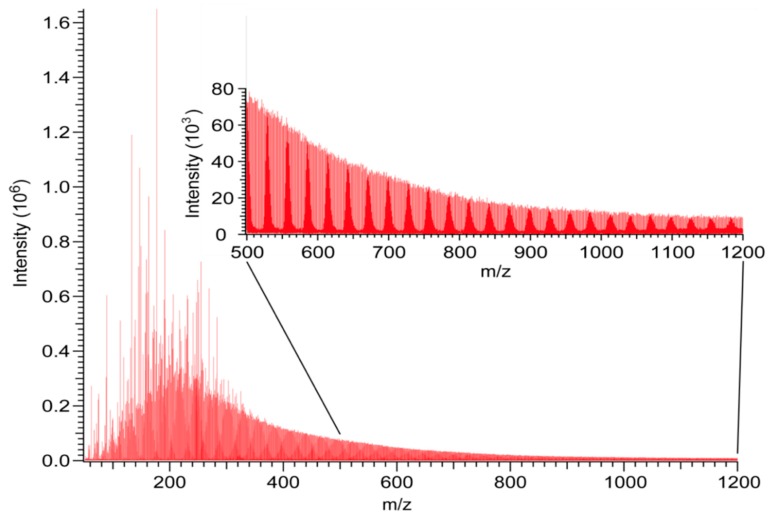
- Prebiotic environments were likely chemically diverse and dominated by non-biomolecules; a methanolic extract of the Murchison meteorite yielded 14,000–50,000 unique molecular formula compounds, estimated to represent millions of unique structural isomers.
- α-Hydroxy acids can polymerize into polyesters under wet-dry cycling; using 5 different αHA monomer types generated vast, likely sequence-complete oligomer libraries, and L-malic acid polymerizes during drying and partially hydrolyzes during rehydration, allowing carryover of stable products.
- Polyester bond formation has a much lower free energy (~0 kcal mol−1) than peptide bond formation (~+3.5 kcal mol−1), and reversible esterification offers facile access to polymer sequence space; depsipeptide intermediates can enrich in peptide bonds over time.
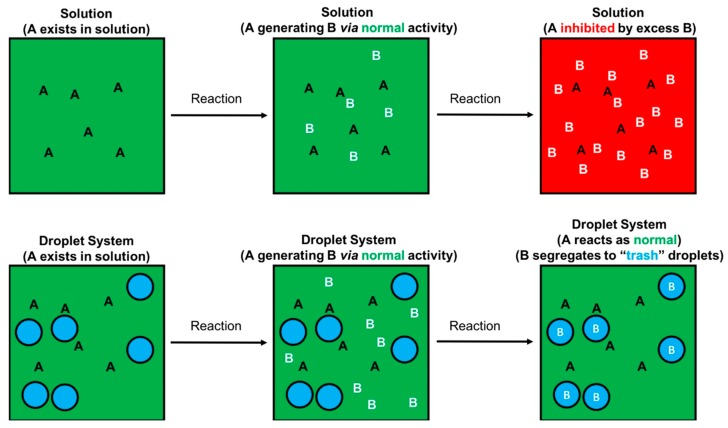
- Drying mixed αHAs at 80 °C produces oligomers that, upon rehydration, form gels and self-assemble into membraneless droplets that differentially segregate hydrophobic dyes and fluorescently labeled nucleic acids, and can scaffold lipid assembly.
Methods
- This is a review/perspective article, not a primary experimental report; it synthesizes prior work on prebiotic polyester chemistry, αHA polymerization, wet-dry cycling, and microdroplet assembly.
- It draws on cited experiments including Murchison meteorite analyses, L-malic acid wet-dry cycling, combinatorial polymerization of 5 αHAs, and polyester microdroplet segregation studies.
- Main analysis is conceptual synthesis and hypothesis generation about non-biomolecular chemical evolution, primitive compartments, and possible transitions to biochemistry.
Limitations
- The paper states that identifying every compound in messy prebiotic systems is beyond contemporary analytical chemistry, and that the combinatorial hydroxy acid systems discussed are likely compositionally simple compared to real environmental settings.
- The paper states that the microdroplet study included only a small number of αHAs chosen for analytical tractability, formed only linear polymers, was a proof-of-principle investigation, and did not explore greater molecular diversity; it also states that no functional searches for catalytic behavior within the droplets were performed.
- Evident from the text: this is a review/prospective with no new experimental data, and many proposed scenarios—such as droplet sinks for deactivated monomers, catalytic systems, and geological pruning of chemical diversity—are hypothetical or targets for future work.
Model-written summary. Check it against the paper before relying on it.
Integrity signals
Registry
Cites
Statistics
Figures



Verification
Claims the paper makes
3 Valid · 0 Not valid · 52 Not checked · 27 Own results and interpretations
Every source the paper cites for this claim was checked and supports it.
In the paper
“In light of this, it seems plausible that a similarly complex compound suite was provided to primitive Earth (or existed on another planet [19]) from one or more sources (e.g., [20,21,22])”
§ Polyesters as a Model System for Building Primitive Biologies from Non-Biological Prebiotic Chemistry > 1. Introduction
What the sources say
- Supportedcites [19] Kahana, 2019, Enceladus: First observed primordial soup could arbitrate origin-of-life debate, Astrobiology source
The citation is attached specifically to the possibility of a complex organic suite on another world. The Abstract describes Enceladus as an extraterrestrial organics-rich water body, while §2 discusses organic inputs to early Earth from dust, meteorites, and comets. Together with the molecular diversity described in §7, these passages support the sentence’s cautious framing; the paper does not establish the exact composition of Earth’s early supply. (LLM, conf=0.87)
- Supportedcites [20] Wollrab, 2016, Chemical analysis of a “Miller-type” complex prebiotic broth: Part I: Chemical diversity, oxygen and nitrogen based polymers, Orig. Life Evol. Biosph. source
The paper reports a chemically diverse mixture from a Miller-type experiment (Discussion, p. 16) and suggests that some compounds could have formed endogenously under a sufficiently reducing atmosphere (Discussion, p. 17). This supports citing it as an example of a plausible source of a complex prebiotic compound suite, without establishing that such a suite actually existed on primitive Earth. (LLM, conf=0.84)
- Supportedcites [21] Jiang, 2014, Abiotic synthesis of amino acids and self-crystallization under prebiotic conditions, Sci. Rep. source
The Results report numerous organic molecules and amino acids produced in a spark-discharge experiment simulating early Earth conditions. The Discussion describes the resulting mixture as a plethora of organic compounds, while the Abstract also identifies meteorites and hydrothermal systems as possible sources of amino acids. Together, these passages support the citing sentence’s qualified claim that a complex compound suite could plausibly have come from one or more sources. (LLM, conf=0.86)
hedged- Asserted: passes — The authors put it forward as true.
- Checkable: passes — It can be checked against evidence.
- Load-bearing: passes — The paper’s conclusions depend on it.
- Based: passes — The paper gives a reason why it holds.
- Rests on an assumption not shown here.
- Supported
Every source the paper cites for this claim was checked and supports it.
In the paper
“These informational materials may not be limited to nucleic acid-based materials, but also could be composed of other types of genetic information, such as those based on the composome model [29].”
§ Polyesters as a Model System for Building Primitive Biologies from Non-Biological Prebiotic Chemistry > 1. Introduction
What the sources say
- Supportedcites [29] Lancet, 2018, Systems protobiology: Origin of life in lipid catalytic networks, J. R. Soc. Interface source
The “Compositional information” section describes a composome’s composition as a ‘compositional genome,’ analogous to an RNA sequence. The “Compositional homeostasis” section explicitly presents copying compositional information as an alternative to copying sequence information in templating biopolymers. (LLM, conf=0.94)
hedged- Asserted: passes — The authors put it forward as true.
- Checkable: passes — It can be checked against evidence.
- Load-bearing: unclear — It is unclear whether the paper’s conclusions depend on it.
- Based: passes — The paper gives a reason why it holds.
- Rests on an assumption not shown here.
- Supported
In the paper
“Most of these classes are dominated by compounds not used in present-day biology [18].”
§ Polyesters as a Model System for Building Primitive Biologies from Non-Biological Prebiotic Chemistry > 1. Introduction
What the sources say
- Not checked yetcites [18] Sephton, 2002, Organic compounds in carbonaceous meteorites, Nat. Prod. Rep. source
plain- Asserted: passes — The authors put it forward as true.
- Checkable: passes — It can be checked against evidence.
- Load-bearing: passes — The paper’s conclusions depend on it.
- Based: passes — The paper gives a reason why it holds.
In the paper
“Contemporary biochemistry uses a relatively small set of building blocks, e.g., only 20 coded amino acids, four ribonucleotides, four deoxyribonucleotides, etc., out of a large number of possibilities [4].”
§ Polyesters as a Model System for Building Primitive Biologies from Non-Biological Prebiotic Chemistry > 1. Introduction
What the sources say
- Not checked yetcites [4] Meringer, 2017, Exploring astrobiology using in silico molecular structure generation, Philos. Trans. A Math. Phys. Eng. Sci.
plain- Asserted: passes — The authors put it forward as true.
- Checkable: passes — It can be checked against evidence.
- Load-bearing: passes — The paper’s conclusions depend on it.
- Based: passes — The paper gives a reason why it holds.
In the paper
“As prebiotic chemical diversity was likely high, and the core of biochemistry uses a rather small set of common building blocks, the majority of prebiotically available organic compounds may not have been those used in modern biochemistry.”
§ Polyesters as a Model System for Building Primitive Biologies from Non-Biological Prebiotic Chemistry > Abstract
What the sources say
- Not checked yetcites [18] Sephton, 2002, Organic compounds in carbonaceous meteorites, Nat. Prod. Rep. source
hedged- Asserted: passes — The authors put it forward as true.
- Checkable: passes — It can be checked against evidence.
- Load-bearing: passes — The paper’s conclusions depend on it.
- Based: passes — The paper gives a reason why it holds.
25 more claims
Create a free account to see all 82 claims and to verify the 76 references still open.
- Probably not a substantial claim. 30
- It may state two separate claims as one. 28
Claims other papers make about this one
Each is checked against this paper’s own text: does it say what the citing paper says it does?
The cited source says what the claim attributes to it.
In the citing paper
“If one considers that the accumulation of biomolecules is a biological invention, optimizing for certain geochemical and/or biochemical properties [119], then compounds such as aHAs may have played a role in some form of nascent biology not conserved in modern biology [142].”
From The Future of Origin of Life Research: Bridging Decades-Old Divisions (2020) · cites this paper as [142]
Citations
Cites
Enzyme promiscuity: A mechanistic and evolutionary perspective
Tawfik, O. K. A. D. S. (2010) · Annual Review of Biochemistry · doi:10.1146/annurev-biochem-030409-143718 · Cited by 1,355 · cited 1×
“Such environmental or geological changes could also have led to innovation of increasingly specific and functional catalysts from the initially diverse and chaotic prebiotic milieu [91,92].”
BackgroundExploring the sequence space for (tri-)peptide self-assembly to design and discover new hydrogels
Frederix, P. W. J. M., Scott, G. G., Abul-Haija, Y. M., Kalafatovic, D., Pappas, C. G., Javid, N., Hunt, N. T., Ulijn, R. V., & Tuttle, T. (2015) · Nature Chemistry · doi:10.1038/nchem.2122 · Cited by 774 · cited 1×
“Such assembly or accumulation mechanisms could be extended to other possibly important early self-assembly chemistries [71].”
BackgroundWoese, C. R. (2002) · Proceedings of the National Academy of Sciences · doi:10.1073/pnas.132266999 · Cited by 762 · cited 4×
“LUCA, a community of progenotes [45], as in primitive entities in the process of (but prior to) establishing the genotype-phenotype relationship, could have dominated the prebiotic world while allowing for genetic information transfer amongst themselves and the surrounding environment.”
BackgroundMethodInfluentialOrganic compounds in carbonaceous meteorites
Sephton, M. A. (2002) · Natural Product Reports · doi:10.1039/b103775g · Cited by 704 · cited 2×
“Most of these classes are dominated by compounds not used in present-day biology [18].”
BackgroundRNA evolution and the origins of life
Joyce, G. F. (1989) · Nature · doi:10.1038/338217a0 · Cited by 658
The RNA World: molecular cooperation at the origins of life
Higgs, P. G., & Lehman, N. (2015) · Nature Reviews Genetics · doi:10.1038/nrg3841 · Cited by 604 · cited 1×
“One such assumption is the direct continuity between biochemistry and prebiotic chemistry, which has given rise to OoL models variously focused on the primary roles of lipids [5], nucleic acids [6], metabolism [7], or proteins [8].”
BackgroundSchmitt-Kopplin, P., Gabelica, Z., Gougeon, R. D., Fekete, A., Kanawati, B., Harir, M., Gebefuegi, I., Eckel, G., & Hertkorn, N. (2010) · Proceedings of the National Academy of Sciences · doi:10.1073/pnas.0912157107 · Cited by 594 · cited 2×
“The soluble fraction is ften incredibly diverse, for example 14,000–50,000 unique molecular formul com ounds were identified in a methanolic extract of the Murchison meteorite, which it was estimated may represent millions of unique structural isomers [12] (Figure 1).”
BackgroundPoirier, Y., Nawrath, C., & Somerville, C. (1995) · Nature Biotechnology · doi:10.1038/nbt0295-142 · Cited by 480 · cited 1×
“Polyhydroxyalkanoates are also produced by various bacteria as energy-storage molecules [60], and pores assembled from polyphosphate associations with β-hydroxy acid polymers have been isolated from E.”
BackgroundModern metabolism as a palimpsest of the RNA world
Benner, S. A., Ellington, A. D., & Tauer, A. (1989) · Proceedings of the National Academy of Sciences · doi:10.1073/pnas.86.18.7054 · Cited by 478 · cited 1×
“While the promiscuity of the ribosome and other examples from biochemistry may be interpreted as vestigial [86], it is possible many, if not most, transitional mechanisms in the evolution of biochemistry have left no easily discernible trace in modern biology.”
BackgroundGrowth and division of active droplets provides a model for protocells
Zwicker, D., Seyboldt, R., Weber, C. A., Hyman, A. A., & Jülicher, F. (2017) · Nature Physics · doi:10.1038/nphys3984 · Cited by 464 · cited 1×
“Primitive cells can, perhaps over-simplistically, be conceived of as molecularly crowded droplets containing genetic or functional polymers encased by a lipid boundary [79].”
Background
Cited by
The Future of Origin of Life Research: Bridging Decades-Old Divisions
Preiner, M., Asche, S., Becker, S., Betts, H. C., Boniface, A., Camprubi, E., Chandru, K., Erastova, V., Garg, S. G., Khawaja, N., et al. (2020) · Life · doi:10.3390/life10030020 · Cited by 140
“If one considers that the accumulation of biomolecules is a biological invention, optimizing for certain geochemical and/or biochemical properties [119], then compounds such as aHAs may have played a role in some form of nascent biology not conserved in modern biology [142].”
BackgroundSelf-citationProtocells: Milestones and Recent Advances
Gözen, İ., Köksal, E. S., Põldsalu, I., Xue, L., Spustová, K., Pedrueza‐Villalmanzo, E., Ryskulov, R., Meng, F., & Jesorka, A. (2022) · Small · doi:10.1002/smll.202106624 · Cited by 156
Determining the “Biosignature Threshold” for Life Detection on Biotic, Abiotic, or Prebiotic Worlds
Barge, L. M., Rodriguez, L. E., Weber, J. M., & Theiling, B. (2021) · Astrobiology · doi:10.1089/ast.2021.0079 · Cited by 61
“For example, solutions involving hydroxy acids or nucleotides generate diverse polymer sequence ‘‘libraries’’ (Chandru et al. , 2018, 2020) or supramolecular polymers 1000s of units long within hours or days, respectively (Cafferty et al. , 2013, 2016; Li et al. , 2016); it remains to be seen how…”
BackgroundPrebiotic oligomerization and self-assembly of structurally diverse xenobiological monomers
Chandru, K., Jia, T. Z., Mamajanov, I., Bapat, N. V., & Cleaves, H. J. (2020) · Scientific Reports · doi:10.1038/s41598-020-74223-5 · Cited by 33
Self-citationJia, T. Z., Bapat, N. V., Verma, A., Mamajanov, I., Cleaves, H. J., & Chandru, K. (2021) · Biomacromolecules · doi:10.1021/acs.biomac.0c01697 · Cited by 26
Self-citation
Metadata
- Authors
- Chandru, K., Mamajanov, I., Cleaves, H. J., & Jia, T. Z.
- Affiliations
- National Space Agency (MY)
- Tokyo Institute of Technology (JP)
- Corresponding author
- Chandru, Kuhan
- Jia, Tony Z.
- Venue
- Life
- Publisher
- MDPI AG
- Published
- 2020-01-19
- Volume
- 10
- Issue
- 1
- Pages
- 6
- ISSN
- 2075-1729 (ISSN-L)
- PMC
- PMC7175156
- OpenAlex
- W2999144455
- Semantic Scholar
- 8770f46437611cac5f025d932cb55f6d51abc46d
- Cited by
- 47
- References
- 104
- Citations by year
- 2026: 2 · 2025: 6 · 2024: 7 · 2023: 8 · 2022: 12 · 2021: 8 · 2020: 4
- FWCI
- 3.57
- Type
- journal article
- Language
- en
- Open access
- gold
- dx.doi.org
- Licence
- Locations
- Life (publishedVersion, cc-by)
- PubMed Central (publishedVersion, cc-by)
- PubMed (publishedVersion)
- DOAJ (DOAJ: Directory of Open Access Journals) (submittedVersion, cc-by-sa)
- Institutional Repositories DataBase (IRDB) (submittedVersion)
- Funders
- Japan Society for the Promotion of Science (JP18K14354, JP17K01943)
- Japan Astrobiology Center (AB311021)
- French Embassy in Japan (Programme Exploration France)
- Research Development Fund UKM (DPP-2018-004)
- European Structural and Investment Funds Operational Programme “Research, Development and Education”-funded project “ChemJets” (CZ 02.2.69/0.0/0.0/16_027/0008351)
- Topics
- Physical Sciences › Physics and Astronomy › Astronomy and Astrophysics › Origins and Evolution of Life
- Life Sciences › Biochemistry, Genetics and Molecular Biology › Molecular Biology › RNA and protein synthesis mechanisms
- Life Sciences › Biochemistry, Genetics and Molecular Biology › Genetics › Evolution and Genetic Dynamics
- Keywords
- polyesters, prebiotic chemistry, chemical evolution, α-hydroxy acids, self-assembly, compartmentalization, origin of life
About these checks
Registry, retraction, Cites and statistics results are computed, not judged, with one exception: a printed reference that no index lists is read once by a model before it counts as a citation error. Claims are extracted by a model and kept only when their quote appears verbatim in the text; each cited source is then checked, with a model’s help, for whether it says what the claim relies on. Those verdicts can be wrong — read the claim’s quote and the cited source before relying on one.
The claim verdicts this report counts are experimental: their accuracy is not yet measured.
A language model drew the claims from the paper on 2026-10-04, under version 3 of the claim definition (model deepseek-v4.1-flash, prompt extract-v3).
A second model labelled each claim on 2026-10-04 (model jev-1.13-20260917, definition revision gold-guideline-v0.2).
Cited sources are checked with a language model’s help (gpt-6-sol).
Statistics and arithmetic are recomputed, not judged.
Confidence bands are shown only for fields calibrated on our annotated test set. None is calibrated yet, so no band is shown.
What counts as a claim ›How we measure confidence ›How we check this ›
Are you an author, or do you see a problem with this page? Request a review
How to cite
Cite CoChat for the checks on this page, and the paper for its own findings.
- This page
- CoChat. (2026). Citation check: Polyesters as a Model System for Building Primitive Biologies from Non-Biological Prebiotic Chemistry. https://app.cochat.ai/papers/10.3390/life10010006
- The paper
- Chandru, K., Mamajanov, I., Cleaves, H. J., & Jia, T. Z. (2020). Polyesters as a Model System for Building Primitive Biologies from Non-Biological Prebiotic Chemistry. Life. https://doi.org/10.3390/life10010006
Data sources
Bibliographic data: Semantic Scholar, OpenAlex, Crossref.
Contains information from the Semantic Scholar Academic Graph Datasets, made available under the ODC Attribution License (ODC-BY 1.0).
Semantic Scholar’s data is described in: Kinney, R., et al. (2023). The Semantic Scholar Open Data Platform. arXiv:2301.10140.
