

Serpentinization: Connecting Geochemistry, Ancient Metabolism and Industrial Hydrogenation
Open accessThe DOI matches its Crossref record; 166 of the 166 references it cites were found in a registry or an index.
Abstract
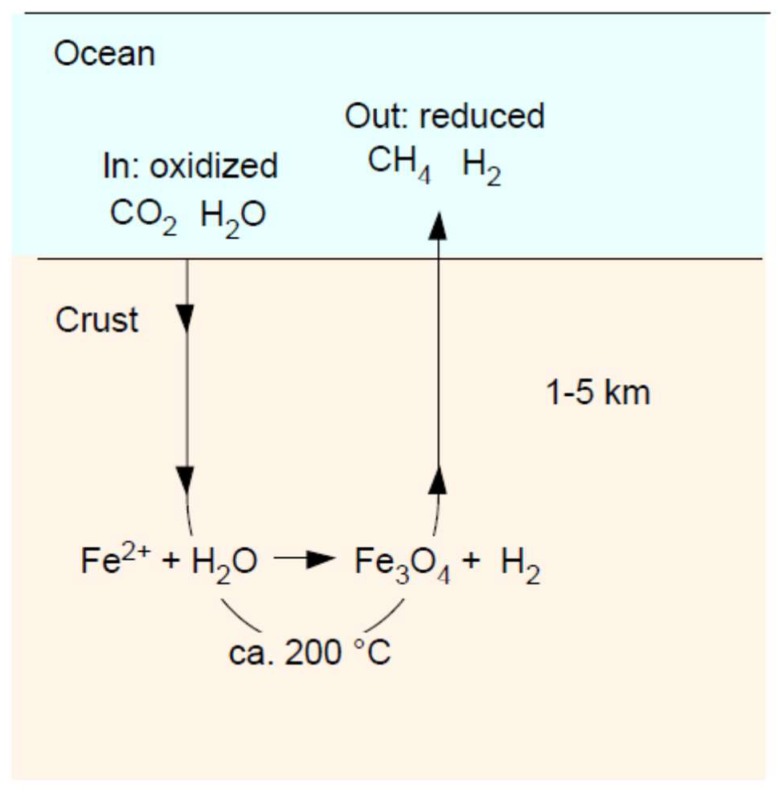
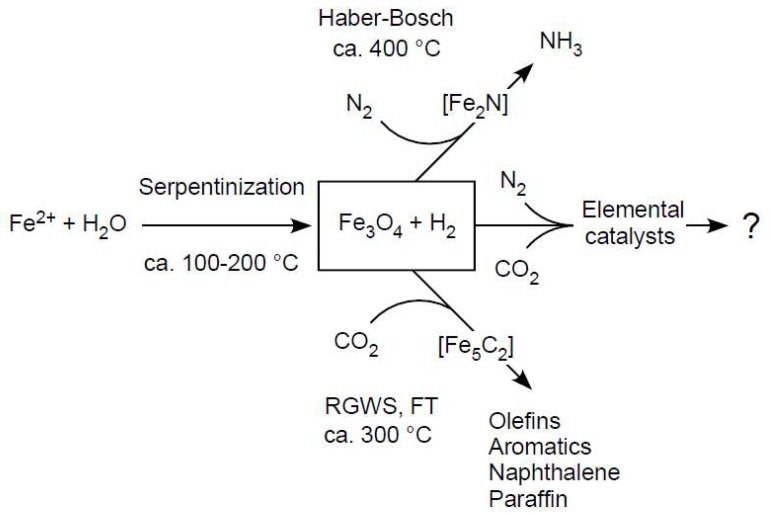
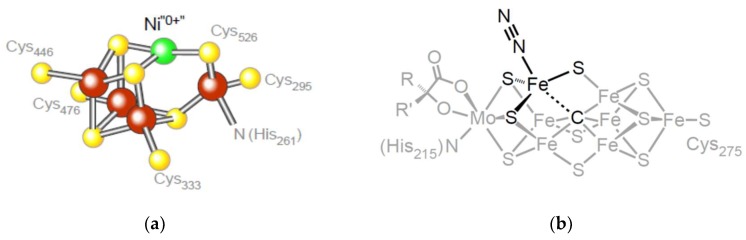
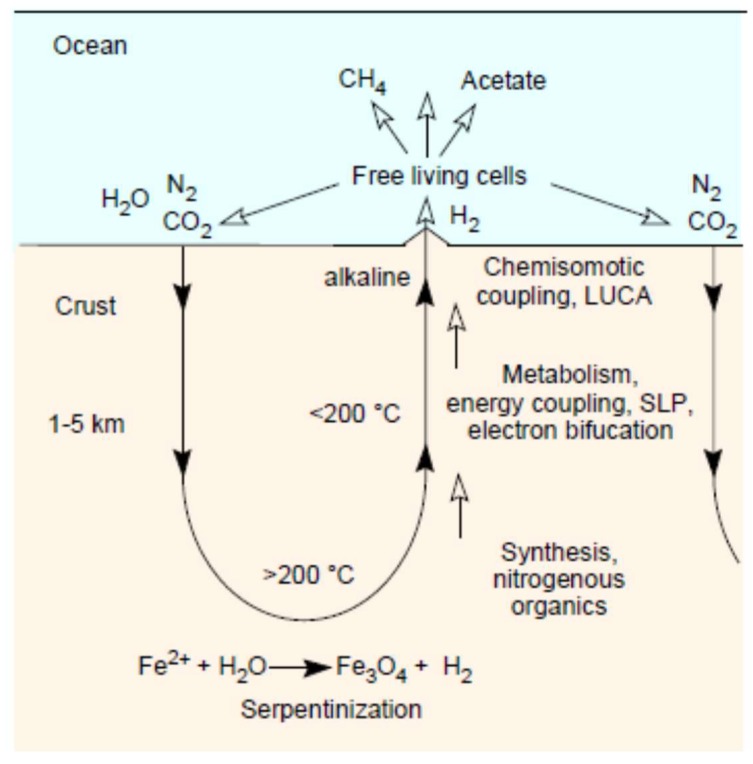
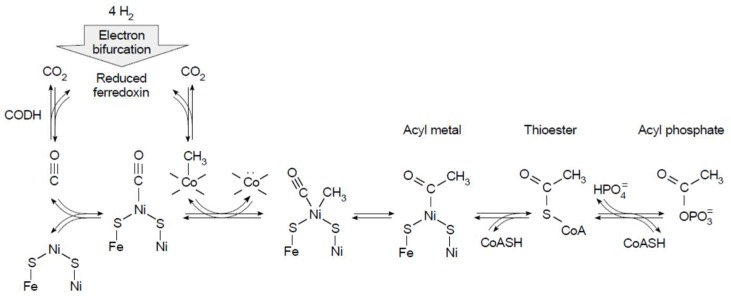
Rock–water–carbon interactions germane to serpentinization in hydrothermal vents have occurred for over 4 billion years, ever since there was liquid water on Earth. Serpentinization converts iron(II) containing minerals and water to magnetite (Fe3O4) plus H2. The hydrogen can generate native metals such as awaruite (Ni3Fe), a common serpentinization product. Awaruite catalyzes the synthesis of methane from H2 and CO2 under hydrothermal conditions. Native iron and nickel catalyze the synthesis of formate, methanol, acetate, and pyruvate—intermediates of the acetyl-CoA pathway, the most ancient pathway of CO2 fixation. Carbon monoxide dehydrogenase (CODH) is central to the pathway and employs Ni0 in its catalytic mechanism. CODH has been conserved during 4 billion years of evolution as a relic of the natural CO2-reducing catalyst at the onset of biochemistry. The carbide-containing active site of nitrogenase—the only enzyme on Earth that reduces N2—is probably also a relic, a biological reconstruction of the naturally occurring inorganic catalyst that generated primordial organic nitrogen. Serpentinization generates Fe3O4 and H2, the catalyst and reductant for industrial CO2 hydrogenation and for N2 reduction via the Haber–Bosch process. In both industrial processes, an Fe3O4 catalyst is matured via H2-dependent reduction to generate Fe5C2 and Fe2N respectively. Whether serpentinization entails similar catalyst maturation is not known. We suggest that at the onset of life, essential reactions leading to reduced carbon and reduced nitrogen occurred with catalysts that were synthesized during the serpentinization process, connecting the chemistry of life and Earth to industrial chemistry in unexpected ways.
Overview
The claims and statistics of this paper haven’t been checked yet.
Free: it reads the open-access text and checks the first 5 claims that cite a source we can check. Create a free account to check every claim.
Integrity signals
Registry
Cites
Statistics
Figures
Verification
Claims the paper makes
The claims and statistics of this paper haven’t been checked yet.
Free: it reads the open-access text and checks the first 5 claims that cite a source we can check. Create a free account to check every claim.
Claims other papers make about this one
Each is checked against this paper’s own text: does it say what the citing paper says it does?
The source backs part of the claim, not all of it — or backs it for a different population, condition or comparison.
In the citing paper
“The diffusible reductant, H2, is generated within the crust, where suitable catalysts for CO2 reduction such as awaruite (Ni3Fe) and magnetite (Fe3O4) are synthesized (Preiner et al., 2018).”
From Serpentinization as the source of energy, electrons, organics, catalysts, nutrients and pH gradients for the origin of LUCA and life (2023) · cites this paper as Preiner et al., 2018
Experimental — accuracy not yet measuredThe source backs part of the claim, not all of it — or backs it for a different population, condition or comparison.
In the citing paper
“Provided that enough catalysts are present (Preiner et al., 2018) these conditions are sufficient to abiotically reduce CO2 (or solid phase inorganic carbon) to formate”
From Serpentinization as the source of energy, electrons, organics, catalysts, nutrients and pH gradients for the origin of LUCA and life (2023) · cites this paper as Preiner et al., 2018
Experimental — accuracy not yet measuredThe source backs part of the claim, not all of it — or backs it for a different population, condition or comparison.
In the citing paper
“It occurs both in terrestrial systems (continental, on land) and in submarine systems on the sea floor, usually close to the borders of tectonic plates (Schrenk et al., 2013; Wang et al., 2014; Preiner et al., 2018).”
From Serpentinization as the source of energy, electrons, organics, catalysts, nutrients and pH gradients for the origin of LUCA and life (2023) · cites this paper as Preiner et al., 2018
Experimental — accuracy not yet measuredThe cited source says what the claim attributes to it.
In the citing paper
“Serpentinization releases energy, generates reductants, and provides small organic compounds that directly interface with microbial metabolism.”
From Serpentinization as the source of energy, electrons, organics, catalysts, nutrients and pH gradients for the origin of LUCA and life (2023) · cites this paper as Preiner et al., 2018
Self-check
Percentages, sums and reported differences re-computed from the paper’s own numbers.
The self-check needs the paper’s full text.
Citations
Cites
Prokaryotes: The unseen majority
Whitman, W. B., Coleman, D. C., & Wiebe, W. J. (1998) · Proceedings of the National Academy of Sciences · doi:10.1073/pnas.95.12.6578 · Cited by 4,871 · cited 1×
“The deep biosphere contains very large amounts of biomass [140,141] consisting of microorganisms that are generally starved for reducible carbon substrate, Heberling et al.”
BackgroundThe biomass distribution on Earth
Bar-On, Y. M., Phillips, R., & Milo, R. (2018) · Proceedings of the National Academy of Sciences · doi:10.1073/pnas.1711842115 · Cited by 3,723 · cited 1×
“The deep biosphere contains very large amounts of biomass [140,141] consisting of microorganisms that are generally starved for reducible carbon substrate, Heberling et al.”
BackgroundMethanogenic archaea: ecologically relevant differences in energy conservation
Thauer, R. K., Kaster, A.-K., Seedorf, H., Buckel, W., & Hedderich, R. (2008) · Nature Reviews Microbiology · doi:10.1038/nrmicro1931 · Cited by 2,184 · cited 4×
“[78] are compounds that also occur as intermediates and end products in the metabolism of organisms, such as acetogenic bacteria and methanogenic archaea [81,82], that live on H2 and CO2 as the substrates for their carbon and energy metabolism: Formate, methyl moieties, and acetate.”
BackgroundInfluentialThe Fischer-Tropsch process: 1950-2000
Dry, M. E. (2002) · Catalysis Today · doi:10.1016/s0920-5861(01)00453-9 · Cited by 2,061 · cited 1×
“Small amounts of native iron also seem to help the catalysis from CO to carbide [108].”
BackgroundMechanism of Molybdenum Nitrogenase
Burgess, B. K., & Lowe, D. J. (1996) · Chemical Reviews · doi:10.1021/cr950055x · Cited by 1,854
Hydrothermal vents and the origin of life
Martin, W., Baross, J., Kelley, D., & Russell, M. J. (2008) · Nature Reviews Microbiology · doi:10.1038/nrmicro1991 · Cited by 1,608
Self-citation(2005) · Van Nostrand's Encyclopedia of Chemistry · doi:10.1002/0471740039.vec1045 · Cited by 1,497
A Serpentinite-Hosted Ecosystem: The Lost City Hydrothermal Field
Kelley, D. S., Karson, J. A., Früh-Green, G. L., Yoerger, D. R., Shank, T. M., Butterfield, D. A., Hayes, J. M., Schrenk, M. O., Olson, E. J., Proskurowski, G., et al. (2005) · Science · doi:10.1126/science.1102556 · Cited by 1,288 · cited 3×
“Hydrothermal fluids from serpentine-hosted seafloor systems are also commonly enriched in CH4, up to several mmol/kg [59,60].”
BackgroundInfluentialBefore enzymes and templates: theory of surface metabolism
Wächtershäuser, G. (1988) · Microbiological Reviews · doi:10.1128/mmbr.52.4.452-484.1988 · Cited by 1,242 · cited 1×
“Biologists and chemists have long held that inorganic catalysts/electron donors like FeS centers preceded organic catalysts/electron donors like NADH in evolution [153,154].”
BackgroundAn off-axis hydrothermal vent field near the Mid-Atlantic Ridge at 30° N
Party, T. A.-6. S., Kelley, D. S., Karson, J. A., Blackman, D. K., Früh-Green, G. L., Butterfield, D. A., Lilley, M. D., Olson, E. J., Schrenk, M. O., Roe, K. K., et al. (2001) · Nature · doi:10.1038/35084000 · Cited by 1,168
Research works printed but not linked: 1
- Stouthamer A.H. Energy-yielding pathways The Bacteria Vol 6 Gunsalus I.C. Academic Press New York, NY, USA 1978 389 462
Cited by
Nonenzymatic Metabolic Reactions and Life’s Origins
Muchowska, K. B., Varma, S. J., & Moran, J. (2020) · Chemical Reviews · doi:10.1021/acs.chemrev.0c00191 · Cited by 317
“60 61–63”
A hydrogen dependent geochemical analogue of primordial carbon and energy metabolism
Preiner, M., Igarashi, K., Muchowska, K. B., Yu, M., Varma, S. J., Kleinermanns, K., Nobu, M. K., Kamagata, Y., Tüysüz, H., Moran, J., et al. (2019) · doi:10.1101/682955 · Cited by 272
Self-citationA hydrogen-dependent geochemical analogue of primordial carbon and energy metabolism
Preiner, M., Igarashi, K., Muchowska, K. B., Yu, M., Varma, S. J., Kleinermanns, K., Nobu, M. K., Kamagata, Y., Tüysüz, H., Moran, J., et al. (2020) · Nature Ecology & Evolution · doi:10.1038/s41559-020-1125-6 · Cited by 272
Self-citationMilkov, A. V. (2022) · Earth-Science Reviews · doi:10.1016/j.earscirev.2022.104063 · Cited by 164
Older than genes: the acetyl CoA pathway and origins
Martin, W. F. (2020) · Frontiers in Microbiology · doi:10.3389/fmicb.2020.00817 · Cited by 132
Self-citationAnalysis of 16S rRNA Primer Systems for Profiling of Thermophilic Microbial Communities
Merkel, A. Y., Tarnovetskii, I. Y., Podosokorskaya, O. A., & Toshchakov, S. V. (2019) · Microbiology · doi:10.1134/s0026261719060110 · Cited by 105
“Secondly, many ecotopes associated with geothermal activity can exist independently of solar energy (McCollom and Shock 1997; Preiner et al., 2018).”
BackgroundHydrogen and Abiotic Hydrocarbons: Molecules that Change the World
Truche, L., McCollom, T. M., & Martinez, I. (2020) · Elements · doi:10.2138/gselements.16.1.13 · Cited by 116
Self-citationOrigin of Life’s Building Blocks in Carbon- and Nitrogen-Rich Surface Hydrothermal Vents
Rimmer, P. B., & Shorttle, O. (2019) · Life · doi:10.3390/life9010012 · Cited by 83
“There are also natural catalysts present in these systems that could have facilitated reactions now performed by enzymes [9].”
BackgroundCamprubí, E., de Leeuw, J. W., House, C. H., Raulin, F., Russell, M. J., Spang, A., Tirumalai, M. R., & Westall, F. (2019) · Space Science Reviews · doi:10.1007/s11214-019-0624-8 · Cited by 84
“Others defend some degree of homology must apply since biology tends to follow the path of least resistance (e.g. Harrison and Lane 2018; Preiner et al. 2018; Muchowska et al. 2019).”
BackgroundWang, W., Li, Z., Zeng, L., Dong, C., & Shao, Z. (2020) · The ISME Journal · doi:10.1038/s41396-020-0662-y · Cited by 83
“Ultimately, the H2-dependent reduction of CO2 leads to the generation of hydrocarbons (C2–C11), methane, and aromatics using Fe3O4 as the catalyst [5, 6].”
BackgroundTemporal variation of planetary iron as a driver of evolution
Wade, J., Byrne, D. J., Ballentine, C. J., & Drakesmith, H. (2021) · Proceedings of the National Academy of Sciences · doi:10.1073/pnas.2109865118 · Cited by 85
The ambivalent role of water at the origins of life
do Nascimento Vieira, A., Kleinermanns, K., Martin, W. F., & Preiner, M. (2020) · FEBS Letters · doi:10.1002/1873-3468.13815 · Cited by 73
Self-citationBeyazay, T., Belthle, K. S., Farès, C., Preiner, M., Moran, J., Martin, W. F., & Tüysüz, H. (2023) · Nature Communications · doi:10.1038/s41467-023-36088-w · Cited by 72
Self-citationSchwander, L., Brabender, M., Mrnjavac, N., Wimmer, J. L. E., Preiner, M., & Martin, W. F. (2023) · Frontiers in Microbiology · doi:10.3389/fmicb.2023.1257597 · Cited by 65
“Genomic reconstructions of LUCA (Weiss et al., 2016, 2018) indicate that the energy required for the synthesis of encoded peptide catalysts (protein synthesis cost 4 ATP per peptide bond) stemmed from substrate level phosphorylation, SLP (Weiss et al., 2016).”
BackgroundInfluentialSelf-citationWimmer, J. L. E., Xavier, J. C., Vieira, A. D. N., Pereira, D. P. H., Leidner, J., Sousa, F. L., Kleinermanns, K., Preiner, M., & Martin, W. F. (2021) · Frontiers in Microbiology · doi:10.3389/fmicb.2021.793664 · Cited by 62
Self-citationDetermining the “Biosignature Threshold” for Life Detection on Biotic, Abiotic, or Prebiotic Worlds
Barge, L. M., Rodriguez, L. E., Weber, J. M., & Theiling, B. (2021) · Astrobiology · doi:10.1089/ast.2021.0079 · Cited by 61
“…for example, in Fe/Ni meteorite material, in chondrite-rich interiors of ocean worlds, and/or from ser-pentinizing systems that form native metals and metal alloys (Ashley et al. , 2011; Schwarzenbach et al. , 2014; Sekine et al. , 2015; Pasek, 2017; Preiner et al. , 2018; Lawley et al. , 2020).”
BackgroundOn the potential roles of phosphorus in the early evolution of energy metabolism
Nicholls, J., Chin, J. P., Williams, T. A., Lenton, T. M., O’Flaherty, V., & McGrath, J. W. (2023) · Frontiers in Microbiology · doi:10.3389/fmicb.2023.1239189 · Cited by 74
“Hydrothermal environments on the ancient Earth likely produced all the requirements of chemoautotrophy through the fixation of CO2 catalyzed by natural minerals (Preiner et al., 2018), and might also have provided energy in the form of geochemical ionic gradients coupled to primordial chemiosmotic systems (Lane, 2017).”
BackgroundBeyazay, T., Ochoa‐Hernández, C., Song, Y., Belthle, K. S., Martin, W. F., & Tüysüz, H. (2023) · Angewandte Chemie International Edition · doi:10.1002/anie.202218189 · Cited by 50
Self-citationMiyazaki, R., Belthle, K. S., Tüysüz, H., Foppa, L., & Scheffler, M. (2024) · Journal of the American Chemical Society · doi:10.1021/jacs.3c12984 · Cited by 55
Self-citationThe rocky road to organics needs drying
Andréani, M., Montagnac, G., Fellah, C., Hao, J., Vandier, F., Daniel, I., Pisapia, C., Galipaud, J., Lilley, M. D., Früh‐Green, G. L., et al. (2023) · Nature Communications · doi:10.1038/s41467-023-36038-6 · Cited by 50
Catalysts, autocatalysis and the origin of metabolism
Preiner, M., Xavier, J. C., Vieira, A. D. N., Kleinermanns, K., Allen, J. F., & Martin, W. F. (2019) · Interface Focus · doi:10.1098/rsfs.2019.0072 · Cited by 43
Self-citationRussell, M. J., & Ponce, A. (2020) · Life · doi:10.3390/life10110291 · Cited by 47
Henriques Pereira, D. P., Leethaus, J., Beyazay, T., do Nascimento Vieira, A., Kleinermanns, K., Tüysüz, H., Martin, W. F., & Preiner, M. (2022) · The FEBS Journal · doi:10.1111/febs.16329 · Cited by 42
Self-citationBelthle, K. S., Beyazay, T., Ochoa-Hernández, C., Miyazaki, R., Foppa, L., Martin, W. F., & Tüysüz, H. (2022) · Journal of the American Chemical Society · doi:10.1021/jacs.2c08845 · Cited by 41
Self-citationA prebiotic Krebs cycle analog generates amino acids with H2 and NH3 over nickel
Kaur, H., Rauscher, S. A., Werner, E., Song, Y., Yi, J., Kazöne, W., Martin, W. F., Tüysüz, H., & Moran, J. (2024) · Chem · doi:10.1016/j.chempr.2024.02.001 · Cited by 39
“13 ,9,25 The meteorite samples shown to be active were 11–18 mol% Ni, whereby their heterogeneous composition does not allow us to attribute this reactivity to a particular metal, or mixture of metals, or to exclude a role for trace metals.”
BackgroundSelf-citationHydrogen Drives Part of the Reverse Krebs Cycle under Metal or Meteorite Catalysis
Rauscher, S. A., & Moran, J. (2022) · Angewandte Chemie International Edition · doi:10.1002/anie.202212932 · Cited by 39
Mission to Planet Earth: The First Two Billion Years
Stüeken, E. E., Som, S. M., Claire, M. W., Rugheimer, S., Scherf, M., Sproß, L., Tosi, N., Ueno, Y., & Lammer, H. (2020) · Space Science Reviews · doi:10.1007/s11214-020-00652-3 · Cited by 40
Origin of Short-Chain Organic Acids in Serpentinite Mud Volcanoes of the Mariana Convergent Margin
Eickenbusch, P., Takai, K., Sissman, O., Suzuki, S., Menzies, C. D., Sakai, S., Sansjofre, P., Tasumi, E., Bernasconi, S. M., Glombitza, C., et al. (2019) · Frontiers in Microbiology · doi:10.3389/fmicb.2019.01729 · Cited by 40
“In addition to the breakdown of photosynthetically fixed and necromass bound OM, SCOAs can be synthesized via the abiotic reduction of inorganic carbon with electron donors released by serpentinization reactions (Holm and Andersson, 1998; McCollom and Seewald, 2007; Schrenk et al., 2013; FrühGreen et al., 2014; Preine…”
BackgroundWimmer, J. L. E., Vieira, A. D. N., Xavier, J. C., Kleinermanns, K., Martin, W. F., & Preiner, M. (2021) · Microorganisms · doi:10.3390/microorganisms9020458 · Cited by 32
“During serpentinization, mineral catalysts awaruite (Ni3Fe) and magnetite (Fe3O4) are formed in situ in serpentinizing hydrothermal vents [44].”
BackgroundSelf-citationYuan, G., Jin, Z., Cao, Y., Schulz, H.-M., Gluyas, J., Liu, K., He, X., & Wang, Y. (2024) · Nature Communications · doi:10.1038/s41467-024-49293-y · Cited by 35
“Diverse catalytic models, such as Fischer – Tropsch-type reactions in serpentinization 1,6 – 9 ,thecatalyticin fl uenceofclaymineralsonkerogen maturation 4,10 , and the catalysis of iron-bearing minerals 4,11 – 13 or sulfate minerals 14,15 on hydrocarbon evolution, have been proposed to elucidate…”
BackgroundMethodInfluentialSeyler, L., Brazelton, W. J., McLean, C., Putman, L. I., Hyer, A. J., Kubo, M. D. Y., Hoehler, T. M., Cardace, D., & Schrenk, M. O. (2020) · mSystems · doi:10.1128/msystems.00607-19 · Cited by 29
Carbon–Metal Bonds: Rare and Primordial in Metabolism
Martin, W. F. (2019) · Trends in Biochemical Sciences · doi:10.1016/j.tibs.2019.04.010 · Cited by 23
“It is possible that native metals are catalyzing the organic syntheses reported in modern hydrothermal vents [36].”
BackgroundSelf-citationEvolutionary History of Bioessential Elements Can Guide the Search for Life in the Universe
Kaçar, B., Garcia, A. K., & Anbar, A. D. (2020) · ChemBioChem · doi:10.1002/cbic.202000500 · Cited by 26
Biological Weathering in the Terrestrial System
Zaharescu, D. G., Burghelea, C. I., Dontsova, K. M., Reinhard, C. T., Chorover, J., & Lybrand, R. A. (2020) · Geophysical monograph · doi:10.1002/9781119413332.ch1 · Cited by 37
The rocky road to biomolecules
Baross, J. A. (2018) · Nature · doi:10.1038/d41586-018-07262-8 · Cited by 22
Hydrogenation reactions of carbon on Earth: Linking methane, margarine, and life
McGlynn, S. E., Glass, J. B., Johnson-Finn, K. N., Klein, F., Sanden, S., Schrenk, M. O., Ueno, Y., & Brovarone, A. V. (2019) · American Mineralogist · doi:10.2138/am-2020-6928ccbyncnd · Cited by 21
“A more complete tabulation of hydrogenation reactions in biology is available in Tables 13 and 14 in Thauer et al. (1977), and a recent review on some topics discussed here has recently appeared (Preiner et al. 2018).”
BackgroundBaidya, A. S., Pasek, M. A., & Stüeken, E. E. (2024) · Communications Earth & Environment · doi:10.1038/s43247-024-01657-4 · Cited by 20
“These minerals are known to catalyze the reduction of carbon and nitrogen 48 and may have a similar catalytic effect on phosphate reduction.”
Yang, Z., & Aspin, A. (2023) · ACS in focus · doi:10.1021/acsinfocus.7e7023 · Cited by 20
Linking Catalysis in Biochemical and Geochemical CO2 Fixation at the Emergence of Life
Belthle, K. S., & Tüysüz, H. (2023) · ChemCatChem · doi:10.1002/cctc.202201462 · Cited by 17
Self-citationSong, Y., Beyazay, T., & Tüysüz, H. (2024) · Angewandte Chemie International Edition · doi:10.1002/anie.202316110 · Cited by 15
Self-citationCO 2 Fixation to Prebiotic Intermediates over Heterogeneous Catalysts
Song, Y., & Tüysüz, H. (2024) · Accounts of Chemical Research · doi:10.1021/acs.accounts.4c00151 · Cited by 18
Self-citationWeingart, M., Chen, S., Donat, C., Helmbrecht, V., Orsi, W. D., Braun, D., & Alim, K. (2023) · Science Advances · doi:10.1126/sciadv.adi1884 · Cited by 16
Advances in Defining Ecosystem Functions of the Terrestrial Subsurface Biosphere
Meyer-dombard, D. R., & Malas, J. (2022) · Frontiers in Microbiology · doi:10.3389/fmicb.2022.891528 · Cited by 15
The Moon‐Forming Impact and the Autotrophic Origin of Life
Mrnjavac, N., Wimmer, J. L. E., Brabender, M., Schwander, L., & Martin, W. F. (2023) · ChemPlusChem · doi:10.1002/cplu.202300270 · Cited by 13
Self-citationWannicke, N., Stüeken, E. E., Bauersachs, T., & Gehringer, M. M. (2024) · Applied and Environmental Microbiology · doi:10.1128/aem.00574-24 · Cited by 14
“The LUCA origin may be consistent with the idea that N 2 reduction to NH 4 + could have evolved from an abiotic process occurring on sulfide minerals to an enzymatic process driven by FeS clusters (31).”
BackgroundMicrofluidics for studying the deep underground biosphere: from applications to fundamentals
Morais, S., Vidal, E., Cario, A., Marre, S., & Ranchou‐Peyruse, A. (2024) · FEMS Microbiology Ecology · doi:10.1093/femsec/fiae151 · Cited by 14
Cooperative formation of porous silica and peptides on the prebiotic Earth
Navrotsky, A., Hervig, R. L., Lyons, J., Seo, D., Shock, E. L., & Voskanyan, A. A. (2020) · Proceedings of the National Academy of Sciences · doi:10.1073/pnas.2021117118 · Cited by 15
“, iron, manganese, and copper), have been suggested to play major roles in controlling and catalyzing reactions on the prebiotic Earth (4, 5).”
BackgroundBeyazay, T., Ochoa‐Hernández, C., Song, Y., Belthle, K. S., Martin, W. F., & Tüysüz, H. (2023) · Angewandte Chemie · doi:10.1002/ange.202218189 · Cited by 11
Self-citationGe, Q., Liu, Y., You, W., Wang, W., Li, K., Ruan, X., Xie, L., Wang, T., & Zhang, L. (2023) · PNAS Nexus · doi:10.1093/pnasnexus/pgad389 · Cited by 11
“…was perhaps 100 – 1,000 times higher than that in the current one, and early aqueous environments can consequently accumulate a considerable amount of (bi)carbonates anions, dominated in the form of HCO 3 − through dissolution equilibrium of atmospheric CO 2 (49) in the acidic environment.”
BackgroundA naturalist perspective of microbiology: Examples from methanogenic archaea
Boyd, E. S., Spietz, R. L., Kour, M., & Colman, D. R. (2022) · Environmental Microbiology · doi:10.1111/1462-2920.16285 · Cited by 7
Wang, Y., Li, W., Baker, B. J., Zhou, Y., He, L., Danchin, A., Li, Q., & Gao, Z. (2022) · Environmental Microbiology Reports · doi:10.1111/1758-2229.13052 · Cited by 10
Kokkinos, Ε., Kotsali, V., Tzamos, E., & Zouboulis, A. I. (2024) · Sustainability · doi:10.3390/su16208967 · Cited by 9
Formation and fluxes of natural hydrogen in the crust and upper mantle
Wong, K., Cascone, M., Giovannelli, D., & Brovarone, A. V. (2026) · Earth-Science Reviews · doi:10.1016/j.earscirev.2026.105400 · Cited by 10
Database on mineral mediated carbon reduction: implications for future research
Prakash, M., Weber, J. M., Rodriguez, L. E., Sheppard, R. Y., & Barge, L. M. (2022) · International Journal of Astrobiology · doi:10.1017/s1473550422000052 · Cited by 8
Garibello, C. F., Eldridge, D. S., Malherbe, F., & Hocking, R. K. (2023) · Inorganic Chemistry Frontiers · doi:10.1039/d3qi01553j · Cited by 6
Hydrothermal Regeneration of Ammonium as a Basin-Scale Driver of Primary Productivity
Stüeken, E. E., Kirsimäe, K., Lepland, A., & Prave, A. R. (2022) · Astrobiology · doi:10.1089/ast.2021.0203 · Cited by 7
“Furthermore, N 2 and lightning-derived nitrite may be converted abiotically to ammonium in hydrothermal settings (Brandes et al. , 1998, 2008; Smirnov et al. , 2008), which has prompted hypotheses about the origin of biological N 2 fixation in these environments (Preiner et al. , 2018).”
Isah, A., Samouei, H., & Okoroafor, E. R. (2025) · Hydrogen · doi:10.3390/hydrogen6040076 · Cited by 7
“Recent studies indicate that transition-metal sites within ultramafic and mafic rocks can act as true geocatalysts that enhance abiotic H 2 production beyond what is expected from simple Fe(II) oxidation and serpentinization alone [51,52].”
Rajah, Z., Gavras, D. F., Andrianandraina, H., Faraji, F., Traoré, M., Somot, S., Larachi, F., Ryan, D. H., & Bouajila, A. (2025) · Metals · doi:10.3390/met15111215 · Cited by 6
Ponce, A. (2019) · Interface Focus · doi:10.1098/rsfs.2019.0085 · Cited by 5
Physicochemical Processes That Probably Originated Life
Коваленко, С. П. (2020) · Russian Journal of Bioorganic Chemistry · doi:10.1134/s1068162020040093 · Cited by 4
Bility, M. T., Agarwal, Y., Ho, S. G., Castronova, I., Beatty, C., Biradar, S., Narala, V., Periyapatna, N., Chen, Y., & Nachega, J. B. (2020) · The Science of The Total Environment · doi:10.1016/j.scitotenv.2020.142830 · Cited by 6
RetractedStimulated geologic hydrogen: from mechanistic control to engineered rock transformation
Yuan, Q., Wanambwa, S., Ifticene, M. A., Kang, Q., Chen, B., & Reible, D. D. (2026) · Energy & Environmental Science · doi:10.1039/d6ee01230b · Cited by 9
Prebiotic Evolution: The Self-Assembly of Primordial Biomolecules
Sillerud, L. O. (2024) · Springer eBooks · doi:10.1007/978-3-031-56687-5_12 · Cited by 6
Origins of life: the possible and the actual
Solé, R. V., Kempes, C. P., & Stepney, S. (2025) · Philosophical Transactions of the Royal Society B Biological Sciences · doi:10.1098/rstb.2024.0281 · Cited by 10
Nickel: Geochemistry, biochemistry and its role in chemical and biological evolutions
Neubeck, A., & Kirschning, A. (2025) · Earth-Science Reviews · doi:10.1016/j.earscirev.2025.105324 · Cited by 6
“…route of biological CO 2 fixation, the reductive acetyl-CoA pathway, it may also act as a reducing power for the abiotic formation of reduced carbon species such as CH 4 , an important carbon source for microbial life (Horita & Berndt 1999, Preiner et al., 2018, Lamadrid 2017, Holm et al., 2015).”
Self-citationSpark of Life: Role of Electrotrophy in the Emergence of Life
Pillot, G., Santiago, Ó., Kerzenmacher, S., & Liebgott, P.-P. (2023) · Life · doi:10.3390/life13020356 · Cited by 4
To What Inanimate Matter Are We Most Closely Related and Does the Origin of Life Harbor Meaning?
Martin, W. F., Nagies, F. S. P., & Vieira, A. D. N. (2021) · Philosophies · doi:10.3390/philosophies6020033 · Cited by 3
“H2 exits the vent in the effluent; the more alkaline the water is, the more H2 (chemical energy) it contains [102].”
BackgroundSelf-citationRehman, H. U., Sharma, J., Subrahmanyam, M., & Begum, S. K. (2023) · Acta Geophysica · doi:10.1007/s11600-023-01045-0 · Cited by 2
Tarter, J., Larrabee, A., Badejo, A. O., & Okoroafor, E. R. (2026) · SPE Hydraulic Fracturing Technology Conference and Exhibition · doi:10.2118/230632-ms · Cited by 2
Cinquemani, S., & Lutz, R. A. (2026) · Journal of Marine Science and Engineering · doi:10.3390/jmse14050486 · Cited by 2
Natural hydrogen: Generation mechanisms, occurrence, challenges and future prospects
Zeng, L., Sander, R., Salimzadeh, S., Lupton, N., & Musa, M. (2026) · Gas Science and Engineering · doi:10.1016/j.jgsce.2026.205928 · Cited by 5
The First Nucleic Acid Strands May Have Grown on Peptides via Primeval Reverse Translation
Tozzi, A., & Mazzeo, M. (2023) · Acta Biotheoretica · doi:10.1007/s10441-023-09474-6 · Cited by 3
“…into account that different environments display different temperatures, pH and redox gradients (Holm et al. 2006; Baaske et al. 2007; Russell et al. 0; Fryer 2012; Postec et al. 2015; Lamadrid et al. 2017; Preiner et al. 2018; Cartwright and Russell 2019; Boyd et al. 2020; Russell and Ponce 2020).”
BackgroundInfluentialWasserstoff ermöglicht Teile des reduktiven Krebs‐Zyklus unter Katalyse von Metallen oder Meteoriten
Rauscher, S. A., & Moran, J. (2022) · Angewandte Chemie · doi:10.1002/ange.202212932 · Cited by 2
Iron oxidation and porosity generation in serpentinized abyssal peridotite
Pujatti, S., Sevgen, S., Phelps, P. R., & Tutolo, B. M. (2024) · Lithos · doi:10.1016/j.lithos.2024.107690 · Cited by 4
Alessa, S., Ali, H. M., Myers, M., Hathon, L., & Saihood, T. (2025) · SPE Western Regional Meeting · doi:10.2118/224210-ms · Cited by 1
Paschek, K., Henning, T. K., Molaverdikhani, K., Miyazaki, Y., Pearce, B. K. D., Pudritz, R. E., & Semenov, D. A. (2025) · The Astrophysical Journal · doi:10.3847/1538-4357/adc39b · Cited by 7
“Because of this very active volcanism on this Hadean Earth, one source of reducing gases might have been extensive serpentinization ( M. J. Russell et al. 2010; N. Holm et al. 2015; M. Preiner et al. 2018; Y. Miyazaki & J. Korenaga 2022 ) in the Earth ’ s crust.”
InfluentialConstraints of Prebiotic Phosphorus Reactions Within Enceladus Hydrothermal Systems
Dzurilla, K. A., Pasek, M. A., & Barge, L. M. (2025) · ChemSystemsChem · doi:10.1002/syst.202500029 · Cited by 1
Formation and spontaneous oxidation of neutral [4Fe–4S] clusters in prebiotic oceans
Present, T. M., Valentine, J. S., Johnson, J. E., & Szilagyi, R. K. (2026) · Journal of Inorganic Biochemistry · doi:10.1016/j.jinorgbio.2026.113259 · Cited by 1
May, A., Sánchez‐Murillo, R., Schrenk, M. O., Gazel, E., de Moor, J. M., Birkel, C., Li, X., Carr, D., & Chavarría, M. M. (2026) · Hydrological Processes · doi:10.1002/hyp.70448 · Cited by 2
“…(Fe 3+ ) iron, which can reduce CO 2 to CH 4 through the Sabatier reaction, mirroring the central biogeochemical process of methanogenesis (Neal and Stanger 1983; Seewald et al. 2006; Russell et al. 2010; Etiope 2017; Etiope and Sherwood Lollar 2013; McCollom and Seewald 2013; Preiner et al. 2018).”
105Chapter 4 Geological and geochemical pathways of onshore natural hydrogen generation
Kularatne, K., & Moretti, I. (2025) · De Gruyter eBooks · doi:10.1515/9783111437040-004 · Cited by 3
Opportunities for interfacing organometallic catalysts with cellular metabolism
Rubini, R., & Mayer, C. (2021) · Elsevier eBooks · doi:10.1016/b978-0-12-820206-7.00072-x · Cited by 1
Miyazaki, R., Belthle, K. S., Tüysüz, H., Foppa, L., & Scheffler, M. (2023) · ChemRxiv · doi:10.26434/chemrxiv-2023-xx4f1 · Cited by 1
Self-citationPrebiotic Resource Constraints and the Origin of Life: A Linear Logic FrameworkPreprint
Tozzi, A. (2025) · bioRxiv (Cold Spring Harbor Laboratory) · doi:10.1101/2025.03.23.644802 · Cited by 1
“Other approaches, such as extraterrestrial, metabolism-first and hydrothermal vent models, emphasize the role of autocatalytic cycles and environmental constraints in shaping molecular complexity (Preiner et Krasnokutski et al., 2022).”
A Bioinformatics Approach to Identifying Radical SAM (S-Adenosyl-L-Methionine) Enzymes
Gagliano, E. (2020) · VTechWorks (Virginia Tech)
The Geological Platform for the Origin of Life on Earth
Stüeken, E. E., & Gardiner, N. J. (2021) · Advances in astrobiology and biogeophysics · doi:10.1007/978-3-030-81039-9_3 · Cited by 1
Rational ignorance in the search for extra-terrestrial life
Zanders, E. D. (2023) · New Astronomy Reviews · doi:10.1016/j.newar.2023.101675
Processing Catalytic Information in Bacteria
Rubini, R. (2023) · University of Groningen research database (University of Groningen / Centre for Information Technology) · doi:10.33612/diss.658678997
Song, Y., Beyazay, T., & Tüysüz, H. (2024) · Angewandte Chemie · doi:10.1002/ange.202316110 · Cited by 3
Self-citationOhtomo, Y., Higashino, S., Kikuchi, R., Otake, T., & Satō, T. (2025) · GEOCHEMICAL JOURNAL · doi:10.2343/geochemj.gj25012
Nair, V. M., Jagmag, S. H., & Sarbadhikari, A. B. (2025) · Frontiers in Astronomy and Space Sciences · doi:10.3389/fspas.2025.1622043 · Cited by 1
“These redox and geochemical gradients can drive key abiotic reactions, including Fischer-Tropsch-type (FTT) synthesis and Haber-Bosch-type reactions, enabling the production of prebiotic compounds such as formate, glycine, and ammonia (Preiner et al., 2018).”
Jones, C. K., Leung, M., Tu, C., Ebadirad, S., Marshall, N. L., Tan, L., & Lyons, T. W. (2025) · Elsevier eBooks · doi:10.1016/b978-0-323-95547-8.00003-3
Methanogens Through Time and Space: Impact on Earth’s Planetary Evolution and Biogeochemistry
Tomko, P., Ovando-Ovando, C. I., Boussagol, P., Santiago‐Martínez, M. G., & Visscher, P. T. (2026) · Geosciences · doi:10.3390/geosciences16040144
“Such nitrogenases are ancient and were likely important for early biochemistry at hydrothermal vents [231].”
InfluentialTrenches, serpentinization, and the origin of life
Huang, R., Shang, X., & Sun, W. (2026) · Elsevier eBooks · doi:10.1016/b978-0-443-27610-1.00006-5
Nisson, D. M., Daswani, M. M., Hughes, E. B., Perl, S. M., Nair, V. M., Pitawala, H. M. T. G. A., Malaviarachchi, S. P. K., Dharmapriya, P. L., Vithanage, M. S., Sarbadhikari, A. B., et al. (2026) · Journal of Geophysical Research Planets · doi:10.1029/2025je009395
“Considerations of paleo‐habitability typically focus on H 2 production through thermodynamic investigations of Fe(II) oxidation from ultramafic rock to subsequent Fe(III) enriched secondary minerals (e.g., magnetite; Andreani et al., 2013; Greenberger et al., 2015; Preiner et al., 2018).”
Primitive Basic Amino Acids Promote Mineral-Catalyzed Electrochemical Reduction of H + and CO 2
Chen, S., Corlett, T., Kitadai, N., Nakamura, R., Miyauchi, M., Longo, L. M., & Yamaguchi, A. (2026) · The Journal of Physical Chemistry C · doi:10.1021/acs.jpcc.6c02384 · Cited by 1
Lv, Z., Wang, F., & Wang, Y. (2026) · The Innovation Life · doi:10.59717/j.xinn-life.2026.100235
Laboratory Simulation of Serpentinization Processes for Sustainable Hydrogen Production
Abutu, D., Yussof, H. W., Nwaichi, P. I., Umunnawuike, C., Yahya, M. N., Nyah, F., Gbonhinbor, J. R., & Agi, A. (2026) · SPE Nigeria Annual International Conference and Exhibition · doi:10.2118/234805-ms
Spoto, S. E. (2026) · Life · doi:10.3390/life16081312
“On early Earth analogues, it predicts that geochemical interfaces with repeated flux and catalytic mineral diversity should produce more structured organic distributions than equilibrium aqueous mixtures [21,24,57,59].”
Influential
Metadata
- Authors
- Preiner, M., Xavier, J. C., Sousa, F. L., Zimorski, V., Neubeck, A., Lang, S. Q., Greenwell, H. C., Kleinermanns, K., Tüysüz, H., McCollom, T. M., Holm, N. G., & Martin, W. F.
- Affiliations
- Heinrich Heine University Düsseldorf (DE)
- University of Vienna (AT)
- Uppsala University (SE)
- University of South Carolina (US)
- Durham University (GB)
- Max-Planck-Institut für Kohlenforschung (DE)
- University of Colorado Boulder (US)
- Stockholm University (SE)
- Corresponding author
- Preiner, Martina
- Martin, William F.
- ORCID
- Venue
- Life
- Publisher
- MDPI AG
- Published
- 2018-09-22
- Volume
- 8
- Issue
- 4
- Pages
- 41
- ISSN
- 2075-1729 (ISSN-L)
- PMC
- PMC6316048
- OpenAlex
- W2890079329
- Cited by
- 97
- References
- 166
- Citations by year
- 2026: 14 · 2025: 12 · 2024: 10 · 2023: 19 · 2022: 10 · 2021: 8 · 2020: 15 · 2019: 8 · 2018: 1
- FWCI
- 0.72
- Type
- journal article
- Language
- en
- Open access
- gold
- dx.doi.org
- Licence
- Locations
- Life (publishedVersion, cc-by)
- Europe PMC (PubMed Central) (publishedVersion, other-oa)
- PubMed Central (publishedVersion, cc-by)
- PubMed (publishedVersion)
- Durham Research Online (Durham University) (acceptedVersion, other-oa)
- Durham Research Online (Durham University) (submittedVersion, cc-by)
- Scholar Commons (University of South Carolina) (submittedVersion, cc-by)
- Phaidra (Universität Wien) (submittedVersion, cc-by-nc-nd)
- Uppsala University Publications (Uppsala University) (submittedVersion, other-oa)
- DOAJ (DOAJ: Directory of Open Access Journals) (submittedVersion, cc-by-sa)
- MPG.PuRe (Max Planck Society) (submittedVersion)
- Funders
- Deutsche Forschungsgemeinschaft (MA 1426/21-1)
- European Research Council (666053)
- Topics
- Physical Sciences › Physics and Astronomy › Astronomy and Astrophysics › Origins and Evolution of Life
- Physical Sciences › Earth and Planetary Sciences › Geochemistry and Petrology › Geochemistry and Elemental Analysis
- Life Sciences › Biochemistry, Genetics and Molecular Biology › Biochemistry › Metalloenzymes and iron-sulfur proteins
- Keywords
- serpentinization, magnetite, hydrogen production, awaruite, CO2 fixation, acetyl-CoA pathway, carbon monoxide dehydrogenase, origin of life, hydrothermal vents, CO2 hydrogenation, Haber-Bosch process, nitrogenase, Fe5C2, Fe2N
About these checks
Registry, retraction, Cites and statistics results are computed, not judged, with one exception: a printed reference that no index lists is read once by a model before it counts as a citation error. Claims are extracted by a model and kept only when their quote appears verbatim in the text; each cited source is then checked, with a model’s help, for whether it says what the claim relies on. Those verdicts can be wrong — read the claim’s quote and the cited source before relying on one.
Statistics and arithmetic are recomputed, not judged.
Confidence bands are shown only for fields calibrated on our annotated test set. None is calibrated yet, so no band is shown.
What counts as a claim ›How we measure confidence ›How we check this ›
Are you an author, or do you see a problem with this page? Request a review
Data sources
Bibliographic data: Semantic Scholar, OpenAlex, Crossref.
Contains information from the Semantic Scholar Academic Graph Datasets, made available under the ODC Attribution License (ODC-BY 1.0).
Semantic Scholar’s data is described in: Kinney, R., et al. (2023). The Semantic Scholar Open Data Platform. arXiv:2301.10140.
