

Universal Molecular Triggers of Stress Responses in Cyanobacterium Synechocystis
Open accessThe DOI matches its Crossref record; 74 of the 74 references it cites were found in a registry or an index.
Abstract
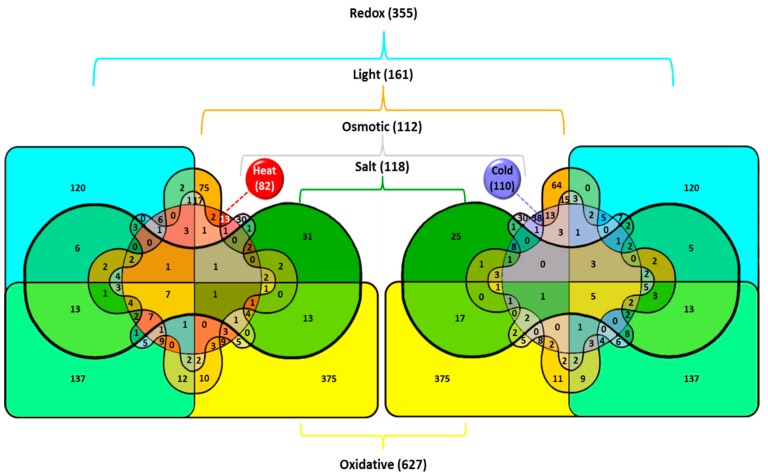
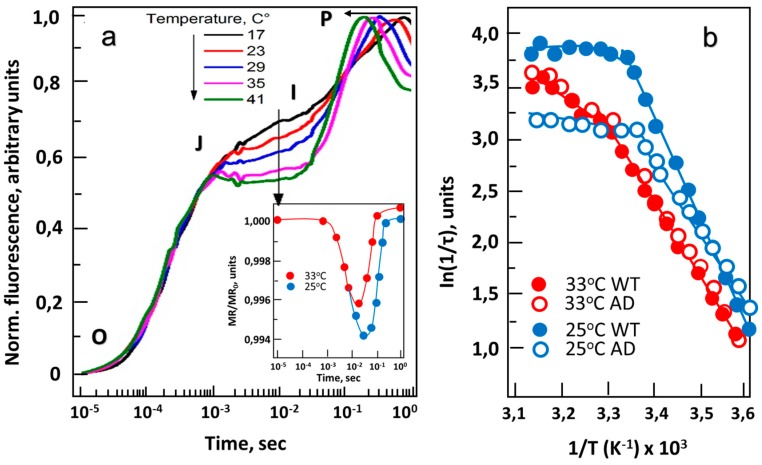
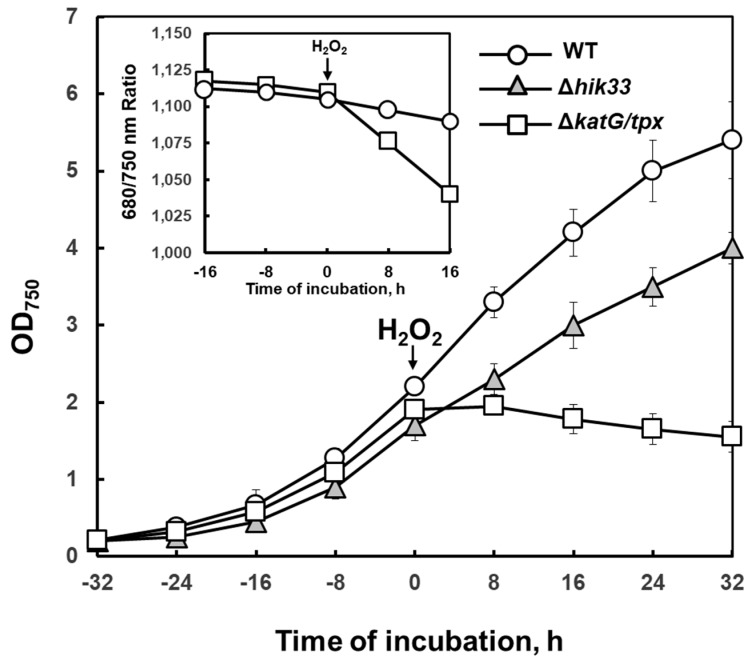
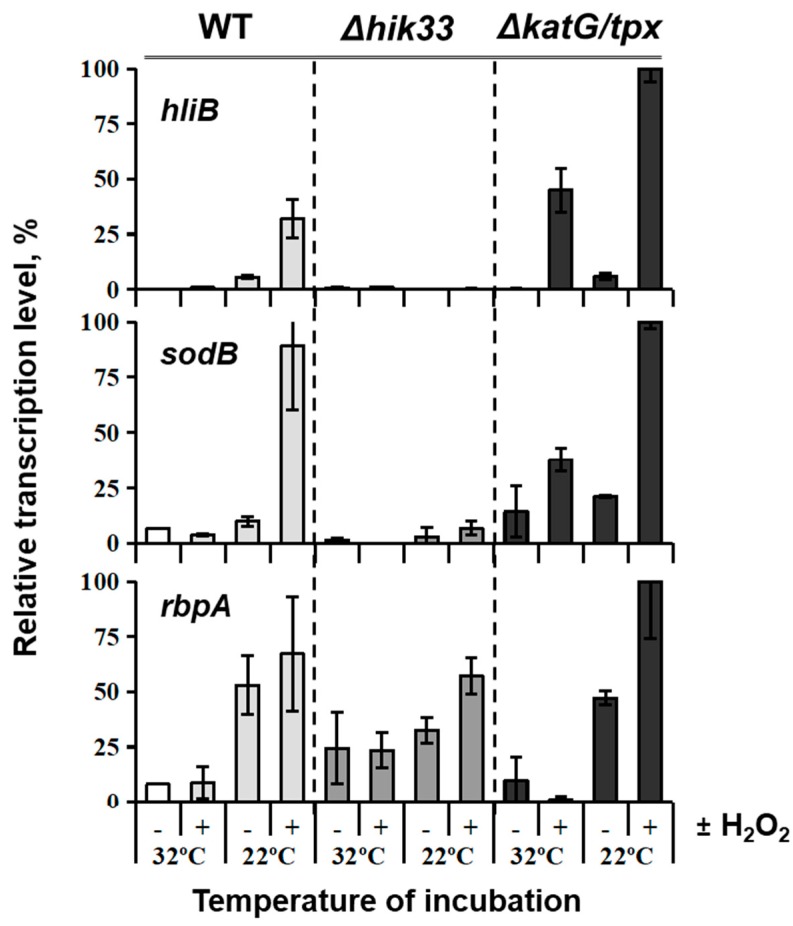
Systemic analysis of stress-induced transcription in the cyanobacterium Synechocystis sp. strain PCC 6803 identifies a number of genes as being induced in response to most abiotic stressors (heat, osmotic, saline, acid stress, strong light, and ultraviolet radiation). Genes for heat-shock proteins (HSPs) are activated by all these stresses and form a group that universally responds to all environmental changes. The functions of universal triggers of stress responses in cyanobacteria can be performed by reactive oxygen species (ROS), in particular H2O2, as well as changes in the redox potential of the components of the photosynthetic electron transport chain. The double mutant of Synechocystis sp. PCC 6803 (katG/tpx, or sll1987/sll0755), which is defective in antioxidant enzymes catalase (KatG) and thioredoxin peroxidase (Tpx), cannot grow in the presence of exogenous hydrogen peroxide (H2O2); and it is extremely sensitive to low concentrations of H2O2, especially under conditions of cold stress. Experiments on this mutant demonstrate that H2O2 is involved in regulation of gene expression that responds to a decrease in ambient temperature, and affects both the perception and the signal transduction of cold stress. In addition, they suggest that formation of ROS largely depends on the physical state of the membranes such as fluidity or viscosity. In cyanobacteria, an increase in membrane turnover leads to a decrease in the formation of ROS and an increase in resistance to cold stress. Therefore: (1) H2O2 is the universal trigger of stress responses in cyanobacterial cells; (2) ROS formation (in particular, H2O2) depends on the physical properties of both cytoplasmic and thylakoid membranes; (3) The destructive effect of H2O2 is reduced by increasing of fluidity of biological membranes.
Overview
The claims and statistics of this paper haven’t been checked yet.
Free: it reads the open-access text and checks the first 5 claims that cite a source we can check. Create a free account to check every claim.
Integrity signals
Registry
Cites
Statistics
Figures
Verification
Claims the paper makes
The claims and statistics of this paper haven’t been checked yet.
Free: it reads the open-access text and checks the first 5 claims that cite a source we can check. Create a free account to check every claim.
Claims other papers make about this one
Each is checked against this paper’s own text: does it say what the citing paper says it does?
The source backs part of the claim, not all of it — or backs it for a different population, condition or comparison.
In the citing paper
“Indeed, the induction of so-called heat stress proteins (HSPs) in cyanobacteria appeared to be non-specific. HSPs are induced by heat, salt, osmotic, acid, UV, oxidative stresses, and redox changes; all resulted in transcriptional activation of major HSPs and, as a consequence, accumulation of the corresponding proteins (17, 60, 70, 90 kDa) [140,141].”
From Spirulina/Arthrospira/Limnospira—Three Names of the Single Organism (2024) · cites this paper as [141]
Experimental — accuracy not yet measured
Self-check
Percentages, sums and reported differences re-computed from the paper’s own numbers.
The self-check needs the paper’s full text.
Citations
Cites
Guskov, A., Kern, J., Gabdulkhakov, A., Broser, M., Zouni, A., & Saenger, W. (2009) · Nature Structural & Molecular Biology · doi:10.1038/nsmb.1559 · Cited by 1,178 · cited 1×
“X-ray crystallography of cyanobacterial PS II and PS I clearly indicate the presence of a significant amount of lipids in photosynthetic reaction centers that may participate in structuring and regulation of electron transfer [58].”
BackgroundHydrogen peroxide sensing, signaling and regulation of transcription factors
Marinho, H. S., Real, C., Cyrne, L., Soares, H., & Antunes, F. (2014) · Redox Biology · doi:10.1016/j.redox.2014.02.006 · Cited by 850
Structure and expression of fatty acid desaturases
Los, D. A., & Murata, N. (1998) · Biochimica et Biophysica Acta (BBA) - Lipids and Lipid Metabolism · doi:10.1016/s0005-2760(98)00091-5 · Cited by 558 · cited 14×
“It turns out that at low temperatures, regulation of the redox state of the PQ pool strongly depends on the fluidity of the membrane controlled by cold-induced Δ12- and Δ6-FADs.”
BackgroundSelf-citationThe PerR transcription factor senses H2O2 by metal-catalysed histidine oxidation
Lee, J.-W., & Helmann, J. D. (2006) · Nature · doi:10.1038/nature04537 · Cited by 547 · cited 1×
“H2O2 specifically induces transcription of perR (slr1738) for the transcriptional regulator PerR [38] that is directly regulated by hydrogen peroxide via oxidation of His37 and His91 residues, which leads to dissociation of PerR-DNA complex [55].”
BackgroundMolecular biology of cyanobacterial salt acclimation
Hagemann, M. (2011) · FEMS Microbiology Reviews · doi:10.1111/j.1574-6976.2010.00234.x · Cited by 510 · cited 3×
“Specifically, NaCl induces genes for ABC-type transporters (cbiQ, norM, and ycf85), quinone synthesis (menB, menG, and ubiH), biotin (birA) and riboflavin (ribF) metabolism, NAD biosynthesis (nadC), protein acetylation (rimI), protease HhoB, translation initiation factor (infC), and some genes with unknown functions […”
BackgroundDNA Microarray Analysis of Cyanobacterial Gene Expression during Acclimation to High Light
Hihara, Y., Kamei, A., Kanehisa, M., Kaplan, A., & Ikeuchi, M. (2001) · The Plant Cell · doi:10.1105/tpc.13.4.793 · Cited by 469 · cited 3×
“Apart from the high temperature, the transcription of HSP genes is induced by hyperosmotic [21] or salt stress [19,22,23], strong light [24], UV-B [25], oxidative stress [14,26], and low pH [27,28].”
BackgroundMembrane fluidity controls redox-regulated cold stress responses in cyanobacteria
Maksimov, E. G., Mironov, K. S., Trofimova, M. S., Nechaeva, N. L., Todorenko, D. A., Klementiev, K. E., Tsoraev, G. V., Tyutyaev, E. V., Zorina, A. A., Feduraev, P., et al. (2017) · Photosynthesis Research · doi:10.1007/s11120-017-0337-3 · Cited by 428 · cited 8×
“Evidence suggests this hypothesis to be true [59].”
BackgroundMethodSelf-citationHydrogen Peroxide Participates in Perception and Transduction of Cold Stress Signal in Synechocystis
Feduraev, P., Mironov, K. S., Gabrielyan, D. A., Bedbenov, V. S., Zorina, A. A., Shumskaya, M. A., & Los, D. A. (2018) · Plant and Cell Physiology · doi:10.1093/pcp/pcy067 · Cited by 385 · cited 7×
“The mutant was necessary to perform such analysis since due to a rapid detoxification of peroxide under normal conditions, its effect is not traceable in the wild-type cyanobacterium [66].”
BackgroundMethodSelf-citationSignal amplification and transduction in phytochrome photosensors
Takala, H., Björling, A., Berntsson, O., Lehtivuori, H., Niebling, S., Hoernke, M., Kosheleva, I., Henning, R., Menzel, A., Ihalainen, J. A., et al. (2014) · Nature · doi:10.1038/nature13310 · Cited by 358 · cited 1×
“regulatory genes for cold stress are limited to two histidine kinases (light-regulated Hik3 [35] and multifunctional Hik31 [8–12]), two genes for the DNA-binding transcriptional regulators (rre5 and sfsA) [36], and a gene for the RNA polymerase σ-factor sigD.”
BackgroundAllahverdiyeva, Y., Mustila, H., Ermakova, M., Bersanini, L., Richaud, P., Ajlani, G., Battchikova, N., Cournac, L., & Aro, E.-M. (2013) · Proceedings of the National Academy of Sciences · doi:10.1073/pnas.1221194110 · Cited by 341 · cited 1×
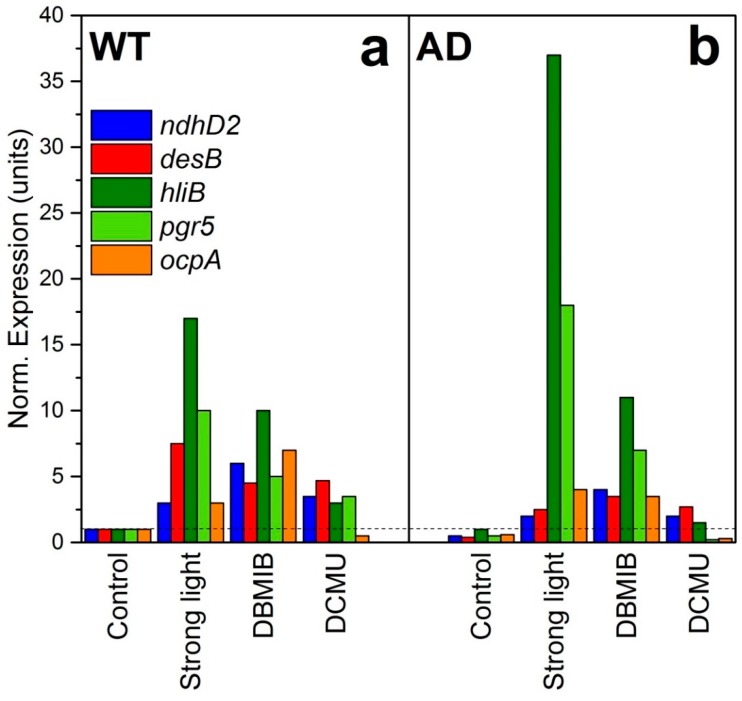
“Both are shown to be induced by strong light and cold shock; HliB is associated with PSI trimers and protects it under stress conditions [46], and pgr5 encodes an analog of a higher plants proton gradient regulation 5 protein (Prg5) with a controversial function [61].”
Background
Cited by
Biocatalysis in Green and Blue: Cyanobacteria
Jodlbauer, J., Rohr, T., Spadiut, O., Mihovilovič, M. D., & Rudroff, F. (2021) · Trends in biotechnology · doi:10.1016/j.tibtech.2020.12.009 · Cited by 69
Very-long-chain fatty acids (VLCFAs) in plant response to stress
Zhukov, A. V., & Shumskaya, M. A. (2020) · Functional Plant Biology · doi:10.1071/fp19100 · Cited by 54
Self-citationRegulation of antioxidant defense and glyoxalase systems in cyanobacteria
Rai, R., Singh, S., Rai, K. K., Raj, A., Sriwastaw, S., & Rai, L. C. (2021) · Plant Physiology and Biochemistry · doi:10.1016/j.plaphy.2021.09.037 · Cited by 51
Spirulina/Arthrospira/Limnospira—Three Names of the Single Organism
Sinetova, M. A., Kupriyanova, E. V., & Los, D. A. (2024) · Foods · doi:10.3390/foods13172762 · Cited by 51
“HSPs are induced by heat, salt, osmotic, acid, UV, oxidative stresses, and redox changes; all resulted in transcriptional activation of major HSPs and, as a consequence, accumulation of the corresponding proteins (17, 60, 70, 90 kDa) [140,141].”
BackgroundSelf-citationCycling between growth and production phases increases cyanobacteria bioproduction of lactate
Shabestary, K., Hernández, H. P., Miao, R., Ljungqvist, E., Hallman, O., Sporre, E., Branco dos Santos, F., & Hudson, E. P. (2021) · Metabolic Engineering · doi:10.1016/j.ymben.2021.09.010 · Cited by 42
Cyanobacterial biofilms: from natural systems to applications
Bozan, M., Berreth, H., Lindberg, P., & Bühler, K. (2024) · Trends in biotechnology · doi:10.1016/j.tibtech.2024.08.005 · Cited by 35
Li, J., Wu, B., Xu, M., Han, X., Xing, Y., Zhou, Y., Ran, M., & Zhou, Y. (2023) · Bioresource Technology · doi:10.1016/j.biortech.2023.129940 · Cited by 23
Laboratory System for Intensive Cultivation of Microalgae and Cyanobacteria
Gabrielyan, D. A., Sinetova, M. A., Gabrielyan, A. K., Bobrovnikova, L. A., Bedbenov, V. S., Starikov, A., Zorina, A. A., Gabel, B. V., & Los, D. A. (2023) · Russian Journal of Plant Physiology · doi:10.1134/s1021443722602737 · Cited by 21
Self-citationHigh Light Induced Alka(e)ne Biodegradation for Lipid and Redox Homeostasis in Cyanobacteria
Qiao, Y., Wang, W., & Lü, X. (2020) · Frontiers in Microbiology · doi:10.3389/fmicb.2020.01659 · Cited by 18
Yuorieva, N. O., Sinetova, M. A., Messineva, E. M., Куличенко, И. Е., Fomenkov, A. A., Vysotskaya, O. N., Osipova, E., Baikalova, A., Prudnikova, O. N., Титова, М. В., et al. (2023) · Biology · doi:10.3390/biology12060838 · Cited by 18
Self-citation50 years since the concept of homeoviscous adaptation
Los, D. A., & Leusenko, A. V. (2024) · Biochimie · doi:10.1016/j.biochi.2024.12.008 · Cited by 17
Self-citationCurrent insights into molecular mechanisms of environmental stress tolerance in Cyanobacteria
Rai, P., Pathania, R., Bhagat, N., Bongirwar, R., Shukla, P., & Srivastava, S. (2025) · World Journal of Microbiology and Biotechnology · doi:10.1007/s11274-025-04260-7 · Cited by 20
“ROS formation depends on the physical status of the membrane viz. fluidity, viscosity (Mironov et al. 2019).”
InfluentialLipid metabolism in cyanobacteria: biosynthesis and utilization
Eungrasamee, K., Zhu, Z., Liu, X., Jantaro, S., & Lindblad, P. C. (2024) · Elsevier eBooks · doi:10.1016/b978-0-443-13231-5.00017-9 · Cited by 14
Kato, N., Iwata, K., Kadowaki, T., Sonoike, K., & Hihara, Y. (2022) · Plant and Cell Physiology · doi:10.1093/pcp/pcac079 · Cited by 12
Sidorov, R. A., Starikov, A., Sinetova, M. A., Guilmisarian, E. V., & Los, D. A. (2024) · International Journal of Molecular Sciences · doi:10.3390/ijms25063239 · Cited by 15
“Growth inhibition and increased relative carotenoid content are classic indications of oxidative stress, which normally accompany almost all abiotic stresses in photosynthetic organisms [19,20].”
BackgroundSelf-citationKarimi-Fard, A., Saidi, A., Tohidfar, M., & Emami, S. N. (2024) · Brazilian Journal of Microbiology · doi:10.1007/s42770-024-01338-6 · Cited by 11
“The molecular mechanisms of stress response have been studied in several strains of cyanobacteria [9, 10].”
Verma, N., Pandey, A., Tiwari, S., & Prasad, S. M. (2021) · Biochemistry and Biophysics Reports · doi:10.1016/j.bbrep.2021.100953 · Cited by 15
“Cyanobacteria, an important component of paddy fields, are the most primitive group of oxygenic photosynthetic microorganisms [7]”
BackgroundStudying Cyanobacteria by Means of Fluorescence Methods: A Review
Grigoryeva, N. Y. (2020) · IntechOpen eBooks · doi:10.5772/intechopen.93543 · Cited by 18
Alcohol stress on cyanobacterial membranes: New insights revealed by transcriptomics
Mironov, K. S., Kupriyanova, E. V., Shumskaya, M. A., & Los, D. A. (2020) · Gene · doi:10.1016/j.gene.2020.145055 · Cited by 11
Self-citationHeat shock proteins in hypothermia: a review
Song, S.-J., Wu, G., Yi, L., Liu, X., Jiang, M.-M., Zhang, X.-C., Yin, Z.-F., Gu, W., & Ruan, Y. (2025) · Frontiers in Molecular Biosciences · doi:10.3389/fmolb.2025.1564364 · Cited by 9
“Research has demonstrated that membrane fluidityiscloselylinkedtoROSgeneration;anincreaseinmembrane fluidity can reduce ROS formation, thereby alleviating heat stress-induced damage to cells (Mironov et al., 2019).”
Santos‐Merino, M., Nikkanen, L., Kokarakis, E. J., Allahverdiyeva, Y., & Ducat, D. C. (2025) · The Plant Journal · doi:10.1111/tpj.70480 · Cited by 7
“Unbalanced photosynthetic activity can lead to the formation of ROS, typically regarded as a dangerous byproduct, although some species (i.e., hydrogen peroxide [H 2 O 2 ]) have well-established signaling roles (Mironov et al., 2019).”
Leusenko, A. V., Mironov, K. S., & Los, D. A. (2023) · Biochimie · doi:10.1016/j.biochi.2023.08.004 · Cited by 8
Self-citationKratzl, F., Urban, M., Pandhal, J., Shi, M., Meng, C., Kleigrewe, K., Kremling, A., & Pflüger‐Grau, K. (2024) · Communications Biology · doi:10.1038/s42003-024-06098-5 · Cited by 10
“In general, in cyanobacteria, high-light-inducible proteins (Hlip) are expressed in response to various exogenous stresses, including already moderate light intensity 39,40 .”
BackgroundAntioxidant, Anti-aging and Anti-neurodegenerative Biomolecules from Cyanobacteria
Chaubey, M. G., Patel, S. N., Sonani, R. R., Singh, N., Rastogi, R. P., & Madamwar, D. (2021) · Springer eBooks · doi:10.1007/978-981-16-4873-1_15 · Cited by 9
Martín‐Clemente, E., Melero‐Jiménez, I. J., Bañares‐España, E., Flores‐Moya, A., & García‐Sánchez, M. J. (2021) · Photosynthesis Research · doi:10.1007/s11120-021-00882-8 · Cited by 7
Xiao, Z., Huang, C., Ge, H., Wang, Y., Duan, X., Wang, G., Zheng, L., Dong, J., Huang, X., Zhang, Y., et al. (2022) · Molecular & Cellular Proteomics · doi:10.1016/j.mcpro.2022.100440 · Cited by 8
“In the case of the WT cells treated with BP, weak protein biotinylation was detected due to the existence of the endogenous peroxidase activity (36).”
BackgroundSamanta, L., Stensjö, K., Lindblad, P. C., & Bhattacharya, J. (2022) · Archives of Microbiology · doi:10.1007/s00203-021-02643-6 · Cited by 7
“A wide variety of naturally occurring stressors, such as high light, ultraviolet rays, salinity, herbicides, heavy metals, and high and low temperature, further increase the intracellular concentration of H2O2 in cyanobacteria (Latifi et al. 2009; Chauvat and Chauvat 2015; Mironov et al. 2019).”
BackgroundKroupová, Z., Slaninová, E., Mrázová, K., Krzyžánek, V., Hrubanová, K., Fritz, I., & Obruča, S. (2024) · Folia Microbiologica · doi:10.1007/s12223-024-01212-w · Cited by 6
“…the viability could be observed during experiments dedicated to investigation of carbon/nitrogen homeostasis (Forchhammer and Selim 2019), studies keen on salt stress response (Klähn et al. 2021), high-light induced stress (Kojima et al. 2022), and cold or another stresses (Mironov et al. 2019).”
Dahedl, E. K., Hancock, T. L., & Urakawa, H. (2025) · Harmful Algae · doi:10.1016/j.hal.2025.102992 · Cited by 4
Kobayashi, K., Yoneda, K., Maeda, Y., & Suzuki, I. (2024) · Journal of Bioscience and Bioengineering · doi:10.1016/j.jbiosc.2024.07.005 · Cited by 5
Grigoryeva, N. Y., & Zaytseva, T. B. (2021) · Inland Water Biology · doi:10.1134/s1995082920060061 · Cited by 5
Stress Proteins and Signal Transduction in Cyanobacteria
Rai, R., Rai, K. K., Singh, S., Raj, A., & Rai, L. C. (2021) · Springer eBooks · doi:10.1007/978-981-16-4873-1_8 · Cited by 7
Rcheulishvili, O. A., Metreveli, N., Solomonia, R. O., Tsverava, L., & Holman, H. N. (2022) · International Microbiology · doi:10.1007/s10123-022-00258-5 · Cited by 4
Stress biology and signal perceptions in cyanobacteria
Gupta, N., Bhattacharjee, S., & Mishra, A. K. (2024) · Elsevier eBooks · doi:10.1016/b978-0-443-13231-5.00009-x · Cited by 6
Molecular Characterization of the MoxR AAA+ ATPase of Synechococcus sp. Strain NKBG15041c
Mano, K., Noi, K., Oe, K., Mochizuki, T., Morishima, K., Inoue, R., Sugiyama, M., Noguchi, K., Shinohara, K., Yohda, M., et al. (2024) · International Journal of Molecular Sciences · doi:10.3390/ijms25189955 · Cited by 3
“…under stress conditions, we measured its activity at 42 °C, a temperature typically associated with the induction of heat stress in cyanobacteria [13,14]. investigate the ATPase activity of SyMRP under stress conditions, we measured its activity at 42 a temperature typically associated with the…”
MethodInfluentialSoule, T. T., Ferreira, D., Lothamer, J., & García‐Pichel, F. (2021) · Photochemistry and Photobiology · doi:10.1111/php.13444 · Cited by 3
Волков, В. А., Yamskova, О. V., Voronkov, M. V., Kurilov, D. V., Романова, В. С., Misin, V. M., Gagarina, I., Ефимовна, П. Н., Вячеславовна, Г. И., & Лушников, А. В. (2020) · BIOPHYSICS · doi:10.1134/s0006350920040272 · Cited by 3
Temperature changes are signaled in cyanobacteria through the PipX interaction network
Llop, A., Bibak, S., Mata‐Balaguer, T., Tremiño, L., Fuertes-García, L., Neira, J. L., Dixon, R. A., & Contreras, A. (2025) · Frontiers in Microbiology · doi:10.3389/fmicb.2025.1688974 · Cited by 2
“…of signal pathways involved in transcriptional regulation in response to either cold or heat shock (Sinetova and Los, 2016; Kobayashi et al., 2017; Mironov et al., 2019), two stresses that are sensed by different mechanisms in bacteria (Kusukawa and Yura, 1988; Weber and Marahiel, 2003; Shivaji…”
Delgado, R. T., Filho, R. D. S. F., Assunção, M. F. G., Aksoy, B., Lm, S., & Mendes, C. R. B. (2026) · Journal of Applied Phycology · doi:10.1007/s10811-026-03805-z · Cited by 2
Shahbazi, M., Tohidfar, M., & Irani, M. A. (2021) · 3 Biotech · doi:10.1007/s13205-021-03050-w · Cited by 3
Laboratory System for Intensive Cultivation of Microalgae and Cyanobacteria
Gabrielyan, D. A., Sinetova, M. A., Gabrielyan, A. K., Bobrovnikova, L. A., Bedbenov, V. S., Starikov, A. Y., Zorina, A. A., Gabel, B. V., & Los, D. A. (2023) · Russian Journal of Plant Physiology · doi:10.31857/s0015330322600486 · Cited by 2
Self-citationFluorescence and electron transfer of Limnospira indica functionalized biophotoelectrodes
Ryzhkov, N. V., Colson, N., Ahmed, E., Pobedinskas, P., Haenen, K., Janssen, P., & Braun, A. (2024) · Photosynthesis Research · doi:10.1007/s11120-024-01114-5 · Cited by 1
“…choice for long-term autonomous operation, considering the influence of hyperosmotic or salinity stress, intense illumination, oxidative stress, and low pH on cellular processes vital for cyanobacteria (Allakhverdiev and Murata 2008; Mironov et al. 2019; Nishiyama et al. 2005; Singh et al. 2010).”
BackgroundQiao, Q., Li, X., Shi, J., Deng, H., & Pei, H. (2026) · Journal of environmental chemical engineering · doi:10.1016/j.jece.2026.121103 · Cited by 1
Karimi-Fard, A. (2026) · Current Plant Biology · doi:10.1016/j.cpb.2026.100615 · Cited by 1
Cold stress impairs CurT accumulation and thylakoid architecture in Synechocystis sp. PCC 6803
Holzer, V. J. C., Pohland, A.-C., Nickelsen, J., Dann, M., & Ostermeier, M. (2026) · Frontiers in Plant Science · doi:10.3389/fpls.2026.1876046 · Cited by 1
“However, such studies have de fi ned cold-stress inducing low temperatures as 20-22 °C (Sinetova and Los, 2016; Mironov et al., 2019), which indicates that CurT function may become critical only under more severe cold stress conditions.”
Chauvat, F., & Cassier‐Chauvat, C. (2021) · Advances in botanical research · doi:10.1016/bs.abr.2021.01.007 · Cited by 1
Grigoryeva, N. Y., & Snarskaya, D. D. (2020) · Issues of modern algology (Вопросы современной альгологии) · doi:10.33624/2311-0147-2020-2(23)-8-16
Samanta, L., Stensjö, K., Lindblad, P. C., & Bhattacharya, J. (2021) · Research Square · doi:10.21203/rs.3.rs-624017/v1
Voronkov, M., Tsivileva, O. M., Volkov, V. A., Romanova, V. S., & Misin, V. M. (2023) · Processes · doi:10.3390/pr11061695 · Cited by 1
“, a number of genes have been identified as being induced in response to numerous abiotic stresses [30].”
BackgroundNehézfém és szinglet oxigén érzékelés Synechocystis PCC 6803 cianobaktériumban
Patyi, G. (2023) · SZTE Repository of Dissertations (University of Szeged) · doi:10.14232/phd.11413
Nien, T.-S., Chan, T.-H., Li, Y. L., Liu, T.-S., Shiau, Y., & Ho, M. (2024) · mSphere · doi:10.1128/msphere.00251-24 · Cited by 2
“Previous studies show that these chaperones are expressed under stress conditions, including heat stress and high light intensity, in Syn6803 (48, 49). sodB is a gene encoding superoxide dismutase, which can eliminate reactive oxygen species (ROS) (49).”
BackgroundSantos‐Merino, M., Nikkanen, L., Kokarakis, E. J., Allahverdiyeva, Y., & Ducat, D. C. (2025) · bioRxiv (Cold Spring Harbor Laboratory) · doi:10.1101/2025.01.24.634715
Serine-Threonine Protein Kinases of Cyanobacteria
Zorina, A. A., Los, D. A., & Klychnikov, O. I. (2025) · Biochemistry (Moscow) · doi:10.1134/s0006297924604507 · Cited by 2
“Considering that reactive oxygen species are universal triggers of the stress response in cyanobacteria [135], the induction of Pkn22 in the presence of methyl viologen that initiates oxidative stress, suggested its involvement in the cell response to several types of stress.”
Self-citationLeveraging Cyanobacteria for Alleviating Climate Change-Induced Abiotic Stress in Crop Plants
Rani, V., Jaiswal, P., Mahawar, H., Khati, P., Arora, A., & Musa, I. O. (2026) · Springer eBooks · doi:10.1007/978-981-95-8883-1_15
Tayade, A. A., Prasanna, R., & Kumar, A. (2026) · World Journal of Microbiology and Biotechnology · doi:10.1007/s11274-026-05243-y
“…can exhibit transgenerational epigenetic inheritance, where altered DNA methylation patterns induced by nutrient or environmental stress persist into subsequent generations, potentially enabling populations to respond more effectively to recurring challenges (Hu et al. 2018 ; Mironov et al. 2019).”
Metadata
- Authors
- Mironov, K., Sinetova, M., Shumskaya, M., & Los, D.
- Affiliations
- Russian Academy of Sciences (RU)
- Kean University (US)
- Corresponding author
- Los, Dmitry
- Venue
- Life
- Publisher
- MDPI AG
- Published
- 2019-08-20
- Volume
- 9
- Issue
- 3
- Pages
- 67
- ISSN
- 2075-1729 (ISSN-L)
- PMC
- PMC6789579
- OpenAlex
- W2969967965
- Cited by
- 56
- References
- 74
- Citations by year
- 2026: 6 · 2025: 8 · 2024: 13 · 2023: 7 · 2022: 4 · 2021: 12 · 2020: 6
- FWCI
- 0.49
- Type
- journal article
- Language
- en
- Open access
- gold
- doi.org
- Licence
- Locations
- Life (publishedVersion, cc-by)
- Europe PMC (PubMed Central) (publishedVersion, cc-by)
- PubMed Central (publishedVersion, cc-by)
- PubMed (publishedVersion)
- DOAJ (DOAJ: Directory of Open Access Journals) (submittedVersion, cc-by-sa)
- Funders
- Russian Science Foundation (19-74-10100, 14-24-00020)
- Topics
- Life Sciences › Agricultural and Biological Sciences › Plant Science › Plant Stress Responses and Tolerance
- Life Sciences › Biochemistry, Genetics and Molecular Biology › Molecular Biology › Redox biology and oxidative stress
- Life Sciences › Biochemistry, Genetics and Molecular Biology › Molecular Biology › Photosynthetic Processes and Mechanisms
- Keywords
- Synechocystis sp. PCC 6803, cyanobacteria, abiotic stress response, heat shock proteins, hydrogen peroxide, reactive oxygen species, cold stress, catalase, peroxiredoxin, membrane fluidity, thylakoid membranes, photosynthetic electron transport chain, redox signaling, antioxidant enzymes
About these checks
Registry, retraction, Cites and statistics results are computed, not judged, with one exception: a printed reference that no index lists is read once by a model before it counts as a citation error. Claims are extracted by a model and kept only when their quote appears verbatim in the text; each cited source is then checked, with a model’s help, for whether it says what the claim relies on. Those verdicts can be wrong — read the claim’s quote and the cited source before relying on one.
Statistics and arithmetic are recomputed, not judged.
Confidence bands are shown only for fields calibrated on our annotated test set. None is calibrated yet, so no band is shown.
What counts as a claim ›How we measure confidence ›How we check this ›
Are you an author, or do you see a problem with this page? Request a review
Data sources
Bibliographic data: Semantic Scholar, OpenAlex, Crossref.
Contains information from the Semantic Scholar Academic Graph Datasets, made available under the ODC Attribution License (ODC-BY 1.0).
Semantic Scholar’s data is described in: Kinney, R., et al. (2023). The Semantic Scholar Open Data Platform. arXiv:2301.10140.
