

The Use of Artificial Intelligence in Tribology—A Perspective
Open accessThe DOI matches its Crossref record; 31 of the 32 references it cites were found in a registry or an index.
Abstract
Artificial intelligence and, in particular, machine learning methods have gained notable attention in the tribological community due to their ability to predict tribologically relevant parameters such as, for instance, the coefficient of friction or the oil film thickness. This perspective aims at highlighting some of the recent advances achieved by implementing artificial intelligence, specifically artificial neutral networks, towards tribological research. The presentation and discussion of successful case studies using these approaches in a tribological context clearly demonstrates their ability to accurately and efficiently predict these tribological characteristics. Regarding future research directions and trends, we emphasis on the extended use of artificial intelligence and machine learning concepts in the field of tribology including the characterization of the resulting surface topography and the design of lubricated systems.
Overview
The claims and statistics of this paper haven’t been checked yet.
Free: it reads the open-access text and checks the first 5 claims that cite a source we can check. Create a free account to check every claim.
Integrity signals
Registry
Cites
Statistics
Figures
Verification
Claims the paper makes
The claims and statistics of this paper haven’t been checked yet.
Free: it reads the open-access text and checks the first 5 claims that cite a source we can check. Create a free account to check every claim.
Claims other papers make about this one
Each is checked against this paper’s own text: does it say what the citing paper says it does?
The source backs part of the claim, not all of it — or backs it for a different population, condition or comparison.
In the citing paper
“Nevertheless, ML approaches have not yet been adapted to predict lubricant film parameters in EHL contacts as a function of standard input variables, as is also accomplished by the well-known proximity equations [4, 39], see Fig. 2.”
From Predicting EHL film thickness parameters by machine learning approaches (2023) · cites this paper as [39]
Experimental — accuracy not yet measured
Self-check
Percentages, sums and reported differences re-computed from the paper’s own numbers.
The self-check needs the paper’s full text.
Citations
Cites
Bayesian Reasoning and Machine Learning
Barber, D. (2012) · Cambridge University Press eBooks · doi:10.1017/cbo9780511804779 · Cited by 1,631
What Are Artificial Neural Networks?
Krogh, A. (2008) · Nature Biotechnology · doi:10.1038/nbt1386 · Cited by 844 · cited 2×
“Machines are able to learn by modifying the thresholds of each model neuron, when a new example is introduced, until the thresholds reach a point to where they don’t change much [6].”
BackgroundEl Kadi, H. (2006) · Composite Structures · doi:10.1016/j.compstruct.2005.01.020 · Cited by 244 · cited 1×
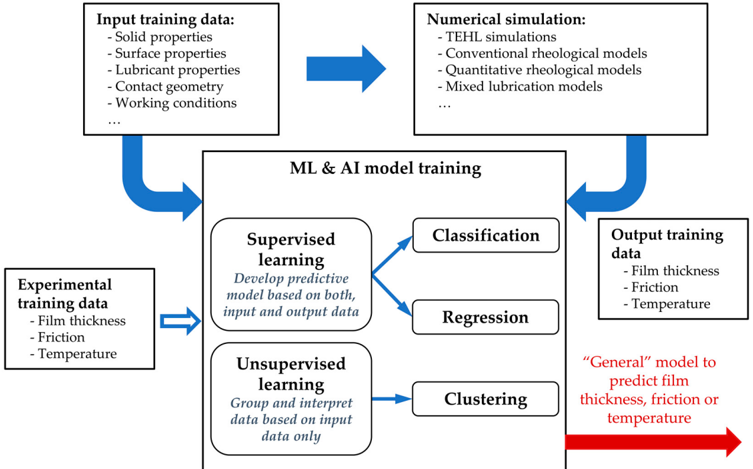
“This dataset can for example be incorporated to develop an ANN (Figure 2), which can be used for further optimization [8,10].”
MethodKönig, F., Sous, C., Ouald Chaib, A., & Jacobs, G. (2021) · Tribology International · doi:10.1016/j.triboint.2020.106811 · Cited by 152 · cited 1×
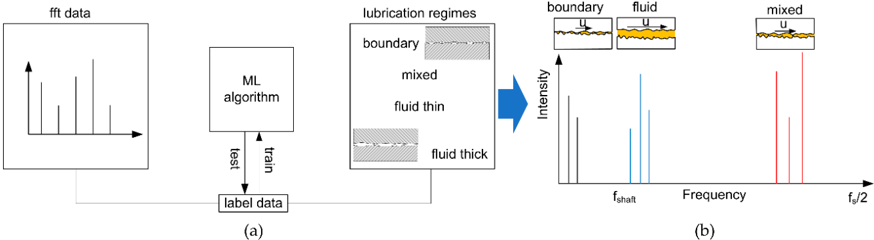
“Framework of the machine learning approach from [13].”
MethodFriedrich, K., Reinicke, R., & Zhang, Z. (2002) · Proceedings of the Institution of Mechanical Engineers, Part J: Journal of Engineering Tribology · doi:10.1243/135065002762355334 · Cited by 107 · cited 2×
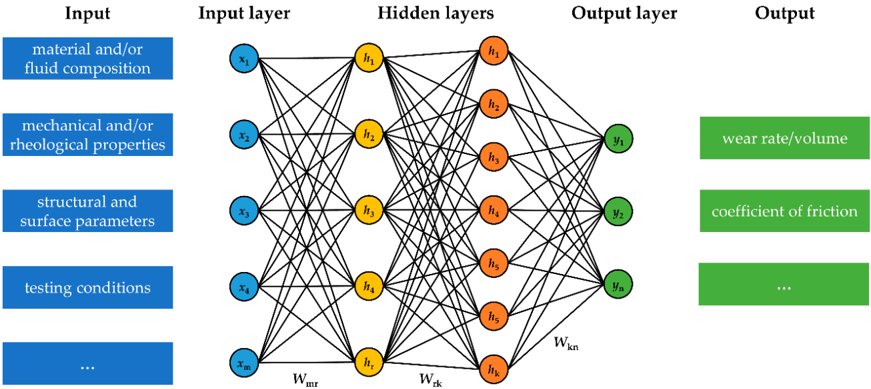
“Correlation between material properties and testing conditions using artificial neural networks. from [7,8].”
MethodSenatore, A., D’Agostino, V., Giuda, R. D., & Petrone, V. (2011) · Tribology International · doi:10.1016/j.triboint.2011.05.022 · Cited by 99 · cited 1×
“[22] developed an EBP model to study the tribological behavior of different brakes and clutch materials thus elucidating the influence of different materials, loading, sliding and acceleration conditions.”
BackgroundArtificial Neural Networks (ANNs) as a Novel Modeling Technique in Tribology
Argatov, I. (2019) · Frontiers in Mechanical Engineering · doi:10.3389/fmech.2019.00030 · Cited by 97 · cited 1×
“This dataset can for example be incorporated to develop an ANN (Figure 2), which can be used for further optimization [8,10].”
MethodUsing neural networks for the diagnosis of localized defects in ball bearings
Subrahmanyam, M., & Sujatha, C. (1997) · Tribology International · doi:10.1016/s0301-679x(97)00056-x · Cited by 93 · cited 1×
“Shortly after, Subrahmanyam and Sujatha [12] applied two ANN approaches, namely a multilayered feed forward neural network trained with supervised error back propagation (EBP) technique and an unsupervised adaptive resonance theory-2 (ART2) based neural network for the detection and diagnosis of localized defects in b…”
MethodMarian, M., Bartz, M., Wartzack, S., & Rosenkranz, A. (2020) · Lubricants · doi:10.3390/lubricants8100095 · Cited by 92 · cited 2×
“, film thickness, friction, temp ratur rise, leakag , among others) of different types of bearings and other lubricated systems [32].”
BackgroundSelf-citationNeural network prediction of disc brake performance
Aleksendrić, D., & Barton, D. C. (2009) · Tribology International · doi:10.1016/j.triboint.2009.03.005 · Cited by 88
Research works printed but not linked: 3
- 2. James, G.; Witten, D.; Hastie, T.; Tibshirani, R. An Introduction to Statistical Learning: With Applications in R ; Springer: Basel, Switzerland, 2017; ISBN 978-1-4614-7138-7.
- 3. Murphy, K.P. Machine Learning: A Probabilistic Perspective ; MIT Press: Cambridge, UK, 2013; ISBN 978-0262018029.
- 5. Bishop, C.M. Pattern Recognition and Machine Learning ; Springer: New York, NY, USA, 2016; ISBN 978-0-387-31073-2.
Cited by
Items 101–200 of 202
Wadi, V. T., Özmen, Ö., Çalışkan, A., & Karamis, M. B. (2021) · Industrial Lubrication and Tribology · doi:10.1108/ilt-05-2021-0193 · Cited by 8
Zeng, Q., Jiang, H., Liu, Q., Li, G., & Ning, Z. (2022) · Industrial Lubrication and Tribology · doi:10.1108/ilt-11-2021-0432 · Cited by 8
Leidens, L. M., Michels, A. F., Perotti, B. L., Alvarez, F., Zanatta, A. R., & Figueroa, C. A. (2022) · ACS Applied Nano Materials · doi:10.1021/acsanm.2c03603 · Cited by 8
Mousavirad, S. J., Rahmani, R., & Dolatabadi, N. (2023) · Surface Topography Metrology and Properties · doi:10.1088/2051-672x/acc882 · Cited by 9
Krishnamoorthy, V., John, A. A., Bhaumik, S., & Paleu, V. (2024) · Technologies · doi:10.3390/technologies12030030 · Cited by 8
“…artificial intelligence (AI) techniques were introduced, resulting in significant advancements in signal manipulation [9], lubricant technology [10–13], composites [14,15], etc. Today, the resurgence of AI and machine learning (ML) has sparked new research on using ML for intelligent fault…”
Zavos, A., Katsaros, K. P., & Nikolakopoulos, P. G. (2022) · Coatings · doi:10.3390/coatings12050704 · Cited by 8
Applications of Acoustic Emission Monitoring in Grinding: A Review
Jia, J., Guo, B., Krajnik, P., Gu, Y., Wu, G., Yao, H., Zhao, H., Li, K., Yang, W., & Zhao, Q. (2025) · International Journal of Precision Engineering and Manufacturing-Green Technology · doi:10.1007/s40684-025-00749-6 · Cited by 10
“Unsupervised learning involves analyzing inputs without corresponding output vectors [125].”
Advanced friction modelling for cold forging using a feed forward neural network
Volz, S., Launhardt, J., & Groche, P. (2025) · Tribology International · doi:10.1016/j.triboint.2025.110837 · Cited by 7
Yang, C., Yang, K., Yin, Y., Gao, F., Li, L. A., Ma, L., & Wang, Z. J. (2025) · Nanoscale · doi:10.1039/d5nr04089b · Cited by 9
Data-Driven AI Model for Time-Based Prediction of Friction and Wear in Lubricated Tribosystems
Granja, V., & Higgs, C. F. (2026) · Lubricants · doi:10.3390/lubricants14010022 · Cited by 7
“Deep learning algorithms excel at modeling non-linear relationships and capturing subtle interactions within large datasets, making them well-suited for predicting friction and wear behaviors [10,11].”
Design of New Dispersants Using Machine Learning and Visual Analytics
Martínez, M. J., Naveiro, R., Soto, A. J., Talavante, P., Kim‐Lee, S., Arrayás, R. G., Franco, M., Mauleón, P., Ordoñez, H. J. L., López, G. R., et al. (2023) · Polymers · doi:10.3390/polym15051324 · Cited by 7
“In particular, several subproblems associated with the design of lubricants [16–18] and fuels [19,20] have been addressed using machine learning techniques.”
BackgroundRothammer, B., Wolf, A., Winkler, A., Schulte-Hubbert, F., Bartz, M., Wartzack, S. J., Miehling, J., & Marian, M. (2023) · Biomechanics and Modeling in Mechanobiology · doi:10.1007/s10237-023-01726-1 · Cited by 10
Self-citationKchaou, M. (2024) · Sustainable Engineering and Innovation · doi:10.37868/sei.v6i1.id268 · Cited by 7
Performance Prediction of Rolling Bearing Using EEMD and WCDPSO-KELM Methods
Li, X., & Zhao, H. (2022) · Applied Sciences · doi:10.3390/app12094676 · Cited by 7
Yadav, S. K., Khatri, C. B., Kumar, A., & Chaturvedi, S. (2024) · Proceedings of the Institution of Mechanical Engineers Part C Journal of Mechanical Engineering Science · doi:10.1177/09544062241256504 · Cited by 6
“17,18 Studies like that by Song et al. 19 developed into the analysis of discharge coefficients in finite element modeling (FEM) of hybrid air journal bearings, emphasizing the importance of computational meth-ods in understanding bearing behavior.”
Нуризинова, М., Skakov, М., Çoruh, A., Ramankulov, S. J., & Nurizinov, M. (2024) · International Journal of Innovative Research and Scientific Studies · doi:10.53894/ijirss.v7i4.3459 · Cited by 6
“According to Rosenkranz, et al. [25], the search for intelligence is investigated with an emphasis on machine learning techniques and the incorporation of new knowledge into the tribological community to predict essential tribological parameters such as training ratios and mass media content.”
BackgroundPriyadarshini, S., & Behera, S. K. (2025) · Surface Topography Metrology and Properties · doi:10.1088/2051-672x/adb499 · Cited by 6
Silitonga, A. S., Milano, J., Aziz, N. A. M., Nurulita, B., Sebayang, A. R., Mahlia, T. M. I., Kalam, M. A., Fattah, I. M. R., Sebayang, A. H., Mohamed, H., et al. (2025) · Results in Engineering · doi:10.1016/j.rineng.2025.104437 · Cited by 6
Zhang, L., Sun, Y., Hao, X., Guo, Z., & Liu, W. (2025) · Advances in Colloid and Interface Science · doi:10.1016/j.cis.2025.103727 · Cited by 5
Deep Learning Data-Driven Model for Stribeck Curve Prediction of Lubricated Tribo-Pairs
Granja, V., & Higgs, C. F. (2026) · Lubricants · doi:10.3390/lubricants14010025 · Cited by 6
“Recent developments in machine learning have introduced new opportunities to model tribological systems directly from data [4,27,28].”
Applications of machine learning in tribo-informatics: Current status and future perspective
Xiang, D., Wang, S., Wang, D., Hu, Y., Yan, L., Sim, R. K., Tan, X., & Zhang, Z. (2026) · Wear · doi:10.1016/j.wear.2026.206757 · Cited by 6
A Review on Tribological Considerations in the Transition from IC Engines to Electric Vehicles
Abebe, B. A., Çelebi, S., & Kılıç, R. (2024) · International Journal of Automotive Science And Technology · doi:10.30939/ijastech..1476366 · Cited by 5
Muthuganapathy, P., Chaturvedi, S. K., Gargama, H., & Sasikumar, P. (2025) · International Journal of Systems Assurance Engineering and Management · doi:10.1007/s13198-024-02699-9 · Cited by 9
Data-driven modeling for tribological performance of nano-lubricants using artificial neural network
Kulkarni, T. P., Autee, A. T., Toksha, B. G., & Chatterjee, A. (2022) · IEEE International Conference on Nanoelectronics, Nanophotonics, Nanomaterials, Nanobioscience & Nanotechnology (5NANO) · doi:10.1109/5nano53044.2022.9828932 · Cited by 6
Krstić, V., Milčić, D., Madić, M. J., Milčić, M., & Milovančević, M. (2022) · Journal of Vibration Engineering & Technologies · doi:10.1007/s42417-022-00461-8 · Cited by 5
“in [3] describe and point to the perspective of using AI and ML in tribological research.”
BackgroundSajeeb, A., & Rajendrakumar, P. K. (2022) · Transactions of the Indian Institute of Metals · doi:10.1007/s12666-022-02800-5 · Cited by 5
“Few works were carried out in development of lubricant using ML techniques [15].”
MethodAl-Quraan, T. M. A., Alfaqs, F. A., Alrefo, I. F. S., Vojtov, V., Войтов, А., Kravtsov, A., Miroshnyk, O., Kondratiev, A., Kučera, P., & Píštěk, V. (2023) · Lubricants · doi:10.3390/lubricants11010017 · Cited by 5
Boidi, G., Grützmacher, P. G., Varga, M., da Silva, M. R., Gachot, C., Dini, D., Profito, F. J., & Machado, I. F. (2021) · IntechOpen eBooks · doi:10.5772/intechopen.100245 · Cited by 5
Self-citationWear particles recognition through teachable machine
More, P. P., & Jaybhaye, M. D. (2022) · Industrial Lubrication and Tribology · doi:10.1108/ilt-11-2021-0438 · Cited by 5
Aero-engine as the object of tribological research
Nidzgorska, A., Witoś, M., Perczyński, J., & Kułaszka, A. (2023) · Journal of Konbin · doi:10.5604/01.3001.0053.9061 · Cited by 4
Noma, H., Aoki, S., & Kobayashi, K. (2024) · Scientific Reports · doi:10.1038/s41598-024-62329-z · Cited by 4
“Thus, tribological application of ML-based models has been extensive, and their use in this field is expected to continue to expand 36 .”
Jayasinghe, R., Ramos, M. V., Nand, A. V., & Ramezani, M. (2025) · Macromolecular Materials and Engineering · doi:10.1002/mame.70004 · Cited by 4
Triboinformatics Modeling of Dry Sliding Wear of High Manganese Hadfield Steel alloys
Harsha, B. P., Patnaik, A., Banerjee, M. K., & Kozeschnik, E. (2023) · International Journal of Metalcasting · doi:10.1007/s40962-023-01147-x · Cited by 4
A review on artificial intelligence-aided design of surface textures
Zheng, J., Jiang, S., & Dong, G. (2025) · Friction · doi:10.26599/frict.2025.9441121 · Cited by 6
Modelling of Friction Phenomena Existed in Drawbead in Sheet Metal Forming
Trzepieciński, T., Kubit, A., Fejkiel, R., Chodoła, Ł., Ficek, D., & Szczęsny, I. (2021) · Materials · doi:10.3390/ma14195887 · Cited by 4
Zhao, Y., Lin, L., & Schlarb, A. K. (2024) · Lubricants · doi:10.3390/lubricants12120423 · Cited by 4
Exploring the mechanical behavior of friction material composites using artificial intelligence
Matté, D., & Perottoni, C. A. (2025) · Neural Networks · doi:10.1016/j.neunet.2025.108040 · Cited by 3
Engine Health Status Prediction Based on Oil Analysis With Augmented Machine Learning Algorithms
Szrama, S. (2024) · Tribology in Industry · doi:10.24874/ti.1736.08.24.09 · Cited by 5
Szewczyk, M., Mezher, M. T., & Jaber, T. A. (2025) · Advances in Mechanical and Materials Engineering · doi:10.7862/rm.2025.1 · Cited by 3
Prediction of Performance Parameters of Journal Bearing Using Machine Learning Algorithms
Nagpal, Y., Gupta, A., Satija, T., Maheshwari, G., & Aggarwal, S. (2025) · Journal of The Institution of Engineers (India) Series C · doi:10.1007/s40032-025-01226-4 · Cited by 3
Yang, F., Han, X., & Si, M. (2021) · Industrial Lubrication and Tribology · doi:10.1108/ilt-07-2021-0273 · Cited by 3
Malinowski, P., & Kasińska, J. (2022) · Tribologia : tarcie, zużycie, smarowanie · doi:10.5604/01.3001.0015.8984 · Cited by 3
Identifying lifetime determining processes in third-body controlled, abrasive contacts
Köhn, F., Schulz, W., Perkins, J., Schmidt, K., & Albrecht, J. (2025) · Wear · doi:10.1016/j.wear.2025.205947 · Cited by 2
Programmable friction control in 3D printed patterned multi-materials: a flexible design strategy
Yao, X., Guo, Y., Wang, M., Lu, Y., Lu, Z., Jia, X., Gao, Y., & Wang, X. (2025) · Virtual and Physical Prototyping · doi:10.1080/17452759.2025.2523545 · Cited by 2
“This process involved layer-by-layer printing, ultraviolet (UV) light curing, and programmed heat treatment, which serve as an effective means of modulating surface tribological characteristics by varying the lubricant material [17].”
Deep learning-based prediction of optimal surface texturing parameters for water-lubricated SiC
He, M., Long, W., Wang, W., Qiao, Y., & Lu, S. (2025) · Tribology International · doi:10.1016/j.triboint.2025.111207 · Cited by 2
Mishra, N., & Baradeswaran, A. (2026) · Multiscale and Multidisciplinary Modeling Experiments and Design · doi:10.1007/s41939-026-01197-8 · Cited by 2
Xin, H., Shen, W., Ling, F., Wu, Y., Wang, H., Qin, F., Peng, H., & Xu, P. (2026) · Journal of Composites Science · doi:10.3390/jcs10040193 · Cited by 3
“This multicomponent, multi-scale composite structure makes it extremely difficult to de-sign [27].”
Pfister, F., Wartzack, S. J., & Rothammer, B. (2026) · Lubricants · doi:10.3390/lubricants14040163 · Cited by 2
“Rosenkranz et al. [29] characterized the state of the art in tribology as strongly dominated by arti fi cial neural networks (ANNs), with particular maturity in condition monitoring applications such as automated particle analysis and fault diagnosis, while also highlighting growing use of ANN…”
Verma, P. K., Jeyaprakash, N., Vasudev, H., Shankar, K. V., & Singh, J. (2026) · Lubricants · doi:10.3390/lubricants14070264 · Cited by 2
Jebali, B., Gennesseaux, M. L., & Kane, M. (2025) · Progress in Engineering Science · doi:10.1016/j.pes.2025.100159 · Cited by 2
Rajakumareswaran, V., Chinthamu, N., MURALI, M., & Balaji, D. (2024) · Surface Review and Letters · doi:10.1142/s0218625x24300077 · Cited by 1
Advances and Trends in Industrial Lubrication
Jeevan, T. P., Sharath, H. K., & Divya, H. V. (2024) · Lecture notes in mechanical engineering · doi:10.1007/978-981-99-9264-5_6 · Cited by 1
A review of stratified topography theory on interface mechanics
Xie, T., Xie, T., & Hu, S. (2025) · Surface Topography Metrology and Properties · doi:10.1088/2051-672x/add7f1 · Cited by 1
He, C., Stepanov, D. Y., Геннадьевич, Б. Д., Panin, S. V., & Первиков, А. В. (2025) · Tribology International · doi:10.1016/j.triboint.2025.111373 · Cited by 1
НАУКОВІ ЗАДАЧІ ТРИБОМАТЕРІАЛОЗНАВСТВА ПРИ АНАЛІЗІ ТРИБОСИСТЕМ
Popov, S., Лаптєва, Г. М., Гребєшков, М., & Капустян, О. (2025) · Наука та виробництво · doi:10.31498/2522-9990302025347048 · Cited by 1
Fang, M., Goto, M., Katayama, K., Tomimatsu, S., Heya, A., & Inoue, T. (2025) · Tribology International · doi:10.1016/j.triboint.2025.111630 · Cited by 1
Impact of metallurgical parameters on wear rate and COF of DP steels using ML-driven methods
Safarpour, M., Ekrami, A., & Kazeminezhad, M. (2026) · Results in Engineering · doi:10.1016/j.rineng.2026.110019 · Cited by 2
Zhou, K., Wang, J., Yu, H., Che, X., & Zhang, L. (2026) · Chinese Journal of Chemical Engineering · doi:10.1016/j.cjche.2026.03.009 · Cited by 1
Deviated Elastohydrodynamic Line Contacts: Prediction Modeling Using Machine Learning
Feile, K., Wartzack, S. J., & Rothammer, B. (2026) · Journal of Tribology · doi:10.1115/1.4072244 · Cited by 1
Zambrano-Mera, D. F., Rosenkranz, A., & Pineda, F. (2026) · Chemistry of Materials · doi:10.1021/acs.chemmater.6c01595 · Cited by 1
Self-citationCombining machine learning methods and data augmentation for misaligned journal bearings design
Arvanitis, K., & Nikolakopoulos, P. G. (2023) · IOP Conference Series Materials Science and Engineering · doi:10.1088/1757-899x/1294/1/012024 · Cited by 1
“Rosenkranz, Marian et al. [15] presented an overview of the various applications of artificial intelligence (AI) and machine learning (ML) in tribology.”
BackgroundKchaou, M. (2024) · Tribologia - Finnish Journal of Tribology · doi:10.30678/fjt.142331 · Cited by 2
“With the presence of a high level of temperature, fuzzy systems can be used in this case of activated complexity because they work well with nonlinear systems and in particular with time-dependent functions [36].”
BackgroundSpecial Issue on Tribo-Informatics: Toward High-Efficiency Tribology Research
Zhu, Y., Zhang, Z., & Sadeghi, F. (2023) · Journal of Tribology · doi:10.1115/1.4062876 · Cited by 1
Urgilés, R. W. C., Tanarro, E. C., & Otero, J. (2022) · Congreso Iberoamericano de Ingeniería Mecánica (CIBIM) · doi:10.5944/bicim2022.160 · Cited by 1
“Una herramienta destacada de IA es el uso de redes neuronales artificiales (RNA) [7].”
BackgroundInfluentialMachine Learning-Based Optimizer for Tilting Pad Journal Bearing Inlet Flowrate
Gheller, E., Chatterton, S., Panara, D., Turini, G., & Pennacchi, P. (2023) · Journal of Engineering for Gas Turbines and Power · doi:10.1115/1.4063532
Prediction of the static force characteristic of annular gaps using neural networks
Kuhr, M. M. G., & Pelz, P. F. (2023) · Proceedings of ... European Conference on Turbomachinery Fluid Dynamics & Thermodynamics · doi:10.29008/etc2023-233
Freschi, M., Virgilio, M. D., Andena, L., Mariani, M., Haiko, O., Kömi, J. I., Lecis, N. F. M., & Dotelli, G. (2023) · Next Materials · doi:10.1016/j.nxmate.2023.100083 · Cited by 1
Machine Failure and Its Prevention by Tribology
Al-Samarai, R. A., & Al-Douri, Y. (2024) · Materials horizons · doi:10.1007/978-981-97-1168-0_10
Piechowski, M., Wyczółkowski, R., Paszkowski, W., & Meller, A. (2024) · IFAC-PapersOnLine · doi:10.1016/j.ifacol.2024.08.125
Drees, D., Lopes, L., Baião, P., Koutsomichalis, A. M., & Georgiou, E. P. (2025) · Wear · doi:10.1016/j.wear.2025.205853
Ma’ruf, M., Fukuda, K., Liza, S., & Fajar, R. (2025) · Industrial Lubrication and Tribology · doi:10.1108/ilt-07-2024-0286
Using Artificial Neural Networks to Accelerate Thermo-elastohydrodynamic Lubrication SimulationsPreprint
Kaliafetis, F., Ardah, S., Ewen, J. P., & Dini, D. (2025) · Engineering Archive (engrXiv) · doi:10.31224/4662
Applications of Artificial Intelligence in Tribology
Truong, Q. N., & Vu, V. Q. (2025) · Lecture notes in networks and systems · doi:10.1007/978-3-032-03859-3_20
An overview of artificial intelligence-enabled intelligent manufacturing
Rangra, A., Sharma, P., Goyal, S., Jindal, P. K., & Pahuja, H. (2025) · AIP conference proceedings · doi:10.1063/5.0293141
113Chapter 6 Machine design: modern design techniques and methodologies for a sustainable design
Filippatos, A., Zavos, A., Markatos, D. N., Antzoulatou, A., & Nikolakopoulos, P. G. (2025) · De Gruyter eBooks · doi:10.1515/9783111585062-006
Martínez, F. F., Ayuso, I. G., Otero, J. E., Tanarro, E. C., & Arrabal, A. L. (2025) · Anales de Ingeniería Mecánica · doi:10.63450/aim.1.211.2025
Illuminate the Black Box: Explainable AI Innovations for Machine Condition Monitoring
Herwig, N. (2025) · UNSWorks (University of New South Wales, Sydney, Australia) · doi:10.26190/unsworks/31550 · Cited by 1
Leidens, L. M. (2023) · LA Referencia (Red Federada de Repositorios Institucionales de Publicaciones Científicas)
A multidimensional investigation of the transition from lubricated to abrasive wear
Li, Y., Schneider, J., & Greiner, C. (2026) · Friction · doi:10.26599/frict.2026.9441254
A Review of Additively Manufactured Polymer and Steel Gears - Tribology and Modeling
Mustafa, M. M., Ali, M. A., Abdula, R. W., Mohammed, O. D., & Wadullah, H. M. (2026) · Mechanisms and machine science · doi:10.1007/978-3-032-22270-1_42
Performance prediction of journal bearing employing random forest algorithm
Maheshwari, G., Nagpal, Y., Gupta, A., Satija, T., Mishra, S. S., & Aggarwal, S. (2026) · AIP conference proceedings · doi:10.1063/5.0340528
Sui, X., Gachot, C., & Marquis, E. (2026) · Elsevier eBooks · doi:10.1016/b978-0-443-30138-4.00060-1
Data-Driven Modeling of Friction in Drawbead Test Through Advanced Machine Learning
Trzepieciński, T., Fejkiel, R., & Kowalik, M. (2026) · Materials · doi:10.3390/ma19122641
“…of friction in sheet metal forming [29], performance optimization of novel tribological materials [33], selection of lubricant formulations [34], lubrication regime classification [35], predicting lubricated friction on textured surfaces [36], prediction of nanoscale friction for…”
POSSIBILITIES OF WRITING A TRIBOLOGY ARTICLE USING AR-TIFICIAL INTELLIGENCE SOFTWARE CHATGPT
Posmyk, A., Posmyk, A., & Mathia, T. G. (2026) · Tribologia : tarcie, zużycie, smarowanie · doi:10.5604/01.3001.0055.8229
Data‐Driven Design of Pentaerythritol Esters via Structure–Viscosity Coupling
Sun, Z. X., Bai, P., Cao, H., Ma, K., Chen, W. P., Xiang, Z., Meng, Y., & Tian, Y. (2026) · Advanced Functional Materials · doi:10.1002/adfm.76909
“…for extreme-condition lubrication applications [76– 78]—including aerospace, high-speed bearings, and deep-sea or high-pressure fluid power systems [79, 80]—providing a rigorous guide for designing high-performance, cost-effective lubri-cants that enhance reliability, energy efficiency, and…”
Cloud Computing’s Data Security and Privacy Issues: A Review of the Problems and Solutions
Majumdar, S. (2026) · International Journal of Mathematic Exploration and Computer Education · doi:10.47485/3069-9703.1027
Saleh, A., Jacobs, G., Chen, W., Lucassen, M., & Lehmann, B. (2026) · Lubricants · doi:10.3390/lubricants14070278
“The rapid adoption of machine learning in tribology has been comprehensively reviewed by Argatov et al. [28], Rosenkranz et al. [29], Marian et al. [30], Sose et al. [31] and Paturi et al. [32].”
Varatharajulu, M., & Duraiselvam, M. (2026) · Lubricants · doi:10.3390/lubricants14080287
“Rosenkranz et al. [206] focus on the potential of AI for describing surface topography and creating lubricated systems, whereas Marian et al. [207] note the capacity of ML to distinguish between complex tribological interactions across several areas.”
Song, K., Li, Z., Liu, X., Luo, L., Wang, H., & Zhang, Y. (2026) · Engineering Applications of Artificial Intelligence · doi:10.1016/j.engappai.2026.115803
Bao, L., Zhou, R., Jia, X., Zhou, F., Cai, M., & Liu, W. (2026) · Friction · doi:10.26599/frict.2026.9441293
Zhang, Y., Pan, Z., Yang, K., Niu, W., Rao, S., Tan, L., Luo, Z., Wang, H., & Qiao, B. (2026) · SSRN Electronic Journal · doi:10.2139/ssrn.7243287
Artificial Intelligence and Machine Learning in Tribology
Nalam, P. C., Garbedian, N., & Marian, M. (2026) · Elsevier eBooks · doi:10.1016/b978-0-443-30138-4.00114-x
Self-citationDesign and Development of Tribometers: A Comprehensive Review
Singh, H. R., Jadhal, P., & Singh, V. K. (2026) · doi:10.70973/jtst.3.1.2026.1-27
Triboinformatic modeling of nitinol alloys under different heat-treatment regimes
Alfred, S. O. (2026) · Journal of Materials Science · doi:10.1007/s10853-026-13713-9
“Reviews on the application of machine learning (ML) and artificial intelligence in tribology highlight this rapid growth across various materials and lubrication regimes [9, 10].”
Shah, R., Roshan, M. S., Kim, S., Sutradhar, A., & Liang, H. Y. (2026) · Lubricants · doi:10.3390/lubricants14090350
Self-citationUncertainty optimization of shaft texture for lip seal under working condition fluctuation
Wang, E., Liu, D., Wang, S., He, Z., & Wen, J. (2026) · Physics of Fluids · doi:10.1063/5.0341400
Vogel, D. J., & Christian, M. S. (2026) · Industrial & Engineering Chemistry Research · doi:10.1021/acs.iecr.5c05343
Stadnychenko, V., & Masaryk, M. (2026) · Lubricants · doi:10.3390/lubricants14100393
Omenife, N., Tabakov, P. Y., & Pandelani, T. (2026) · SSRN Electronic Journal · doi:10.2139/ssrn.7624630
Metadata
- Authors
- Rosenkranz, A., Marian, M., Profito, F. J., Aragon, N., & Shah, R.
- Affiliations
- University of Chile (CL)
- Friedrich-Alexander-Universität Erlangen-Nürnberg (DE)
- Universidade de São Paulo (BR)
- Koehler Instrument Company, Holtsville, NY 11742, USA
- Corresponding author
- Rosenkranz, Andreas
- Marian, Max
- Venue
- Lubricants
- Publisher
- MDPI AG
- Published
- 2020-12-26
- Volume
- 9
- Issue
- 1
- Pages
- 2
- ISSN
- 2075-4442 (ISSN-L)
- OpenAlex
- W3113471983
- Cited by
- 187
- References
- 32
- Citations by year
- 2026: 30 · 2025: 40 · 2024: 26 · 2023: 37 · 2022: 40 · 2021: 14
- FWCI
- 11.19
- Type
- journal article
- Language
- en
- Open access
- gold
- doi.org
- Licence
- Locations
- Lubricants (publishedVersion, cc-by)
- DOAJ (DOAJ: Directory of Open Access Journals) (submittedVersion, cc-by-sa)
- OPUS FAU (Kooperativer Bibliotheksverbund Berlin-Brandenburg (KOBV), on behalf of the Universitätsbibliothek Erlangen-Nürnberg) (submittedVersion, cc-by)
- Funders
- CONICYT-ANID (Fondecyt Iniciacion 11180121)
- VID of the University of Chile (U-Inicia UI 013/2018)
- Topics
- Physical Sciences › Engineering › Mechanical Engineering › Tribology and Lubrication Engineering
- Physical Sciences › Engineering › Mechanical Engineering › Lubricants and Their Additives
- Physical Sciences › Materials Science › Materials Chemistry › Machine Learning in Materials Science
- Keywords
- machine learning, artificial neural networks, oil film thickness, surface topography characterization
About these checks
Registry, retraction, Cites and statistics results are computed, not judged, with one exception: a printed reference that no index lists is read once by a model before it counts as a citation error. Claims are extracted by a model and kept only when their quote appears verbatim in the text; each cited source is then checked, with a model’s help, for whether it says what the claim relies on. Those verdicts can be wrong — read the claim’s quote and the cited source before relying on one.
Statistics and arithmetic are recomputed, not judged.
Confidence bands are shown only for fields calibrated on our annotated test set. None is calibrated yet, so no band is shown.
What counts as a claim ›How we measure confidence ›How we check this ›
Are you an author, or do you see a problem with this page? Request a review
Data sources
Bibliographic data: Semantic Scholar, OpenAlex, Crossref.
Contains information from the Semantic Scholar Academic Graph Datasets, made available under the ODC Attribution License (ODC-BY 1.0).
Semantic Scholar’s data is described in: Kinney, R., et al. (2023). The Semantic Scholar Open Data Platform. arXiv:2301.10140.
